In modern industrial construction, factory column grid optimization is not merely a structural decision — it is a production strategy. The arrangement of columns within a factory directly influences workflow efficiency, equipment placement, material handling speed, and long-term scalability. Yet many projects treat column grids as a secondary architectural detail rather than a core operational framework.
For steel industrial buildings, where flexibility and long spans are possible, factory column grid optimization becomes even more critical. A poorly planned grid can restrict machinery layout, interfere with crane systems, and create permanent bottlenecks in production lines. Conversely, a well-optimized column grid enhances bay spacing efficiency, improves equipment layout coordination, and reduces lifecycle operational costs.
This article explores how factory column grid optimization impacts steel factory production lines, and why structural engineers and production planners must collaborate from the earliest design stage.
Why Column Grid Design Determines Factory Efficiency
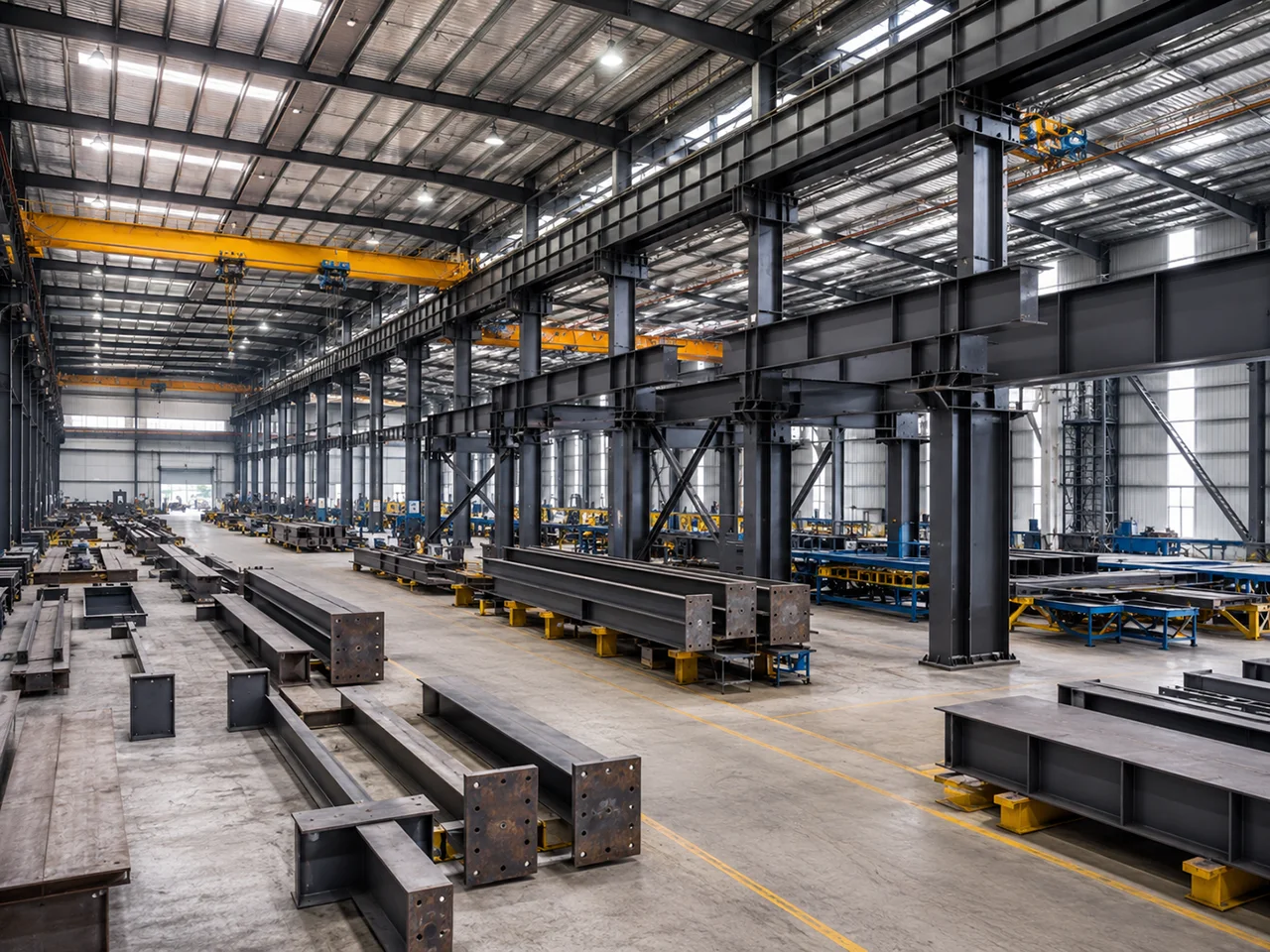
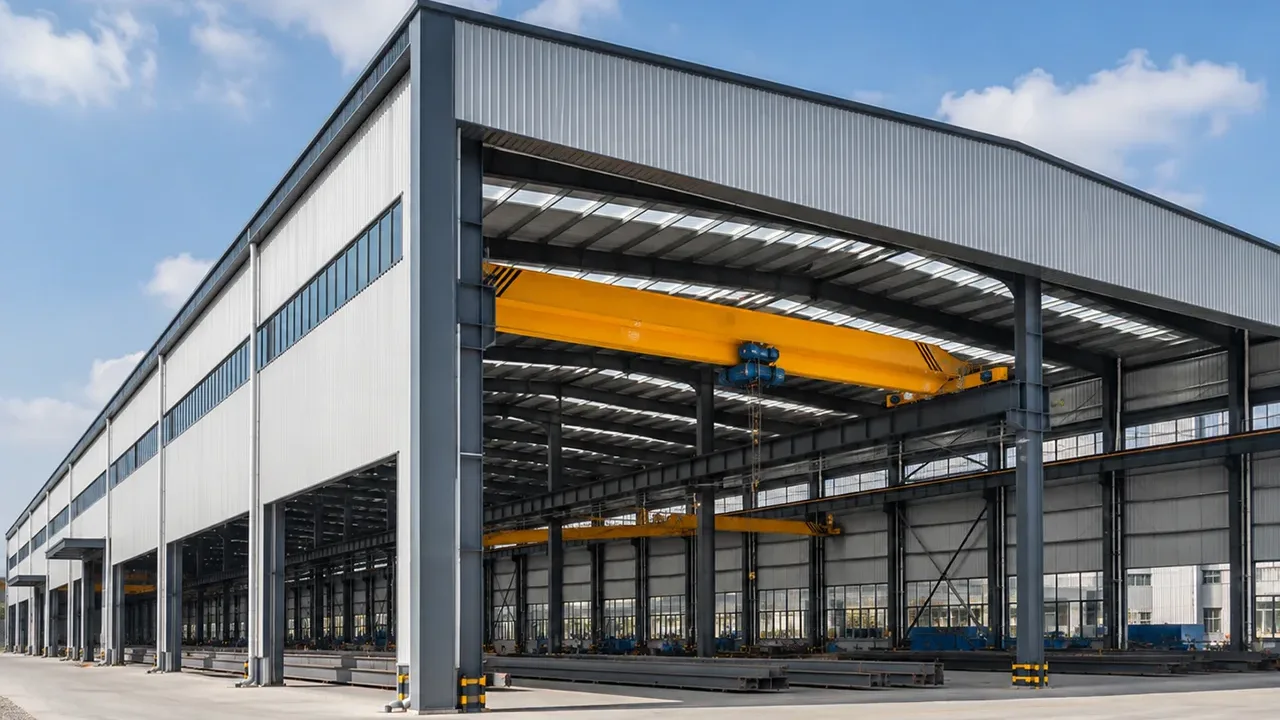
Every factory begins with a structural skeleton. In a steel structure facility, this skeleton consists of columns, beams, and roof framing arranged along defined grid lines. These grid lines determine the rhythm of bays, the positioning of structural supports, and the clear spans available for production.
When factory column grid optimization is ignored during early engineering, production teams are forced to adapt their equipment layout around fixed column locations. This often leads to compromised bay spacing, inefficient workflow routes, and unnecessary material handling complexity.
However, when factory column grid optimization is approached strategically, the column layout becomes a tool for enhancing production flow rather than restricting it. The result is a factory building that supports long-term efficiency rather than limiting it.
Understanding the Basics of Factory Column Grid Optimization

What Is a Column Grid in Industrial Buildings?
A column grid refers to the systematic layout of structural columns arranged along intersecting grid lines. These grid lines define the spacing between columns, known as bay spacing, and determine the span length of beams.
In steel industrial buildings, column grids typically follow rectangular patterns, although customized layouts may be used depending on equipment layout requirements. The distance between columns directly affects:
- Structural load distribution
- Beam sizing and steel tonnage
- Clear floor space availability
- Overhead crane alignment
Effective factory column grid optimization requires balancing structural efficiency with operational functionality.
The Relationship Between Bay Spacing and Production Flow
Bay spacing is more than a structural measurement — it defines usable production modules. If bay spacing is too narrow, columns interfere with machinery and forklift circulation. If bay spacing is too wide, structural members become heavier and more expensive.
Optimized bay spacing ensures that:
- Production lines align with structural bays
- Equipment layout remains uninterrupted
- Material handling routes remain straight and efficient
- Future expansion can follow a modular rhythm
In essence, factory column grid optimization aligns structural rhythm with production rhythm.
The Hidden Cost of Poor Column Grid Planning
Equipment Layout Constraints
One of the most common consequences of weak factory column grid optimization is conflict between structural columns and production machinery. Large fabrication equipment, stamping machines, or robotic arms often require clear zones that may not align with structural supports.
When columns obstruct machine placement, factories must:
- Relocate machines away from optimal positions
- Introduce inefficient circulation routes
- Modify equipment foundations
- Accept long-term operational compromises
This disconnect between structural planning and equipment layout reduces overall productivity.
Production Bottlenecks Caused by Structural Obstruction
Columns positioned without considering logistics movement can create invisible bottlenecks. Forklifts require sufficient turning radius, conveyors require straight alignment, and overhead cranes require uninterrupted runway paths.
Poor factory column grid optimization may result in:
- Blocked material flow corridors
- Reduced crane lifting efficiency
- Congested storage zones
- Increased internal transport time
Over time, these inefficiencies accumulate into significant hidden operational costs.
Long-Term Operational Rigidity
Factories evolve. Production volumes increase, machinery is upgraded, and automation systems are introduced. If initial factory column grid optimization was neglected, future modifications become expensive.
Structural retrofits in steel factories may involve:
- Column relocation (complex and costly)
- Beam reinforcement
- Temporary production shutdown
- Reconfiguration of utility systems
Good grid planning protects against these risks.
Key Engineering Principles Behind Factory Column Grid Optimization
Span Length vs Structural Cost Balance
Longer spans reduce the number of columns but require deeper beams and increased steel tonnage. Shorter spans reduce beam weight but introduce more columns, potentially interfering with equipment layout.
Factory column grid optimization seeks a cost-performance balance between:
- Steel consumption
- Fabrication complexity
- Usable floor space
- Production efficiency
The most economical structural solution is not always the most productive operational solution.
Load Path Efficiency in Steel Factory Structures
In a steel structure factory, structural loads include:
- Dead loads (structure weight)
- Live loads (equipment and personnel)
- Crane loads
- Dynamic vibration loads
Optimized column placement ensures efficient load transfer while maintaining open production areas. This dual requirement makes factory column grid optimization both a structural and operational challenge.
Modular Grid Planning for Scalable Production
Modern factories benefit from modular planning. Repeating bay modules allow future expansion without disrupting existing operations.
When factory column grid optimization integrates modular expansion logic, future production lines can be added seamlessly by extending grid lines.
Optimizing Bay Spacing for Different Production Line Types
Assembly Line Manufacturing
In assembly-based manufacturing environments, production follows a linear flow. Machinery, workstations, and inspection zones are typically arranged in sequential order. In such cases, factory column grid optimization must prioritize uninterrupted longitudinal alignment.
Optimized bay spacing in assembly factories ensures:
- Straight production flow without column interference
- Clear aisle corridors for material transfer
- Balanced structural spans across repetitive modules
- Predictable expansion along the same grid axis
When factory column grid optimization aligns with assembly logic, the building becomes an extension of the production line rather than an obstacle to it.
Heavy Fabrication Workshops
Heavy fabrication facilities, such as steel processing plants, require wider spans and stronger crane systems. Here, factory column grid optimization focuses on maximizing open floor areas to accommodate oversized components and lifting operations.
Key considerations include:
- Wide bay spacing for crane maneuverability
- Minimal internal columns in lifting zones
- Reinforced structural frames for dynamic crane loads
- Clear load paths for heavy equipment foundations
In heavy industrial environments, poorly executed factory column grid optimization can severely limit operational capacity and safety performance.
Automated Smart Factories
Automation introduces new constraints. Robotics, AGVs (Automated Guided Vehicles), and conveyor systems require precision alignment and predictable circulation paths.
Effective factory column grid optimization in automated facilities must consider:
- Robot reach envelopes
- Cable tray routing
- Sensor and control system integration
- Future reprogramming flexibility
Smart factories depend on spatial precision, making grid optimization more important than ever.
Equipment Layout Integration in Structural Grid Planning
Coordinating Structural Engineers with Production Engineers
True factory column grid optimization begins before structural drawings are finalized. Production engineers must define equipment layout, machine footprints, maintenance clearances, and logistics routes first.
The structural grid should then be aligned to support those requirements. Reversing this sequence leads to costly adjustments and inefficiencies.
Clear Height and Column Position Alignment
Column placement affects not only floor layout but also vertical clearance. Overhead cranes require precise runway alignment, and tall equipment may demand localized clear height adjustments.
Optimized factory column grid optimization integrates:
- Column spacing with crane runway beams
- Clear height zoning
- Roof slope coordination
- Future mezzanine integration
Avoiding Structural Conflicts in Process Plants
Process-heavy facilities often include pipe racks, vertical shafts, and utility corridors. If factory column grid optimization does not account for these systems early, conflicts arise between structural members and process routing.
Preventive coordination reduces rework and installation delays.
Structural Optimization vs Production Optimization — Finding the Balance
Pure Structural Efficiency Approach
From a purely structural standpoint, uniform grid spacing and repetitive beam systems reduce fabrication cost and simplify erection. However, excessive focus on steel tonnage minimization may undermine operational efficiency.
Production-Driven Grid Optimization
A production-driven approach prioritizes machine clusters, logistics flow, and value-generating zones. In this scenario, factory column grid optimization may require variable bay spacing and column-free zones in critical areas.
Hybrid Optimization Strategy
The most effective strategy combines structural efficiency with operational logic. Hybrid factory column grid optimization uses zoning principles:
- Wide spans in high-value production zones
- Standardized spacing in storage or auxiliary areas
- Expansion-ready grid alignment
- Balanced steel consumption
This balanced model delivers both cost control and productivity enhancement.
Digital Tools for Factory Column Grid Optimization
BIM Integration in Industrial Design
Building Information Modeling (BIM) enables simulation-based factory column grid optimization. Engineers can test equipment layout against structural frames in 3D before fabrication begins.
BIM tools allow:
- Clash detection
- Workflow simulation
- Crane clearance verification
- Expansion modeling
This predictive capability significantly reduces risk.
Production Simulation Before Construction
Advanced factories now use throughput modeling and digital twin simulations. By integrating these tools into factory column grid optimization, companies validate production efficiency before the building is even constructed.
Case Scenarios of Factory Column Grid Optimization
Scenario 1 — Retrofitting a Poorly Planned Steel Factory
A factory originally designed with narrow bay spacing later installed larger equipment. Columns obstructed workflow, forcing production relocation. Structural reinforcement and downtime costs exceeded initial construction savings.
This scenario highlights the long-term consequences of inadequate factory column grid optimization.
Scenario 2 — Greenfield Steel Structure Planning
In a newly planned facility, equipment layout was finalized first. Structural engineers then optimized the column grid accordingly. The result was efficient bay spacing, clear logistics corridors, and future expansion capability.
This proactive factory column grid optimization reduced lifecycle costs and improved operational output.
Why Column Grid Optimization Matters More in Steel Structures
Steel structures provide flexibility that concrete buildings cannot easily match. Long spans, modular expansion, and lighter structural systems allow precise adjustments.
Because steel buildings are adaptable, factory column grid optimization becomes a powerful design lever. Engineers can fine-tune bay spacing, align equipment layout, and support crane systems without excessive structural compromise.
Practical Guidelines for Factory Column Grid Optimization
Early Coordination Checklist
- Complete equipment list with dimensions
- Future capacity targets
- Crane system requirements
- Logistics flow diagrams
- Utility routing plans
Recommended Bay Spacing Ranges
While each project varies, general guidance for factory column grid optimization includes:
- Light industry: 6–8 meters bay spacing
- Medium fabrication: 8–10 meters bay spacing
- Heavy fabrication: 10–15 meters or more
These values must always be validated against equipment layout and structural load conditions.
Future Expansion Planning Rules
Factories rarely remain static. Effective factory column grid optimization includes expansion-ready alignment:
- Reserve expansion bays
- Maintain structural continuity
- Plan utility extension routes
- Preserve crane runway alignment
Conclusion — Structural Decisions That Shape Production Performance
Factory performance is shaped long before production begins. Column placement, bay spacing, and structural alignment determine whether equipment layout operates smoothly or struggles against physical constraints.
Factory column grid optimization transforms structural design from a passive framework into an active production enabler. By aligning bay spacing with equipment layout, integrating structural and operational planning, and leveraging digital simulation tools, industrial facilities achieve higher efficiency, scalability, and long-term value.
In modern steel industrial construction, optimizing the column grid is not optional — it is foundational. The factories that perform best are those whose structure was designed around production logic from day one.