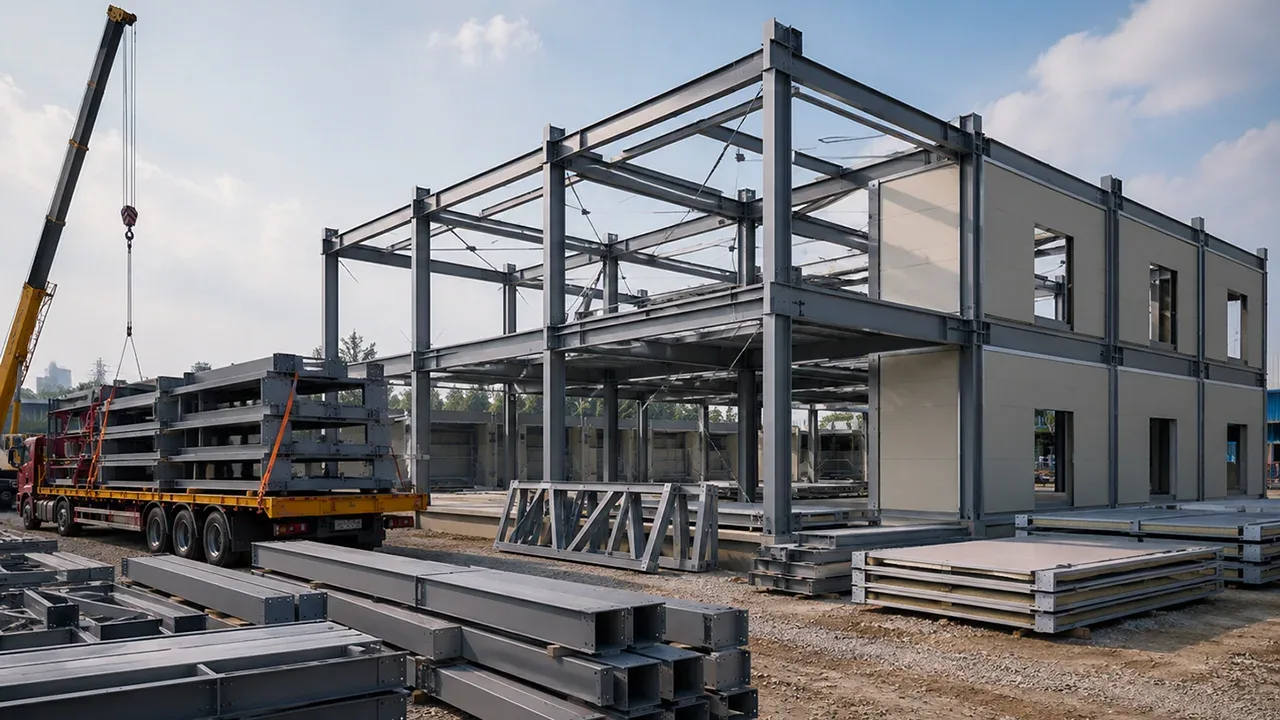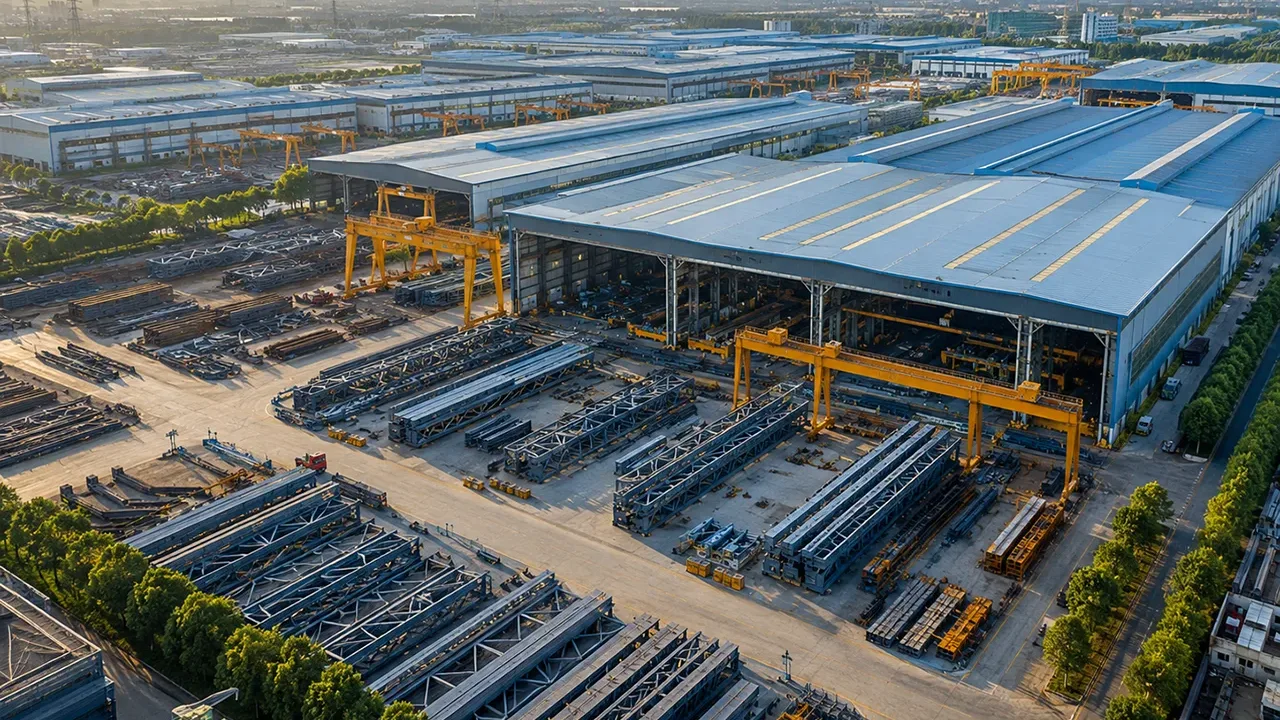
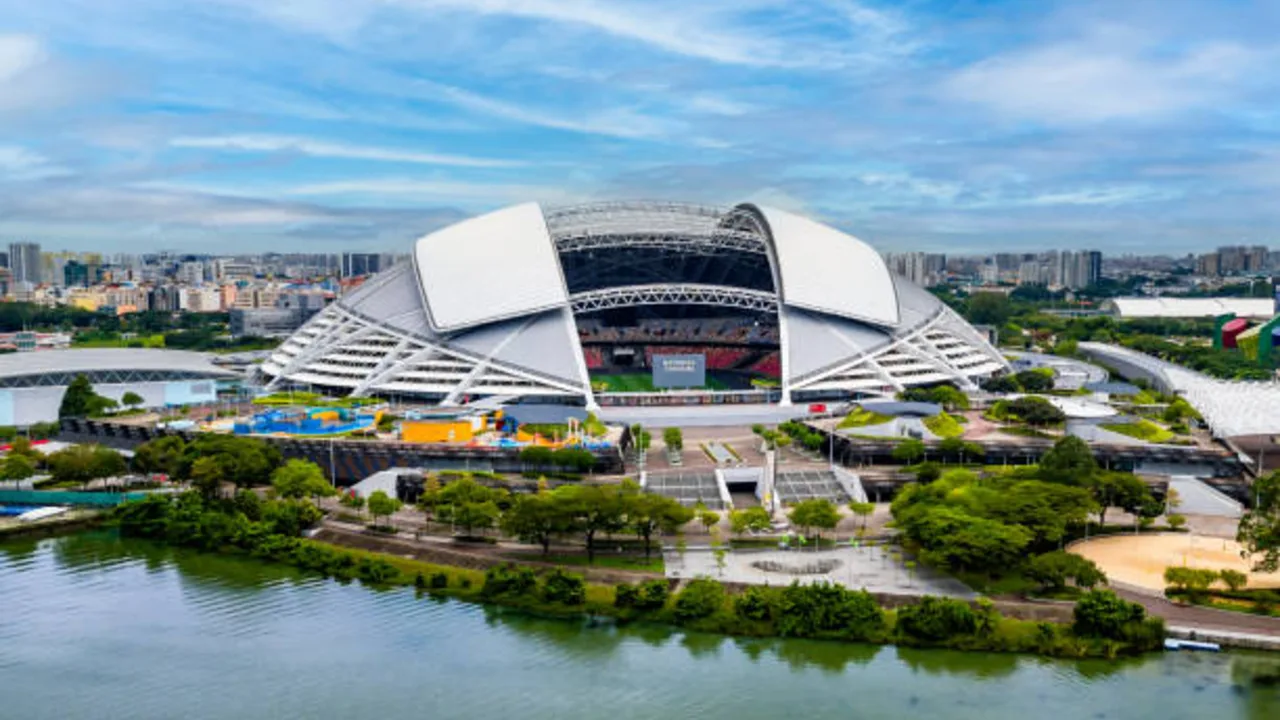
A steel dome for stadiums is not only a roof shape. It is a structural strategy for covering large public venues where visibility, safety, weather protection, acoustics, equipment support, and architectural identity all matter at the same time. Stadium roofing must protect people and facilities while keeping the interior space open, flexible, and suitable for large crowds. That makes the roof one of the most demanding parts of the entire building.
Unlike small commercial roofs, stadium roofs often need to span over seating areas, circulation zones, playing surfaces, service platforms, lighting systems, speaker systems, scoreboards, catwalks, smoke control equipment, and maintenance routes. The structure must be strong enough to resist vertical loads and wind uplift, but it must also be efficient enough to avoid unnecessary weight. It must be buildable, inspectable, and coordinated with the stadium’s long-term operation.
Steel works well for this type of public venue roofing because it combines high strength, precise fabrication, flexible geometry, and reliable connection detailing. A dome form can help distribute loads across multiple directions, while steel members, trusses, rings, nodes, and bracing can be designed to support wide-span roof performance. When planned correctly, a steel dome roof can give a stadium both structural strength and a memorable architectural presence.
However, a stadium dome is not successful just because it looks impressive. The roof must be designed as a complete system. Geometry, load path, member layout, connection accuracy, cladding, drainage, fabrication, erection sequence, and maintenance access all need to work together. When these parts are coordinated early, a stadium roof becomes easier to fabricate, install, inspect, and operate over time.
Why Stadium Roofs Need a Different Structural Approach
Stadium roofs are different from ordinary building roofs because they must serve a large public function. They do not simply cover a rectangular floor area. They must respond to seating bowl geometry, crowd movement, event visibility, roof-mounted services, large-span requirements, safety regulations, and long-term maintenance. The roof is both a structural system and a public experience feature.
A stadium roof often needs to protect spectators from sun, rain, and wind while keeping the playing area, seating rows, walkways, entrances, and service zones clear. Internal columns are usually limited because they can block views or interrupt movement. The roof structure must therefore carry loads across long distances and deliver them safely to the supporting frame, ring beams, columns, or perimeter structure.
This is why stadium roofing usually requires a more advanced structural approach. A simple flat roof system may not provide the right combination of span, stiffness, shape, and visual effect. A dome roof can solve several of these challenges by using curved geometry and multi-directional load transfer. When steel is used, the roof can be fabricated into accurate members and assembled into a strong, controlled large-span system.
Clear Sightlines and Open Interior Space
Sightline control is one of the most important reasons stadiums need long-span roof systems. Spectators must be able to see the field, court, track, stage, or event area without structural obstructions. If columns are placed inside the wrong zones, they can reduce ticket value, affect the viewing experience, and limit how the venue can be used.
A steel dome roof helps reduce the need for internal columns by transferring roof loads toward the perimeter or major support points. This keeps the seating bowl more open and allows the venue to maintain better visibility. For sports facilities, concert venues, and multipurpose arenas, this open interior space is a major functional advantage.
Open space also supports flexibility. A stadium may host football, athletics, concerts, ceremonies, exhibitions, or community events. The fewer structural interruptions inside the venue, the easier it is to adapt the space for different layouts and event requirements.
Large Public Loads and Building Services
A stadium roof supports more than its own weight. It may carry lighting rigs, speakers, scoreboards, display screens, camera platforms, maintenance walkways, smoke control equipment, ducts, pipes, ceiling panels, acoustic treatments, and access systems. These loads must be considered during roof design, not added as an afterthought.
Public safety also increases the importance of serviceability. A stadium roof must remain stable under wind, rain, temperature changes, maintenance loads, and possible crowd-related operational demands. Excessive movement can affect cladding, drainage, suspended equipment, lighting alignment, acoustic systems, or user comfort.
Steel is useful because it can be engineered for both strength and predictable behavior. Members can be sized, connected, and braced to support roof loads while keeping the structure practical for fabrication and installation. For large public venues, this predictability is just as important as raw strength.
Architectural Identity
Stadiums are often landmark buildings. Their roofs are visible from long distances and frequently become part of the venue’s identity. A dome roof can create a strong visual form while also solving a technical problem. It can express openness, strength, modern construction, and civic importance.
The challenge is that architecture and structure must support each other. A dramatic roof shape can become costly or difficult if it does not match structural logic. A successful steel dome for stadiums balances appearance with load transfer, member repetition, connection access, cladding layout, drainage, and erection planning.
When the architectural form is developed together with the structural system, the dome becomes more than a visual symbol. It becomes a practical roof solution that supports the venue’s performance, safety, and long-term value.
What Makes a Steel Dome Suitable for Stadiums
A stadium dome roof must cover large areas while staying stable, buildable, and maintainable. Steel is suitable because it can be formed into ribs, trusses, arches, rings, space frame elements, and hybrid systems. These elements can work with the curved geometry of a dome to transfer loads across the roof and into the supporting structure below.
A steel dome for stadiums may use different structural layouts depending on the venue. Some roofs use radial ribs and circumferential rings. Others use deep steel trusses or space frame systems. Some combine dome geometry with partial roof coverage, cantilevered edges, or architectural cladding. The best solution depends on the seating bowl, roof span, local wind conditions, cladding system, fabrication capacity, and installation method.
The advantage of steel is that it supports both structural performance and construction control. Members can be fabricated according to shop drawings, marked for assembly, transported in planned segments, and installed according to a defined erection sequence. This makes steel practical for complex stadium roofs where many components must meet accurately in three-dimensional space.
Curved Geometry and Load Distribution
Dome geometry helps distribute loads through curved and multi-directional paths. Instead of relying only on straight beams spanning in one direction, a dome roof can use radial members, circumferential rings, diagonal bracing, trusses, or space frame grids to spread forces across the roof surface.
This load distribution can be efficient for large stadium roofs. Vertical loads can move through ribs or trusses toward support zones. Wind loads can be resisted through bracing, rings, cladding supports, and base connections. The curved form can help the roof behave as a connected system rather than a group of isolated beams.
However, geometry only works when it is properly engineered. The ring members, nodes, supports, and bracing must be coordinated. If the load path is unclear, the roof may experience excessive deflection, connection stress, or difficult installation. A dome form gives the project potential, but engineering turns that potential into performance.
Steel Strength for Long Spans
Stadium roofs often require long spans because the seating and event areas must remain open. Steel provides high strength relative to its weight, making it suitable for roofs that need to cover wide spaces without becoming too heavy. This helps reduce demand on the supporting columns, ring beams, foundations, and erection equipment.
Steel can also be shaped into different structural forms. For some stadiums, steel ribs may provide a clean and readable dome structure. For others, trusses may be needed to increase stiffness. In very large or complex roofs, a space frame may help distribute forces in multiple directions. This flexibility allows engineers to select a system that fits the project’s span, roof rise, loads, and architectural goals.
A strong roof does not mean using the maximum amount of steel. It means using steel intelligently. Member sizes, spacing, connection types, bracing, and secondary supports should be optimized so the roof performs safely without unnecessary material waste.
Controlled Fabrication and Accurate Assembly
Stadium dome roofs require high accuracy because many steel members connect at different angles. A small fabrication error can affect several surrounding members, especially near nodes, rings, or crown zones. Steel fabrication helps control these risks before the structure reaches the site.
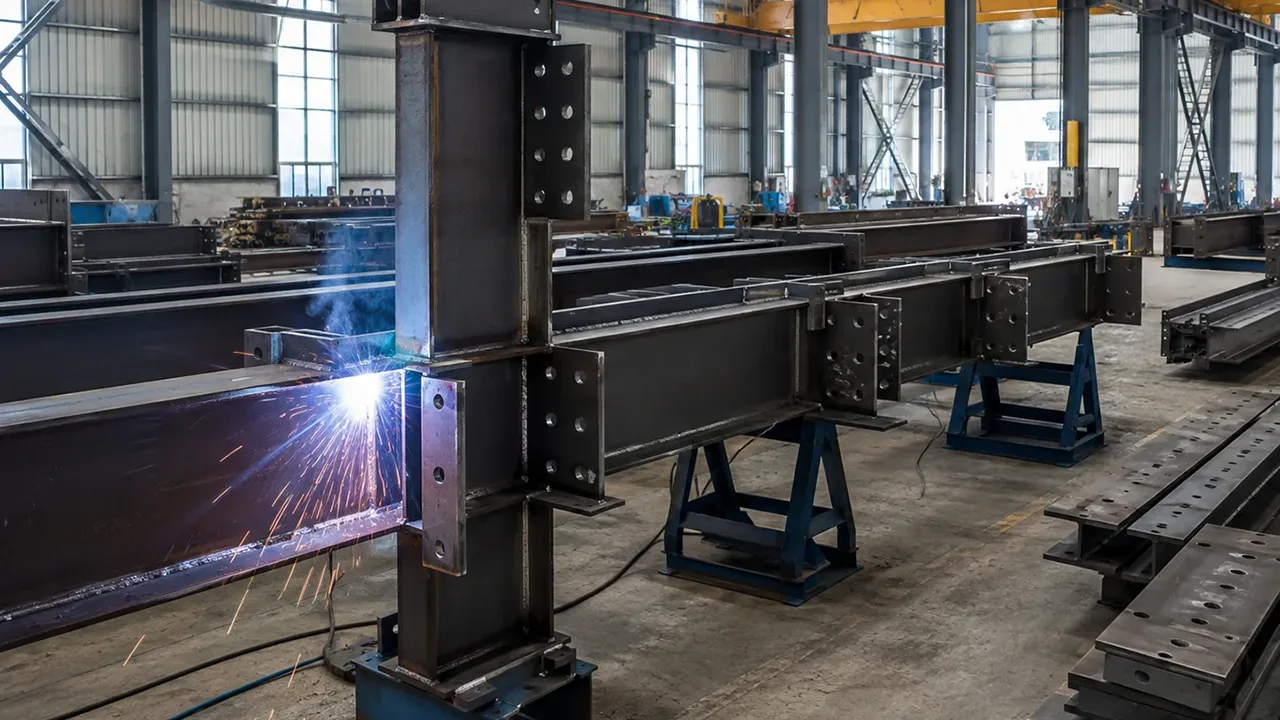
In a controlled workshop, members can be cut, drilled, welded, coated, marked, and inspected according to approved shop drawings. Complex node assemblies can be prepared in advance. Critical sections can be trial assembled when needed. This improves dimensional accuracy and reduces the chance of major rework during installation.
Accurate assembly is especially important for stadium projects because delays can affect large construction schedules. If roof members do not align, the project may face crane delays, safety concerns, additional welding, forced fitting, or cladding problems. Good fabrication planning helps the erection sequence move more smoothly.
Structural Benefits of Steel Dome Roofing for Stadiums
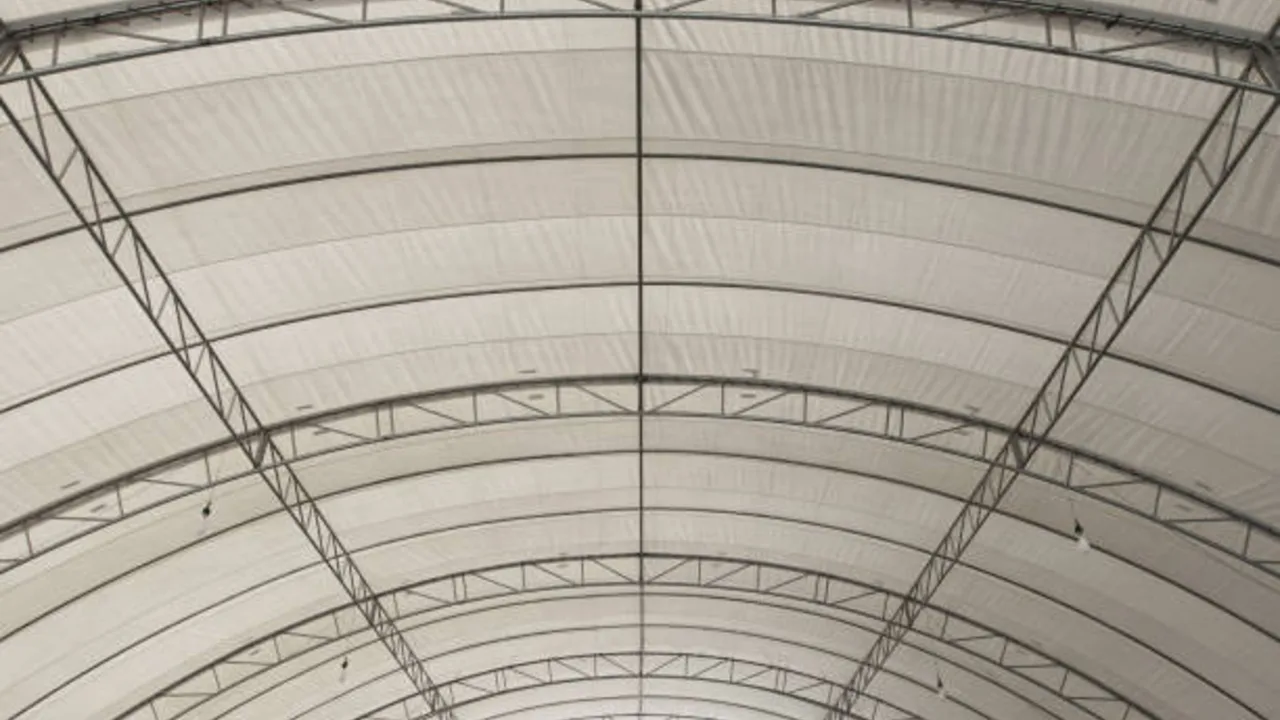
A steel dome roof offers several structural benefits for stadiums and large public venues. These benefits come from the combination of steel strength, dome geometry, engineered connections, and controlled fabrication. When the system is designed correctly, it can support wide roof coverage, reduce internal obstructions, resist wind effects, and provide a durable framework for cladding and building services.
Fewer Columns, Better Visibility
One of the most important advantages of a stadium dome is the ability to reduce internal columns. Stadiums rely heavily on visibility. Spectators expect clear views from different seating levels, and event operators need flexible space for sports, concerts, ceremonies, and special events. Too many internal supports can reduce the quality and value of the venue.
A steel dome roof can transfer loads toward the perimeter, reducing the need for supports inside the seating or event area. This helps protect sightlines and improves the user experience. It also gives architects and planners more freedom when arranging seating bowls, circulation routes, entrances, and service areas.
For large public venues, clear space is not only about appearance. It affects ticketing, crowd movement, emergency access, event flexibility, and long-term commercial use. A well-designed dome roof supports all of these functions by keeping the main interior volume open.
Strong Resistance to Wind and Uplift
Stadium roofs are exposed to wind from many directions. Curved roof surfaces can experience pressure in some zones and suction in others. Edges, openings, roof transitions, and high points can be especially sensitive. If wind uplift is underestimated, the roof may face cladding damage, connection stress, vibration, or long-term serviceability problems.
A steel dome roof can resist these forces when the system is properly engineered. Bracing, rings, purlins, nodes, base connections, and cladding fasteners must all work together. The roof should not be designed only for downward gravity loads. It must also resist forces that try to lift, twist, or shift parts of the structure.
This is one reason connection design matters so much. A strong member does not help if the connection cannot transfer wind forces safely. Stadium roof design must treat wind resistance as a complete system issue, not just as a member-sizing calculation.
Efficient Use of Steel
Efficiency in a stadium roof does not mean using the least possible steel. It means using the right amount of steel in the right layout. A dome roof can distribute loads through curved geometry, repeated members, rings, trusses, or space frame action. This allows the structure to support large areas without relying on overly heavy individual elements.
Repeated components can also improve fabrication efficiency. If the roof design uses consistent member lengths, node types, and connection details where possible, the workshop can produce components more predictably. Site teams can also assemble the structure more efficiently because the system becomes easier to understand and sequence.
For a public venue, efficient steel use affects more than material cost. It can reduce foundation demand, simplify transport, improve erection planning, and support long-term maintenance. The best stadium roofs balance strength, stiffness, weight, fabrication logic, and installation safety.
Stadium Roof Systems That Can Use Steel Dome Logic
Not every stadium dome uses the same structural system. The best roof type depends on the span, roof height, architectural intent, equipment loads, cladding system, fabrication capacity, transport limits, and erection method. Some stadiums need a simple and readable dome form, while others require a more complex roof system to support large spans and many suspended services.
| System Type | Best Stadium Use | Main Design Concern |
|---|---|---|
| Ribbed steel dome roof | Medium to large stadium roofs with clear radial geometry | Rib spacing, ring forces, roof cladding support, and erection sequence |
| Steel truss dome roof | Large venues with heavier roof loads or longer spans | Truss depth, node detailing, transport segmentation, and crane planning |
| Space frame dome roof | Large public venues requiring multi-directional load distribution | Node accuracy, member marking, geometric control, and assembly sequence |
| Hybrid stadium dome roof | Custom stadiums with special architectural or equipment requirements | Coordination between ribs, trusses, rings, space frames, and roof envelope |
| Partially covered steel dome roof | Open-air stadiums where seating protection is prioritized | Edge uplift, drainage, cladding transitions, and perimeter support design |
Ribbed Steel Dome Roofs
A ribbed steel dome roof uses main steel ribs that follow the curved shape of the dome. These ribs usually run from the perimeter toward the top or crown area, while secondary members support the roof cladding between them. This system can be effective when the stadium roof has a clear radial layout and moderate complexity.
The main design concerns include rib spacing, ring action, bracing, support conditions, and cladding layout. If the ribs are too far apart, the secondary roof system may become inefficient. If the ring members are not properly designed, horizontal forces may not be controlled. A ribbed system works best when the dome geometry, load transfer, and roof envelope are developed together.
Space Frame Dome Roofs
A space frame dome roof uses a three-dimensional grid of steel members to distribute loads in multiple directions. This type of system is useful for large public venues because it can combine wide coverage with structural efficiency. Many stadiums, terminals, exhibition halls, and arenas use space frame logic when the roof must span a large area and support complex loads.
Because many members meet at engineered nodes, precision is essential. Node geometry, bolt positions, member lengths, assembly marks, and erection sequence must be controlled carefully. A space frame can perform very well, but it can also become difficult to install if the component marking or node accuracy is weak.
For stadiums, space frame dome roofs are often useful when the roof must carry lighting, acoustic elements, catwalks, and service systems while maintaining a large open volume below.
Hybrid Stadium Dome Roofs
A hybrid stadium dome roof combines different structural systems. It may use ribs in one zone, trusses in another, ring members at the perimeter, and space frame components in high-load areas. This approach is useful when the roof must satisfy both architectural and engineering requirements that cannot be solved easily by one system alone.
Hybrid systems can be powerful, but they require careful coordination. Different structural systems may have different stiffness, connection details, fabrication needs, and erection sequences. If these differences are not planned early, the roof may face alignment problems, cladding conflicts, or complicated site assembly.
A hybrid roof works best when the design team treats the stadium dome as one integrated system. Structure, roof envelope, services, fabrication, transport, and installation must be developed together from the early design stage.
Design Factors That Affect a Steel Dome for Stadiums
A steel stadium dome must be designed around more than span and roof shape. The roof has to work with seating geometry, wind behavior, cladding, drainage, suspended equipment, access routes, fabrication limits, transport size, and erection safety. When comparing different roof concepts, project teams should also study the broader steel dome advantages before finalizing the structural strategy.
The most successful stadium roofs are usually planned as complete systems. The primary steel frame, secondary supports, roof envelope, drainage path, service loads, maintenance access, and installation sequence should be coordinated before fabrication begins. If these decisions are delayed, the project may face redesign, site modification, cladding conflicts, or longer erection time.
Stadium Span and Roof Rise
The span of the stadium roof has a major effect on structural design. A larger span increases member forces, connection demand, deflection control requirements, crane planning, and foundation reactions. The roof rise also matters because the height of the dome affects how forces move through the structure.
A shallow dome can reduce the overall building height, but it may create higher horizontal thrust at the perimeter. This can increase demand on ring beams, support columns, and foundations. A higher dome may improve some load paths, but it can increase wind exposure, roof surface area, cladding quantity, and visual height.
The right geometry depends on the venue’s function. A football stadium, athletics venue, indoor arena, multipurpose public hall, or concert venue may each require different roof coverage. The roof should support the seating bowl, event layout, drainage strategy, sightlines, and architectural goal rather than being selected only for appearance.
Member Layout and Node Geometry
Member layout controls how forces move through the dome. A ribbed system may use radial members and ring beams. A truss dome may use deeper structural members to increase stiffness. A space frame dome may use multi-directional steel members that meet at engineered nodes. Each layout creates a different load path and different fabrication requirements.
Node geometry is especially important in stadium dome roofs because many members meet at different angles. If node plates, bolt holes, weld details, or member lengths are not coordinated accurately, installation can become difficult. Small dimensional errors may accumulate as the roof closes toward the crown or perimeter ring.
A good design should not only ask whether the members are strong enough. It should also ask whether the connections can be fabricated, transported, accessed, bolted, inspected, and maintained. For stadium projects, connection practicality is a major part of structural success.
Roof Cladding, Drainage, and Waterproofing
The roof envelope must be planned early. Stadium dome roofs often use metal panels, insulated panels, standing seam systems, membrane zones, skylight sections, translucent panels, or custom architectural cladding. Each system has different requirements for support spacing, curvature, fastening, thermal movement, waterproofing, and maintenance.
Drainage is also more complex on a curved roof than on a simple flat roof. Water flow depends on roof geometry, panel seams, gutters, valleys, roof edges, penetrations, and local slope changes. If drainage is not planned carefully, some areas may collect water or become vulnerable to leakage.
Waterproofing details are especially important around joints, roof penetrations, equipment supports, skylights, edge transitions, and maintenance openings. If the cladding system is selected after the steel structure is already finalized, the project may need extra secondary members, site drilling, support modifications, or expensive waterproofing adjustments.
Acoustics, Lighting, and Equipment Loads
Stadium roofs often carry many building systems. Lighting rigs, speakers, scoreboards, screens, cable trays, smoke control equipment, ventilation ducts, acoustic panels, catwalks, cameras, and service platforms may all connect to the roof structure. These loads must be included during early design.
Acoustics can also affect roof planning. A dome shape may reflect sound differently from a flat or folded roof. For sports and event venues, sound performance can influence ceiling panels, acoustic treatments, equipment placement, and interior finishes. These systems add weight and require coordination with the steel frame.
A steel dome for stadiums should therefore be designed not only as a weather cover, but as a support platform for the venue’s operation. The roof must carry structural loads, service loads, maintenance loads, and architectural systems without creating excessive movement or difficult access.
Fabrication and Construction Planning
Fabrication and construction planning are critical because a dome roof depends on geometry. A straight frame may allow more adjustment during installation, but a dome closes into a defined three-dimensional form. If members, nodes, rings, and supports are not controlled from the beginning, errors can accumulate across the roof.
For stadium projects, the fabrication plan should be connected to the erection plan. The size of transport segments, location of site connections, crane capacity, lifting sequence, temporary supports, and inspection checkpoints should all be considered before production begins. A roof that looks efficient in design can still become difficult if it is not practical to fabricate, transport, and install.
Shop Fabrication and Trial Assembly
Shop fabrication may include CNC cutting, drilling, welding, plate preparation, node fabrication, coating, component marking, and quality inspection. For a stadium dome, accuracy is essential because members often meet at complex angles and repeated nodes must align across large areas.
Clear shop drawings are the foundation of fabrication quality. They should show member marks, connection details, bolt positions, weld requirements, coating zones, assembly references, and inspection requirements. Fabricators should also understand which components are part of critical geometry zones, such as the crown, perimeter ring, major truss intersections, or high-load node groups.
Trial assembly may be useful for critical sections. The entire roof does not need to be assembled in the factory, but representative sections, complex nodes, or closure zones may be checked before shipment. This helps identify alignment problems before they become expensive site issues.
Transport Segmentation
A stadium dome roof is usually too large to transport as a complete unit. It must be divided into transportable parts such as ribs, truss sections, space frame modules, ring segments, node assemblies, purlin groups, or cladding support packages. The segmentation plan affects both fabrication and site erection.
Large segments can reduce the number of site connections, but they may require special transport, stronger lifting equipment, more storage space, and careful handling. Smaller components are easier to ship and store, but they may increase site connection work and installation time.
The best segmentation plan balances factory efficiency and site practicality. It should consider container size, truck routes, road restrictions, port handling, crane access, laydown areas, lifting weight, and the sequence in which the roof will be assembled.
Erection Stability and Crane Planning
A completed stadium dome may be stable, but a partially erected dome may not be. This is one of the most important construction risks. Temporary towers, bracing, cable supports, staged tightening, ground assembly, heavy lifting, or progressive installation may be required depending on the roof system.
Crane planning should match the roof geometry and segment weight. The team must consider lifting radius, lifting height, ground bearing capacity, site access, wind restrictions, storage zones, and safe working areas. Stadium sites can be crowded, especially when seating structures, concrete works, façade installation, and service systems are being built at the same time.
A safe erection plan should define how each segment is lifted, how it is temporarily supported, when it becomes stable, when bolts are tightened, when temporary supports are removed, and how geometry is checked during installation. Without this planning, the roof can face deformation, alignment difficulty, or safety risk.
Long-Term Performance and Maintenance
A stadium roof is a long-life public asset. It must perform not only during opening day, but through years of events, weather exposure, inspection cycles, repairs, upgrades, and maintenance work. Long-term performance depends on structural design, material protection, roof drainage, cladding quality, access planning, and serviceability control.
Steel is durable when it is properly protected and maintained. The roof design should include inspection access, coating repair plans, drainage maintenance, bolt and weld checking, cladding replacement strategy, and safe routes for workers. Maintenance should not be treated as a future problem. It should be part of the original design.
Corrosion Protection
Corrosion protection is especially important for stadium roofs because they are exposed to rain, humidity, temperature changes, pollution, and sometimes coastal or industrial environments. The coating system should be selected based on the project location, expected exposure, maintenance access, and design life.
Common protection methods may include primer systems, multi-coat paint systems, zinc-rich coatings, galvanizing, or project-specific protective treatments. The correct option depends on the steel members, connection details, fabrication sequence, transport conditions, and site touch-up requirements.
Coating damage can occur during transport, lifting, bolting, or cladding installation. For that reason, the project should include a clear repair procedure. Areas around bolts, welds, lifting marks, and site connections should be inspected and repaired before final handover.
Access for Inspection and Repairs
A stadium dome roof needs safe access for inspection, cleaning, waterproofing repair, lighting service, speaker maintenance, coating inspection, drainage clearing, and equipment replacement. If access routes are not planned, even simple maintenance tasks can become difficult and expensive.
Catwalks, roof hatches, anchor points, ladders, inspection platforms, and safe walking routes should be considered during design. These access systems may add loads to the roof and require coordination with the steel frame. They should not be added randomly after the roof is complete.
Good maintenance access also supports public safety. Stadiums host large crowds, so roof inspection and repair must be practical, repeatable, and safe. A well-designed access strategy helps the owner protect the building over its full service life.
Serviceability Over Time
A stadium dome roof must remain serviceable under normal use. This means controlling deflection, vibration, movement, cladding alignment, drainage behavior, and suspended equipment performance. A roof may be structurally safe but still create problems if it moves too much or causes roof systems to misalign.
Serviceability checks should consider the complete roof assembly. Steel members, purlins, cladding, fasteners, ceilings, lighting, acoustic panels, and maintenance systems all depend on stable geometry. If deflection is excessive, waterproofing joints may be stressed, roof panels may shift, and suspended systems may lose alignment.
Long-term performance also depends on monitoring. Stadium owners should maintain inspection records, repair logs, coating condition reports, drainage checks, and structural review notes. This helps identify small issues before they become major roof problems.
Common Mistakes in Stadium Steel Dome Projects
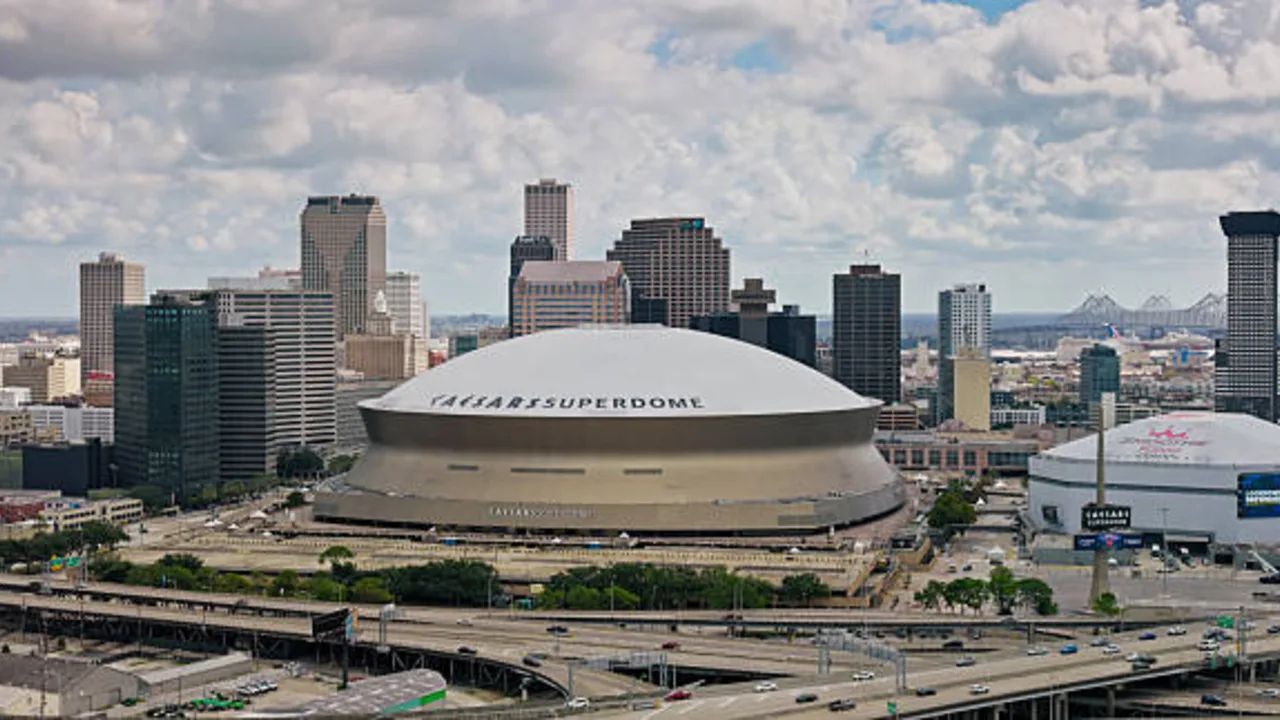
Steel dome stadium roofs can perform very well, but they are less forgiving when early planning is weak. Many problems come from treating the roof as a visual form instead of a complete structural, fabrication, installation, and maintenance system.
Choosing the Dome Shape Before Structural Review
A dome shape should not be selected only because it looks powerful or iconic. The geometry must match span, support conditions, load requirements, wind behavior, cladding system, fabrication capacity, and erection method. A visually attractive roof can become expensive or difficult if the structural logic is weak.
Early structural review helps confirm whether the selected dome form can be built efficiently and safely. It also helps avoid late changes that affect member layout, connection details, roof envelope, and support design.
Treating Cladding as a Late Decision
Roof cladding is not a finishing detail. It affects purlin spacing, waterproofing, drainage, panel layout, thermal movement, skylight positions, edge details, and maintenance access. If the cladding system is selected too late, the steel frame may not match the roof envelope requirements.
For stadium projects, cladding should be coordinated with the structural layout from the beginning. This reduces the risk of panel mismatch, leakage, additional secondary supports, and site modification.
Underestimating Wind Uplift
Wind uplift is a major design concern for stadium roofs. Curved surfaces, roof edges, openings, and high-exposure sites can create strong suction zones. If uplift is underestimated, the roof may face cladding failure, fastener problems, connection stress, or excessive movement.
The roof should be designed as a complete wind-resisting system. Cladding fasteners, purlins, bracing, rings, nodes, trusses, base connections, and support structures must all work together. Wind resistance should not be treated as an isolated calculation.
Ignoring Erection Stability
A dome roof may be stable when complete but unstable during partial construction. If erection stability is ignored, the project can face deformation, unsafe lifting conditions, difficult alignment, or delays. Temporary supports, staged assembly, lifting points, bracing, and inspection checkpoints should be planned before site work begins.
This is especially important for large stadium roofs because crane operations, public safety requirements, and construction schedules are often demanding. A strong final structure still needs a safe path to completion.
Forgetting Maintenance Access
Stadium roofs need long-term inspection and maintenance. If access routes are forgotten, future repairs can become difficult, unsafe, or costly. Lighting systems, speakers, drainage lines, roof joints, coatings, bolts, welds, and cladding panels may all need inspection over time.
Maintenance access should be built into the roof strategy. Safe routes, anchor points, catwalks, hatches, and inspection zones help the owner maintain the roof without disrupting operations or creating safety risks.
Conclusion: Steel Dome Stadium Roofs Work Best When Structure, Fabrication, and Venue Function Are Planned Together
A steel dome for stadiums works because it combines wide-span coverage, structural strength, efficient load distribution, fabrication precision, and architectural value. It can help public venues create open interior space, protect spectators, support building services, resist wind effects, and establish a strong visual identity.
The real value of steel is not only its strength. It is the ability to fabricate accurate members, control complex connections, divide the roof into transportable segments, and assemble the structure according to a planned erection sequence. For stadiums, this level of control is essential because the roof must serve both engineering performance and public venue function.
A stadium dome should never be treated as only a roof shape. It is a complete structural system. When geometry, member design, connections, cladding, drainage, fabrication, installation, and maintenance access are coordinated from the beginning, the roof becomes safer, stronger, easier to build, and more reliable over the long term.