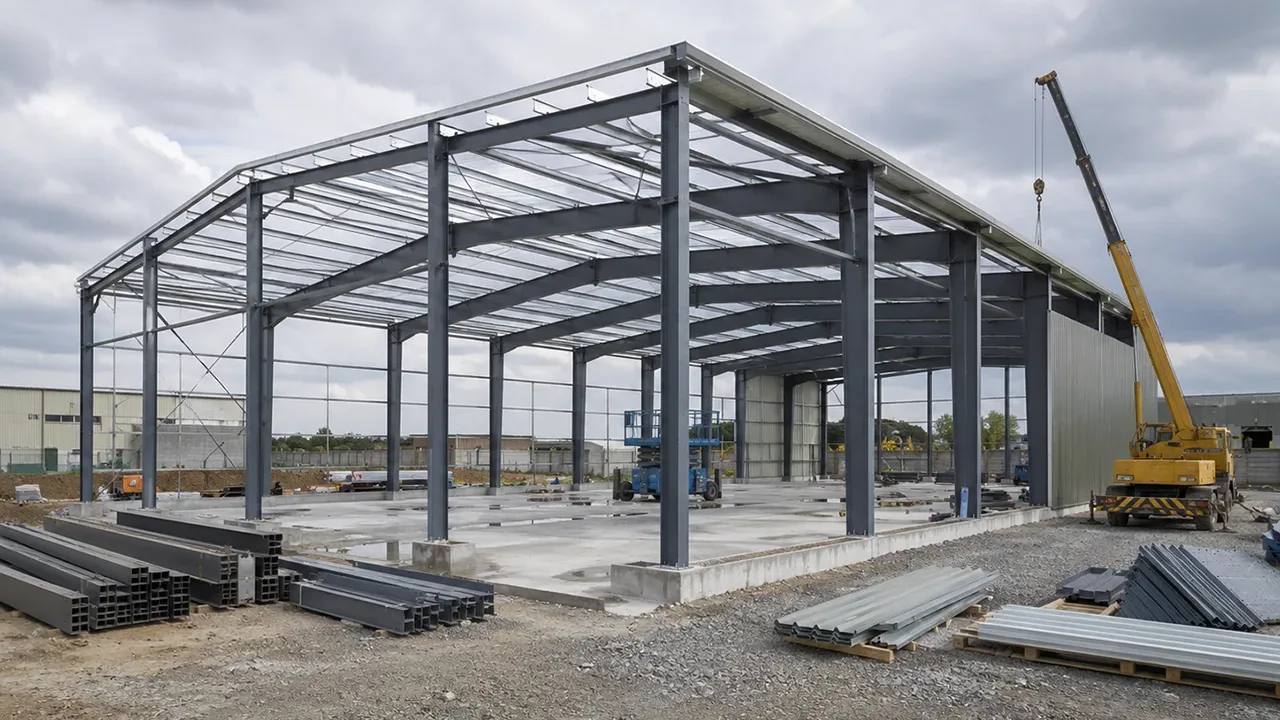
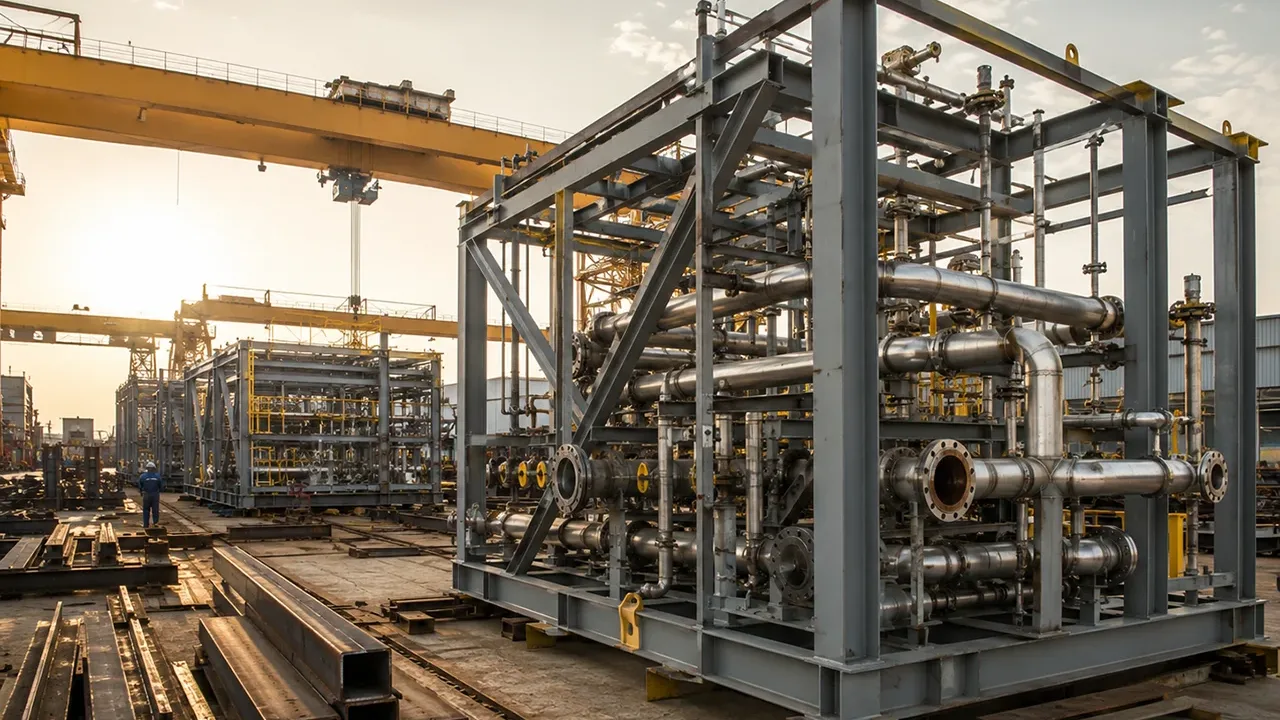
Selecting the correct steel material is one of the most critical decisions in structural engineering. The performance, safety, durability, and long-term cost efficiency of any framed structure depend heavily on proper steel grade selection for buildings. Whether designing industrial warehouses, commercial towers, logistics hubs, or infrastructure projects, engineers must carefully evaluate mechanical properties, environmental conditions, fabrication requirements, and code compliance before finalizing a steel grade.
Modern construction increasingly relies on engineered steel systems because of their strength-to-weight ratio, speed of installation, and scalability. However, not all steel grades perform equally in structural applications. A well-executed steel grade selection for buildings ensures optimal load-bearing capacity without unnecessary material overuse. Poor selection, on the other hand, can lead to structural inefficiency, higher fabrication costs, and potential long-term safety risks.
Two of the most widely used structural steel grades globally are Q355 and S355. While they share similar yield strength values, their standards, chemical compositions, and regional applications differ. Understanding how these grades compare is fundamental to proper steel grade selection for buildings, especially for international projects where compliance standards vary. In any steel structure building project, the steel grade directly influences frame performance and cost optimization.
Why Steel Grade Selection for Buildings Matters
Structural frames must safely support dead loads, live loads, wind forces, seismic activity, and environmental exposure. This is why steel grade selection for buildings plays a central role in engineering design. The yield strength of the selected steel determines how much stress the material can withstand before permanent deformation occurs. Choosing a lower-grade steel for a high-load project may compromise structural integrity, while over-specifying a higher grade can inflate costs unnecessarily.
Structural Safety and Load Performance
At the heart of steel grade selection for buildings is yield strength. For example, both Q355 and S355 provide a minimum yield strength of approximately 355 MPa, making them suitable for medium to high-load applications. However, structural engineers must evaluate more than just yield values. Tensile strength, elongation capacity, and ductility also impact how a building frame responds to dynamic loads such as earthquakes or heavy wind pressures.
In high-rise structures or long-span industrial facilities, the wrong steel grade can result in excessive deflection or instability. Therefore, steel grade selection for buildings must align precisely with structural calculations derived from load combinations defined in design codes.
Cost Efficiency and Material Optimization

Another major reason why steel grade selection for buildings matters is material optimization. Higher-strength steel allows designers to reduce section sizes and overall tonnage. This can lower foundation requirements, transportation costs, and installation time. However, stronger grades may also involve higher raw material costs or stricter fabrication controls.
For example, using S355 instead of a lower-grade steel may reduce beam weight in large-span structures. Conversely, over-specifying ultra-high-strength steel in a low-rise warehouse can lead to unnecessary expense. A balanced steel grade selection for buildings minimizes total lifecycle cost rather than simply reducing initial material price.
Compliance with International Standards
Construction projects must comply with regional standards such as ASTM (United States), EN (Europe), and GB (China). Effective steel grade selection for buildings requires understanding how equivalent grades align across these standards. Q355 is governed under Chinese GB/T standards, while S355 follows EN 10025 European standards.
For international contractors working on cross-border projects, selecting an equivalent grade that satisfies local regulatory requirements is crucial. Incorrect documentation or mismatched certification can delay approvals and inspections. Therefore, steel grade selection for buildings must consider regulatory compatibility from the earliest design stage.
Understanding Steel Grades Used in Structural Frames
A technical understanding of commonly used structural grades strengthens the decision-making process in steel grade selection for buildings. Among the most recognized grades worldwide are Q355 and S355, both widely adopted in industrial and commercial construction.
What Is Q355 Steel?
Q355 is a structural steel grade defined under Chinese GB/T standards. The “Q” stands for yield strength (“Qu” in Chinese terminology), and “355” represents the minimum yield strength of 355 MPa. Q355 steel is commonly used in industrial plants, warehouses, bridges, and heavy steel frame systems throughout Asia.
Because of its strong mechanical performance and cost competitiveness, Q355 is frequently chosen during steel grade selection for buildings in manufacturing facilities and large-span structures. Variants such as Q355B, Q355C, and Q355D provide different impact resistance levels depending on environmental temperature requirements.
What Is S355 Steel?
S355 steel is governed by the European EN 10025 standard. Similar to Q355, the “355” denotes minimum yield strength. S355 is widely used in Europe and international projects requiring EN compliance. It offers excellent weldability, good ductility, and strong fatigue resistance.
In global infrastructure projects, S355 is often specified in steel grade selection for buildings where European certification is required. Subgrades such as S355JR, S355J0, and S355J2 indicate different impact toughness characteristics at varying temperatures.
Comparing Q355 and S355
While Q355 and S355 share similar yield strength levels, their chemical composition ranges and certification frameworks differ. For engineers involved in steel grade selection for buildings, understanding these subtle distinctions is critical when sourcing materials internationally.
From a structural perspective, both grades perform similarly in standard building frames. However, fabrication standards, documentation requirements, and inspection processes may vary. This reinforces why steel grade selection for buildings must account not only for mechanical properties but also for supply chain logistics and certification compatibility.
Key Factors in Steel Grade Selection for Buildings
A successful steel grade selection for buildings requires a comprehensive evaluation of structural, environmental, and economic factors. Selecting steel is not merely about choosing a higher strength number. Instead, engineers must analyze how the material behaves under real-world conditions, how it will be fabricated, and how it interacts with the overall structural system.
Structural Load Requirements
The primary driver of steel grade selection for buildings is structural loading. Dead loads, live loads, wind forces, snow loads, and seismic effects must all be considered. High-rise buildings and long-span industrial facilities typically require higher yield strength to control deflection and structural stability.
For example, in heavy industrial workshops, selecting Q355 or S355 may allow for reduced beam size while maintaining structural safety. Proper steel grade selection for buildings ensures that the material can handle both static and dynamic forces without excessive deformation.
Environmental Conditions
Environmental exposure significantly impacts steel grade selection for buildings. Structures located in coastal regions face corrosion risks due to salt exposure. Cold climates demand impact-resistant subgrades, while high-temperature environments require evaluation of thermal expansion behavior.
For example, S355J2 provides improved toughness at lower temperatures compared to S355JR. In China, Q355D offers better impact resistance for colder climates. These variations highlight how steel grade selection for buildings must adapt to geographic conditions.
Fabrication and Welding Considerations
Weldability is another critical factor in steel grade selection for buildings. While higher-strength steel can reduce structural weight, it may require stricter welding procedures. Preheating requirements, heat-affected zone performance, and fabrication tolerances must be evaluated.
Poor consideration of welding compatibility can increase fabrication complexity and project cost. Therefore, steel grade selection for buildings must align with the manufacturing capabilities of the selected fabricator.
Availability and Supply Chain Stability
Material sourcing plays a practical role in steel grade selection for buildings. Certain grades are more readily available in specific regions. Q355 is widely stocked in Asian markets, while S355 is more common in Europe. International projects must balance certification requirements with procurement efficiency.
A strategic steel grade selection for buildings reduces lead time, prevents material shortages, and maintains construction schedules.
Steel Grade Selection for Buildings in Different Project Types
Industrial Buildings
Industrial warehouses and manufacturing plants often require large column spacing and heavy equipment support. In these cases, steel grade selection for buildings focuses on load-bearing efficiency and cost control. Using Q355 or S355 allows engineers to optimize structural members without overdesigning the frame.
Commercial and High-Rise Buildings
In commercial towers and office buildings, steel grade selection for buildings must consider vertical load transfer, lateral stability systems, and seismic resistance. Higher-strength grades can reduce column size, increasing usable floor space.
Careful steel grade selection for buildings in high-rise structures enhances both structural performance and architectural flexibility.
Infrastructure and Long-Span Projects
Bridges, airports, and stadium structures often demand higher performance standards. In such applications, steel grade selection for buildings involves fatigue resistance, cyclic loading performance, and durability under continuous stress conditions.
Both Q355 and S355 are commonly specified in large-span steel frames, but engineers must verify code equivalency during steel grade selection for buildings.
Engineering Considerations in Steel Grade Selection for Buildings
Yield Strength and Safety Factors
Structural design calculations rely heavily on yield strength. During steel grade selection for buildings, engineers apply safety factors to ensure that the material performs reliably under worst-case scenarios. Higher yield strength allows thinner sections, but design margins must always comply with building codes.
Seismic Design and Ductility
In seismic zones, steel grade selection for buildings must prioritize ductility and energy absorption. Materials with adequate elongation capacity reduce brittle failure risks. Subgrades with improved toughness are often preferred in earthquake-prone regions.
Fire Resistance Performance
Steel loses strength at elevated temperatures. Therefore, steel grade selection for buildings must consider fire protection strategies such as intumescent coatings or fire-resistant cladding systems. Proper protection ensures the structural frame maintains integrity during emergencies.
Cost Impact of Steel Grade Selection for Buildings
The financial impact of steel grade selection for buildings extends beyond raw material pricing. Stronger steel may reduce tonnage, lower transportation costs, and shorten erection time. However, it may also increase fabrication or inspection expenses.
Comparison Table: Q355 vs S355
| Property | Q355 | S355 |
|---|---|---|
| Standard | GB/T (China) | EN 10025 (Europe) |
| Minimum Yield Strength | ≥355 MPa | ≥355 MPa |
| Common Application | Industrial & Infrastructure (Asia) | Commercial & Infrastructure (Europe) |
| Impact Subgrades | B / C / D | JR / J0 / J2 |
| Global Availability | High in Asia | High in Europe |
This comparison illustrates that while mechanical strength is similar, certification and regional usage differ. Effective steel grade selection for buildings ensures regulatory compliance while maintaining cost efficiency.
Common Mistakes in Steel Grade Selection for Buildings
One common mistake in steel grade selection for buildings is over-specification. Engineers sometimes choose higher-strength steel than required, increasing project cost without structural benefit.
Another issue is ignoring fabrication compatibility. A poorly aligned steel grade selection for buildings can complicate welding procedures and delay production.
Failing to account for environmental exposure is also problematic. Proper steel grade selection for buildings must integrate corrosion protection and toughness requirements from the start.
Best Practices for Steel Grade Selection for Buildings

Best practice begins with early collaboration between structural engineers, fabricators, and procurement teams. A data-driven steel grade selection for buildings considers load calculations, lifecycle cost, and regional compliance simultaneously.
Lifecycle analysis is essential. Rather than focusing solely on upfront cost, strategic steel grade selection for buildings evaluates durability, maintenance needs, and long-term operational performance.
Conclusion
Choosing the right material is foundational to structural success. A precise steel grade selection for buildings ensures safety, cost optimization, regulatory compliance, and long-term durability. Whether using Q355 in Asian markets or S355 in European projects, engineers must balance mechanical performance with fabrication practicality.
Ultimately, effective steel grade selection for buildings is not about selecting the strongest steel available — it is about selecting the right steel for the right structural demand. When executed correctly, it strengthens the entire building frame and maximizes project value.