Choosing the right structural member is one of the most important decisions in any steel building structure. Among the most common options are hollow sections and I-beams. The comparison of hollow section vs i beam building systems is not merely academic — it directly influences strength, stability, fabrication efficiency, and overall project cost. Engineers must evaluate structural behavior, load distribution, and section efficiency before finalizing the optimal framing solution.
Both hollow sections and I-beams are widely used in industrial plants, warehouses, commercial buildings, and multi-story steel frames. While they may appear similar in function, their structural mechanics differ significantly. Understanding how each performs under compression, bending, and torsion is essential when designing a durable and cost-effective steel building structure.
Understanding Structural Profiles in Steel Buildings
What Is a Hollow Section?
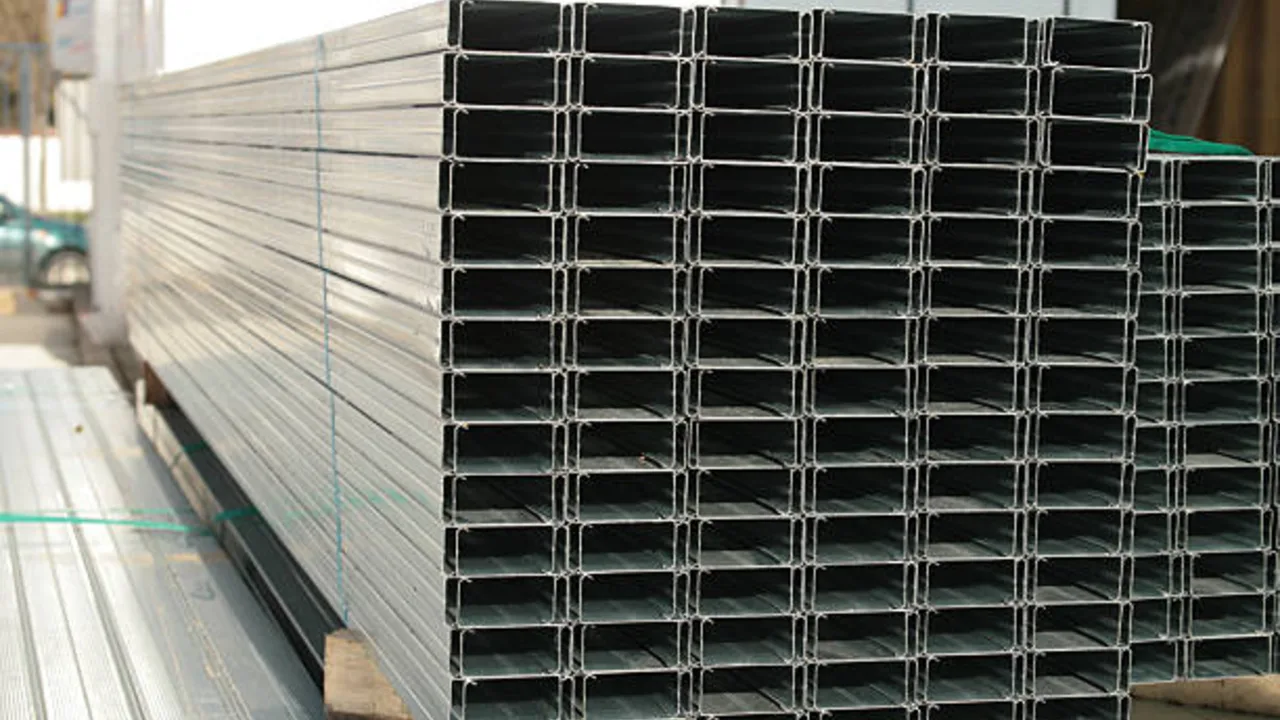
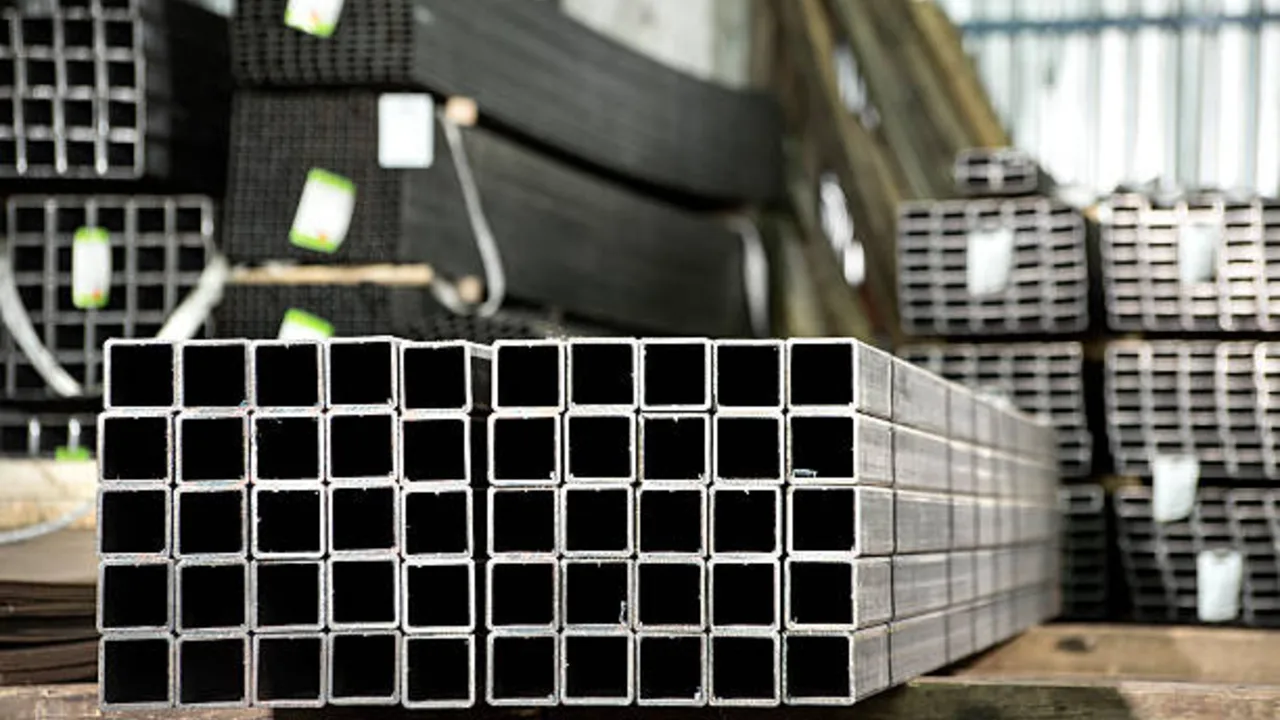
Hollow Structural Sections (HSS) are closed steel profiles that may be circular (CHS), square (SHS), or rectangular (RHS). These members are manufactured either through cold-forming or hot-finishing processes, resulting in a uniform wall thickness and a fully enclosed cross-section.
In a hollow section vs i beam building comparison, hollow sections are commonly used as columns, bracing members, truss components, and architectural features. Because they are closed sections, they provide uniform resistance in multiple directions, contributing to high section efficiency in compression members.
The geometric symmetry of hollow sections allows loads to distribute evenly across the profile. This balanced stress flow reduces localized weaknesses and enhances buckling resistance. For compression-dominated applications, hollow sections often deliver superior performance relative to their weight.
What Is an I-Beam?
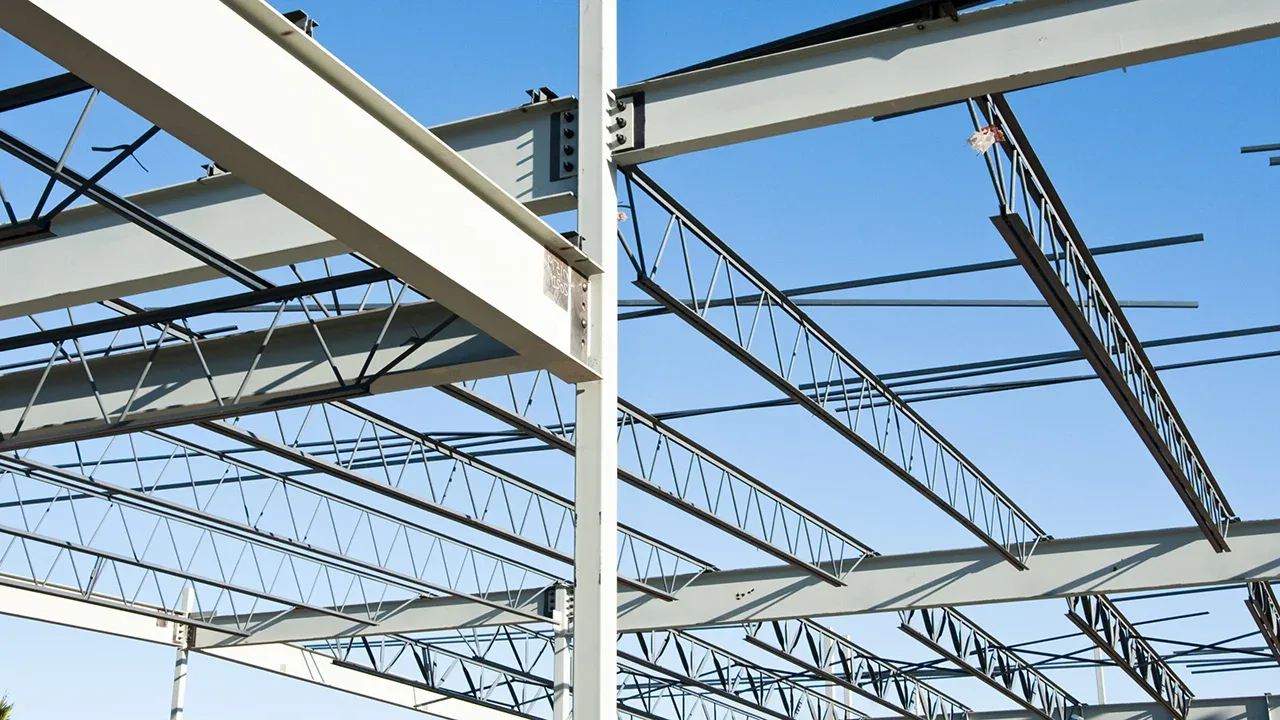
An I-beam, also known as a wide flange or universal beam, consists of two flanges connected by a vertical web. This open cross-section is specifically optimized to resist bending about its major axis. The majority of material is concentrated in the flanges, where bending stresses are highest.
In many hollow section vs i beam building discussions, I-beams are recognized for their exceptional bending performance. They are frequently used as primary beams, girders, floor framing members, and crane runway supports in steel building structure systems.
Because I-beams are hot-rolled in standardized sizes, they offer fabrication familiarity and predictable structural properties. Their geometry makes them particularly effective in applications dominated by flexural loads.
Structural Mechanics: Hollow Section vs I Beam Building Performance
Axial Load Performance
When evaluating hollow section vs i beam building systems for columns, axial load performance becomes a primary consideration. Hollow sections typically exhibit higher resistance to buckling due to their uniform cross-section and higher radius of gyration in both principal directions.
Closed shapes distribute compressive stresses evenly, minimizing weak axes. This improves stability and enhances section efficiency under axial loads. In tall steel building structure applications where columns must support significant vertical forces, hollow sections can provide optimized strength-to-weight ratios.
In contrast, I-beam columns possess distinct strong and weak axes. If not properly oriented, their weaker axis may govern design, requiring additional bracing or increased member size. While I-beams can perform effectively as columns, they may require careful detailing to achieve similar buckling resistance.
Bending Performance
Bending behavior is where I-beams excel. In a hollow section vs i beam building comparison, I-beams often outperform hollow sections in major-axis bending because their flanges are positioned far from the neutral axis. This maximizes moment of inertia and flexural capacity.
For long-span beams in warehouses or industrial facilities, I-beams deliver outstanding flexural performance with efficient material distribution. Their design naturally aligns with floor systems and roof framing, making them a logical choice in many steel building structure layouts.
Hollow sections can resist bending effectively, particularly rectangular hollow sections. However, for purely flexural members, the material distribution of an I-beam may offer superior section efficiency in bending-dominated applications.
Torsional Resistance
One of the clearest distinctions in hollow section vs i beam building performance lies in torsional resistance. Hollow sections, being closed profiles, provide significantly higher torsional stiffness. This makes them ideal for members subject to eccentric loads or twisting forces.
I-beams, as open sections, are more susceptible to torsional deformation and lateral-torsional buckling. In cases where torsion is significant, additional bracing or stiffening may be required when using I-beams in a steel building structure.
Section Efficiency and Material Utilization
The concept of section efficiency plays a central role in comparing hollow section vs i beam building systems. Section efficiency refers to how effectively a cross-section uses its material to resist applied loads.
Hollow sections often demonstrate excellent efficiency in compression and torsion due to their uniform geometry. Their higher radius of gyration reduces slenderness ratios, improving stability without increasing weight.
I-beams, on the other hand, are highly efficient in bending about their major axis. Their flanges concentrate material precisely where bending stresses are highest. In beam-dominated steel building structure systems, this targeted efficiency can reduce total steel tonnage.
The decision between hollow section and I-beam ultimately depends on which load effects dominate the design. Evaluating hollow section vs i beam building options requires a balanced understanding of load paths, stability requirements, and constructability considerations.
Connection Design and Fabrication Considerations
Connection detailing significantly influences the practicality of hollow section vs i beam building systems. Hollow section connections may require specialized welding techniques, particularly at truss nodes or complex intersections. Access to internal surfaces can be limited, requiring careful fabrication planning.
I-beams benefit from standardized connection details such as shear tabs, end plates, and moment connections. Their open geometry simplifies bolting and welding procedures, often reducing fabrication time in a steel building structure project.
For fabricators familiar with conventional beam-column framing, I-beam systems may provide greater workflow efficiency. However, in architecturally exposed applications, hollow sections can deliver cleaner aesthetics with competitive section efficiency.
To achieve optimal performance, many projects combine both systems strategically. In advanced steel building structure design, engineers may select hollow sections for columns and bracing while using I-beams for primary flexural members.
Authoritative design guidance from organizations such as the American Institute of Steel Construction provides detailed structural specifications for both profile types, ensuring safe and efficient implementation.
In Part 2, we will examine real-world project scenarios, cost implications, erection strategies, and long-term performance considerations that further clarify the hollow section vs i beam building decision process.
Construction and Erection Considerations
Beyond structural calculations, the comparison of hollow section vs i beam building systems must also account for erection logistics and on-site efficiency. Even if two members deliver similar structural performance, differences in handling, stability during installation, and temporary bracing requirements can significantly influence project timelines and labor costs.
Weight and Handling
Hollow sections often provide strong compression performance with relatively low weight, especially when optimized for axial load. Their balanced geometry allows engineers to achieve high section efficiency without unnecessary material concentration. In column applications, this can reduce crane loads and simplify lifting procedures.
I-beams, while highly efficient in bending, may have heavier flange concentrations depending on span and load demands. In long-span beam applications within a steel building structure, lifting operations must account for flange orientation and potential lateral instability during placement.
Stability During Erection
Closed sections offer inherent torsional stability. In a hollow section vs i beam building comparison, hollow section columns typically exhibit greater resistance to twisting during installation. This can reduce temporary bracing requirements in certain configurations.
I-beams, as open sections, are more vulnerable to lateral-torsional buckling before full bracing systems are installed. During early erection stages of a steel building structure, careful sequencing and temporary supports are often necessary to maintain alignment and safety.
Speed of Installation
Standardized connection details make I-beams straightforward to assemble. Fabricators and erectors are widely familiar with bolted shear tabs, moment end plates, and flange splice details. This familiarity can improve productivity in beam-dominated framing systems.
Hollow section connections, particularly at multi-member nodes, may require more complex welding or custom fabrication. However, in modular truss assemblies, hollow sections can streamline installation by reducing secondary bracing components thanks to improved section efficiency in compression and torsion.
Architectural and Aesthetic Considerations
Structural performance is not the only factor influencing the hollow section vs i beam building decision. In exposed structural applications, architectural appearance can play a decisive role.
Hollow sections present clean lines and smooth surfaces without exposed flanges. Their uniform geometry is often preferred in modern industrial, commercial, and public buildings where the steel building structure remains visible. The closed form also simplifies painting and corrosion protection due to reduced crevice formation.
I-beams, by contrast, communicate a more traditional industrial aesthetic. Their visible flanges and webs reflect classic steel framing. In purely functional facilities, aesthetics may be secondary to cost and structural optimization, making I-beams a practical solution.
Cost Analysis: Material, Fabrication, and Lifecycle
Cost evaluation is central to any hollow section vs i beam building comparison. Material price per ton, fabrication complexity, and long-term maintenance all contribute to total project expenditure.
Material Utilization
Because hollow sections distribute material evenly, they often achieve high section efficiency in compression-dominated members. This can reduce total steel tonnage in column systems. In multi-story steel building structure designs, optimized hollow section columns may decrease foundation loads due to lower overall weight.
I-beams, however, may reduce tonnage in flexural members due to their highly efficient flange placement. For large-span roofs or heavy floor systems, I-beams frequently provide a more economical solution when bending governs design.
Fabrication Costs
Connection detailing strongly affects fabrication cost. I-beams benefit from standardized production workflows and widespread familiarity among fabricators. This can lower labor costs and shorten manufacturing cycles.
Hollow sections may require specialized welding procedures, especially in complex node assemblies. In a hollow section vs i beam building decision, fabrication capability and project complexity must be evaluated together.
Corrosion Protection and Maintenance
Closed sections reduce exposed edges and may simplify coating application. However, proper drainage and sealing are critical to prevent internal corrosion in hollow members. In a steel building structure exposed to harsh environments, detailing for moisture control becomes essential.
I-beams allow easy inspection of flanges and webs but may contain more exposed surfaces susceptible to corrosion accumulation at flange-web intersections.
Real Project Case: Paraguay Agricultural Logistics Hub
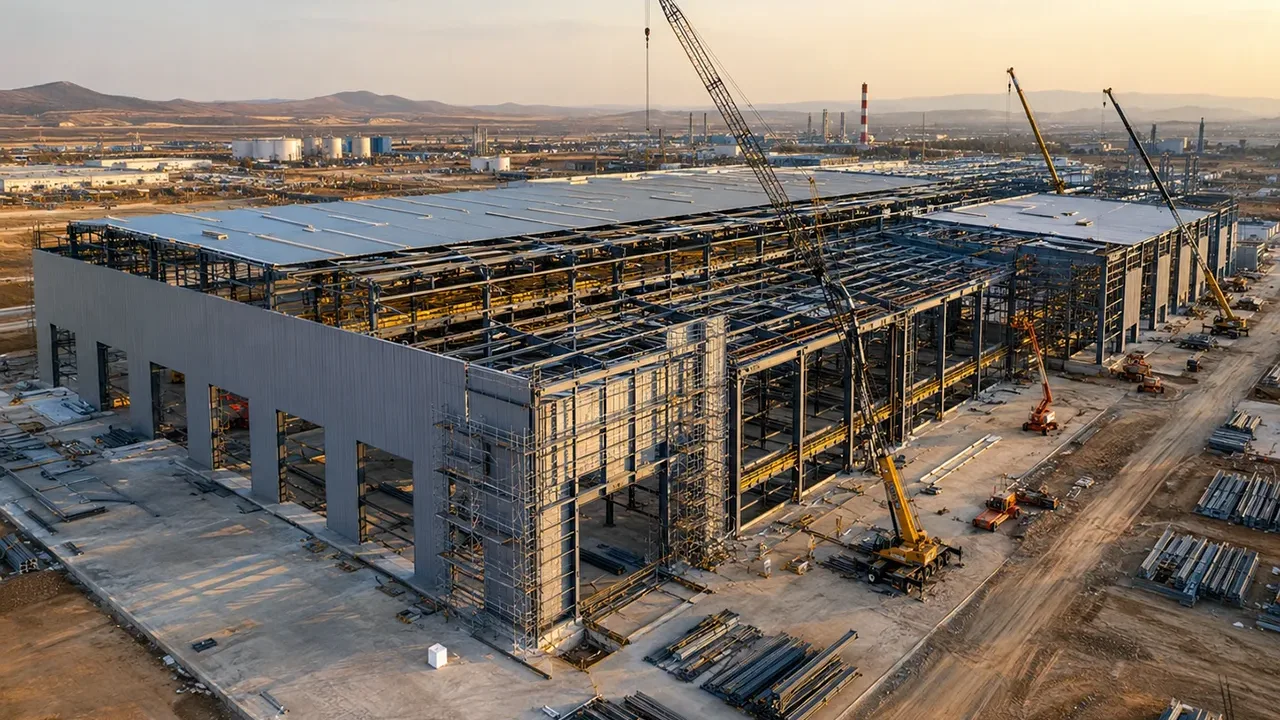
To better understand the hollow section vs i beam building decision process, it is useful to examine a real industrial application. The Paraguay Agricultural Logistics Hub project — a 22,400 m² steel facility designed for grain storage, equipment maintenance, and truck circulation — presented a complex combination of axial, bending, and torsional demands.
The building required 36-meter clear spans, heavy roof loads, and integrated overhead handling systems. During the early design phase, the engineering team conducted a detailed hollow section vs i beam building evaluation to determine the most efficient structural framing strategy.
Column and Bracing Strategy
Because the structure was exposed to strong seasonal wind loads and required high lateral stiffness, hollow sections were selected for primary columns and vertical bracing. The closed geometry significantly improved torsional resistance and compression stability. In this configuration, hollow sections demonstrated superior section efficiency for axial load transfer compared to equivalent I-beam columns.
The enhanced buckling resistance reduced the required member size, resulting in measurable steel tonnage savings without compromising safety. This optimization improved overall foundation load distribution within the steel building structure.
Primary Beam System
For the long-span roof beams, I-beams were selected due to their superior bending capacity about the major axis. The flange-heavy geometry maximized flexural strength while maintaining efficient material usage. In bending-dominated zones, the hollow section vs i beam building comparison clearly favored I-beams.
Standardized moment connections also simplified fabrication and accelerated erection. The fabrication workshop reported reduced welding hours compared to an alternative hollow-section beam design.
Performance and Cost Outcome
By integrating hollow sections for compression-critical members and I-beams for flexural members, the final steel building structure achieved balanced structural performance. The hybrid solution improved global section efficiency while maintaining constructability.
Post-construction analysis indicated a 7.8% reduction in total structural steel weight compared to an all–I-beam scheme, and a 5.4% fabrication time reduction compared to an all–hollow section alternative. The project demonstrated that the hollow section vs i beam building decision should not be viewed as a binary choice, but rather as a strategic engineering optimization process.
When to Choose Hollow Section vs I Beam Building Systems
The decision between hollow section and I-beam depends on dominant load effects and project constraints.
- Choose hollow sections when compression, torsion, and multidirectional stability dominate.
- Choose I-beams when bending about a primary axis governs design.
- Consider fabrication capability and erection strategy.
- Evaluate long-term durability and maintenance needs.
Proper evaluation of section efficiency ensures that material is placed where it contributes most to structural performance. In advanced steel building structure design, engineering analysis — not personal preference — determines the optimal solution.
Why Hollow Section vs I Beam Building Is an Engineering Decision
There is no universally superior profile. The hollow section vs i beam building comparison highlights the importance of aligning structural form with load behavior. Axial strength, bending resistance, torsional stability, fabrication complexity, and cost must all be weighed together.
When properly analyzed and detailed, both hollow sections and I-beams can deliver safe, durable, and efficient performance. The most successful steel building structure systems are those in which each member type is selected based on mechanical demand and optimized for maximum section efficiency.
Conclusion
The comparison of hollow section vs i beam building systems reveals that structural efficiency depends on context. Hollow sections excel in compression and torsion, while I-beams dominate in bending applications. Understanding section efficiency allows engineers to reduce weight, improve stability, and control cost without compromising safety.
In modern steel building structure design, strategic integration of both profiles often provides the most balanced and economical solution. Through careful structural analysis and thoughtful detailing, engineers can achieve durable, high-performance buildings tailored to their specific functional requirements.