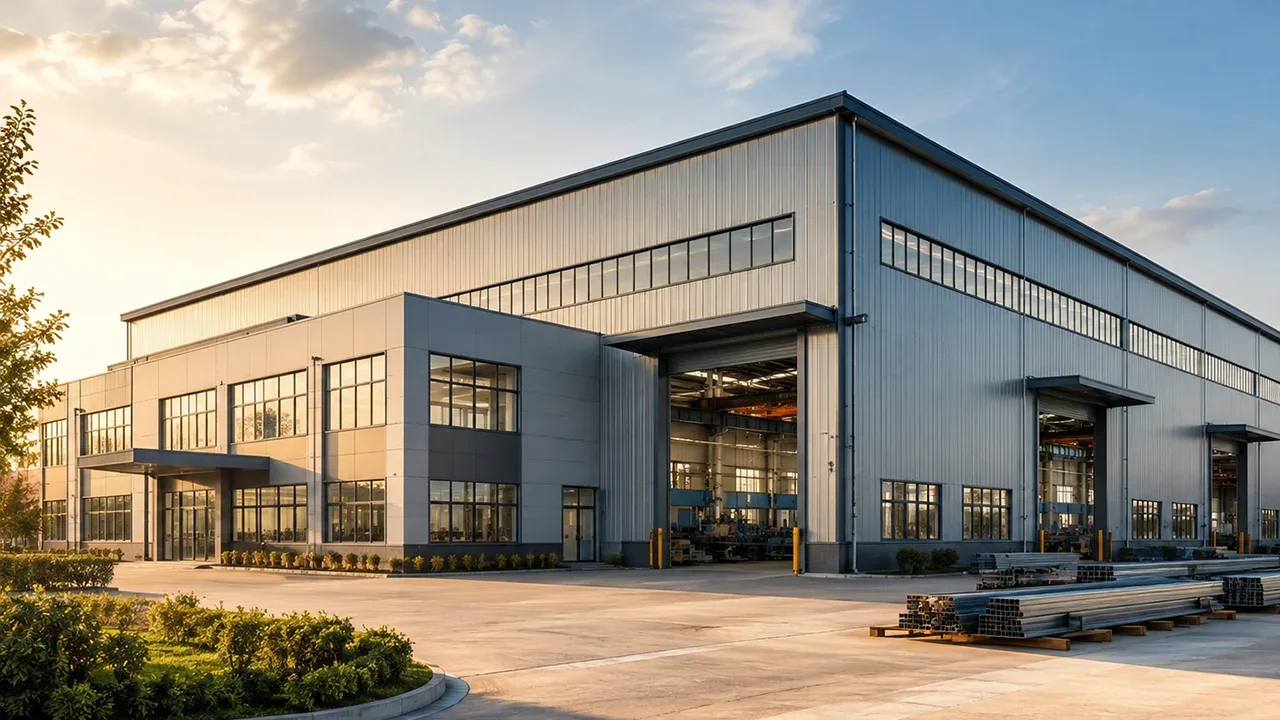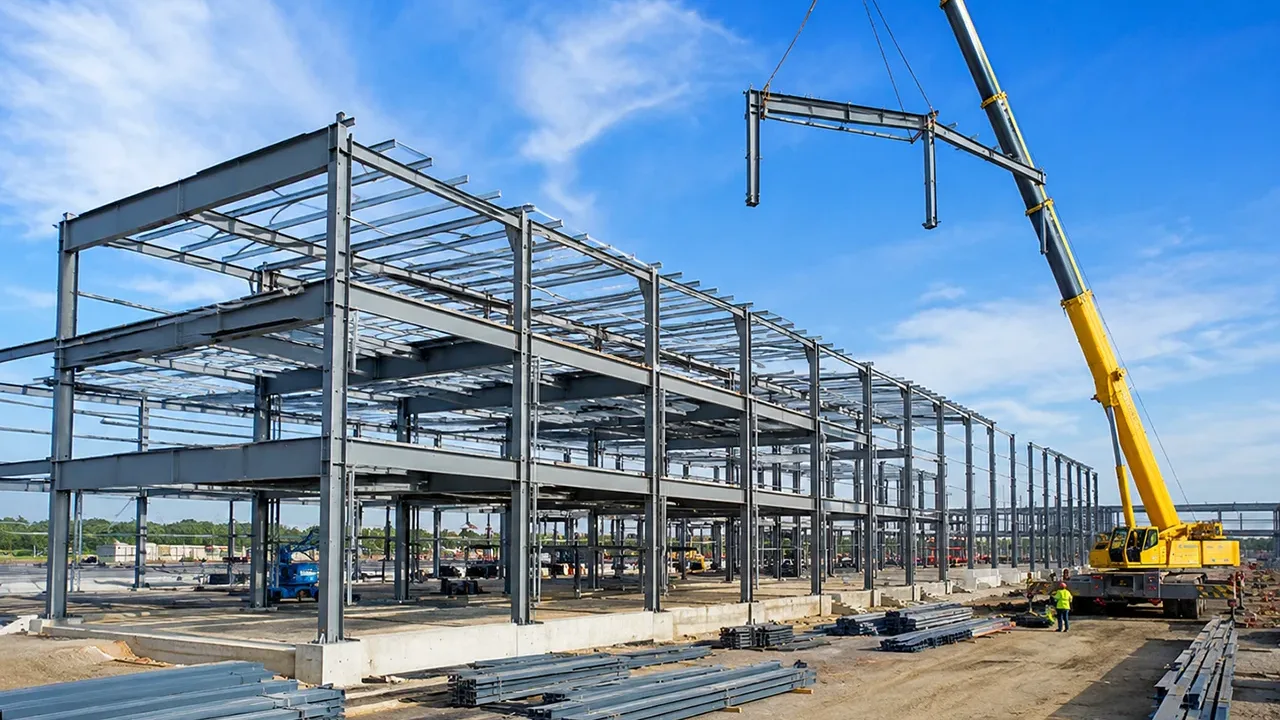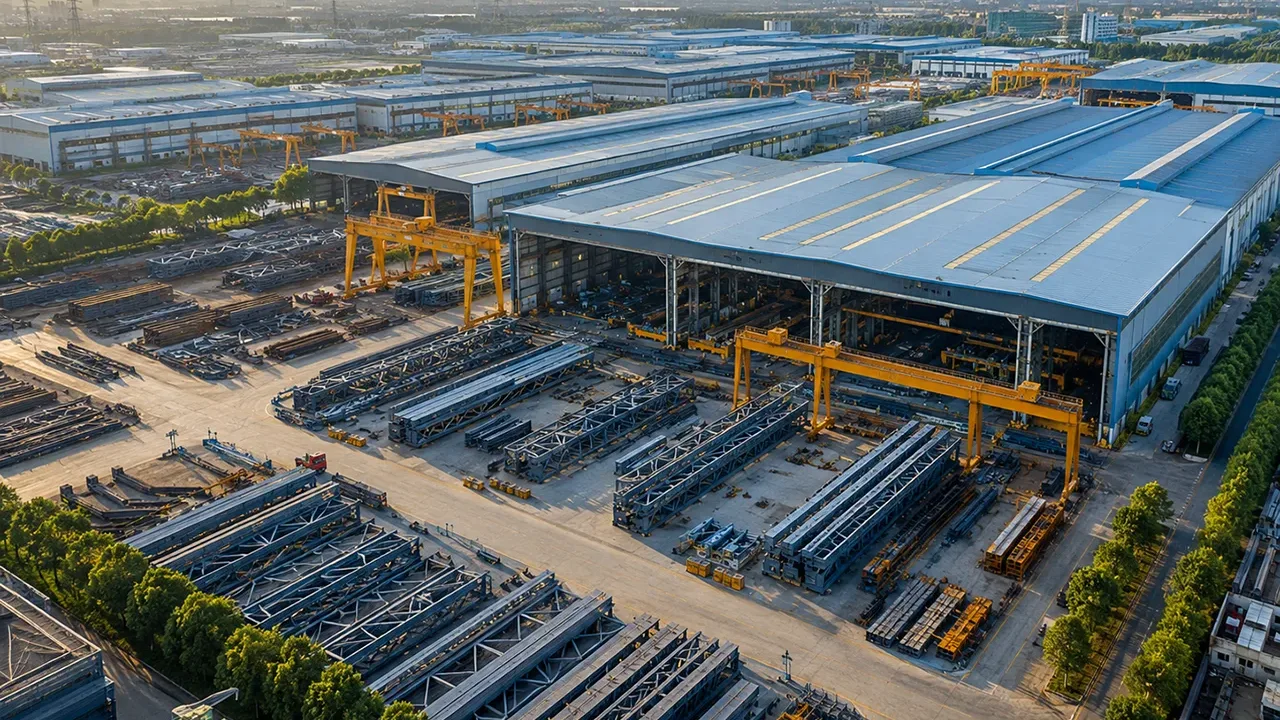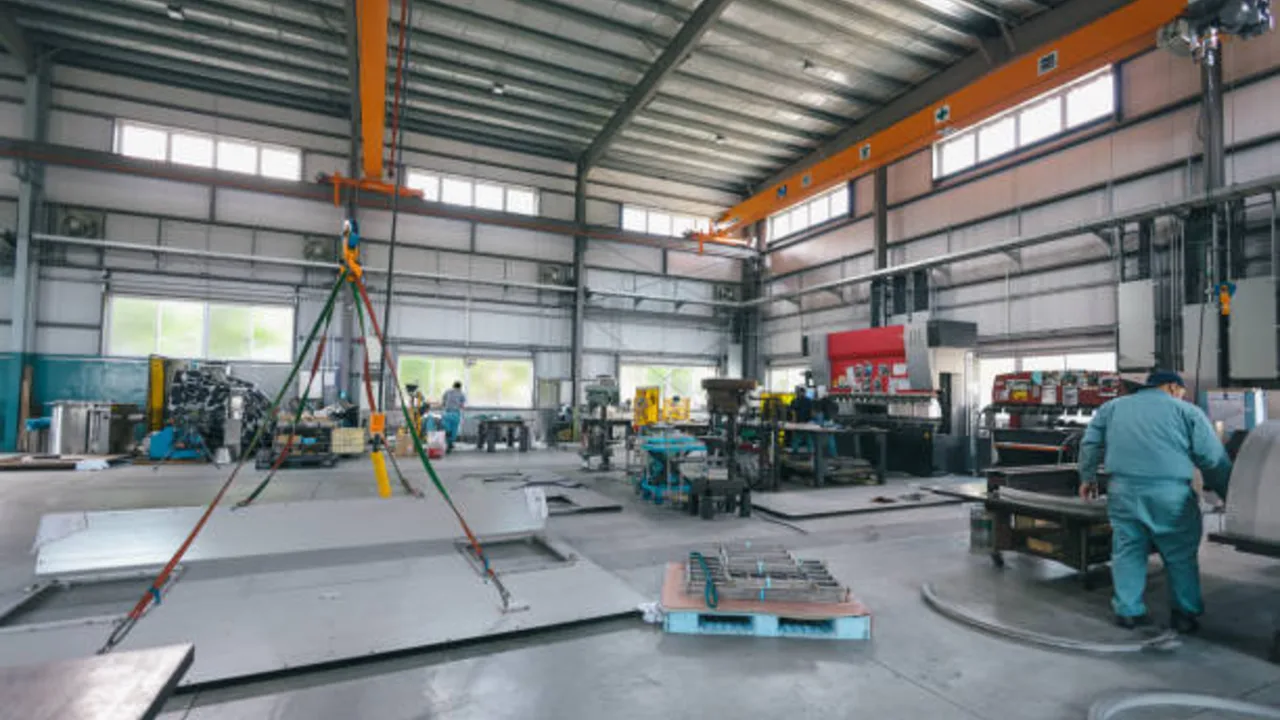
In modern manufacturing environments, floor precision plays a critical role in ensuring smooth industrial operations. One of the most important technical considerations in industrial construction is meeting the factory floor flatness requirements. Industrial facilities rely on large concrete floors to support heavy machinery, automated logistics systems, and continuous material movement. Even small deviations in surface profile can affect operational efficiency, equipment accuracy, and long-term maintenance costs.
Industrial steel factories typically operate with high material throughput and heavy equipment loads. Forklifts, automated guided vehicles (AGVs), conveyor systems, and robotic manufacturing lines all depend on a stable floor surface. If the floor surface contains waves, slopes, or uneven segments, operational disturbances may occur. As a result, engineers carefully evaluate both surface flatness and FM tolerance during the design and construction stages.
In a modern steel structure factory building, the concrete floor is more than a structural slab—it acts as an operational platform for production. Achieving the correct floor flatness requires coordination between structural engineers, concrete contractors, and project managers. Through proper design, construction control, and inspection, the required flatness performance can be achieved to support long-term industrial reliability.
Why Floor Flatness Matters in Industrial Steel Factories
The floor system in an industrial facility directly influences productivity and safety. While many building components are hidden within structural frames or mechanical systems, the floor surface interacts constantly with equipment, vehicles, and workers. Understanding the importance of factory floor flatness requirements helps project stakeholders recognize why precision during construction is necessary.
Operational Efficiency and Equipment Performance
Manufacturing facilities rely heavily on efficient movement of materials. Forklifts, pallet trucks, and automated transport systems require a consistent floor surface to move smoothly. Irregular surfaces may cause vibration or instability, which can slow down operations or reduce equipment lifespan.
Automated logistics systems are particularly sensitive to surface variation. In facilities with robotic material handling or automated storage systems, even small irregularities may influence navigation accuracy. Maintaining a consistent floor profile therefore supports both speed and reliability in production environments.
Structural Alignment and Installation Accuracy
Heavy machinery often requires precise alignment during installation. Equipment bases must sit on stable and level surfaces to maintain calibration and operational accuracy. If floor conditions vary beyond acceptable limits, installation teams may need to perform additional leveling work, increasing construction time and cost.
When engineers plan an industrial facility, the expected equipment layout and load distribution are carefully evaluated. Proper floor construction ensures that installation teams can position machines without complex adjustments. In this way, compliance with factory floor flatness requirements supports both engineering accuracy and construction efficiency.
Worker Safety and Maintenance Costs
Uneven floors create safety hazards for workers moving across large production spaces. Small depressions or ridges may increase the risk of tripping, particularly in areas where workers transport materials or operate machinery. Over time, poor floor quality can also contribute to equipment damage or increased maintenance demands.
Repairing industrial floors after production begins can be extremely disruptive. Grinding, resurfacing, or reconstruction often requires halting operations temporarily. By ensuring the correct floor flatness during initial construction, project teams can reduce long-term operational disruptions and maintenance costs.
Understanding Factory Floor Flatness Requirements
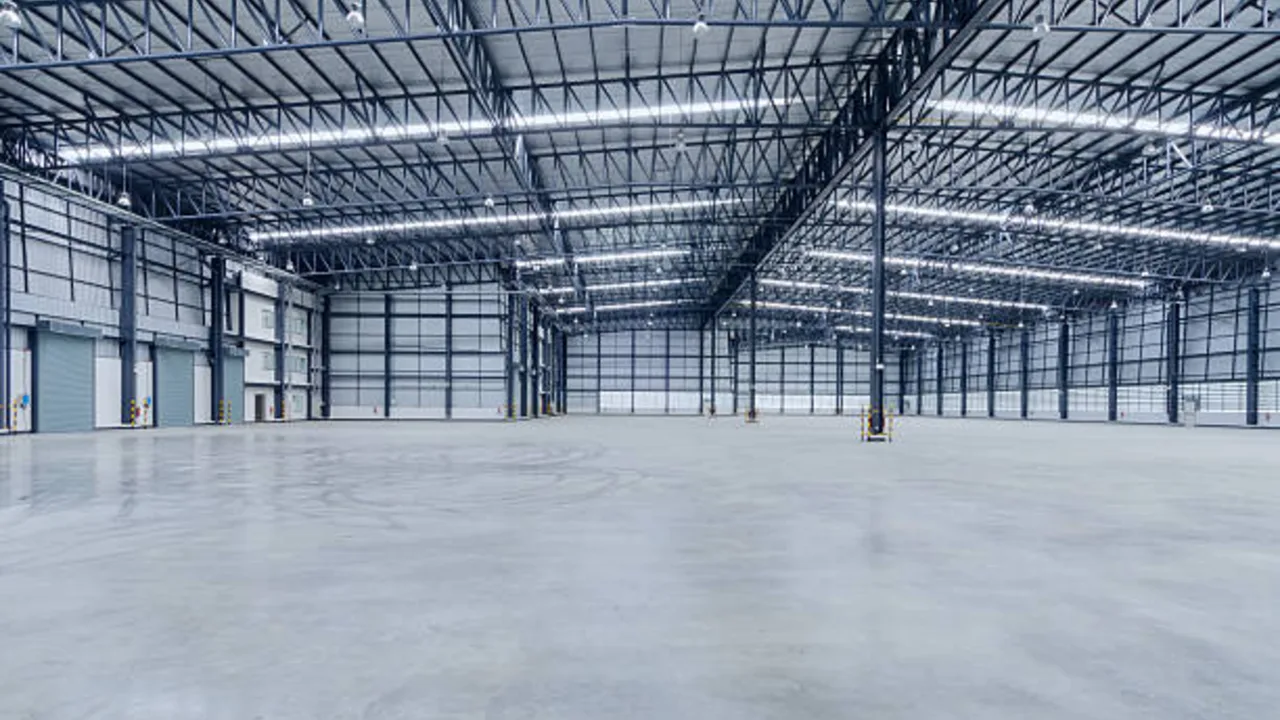
Evaluating floor quality involves more than simple visual inspection. Engineers rely on measurement systems and performance criteria to determine whether a floor surface meets the required standards. The concept of factory floor flatness requirements combines surface profile measurement, construction accuracy, and performance expectations for industrial operations.
Difference Between Flatness and Levelness
Flatness and levelness are two related but distinct concepts in floor engineering. Flatness refers to the smoothness of the floor surface over short distances, while levelness measures the slope of the floor relative to a horizontal reference plane. Both factors influence how equipment interacts with the surface.
A floor can be perfectly level yet still contain surface waves, or it can be flat but slightly inclined. Engineers evaluate both conditions during construction to ensure that operational requirements are satisfied.
Introduction to FM Tolerance
The term FM tolerance refers to an accepted range of surface variation that determines whether a floor meets the required performance standard. This tolerance defines how much deviation is allowed over specified measurement distances. Different industrial operations require different tolerance levels depending on equipment sensitivity and operational demands.
High-precision manufacturing facilities often require tighter tolerance values, while general storage facilities may accept slightly wider variation. By defining FM tolerance early in the project, engineers establish measurable targets for construction teams.
Industry Standards for Industrial Floor Construction
Several engineering standards provide guidelines for measuring and evaluating floor flatness in industrial buildings. These guidelines help engineers determine acceptable tolerances for different types of facilities and equipment.
One commonly referenced organization is the American Concrete Institute, which publishes technical documents related to concrete floor design and measurement. These standards provide valuable guidance for engineers responsible for planning industrial floor systems.
However, standards alone do not guarantee performance. Successful projects combine technical guidelines with careful construction practices, site supervision, and detailed inspection procedures.
Key Factors Influencing Floor Flatness in Steel Factories

Achieving consistent floor flatness requires attention to multiple engineering and construction factors. The interaction between structural design, material properties, and construction methods ultimately determines whether the finished floor meets the required performance level.
Structural Layout of the Steel Building
The column grid and structural framing of an industrial building influence how floor slabs behave during construction and operation. Wide structural spans may increase slab deflection potential, while dense column grids may restrict construction equipment movement during floor finishing.
Engineers must consider how the steel structure interacts with the floor system. The geometry of a steel structure factory building affects concrete placement sequences and finishing methods, both of which influence final floor flatness.
Concrete Mix Design and Material Behavior
Concrete composition directly affects surface quality after placement. Factors such as aggregate size, water content, and curing conditions influence shrinkage and surface stability. If shrinkage occurs unevenly, minor distortions may develop in the floor surface.
Selecting an appropriate concrete mix helps control shrinkage and maintain the designed floor profile. Engineers and contractors often collaborate closely during this stage to balance strength, workability, and long-term dimensional stability.
Construction Techniques and Finishing Methods
Modern construction technology offers several tools to improve floor precision. Laser screed machines are commonly used to place and level concrete across large areas. These systems help contractors achieve consistent surfaces more efficiently than manual methods alone.
However, technology alone cannot guarantee quality. Skilled operators and careful supervision remain essential to ensure that floor finishing processes achieve the desired surface condition.
In large industrial facilities, construction teams may divide the floor into sections to control curing behavior and maintain consistent finishing conditions. Proper sequencing of these sections contributes significantly to achieving the target flatness performance.
In Part 2, we will explore measurement techniques, inspection procedures, real-world engineering examples, and long-term maintenance considerations that influence factory floor flatness requirements in industrial steel factories.
Measurement Methods for Factory Floor Flatness
Ensuring that a concrete floor meets the specified factory floor flatness requirements requires reliable measurement methods. Construction teams cannot rely solely on visual inspection, especially in large industrial facilities where floor areas may extend across tens of thousands of square meters. Instead, engineers apply standardized measurement techniques that quantify surface variation and verify compliance with design criteria such as FM tolerance.
Measurement is typically performed shortly after the concrete has hardened sufficiently to support testing equipment. Early verification allows contractors to identify deviations and correct potential issues before additional construction activities proceed.
Straightedge Measurement Method
One of the simplest ways to evaluate floor flatness is by using a straightedge placed across the concrete surface. By measuring the gap between the straightedge and the floor, inspectors can identify localized variations. This method is often used for quick checks in smaller areas or during early construction stages.
However, straightedge testing provides limited information for large industrial floors. Because it only measures short segments of the surface, it cannot fully represent the overall flatness condition across an entire facility. For this reason, modern industrial projects frequently rely on more advanced digital measurement systems.
Laser Measurement and Digital Survey Tools
Laser-based surveying equipment has become widely used in modern construction. These tools measure surface elevation at numerous points across the floor and generate detailed surface maps. By analyzing this data, engineers can determine whether the floor meets the specified factory floor flatness requirements.
Laser measurement systems allow construction teams to evaluate large areas quickly and accurately. The collected data can also be stored for documentation purposes, providing project owners with verification records of floor performance.
Evaluating FM Tolerance Compliance
Once measurement data has been collected, engineers compare the results with the required FM tolerance. If surface deviations fall within the specified limits, the floor is considered acceptable for the intended industrial use.
If deviations exceed allowable tolerance levels, corrective measures such as surface grinding or localized leveling may be necessary. Early detection of these deviations is essential because correction becomes far more difficult once machinery installation begins.
Design Strategies to Achieve Proper Floor Flatness
Achieving the correct factory floor flatness requirements begins long before concrete placement. Proper design planning and coordination between project stakeholders are essential. When structural engineers, architects, and construction teams collaborate effectively, potential floor issues can be prevented rather than corrected later.
Pre-Construction Planning
Before construction begins, project teams establish clear flatness specifications and construction procedures. These specifications define acceptable FM tolerance values and outline the measurement methods that will be used for verification.
Detailed planning also includes reviewing equipment layouts and operational requirements. Certain industrial processes require tighter surface tolerances than others, and understanding these needs early helps guide the design of the floor system.
Construction Sequencing and Quality Control
Concrete placement is typically performed in sections to control shrinkage and curing conditions. Each section must be carefully finished to maintain surface continuity with adjacent areas. Construction teams monitor the process continuously to ensure that surface deviations remain within acceptable limits.
Quality control personnel often conduct preliminary measurements before each section fully cures. If irregularities appear during finishing, corrections can be made immediately, preventing more extensive repairs later.
Preventing Differential Settlement
Subgrade preparation is another important factor influencing floor performance. Poorly compacted soil can settle unevenly under structural loads, leading to floor deformation over time. Proper soil stabilization and compaction reduce the risk of differential settlement.
Foundation engineering and structural design therefore play an indirect yet critical role in maintaining floor performance. When the foundation system is stable, the concrete floor can maintain its designed profile throughout the building’s operational life.
Engineering Case Example: Precision Manufacturing Facility
A practical example illustrating the importance of factory floor flatness requirements can be found in a precision equipment manufacturing plant constructed for heavy industrial production. The facility covered approximately 18,000 square meters and included automated assembly lines, overhead cranes, and robotic logistics systems.
During early construction planning, engineers determined that standard floor tolerances would not be sufficient for the automated equipment installed within the plant. The operational design required tighter FM tolerance values to ensure stable movement of robotic transport units and conveyor systems.
To meet these requirements, the construction team implemented laser-guided screed equipment during concrete placement. This technology allowed precise control of surface elevation across large areas. In addition, the floor was divided into carefully sequenced construction zones to control curing conditions and minimize shrinkage distortion.
After the floor sections were completed, a comprehensive laser measurement survey verified that the surface profile satisfied the project’s flatness criteria. Minor deviations identified in localized areas were corrected through targeted grinding operations before equipment installation began.
Once the factory became operational, the high-quality floor surface contributed significantly to the performance of automated logistics systems. Equipment vibration was minimized, and vehicle movement remained stable across the production floor. This case demonstrates how careful planning and execution can successfully achieve demanding factory floor flatness requirements in modern industrial facilities.
Common Mistakes in Industrial Floor Construction
Despite advances in construction technology, several common mistakes can still compromise floor quality. Understanding these risks helps project teams avoid costly corrections later in the project lifecycle.
Inadequate Subgrade Preparation
If the soil beneath the concrete slab is not properly compacted, uneven settlement may occur. Even a perfectly finished floor can develop irregularities over time if the foundation layer lacks stability.
Poor Concrete Finishing Practices
Concrete finishing requires experienced workers and proper timing. If finishing begins too early or too late, surface irregularities may develop. Careful supervision and skilled operators are essential for achieving consistent results.
Lack of Measurement and Verification
Without systematic measurement procedures, construction teams may fail to detect deviations until after equipment installation begins. Implementing structured inspection procedures ensures that floor surfaces meet the required standards.
Ignoring FM Tolerance During Design
Sometimes flatness requirements are not clearly defined during early project planning. When FM tolerance values are not specified in design documents, contractors may apply inconsistent standards during construction.
Long-Term Maintenance and Floor Performance
Industrial floors must perform reliably for many years under heavy operational conditions. Even when construction quality is high, ongoing monitoring helps preserve floor performance. Regular inspections can identify surface wear, minor cracking, or early signs of settlement.
Maintenance strategies may include localized grinding, surface treatments, or joint repairs. These procedures help maintain compliance with factory floor flatness requirements while minimizing disruptions to factory operations.
Why Factory Floor Flatness Requirements Are Critical for Modern Industrial Facilities
As manufacturing becomes increasingly automated, the importance of precise floor surfaces continues to grow. Automated vehicles, robotics, and high-speed production lines all rely on stable ground conditions to function efficiently.
Industrial buildings designed for advanced manufacturing must therefore prioritize floor quality from the earliest stages of project planning. Engineers and contractors must treat floor construction as a critical component of overall facility performance.
For projects that require reliable structural performance and efficient production environments, working with experienced professionals in steel structure factory building development ensures that structural systems and operational requirements are carefully integrated.
Conclusion
Meeting the required factory floor flatness requirements is essential for the success of modern industrial facilities. From equipment performance to worker safety and long-term maintenance, floor quality influences nearly every aspect of factory operation.
By combining accurate engineering design, proper construction techniques, and rigorous inspection procedures, project teams can create industrial floors that support reliable operations for decades. In large-scale manufacturing environments, precise floor construction is not merely a structural consideration—it is a fundamental requirement for operational excellence.