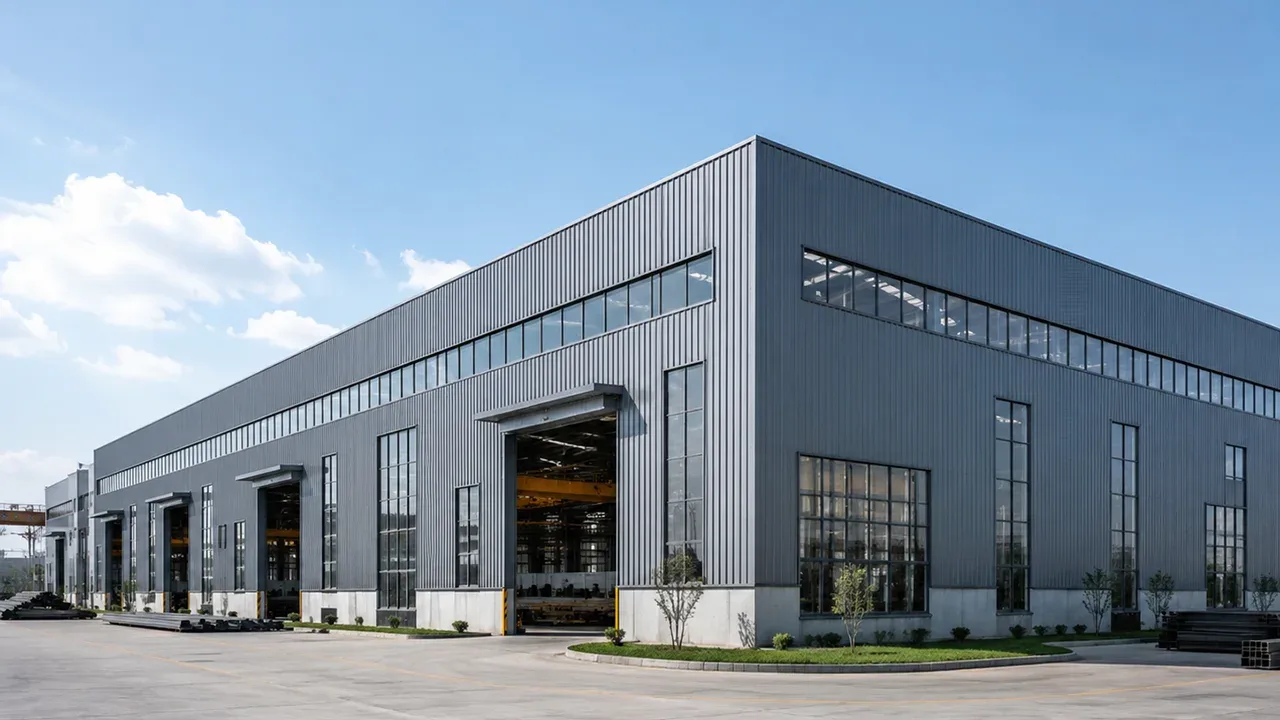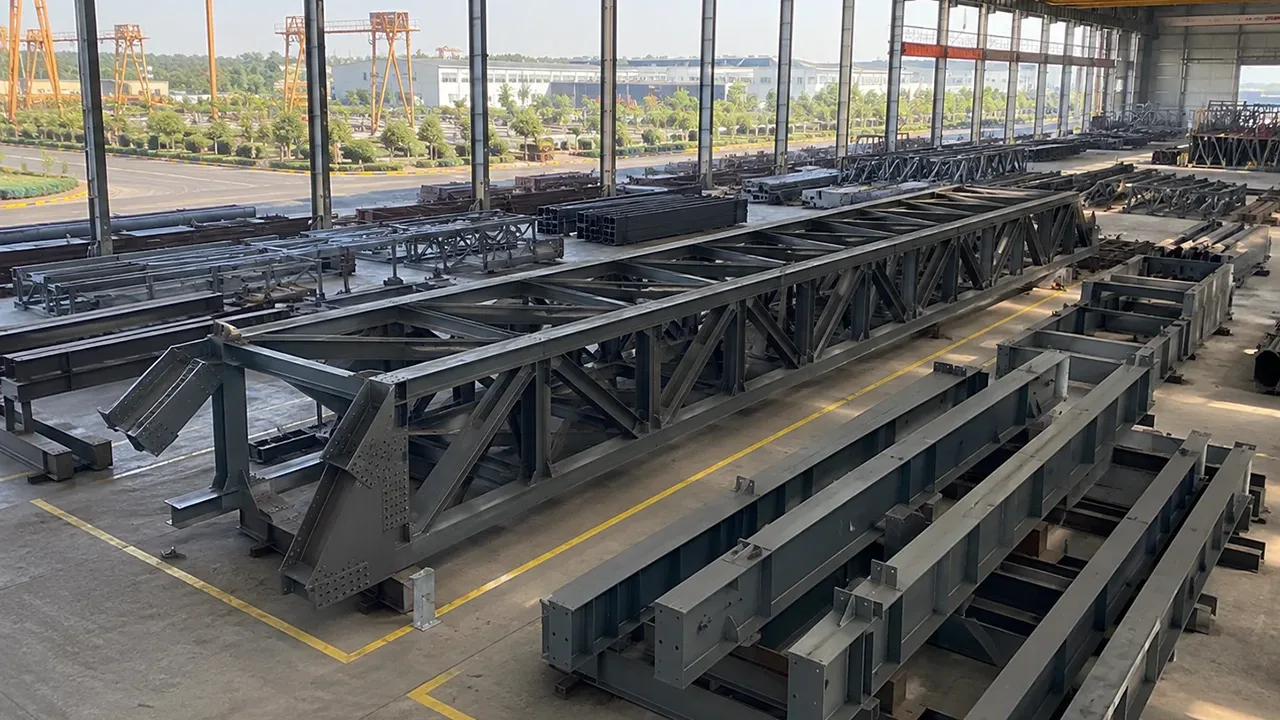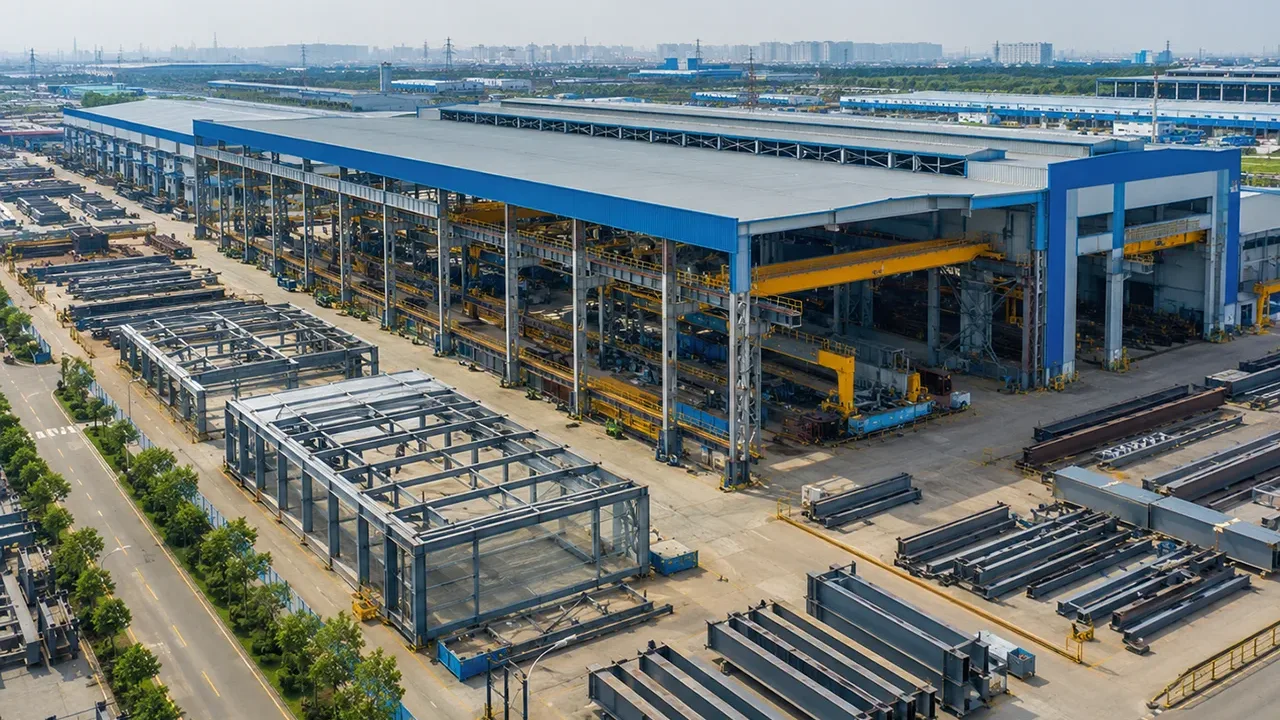
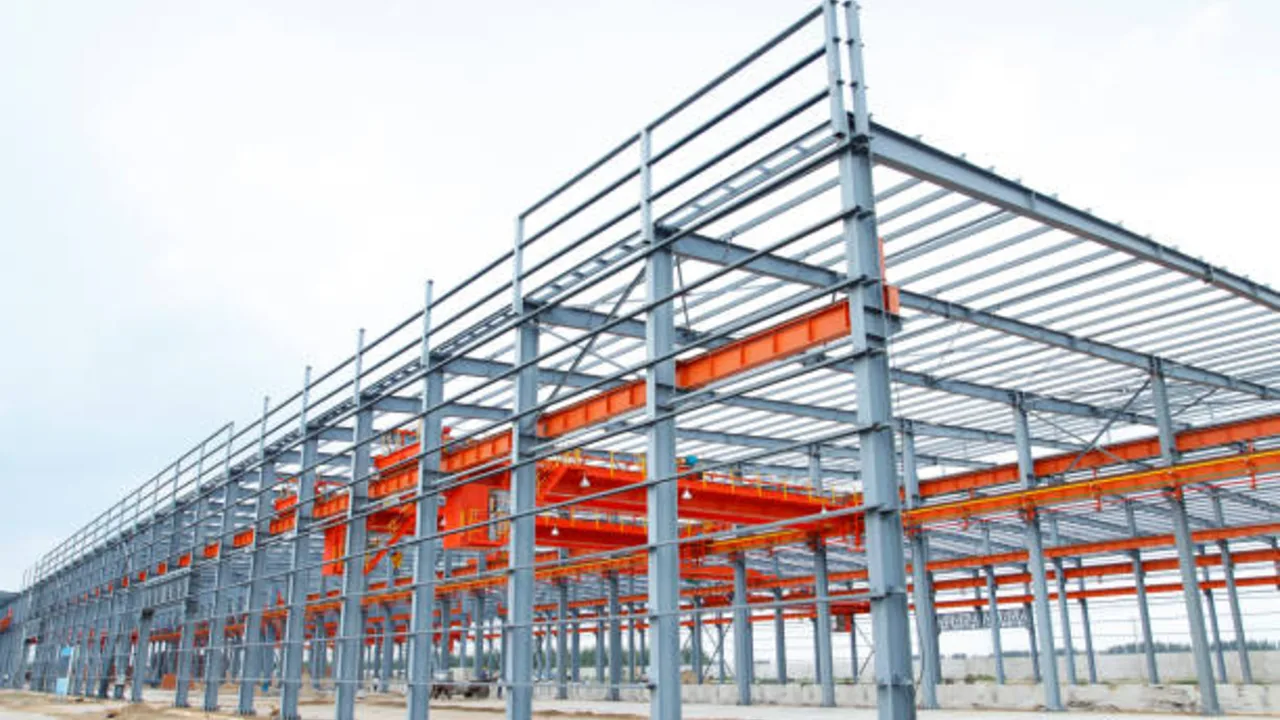
Industrial buildings made of steel are assembled in stages, and during the early phases of erection the structure is not yet fully stable. Columns, beams, and roof members are installed progressively, which means the building does not behave as a complete structural system until all connections are finished. Because of this condition, factory construction temporary bracing becomes a critical requirement to maintain stability and safety throughout the construction process.
Steel factories often feature large spans, tall columns, and heavy structural members. These characteristics make the structure efficient after completion, but they also increase the risk of instability during erection. Without proper temporary support, partially completed frames may sway under wind loads, shift during lifting operations, or experience misalignment that affects final installation accuracy.
Modern industrial construction standards require that temporary bracing be considered part of the engineering plan, not just a site decision. By implementing proper factory construction temporary bracing strategies, contractors can ensure structural stability, protect workers, and keep the erection sequence aligned with the design intent.
Why Temporary Bracing Is Critical in Steel Factory Construction
During steel erection, the structure goes through several intermediate stages where it cannot yet resist loads in the same way as the completed building. At these stages, the frame may lack lateral stiffness, and individual members may carry loads they were not designed to resist permanently. Temporary bracing is used to control these conditions and keep the structure stable until the full structural system is completed.
Incomplete Structural Systems During Erection
When a steel factory is being assembled, columns are usually erected first, followed by beams, rafters, and roof members. Before the full frame is connected, the structure behaves like a collection of individual elements rather than a unified system. This incomplete condition makes the building vulnerable to movement.
Temporary bracing provides additional support that prevents excessive displacement. In many projects, factory construction temporary bracing is installed immediately after the first frames are erected to ensure the structure remains stable while additional members are connected.
Wind Load Risks Before Full Connection
Wind is one of the most dangerous forces during steel erection. Even moderate wind can generate significant lateral loads on tall columns or partially completed frames. Because the roof and wall systems are not yet installed, the structure may not have enough stiffness to resist these loads.
Temporary bracing helps transfer wind forces safely to the ground until permanent bracing, roof diaphragms, and wall panels are in place. Without this support, the frame may twist, lean, or collapse under unexpected wind conditions.
Importance of Temporary Stability Control
Temporary stability is not only about preventing collapse. It also ensures that the structure stays aligned according to design tolerances. Misalignment during erection can cause problems when installing roof panels, crane beams, or cladding systems later.
Properly designed factory construction temporary bracing keeps the geometry of the structure correct, allowing each stage of installation to proceed smoothly. This reduces rework, improves safety, and shortens the overall construction schedule.
Structural Behavior Before the Frame Is Fully Completed
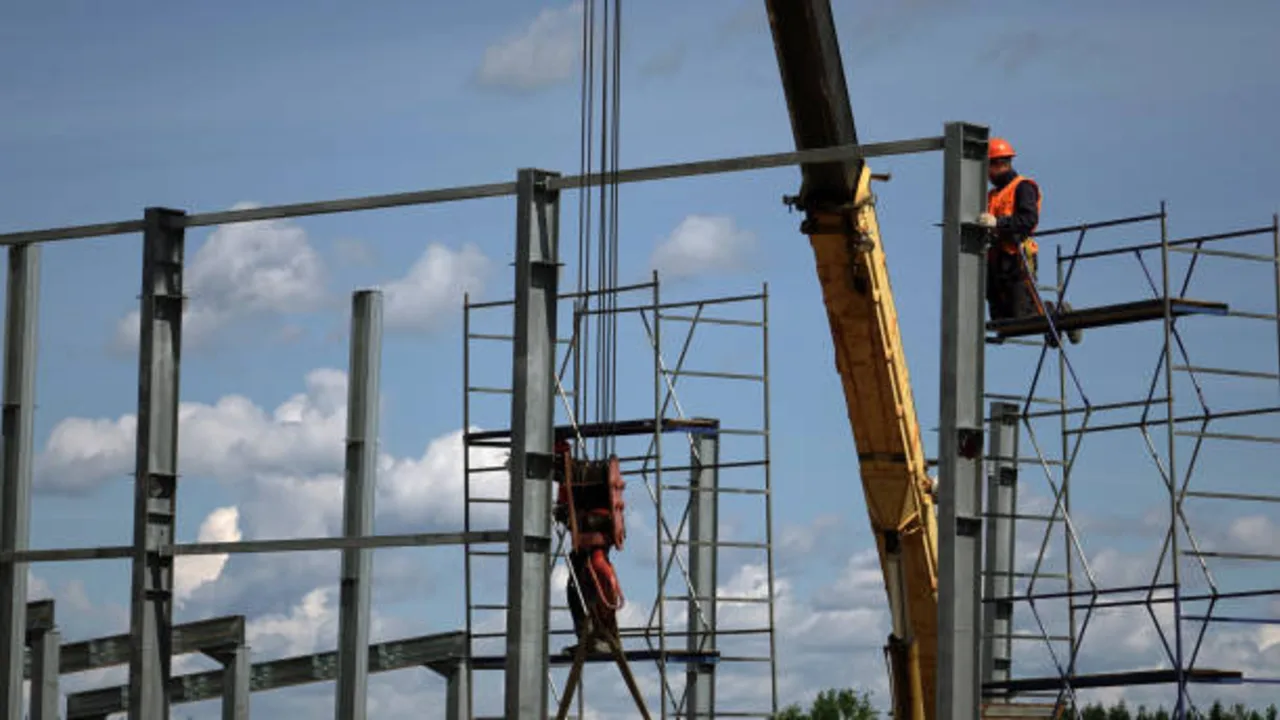
Understanding how a steel structure behaves during erection is essential for planning temporary bracing. A finished factory building has multiple load paths, including roof bracing, wall bracing, and rigid frame action. During construction, many of these load paths do not yet exist, so the structure must rely on temporary supports to remain stable.
Unbraced Columns and Beams
Columns in a steel factory are designed to work together with beams, roof bracing, and wall systems. When installed alone, a column has very little resistance to lateral movement. Even a small horizontal force can cause the column to sway.
Temporary bracing is used to connect columns to each other or to the ground, creating a stable temporary system. This prevents excessive movement until permanent structural members are installed.
Lateral Instability During Installation
Large industrial buildings often use portal frames or long-span trusses. These systems are very strong after completion, but during erection they may be unstable because only part of the frame is connected.
Lateral instability can occur when loads are applied unevenly during lifting, bolting, or welding. Proper factory construction temporary bracing reduces the risk of frame rotation, buckling, or sudden displacement during these operations.
Connection Stages and Load Paths
Steel structures are designed with specific load paths that distribute forces through the entire frame. During construction, these load paths are incomplete. For example, a beam may be connected to a column before the roof bracing is installed, meaning the beam must temporarily resist forces it was not designed to carry alone.
Temporary bracing creates alternative load paths that keep the structure stable until all permanent connections are completed. Careful planning of these temporary supports is necessary to maintain overall stability during each stage of construction.
Types of Temporary Bracing Used in Steel Factory Projects
Different construction stages require different types of temporary support. The selection of bracing systems depends on the building height, span length, erection sequence, and environmental conditions. In large industrial projects, several temporary bracing methods are often used together to maintain overall stability throughout the construction process.
Cable Bracing
Cable bracing is one of the most commonly used solutions during steel erection. Steel cables are installed diagonally between columns or frames to prevent lateral movement. Because cables are lightweight and easy to install, they are widely used in large-span factory buildings.
Cable systems are particularly effective when only a few frames have been erected and the structure does not yet have enough stiffness. Properly installed cable supports can significantly improve factory construction temporary bracing performance during early erection stages.
Steel Pipe Bracing
Steel pipes or temporary steel members can also be used as rigid bracing elements. These members are bolted or welded between structural components to provide stronger resistance compared to cables.
Rigid temporary bracing is often required in tall factory buildings where columns are long and flexible. Pipe bracing helps maintain alignment and prevents excessive displacement caused by wind or lifting operations.
Temporary Diagonal Members
Temporary diagonal members are installed between beams and columns to create a triangular support system. Triangular geometry is naturally stable, which makes diagonal bracing one of the most effective ways to control movement during erection.
In many projects, diagonal members remain in place until permanent roof or wall bracing is installed. This approach ensures that factory construction temporary bracing continues to provide stability until the structural system is fully completed.
Temporary Guy Wires
Guy wires are often used when erecting tall columns or large frames. These wires are anchored to the ground and connected to the structure to prevent tipping or leaning.
Guy wire systems are especially useful in open construction sites where wind exposure is high. They allow the structure to remain stable even when only a small portion of the frame has been installed.
Base Anchoring Support
In some cases, additional anchoring is required at the column base to resist uplift or lateral forces. Temporary anchors may be installed in concrete foundations to secure the structure during erection.
Base anchoring is important in projects where the permanent connections are not yet fully tightened or where heavy lifting equipment may introduce unexpected loads.
Temporary Bracing for Large-Span Factory Buildings
Industrial factories often require large clear spans to accommodate production lines, cranes, and heavy equipment. These long-span structures are efficient after completion, but they can be highly unstable during erection if temporary support is not properly planned.
During the construction of a large factory steel structure, temporary bracing is essential to maintain stability until the full frame, roof system, and wall bracing are installed.
Portal Frame Erection Sequence
Many factory buildings use portal frame systems. These frames must be erected in sequence, and each frame needs temporary support before the next frame is connected.
Without bracing, a single portal frame may not be able to resist lateral loads. Temporary supports are installed to hold the frame in position until roof beams and bracing members connect multiple frames together.
Roof Truss Installation Support
Roof trusses are often installed after the main columns and beams are in place. Before the roof system is completed, the structure may not have enough stiffness to resist horizontal forces.
Temporary bracing keeps the frames aligned during truss lifting and installation. This prevents deformation that could make later connections difficult or unsafe.
Crane Beam Alignment Stability
Many factories include overhead crane systems, which require precise alignment of crane beams and columns. During erection, even small movements can cause misalignment that affects crane operation.
Temporary bracing helps hold the structure in the correct position while crane beams are installed and adjusted. This ensures that the final geometry meets design tolerances and maintains long-term stability.
Tall Column Temporary Support
Factory buildings often have tall columns to allow space for equipment and cranes. Tall columns are more flexible than short ones and are more sensitive to wind and construction loads.
Temporary supports are installed to prevent these columns from leaning or vibrating during erection. Proper factory construction temporary bracing is especially important in buildings with high roof elevations or long spans.
Wind and Lateral Load Risks During Construction
During construction, the structure is exposed to loads that may be different from those considered in the final design. Wind, lifting forces, and uneven installation can create temporary conditions that require additional support.
Temporary Load Cases
Engineers must consider temporary load cases when planning steel erection. These loads include wind acting on incomplete frames, lifting forces from cranes, and weight from partially installed members.
Temporary bracing is designed to resist these loads safely until the permanent structure is complete.
Wind During Erection Stage
Wind loads can be critical when the structure is only partially assembled. Without roof and wall panels, the frame may not have enough stiffness to resist lateral forces.
Temporary bracing transfers wind forces through safe load paths, reducing the risk of structural movement or collapse.
Unbalanced Frame Condition
During erection, one side of the structure may be completed before the other. This creates an unbalanced condition that can lead to rotation or displacement.
Temporary supports help balance the frame until all structural members are connected.
Safety Regulations for Temporary Bracing
Construction standards in many countries require temporary stability checks during steel erection. Engineers must verify that the structure remains safe at every stage.
Proper factory construction temporary bracing is part of these safety procedures and should be planned before construction begins.
Engineering Planning for Temporary Bracing
Temporary bracing should never be treated as an improvised solution on site. In modern industrial construction, temporary stability must be included in the engineering plan before erection begins. Proper planning ensures that every stage of the installation sequence remains safe, aligned, and structurally stable.
In large factory projects, engineers calculate temporary load conditions, determine erection order, and specify where factory construction temporary bracing must be installed. This preparation reduces risk during construction and prevents costly delays caused by misalignment or structural movement.
Erection Sequence Planning
The order in which structural members are installed has a direct effect on stability. Engineers must define a clear erection sequence that allows the structure to remain supported at every stage.
For example, frames may need to be installed in pairs, or temporary supports may be required before lifting roof trusses. Without a proper sequence plan, even a well-designed structure can become unstable during construction.
Temporary Load Calculation
Temporary conditions often produce loads that are different from final design loads. Wind acting on incomplete frames, lifting forces from cranes, and uneven weight distribution can create unexpected stresses.
Engineers must calculate these temporary loads and design factory construction temporary bracing systems capable of resisting them. This ensures that the structure remains stable even before permanent bracing and roof systems are installed.
Coordination Between Design and Site Team
Temporary bracing design requires close coordination between structural engineers and the construction team. The design must reflect real installation conditions, including crane capacity, lifting methods, and site constraints.
When communication between design and site teams is weak, temporary supports may be installed incorrectly or removed too early. Proper coordination ensures that stability is maintained throughout the erection process.
Safety Inspection Procedures
Regular inspection is necessary while temporary bracing is in place. Bolts, cables, anchors, and connections must be checked to ensure they remain secure during construction.
Safety procedures often require that temporary supports remain installed until permanent structural elements are fully connected. Removing bracing too early can lead to sudden instability, especially in large industrial buildings.
Real Project Example: Temporary Bracing in Large Steel Factory Construction
A real industrial project helps illustrate the importance of proper temporary support during erection. Large-span factories require careful stability control because the structural system is not fully effective until the entire frame and roof bracing are installed.
In projects such as the Insulator Group Jiangxi Base spatial grid structure project, temporary supports are necessary during the installation of long-span roof systems and tall structural frames.
This large industrial facility uses a spatial grid structure to create wide column-free spaces. While this design provides excellent efficiency after completion, it also means that the structure requires careful factory construction temporary bracing during erection to maintain stability.
During installation, columns and primary frames must be supported before the roof grid is fully connected. Temporary cables, diagonal members, and anchoring systems are used to control movement and ensure that the structure remains aligned.
Projects like this demonstrate that temporary bracing is not optional. In large-span industrial buildings, stability during construction depends on proper planning, correct installation sequence, and well-designed temporary support systems.
Common Mistakes Without Temporary Bracing
Failing to install adequate temporary support can lead to serious structural problems during construction. Many accidents in steel erection occur because the structure was assumed to be stable before the full system was completed.
Understanding these common mistakes highlights why factory construction temporary bracing must always be included in the construction plan.
Frame Collapse Risk
Without temporary bracing, partially erected frames may not be able to resist wind or lifting forces. This can cause sudden collapse, especially in tall or long-span factory buildings.
Even small movements can lead to progressive failure if the structure does not have enough lateral support.
Misalignment Problems
If the frame moves during erection, beams, roof members, and cladding panels may not fit correctly. This creates installation delays and may require costly adjustments.
Temporary bracing keeps the structure in the correct position until all connections are completed.
Connection Stress
When structural members are forced into position because of misalignment, connections may carry unexpected stress. Over time, this can reduce structural performance.
Proper bracing prevents unnecessary movement and protects the integrity of the connections.
Delayed Installation
Lack of stability often slows down construction. Workers may need to stop lifting operations until additional supports are installed.
Planning temporary bracing in advance allows the erection process to proceed smoothly and safely.
Future Trends in Steel Factory Erection Safety
As industrial projects become larger and more complex, new technologies are being used to improve safety during construction. Temporary stability is now analyzed using digital tools before erection begins.
These methods help engineers design more effective factory construction temporary bracing systems and reduce risk on site.
Digital Erection Simulation
Software can simulate each stage of steel erection to identify unstable conditions before construction starts. Engineers can test different bracing layouts and choose the safest solution.
Simulation is especially useful for large-span factory buildings where temporary conditions are critical.
BIM Temporary Support Planning
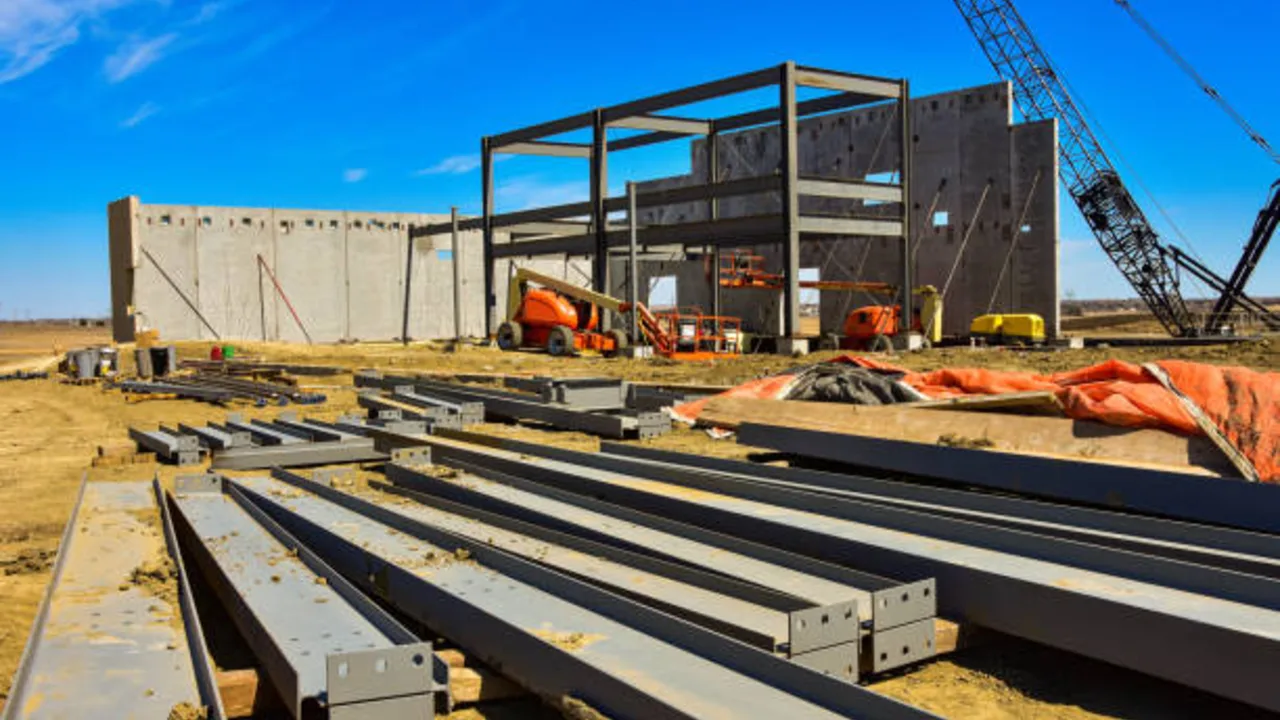
Building Information Modeling (BIM) allows temporary supports to be included in the construction model. This helps the design team and site team understand where bracing must be installed and when it can be removed.
Using BIM improves coordination and reduces errors during erection.
Smart Monitoring During Erection
Modern construction sites may use sensors to monitor movement of structural members during installation. If excessive displacement is detected, work can be stopped before a dangerous situation develops.
These technologies make temporary stability control more reliable, especially in large industrial projects.
Conclusion
Steel factory buildings achieve their strength only after the full structural system is completed. During erection, the frame is vulnerable to wind, lifting forces, and alignment problems. Because of this, proper factory construction temporary bracing is essential for maintaining stability throughout the construction process.
Temporary supports ensure that the structure remains safe, aligned, and within design tolerances until permanent bracing, roof systems, and wall panels are installed. In large projects, especially those involving a factory steel structure, temporary stability planning is just as important as the final structural design.
With careful engineering, proper erection sequencing, and well-designed temporary bracing systems, steel factory construction can be completed safely, efficiently, and without structural risk.