Industrial factories rely on structural precision. Production lines, heavy machinery, overhead cranes, and automated systems all depend on stable foundations to operate correctly. When the ground beneath a structure settles unevenly, the building may experience alignment issues, structural stress, and operational disruptions. This phenomenon is known as factory differential settlement, and it represents one of the most critical geotechnical challenges in industrial construction.
Unlike residential or small commercial buildings, factory structures often span large areas and support concentrated loads from equipment and cranes. These conditions make them particularly sensitive to uneven ground movement. Even small differences in settlement between two foundation points can affect equipment calibration, crane rail alignment, and structural performance.
In modern industrial engineering, preventing factory differential settlement begins long before construction starts. Engineers must evaluate site conditions, analyze soil properties, and design foundations that distribute loads effectively. When these factors are properly addressed, steel factories can maintain structural integrity and operational efficiency throughout decades of use.
Steel industrial buildings are especially dependent on stable foundations because of their large spans and precise structural geometry. In facilities designed as a steel structure factory building, structural frames, crane systems, and production layouts are often interconnected. If differential settlement occurs beneath one section of the building, the resulting misalignment can affect multiple operational systems simultaneously.
Introduction to Factory Differential Settlement in Industrial Buildings
Differential settlement occurs when different parts of a structure’s foundation settle by different amounts. While some level of settlement is normal in most buildings, uneven settlement can lead to structural stress and operational problems. In factories, where equipment and structural systems must remain precisely aligned, the risks associated with factory differential settlement are significantly higher.
Industrial buildings are often constructed on large plots of land where soil conditions may vary across the site. Variations in soil density, moisture content, or composition can cause different sections of the foundation to respond differently under load. Over time, these differences may lead to uneven settlement across the building footprint.
Factories also tend to impose irregular loading conditions on the ground. Heavy equipment may be concentrated in specific areas, while other sections of the building carry lighter loads. If the foundation system is not designed to accommodate these variations, differential settlement may occur as the soil compresses unevenly beneath the structure.
Another factor contributing to settlement risk is the scale of modern industrial buildings. Large-span factory halls often extend hundreds of meters in length and width. Across such distances, soil conditions can change significantly. Without proper site investigation and engineering analysis, these variations can translate into uneven structural movement.
Understanding the causes and mechanisms of factory differential settlement is therefore essential for engineers involved in industrial construction. By combining geotechnical analysis, structural design, and construction planning, engineers can significantly reduce the risk of uneven foundation movement in factory environments.
Understanding Soil Behavior in Factory Construction Projects
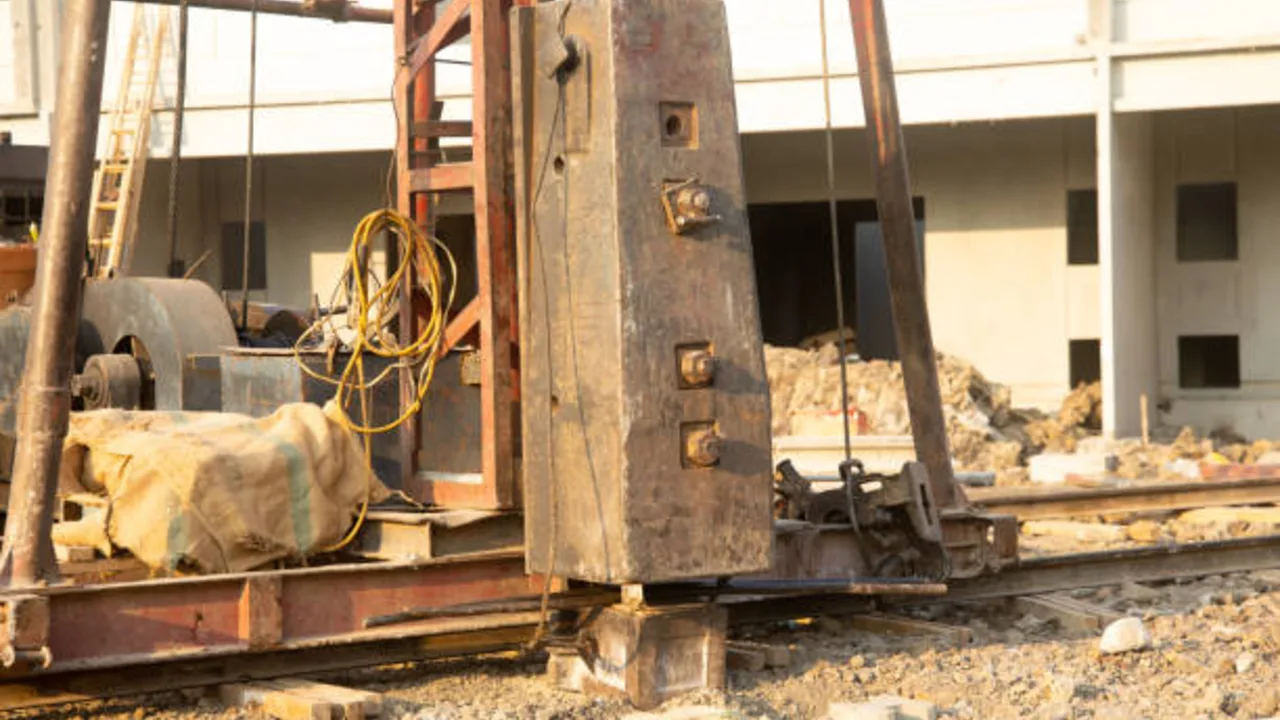
One of the most important factors influencing settlement is the behavior of the soil beneath the building. Soil is not a uniform material; it consists of different particles, moisture levels, and structural properties that determine how it responds to load. For industrial projects, understanding soil behavior is a fundamental step in preventing foundation problems.
How Soil Behavior Affects Structural Stability
When a building is constructed, its weight is transferred through the foundation into the soil below. Ideally, the soil compresses evenly under this load, allowing the structure to settle uniformly. However, if the soil properties vary across the site, some areas may compress more than others.
Different soil layers also respond differently to pressure. Soft soils may compress significantly when loaded, while dense soils may remain relatively stable. When these materials exist in uneven layers beneath a factory building, they can cause differential settlement between structural supports.
Water content also plays a major role in soil behavior. Changes in groundwater levels or seasonal moisture variations can alter the strength and compressibility of certain soil types. Clay soils, for example, may expand or shrink depending on moisture conditions, creating long-term settlement risks.
For this reason, geotechnical engineers conduct detailed soil investigations before designing factory foundations. These studies analyze soil composition, density, moisture levels, and bearing capacity to predict how the ground will behave under structural loads.
Common Soil Types in Industrial Construction Sites
Industrial facilities may be built on a wide variety of soil conditions, each with different settlement characteristics.
Clay soils are highly compressible and sensitive to moisture changes. When loaded, they may settle gradually over time as water is expelled from the soil structure.
Sandy soils generally have better drainage and lower compressibility, but loose sand deposits may still experience settlement if not properly compacted.
Fill soils are artificial materials placed during land preparation. Because they may contain mixed materials and inconsistent compaction levels, they often present higher settlement risks.
Soft ground, such as silt or organic soils, can compress significantly under structural loads. These soils often require ground improvement techniques before construction.
Rock formations provide the most stable foundation conditions. However, even rock sites may contain fractures or weathered layers that affect load distribution.
Understanding the distribution of these soil types across a construction site allows engineers to design foundation systems that accommodate variations in soil behavior.
Uneven Soil Behavior and Load Distribution
Uneven soil behavior is one of the primary drivers of factory differential settlement. When different parts of the soil profile compress at different rates, the structure above experiences uneven movement.
For example, one section of a factory may rest on dense sand while another sits on softer clay. Under identical structural loads, the clay layer will compress more than the sand layer. This difference in settlement can create structural distortion across the building.
Load distribution within the factory also interacts with soil conditions. Areas supporting heavy equipment, storage systems, or crane columns impose higher loads on the ground. If these loads are applied to weaker soils, settlement can occur more rapidly in those zones.
Over time, the combined effects of soil compression, moisture changes, and operational loads can produce uneven ground movement beneath the building. Proper engineering design aims to control these factors so that settlement remains uniform across the structure.
Why Steel Factory Buildings Are Sensitive to Differential Settlement
Industrial steel buildings are designed for efficiency, large spans, and high load capacity. These advantages make them ideal for manufacturing, logistics, and heavy industry, but they also make them more sensitive to uneven ground movement. When factory differential settlement occurs in a steel industrial building, the effects can spread through the structural system and disrupt multiple components at once.
Unlike small buildings where minor settlement may go unnoticed, factory structures often require strict alignment tolerances. Crane rails must remain level, machinery must stay calibrated, and long production lines must maintain precise positioning. Even a few millimeters of uneven settlement can create operational problems in a large industrial facility.
Because of these requirements, engineers must carefully evaluate settlement risk when designing any steel structure factory building. Understanding how steel frames respond to ground movement is essential for preventing long-term structural and operational issues.
Large-Span Structures and Load Concentration
Steel factory buildings often use large-span structural systems to create wide column-free spaces. These long spans allow flexible equipment layout and efficient material handling, but they also concentrate loads at specific foundation points.
Columns supporting long-span beams or trusses carry significant vertical forces. If the soil beneath one column compresses more than the soil beneath another, the structural frame may experience distortion. This distortion can cause misalignment in beams, roof systems, and crane runways.
In large factories, spans may reach 30–60 meters or more. Across these distances, small differences in settlement can result in noticeable structural movement. Proper control of factory differential settlement is therefore essential when designing large industrial halls.
Rigid Frames vs Flexible Frames
Most steel factories use rigid frame systems because they provide high strength and efficient material usage. However, rigid frames are less tolerant of uneven settlement compared to flexible structures.
When one column settles more than another, the rigid connections between beams and columns transfer stress throughout the frame. This can create additional bending forces and increase structural strain.
Flexible structural systems can absorb some movement without major damage, but rigid industrial frames must be designed with settlement tolerance in mind. Engineers may include expansion joints, sliding connections, or reinforced foundations to reduce the impact of differential movement.
Crane Systems and Settlement Tolerance
Many factories include overhead crane systems for moving heavy materials. Crane rails must remain precisely aligned for safe operation. Even small vertical differences between columns can affect crane movement.
If factory differential settlement occurs beneath crane runway beams, the rails may become uneven. This can lead to excessive wheel wear, vibration, or operational safety risks.
For this reason, crane-supporting columns often require stronger foundations or deeper piles than other parts of the building. In some cases, engineers design independent foundation systems for crane structures to minimize settlement differences.
Long Production Lines and Alignment Requirements
Modern factories often use automated production lines that extend across large areas of the building. These systems require precise alignment to maintain efficiency and product quality.
Uneven settlement can cause floors to tilt slightly or create small elevation differences between structural bays. While these changes may seem minor, they can interfere with conveyor systems, robotic equipment, and precision manufacturing processes.
Controlling factory differential settlement is therefore not only a structural concern but also an operational requirement. The foundation design must ensure that movement remains within acceptable limits throughout the life of the facility.
Common Causes of Factory Differential Settlement
Differential settlement does not occur randomly. It is usually the result of specific geotechnical or structural conditions that allow one part of the foundation to move more than another. Understanding the common causes of factory differential settlement helps engineers design buildings that remain stable over time.
Uneven Soil Compaction
One of the most frequent causes of settlement problems is uneven compaction of soil during site preparation. If some areas of the site are compacted more than others, the ground may compress differently when the building load is applied.
This issue is especially common in large industrial sites where filling and grading are required. Areas with poorly compacted fill material may settle more than areas with natural dense soil.
Proper compaction testing and quality control during construction are essential to reduce the risk of uneven settlement.
Poor Site Investigation
Accurate geotechnical investigation is critical for foundation design. If soil conditions are not properly studied, engineers may assume uniform ground properties even when significant variations exist.
Incomplete soil data can lead to foundation systems that are not suited to the actual site conditions. When the building is loaded, unexpected settlement may occur in weaker soil zones.
Detailed borehole testing, soil sampling, and laboratory analysis help engineers understand soil behavior and design foundations that perform correctly.
Improper Foundation Design
Even when soil conditions are known, settlement problems can occur if the foundation system is not designed to distribute loads evenly.
For example, using shallow footings in soft soil may allow excessive compression, while deeper foundations may be required to reach stable layers. If different parts of the building use different foundation types without proper analysis, uneven settlement can occur.
Foundation design must consider load magnitude, soil strength, and structural geometry together in order to control factory differential settlement.
Changes in Groundwater Level
Water content in the soil can change over time due to rainfall, drainage, or nearby construction. When groundwater levels rise or fall, certain soil types may expand, shrink, or lose strength.
Clay soils are especially sensitive to moisture changes. If one area of the site experiences more moisture variation than another, uneven settlement may develop.
Proper drainage systems and site grading can help maintain stable soil conditions around factory foundations.
Heavy Equipment Loads
Factories often contain heavy machines, storage racks, or production lines that impose concentrated loads on the floor and foundation.
If these loads are not considered during design, the soil beneath heavy equipment zones may compress more than the rest of the building. Over time, this can lead to differential settlement between structural bays.
Engineers must analyze equipment loads during the design phase and provide additional foundation support where necessary.
Future Expansion of Factory Buildings
Many industrial facilities are designed for future expansion. When new sections are added to an existing building, the soil beneath the extension may behave differently from the original foundation area.
Differences in soil preparation, compaction, or loading history can create uneven settlement between the old and new structures.
To prevent this problem, engineers often use expansion joints and independent foundation systems when planning factory extensions.
Foundation Types Used to Control Differential Settlement
Selecting the correct foundation system is one of the most important steps in preventing factory differential settlement. Because industrial buildings are large and often support heavy equipment, the foundation must distribute loads evenly across the soil while maintaining structural stability over time. The choice of foundation type depends on soil conditions, building loads, groundwater level, and long-term performance requirements.
Different foundation systems provide different levels of settlement control. In factory construction, engineers often combine multiple foundation solutions to ensure that uneven ground movement does not affect the structural frame or production equipment.
Isolated Footings
Isolated footings are commonly used when soil has sufficient bearing capacity and loads are relatively moderate. Each column rests on its own concrete footing, which transfers load directly to the ground.
This type of foundation is economical and simple to construct, but it is more sensitive to uneven soil behavior. If the soil beneath one footing compresses more than another, differential settlement may occur between columns.
For this reason, isolated footings are usually used only when soil conditions are uniform across the entire factory site.
Strip Foundations
Strip foundations support continuous walls or rows of columns. They distribute loads over a larger area than isolated footings, reducing the risk of local settlement.
In factory buildings, strip foundations may be used for exterior walls or for structural lines carrying consistent loads. Because the load is spread along a continuous strip, the foundation can better accommodate minor variations in soil strength.
However, if soil conditions vary significantly across the building footprint, strip foundations alone may not be sufficient to prevent factory differential settlement.
Raft Foundations
Raft foundations, also known as mat foundations, support the entire building on a single reinforced concrete slab. This type of foundation spreads loads across a large area, reducing pressure on the soil and helping to maintain uniform settlement.
Raft foundations are often used for large factory buildings constructed on soft or variable soil. Because the entire structure rests on one continuous slab, differences in soil compression are minimized.
This approach is especially effective when soil behavior is inconsistent across the site but not extremely weak.
Pile Foundations
Pile foundations are used when surface soil is not strong enough to support the building load. Piles transfer the load to deeper, more stable soil layers or rock.
In steel factory construction, piles are often required under crane columns, heavy equipment zones, or large-span structural supports. By anchoring the building to stable ground, piles help prevent uneven settlement between different parts of the structure.
Pile foundations are one of the most reliable methods for controlling factory differential settlement, especially on soft or reclaimed land.
Combined Foundation Systems
Large industrial buildings rarely rely on a single foundation type. Engineers often use combined systems to match different load conditions within the same factory.
For example, pile foundations may be used under crane columns, while raft or strip foundations support lighter areas of the building. By tailoring the foundation design to the load distribution, engineers can reduce the risk of uneven settlement.
Careful coordination between geotechnical and structural engineers is required to ensure that all foundation elements perform together without creating stress differences in the building frame.
Engineering Methods for Factory Differential Settlement Control
In addition to selecting the right foundation type, engineers use various techniques to reduce settlement risk. These methods focus on improving ground conditions, redistributing loads, and allowing controlled structural movement when necessary.
Effective factory differential settlement control requires cooperation between soil engineers, structural designers, and construction teams.
Soil Improvement Techniques
When natural soil is not suitable for construction, ground improvement methods can increase its strength and stability.
Common techniques include:
– Mechanical compaction to increase soil density
– Soil replacement using stronger material
– Chemical stabilization with cement or lime
– Grouting to fill voids and strengthen weak zones
These methods improve soil behavior and reduce the risk of uneven compression under structural loads.
Deep Foundation Solutions
When soil near the surface cannot support heavy loads, deep foundations such as piles or drilled shafts are used. These systems transfer the building load to deeper layers that are more stable.
Deep foundations are often required for heavy industrial facilities, especially when crane systems or large-span structures are involved.
By reaching stable ground, deep foundations help maintain consistent support across the entire building.
Load Redistribution Design
Structural design can also help control settlement by distributing loads more evenly across the foundation.
Engineers may adjust column spacing, beam sizes, or structural layout to reduce concentrated loads. In some cases, heavier areas of the factory are designed with stronger foundations to prevent local compression.
Balanced load distribution reduces the chance that one part of the building will settle more than another.
Flexible Structural Connections
Even with careful design, some settlement may still occur over time. To accommodate small movements without causing damage, engineers may use flexible or sliding connections in certain parts of the structure.
These connections allow limited movement between structural elements, reducing stress caused by uneven foundation movement.
Flexible connections are often used in long factory buildings where thermal expansion and settlement may both occur.
Expansion Joints in Factory Buildings
Expansion joints divide a large building into smaller structural sections. Each section can move slightly without affecting the others.
In long industrial halls, expansion joints help prevent cracks and distortion caused by differential settlement. They are especially useful when the building is constructed in phases or when soil conditions vary across the site.
Proper placement of expansion joints is an important part of controlling factory differential settlement in large industrial projects.
Factory Layout Planning to Reduce Settlement Risk
The internal layout of a factory also influences settlement behavior. Heavy equipment, storage systems, and crane supports create uneven loads that must be considered during design.
In modern facilities designed as a steel structure factory building, engineers plan the layout carefully so that load distribution matches the foundation capacity.
Separating Heavy Equipment Zones
Heavy machines should be located in areas with stronger foundations or improved soil conditions. Concentrating heavy loads in weak soil zones can lead to uneven settlement.
By grouping heavy equipment in planned zones, engineers can design foundations specifically for those loads.
Designing for Future Expansion
Factory buildings are often expanded over time. If expansion is not considered in the original design, differences in soil preparation may cause settlement problems between old and new sections.
Providing independent foundations or expansion joints helps maintain stability when new structures are added.
Crane Beam Alignment Considerations
Crane systems require strict alignment tolerances. Even small settlement differences can affect crane operation.
Columns supporting crane beams usually require stronger foundations or piles to maintain consistent elevation.
Floor Flatness Requirements
Modern factories often require high floor flatness for automated systems and precision equipment.
Uneven settlement can create slopes or cracks in the floor slab. Proper soil preparation and reinforcement help maintain flatness over time.
Settlement Monitoring Points
Large factories may include monitoring points in the foundation or floor to track movement over time.
These measurements allow engineers to detect early signs of factory differential settlement and take corrective action if needed.
Material and Structural Design Considerations
Structural materials and connection details also affect how a building responds to settlement. Steel frames are strong but require careful design to tolerate ground movement.
Steel Frame Tolerance to Settlement
Steel structures can handle some movement without cracking, but excessive differential settlement can create stress in beams and columns.
Designing frames with proper stiffness and flexibility helps prevent damage.
Connection Design
Bolted and welded connections must allow for small adjustments during construction and operation.
In some cases, slotted holes or adjustable connections are used to accommodate minor movement.
Foundation Reinforcement
Reinforced concrete foundations help distribute loads and reduce local stress in the soil.
Proper reinforcement design is essential for controlling settlement in heavy industrial buildings.
Floor Slab Design
Factory floors must support both structural loads and operational loads. Thick reinforced slabs help prevent cracking caused by uneven ground movement.
Joint spacing and reinforcement layout must be designed carefully.
Roof System Alignment
Uneven settlement can affect roof slope and drainage performance. Structural design must ensure that roof systems remain functional even if minor movement occurs.
Project Example — Foundation Stability Control in Libya Steel Factory Project
A real industrial project can clearly demonstrate how proper engineering prevents factory differential settlement in large industrial buildings. One representative case is the
Libya steel structure factory project, a heavy-duty manufacturing facility designed and delivered by XTD Steel Structure.
The project required a large-span industrial building capable of supporting continuous production lines, storage systems, and overhead handling equipment. The facility used approximately 1,450 tons of structural steel and adopted a portal rigid frame system to create wide column-free spaces for flexible factory layout. Because the building covered a large area and supported heavy operational loads, controlling foundation stability was a critical part of the design process.
Industrial projects of this scale are highly sensitive to uneven ground movement. If factory differential settlement occurs beneath one section of the building, structural frames may distort, crane rails may lose alignment, and production equipment may require recalibration. To prevent these problems, engineers must evaluate soil behavior carefully and select a foundation system that distributes loads evenly across the site.
In the Libya factory project, foundation planning focused on maintaining uniform support across the entire structural grid. Load concentration at column bases, crane supports, and equipment zones required stronger foundation elements in specific areas, while lighter zones used standard footing systems. This balanced approach helped reduce the risk of uneven settlement and ensured long-term structural stability.
Projects built as a steel structure factory building often require precise coordination between geotechnical analysis, foundation engineering, and structural design. Large-span steel frames are efficient but sensitive to misalignment, which makes differential settlement control especially important for factories that operate heavy machinery or automated production lines.
The Libya project shows that effective settlement control is not achieved by foundation design alone. It requires early soil investigation, correct selection of foundation type, proper load distribution, and structural planning that allows the building to perform safely even under long-term industrial use. By integrating these engineering methods from the beginning, large steel factory buildings can maintain alignment, safety, and operational efficiency throughout their service life.
Monitoring and Maintenance After Construction

Settlement control does not end when construction is completed. Long-term monitoring helps ensure that the building remains stable throughout its service life.
Settlement Monitoring Systems
Survey points can be installed on columns and floors to measure movement over time.
Crack Detection
Regular inspection of floors and walls helps identify early signs of uneven settlement.
Level Measurement
Laser leveling tools can detect small elevation differences that may affect equipment.
Long-Term Soil Behavior
Soil may continue to compress slowly over years, especially in soft ground conditions.
Repair Methods
If settlement becomes excessive, engineers may use grouting, underpinning, or structural adjustment to restore alignment.
Future Trends in Industrial Foundation Engineering
Modern technology is improving the ability to predict and control settlement.
– Digital soil modeling
– AI-based geotechnical analysis
– Smart sensors in foundations
– Real-time monitoring systems
– Advanced ground improvement methods
These tools allow engineers to design factory foundations with higher precision than ever before.
Conclusion
Factory differential settlement is one of the most important challenges in industrial construction. Because factories are large, heavy, and sensitive to alignment, uneven ground movement can affect both structural safety and operational performance.
Understanding soil behavior, selecting the correct foundation system, and designing the structure carefully are essential steps in preventing settlement problems.
Modern industrial projects, especially those built as a steel structure factory building, require close coordination between geotechnical and structural engineering to ensure long-term stability.
With proper planning, monitoring, and engineering design, differential settlement can be controlled, allowing steel factory buildings to operate safely and efficiently for decades.