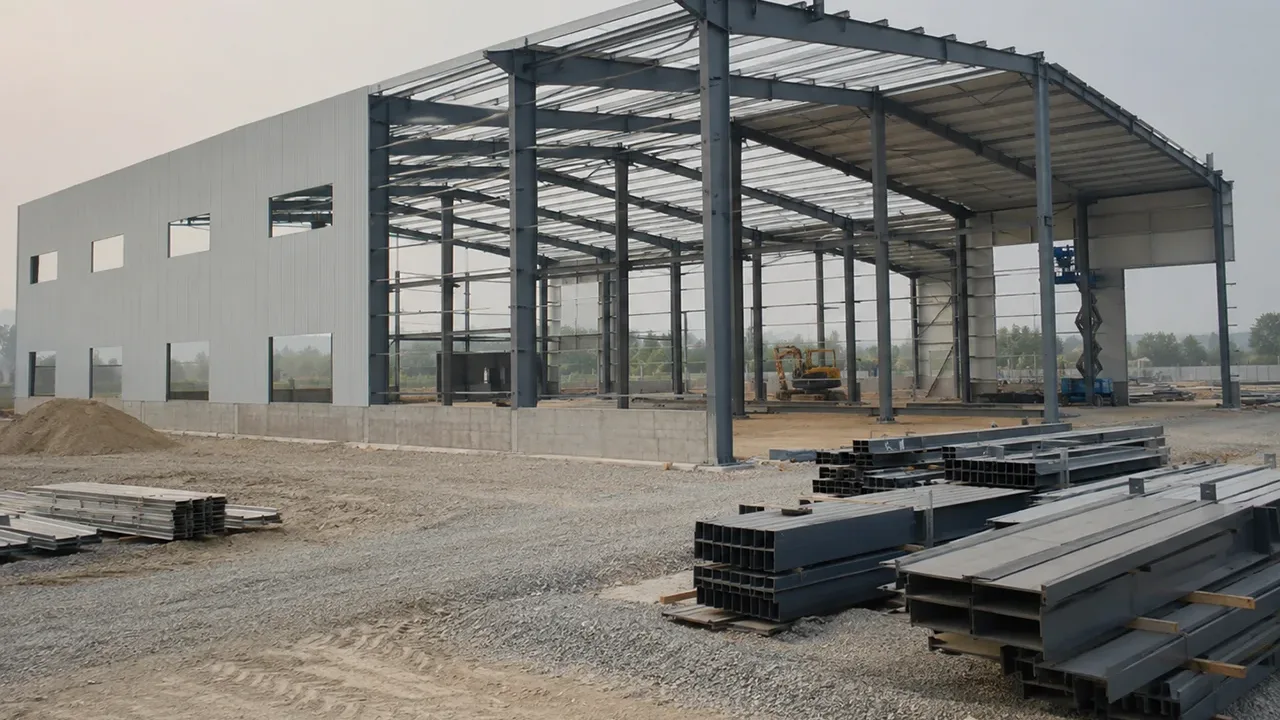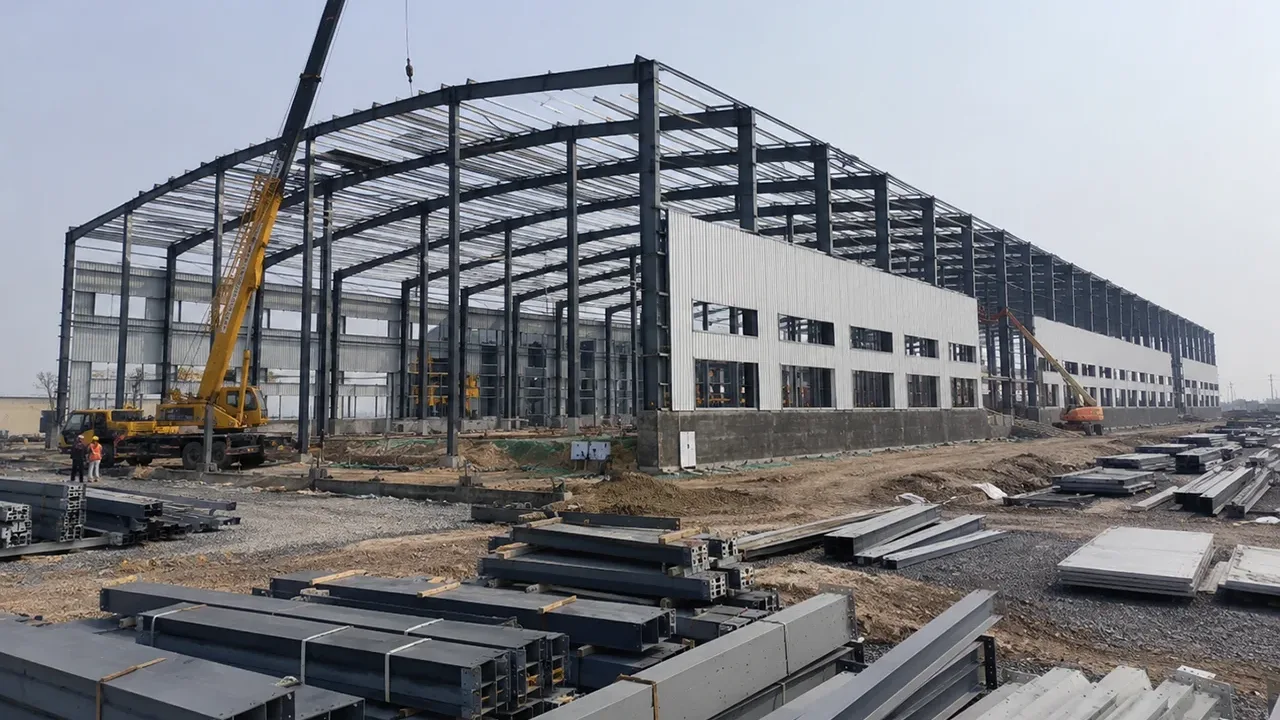

In modern industrial and commercial construction, prefabrication has transformed how steel structures are engineered, manufactured, transported, and assembled. However, achieving true efficiency in modular construction depends heavily on one critical factor: prefab module size optimization.
Module dimensions directly influence transportation feasibility, crane selection, production flow, site installation speed, and overall project cost. A module that is too large may exceed transport limits or crane capacity, while a module that is too small can increase field connections and reduce the efficiency advantages of prefabrication.
As prefabricated construction continues expanding across warehouses, industrial plants, infrastructure facilities, and modular buildings, manufacturers and contractors must carefully balance fabrication efficiency with logistical and installation realities. Effective prefab module size optimization is no longer simply a design preference — it has become a strategic engineering requirement for controlling project risk and improving execution performance.
Understanding Prefab Module Size Optimization
Prefab module size optimization refers to the process of determining the most efficient dimensions, weight, and configuration of prefabricated steel components for manufacturing, transportation, lifting, and installation.
Unlike conventional construction, prefabricated projects involve multiple interconnected stages that must operate cohesively. Decisions made during engineering directly affect fabrication complexity, logistics planning, crane operations, and site assembly.
The challenge is that there is no universal “ideal” module size. Each project has unique transport regulations, site conditions, structural requirements, and equipment limitations. A module size suitable for one country or facility may be impractical in another environment.
Therefore, prefab module size optimization requires a balance between several competing priorities:
- Maximum factory prefabrication efficiency
- Safe transportation within transport limit regulations
- Compatible crane capacity for installation
- Reduced field labor and connection work
- Structural stability during handling and lifting
Successful optimization occurs when these variables are aligned into a coordinated engineering and logistics strategy.
Core Factors Affecting Module Size Decisions
Transport Limit Considerations
Transportation is often the first major constraint affecting module dimensions. Every region has specific regulations governing road transport width, height, length, and weight.
Oversized modules may require:
- Special permits
- Escort vehicles
- Restricted transport hours
- Alternative delivery routes
- Additional port handling procedures
Ignoring these transport limit conditions can significantly increase project costs and delivery complexity.
For example, a module that exceeds bridge clearance limits may require route changes spanning hundreds of additional kilometers. Similarly, oversized loads entering urban environments may face severe movement restrictions.
As a result, transportation analysis becomes a foundational part of prefab module size optimization.
Crane Capacity Limitations

Even if transportation is technically feasible, crane limitations can still restrict module sizing. Crane capacity depends not only on total weight, but also on lifting radius, boom configuration, site access, and ground conditions.
Large modules frequently require:
- Heavy-lift cranes
- Tandem lifting operations
- Temporary reinforcement structures
- Special lifting frames
- Complex rigging calculations
These requirements substantially increase installation cost and operational risk.
Proper prefab module size optimization evaluates crane capacity early during project planning to avoid later redesigns or unsafe lifting conditions.
Fabrication Facility Constraints
Module dimensions are also influenced by the physical capabilities of the fabrication workshop itself. Production facilities have limitations involving:
- Building dimensions
- Overhead crane capacity
- Assembly platform size
- Storage areas
- Material handling systems
Producing oversized modules inside a constrained workshop environment may reduce productivity, increase congestion, and complicate workflow coordination.
Experienced manufacturers integrate workshop capacity analysis directly into prefab module size optimization to ensure practical manufacturability.
Site Installation Conditions
Project site conditions often create additional limitations on module sizing. Narrow access roads, uneven terrain, limited staging space, and restricted crane positioning areas can all affect installation feasibility.
In some projects, smaller modules may actually improve installation efficiency because they allow more flexible sequencing and safer handling.
Environmental conditions such as wind exposure and weather variability also influence lifting safety and module stability during erection.
Therefore, successful prefab module size optimization must account for both factory and site realities simultaneously.
How Oversized Modules Create Project Risks
Larger modules are often perceived as more efficient because they reduce field assembly work. While this can be true in certain cases, oversized modules frequently introduce hidden project risks.
Transportation Complications
As module size increases, transportation becomes exponentially more difficult. Oversized loads may encounter regulatory restrictions, bridge limitations, or route accessibility issues.
In international projects, transportation complexity becomes even more significant due to customs handling, port operations, and regional infrastructure differences.
Poorly planned oversized modules can delay delivery schedules and disrupt downstream installation activities.
Increased Crane Costs
Larger modules require larger cranes, which dramatically increase project cost. Heavy-lift cranes often involve:
- Higher mobilization expenses
- Longer setup durations
- Additional engineering studies
- Increased safety management requirements
Crane availability may also become a scheduling constraint in remote or highly active construction regions.
Higher Safety Exposure
As module weight and dimensions increase, lifting operations become more complex and hazardous. Large suspended loads increase the consequences of rigging failures, instability, or environmental disturbances.
Temporary structural deformation during transport or lifting also becomes a greater concern with oversized modules.
For this reason, safety considerations are central to effective prefab module size optimization.
Reduced Schedule Flexibility
Oversized modules can reduce project flexibility during installation. Large lifts often require highly specific weather conditions, specialized crews, and tightly coordinated site preparation.
If delays occur, recovering the schedule becomes more difficult because fewer installation alternatives are available.
Additionally, oversized modules can create dependencies where one delayed lift impacts multiple downstream activities simultaneously.
Structural Handling Deformation Risks
Large modules may experience temporary stresses during lifting and transportation that differ from their final in-service conditions.
Without proper engineering analysis, deformation risks can affect alignment accuracy, connection tolerances, and overall structural integrity.
Managing these risks requires detailed lifting studies and reinforcement strategies integrated into prefab module size optimization.
Problems Caused by Undersized Modules
While oversized modules create logistical challenges, modules that are too small also generate inefficiencies.
Excessive Field Connections
Smaller modules increase the number of on-site connections required during assembly. Additional bolting, welding, and alignment work extend installation durations and increase labor demands.
Each field connection also introduces additional quality control and inspection requirements.
Increased Labor Requirements
One of the primary advantages of prefabrication is reducing field labor. However, when modules become too fragmented, more workers are needed for assembly coordination, handling, and installation.
This reduces the economic benefit of prefabrication and increases project exposure to labor shortages or productivity variability.
Longer Installation Duration
Smaller modules require more lifts, more staging activities, and more installation sequencing. Over time, these repetitive operations accumulate and extend the project schedule.
Weather delays and site congestion can further amplify inefficiencies associated with undersized modular systems.
Reduced Prefabrication Efficiency Advantages
The purpose of prefabrication is to transfer work from the field into a controlled factory environment. Excessively small modules undermine this strategy by shifting too much work back to the project site.
Therefore, successful prefab module size optimization requires finding the balance point between factory efficiency and field practicality.
Engineering Approaches to Prefab Module Size Optimization
Integrated Engineering Coordination
Optimization begins with coordination between structural engineers, fabrication teams, logistics planners, and installation specialists.
Rather than designing modules independently, experienced project teams evaluate manufacturing, transport, and erection simultaneously.
This integrated approach helps prevent conflicts that would otherwise emerge later during construction.
Digital Simulation and Lifting Analysis

Modern engineering teams increasingly rely on digital simulation tools to analyze lifting behavior, transportation conditions, and structural stability.
Simulation allows engineers to:
- Evaluate lifting stresses
- Test crane configurations
- Verify transport feasibility
- Identify handling risks
- Optimize lifting point placement
These tools significantly improve decision-making during prefab module size optimization.
Logistics-First Module Planning
Some projects fail because logistics considerations are addressed too late in the design process. Leading manufacturers instead adopt a logistics-first strategy where transportation analysis begins before final module dimensions are approved. This ensures module designs remain aligned with transport limit requirements and regional infrastructure realities.
Standardized Modular Systems
Standardization helps simplify manufacturing and installation. Repeatable module sizes improve production efficiency, reduce engineering complexity, and streamline logistics planning.
Although not every project can achieve full standardization, partial modular consistency often improves overall project performance.
Early Crane Study Integration
Crane analysis should not be treated as a late-stage construction exercise. Instead, lifting studies should influence module design from the beginning.
Early crane coordination improves safety, reduces redesign risk, and ensures installation feasibility under actual site conditions.
Transport Limit Strategy in Global Prefabricated Projects
Transport regulations vary significantly between countries and regions. What qualifies as a standard shipment in one market may require oversized permits in another.
Therefore, international projects require early evaluation of:
- Road transport regulations
- Port infrastructure
- Bridge clearances
- Shipping container compatibility
- Escort requirements
- Local authority approvals
Some manufacturers attempt to maximize module size without fully considering regional logistics restrictions. This frequently results in delivery complications and unexpected costs.
Effective prefab module size optimization integrates global transport realities directly into engineering planning.
Crane Capacity Planning for Large Modules
Crane planning is closely connected to modular design strategy. Large modules may appear efficient on paper but become impractical if suitable lifting equipment is unavailable or excessively expensive.
Proper crane planning includes:
- Lift radius analysis
- Ground pressure evaluation
- Wind condition assessment
- Rigging configuration design
- Temporary reinforcement engineering
- Safe lifting point calculation
Crane studies must also account for real-world installation conditions rather than ideal theoretical scenarios. Integrating crane capacity analysis into prefab module size optimization significantly improves installation reliability and project predictability.
Real-World Scenario: Optimized vs Non-Optimized Module Design
Consider two industrial prefabricated steel projects with similar building sizes and structural complexity.
In the first project, module dimensions were determined solely based on maximizing factory assembly. Transportation and crane studies were conducted only after fabrication drawings had already been completed.
As construction progressed, several modules exceeded regional transport limit regulations. Additional permits, escort vehicles, and alternative transport routes became necessary. The oversized modules also required larger cranes than originally budgeted.
Installation delays accumulated because lifting operations could only proceed during limited weather windows.
In the second project, the engineering team integrated fabrication, logistics, and crane analysis from the earliest planning stages. Module dimensions were adjusted slightly to remain within regional transportation thresholds while maintaining high prefabrication efficiency.
The optimized modules reduced lifting complexity, simplified transport coordination, and improved installation sequencing. As a result, the project achieved lower logistics costs, fewer schedule disruptions, and safer site operations.
This comparison demonstrates how effective prefab module size optimization directly influences project predictability, cost control, and construction efficiency.
Role of Experienced Manufacturers in Module Optimization
Successful modular construction depends heavily on coordination between engineering, fabrication, logistics, and installation teams.
Experienced manufacturers understand that module sizing decisions affect every stage of the project lifecycle — not just workshop productivity.
They evaluate:
- Production feasibility
- Transport limit conditions
- Crane capacity constraints
- Structural lifting behavior
- Site installation sequencing
- Regional logistics regulations
This integrated approach reduces operational conflicts and improves overall project execution quality.
Companies seeking efficient modular construction solutions often benefit from working with an experienced prefabricated steel structure manufacturer capable of coordinating engineering and logistics simultaneously.
Best Practices for Prefab Module Size Optimization
| Best Practice | Application | Project Benefit |
|---|---|---|
| Evaluate transport routes early | Identify dimensional restrictions before final fabrication | Prevents redesign, permit complications, and delivery delays |
| Coordinate crane studies during design | Align module weight with realistic lifting capability | Improves installation safety and reduces lifting costs |
| Standardize repeatable modules | Use consistent modular dimensions when possible | Improves fabrication efficiency and installation speed |
| Use digital simulation tools | Model transportation and lifting scenarios before production | Reduces operational uncertainty and engineering risk |
| Balance factory and field work | Optimize prefabrication percentage strategically | Maximizes overall project efficiency |
Each of these strategies directly supports more effective prefab module size optimization by reducing conflicts between manufacturing efficiency and construction practicality.
Projects that fail to apply these principles often encounter avoidable transportation delays, crane coordination issues, and costly installation inefficiencies.
In contrast, integrated modular planning creates smoother workflows across the entire project lifecycle.
Conclusion
In modern modular construction, module sizing is far more than a dimensional decision — it is a strategic engineering process that influences logistics, safety, fabrication efficiency, crane planning, and installation performance.
Successful prefab module size optimization requires balancing transport limit regulations, crane capacity realities, workshop capabilities, and site installation conditions simultaneously.
Projects that approach modular design through integrated engineering coordination achieve better predictability, lower risk exposure, improved safety, and stronger cost control.
As global prefabricated construction continues advancing toward larger and more complex modular systems, the ability to optimize module sizing effectively will remain a critical competitive advantage for manufacturers, contractors, and project developers alike.