In prefabricated steel construction, precision is one of the most critical factors determining whether a project progresses smoothly or encounters costly installation problems. While individual dimensional deviations may appear small during fabrication, the accumulation of multiple deviations across connected components can create major alignment failures. This phenomenon is known as prefab tolerance stack up.
Unlike conventional on-site construction, prefabricated steel systems rely heavily on factory-produced components that must fit together accurately once delivered to the project site. Every beam, column, connection plate, and bolt hole depends on dimensional consistency throughout the production chain. Even minor inaccuracies introduced during cutting, welding, coating, transportation, or erection can compound into significant structural mismatch.
As industrial projects become larger and more modular, understanding prefab tolerance stack up becomes increasingly important for manufacturers, engineers, and contractors. Proper dimensional management directly affects installation efficiency, structural alignment, labor costs, and project timelines.
Without effective tolerance control, fabrication precision achieved inside the factory can quickly be lost during assembly in the field.
Understanding Prefab Tolerance Stack Up
What Is Tolerance Stack-Up?
Tolerance stack-up refers to the cumulative effect of dimensional variations across multiple connected components. In steel structures, each fabricated part carries a small allowable deviation based on engineering standards. Individually, these deviations may remain within acceptable limits. However, when several components are assembled together, their combined dimensional differences can exceed the system’s allowable tolerance.
This cumulative effect creates alignment problems that may not be visible during individual component inspection but become apparent during installation.
In the context of steel fabrication, prefab tolerance stack up often develops gradually across multiple production stages rather than from a single large error.
Why Prefabricated Structures Are Sensitive to Dimensional Error
Prefabricated steel systems are highly dependent on dimensional consistency because components are manufactured separately before being assembled on-site. Unlike cast-in-place construction methods, prefabricated systems allow very limited adjustment during installation.
A slight deviation in one column location may affect beam alignment, roofing installation, cladding positioning, and equipment integration across the entire structure.
This sensitivity becomes even more critical in:
- Large-span industrial buildings
- Modular steel systems
- Multi-story steel structures
- Heavy industrial facilities
- High-precision manufacturing plants
In these projects, unmanaged prefab tolerance stack up can trigger widespread installation complications.
Sources of Accumulated Deviation
Dimensional variation can originate from multiple stages within the manufacturing and installation process. Common sources include:
- Inaccurate cutting dimensions
- Welding distortion
- Improper drilling alignment
- Fixture positioning errors
- Coating thickness variation
- Transportation movement
- Improper lifting procedures
- Site installation misalignment
While each issue may appear insignificant individually, their cumulative effect can create severe prefab tolerance stack up across the completed structure.
How Tolerance Stack-Up Develops During Production
Material Preparation Phase
The earliest stage of dimensional variation often begins during raw material preparation. Steel plates, beams, and sections must be cut according to precise engineering specifications. Any deviation introduced during cutting can affect all downstream assembly stages.
Manual fabrication methods typically produce wider tolerance variation compared to automated CNC systems. Inconsistent measuring practices, tool wear, or calibration errors may further amplify inaccuracies.
Because all subsequent fabrication activities depend on initial dimensional accuracy, errors introduced during material preparation frequently become the foundation of larger prefab tolerance stack up issues later.
Assembly and Welding Phase
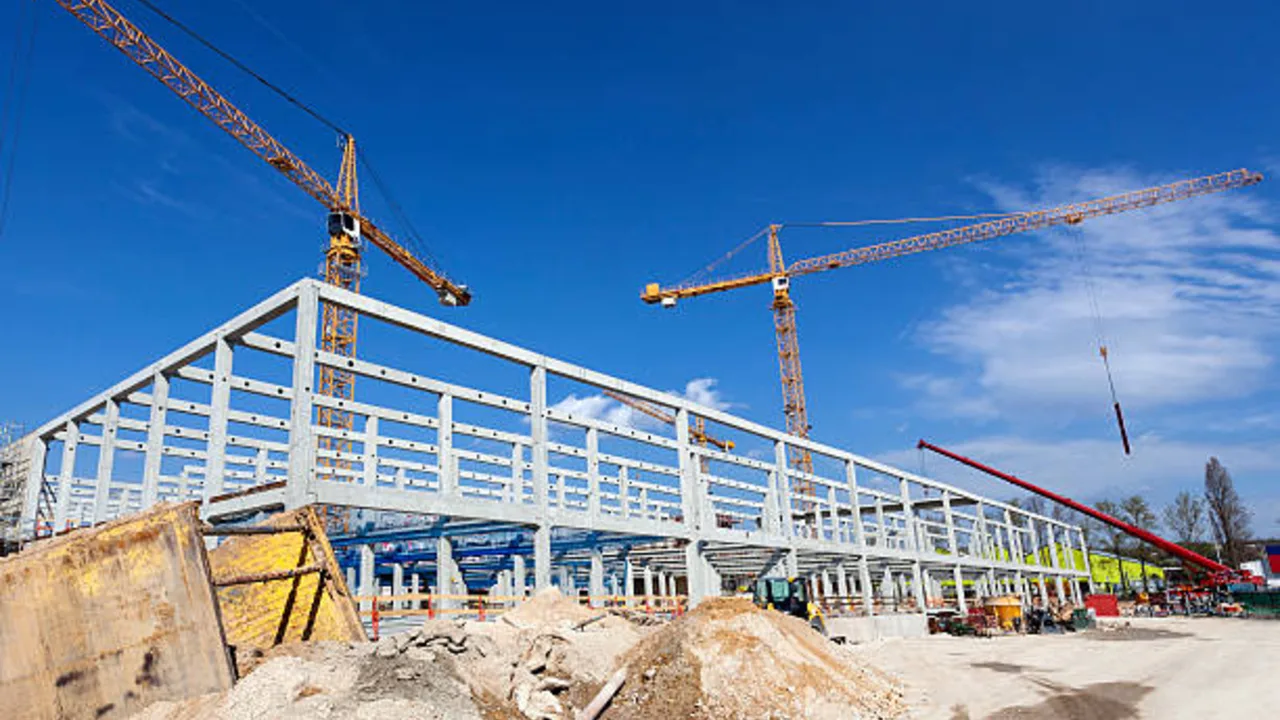
Welding operations are one of the most common contributors to dimensional instability in steel fabrication. Heat generated during welding causes expansion and contraction within steel members, resulting in distortion.
Without controlled welding procedures, even properly cut components can shift out of alignment during assembly. This becomes especially problematic in:
- Long-span trusses
- Heavy plate assemblies
- Box columns
- Complex node connections
- Modular frame systems
Fixture quality, welding sequence, and heat management all influence the severity of prefab tolerance stack up during fabrication.
Inconsistent assembly jigs may further increase cumulative dimensional deviation throughout repeated production cycles.
Surface Treatment and Coating Effects
Surface treatment processes such as galvanizing and industrial coating can also influence dimensional accuracy. While coating thickness appears minimal, accumulated variation around connection surfaces and bolt holes may affect fit-up precision.
In galvanized structures, thermal exposure during dipping may introduce slight movement or warping in long steel members. Coating buildup around bolted connections can also reduce installation tolerance during site assembly.
These effects are often underestimated during planning despite their contribution to prefab tolerance stack up.
Packaging and Transportation Risks
After fabrication, steel components are subjected to handling, lifting, packaging, and transportation forces. Improper support positioning during shipment may cause temporary or permanent deformation in long-span members.
Transportation vibration can also loosen temporary bracing or shift bundled components. For oversized modules, lifting stress during loading and unloading introduces additional dimensional risks.
As project scale increases, transportation-related deformation becomes a more significant contributor to prefab tolerance stack up, especially for modular steel construction systems.
Installation Problems Caused by Prefab Tolerance Stack Up
Bolt Hole Misalignment
One of the most visible consequences of prefab tolerance stack up is bolt hole misalignment during erection. When accumulated deviations exceed allowable installation tolerance, bolts cannot be inserted properly into connection plates.
This often forces field teams to:
- Enlarge bolt holes
- Re-drill connection plates
- Use temporary force alignment methods
- Perform on-site welding modifications
These corrective measures increase labor costs, reduce installation speed, and may compromise structural integrity if improperly managed.
Structural Alignment Problems
Dimensional accumulation also affects the overall geometry of the structure. Columns may lean slightly outside allowable verticality limits, while beams may experience elevation inconsistency across connected spans.
Even small geometric deviations can affect:
- Roof alignment
- Wall panel positioning
- Mechanical equipment installation
- Pipe routing systems
- Crane rail accuracy
As a result, unmanaged prefab tolerance stack up can spread far beyond the primary steel frame itself.
Roofing and Cladding Installation Failure
Roofing and cladding systems are particularly sensitive to dimensional inconsistency. Even minor frame misalignment may create visible panel gaps, uneven surfaces, or connection stress.
In severe cases, accumulated deviation can result in:
- Roof leakage
- Water infiltration
- Thermal insulation failure
- Panel deformation
- Fastener overstressing
Because enclosure systems depend on accurate steel geometry, prefab tolerance stack up directly impacts both structural and architectural performance.
Cascading Site Delays
Dimensional mismatch rarely affects only one activity. Once installation problems appear, delays often cascade throughout the project schedule.
Common secondary impacts include:
- Crane rescheduling
- Extended labor hours
- Delayed equipment installation
- Interrupted subcontractor sequencing
- Additional inspection requirements
These delays increase project cost and reduce overall site productivity.
In large industrial developments, unresolved prefab tolerance stack up can affect multiple trades simultaneously, creating widespread operational disruption.
Real-World Scenarios of Dimensional Mismatch
Multi-Module Industrial Buildings
In modular industrial facilities, repeated structural bays amplify cumulative deviation. A small dimensional shift repeated across multiple modules may create major alignment failure at the far end of the structure.
For example, repeated beam offset across ten structural bays can eventually create severe roof misalignment or connection interference.
This is why dimensional control becomes increasingly important as modular repetition increases.
Long-Span Steel Structures
Long-span trusses and large roof systems are extremely sensitive to accumulated tolerance variation. Minor fabrication distortion in one section may transfer additional stress throughout the entire structural system.
During erection, installers often discover that truss nodes or splice connections no longer align correctly due to cumulative dimensional shift.
These challenges make prefab tolerance stack up particularly dangerous in airports, stadiums, warehouses, and heavy industrial plants.
High-Precision Industrial Facilities
Certain facilities require extremely tight installation tolerance due to integrated mechanical or production systems. Manufacturing plants with automated machinery, conveyor systems, or robotic equipment depend on precise structural positioning.
Dimensional mismatch may interfere with:
- Equipment anchoring
- Pipe routing
- Conveyor alignment
- Mechanical clearance
- Production line calibration
In these environments, even small prefab tolerance stack up issues can disrupt operational functionality.
Engineering Strategies to Control Tolerance Stack-Up
Digital Modeling and BIM Coordination
One of the most effective ways to control dimensional risk is through digital modeling and BIM coordination. Three-dimensional modeling allows engineers to verify alignment before fabrication begins.
Using digital systems, teams can:
- Identify clashes early
- Verify connection geometry
- Check dimensional consistency
- Simulate installation sequences
- Reduce interface conflicts
Advanced BIM workflows significantly reduce the likelihood of prefab tolerance stack up across complex projects.
Precision Fabrication Systems
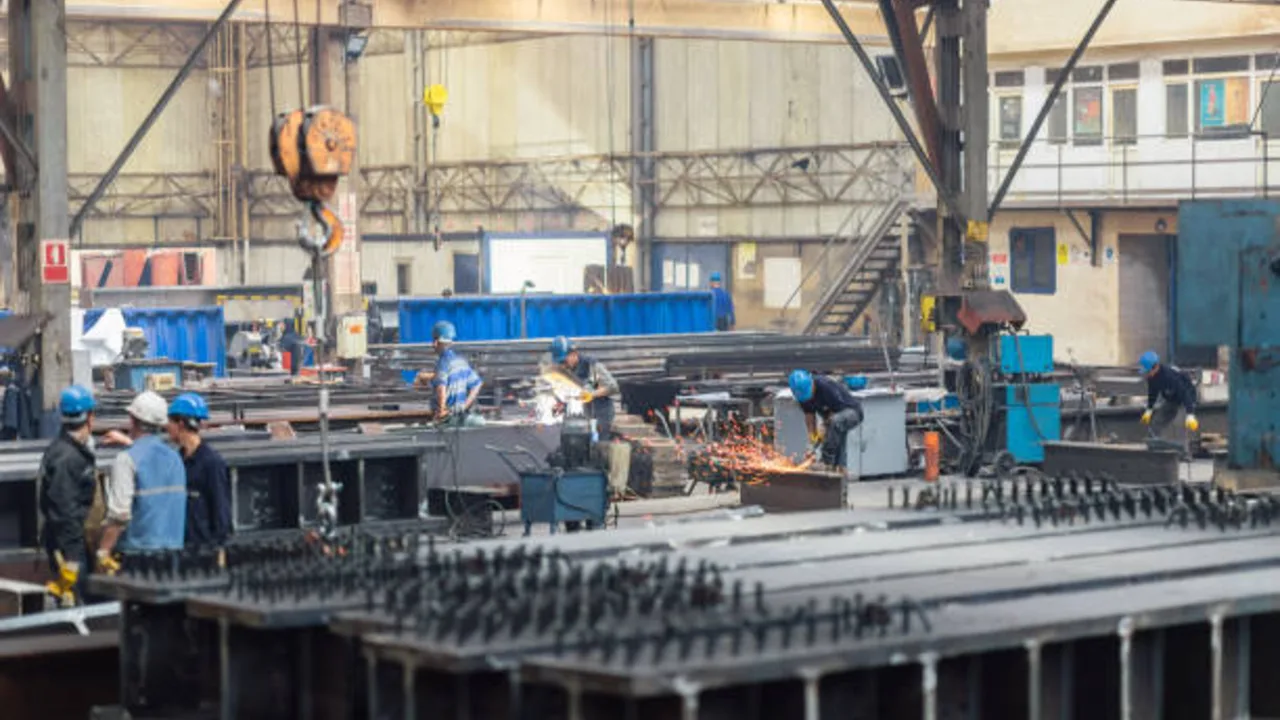
Modern fabrication facilities increasingly rely on automated CNC equipment and laser-based measurement systems. These technologies improve cutting accuracy, drilling precision, and assembly consistency.
Compared to manual fabrication methods, precision manufacturing systems provide:
- Reduced dimensional variation
- Improved repeatability
- Better quality control
- Higher production consistency
- Lower installation correction requirements
Technology-driven fabrication plays a major role in minimizing prefab tolerance stack up.
Controlled Welding Procedures
Managing welding distortion requires carefully controlled fabrication procedures. Heat input, weld sequence, fixture positioning, and cooling behavior all influence final geometry.
Experienced fabricators use:
- Balanced weld sequencing
- Thermal distortion control
- Pre-set compensation methods
- Temporary stiffening systems
- Precision fixture alignment
These methods reduce cumulative dimensional movement throughout assembly operations.
Pre-Assembly Inspection
Many manufacturers perform trial assembly before shipment to verify dimensional fit-up. This process allows teams to identify connection problems before components arrive on-site.
Factory pre-assembly helps reduce:
- Field modification requirements
- Installation delays
- Connection mismatch
- Alignment failure
- Unexpected erection problems
This proactive approach significantly lowers the operational risk associated with prefab tolerance stack up.
The Role of QA/QC in Preventing Dimensional Errors
Effective QA/QC systems are essential for controlling dimensional consistency throughout steel fabrication and installation. Without structured inspection procedures, small inaccuracies may remain undetected until major installation problems occur on-site.
Strong quality systems help manufacturers identify dimensional deviation early before errors propagate throughout the project.
Inspection Checkpoints
Dimensional verification should occur at multiple stages during fabrication rather than only during final inspection. Critical checkpoints typically include:
- Incoming material inspection
- Cutting dimension verification
- Assembly alignment inspection
- Welding distortion monitoring
- Bolt hole positioning checks
- Final geometry measurement
These inspections help isolate problems before they contribute to larger prefab tolerance stack up issues.
Documentation and Traceability
Comprehensive documentation allows fabrication teams to track dimensional consistency across all production stages. Inspection reports, measurement records, and calibration logs provide valuable traceability when investigating alignment issues.
Well-documented QA/QC systems also improve coordination between engineering teams, fabrication personnel, logistics providers, and site installers.
Maintaining accurate dimensional records becomes increasingly important in large modular projects where multiple suppliers and installation crews are involved.
Coordination Between Fabrication and Site Teams
Tolerance management does not end inside the factory. Successful installation requires continuous communication between fabrication teams and site erection crews.
Shared reference points, installation sequencing plans, and alignment benchmarks help ensure consistent dimensional interpretation throughout the project lifecycle.
Without coordination, even properly fabricated components may encounter installation issues due to inconsistent field measurement practices.
Integrated communication helps reduce the risk of prefab tolerance stack up during final assembly.
Best Practices for Managing Prefab Tolerance Stack Up
Managing dimensional accumulation requires a proactive engineering approach rather than reactive correction during installation. Leading manufacturers incorporate tolerance management into every stage of the production process.
The following best practices help reduce dimensional risk:
| Best Practice | Application in Prefabricated Steel Structures | Impact on Dimensional Control |
|---|---|---|
| Define realistic fabrication tolerances early | Establish achievable dimensional standards during engineering design | Reduces inconsistent interpretation during production |
| Integrate engineering and fabrication workflows | Improve communication between design and manufacturing teams | Minimizes coordination-related dimensional errors |
| Use standardized measurement systems | Apply consistent reference benchmarks throughout fabrication and installation | Improves dimensional repeatability |
| Verify interfaces before shipment | Conduct trial assembly and fit-up verification inside the factory | Detects alignment problems before site installation |
| Maintain structured QA/QC procedures | Implement inspection checkpoints across all production stages | Prevents cumulative dimensional deviation |
Each of these strategies directly reduces the likelihood of severe prefab tolerance stack up in large-scale prefabricated steel projects.
Choosing the Right Manufacturing Partner
Dimensional control capability varies significantly between manufacturers. Companies with advanced engineering systems, precision fabrication equipment, and experienced QA/QC teams are better equipped to manage cumulative tolerance risk.
An experienced manufacturer understands how fabrication, transportation, and erection interact throughout the project lifecycle. This integrated perspective allows dimensional risk to be managed proactively rather than corrected reactively.
For developers and contractors seeking reliable structural performance, working with a professional prefabricated steel building structure manufacturer helps reduce installation uncertainty and improve project execution consistency.
Conclusion
In prefabricated steel construction, dimensional accuracy is not simply a fabrication issue — it is a project-wide operational requirement. Small deviations introduced during cutting, welding, transportation, or installation can accumulate into major alignment failures if left unmanaged.
Understanding and controlling prefab tolerance stack up is critical for maintaining installation efficiency, structural integrity, and schedule reliability. As steel projects become larger, more modular, and more technically demanding, tolerance management becomes increasingly important.
Manufacturers that invest in precision fabrication, digital coordination, and structured QA/QC systems are better positioned to minimize dimensional risk and deliver consistently successful prefabricated steel projects.