In modern industrial construction, efficiency is no longer driven solely by fabrication speed or installation capacity. Competitive project delivery now depends on how intelligently structures are designed before manufacturing even begins. This is where dfma prefab steel design has become increasingly important within the prefabricated steel sector.
Design for Manufacturing and Assembly (DFMA) is an engineering methodology focused on simplifying production and installation processes through optimized design decisions. Instead of treating engineering, fabrication, transportation, and assembly as separate stages, DFMA integrates them into a coordinated system from the earliest design phase.
Within prefabricated steel construction, this approach creates major advantages. Steel components can be standardized, manufacturing workflows can be streamlined, and on-site assembly complexity can be significantly reduced. As global projects continue demanding faster delivery, predictable quality, and scalable production, dfma prefab steel design has become a core strategy for improving constructability and industrial efficiency.
Unlike traditional construction methods that often rely on extensive field adjustments, prefab steel systems benefit from controlled factory environments where precision and repeatability can be optimized. DFMA strengthens this advantage by ensuring that every structural component is designed with manufacturability, logistics, and installation efficiency in mind from the beginning.
For developers, EPC contractors, industrial facility owners, and manufacturers, understanding how DFMA principles apply to steel structures is becoming essential for reducing operational friction and improving long-term project performance.
Understanding DFMA in Prefabricated Steel Construction
What DFMA Means
DFMA stands for Design for Manufacturing and Assembly. Originally developed within industrial manufacturing sectors such as automotive and aerospace production, DFMA focuses on simplifying products so they are easier to fabricate, transport, assemble, and maintain.
Rather than designing components independently from production realities, DFMA encourages engineers to consider manufacturing constraints during the design stage itself. This includes material handling, machine capability, connection accessibility, assembly sequencing, and labor efficiency.
In steel construction, dfma prefab steel design applies these same concepts to structural systems. Every beam, column, connection, and module is designed not only for structural performance, but also for fabrication efficiency and installation practicality.
This shift transforms steel structures from purely engineered systems into integrated production-oriented solutions.
Why DFMA Fits Prefabricated Steel Structures
Prefabricated steel construction naturally aligns with DFMA principles because most production occurs in controlled factory conditions. Unlike conventional site-built methods, prefab steel systems rely heavily on standardized workflows, repeatable fabrication, and modular coordination.
These characteristics make dfma prefab steel design highly effective for industrialized construction. By simplifying fabrication and assembly requirements early, manufacturers can reduce waste, minimize errors, and accelerate project timelines.
DFMA also supports improved coordination between engineering and factory production. Instead of adapting designs after fabrication challenges appear, manufacturers proactively design components around production capability.
This creates smoother transitions between design, fabrication, logistics, and installation.
Core Objectives of DFMA Prefab Steel Design
The primary objective of dfma prefab steel design is to simplify the entire project lifecycle while maintaining structural integrity and performance.
Key goals include:
- Reducing manufacturing complexity
- Simplifying connection systems
- Minimizing material waste
- Accelerating assembly speed
- Improving production repeatability
- Enhancing transportation efficiency
- Reducing on-site labor dependency
By addressing these objectives during design development, projects become easier to manufacture and install at scale.
DFMA ultimately improves both operational efficiency and project predictability across large prefabricated steel developments.
Manufacturing Efficiency Through DFMA Principles
Component Standardization
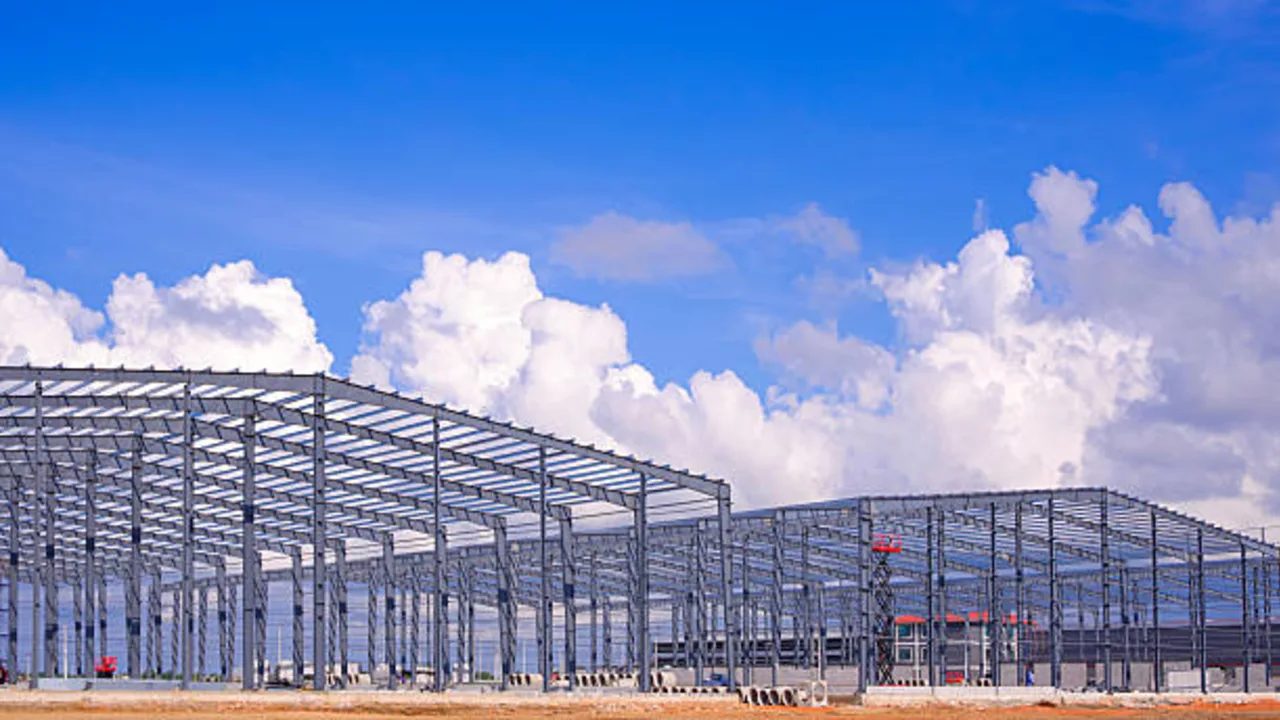
One of the most important principles in dfma prefab steel design is standardization. Repeating component sizes, connection details, and fabrication processes significantly improves production efficiency.
When structural members share similar dimensions and configurations, factories can optimize machine setups, reduce production interruptions, and simplify inventory management.
Standardization also improves consistency across projects. Instead of repeatedly engineering custom components, manufacturers can rely on proven production systems with predictable outcomes.
This is particularly valuable in large industrial or modular developments where thousands of steel members may be fabricated simultaneously.
Simplified Fabrication Workflows
Manufacturing efficiency depends heavily on workflow simplicity. Complex fabrication sequences increase labor requirements, create bottlenecks, and raise production costs.
Through dfma prefab steel design, engineers simplify fabrication by minimizing unnecessary welding, reducing excessive cutting variations, and standardizing assembly procedures.
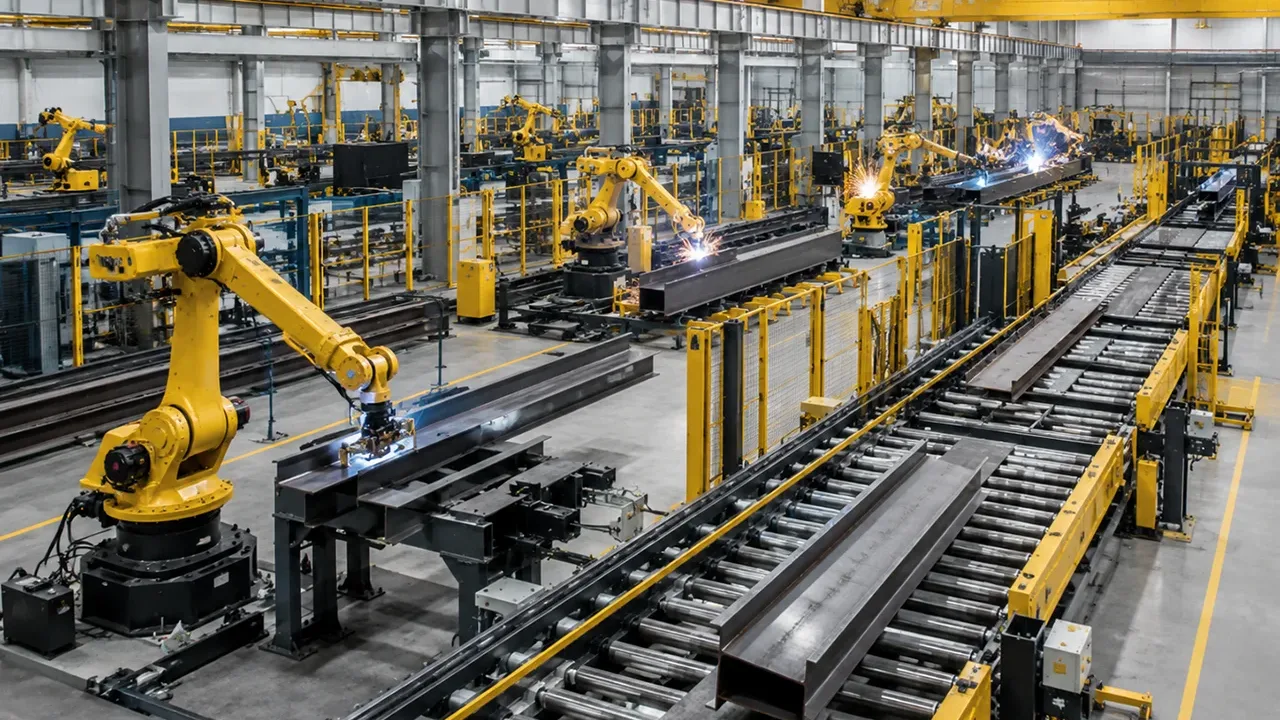
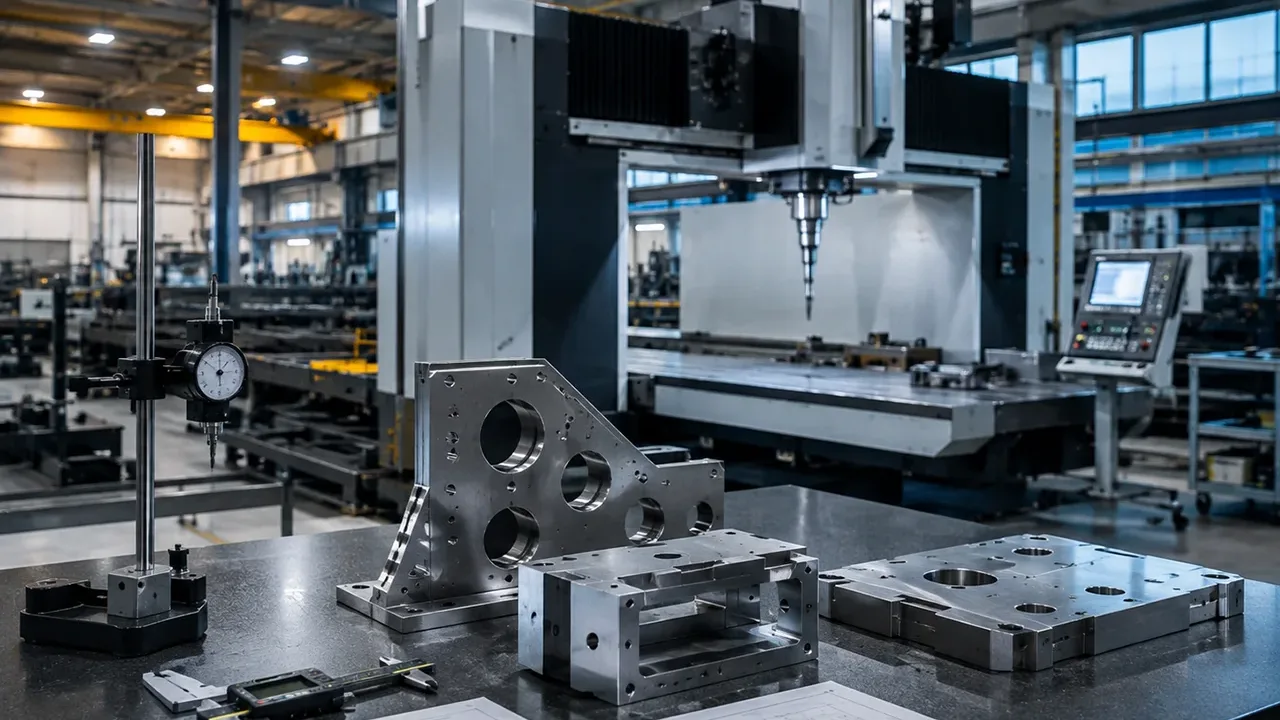
For example, repetitive connection geometries allow CNC cutting systems and automated fabrication equipment to operate more efficiently. Simplified weld access also improves productivity and reduces quality variability.
As fabrication workflows become more streamlined, production throughput increases while operational friction decreases.
Material Optimization
Material efficiency is another major advantage of DFMA-based steel design. Optimized member sizing, standardized cutting patterns, and coordinated nesting strategies reduce scrap generation and improve steel utilization.
In many traditional projects, excessive customization creates irregular material waste and inconsistent inventory requirements. In contrast, dfma prefab steel design improves predictability in procurement and production planning.
This not only lowers raw material waste, but also contributes to more stable manufacturing schedules and improved cost control.
As steel prices fluctuate globally, material optimization becomes increasingly valuable for maintaining competitive project margins.
Production Scalability
Scalability is critical in modern industrialized construction. Projects involving warehouses, factories, logistics centers, modular facilities, and infrastructure often require large volumes of repetitive steel components.
DFMA enables manufacturers to scale production more efficiently by creating highly repeatable fabrication systems.
With dfma prefab steel design, production lines can operate with greater consistency because workflows, tooling, and assembly procedures remain standardized across large batches.
This improves quality control, reduces training complexity, and allows manufacturers to increase throughput without proportionally increasing operational risk.
As a result, prefab steel factories can maintain both speed and consistency during high-volume production environments.
Assembly Optimization in Prefabricated Steel Projects
Connection Design Simplification
Connection systems play a major role in construction efficiency. Complex connections increase installation time, require additional labor coordination, and create higher risks of assembly errors.
One of the central goals of dfma prefab steel design is simplifying connection geometry while maintaining structural reliability. Engineers focus on improving bolt accessibility, reducing field adjustments, and minimizing complicated weld conditions during erection.
Standardized connection systems also improve installation predictability. When crews repeatedly work with similar details, assembly speed increases while training requirements decrease.
This creates safer and more efficient site operations, particularly in large-scale industrial projects.
Modular Coordination
Prefab steel construction frequently involves modular systems where components must align precisely during transportation and installation.
Effective dfma prefab steel design ensures dimensional coordination between modules, connection points, and assembly tolerances. Without this coordination, small inaccuracies can accumulate and create major installation problems on-site.
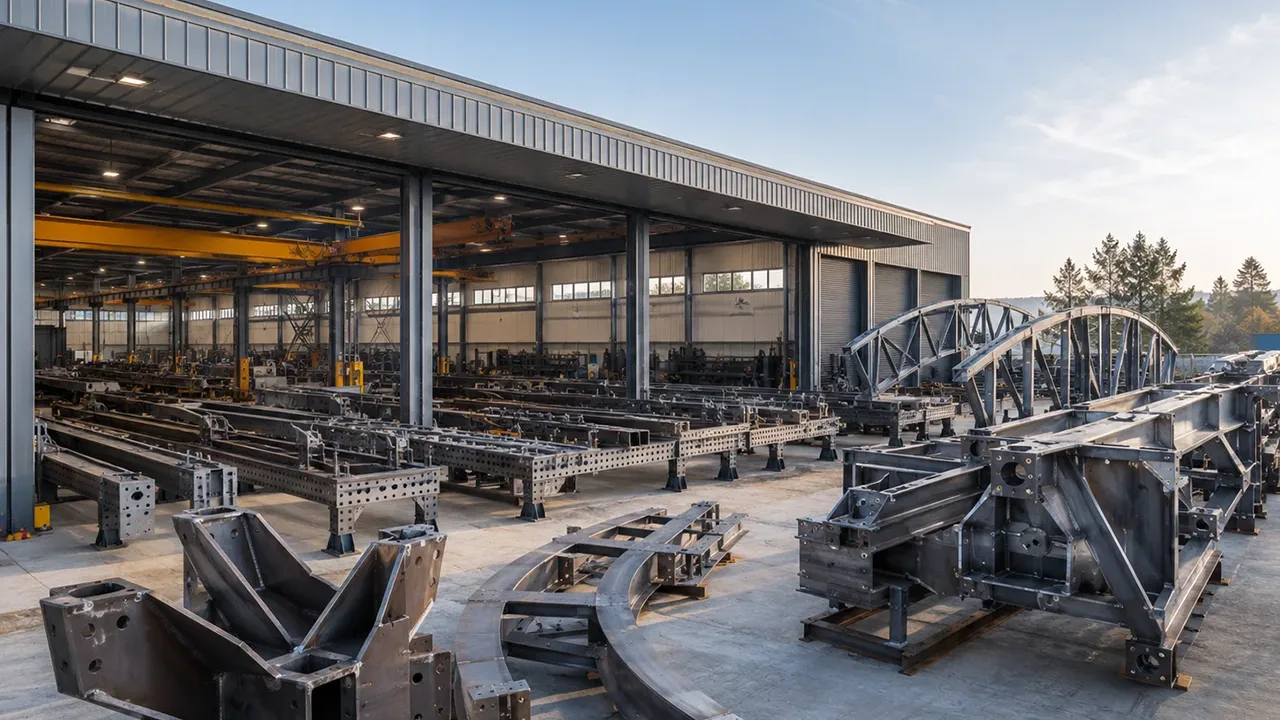
Modular coordination also influences transportation efficiency. Structural modules must fit shipping limitations, lifting requirements, and staging constraints without compromising structural performance.
By integrating these variables into the design stage, manufacturers reduce the likelihood of costly field modifications and schedule delays.
Site Labor Reduction
Reducing on-site labor dependency is one of the most important advantages of prefabricated construction. Field conditions are often unpredictable, labor-intensive, and exposed to weather-related delays.
Through dfma prefab steel design, more work is shifted into controlled factory environments where productivity and quality can be managed more effectively.
This reduces the need for extensive field welding, complicated adjustments, and time-consuming manual assembly.
As a result, projects benefit from:
- Faster installation schedules
- Lower labor costs
- Reduced safety exposure
- Improved construction consistency
- Less on-site congestion
These advantages become especially valuable in remote, high-density, or schedule-sensitive projects.
Construction Sequencing Efficiency
Construction sequencing directly affects crane usage, installation speed, and overall site coordination.
Poorly planned sequencing can create conflicts between trades, increase idle equipment time, and slow project progress. DFMA addresses this issue by incorporating assembly logic directly into structural design development.
In dfma prefab steel design, engineers consider how components will be lifted, positioned, connected, and stabilized before fabrication begins.
This allows installation activities to follow a more predictable and efficient sequence, reducing operational disruption during construction.
Engineering Considerations in DFMA Prefab Steel Design
Structural Performance Requirements
Although DFMA emphasizes manufacturing and assembly efficiency, structural performance remains the foundation of every steel system.
Engineers must ensure that simplified fabrication strategies do not compromise strength, stability, or long-term durability.
Within dfma prefab steel design, structural analysis must account for:
- Load transfer behavior
- Connection performance
- Transportation stresses
- Lifting conditions
- Temporary erection stability
- Long-span structural coordination
Balancing manufacturability with engineering performance is one of the most important technical challenges in DFMA implementation.
Transportation Constraints
Transportation limitations strongly influence prefab steel design decisions. Components that exceed shipping dimensions or weight restrictions can create major logistical complications.
As part of dfma prefab steel design, engineers must evaluate:
- Truck transport limitations
- Container dimensions
- Port handling capability
- Road transportation regulations
- Module lifting requirements
Designing around transportation realities reduces delivery risk and prevents costly redesign during later project stages.
This integration between structural engineering and logistics planning is a core DFMA principle.
Tolerance and Precision Control
Prefabricated systems depend heavily on manufacturing accuracy. Even small dimensional deviations can create fit-up issues during installation.
Therefore, dfma prefab steel design requires tight coordination between engineering tolerances, fabrication capability, and assembly procedures.
Digital modeling systems help manufacturers maintain consistency by improving measurement accuracy and reducing manual interpretation errors.
Precision control becomes especially important in modular steel systems where repetitive assembly sequences magnify even minor inaccuracies.
Integration With BIM and Digital Engineering
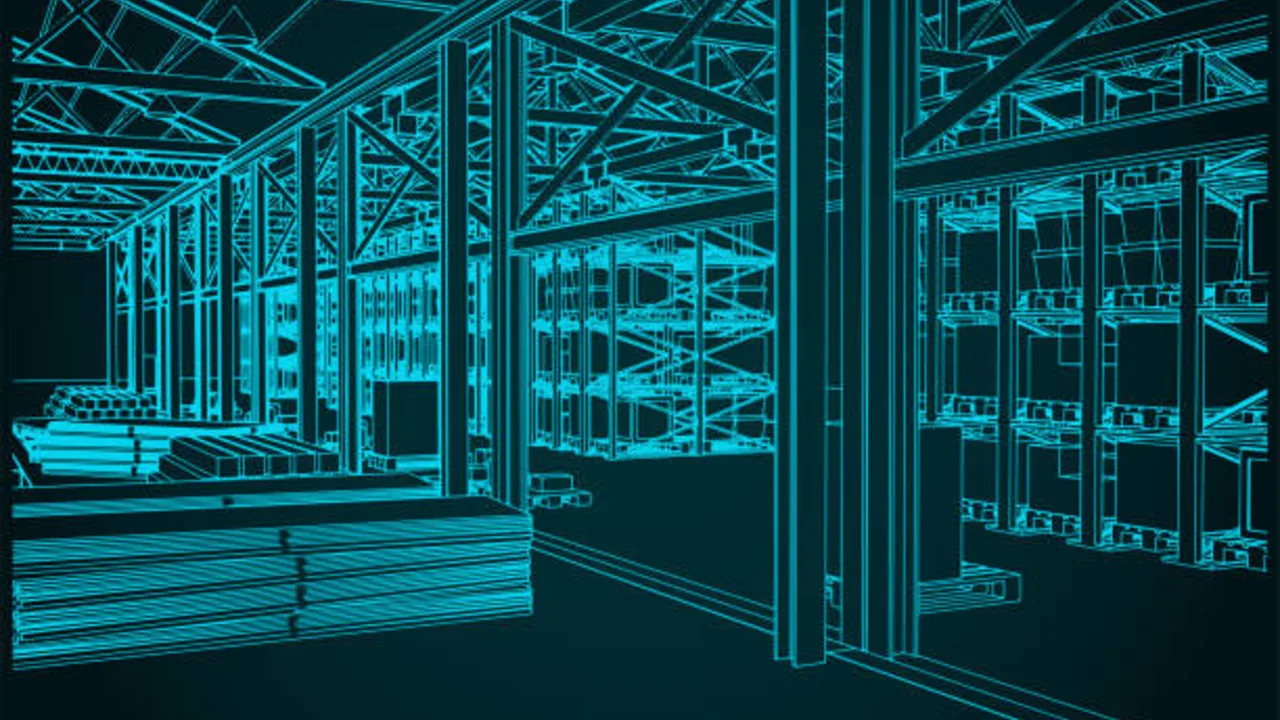
Modern DFMA workflows are increasingly integrated with BIM (Building Information Modeling) and digital manufacturing systems.
These technologies improve:
- Clash detection
- Production coordination
- Fabrication data integration
- Assembly simulation
- Material tracking
- Construction planning
Through BIM-supported dfma prefab steel design, manufacturers gain greater visibility across the entire project lifecycle.
This improves coordination between engineering teams, fabrication facilities, logistics providers, and installation crews while reducing communication gaps and production errors.
Real-World Challenges in Applying DFMA
Balancing Standardization and Customization
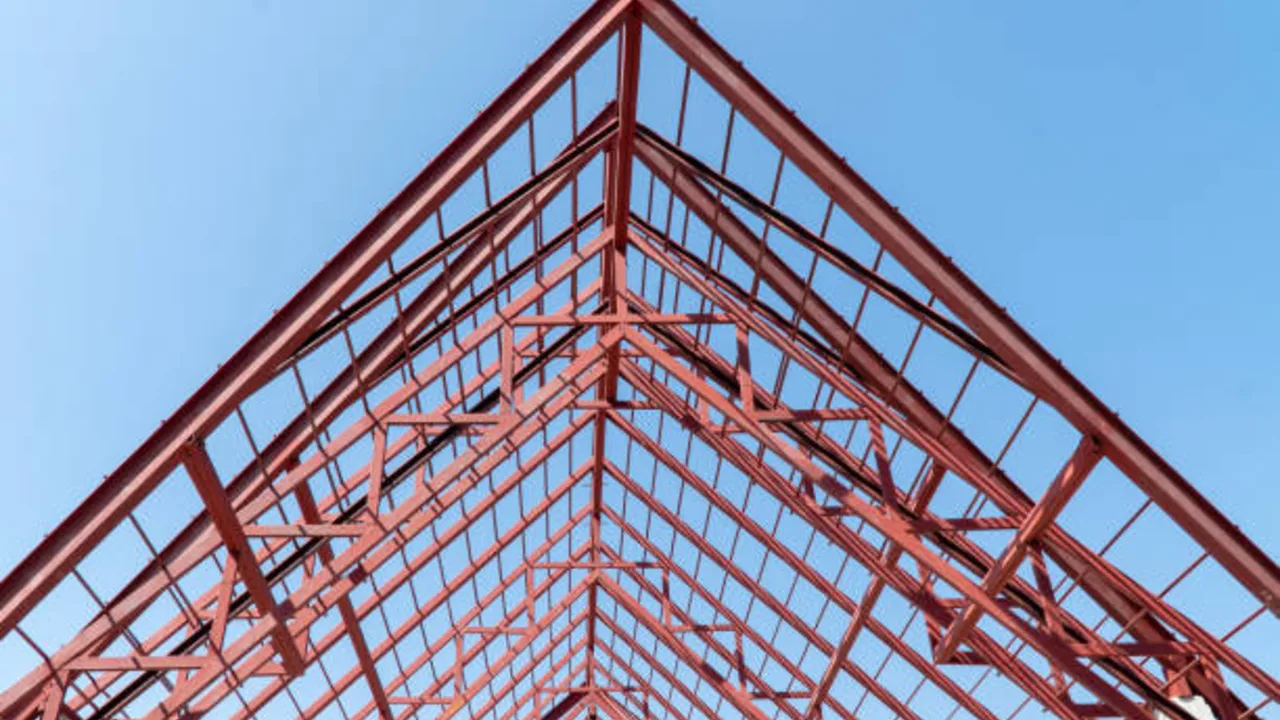
One of the most difficult challenges in DFMA implementation is balancing efficiency with project-specific flexibility.
While standardization improves production speed, many projects still require unique architectural features, structural conditions, or client-driven customization.
Successful dfma prefab steel design requires identifying where standardization creates the greatest efficiency gains without sacrificing project functionality or design intent.
This balance is especially important in commercial, industrial, and architecturally complex developments.
Early Design Coordination
DFMA is most effective when engineering and manufacturing teams collaborate early in the project lifecycle.
Traditional workflows often separate design from fabrication, creating conflicts when production realities emerge later. DFMA eliminates this separation by integrating production knowledge directly into engineering development.
In dfma prefab steel design, early coordination allows manufacturers to identify fabrication risks, optimize workflows, and improve assembly sequencing before construction begins.
This significantly reduces late-stage revisions and operational disruptions.
Investment in Factory Capability
Implementing DFMA successfully often requires significant investment in factory infrastructure, digital systems, and workforce development.
Manufacturers pursuing advanced dfma prefab steel design strategies frequently upgrade:
- Automated fabrication equipment
- CNC cutting systems
- Robotic welding capability
- Digital production management
- BIM integration platforms
- Quality control systems
These investments improve long-term production efficiency, but they also require operational discipline and technical expertise.
Factories that lack integrated systems may struggle to fully realize DFMA benefits despite adopting prefabrication methods.
Managing Multi-Project Production
Large prefab steel manufacturers often operate multiple projects simultaneously. This creates challenges related to scheduling, workflow balancing, material allocation, and production sequencing.
Within dfma prefab steel design, production planning becomes highly interconnected. Delays in one fabrication stream can affect transportation schedules, site installation sequences, and downstream assembly operations.
To manage this complexity, manufacturers rely on coordinated planning systems that integrate engineering schedules with production capacity and logistics management.
This level of coordination becomes increasingly important as project scale and production volume expand.
Benefits of DFMA in Prefabricated Steel Structure Projects
The growing adoption of dfma prefab steel design is driven by measurable operational and financial advantages across the project lifecycle.
Key benefits include:
| DFMA Benefit | Impact on Prefabricated Steel Projects |
|---|---|
| Faster project delivery | Improves fabrication and installation speed |
| Reduced manufacturing costs | Lowers labor inefficiencies and material waste |
| Improved installation efficiency | Simplifies field assembly and reduces delays |
| Higher production consistency | Enhances repeatability and quality control |
| Better logistics coordination | Improves transportation and module planning |
| Lower site labor dependency | Reduces field complexity and safety exposure |
| Scalable production capability | Supports high-volume industrialized construction |
These benefits explain why DFMA principles are becoming increasingly important within global steel manufacturing and modular construction industries.
Best Practices for Implementing DFMA Prefab Steel Design
Effective implementation of dfma prefab steel design requires coordination across engineering, manufacturing, logistics, and construction teams.
Several best practices help maximize DFMA efficiency:
- Standardize repetitive components whenever possible
- Integrate fabrication input during early engineering stages
- Design around transportation realities and lifting constraints
- Simplify connection systems for field assembly
- Use modular coordination principles throughout the project
- Apply BIM-based workflow integration
- Plan erection sequencing during design development
- Maintain flexibility for future expansion and adaptation
These practices improve communication, reduce production risk, and strengthen overall project coordination.
Successful DFMA implementation depends not only on technical systems, but also on organizational collaboration and process discipline.
The Role of Experienced Prefabricated Steel Manufacturers
The effectiveness of dfma prefab steel design depends heavily on manufacturing experience and operational integration.
Experienced manufacturers understand how to align engineering decisions with real-world fabrication capability, transportation logistics, and assembly requirements.
This integration is especially important in large-scale industrialized construction environments where production speed, consistency, and coordination directly affect project profitability.
Working with an experienced prefabricated steel structure manufacturer helps improve constructability, reduce operational friction, and maintain project scalability across complex international developments.
Manufacturers with integrated engineering and production systems are better positioned to deliver DFMA-driven efficiency throughout the project lifecycle.
Conclusion
As industrialized construction continues evolving, dfma prefab steel design is becoming a fundamental strategy for improving manufacturing efficiency, assembly performance, and project scalability.
By integrating engineering, fabrication, logistics, and installation into a coordinated workflow, DFMA reduces operational complexity while improving consistency and predictability.
Projects designed around DFMA principles benefit from faster production, lower waste, improved quality control, and more efficient site execution.
In the global prefab steel industry, the ability to optimize manufacturability and assembly through intelligent design is no longer simply an engineering advantage — it is becoming a critical competitive requirement for long-term project success.