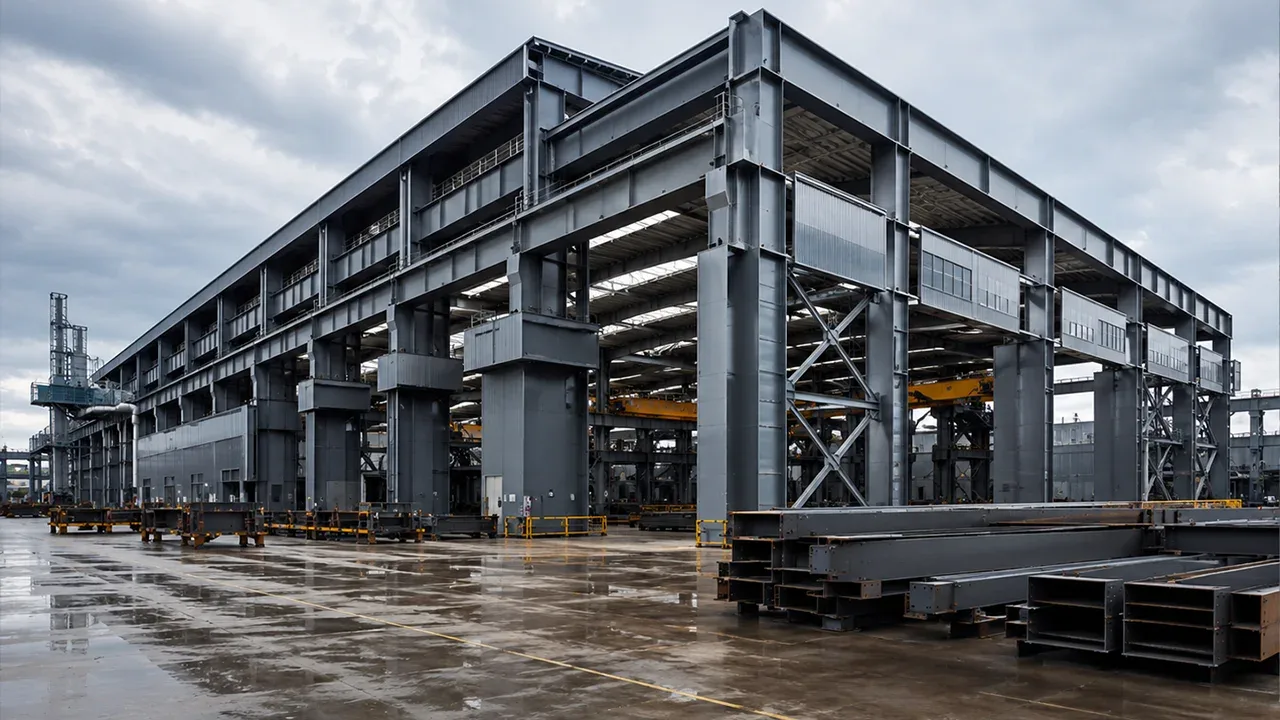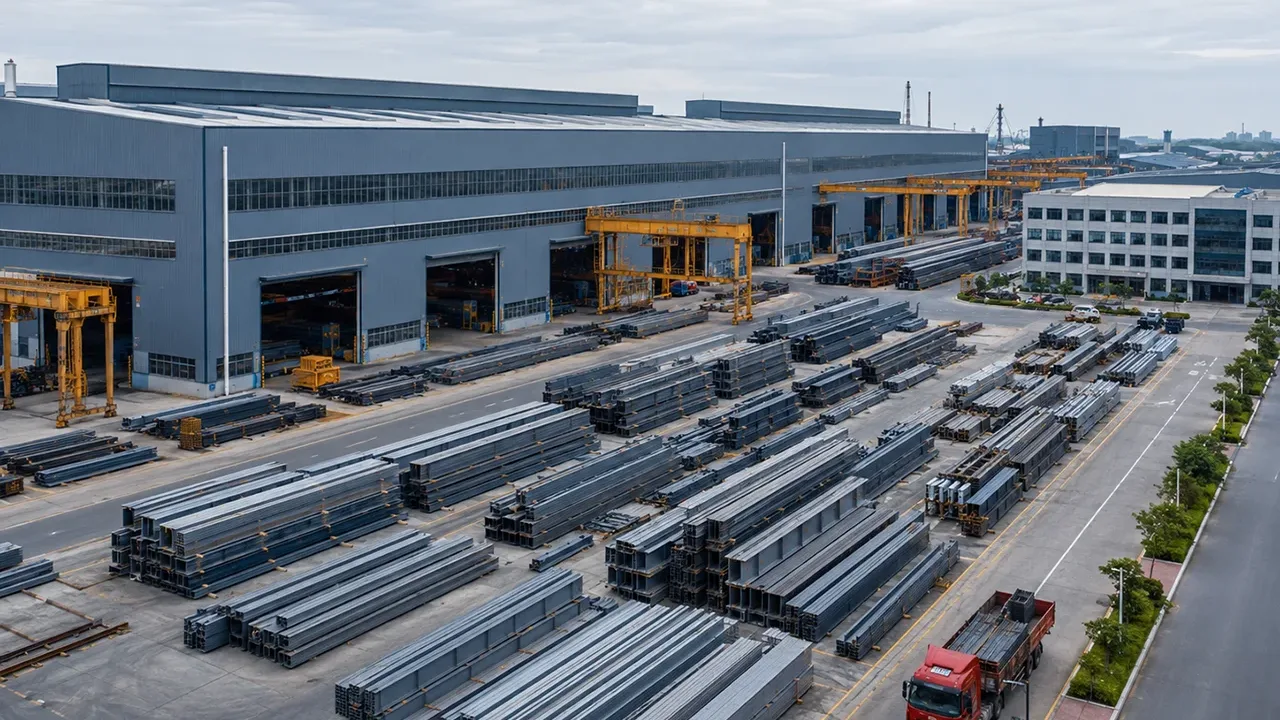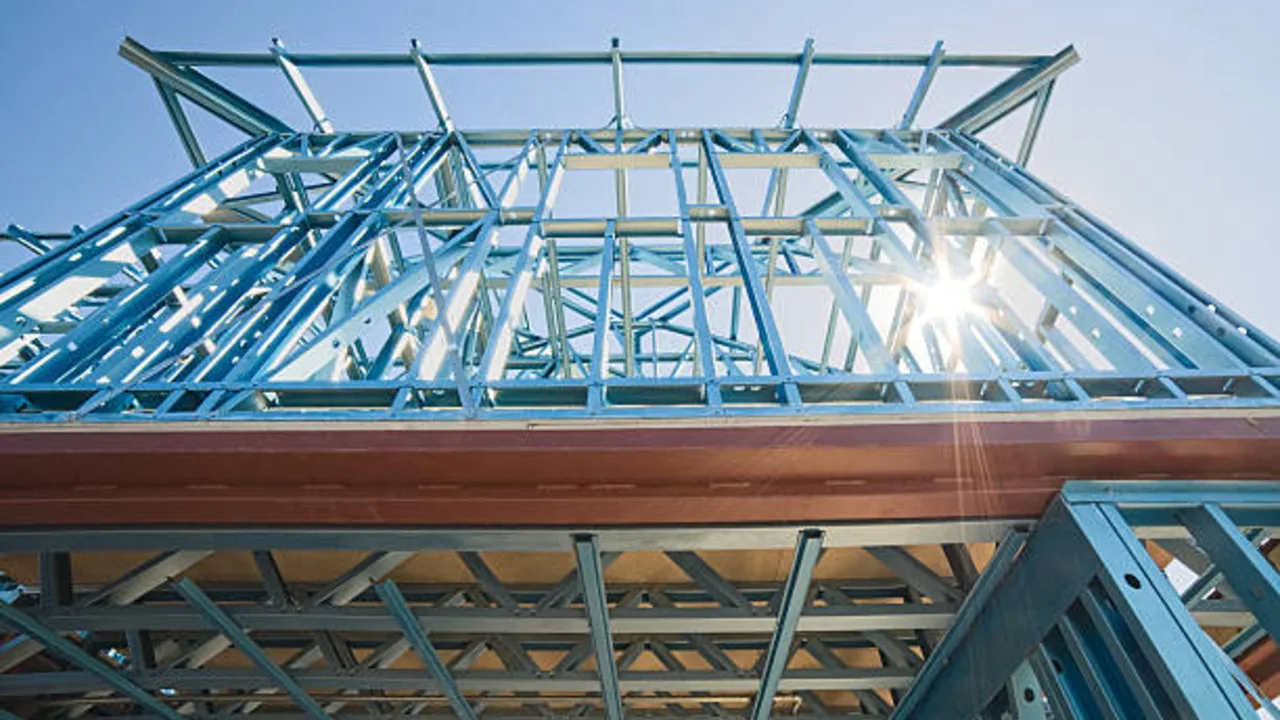
Some construction programs are not about delivering one isolated building. They involve multiple similar facilities, repeated layouts, phased industrial expansion, or a chain of structures that must be delivered across different plots with predictable quality and schedule control. In this type of work, every repeated mistake becomes expensive. Every unnecessary design variation creates more drawings, more procurement decisions, more fabrication instructions, and more installation uncertainty.
This is where repetitive prefab steel buildings become valuable. The goal is not to make every structure look identical. The goal is to create a repeatable steel system that can be used across several buildings while still allowing controlled adjustments for site conditions, operational needs, and local requirements.
For developers, industrial owners, contractors, and logistics operators, repetitive building programs require a different mindset from one-off construction. Instead of designing each building from zero, the project team can define a repeatable frame logic, connection method, bay spacing, roof system, wall support arrangement, and standard module strategy. Once the system is proven, later buildings can move faster through engineering, fabrication, delivery, and erection.
Used correctly, prefab steel turns repetition into a project advantage. It reduces uncertainty, shortens the learning curve, and helps teams control quality across several buildings or construction phases.
Why Repetitive Building Programs Need a Different Steel Strategy
A single building can absorb a certain amount of one-time design effort, site coordination, and installation learning. A repetitive building program cannot be managed the same way. When a project includes several warehouses, factory blocks, utility buildings, agricultural sheds, or logistics units, small inefficiencies multiply quickly.
If the first building has unclear connection details, the second building may repeat the same confusion. If the packing sequence is not coordinated with the erection sequence, the same unloading problem may happen again and again. If every structure uses a slightly different framing layout without a strong reason, the fabrication team loses the benefit of repetition.
Repeated buildings create repeated risks
Repetition can be useful, but only when it is controlled. Without a consistent steel strategy, repeated projects can create repeated drawing errors, repeated procurement delays, repeated site questions, and repeated installation bottlenecks.
Common risks in multi-building programs include:
- Different drawing revisions being used across similar buildings
- Connection details changing without clear control
- Fabrication teams treating each building as a separate package
- Site crews relearning installation methods for every phase
- Material packing that does not match the erection sequence
- Uncontrolled local changes that break the repeatable system
A better approach is to decide early which parts of the building system should repeat and which parts should remain flexible. This allows repetitive prefab steel buildings to gain speed without becoming rigid or unsuitable for real site conditions.
Standardization reduces design and installation friction
Standardization does not mean removing all project-specific thinking. It means reducing unnecessary variation. A repeated structural grid, bolt pattern, bracing arrangement, or roof frame logic can make design review easier and installation more predictable.
When teams agree on the repeatable steel strategy early, they can reuse engineering logic, fabrication workflows, inspection checklists, packing methods, and crane planning. This reduces friction between design, factory production, logistics, and site erection.
What Repetitive Prefab Steel Buildings Mean in Practice
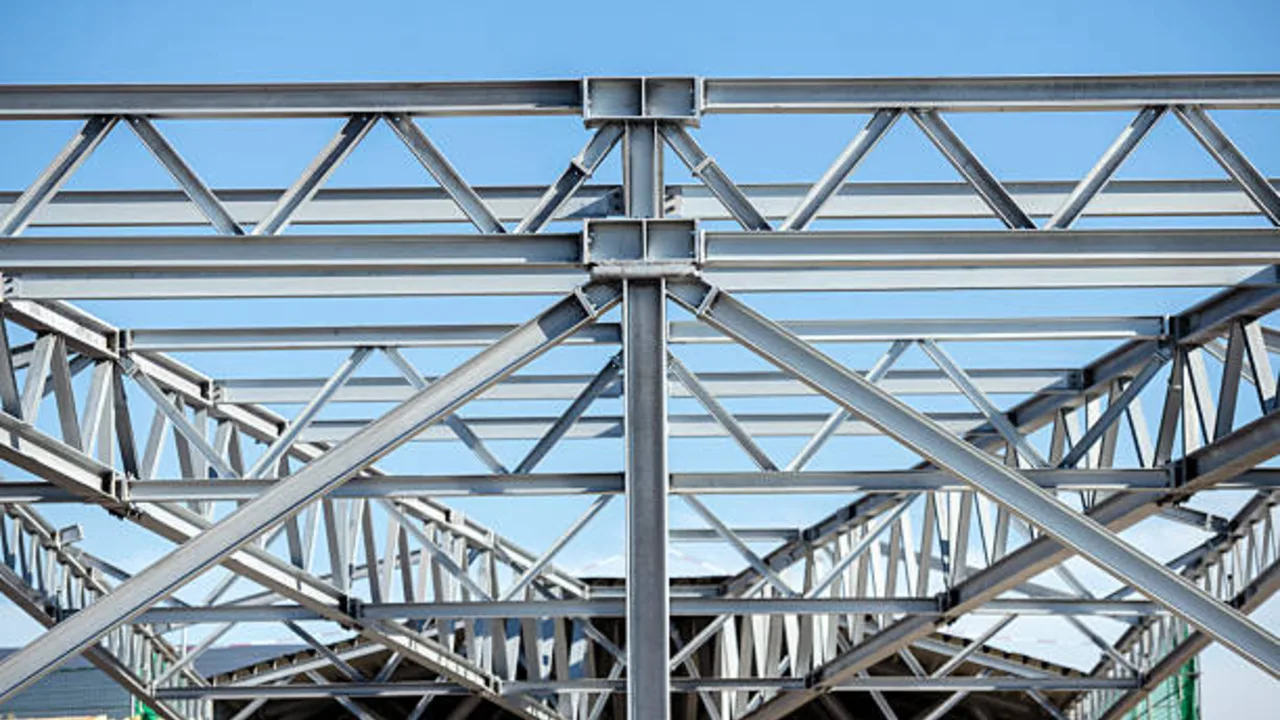
In practical terms, repetitive prefab steel buildings are steel structures designed around repeatable components, repeatable connection logic, and repeatable delivery workflows. They are especially useful when several buildings share similar functions, spans, bay layouts, clear heights, roof systems, or loading requirements.
The repeated system may appear in several forms. It may be a portal frame bay used across multiple warehouse units. It may be a roof truss module repeated across several production halls. It may be a wall support system used across a chain of industrial buildings. It may also be a platform, canopy, pipe rack, stair tower, or equipment support that repeats across different parts of a facility.
Repeating the system, not blindly copying the building
A common misunderstanding is that repetition means every building must be identical. That is rarely practical. Site dimensions, access roads, drainage direction, equipment layout, wind exposure, local codes, door positions, and expansion plans may all vary.
The smarter approach is to repeat the system, not blindly copy the entire building. A project may standardize the main frame spacing while allowing changes in building length. It may repeat the connection details while adjusting cladding layout. It may use the same roof framing logic while modifying ventilation openings or loading conditions.
This approach creates controlled flexibility. The design remains familiar enough for efficient fabrication and installation, while still allowing the project team to respond to real requirements.
Where standard modules create the most value
A standard module is useful when it simplifies repeated decisions. In steel construction, a module does not always mean a fully enclosed volumetric unit. It may be a repeatable structural bay, frame segment, truss unit, wall framing zone, roof support package, bracing set, or preassembled platform section.
The value of a standard module is that it gives the project team a repeatable building block. Once the module is engineered, checked, fabricated, transported, and installed successfully, the same logic can be reused across later buildings or phases.
How Standard Modules Improve Project Control
Standard modules help project teams control complexity. Instead of managing every beam, plate, brace, and connection as if it were unique, the team can organize the building program around repeated packages. This improves drawing control, procurement planning, fabrication batching, quality inspection, packing, and site installation.
| Standardized Area | What Repeats | Project Benefit |
|---|---|---|
| Structural grid | Column spacing, bay width, frame rhythm | Faster design review and more predictable erection planning |
| Frame module | Portal frame, truss segment, or roof support unit | Repeatable fabrication workflow and easier production batching |
| Connection detail | Bolt patterns, splice plates, base plate logic | Less confusion during installation and fewer field questions |
| Secondary steel | Purlins, girts, bracing zones, small support members | Easier procurement and more consistent site assembly |
| Packing sequence | Module-based loading and labeling | Faster unloading, sorting, and installation on site |
The best standard module strategy connects design decisions to real project execution. A module that looks clean in drawings but is difficult to transport, lift, or bolt together will not help the project. A useful module should support engineering clarity, factory repeatability, and practical installation.
Design Advantages of Repetitive Prefab Steel Buildings
The design phase often determines whether a repetitive building program will become efficient or chaotic. If the first building is developed with future repetition in mind, later buildings can move faster. If the first building is treated as a one-off structure, the team may lose the opportunity to standardize early.
Reusable engineering logic
One of the strongest design advantages of repetitive prefab steel buildings is reusable engineering logic. Once the frame type, span, column spacing, bracing method, roof slope, and connection principles are defined, those decisions can guide multiple buildings.
This does not eliminate engineering review. Each building still needs to match its actual loads, site conditions, code requirements, and usage. However, the repeated logic reduces the amount of new decision-making required for every phase.
Controlled variation across multiple sites
Many repetitive programs are not built on one perfect flat site. They may involve several plots, different building lengths, different access directions, or different tenant requirements. Controlled variation allows the project team to adapt without destroying standardization.
For example, the same structural bay may be used across several warehouse units, while door locations, canopy extensions, drainage details, or equipment supports vary by building. This keeps the core steel system consistent while allowing functional differences.
Faster approval cycles after the first unit
The first unit in a repetitive program often requires the most effort. It sets the frame logic, connection details, member sizes, fabrication drawings, packing strategy, and installation method. Once that first unit is approved and successfully built, later units can often move through review more smoothly.
Design comments, fabrication lessons, and installation feedback from the first building should be documented and applied to the next phases. This turns the first building into a prototype for improvement, not just a completed structure.
Fabrication Benefits Across Repeated Steel Packages
Factory fabrication benefits strongly from repetition. When steel packages use repeated components and connection details, the fabricator can organize work more efficiently. Cutting, drilling, fitting, welding, surface treatment, inspection, and packing can follow a more predictable rhythm.
Repeatable cutting, drilling, and welding workflows
Repeated steel members allow the fabrication team to reduce setup time and improve workflow consistency. Similar beams, columns, plates, and braces can be grouped into production batches. Hole patterns can be checked more efficiently. Welding sequences can become more familiar to shop teams.
This does not mean quality control becomes less important. In fact, repeatability makes quality control more systematic. If the same detail appears across many units, the team can inspect it consistently and identify recurring issues earlier.
Better material planning across multiple buildings
Material planning becomes easier when buildings share a repeated steel logic. The procurement team can forecast steel sections, plates, bolts, secondary members, and coating requirements across several phases instead of buying each building as a separate custom package.
Repeated material types can also improve nesting, reduce waste, and simplify inventory control. When a program uses too many unnecessary variations, procurement becomes fragmented. When the system is standardized, purchasing and fabrication can work with clearer expectations.
Consistent quality checks from batch to batch
A repeated building program allows inspection teams to apply consistent checklists. Dimensional checks, hole pattern verification, weld review, coating inspection, component marking, and packing checks can all follow a repeated structure.
This is one of the quiet advantages of prefab steel. The more consistent the system becomes, the easier it is to detect abnormal conditions. Instead of inspecting every component as a completely new condition, the team can compare repeated parts against an established standard.
Installation Efficiency in Repetitive Building Programs
Installation is where repetitive planning becomes visible. A steel system may look efficient in drawings and fabrication schedules, but the real test happens when trucks arrive, cranes are positioned, and erection crews begin assembling the structure. For repetitive building programs, the biggest advantage is that the site team does not need to relearn the building method from zero for every unit.
With repetitive prefab steel buildings, the first building often becomes the learning stage. Crews understand the frame rhythm, bolt-up sequence, bracing order, roof installation method, and packing logic. By the time the second or third building starts, installation becomes faster and more predictable.
Learning curve benefits for erection crews
Repeated steel systems allow erection crews to build practical familiarity. They know which members arrive first, where temporary bracing is placed, how the frame is aligned, which bolts are tightened first, and how roof and wall secondary members are sequenced.
This learning curve can reduce supervision pressure. Instead of explaining a completely new layout for every building, project managers can focus on checking quality, safety, and site-specific differences. The crew becomes more confident because the installation method repeats.
Repeatable crane and lifting plans
Crane planning is another area where repetition creates value. Similar buildings often allow similar lifting points, crane positions, rigging methods, and erection sequences. If the first building is planned well, the same crane logic can often be reused with minor adjustments.
This does not mean every lift is identical. Site access, foundation readiness, truck routes, and weather may still change. However, a repeatable lifting strategy gives the project team a proven starting point.
Fewer surprises during site assembly
Surprises are expensive during steel erection. If materials are difficult to find, connections are unclear, or the packing order does not match the installation sequence, the crew loses time. A standard module-based strategy helps reduce these problems because components are organized around the way the building will actually be assembled.
When packing, labeling, drawings, and erection sequence all follow the same logic, site work becomes cleaner. The crew can locate members faster, reduce unnecessary handling, and avoid opening packages too early.
Where Repetition Should Not Be Overused
Repetition is useful, but it should not be forced. A common mistake in repetitive steel programs is assuming that every building should be identical just because several buildings are similar. In reality, each site and each building function may still require specific adjustments.
Local site conditions still matter
Foundation conditions, wind exposure, seismic requirements, drainage direction, soil bearing capacity, access routes, and local construction rules can vary from one location to another. A steel frame that works well on one plot may need modification on another plot.
Good repetitive design respects these differences. The standard system provides a base, but engineering verification still needs to confirm that each building is suitable for its actual condition.
Functional differences may require controlled variation
Different buildings may serve different operational needs. One warehouse may need larger loading doors. Another may require mezzanine support. A factory block may need equipment openings, crane beams, ventilation zones, or heavier floor interface loads.
In these cases, the project should not blindly copy the same design. The better solution is controlled variation. The main structure, grid, and connection philosophy may repeat, while specific functional areas are adjusted through approved details.
Key Planning Questions Before Choosing a Repetitive Prefab Steel System
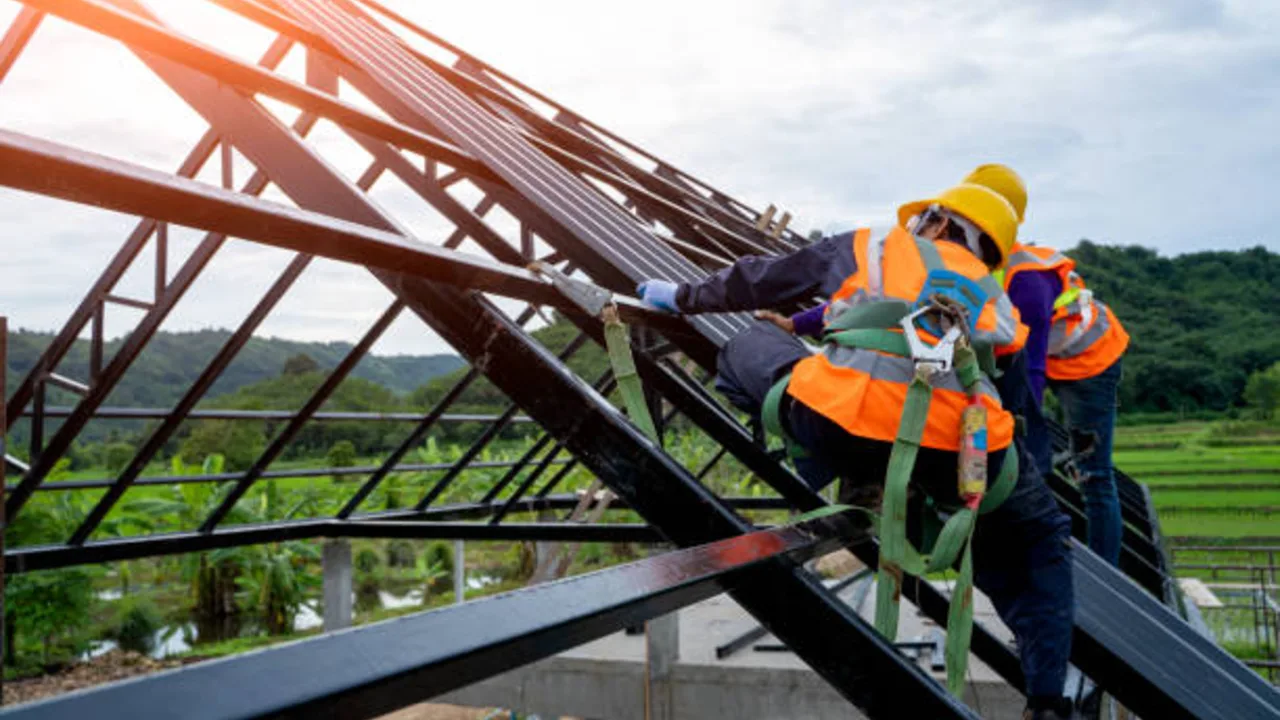
Before committing to a repeatable system, the project team should identify which parts of the building program truly benefit from standardization. A clear planning process prevents both under-standardization and over-standardization.
| Planning Question | Why It Matters | Recommended Direction |
|---|---|---|
| How many buildings or phases will repeat? | The more units repeat, the more value standardization can create. | Define the repeated building family early. |
| Which dimensions are truly fixed? | Not every width, height, or bay spacing needs to change. | Standardize the dimensions that support procurement and erection. |
| Which functions vary by site? | Doors, equipment, access, and loading may differ. | Keep variation controlled and documented. |
| Can one structural grid serve several use cases? | A shared grid can reduce redesign effort. | Use one frame logic where practical. |
| Which connections should be standardized? | Repeated connection details reduce site confusion. | Standardize bolt patterns, splice logic, and base plate concepts. |
| How will future expansion be handled? | Repetitive programs often grow in phases. | Plan end bays, connection points, and extension zones early. |
| Can modules be packed by installation sequence? | Packing affects unloading and crane productivity. | Link the standard module plan with logistics. |
| Who controls revisions across repeated units? | Uncontrolled revisions can break repeatability. | Use one revision control system for all buildings. |
Real Case Study: Rolling Out Multiple Similar Warehouse Units
Consider a developer planning several warehouse units inside an industrial park. The buildings are not perfectly identical, but they share similar spans, clear heights, roof slopes, wall systems, loading requirements, and tenant fit-out expectations. If each warehouse is designed as a separate custom project, the team will need to repeat engineering decisions, drawing reviews, procurement planning, fabrication coordination, and site installation planning for every unit.
Instead, the project team chooses a repeatable prefab steel strategy. The first warehouse is developed as the reference model. The main portal frame bay, roof purlin spacing, wall girt arrangement, bracing zones, bolt connection details, base plate logic, and packing sequence are reviewed carefully. Once the first unit is approved, the same system becomes the foundation for later buildings.
In the second and third units, the team does not start from zero. Building length can be adjusted by adding or reducing repeated bays. Door positions can change within predefined wall zones. Canopies and small equipment supports can be added using approved secondary steel details. The main structural rhythm stays consistent, while project-specific changes remain controlled.
This approach creates several measurable benefits. Fabrication teams can batch similar members together. Site crews become familiar with the erection sequence. The logistics team can pack frames, bracing, and secondary members by building zone. Inspectors can use repeated checklists. Project managers can compare progress across units more easily.
Programs like this benefit from a coordinated prefabricated steel structure approach because the value comes from repeating a controlled system across multiple buildings, not merely copying one warehouse shape.
Common Mistakes in Repetitive Prefab Steel Building Programs
Repetition can reduce risk, but poor planning can also repeat problems. If the standard system is not properly controlled, one mistake can spread across many buildings.
| Mistake | Why It Causes Problems | Better Approach |
|---|---|---|
| Standardizing too late | Several units may already have different layouts, drawings, and details. | Define repeatable frame and module logic before full production begins. |
| Allowing uncontrolled local changes | Small field changes can break consistency across the program. | Use formal revision control and approval workflows. |
| Reusing old drawings without checking revisions | Later units may be fabricated from outdated information. | Maintain one controlled drawing register. |
| Ignoring transport and packing sequence | Site crews may waste time sorting components. | Pack by building, phase, and erection order. |
| Treating each unit as separate procurement | Material planning becomes fragmented and inefficient. | Plan steel sections, bolts, coating, and secondary members across the program. |
| Over-standardizing different buildings | Buildings with different loads or functions may become unsuitable. | Allow controlled variation where engineering requires it. |
How Manufacturers Support Repetitive Steel Building Programs
Manufacturers play an important role in making repetitive programs successful. A good steel partner does more than fabricate individual members. It helps turn the building program into a repeatable production and delivery system.
Support may include developing repeatable frame packages, reviewing connection details for fabrication efficiency, organizing production batches, preparing module-based packing plans, coordinating shipping by installation phase, and providing feedback after the first building is erected.
XTD Steel Structure can support this type of program by helping project teams align engineering logic, fabrication planning, and site installation requirements before repeated production begins. This is especially useful when the project includes multiple warehouses, factory buildings, agricultural facilities, or industrial support structures that share similar steel systems.
Conclusion
Repetitive prefab steel buildings are not valuable simply because they repeat the same shape. Their value comes from repeating the right system: frame logic, standard module planning, connection details, fabrication workflow, logistics sequence, and erection method.
For multi-building programs, this repeatability can reduce design friction, improve procurement control, support more efficient fabrication, and shorten the installation learning curve. It also helps project teams capture lessons from the first unit and apply them across later phases.
The best results come from balance. A repetitive steel program should be standardized enough to create efficiency, but flexible enough to respond to real site conditions and functional differences. When that balance is managed well, prefab steel becomes a scalable delivery method for industrial parks, warehouse programs, factory clusters, logistics facilities, and other repeated building needs.