A Pratt truss is one of the most recognizable and practical truss systems used in steel structure and bridge design. Its layout is simple but effective: vertical members help divide the structure into panels, while diagonal members usually slope toward the center of the span and work mainly in tension under typical gravity loads. This clear member arrangement makes the Pratt truss easy to understand, fabricate, inspect, and apply in many steel projects.
In bridge construction, the Pratt truss has been used for pedestrian bridges, railway bridges, highway bridges, and industrial access bridges. In building construction, the same structural logic can appear in roof trusses, pipe racks, conveyor galleries, equipment supports, and large-span steel framing. The main reason is efficiency. Instead of using a heavy solid beam to cross a long distance, a truss uses a system of connected members to transfer loads through tension and compression.
A well-designed Pratt truss can reduce unnecessary steel weight while still providing a strong and stable structural system. However, its performance depends on more than just the truss shape. Span length, panel spacing, member size, connection design, lateral bracing, fabrication accuracy, corrosion protection, and installation planning all affect how the final structure performs in service.
What Is a Pratt Truss?
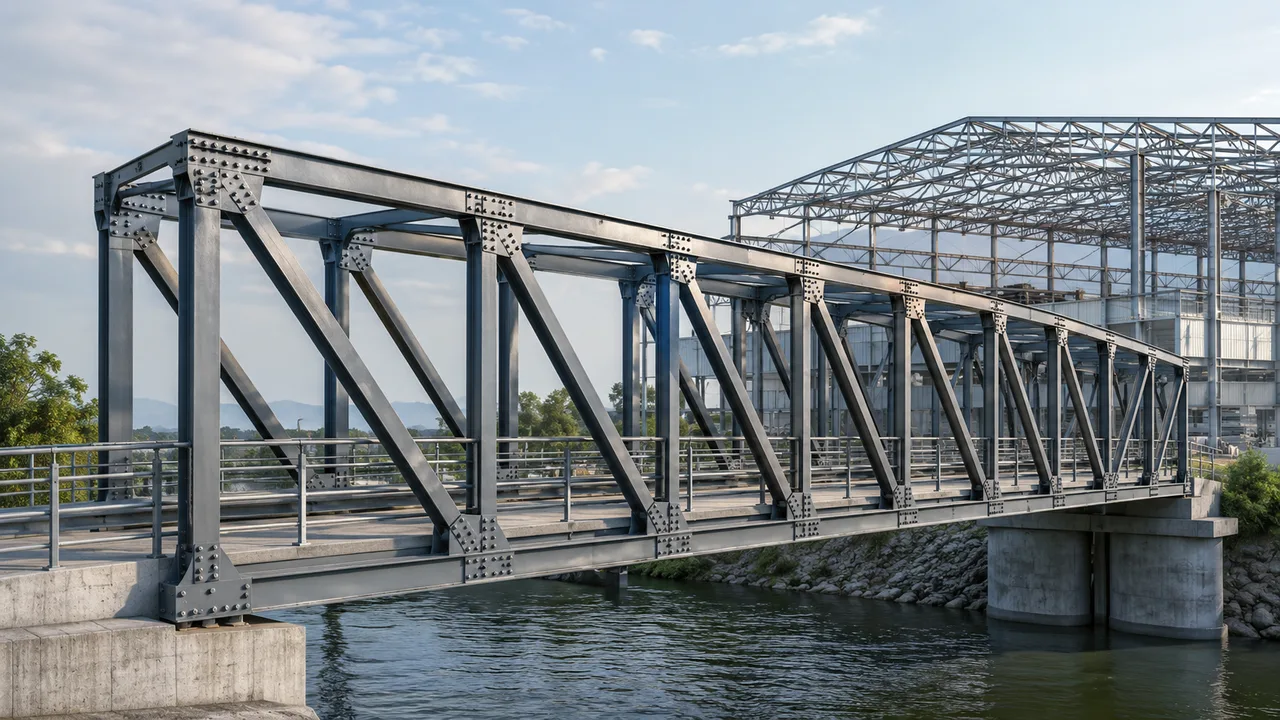
A Pratt truss is a truss system made from top chords, bottom chords, vertical members, and diagonal members. The diagonals are usually arranged so that they slope downward toward the center of the span. Under common vertical loading conditions, the diagonal members mainly carry tension, while the vertical members commonly carry compression.
This force arrangement is one of the key reasons why the Pratt truss became popular in steel construction. Steel performs very well in tension, so using diagonal members as tension elements can be efficient. At the same time, the vertical members help create repeated panels and support load transfer from the deck, roof, or supported structure into the rest of the truss.
The system is especially useful when the project needs a clear load path. A Pratt truss does not rely on a single massive beam. Instead, the load moves through a network of connected members. Each member has a specific role, and the overall geometry allows the structure to carry loads across a span with better material efficiency.
How a Pratt Truss Works
A Pratt truss works by transferring loads through a triangular structural arrangement. When loads are applied to the bridge deck, roof surface, or supported framing, the forces are passed into the truss joints. From there, the forces move through the top chord, bottom chord, vertical members, diagonal members, and finally into the supports.
The top chord generally helps resist compression forces, especially when the truss is carrying gravity loads. The bottom chord often works in tension, helping tie the truss together and resist the overall bending effect across the span. The vertical and diagonal web members divide the truss into smaller triangular panels, allowing the structure to control load transfer more efficiently than a simple beam of the same depth.
This is why truss depth matters. A deeper truss can often carry loads more efficiently because the top and bottom chords are farther apart, giving the structure a stronger lever arm against bending. However, deeper trusses may require more material, more bracing, and more installation planning. Good truss design always balances structural efficiency with fabrication, transport, and site assembly requirements.
Top Chord and Bottom Chord
The top chord and bottom chord form the main outline of the Pratt truss. These two chord members are responsible for resisting the large forces created by the span. In many gravity-load conditions, the top chord is mainly in compression, while the bottom chord is mainly in tension.
The top chord must be designed carefully because compression members can buckle if they are too slender or insufficiently braced. This is especially important in long-span steel structures, where out-of-plane stability can control the design. The top chord often needs lateral bracing, connection stiffness, and accurate alignment to perform properly.
The bottom chord also plays an important role. It ties the truss together and helps resist the tensile forces caused by bending across the span. Since steel is strong in tension, the bottom chord can be an efficient part of the system when properly sized and connected.
Vertical Members
Vertical members divide the Pratt truss into panels and help transfer loads from the deck or roof system into the truss. In bridge applications, floor beams or deck framing may connect near vertical panel points. In roof applications, purlins or secondary framing may transfer loads into the truss at planned locations.
These vertical members often work in compression under typical gravity loads. Because compression members are sensitive to buckling, their length, section size, and bracing conditions must be checked carefully. A vertical member that looks simple on a drawing can become a weak point if it is too slender or poorly connected.
Vertical members also make the truss layout easier to fabricate and inspect. They create a repeated panel rhythm, which can simplify shop drawings, member marking, and site assembly.
Diagonal Members
The diagonal members are the signature part of a Pratt truss. They usually slope toward the center of the span and are commonly designed to carry tension under gravity loads. This makes the system efficient for steel construction because tension members can often be lighter and easier to size than compression members.
The diagonals help move forces from the loaded points toward the supports. As loads travel through the structure, each diagonal participates in the overall load path. If the diagonals are poorly sized, poorly connected, or incorrectly installed, the entire truss system can lose efficiency.
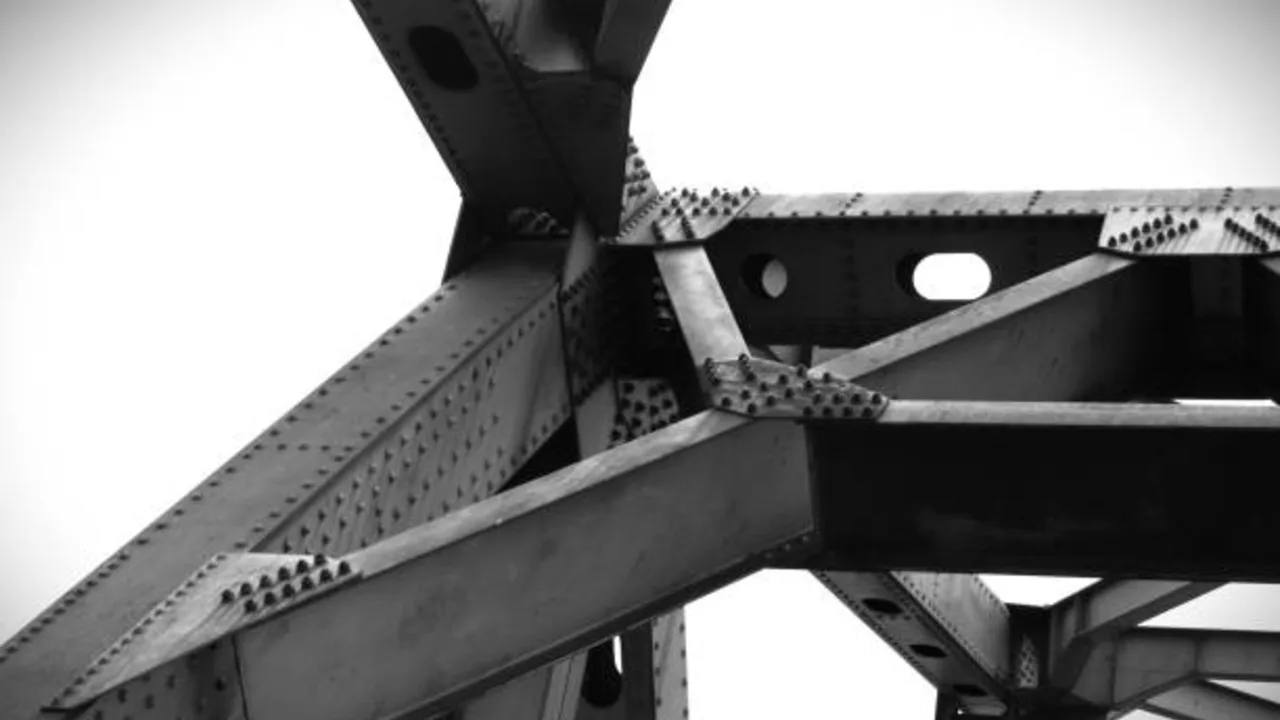
Connection design is especially important for diagonal members. Bolted or welded connections must transfer tension forces safely into gusset plates, chord members, and adjacent web members. Hole alignment, plate thickness, weld quality, bolt grade, and fabrication tolerance all affect the final performance of the truss.
Why Pratt Truss Design Is Common in Steel Structures
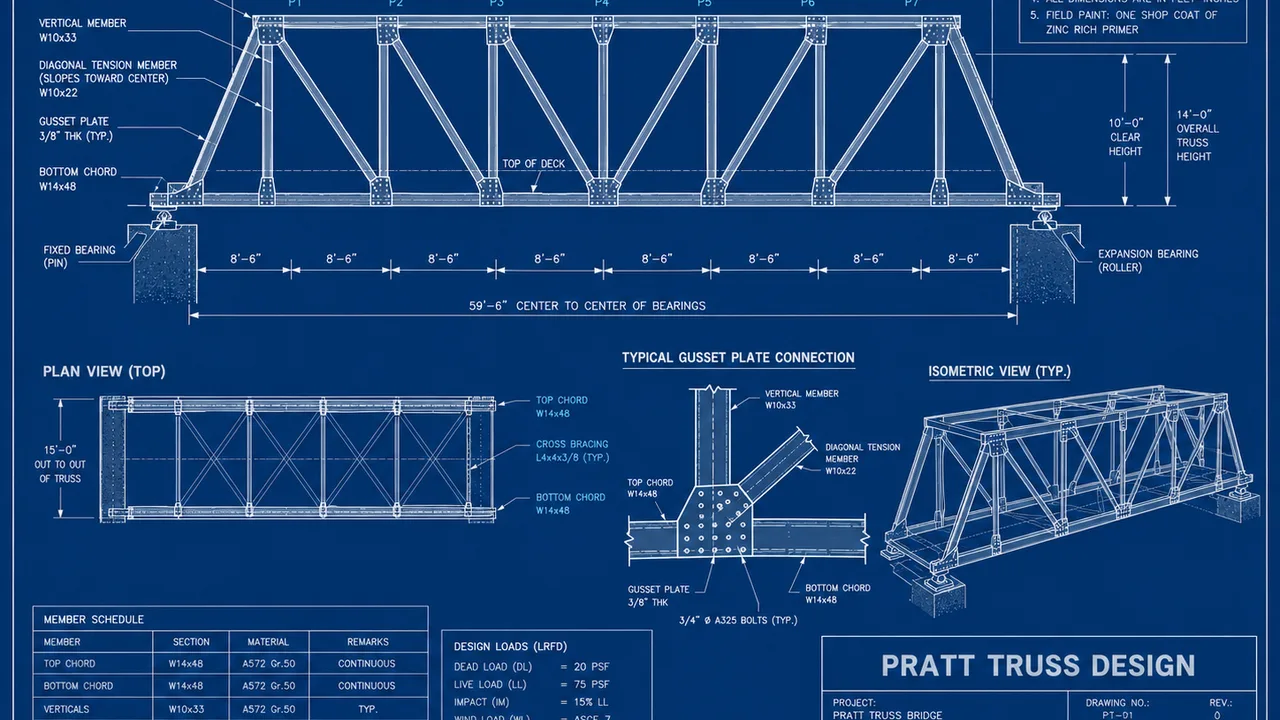
Pratt truss design is common in steel structures because the geometry fits the strengths of steel. Steel performs well in tension, can be fabricated accurately, and can be connected using bolts, welds, gusset plates, and shop-fabricated assemblies. The repeated panel layout of a Pratt truss also works well with industrial fabrication workflows.
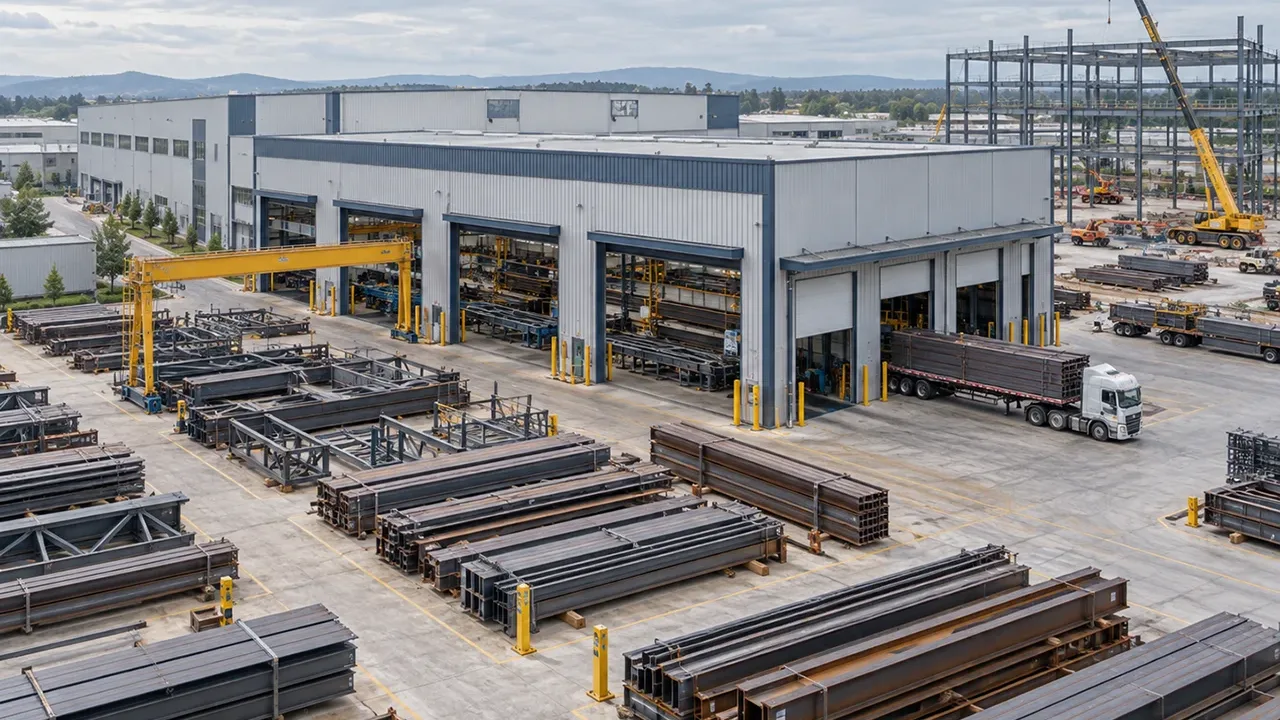
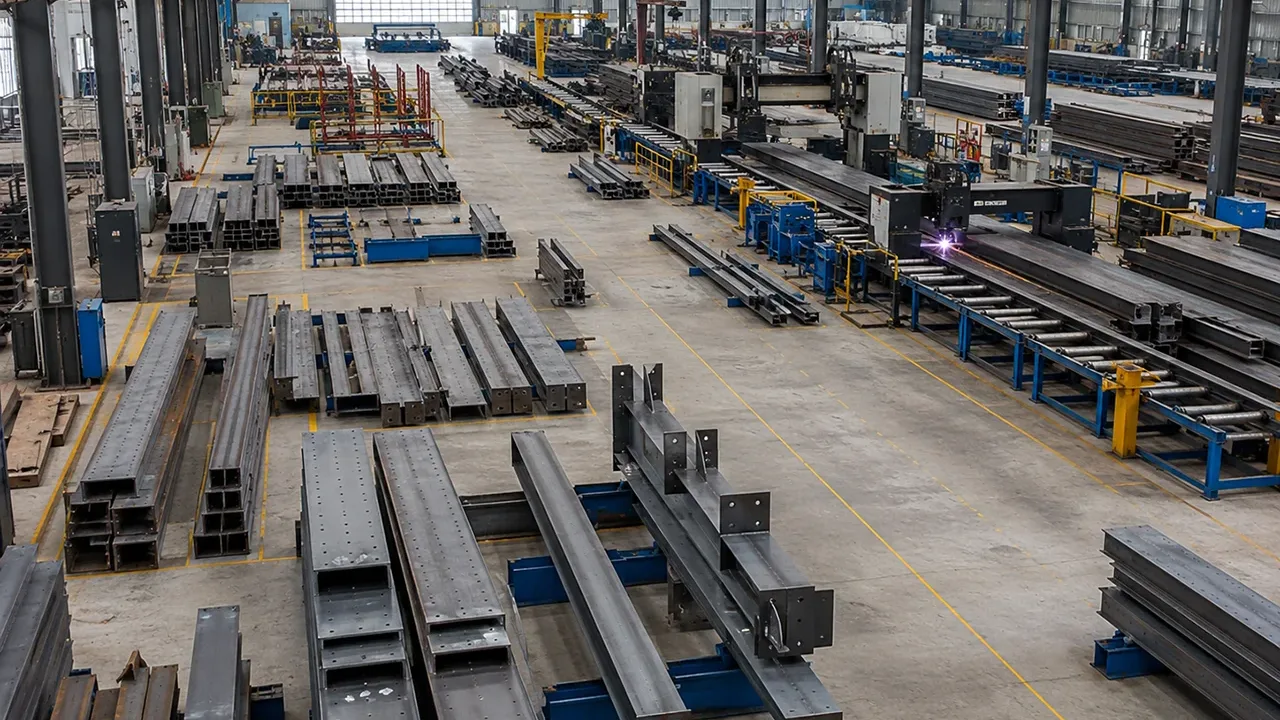
For steel structure manufacturers, repetition matters. When a truss uses repeated panels, similar member types, and consistent connection details, fabrication can be more controlled. Members can be cut, drilled, welded, painted, labeled, and packed according to a clear sequence. This reduces confusion during production and helps site teams assemble the structure more efficiently.
The Pratt truss is also practical because its load path is relatively easy to understand. Engineers, fabricators, inspectors, and erection teams can identify which members are critical, how loads move through the structure, and where connections need special attention. This does not mean the design is simple or should be treated casually. It means the system has a logical arrangement that supports good coordination between design, fabrication, and installation.
Pratt Truss in Bridge Design
The Pratt truss is strongly associated with bridge design. Many historic steel bridges used Pratt truss layouts because the system could span longer distances than simple beams while using material efficiently. Today, Pratt-style trusses can still be used in pedestrian bridges, industrial access bridges, pipe bridges, conveyor bridges, utility bridges, and some transportation structures depending on the project requirements.
In bridge applications, the truss must support moving loads, impact effects, vibration, lateral forces, wind, temperature movement, and long-term durability demands. The structure must also remain serviceable, meaning deflection and vibration must stay within acceptable limits. This is why bridge truss design requires careful coordination between structural analysis, member sizing, deck design, connection detailing, and protective coating.
A Pratt truss bridge can be configured as a through truss, pony truss, or deck truss depending on where the deck is located relative to the truss depth. Each configuration creates different design and clearance requirements. For example, a through truss may place the deck between two side trusses, while a deck truss may support the deck above the truss system.
Load Transfer in Bridge Applications
In a bridge, loads usually begin at the deck. Vehicles, pedestrians, railway traffic, maintenance equipment, or service loads act on the deck surface. These loads are transferred into floor beams, stringers, or cross members, and then into the truss panel points.
From the panel points, the loads move through the verticals and diagonals into the chords and supports. The top chord, bottom chord, and web members work together to resist bending and shear across the span. The truss is efficient because many smaller members share the load instead of relying on one heavy beam.
This load transfer must be planned carefully. If deck loads are introduced at locations that do not match the truss panel points, secondary bending can occur. That can increase stress in members and connections. For this reason, bridge deck framing and truss geometry should be coordinated early in the design.
Why It Works Well for Medium to Long Spans
A Pratt truss can work well for medium to long spans because it uses depth and triangulation to reduce the demand on individual members. Instead of creating a very deep solid beam, the truss separates the compression and tension zones through top and bottom chords. The web members then transfer shear forces between them.
This makes the structure more material-efficient for many bridge and industrial span conditions. The open web also reduces self-weight compared with a solid plate girder of similar depth, depending on the span, load, and fabrication method. Lower self-weight can reduce demands on supports, foundations, lifting equipment, and transportation planning.
However, span efficiency must be balanced with connection complexity. A longer Pratt truss may require more panels, more gusset plates, more bracing, and more detailed erection planning. Good design does not simply make the truss longer. It checks whether the truss type, panel length, member sizes, support conditions, and installation method are suitable for the project.
Pratt Truss in Industrial Steel Structure Design
Although the Pratt truss is often discussed in bridge design, the same structural logic is also useful in industrial steel structure projects. Many industrial buildings need long spans, open working space, equipment clearance, and reliable load transfer. A truss system can help achieve these requirements without relying on extremely heavy solid members.
In industrial projects, Pratt-style web arrangements may appear in roof trusses, pipe racks, conveyor galleries, access bridges, crane support structures, equipment platforms, and large-span steel buildings. The exact geometry may be adjusted for each project, but the principle remains similar: loads are transferred through a system of chords, verticals, diagonals, and bracing.
This is especially useful when the structure needs to cross a wide area without many intermediate columns. Factories, warehouses, workshops, logistics buildings, and industrial halls often require open floor space for production lines, storage racks, vehicles, cranes, or machinery. A truss can help keep the internal space more flexible while still supporting roof loads, service loads, or equipment-related loads.
Roof Truss Applications
In roof design, Pratt-style trusses can support wide spans between columns or frames. The roof load is transferred through purlins or secondary framing into the truss panel points. From there, the truss carries the load toward the supports. This makes the system useful for industrial halls where internal columns should be reduced or avoided.
Roof trusses must be designed for more than dead load. They may need to resist wind uplift, rain load, snow load, maintenance load, suspended services, lighting systems, ducts, cable trays, and possible future equipment. If these loads are not considered early, the roof system may require costly reinforcement later.
A Pratt-style roof truss also requires good coordination with purlins, roof panels, bracing, gutters, skylights, insulation, and installation sequence. The truss itself may be strong, but the roof system only performs well when all connected components are planned together.
Industrial Platform and Support Structures
Industrial platforms and support structures often carry concentrated loads from equipment, walkways, pipes, conveyors, tanks, or service systems. In these cases, a truss arrangement can help distribute load while keeping the structure relatively lightweight.
For example, conveyor galleries may use truss sides to span between support towers. Pipe bridges may use truss arrangements to carry service lines across roads, production zones, or plant areas. Equipment support structures may use truss geometry to control deflection and maintain stability.
These applications require careful member sizing and connection design. Industrial loads can be dynamic, eccentric, or concentrated at specific points. Vibration, maintenance access, corrosion, and thermal movement may also affect the design. A truss used in an industrial plant must be designed for the actual operating environment, not only for a basic vertical load case.
Pratt Truss Advantages
Understanding Pratt truss advantages helps project teams decide whether this truss type is suitable for a bridge, roof, industrial platform, or steel support structure. The main advantage is its clear and efficient load path. Under typical gravity loading, the diagonal members usually work in tension, which matches the natural strength of steel.
Another advantage is material efficiency. A truss can span longer distances with less steel than a solid beam in many conditions. Because the structure uses triangulation, the load can be distributed through multiple members instead of being carried by one heavy section. This can reduce self-weight and improve transportation, lifting, and erection planning.
The Pratt truss is also practical for fabrication. Its repeated panel layout allows similar members and connection details to be produced in a controlled sequence. This helps with cutting, drilling, welding, painting, labeling, packing, and site assembly. For steel structure manufacturers, repeatable geometry can reduce confusion and improve production accuracy.
Inspection is another benefit. The member arrangement is easy to read compared with more complex truss systems. Engineers and inspectors can identify chords, verticals, diagonals, gusset plates, bracing points, and critical connections more easily. This supports maintenance and long-term structural monitoring.
Pratt Truss Limitations
A Pratt truss is useful, but it is not the best solution for every project. One limitation is connection complexity. A truss may use less steel in the main members, but it also requires many joints, gusset plates, bolts, welds, and bracing details. If connections are not designed and fabricated properly, the structure may not perform as intended.
Another limitation is buckling control. Some members work in compression, especially the top chord and often the vertical members. These members must be checked for slenderness and lateral stability. A compression member can fail by buckling even if the steel strength itself seems sufficient.
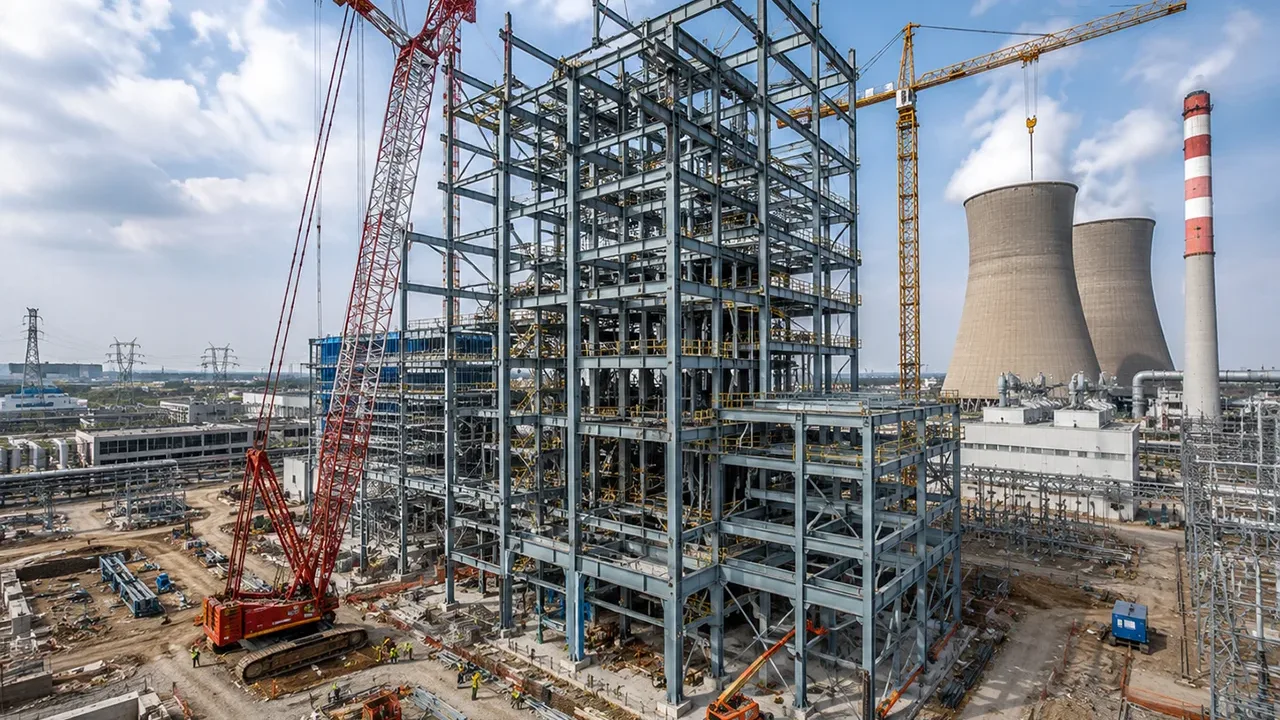
Transport and installation can also become challenging. Large trusses may need to be fabricated in segments, transported carefully, and assembled on site. Long truss sections may require special lifting plans, temporary supports, and erection bracing. If the project team does not plan these steps early, site work can become slower and riskier.
A Pratt truss also needs proper protection against corrosion. Bridges, industrial plants, coastal facilities, chemical environments, and outdoor steel structures can expose members and connections to moisture, pollution, salt air, or aggressive chemicals. Protective coating, galvanizing, drainage details, and inspection access should be part of the design strategy.
Pratt Truss vs Warren Truss
The Pratt truss and Warren truss are both widely known truss types, but they use different web arrangements. A Pratt truss typically uses vertical members and diagonals that slope toward the center. Under common gravity loads, the diagonals usually work in tension and the verticals often work in compression.
A Warren truss uses a repeated triangular pattern, often without vertical members in its basic form. The diagonal members alternate direction and may experience tension or compression depending on the load position. This can make the Warren truss efficient for distributed loads and simple repetitive geometry.
The better choice depends on the project. A Pratt truss can be easier to understand when loads are applied at panel points and when tension diagonals are preferred. A Warren truss may be attractive when the project benefits from a simple triangular pattern and efficient distribution of load across repeated panels.
The comparison should not be based only on appearance. Span, loading type, deflection limit, connection design, fabrication method, transport size, erection plan, inspection needs, and maintenance conditions should all be considered before choosing the truss type.
Key Design Factors for a Pratt Truss
A reliable Pratt truss starts with the correct span and panel layout. If the panels are too long, member forces and deflection may increase. If the panels are too short, the truss may require too many members and connections. The design must find a practical balance between structural efficiency and fabrication simplicity.
Load type is another major factor. Bridge loads, roof loads, equipment loads, wind loads, snow loads, seismic effects, thermal movement, and maintenance loads may all influence the final member sizes. The load path should be clear, and loads should be introduced into the truss at planned panel points whenever possible.
Material selection also matters. Steel grade, member shape, plate thickness, bolt grade, welding requirements, and coating system must match the project environment. A truss for a dry indoor building may need a different protection strategy from a bridge or industrial plant exposed to moisture and chemicals.
Member Sizing
Member sizing must reflect the actual forces in the truss. The top chord, bottom chord, verticals, and diagonals do not carry the same type or amount of force. Some members may be governed by tension strength, while others may be governed by compression buckling, connection capacity, or deflection limits.
The top chord often needs special attention because it commonly works in compression. It may require lateral bracing to prevent out-of-plane buckling. The bottom chord is often a tension element, but it still needs proper connection detailing and alignment.
Diagonal members must be sized according to their tension demand under the governing load cases. However, load reversal from wind, seismic effects, or unusual loading may change the force direction in some members. This is why actual structural analysis is necessary instead of relying only on the typical behavior of the truss type.
Connection Design
Connection design is one of the most important parts of truss performance. Gusset plates, bolts, welds, splice plates, and hole patterns must transfer member forces safely. A weak connection can limit the capacity of the entire truss, even when the member sections are strong.
Fabrication tolerance is also important. If holes do not align, site teams may enlarge holes, force members into position, or make unplanned modifications. These actions can reduce quality and create long-term durability problems. Accurate shop drawings, CNC drilling, fit-up control, and clear member marking help reduce these risks.
Connections should also be easy to inspect. In bridges and industrial structures, future maintenance teams need access to critical joints. Overly congested connection details can make inspection, coating repair, and bolt tightening more difficult.
Lateral Bracing
A truss does not only need strength in its main plane. It also needs stability out of plane. Lateral bracing helps prevent the truss from twisting, buckling, or moving sideways during erection and service. This is especially important for long-span trusses, roof trusses, bridge trusses, and tall industrial structures.
During installation, the truss may be less stable than it is after all permanent bracing and decking are installed. Temporary bracing may be required to hold the structure safely during lifting and assembly. Ignoring erection stability is one of the most dangerous mistakes in truss projects.
Permanent bracing should be coordinated with roof purlins, bridge deck framing, cross frames, diaphragms, and support conditions. The bracing system should be shown clearly in the drawings so that site teams understand the required installation sequence.
Common Mistakes in Pratt Truss Projects
| Common Mistake | Why It Creates Problems | What Project Teams Should Check |
|---|---|---|
| Choosing a Pratt truss only because it is familiar | A familiar truss type is not always the best option for every span, load condition, or project layout. If the truss form is selected by habit, the final structure may not match the real design requirements. | Review span, load type, clearance, fabrication method, transport limitations, installation access, and long-term maintenance needs before confirming the truss form. |
| Underestimating connection design | Many truss problems begin at the joints. Thin gusset plates, poor bolt layout, weak welds, misaligned holes, or congested details can reduce structural reliability and create construction problems. | Give connection design the same attention as member sizing. Check gusset plates, bolts, welds, splice details, hole alignment, and fabrication tolerances. |
| Ignoring lateral bracing | A truss may look stable in elevation drawings, but it can still move, twist, or buckle out of plane if it is not properly braced. This risk is especially important during erection. | Plan both temporary and permanent bracing. Coordinate bracing with roof framing, bridge deck framing, cross frames, diaphragms, and installation sequence. |
| Using poor corrosion protection | Trusses often include corners, plates, bolts, welds, and overlapping surfaces where moisture can collect. Without proper protection, corrosion can reduce service life and increase maintenance costs. | Plan coating access, surface preparation, drainage, galvanizing or painting requirements, and future inspection access according to the project environment. |
When Should You Choose a Pratt Truss?
A Pratt truss is a strong option when the project needs a clear load path, efficient use of steel, and a practical repeated panel layout. It is often suitable for bridge spans, industrial roof systems, access bridges, pipe bridges, conveyor structures, and steel support frames where triangulated load transfer provides an advantage.
It can be especially useful when diagonal tension members fit the expected load behavior. Since steel works well in tension, this arrangement can be efficient under common gravity loads. The system is also practical when fabrication accuracy, inspection clarity, and repeatable connection details are important.
However, the final choice should always be based on project-specific engineering. The span, load combinations, support conditions, available fabrication capacity, transport route, erection method, coating requirements, and maintenance plan should all be reviewed before choosing the truss type.
Conclusion
A Pratt truss is a proven and practical truss form for steel structure and bridge design. Its combination of chords, vertical members, and diagonal tension members creates a clear load path that can support efficient material use, reliable fabrication, and strong structural performance.
In bridges, the Pratt truss can carry deck loads across medium to long spans while keeping the structure open and efficient. In industrial steel structures, the same logic can support roofs, pipe racks, conveyor galleries, platforms, and other long-span systems. Its usefulness comes from both its geometry and its compatibility with steel fabrication.
Good performance depends on proper planning. Span layout, member sizing, connection design, lateral bracing, corrosion protection, fabrication tolerance, and installation sequence must all be coordinated. When these factors are handled correctly, a Pratt truss can provide a durable, efficient, and practical solution for modern steel structures and bridge projects.
FAQ About Pratt Truss Design
What is a Pratt truss used for?
A Pratt truss is commonly used for steel bridges, pedestrian bridges, industrial roof structures, pipe bridges, conveyor galleries, access platforms, and long-span steel support systems. It is useful when a project needs a clear load path, efficient steel use, and a repeatable truss layout.
Why are Pratt truss diagonals usually in tension?
Under typical gravity loads, the diagonal members in a Pratt truss usually slope toward the center of the span and work mainly in tension. This is efficient for steel structures because steel performs very well in tension, allowing the diagonal members to transfer forces effectively toward the supports.
Is a Pratt truss good for bridge design?
Yes. A Pratt truss can be a strong option for bridge design, especially for medium to long spans where a simple beam would become too heavy or inefficient. It can be used for pedestrian bridges, industrial access bridges, pipe bridges, and some transportation structures depending on load, span, clearance, and project requirements.
What is the main difference between a Pratt truss and a Warren truss?
A Pratt truss usually has vertical members and diagonals that slope toward the center, while a Warren truss uses repeated triangular patterns with alternating diagonals. Pratt trusses are often preferred when a clear tension diagonal system is useful, while Warren trusses can be efficient for evenly distributed loads and simple repeated geometry.
What are the main design factors for a Pratt truss?
The main design factors include span length, panel spacing, load type, steel grade, member sizing, gusset plate design, bolt or weld details, lateral bracing, deflection limits, corrosion protection, fabrication tolerance, transport planning, and erection sequence.
Can a Pratt truss be used in industrial buildings?
Yes. Pratt-style truss arrangements can be used in industrial buildings for roof trusses, equipment supports, conveyor structures, pipe racks, service bridges, and large-span framing. The design must be coordinated with roof purlins, bracing, connections, coating requirements, and installation planning.
What is the biggest mistake in Pratt truss projects?
One of the biggest mistakes is focusing only on the truss shape while ignoring connection design and lateral bracing. A Pratt truss may look stable in elevation, but weak gusset plates, poor bolt layout, insufficient bracing, or bad fabrication tolerance can reduce the performance of the whole structure.