A steel beam may have adequate bending and shear capacity while still developing severe local damage where a large reaction enters the member through a small bearing area. This is especially important near supports, where high compressive forces pass through the flange into a relatively thin web over a short distance.
Web crippling at beam supports is a localized failure condition involving distortion, folding, or instability of the web near a concentrated reaction. Similar behavior can also occur away from the beam end at equipment supports, secondary framing intersections, transfer points, or other concentrated load locations.
The risk is controlled not only by the magnitude of the reaction but also by bearing length, web thickness, web slenderness, flange stiffness, support location, alignment, and the way the load is introduced. Understanding these factors helps engineers select appropriate bearing details, stiffeners, reinforcement, and inspection requirements before local damage becomes the governing limit state.
What Happens During Web Crippling at Beam Supports?
Web crippling develops when concentrated compression entering through a flange produces excessive local deformation in the adjacent web. The failure is highly localized and may occur even when the overall beam remains well below its global strength.
Concentrated Compression Through the Flange
At a typical beam support, the reaction travels from the support or bearing plate into the beam flange and then into the web. If the contact area is short, the compressive force is introduced over a limited region.
This creates a high local stress concentration near the flange-web junction. The web must transfer the reaction into the rest of the member while also resisting local bending and instability.
Local Distortion of the Web
As demand increases, the web may begin to deform around the loaded region. Depending on the geometry and loading condition, this can appear as:
- Local wrinkling
- Folding near the flange
- Out-of-plane distortion
- Permanent crushing or denting
- Rotation of the flange-web region
These are not simply cosmetic defects. They indicate that the local load-transfer mechanism has been significantly stressed.
Why Global Beam Strength Does Not Prevent Local Failure
Global bending resistance depends primarily on the entire cross-section and span behavior. Web crippling is governed by a much smaller region surrounding the point of load introduction.
A beam can therefore have substantial remaining flexural capacity while the web near the support becomes the critical component.
Why Beam Supports Are Critical Web Crippling Locations
Beam supports frequently combine large reactions with short bearing areas and limited local restraint, making them natural locations for web crippling.
High Reactions Over Short Bearing Lengths
Support reactions may be transferred through:
- Column caps
- Bearing plates
- Seats
- Wall supports
- Short flange contact areas
When the effective bearing length is small, the local compressive demand increases substantially.
Reduced Restraint Near Beam Ends
At a beam end, the web does not continue beyond the support in one direction. This reduces the amount of surrounding material available to distribute the reaction and restrain local deformation.
For this reason, end-support conditions are often treated differently from interior concentrated load conditions in structural design provisions.
Interaction Between the Flange and Web
The flange helps distribute concentrated force into the web. A thicker or stiffer flange can spread the load more effectively, but this does not eliminate the need to check the web itself.
The flange, web, fillet region, bearing plate, and any stiffeners should be treated as a coordinated local system.
Concentrated Load Points Away From Beam Supports
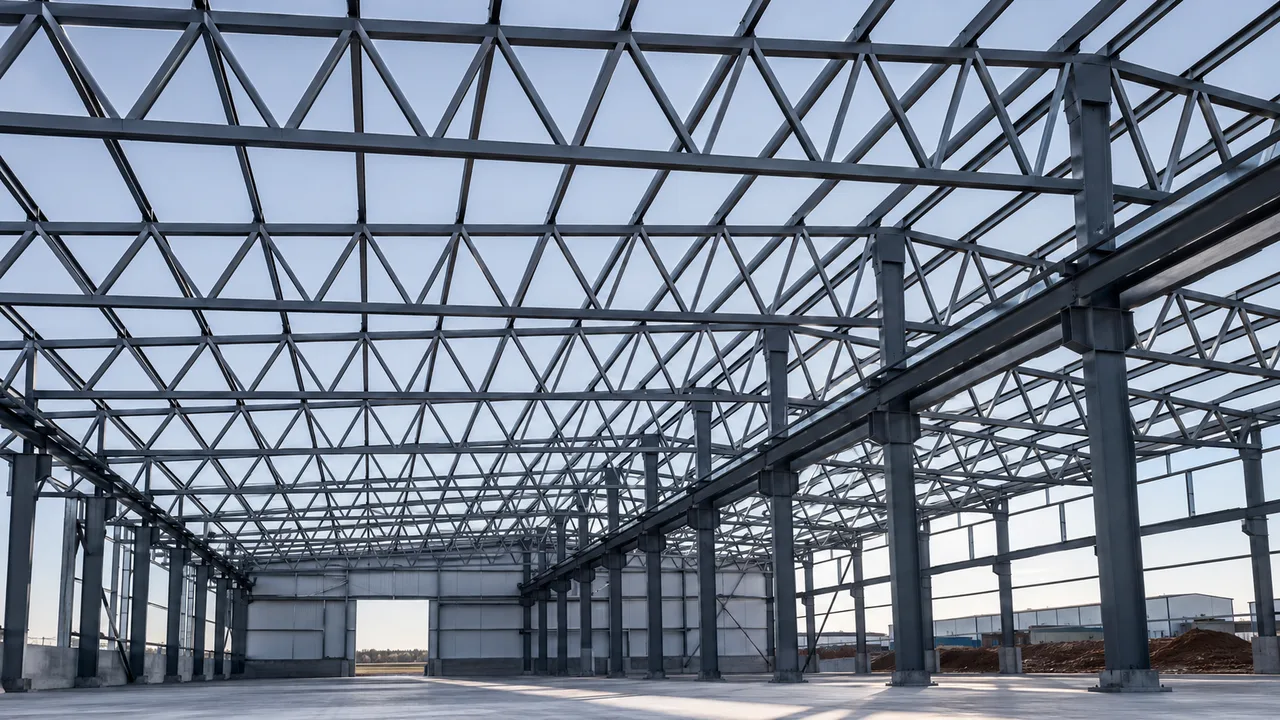
Web crippling is not limited to member ends. Interior load points can create similarly severe local demand when large forces are introduced over short distances.
Secondary Beam Reactions
A secondary beam framing into a primary girder may transfer a significant concentrated reaction into the girder web. If the reaction is large or the connection is located between effective stiffening points, local reinforcement may be required.
Equipment and Machinery Loads
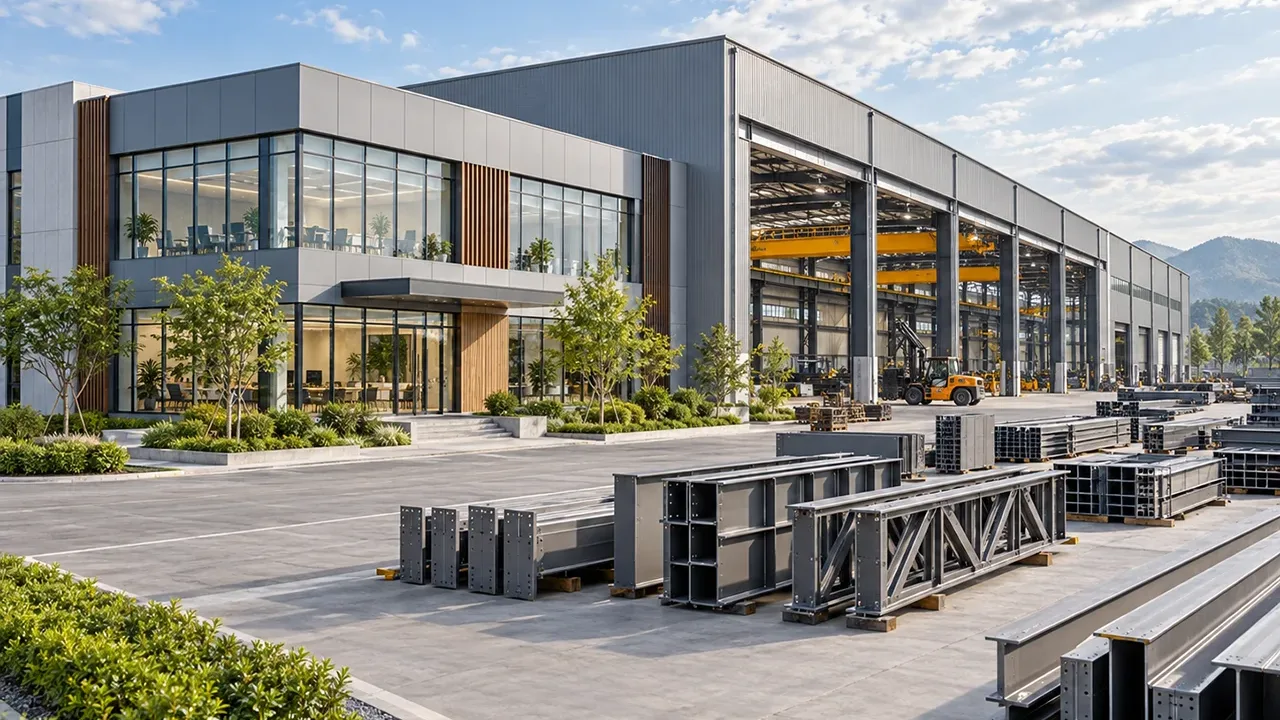
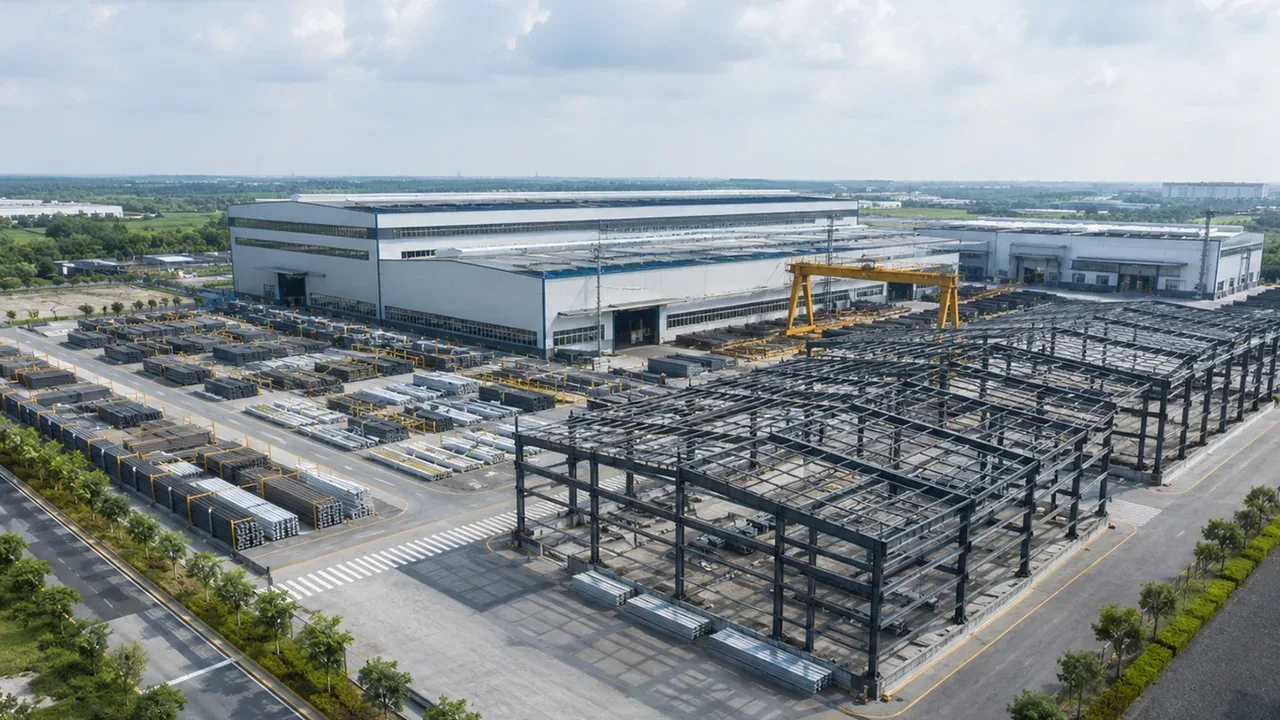
Industrial equipment can create substantial point reactions through machine bases, support brackets, platforms, or maintenance structures. Buildings such as a steel structure factory may contain several concentrated equipment reactions that need to be coordinated with the primary framing before fabrication.
Transfer Columns and Structural Load Points
A column terminating on a girder introduces a very different load condition from a uniformly distributed floor load. The large concentrated force may require bearing stiffeners, reinforcement plates, or a heavier member.
Transfer girders are therefore common locations for detailed local web checks.
Platform and Mezzanine Reactions
Mezzanine beams, industrial platforms, stairs, process equipment, and service framing can all introduce localized reactions into main beams and girders. These loads should be coordinated with structural nodes whenever practical.
End Support vs Interior Concentrated Load
| Design Factor | Beam End Support | Interior Load Point |
|---|---|---|
| Web continuity | Limited on the member-end side | Web continues in both directions |
| Typical force | Support reaction | Equipment or framing reaction |
| Bearing condition | Often short and concentrated | Highly dependent on connection geometry |
| Local restraint | Usually more limited | Often greater |
| Common reinforcement | End bearing stiffener | Transverse stiffener pair |
The distinction matters because the amount of surrounding web available to distribute the load changes with location. Designers should identify the correct loading condition before determining available local resistance.
Main Factors Affecting Web Crippling at Beam Supports
Web crippling at beam supports is influenced by several connected parameters. Evaluating only the support reaction is not sufficient.
Reaction Magnitude
Larger reactions increase local compression and typically increase the demand on the flange-web region.
Bearing Length
A longer effective bearing length distributes the reaction over more of the web. Short bearing plates or seats create more concentrated load introduction.
Web Thickness
A thicker web generally provides greater resistance to localized compression and deformation.
Web Depth and Slenderness
Deep, thin webs may be efficient for overall bending but more sensitive to local instability near concentrated loads.
Distance From the Beam End
Loads near the end of the beam typically have less surrounding web available for stress distribution than interior loads.
Flange Thickness
Flange stiffness affects how concentrated force spreads into the web before being transferred through the member.
Steel Strength
Higher material strength can improve resistance, although geometry and restraint remain equally important in many local limit states.
Support Stiffness and Contact
Even a correctly sized bearing plate may not perform as expected if contact is incomplete. Gaps, uneven surfaces, eccentric bearing, fabrication tolerances, or misalignment can reduce the effective bearing area.
Typical Signs of Web Crippling Near Supports
Visible damage around a support or concentrated load point should be taken seriously because it can indicate deterioration of the local load path.
Local Web Buckling or Wrinkling
The web may develop waves, folds, or localized out-of-plane deformation near the bearing region.
Permanent Web Deformation
Crushing or denting that remains after loading indicates that the web has experienced significant local deformation.
Flange Rotation or Local Bending
Local flange bending may occur when the reaction is not distributed as intended or when the supporting component is too narrow or flexible.
Distortion Around Stiffeners or Bearing Plates
Deformation around stiffeners may indicate incomplete load transfer, insufficient weld capacity, poor fit, or inadequate stiffener proportions.
Why Visible Damage Requires Structural Review
Visible distortion should not automatically be classified as a surface or cosmetic issue. The deformation may indicate that the force path through the flange, web, stiffeners, or support has already changed.
How Bearing Length Changes Local Web Demand
Bearing length is one of the most practical variables available for controlling concentrated web demand.
Short Bearing Plates
A short plate transfers the reaction through a narrow region. This increases local compression and can make web crippling or local yielding more critical.
Longer Bearing Plates
A longer plate may distribute the reaction over a larger section of the web and reduce peak local demand.
However, the plate itself must be sufficiently stiff to spread the load. A long but excessively flexible plate may not provide the assumed distribution.
Effective vs Physical Bearing Length
Physical plate length and effective bearing length are not always identical. Incomplete contact, poor fit, local plate bending, weld distortion, or construction tolerances can reduce the actual area transferring load.
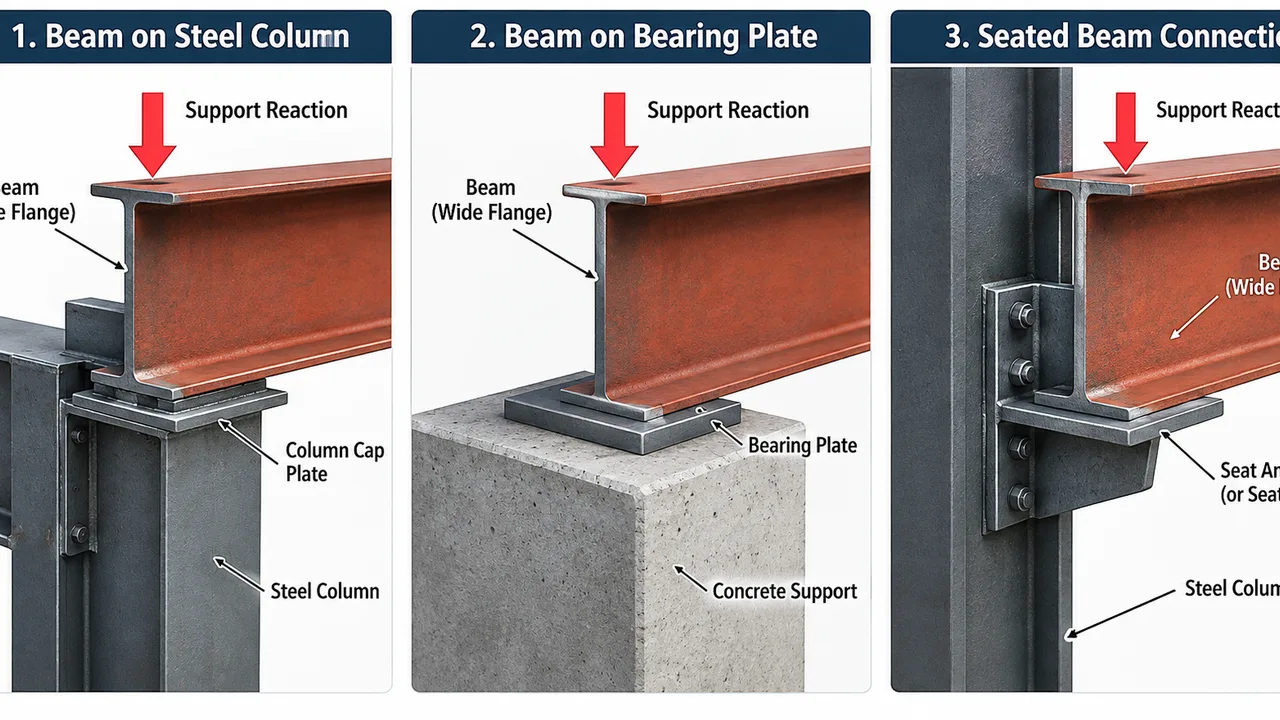
Web Crippling at Common Beam Support Details
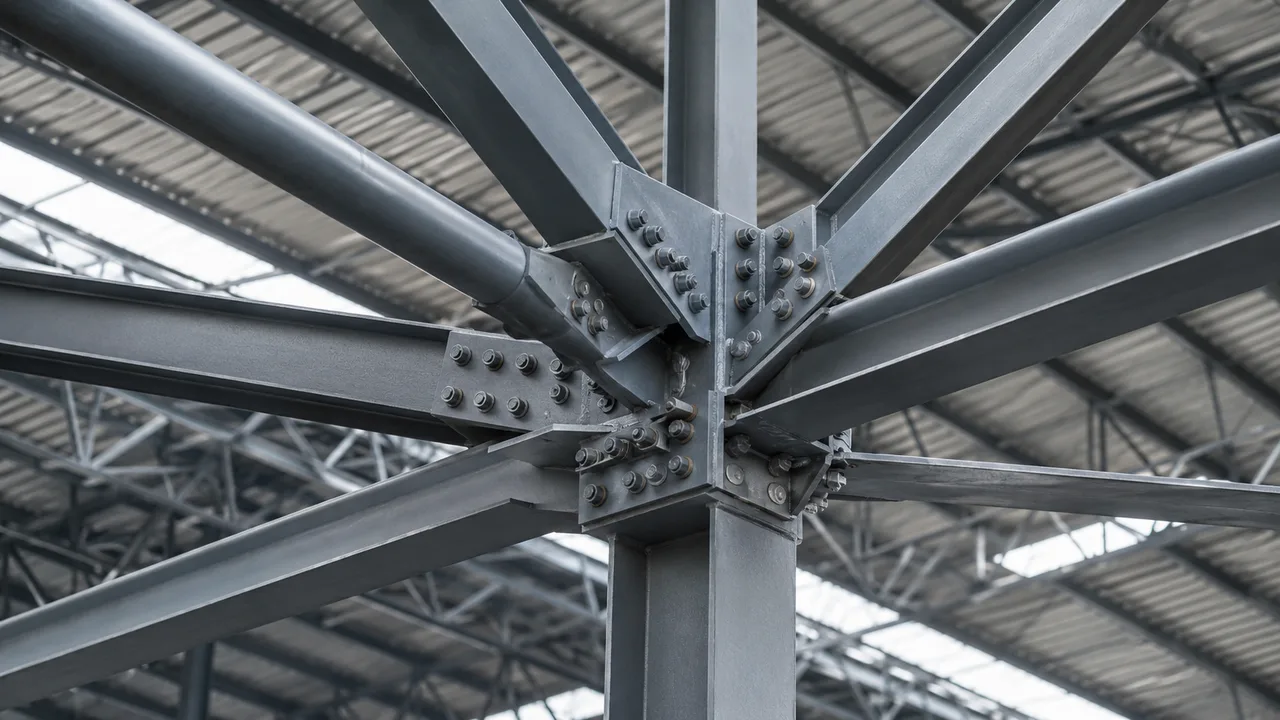
Beam on Steel Column
When a beam bears directly on a steel column or cap plate, the support reaction must transfer through the beam flange and web while the column detail distributes the force below.
Beam on Bearing Plate
Bearing plate length, thickness, alignment, and stiffness directly affect how the reaction enters the beam.
Beam on Concrete or Masonry Support
A bearing plate may be used between the steel beam and supporting concrete or masonry to spread the reaction and avoid excessive local contact pressure.
Seated Beam Connection
A seat angle or seat plate introduces the beam reaction through a relatively small region beneath the flange. The seat and web must be coordinated so the assumed bearing area is actually achieved.
Girder Supporting Secondary Beams
Primary girders may receive multiple concentrated reactions from secondary beams. The spacing and magnitude of these reactions should be evaluated together when they are closely located.
Web Crippling Around Equipment and Machinery Loads
Machine Base Reactions
Heavy machinery may transfer large loads through isolated support points rather than distributed floor loading. These reactions can create highly localized demand in supporting beams.
Dynamic and Repeated Loading
Equipment that vibrates, starts and stops repeatedly, or produces impact should be evaluated according to the project-specific loading requirements rather than treated as a purely static point load.
Equipment Added After Construction
A common risk is adding equipment to an existing beam without verifying whether the original member was designed for the new concentrated reaction.
Aligning Equipment Loads With Structural Nodes
Where possible, equipment reactions should be aligned with stiffeners, columns, framing nodes, or other locations where the structure can transfer the force efficiently.
When Does an Unstiffened Web Need Reinforcement?
An unstiffened web may become inadequate when several unfavorable conditions occur together.
Typical situations include:
- High support reaction combined with a thin web
- Very short bearing length
- Load applied close to the beam end
- Heavy equipment reaction
- Several concentrated loads located close together
The need for reinforcement should be based on structural calculations rather than visual judgment alone.
Reinforcement Options for Critical Support Regions
Bearing Stiffeners
Transverse bearing stiffeners can provide a more direct load path between the loaded flange and the rest of the section. They are commonly used at high-reaction supports.
Increasing Bearing Length
A larger seat or bearing plate can reduce local compression by distributing the reaction over a greater portion of the web.
Web Doubler or Reinforcement Plates
Local reinforcement plates can increase effective web thickness where concentrated demand is high.
Selecting a Heavier Beam Section
In some projects, selecting a section with a thicker web may be simpler and more economical than fabricating complex local reinforcement.
Revising the Connection Geometry
Moving the load point, improving alignment, increasing contact area, or creating a more direct load path may eliminate unnecessary local stress concentrations.
Bearing Stiffener Detailing at Beam Supports
Proper stiffener detailing is just as important as deciding that a stiffener is required.
Full-Depth vs Partial-Depth Stiffeners
The selected configuration should match the required load path. Some reactions require force transfer across most of the web depth, while others can be handled with more localized reinforcement.
Fit Against the Loaded Flange
The stiffener should be detailed so the load can transfer effectively from the loaded flange. Poor fit can create unintended gaps and increase reliance on welds.
Stiffener Thickness
The plate must have enough thickness to resist the applied force without yielding or excessive local deformation.
Stiffener Buckling
A slender stiffener can buckle under compression even when its material strength appears adequate.
Weld Transfer
Welds must transfer the required forces between the stiffener, web, and flange according to the intended structural mechanism.
Connection to the Opposite Flange
Depending on the design, the load path may require interaction with the opposite flange. This should be evaluated explicitly rather than assumed.
Common Design and Detailing Mistakes
| Mistake | Potential Problem | Better Approach |
|---|---|---|
| Checking bending only | Local web failure can be missed | Check concentrated-force limit states |
| Ignoring actual bearing length | Local capacity may be overestimated | Use real contact geometry |
| Treating end and interior loads the same | Incorrect resistance condition may be used | Identify the actual load location |
| Assuming a bearing plate solves the problem | The plate may bend and fail to spread the load | Check plate thickness and stiffness |
| Adding stiffeners without checking the load path | Stiffener or weld failure can occur | Design the complete reinforced system |
| Adding equipment after construction | Unexpected concentrated demand may overload the web | Review the existing member before modification |
| Ignoring erection tolerances | Actual contact area may be smaller than assumed | Detail for realistic fabrication and erection conditions |
Practical Example: Beam Support With High Reaction
Consider a beam end supported on a steel column through a bearing plate. Structural analysis provides the factored reaction, but local support design still requires several additional inputs.
Support Condition
The first step is to identify how the reaction physically moves from the support into the beam. The actual bearing plate dimensions and contact area should be confirmed.
Identify the Critical Variables
The designer should establish:
- Support reaction
- Effective bearing length
- Web thickness
- Distance from the beam end
- Flange dimensions
- Web depth and slenderness
- Existing stiffeners or reinforcement
Check the Unstiffened Web
The local region should be checked for relevant limit states such as web local yielding, web crippling, buckling, and applicable shear effects.
If web crippling at beam supports governs, the connection region needs modification before fabrication.
Compare Reinforcement Options
One option may be to increase the bearing plate length. If this does not provide sufficient resistance, transverse stiffeners or a heavier beam section can be evaluated.
The selected solution should consider both structural capacity and fabrication effort.
Verify the Final Load Path
The final load path should be continuous:
support → bearing plate → flange → web or stiffener → beam.
Every component and connection along that path must have sufficient capacity.
Inspection Checklist for Beam Support Regions
Support regions should be inspected for:
- Visible web distortion
- Wrinkling or folding near the flange
- Local flange bending
- Incomplete bearing plate contact
- Loose or damaged bolts
- Cracked or distressed welds
- Misaligned stiffeners
- Corrosion reducing web thickness
- New equipment or added structural loads
- Settlement or support misalignment
- Previous field modifications
Inspection findings should be compared with the intended structural load path rather than evaluated only by appearance.
Designing Beam Supports to Control Web Crippling
Web crippling at beam supports should be considered whenever a large reaction or concentrated force enters a beam through a limited bearing region. The reaction magnitude alone does not define the risk.
Bearing length, web thickness, web slenderness, distance from the member end, flange stiffness, support alignment, and connection detailing all influence the local behavior.
Where the unstiffened web does not provide sufficient resistance, the load path can be improved through larger bearing areas, properly designed bearing stiffeners, local web reinforcement, revised connection geometry, or a more suitable beam section.
For XTD Steel Structure projects, beam-support details are coordinated with fabrication and erection requirements so the designed bearing condition can be achieved in the actual structure. Proper alignment, stiffener fit, weld accessibility, bearing contact, and inspection provisions are all part of creating a reliable support region.