Modern logistics buildings require more than strong structures. They also require high precision in floor construction. One of the most important factors affecting warehouse performance is warehouse floor flatness. In high-bay storage facilities, automated warehouses, and distribution centers, even small floor deviations can cause serious operational problems. Forklifts, racks, conveyors, and AGV systems all depend on accurate floor surfaces to work safely and efficiently.
In large industrial projects, engineers must define floor tolerance standards before construction begins. Requirements such as FM tolerance are commonly used to control the precision of warehouse floors. When floor flatness is not properly planned, problems may appear after the building is already in use, making correction expensive and difficult. For this reason, every modern steel structure warehouse building project should include clear floor flatness specifications during the design stage.
Why Warehouse Floor Flatness Matters in Modern Logistics Buildings
Warehouses today are no longer simple storage spaces. They are complex logistics systems designed to maximize efficiency and storage density. High racks, narrow aisles, and automated handling equipment all require very precise floor conditions. Without proper warehouse floor flatness, even advanced warehouse systems cannot perform correctly.
Floor tolerance affects equipment stability, rack alignment, and vehicle safety. Because of this, floor design must be considered as important as structural design.
High-Rack Storage and Precision Requirements
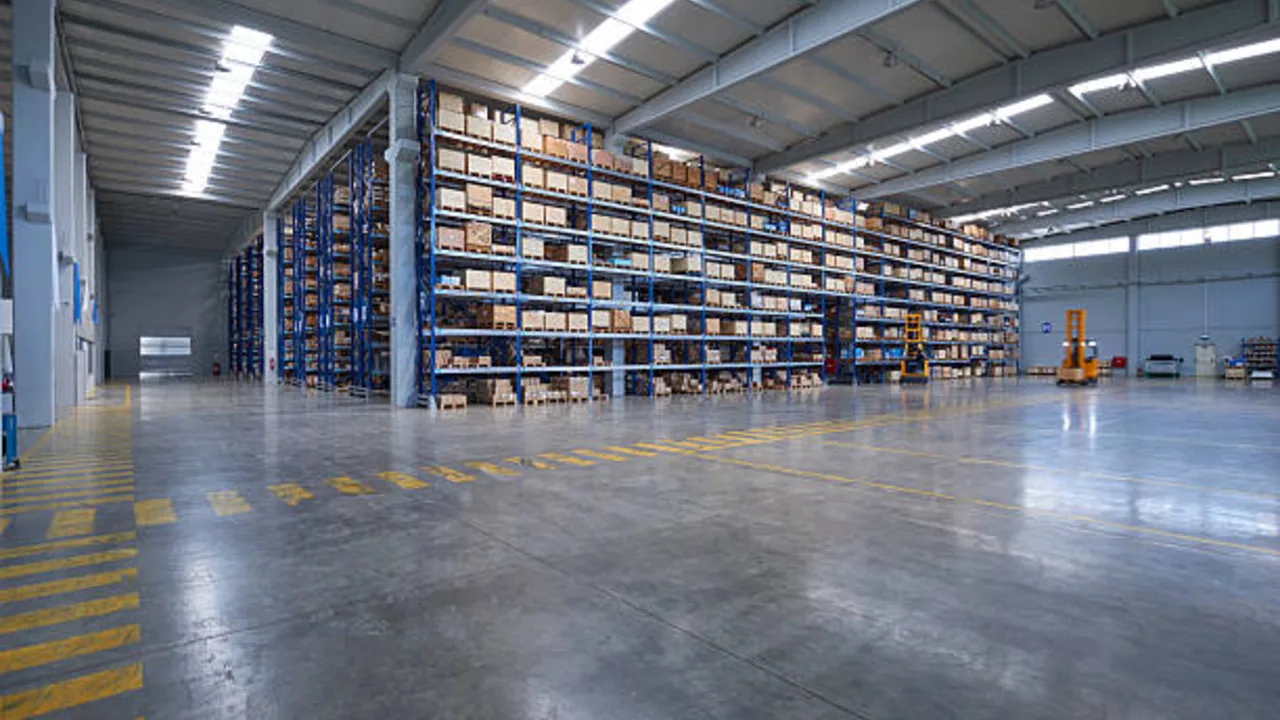
High-bay warehouses may use racks that reach more than 15 meters in height. When racks are tall, even a small deviation in floor level can create large alignment errors at the top. Poor warehouse floor flatness can cause rack instability, uneven load distribution, and safety risks.
To avoid these problems, engineers often specify strict FM tolerance values for high-bay storage areas.
Automation and Floor Tolerance Sensitivity
Automated storage systems and AGV vehicles are very sensitive to floor conditions. Sensors, guidance systems, and wheels require consistent surfaces to operate correctly. If the floor is uneven, AGV navigation may fail, and automated systems may stop unexpectedly.
Because of this, warehouse floor flatness becomes a key requirement in modern automated warehouses.
Safety Risks Caused by Poor Floor Flatness
Uneven floors increase the risk of forklift vibration, load shifting, and rack damage. In narrow aisle warehouses, forklifts operate with very small clearance. If the floor is not flat, the vehicle may tilt, creating dangerous conditions.
Poor floor flatness may lead to:
- Rack misalignment
- Forklift instability
- Damage to stored goods
- Higher maintenance cost
These risks show why warehouse floor flatness must be defined before construction begins.
What Is Warehouse Floor Flatness

Warehouse floor flatness describes how smooth and even the concrete surface is. It is different from floor levelness. A floor may be level but still not flat enough for warehouse operations. Engineers use special measurement systems to define how much variation is allowed.
In warehouse projects, both flatness and levelness must meet specified tolerance limits.
Floor Flatness vs Floor Levelness
Flatness refers to the smoothness of the surface over short distances, while levelness refers to the overall slope of the floor. A warehouse floor can be level but still have small bumps or dips that affect forklift movement.
For high-precision warehouses, flatness is usually more important than levelness.
Understanding FM Tolerance
FM tolerance is a common standard used in warehouse construction to define acceptable floor variation. The FM system measures how much the floor surface can deviate over a certain distance.
Lower FM numbers mean tighter tolerance and higher precision. Narrow aisle warehouses and automated systems usually require strict FM tolerance.
Measurement Methods for Warehouse Floors
Floor flatness is measured using laser equipment or digital profilers. These tools record surface variation along defined paths and calculate tolerance values. The results are compared with the required FM tolerance to confirm compliance.
Accurate measurement is essential because visual inspection cannot detect small deviations that may affect equipment performance.
Why Warehouses Require Stricter Tolerance
Warehouses use heavy racks, narrow aisles, and precise equipment. Because of this, the floor must be more accurate than in normal buildings. Office buildings and residential floors do not require the same level of precision.
For this reason, warehouse floor flatness standards are usually much stricter than general concrete construction.
FM Tolerance Explained for Warehouse Floors
FM tolerance is widely used in logistics and industrial warehouse projects. It defines how smooth the floor must be to support forklifts, racks, and automated systems. Different warehouse types require different tolerance levels depending on equipment and layout.
Selecting the correct FM tolerance is one of the most important decisions in warehouse design.
FM1, FM2, and FM3 Classification
Warehouse floors are often classified into FM1, FM2, and FM3 categories. FM1 represents very high precision, while FM3 allows larger deviation. High-bay automated warehouses usually require FM1 or FM2, while general storage areas may allow FM3.
Choosing the wrong tolerance may increase cost or reduce performance.
Super Flat Floors for Narrow Aisle Forklifts
Very narrow aisle forklifts require extremely flat floors to maintain stability. When aisle width is small, the forklift mast must stay vertical. Even a small floor deviation can cause the load to tilt.
For these applications, warehouse floor flatness must meet strict FM tolerance limits.
Relationship Between FM Tolerance and Aisle Width
As aisle width becomes smaller, floor precision must increase. Narrow aisles allow less movement, so the floor must be flatter to prevent collision with racks.
This is why FM tolerance and aisle width must be planned together during design.
Effects on Automated Storage Systems
Automated warehouses depend on precise movement of equipment. If the floor is not flat, sensors and positioning systems may not work correctly. This can stop the entire warehouse operation.
Proper warehouse floor flatness ensures reliable performance of automated systems.
How Warehouse Floor Flatness Affects Equipment Performance
Warehouse equipment places repeated load on the floor surface. Forklifts, racks, and conveyors all depend on stable support. When floor flatness is not controlled, equipment wear increases and performance decreases.
For this reason, floor tolerance must match the operational requirements of the warehouse.
Forklift Wheel Load and Vibration
Forklifts carry heavy loads on small wheels, creating high pressure on the floor. If the surface is uneven, vibration increases. This vibration can damage goods and reduce operator safety.
Maintaining correct warehouse floor flatness reduces vibration and improves equipment life.
Rack Column Alignment Problems
Racks must stand vertically to carry load safely. If the floor is uneven, rack columns may lean. This creates uneven load distribution and increases the risk of collapse.
Strict FM tolerance helps maintain proper rack alignment.
AGV Sensor Errors
AGV vehicles rely on sensors to move accurately. Uneven floors can cause navigation errors, stopping the system or causing collision risk. Automated warehouses therefore require better floor precision than manual warehouses.
Conveyor and Production Line Accuracy
Conveyors and automated lines must stay aligned over long distances. Floor deviation may cause misalignment, increasing wear and reducing efficiency.
Correct warehouse floor flatness ensures smooth operation of all equipment.
In the next section, we will examine structural design factors, slab construction methods, and real project cases where FM tolerance requirements affected warehouse floor design.
Structural Design Factors Affecting Floor Flatness
Achieving proper warehouse floor flatness is not only a matter of finishing the concrete surface. It begins with structural design. Slab thickness, reinforcement layout, joint spacing, and foundation stability all influence the final floor precision. If these factors are not correctly designed, even the best finishing method cannot meet strict FM tolerance requirements.
In modern logistics buildings, floor design must be coordinated with structural layout from the beginning of the project.
Concrete Slab Design for Warehouses
Warehouse floors are usually designed as large reinforced concrete slabs placed on ground. The slab must support heavy rack loads, forklift traffic, and continuous operation. If slab thickness is insufficient, the floor may deform over time, reducing warehouse floor flatness.
Engineers calculate slab thickness based on load capacity, soil condition, and traffic frequency. High-bay warehouses often require thicker slabs and stronger reinforcement to maintain long-term performance.
Load Capacity and Floor Deformation
Heavy racks and forklifts create concentrated loads. When the floor is not strong enough, small deformation may appear. Even small deformation can break FM tolerance limits and affect equipment operation.
For this reason, warehouse floor flatness must be considered together with load capacity calculations. The floor must remain stable under both static and dynamic loads.
Joint Control and Cracking
Concrete floors require expansion joints to control cracking. However, too many joints can affect warehouse floor flatness and create problems for forklifts and AGV systems.
Engineers must carefully plan joint spacing and location. In high-precision warehouses, joints are often minimized and placed outside main traffic lanes.
Foundation Stability
Floor flatness depends on the stability of the soil below the slab. If the subgrade is not properly compacted, settlement may occur after construction. This settlement can damage FM tolerance and create uneven surfaces.
Proper soil preparation, compaction, and testing are essential to maintain warehouse floor flatness during the life of the building.
Floor Flatness Requirements in Steel Structure Warehouse Buildings
In a modern steel structure warehouse building, large spans and high racks make floor precision even more important. Steel structures allow flexible layouts, but this also means the floor must support long rack lines and heavy vehicle traffic.
Because steel warehouses often use narrow aisles and automated systems, warehouse floor flatness must meet strict FM tolerance standards.
Column Spacing and Slab Stress
Steel buildings usually have large column spacing. This creates wide open areas for storage, but it also increases the load on the slab. When column spacing is large, the floor must carry more load between supports.
To maintain warehouse floor flatness, engineers may increase slab thickness or reinforcement in high-load zones.
Heavy Rack Load Areas
High-bay warehouses concentrate load on rack legs. These point loads can affect floor performance if the slab is not designed correctly. Uneven settlement under racks may cause alignment problems.
Strict FM tolerance helps ensure that racks remain stable and vertical.
High-Bay Warehouse Design
High-bay warehouses require very precise floors because small errors become larger at high elevation. When racks reach 15 meters or more, even minor floor variation may cause safety risk.
Because of this, warehouse floor flatness must be controlled carefully during construction.
Why Steel Structure Warehouse Building Projects Use FM Tolerance
Steel warehouses are often used for logistics, manufacturing, and automated storage. These operations require precise movement of vehicles and equipment. FM tolerance provides a clear standard for floor quality.
By defining FM tolerance early, engineers can design the slab, structure, and layout together, ensuring long-term performance.
Real Project Case — Floor Flatness Adjustment in High-Bay Steel Warehouse
A real example of warehouse floor flatness control occurred in a high-bay logistics warehouse built for an export distribution center in Southeast Asia. The building area was approximately 22,000 m² and used narrow aisle forklifts operating between racks over 14 meters high. The project required strict FM tolerance to ensure safe operation.
During initial construction, the slab was poured using standard industrial tolerance. After measurement, engineers found that the floor did not meet the required warehouse floor flatness for narrow aisle operation. The deviation exceeded the allowed FM tolerance in several traffic lanes.
To correct the problem, the construction team performed laser grinding and surface leveling in critical areas. Additional reinforcement was also added in heavy traffic zones to prevent future deformation.
After correction, the floor passed the FM tolerance test, and forklift operation became stable. The project demonstrated that early planning of warehouse floor flatness is essential in every steel structure warehouse building project.
Construction Methods to Achieve Warehouse Floor Flatness
Meeting strict FM tolerance requires advanced construction techniques. Traditional concrete pouring methods may not achieve the precision needed for modern warehouses. Special equipment and careful planning are required.
Laser Screed Technology
Laser screed machines use automatic leveling systems to control floor height during pouring. This method improves warehouse floor flatness and reduces human error.
Laser screed is commonly used in high-precision warehouse projects.
Continuous Pouring Sequence
Pouring concrete in a controlled sequence helps maintain consistent floor level. Large slabs should be divided into planned sections to reduce shrinkage and distortion.
Proper pouring sequence helps achieve required FM tolerance.
Surface Finishing Methods
After pouring, the surface must be finished carefully. Mechanical finishing machines create smooth surfaces and improve flatness.
Grinding may also be used to correct small deviations.
Quality Inspection and Testing
Floor measurement must be performed after construction. Laser scanning and digital profiling confirm whether warehouse floor flatness meets specification.
If tolerance is not achieved, correction must be done before the warehouse begins operation.
Common Mistakes in Warehouse Floor Construction
Many floor problems occur because tolerance requirements were not defined early. Once the building is finished, correcting the floor becomes expensive.
Incorrect FM Tolerance Selection
Using a low tolerance for a high-precision warehouse can cause operational problems. Engineers must select FM tolerance based on equipment type.
Poor Subgrade Preparation
If soil is not compacted properly, the floor may settle unevenly. This damages warehouse floor flatness over time.
Too Many Construction Joints
Excessive joints create bumps and uneven surfaces. Joint layout must be planned carefully.
Lack of Testing
Without proper measurement, floor problems may not be detected until equipment is installed.
Cost vs Performance in Warehouse Floor Design
Higher precision floors cost more to build, but they reduce long-term maintenance. Choosing the correct tolerance is a balance between cost and performance.
Cost of Super Flat Floors
Very strict FM tolerance increases construction cost, but it improves equipment efficiency.
Cost of Repair After Operation
Correcting floor flatness after installation is much more expensive than building correctly from the start.
Automation Compatibility
Automated warehouses require better floor precision. Investing in flatness during construction ensures future compatibility.
Future Expansion Planning
Warehouses often expand or change layout. Proper warehouse floor flatness makes future modification easier.
Why Steel Structure Warehouse Buildings Need Precise Floor Flatness
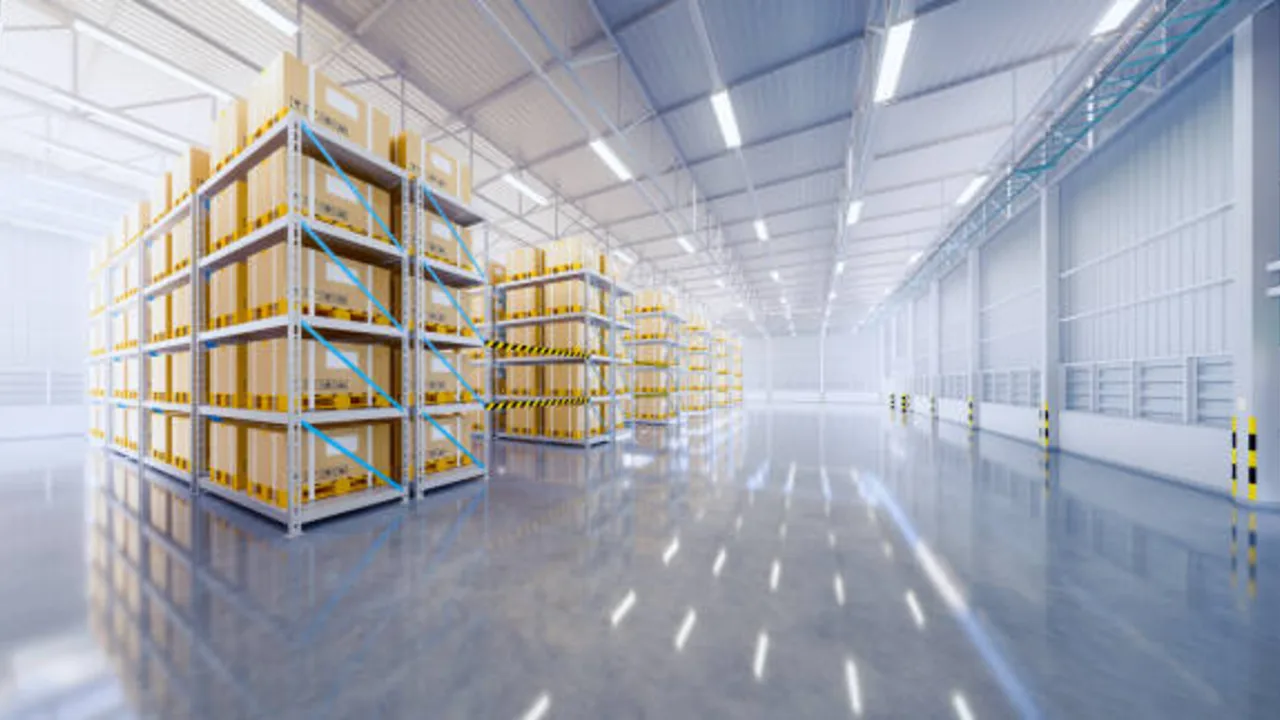
Steel warehouses are designed for large span, heavy load, and high efficiency. These features require precise floor construction. Without proper flatness, the advantages of steel structures cannot be fully used.
Benefits of Steel Warehouse Structure
Steel buildings allow wide column spacing, making them ideal for logistics layout. However, wide spans require strong and flat floors.
Flexibility for Logistics Layout
A steel structure warehouse building can be modified easily, but floor precision must be maintained to support new equipment.
Compatibility with Forklift and AGV Systems
Modern warehouses often use both forklifts and automation. Good warehouse floor flatness ensures safe and stable movement.
Structural Stability and Floor Performance
When slab design, FM tolerance, and structure are planned together, the warehouse can operate safely for many years.
Conclusion
Proper warehouse floor flatness is essential for modern logistics buildings. Correct FM tolerance, strong slab design, and accurate construction methods ensure safe operation and long service life.
By defining floor requirements early in every steel structure warehouse building project, engineers can avoid costly correction and ensure reliable performance for racks, forklifts, and automated systems.