In modern industrial environments, machinery performance depends not only on mechanical precision but also on structural stability beneath it. In steel manufacturing plants and industrial workshops, improper foundation systems can lead to excessive vibration, structural cracking, alignment problems, and even long-term production downtime. This is why factory foundation heavy machinery design plays a decisive role in operational reliability.
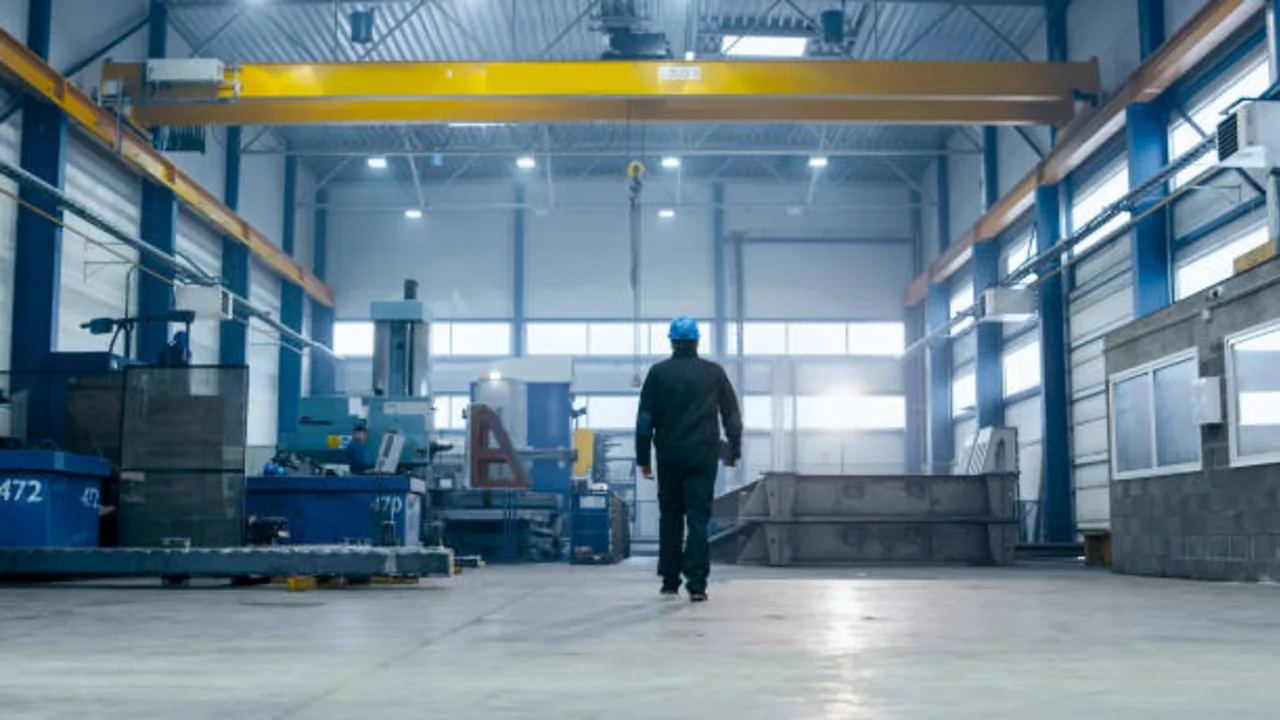
Unlike conventional building foundations that primarily resist static loads, foundations for heavy industrial equipment must withstand continuous dynamic load, vibration cycles, and inertia forces generated during machine operation. Whether supporting stamping presses, rolling equipment, turbines, or compressors, the structural base must be engineered to absorb and redistribute these forces safely into the ground.
As steel factories expand in scale and automation increases, heavy machinery becomes more powerful and more sensitive to misalignment. Even small foundation design errors can amplify vibration, affecting production accuracy and equipment lifespan. For this reason, factory foundation heavy machinery systems must be engineered as an integrated part of the entire industrial structure rather than treated as isolated concrete blocks.
Why Heavy Machinery Requires Specialized Foundation Design
Static Load vs Dynamic Load
In traditional building construction, foundations are designed to carry static loads — the constant weight of structural elements, roofing systems, and floor slabs. However, heavy machinery introduces an entirely different challenge. Instead of a fixed load, equipment produces repeated dynamic load patterns during operation.
Dynamic loads are generated by rotating components, reciprocating movements, impact forces, and start-stop cycles. These loads vary in magnitude and frequency, creating vibrations that can transfer through the foundation into surrounding structural elements. Over time, repeated dynamic loading can lead to fatigue cracking, anchor bolt loosening, and uneven settlement if not properly addressed in the factory foundation heavy machinery design phase.
Understanding the difference between static and dynamic forces is fundamental. While static loads remain predictable and constant, dynamic load behavior depends on machine speed, operating frequency, and inertia forces — all of which require engineering analysis beyond standard building foundation calculations.
The Role of Inertia in Machinery Operation
Inertia is the resistance of a body to changes in motion. In heavy industrial equipment, rotating shafts, flywheels, and reciprocating components generate inertia forces whenever acceleration or deceleration occurs. These inertia effects translate directly into cyclic forces transmitted into the foundation.
For example, large compressors and stamping machines create alternating horizontal and vertical forces due to inertia imbalance. If the factory foundation heavy machinery system is not sufficiently rigid or properly mass-damped, these forces can cause progressive structural damage.
Inertia-induced vibration is particularly critical in high-speed rotating machinery. When operating frequency approaches the natural frequency of the foundation system, resonance may occur. This resonance can amplify vibration amplitude significantly, resulting in unsafe working conditions and structural deterioration.
Therefore, inertia must be calculated as part of the overall dynamic load analysis during the early design stage. Proper mass distribution, reinforcement detailing, and vibration isolation strategies are required to maintain structural stability.
Key Engineering Principles in Factory Foundation Heavy Machinery Design
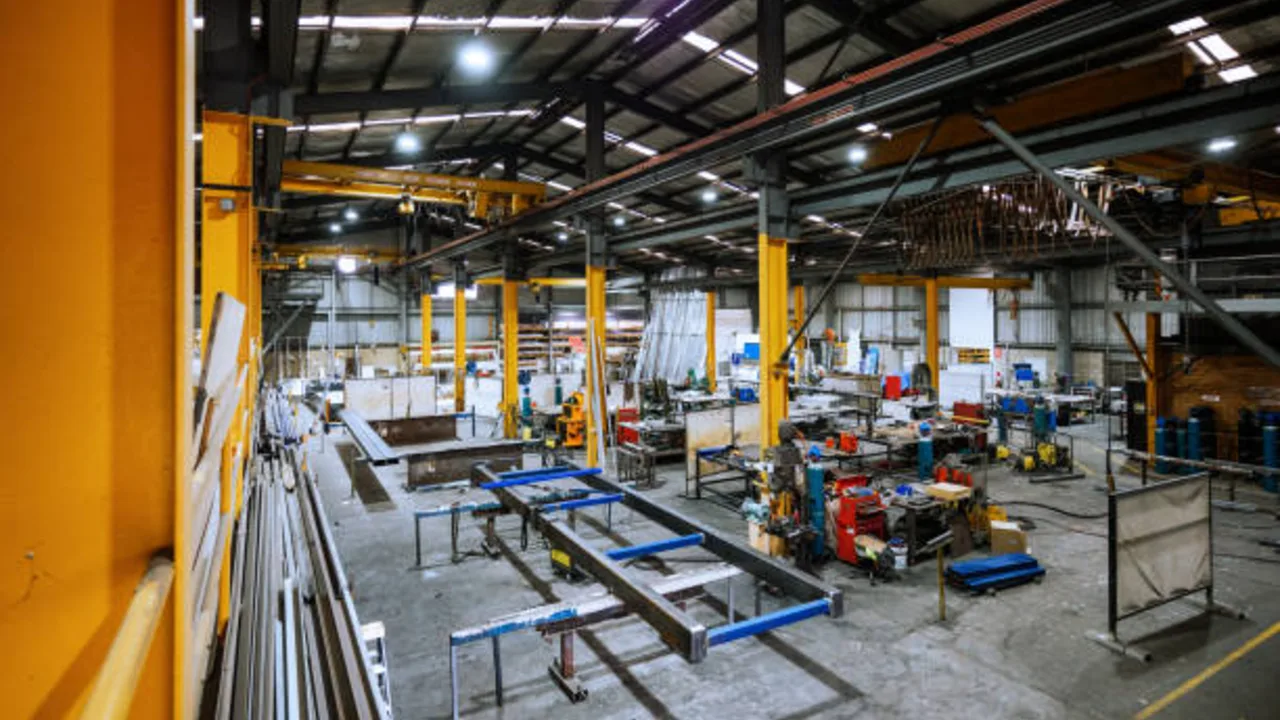
Load Calculation and Structural Analysis
Accurate load calculation is the starting point of every factory foundation heavy machinery system. Engineers must evaluate:
- Equipment self-weight
- Operational dynamic load
- Impact forces during start-up and shutdown
- Horizontal forces caused by inertia
- Safety factors based on operational uncertainty
Structural analysis must consider both ultimate strength and serviceability performance. While ultimate strength ensures safety against failure, serviceability performance ensures vibration remains within acceptable limits for machinery accuracy.
Advanced modeling techniques are often used to simulate vibration behavior. By predicting how dynamic load transfers into the soil, engineers can optimize foundation geometry and reinforcement layout accordingly.
Soil Bearing Capacity Assessment
Even the most robust concrete foundation cannot compensate for weak soil conditions. Geotechnical investigation is therefore essential before finalizing any factory foundation heavy machinery design.
Key soil considerations include:
- Allowable bearing capacity
- Settlement characteristics
- Differential settlement risk
- Soil damping properties
Dynamic load behavior interacts with soil stiffness. Soft soil may amplify vibration, while stiff soil can improve system stability. In some cases, deep foundation systems such as piles may be required to transfer load to stable strata below.
Isolation vs Integration Strategy
One of the most important design decisions involves whether to isolate machinery foundations from the main structural slab or integrate them into a unified foundation system.
Isolation strategy involves constructing a separate reinforced concrete block foundation with vibration gaps around it. This method minimizes vibration transfer into the surrounding structure and is commonly used for high-speed rotating equipment.
Integration strategy, on the other hand, ties the machine foundation directly into the general floor slab. This approach is often suitable for equipment with lower dynamic load intensity and can reduce overall construction cost.
The decision depends on machine type, inertia force magnitude, and performance sensitivity. In most steel factories, a hybrid approach may be used, combining isolated blocks for high-vibration equipment and integrated slabs for lighter machinery.
Types of Foundations for Heavy Machinery in Steel Factories
Reinforced Concrete Block Foundations
Reinforced concrete block foundations are the most commonly adopted solution in factory foundation heavy machinery systems. These foundations rely on mass and stiffness to dampen vibration and resist dynamic load effects.
The principle behind mass foundations is simple: increasing foundation weight reduces vibration amplitude by absorbing inertia forces. However, simply adding concrete mass is not always efficient. Proper reinforcement detailing is essential to prevent cracking caused by cyclic stress.
Designers must ensure adequate embedment depth, anchor bolt positioning accuracy, and sufficient edge distance to prevent concrete spalling.
Pile-Supported Machine Foundations
When soil bearing capacity is insufficient, pile-supported foundations become necessary. Piles transfer heavy machinery load deeper into stable soil layers, minimizing settlement and vibration amplification.
This solution is particularly relevant in coastal or reclaimed land industrial zones where soft soil conditions dominate. By combining pile systems with reinforced concrete caps, engineers can create a stable base for factory foundation heavy machinery applications.
Raft Foundations for Large Equipment Zones
In facilities where multiple heavy machines operate within the same zone, raft foundations may be used to distribute dynamic load across a broader area. Raft systems reduce differential settlement and provide uniform support across large footprints.
However, designers must carefully evaluate vibration interaction between adjacent machines. If not properly designed, dynamic load from one machine can influence the stability of another.
Vibration Control in Steel Structure Factory Buildings
Understanding Resonance Risk
One of the most critical considerations in factory foundation heavy machinery systems is the risk of resonance. Every structural system — including machine foundations — has a natural frequency. When the operating frequency of heavy machinery approaches this natural frequency, vibration amplitude can increase dramatically.
This phenomenon, known as resonance, can lead to severe structural consequences. Even if the dynamic load generated by the equipment is within calculated limits, resonance amplification may cause excessive displacement, anchor loosening, or fatigue cracking.
To prevent resonance, engineers must ensure that the natural frequency of the foundation system differs sufficiently from the machine’s operating frequency. This requires coordinated analysis between mechanical engineers and structural designers during the early design phase of the factory foundation heavy machinery system.
Damping and Isolation Techniques
Vibration mitigation does not rely solely on increasing concrete mass. Modern industrial design incorporates various damping and isolation methods to manage inertia forces effectively.
Common vibration control techniques include:
- Rubber isolation pads to absorb minor vibration
- Spring isolators for high-frequency equipment
- Non-shrink precision grouting to ensure uniform load transfer
- Flexible joints to reduce vibration transmission
By combining proper mass design with isolation systems, engineers can significantly reduce vibration transfer to surrounding structural elements. This approach enhances the performance and longevity of the factory foundation heavy machinery installation.
Interaction With Steel Structure Factory Building Frame
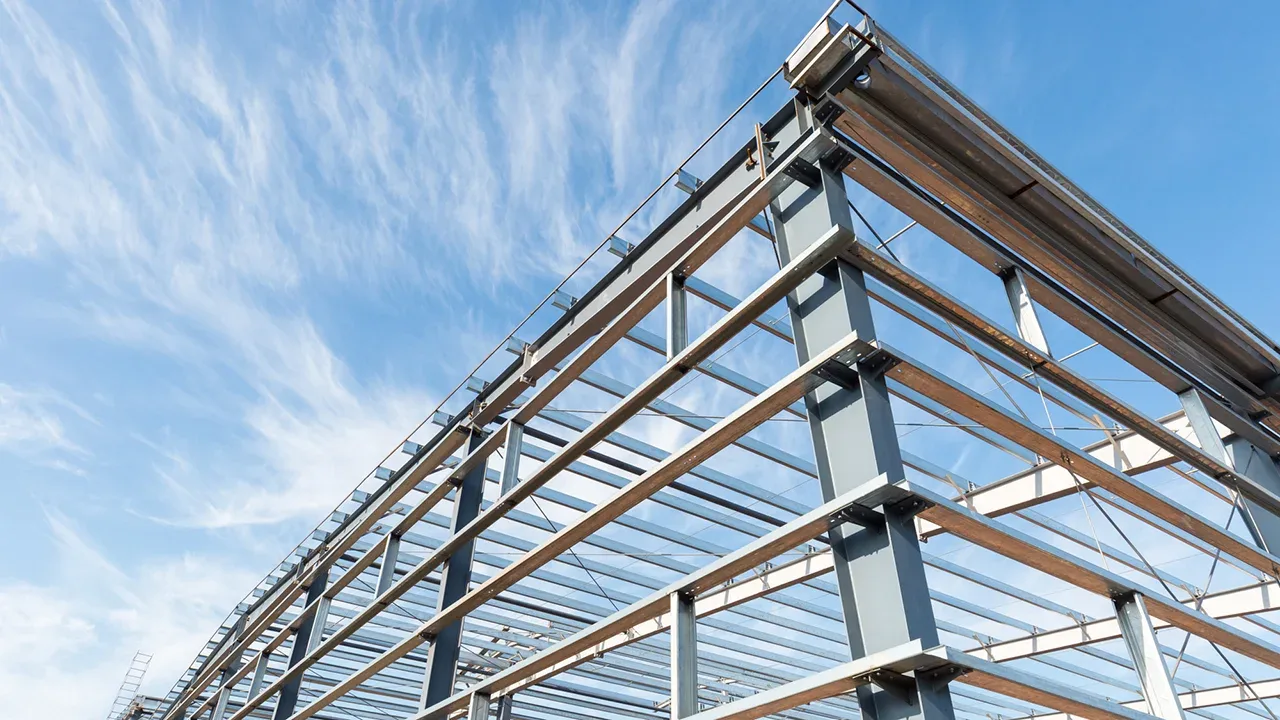
Heavy machinery does not operate in isolation. Its vibration can propagate into columns, beams, and roof systems of the steel structure factory building. If vibration transfer is not properly controlled, it may affect overhead crane systems, wall panels, and even adjacent equipment.
Therefore, foundation design must be coordinated with the overall structural system. Anchor bolt layout, column spacing, and beam stiffness should be evaluated together to prevent unintended force transfer paths.
This integrated approach ensures that factory foundation heavy machinery systems enhance overall industrial stability rather than compromise it.
Anchor Bolt and Base Plate Design for Heavy Machinery
Anchor Bolt Layout and Shear Resistance
Anchor bolts are critical components that connect machinery to its foundation. Improper anchor bolt design can result in equipment misalignment, excessive vibration, or structural failure.
In factory foundation heavy machinery applications, anchor bolts must resist:
- Tensile forces caused by overturning moments
- Shear forces generated by horizontal dynamic load
- Fatigue stress from repeated inertia cycles
Proper embedment depth, bolt diameter selection, and spacing are essential to ensure long-term reliability. In high-impact machinery, shear keys may also be introduced to transfer horizontal forces directly into the concrete mass rather than relying solely on bolt friction.
Grouting Methods
Precision grouting plays a major role in load transfer efficiency. Non-shrink grout fills the gap between base plate and concrete foundation, ensuring full contact and uniform stress distribution.
Without proper grouting, voids beneath the base plate can create stress concentrations, leading to cracking or uneven settlement. In factory foundation heavy machinery systems, grouting quality directly affects vibration control performance.
Common Failure Problems in Factory Foundation Heavy Machinery Systems
Excessive Vibration
Excessive vibration is one of the most common problems in industrial factories. It often results from underestimated dynamic load, poor inertia analysis, or insufficient foundation stiffness.
Symptoms include:
- Noticeable floor shaking
- Anchor bolt loosening
- Equipment misalignment
- Reduced production accuracy
Early vibration assessment and monitoring are essential to avoid long-term structural damage.
Cracking and Fatigue
Repeated dynamic load cycles can cause fatigue cracking in concrete. Even when stress levels are below ultimate capacity, repeated inertia forces may gradually weaken reinforcement bond and create micro-cracks.
Improper reinforcement detailing, inadequate cover thickness, and insufficient mass can accelerate cracking. Regular inspection helps identify early signs of fatigue before structural integrity is compromised.
Settlement and Misalignment
Differential settlement is another serious concern. Uneven soil compression beneath the foundation may cause machinery misalignment, leading to increased wear and operational inefficiency.
Geotechnical evaluation and proper soil preparation are therefore essential parts of factory foundation heavy machinery design.
Design Coordination Between Civil and Steel Structure Engineers
Integrated Design Approach
Successful factory foundation heavy machinery systems require collaboration between civil engineers, structural engineers, and mechanical specialists. Foundation dimensions, reinforcement design, and dynamic load assumptions must align with equipment specifications.
Early-stage coordination prevents costly retrofits and reduces the risk of structural modification after installation.
Construction Sequence Planning
Construction scheduling also affects foundation performance. Concrete curing time must be respected before machinery installation. Premature loading may reduce long-term durability.
Installation steps should include:
- Anchor bolt alignment verification
- Levelness inspection before grouting
- Controlled torque application
- Final vibration testing after commissioning
Proper sequencing ensures that the factory foundation heavy machinery system performs as intended from the first day of operation.
Cost Optimization Without Compromising Stability
Overdesign vs Smart Engineering
Some industrial projects attempt to solve vibration issues by simply increasing foundation mass. While additional concrete can reduce vibration amplitude, excessive overdesign increases cost without proportional benefit.
Smart engineering focuses on balancing mass, stiffness, soil interaction, and damping efficiency. Optimized reinforcement detailing and accurate dynamic load modeling often deliver better performance than blindly increasing foundation size.
Lifecycle Cost Considerations
The true cost of factory foundation heavy machinery design should be evaluated over the lifecycle of the facility. Poor foundation performance may result in:
- Frequent maintenance
- Production downtime
- Machine replacement costs
- Structural repair expenses
Investing in proper dynamic load and inertia analysis during design can significantly reduce long-term operational risk.
Best Practices for Industrial Steel Factories Installing Heavy Machinery
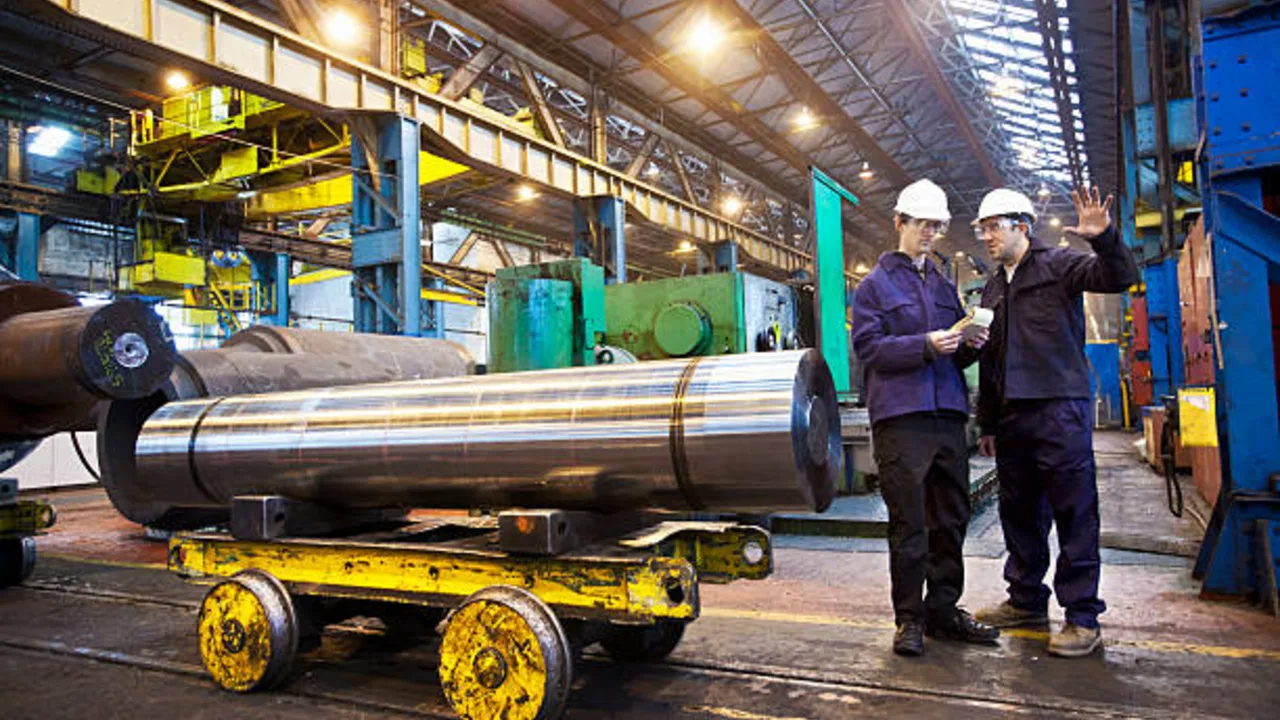
Pre-Installation Checklist
Before installing heavy equipment, factories should verify:
- Geotechnical report confirmation
- Foundation strength test results
- Anchor bolt positioning accuracy
- Vibration simulation review
These steps ensure readiness for machinery placement and protect the integrity of the factory foundation heavy machinery system.
Post-Installation Monitoring
Monitoring should continue after commissioning. Regular vibration measurement, thermal expansion observation, and structural inspections help maintain long-term stability.
When vibration levels remain within calculated thresholds, equipment lifespan increases and operational safety improves.
Export-Oriented Steel Factory Structure
A practical example of how engineering precision and structural planning support international industrial development can be seen in XTD Steel Structure’s export-oriented steel factory project in Indonesia. Completed as part of a major overseas delivery initiative, the project involved approximately 1,536 tons of structural steel and was designed to support heavy industrial operations within a large-span factory environment.
Unlike standard warehouse structures, export-oriented industrial factories must be engineered to accommodate heavy machinery loads, operational vibration, and long-term structural stability. In this project, foundation planning played a critical role in ensuring that heavy equipment zones were properly reinforced to manage dynamic load effects and inertia forces generated during machinery operation.
The structural framework was designed using standardized portal systems combined with reinforced foundation blocks for heavy equipment areas. By integrating factory foundation heavy machinery considerations early in the engineering phase, the project minimized vibration transfer and ensured stable performance of production lines after installation.
Because the facility was intended for industrial export use, precision fabrication and strict quality control were applied throughout the production cycle. Foundation anchor positioning, load distribution analysis, and soil preparation were carefully coordinated to ensure that the heavy machinery installation aligned perfectly with the steel structure system.
This real-world project demonstrates that successful international steel factory construction depends not only on the superstructure, but equally on properly engineered foundation systems. When factory foundation heavy machinery design is integrated with overall structural planning, overseas industrial projects can achieve both durability and operational efficiency.
The Indonesian export project stands as a strong example of how XTD Steel Structure combines structural engineering expertise with global project execution capability — delivering stable, high-performance industrial facilities ready to support heavy equipment and long-term production demands.
Conclusion
Designing foundations for heavy machinery in steel factories is far more complex than standard building construction. The interaction between dynamic load, inertia forces, soil behavior, and structural systems requires detailed engineering analysis.
A properly designed factory foundation heavy machinery system ensures operational stability, reduces vibration risk, and protects both equipment and structural components. By integrating civil engineering principles with machine performance requirements, steel factories can achieve long-term productivity without structural compromise.
As industrial facilities continue to modernize, foundation engineering will remain a critical factor in ensuring safe, stable, and efficient factory operations.