Speed has become a decisive factor in modern industrial development. As supply chains accelerate and operational timelines tighten, developers are under pressure to deliver functional facilities faster without compromising quality. In this context, prefab warehouses have emerged as one of the most effective solutions for rapid industrial expansion.
Prefab warehouse construction speed is driven by a fundamentally different approach compared to conventional on-site construction. By shifting most structural work to controlled factory environments and relying on modular assembly, prefab warehouses significantly shorten project timelines while improving predictability and execution efficiency.
This article explains how prefab warehouses reduce construction time, focusing on modular systems, installation efficiency, and the practical advantages that make prefabricated solutions ideal for time-sensitive projects.
Understanding Prefab Warehouse Construction Speed
Prefab warehouse construction speed refers to the significantly shortened total project duration achieved through a combination of off-site fabrication, standardized structural components, and highly organized on-site installation processes. Instead of building most structural elements piece by piece at the project site, prefab warehouse systems shift the majority of manufacturing activities into controlled factory environments, where production efficiency and quality consistency are much higher.
Unlike traditional construction methods that rely on sequential site-based activities—such as casting, curing, fitting, and adjustment—prefab construction allows multiple project phases to move forward at the same time. While foundations and site preparation are underway, steel frames, roof systems, and wall components are fabricated off-site. This parallel workflow is one of the primary reasons prefab warehouses can be completed in a fraction of the time required for conventional buildings.
Several key characteristics define prefab warehouse construction speed:
- Factory-based structural fabrication
Structural members such as columns, beams, and trusses are manufactured using automated cutting, drilling, and welding systems. Factory production eliminates weather-related delays and ensures consistent output rates, enabling predictable delivery schedules. - Standardized and modular design systems
Prefab warehouses rely on modular design principles, where components follow standardized dimensions and connection details. This standardization reduces design coordination time, simplifies fabrication, and allows rapid repetition during manufacturing and installation. - Reduced on-site labor intensity
Since most fabrication work is completed off-site, on-site labor is primarily focused on assembly rather than manufacturing. This significantly lowers manpower requirements, reduces site congestion, and accelerates daily installation progress. - Shortened erection and installation phases
Pre-engineered components are delivered in an installation-ready condition, allowing erection crews to assemble large structural sections quickly using bolted connections. Installation sequences are planned in advance, minimizing downtime and rework.
By minimizing site-dependent activities, prefab warehouse construction significantly reduces exposure to common schedule disruptions such as adverse weather, labor shortages, and coordination conflicts between multiple trades. The result is a faster, more predictable construction process that enables developers and operators to bring warehouse facilities into operation sooner, improving time-to-market and overall project efficiency.
Role of Modular Systems in Accelerating Construction
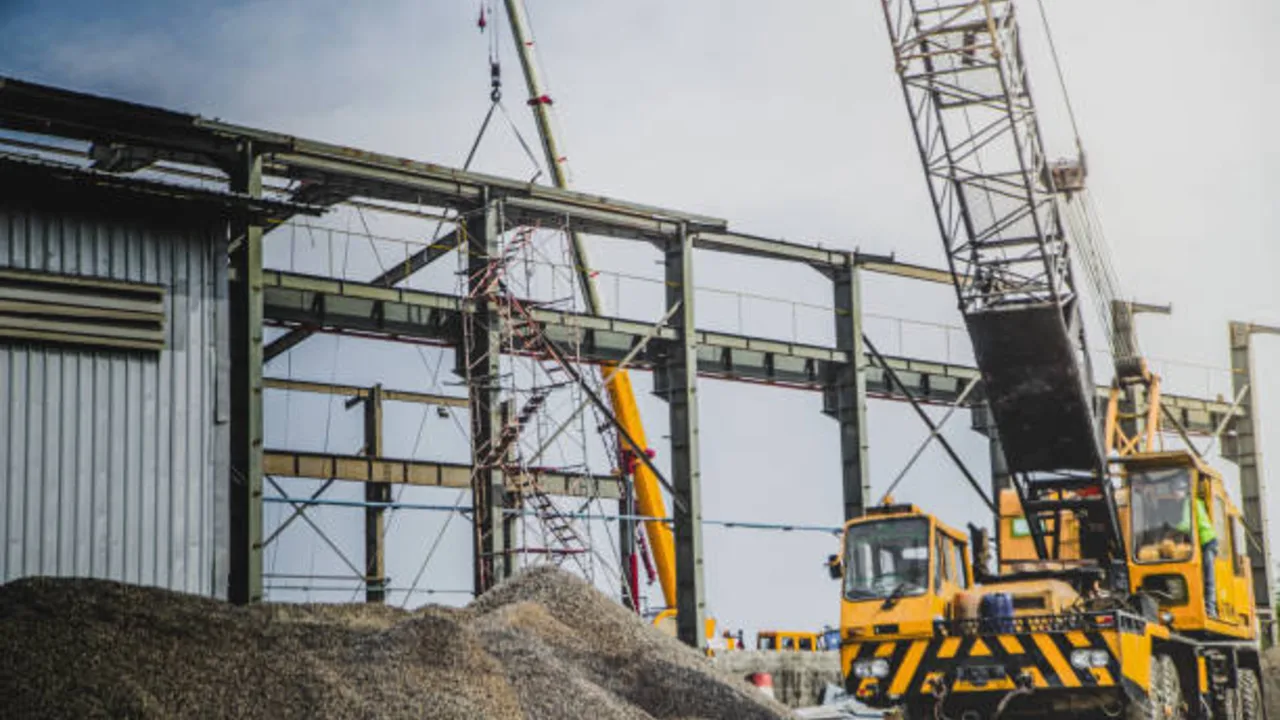
A core factor behind prefab warehouse construction speed is the use of a modular system. Structural elements such as columns, beams, roof trusses, and wall panels are designed as repeatable modules that can be fabricated simultaneously.
Standardized Structural Components
Modular systems rely on standardized connection details and component dimensions. This approach allows:
- Faster design finalization
- Reduced engineering revisions
- Consistent fabrication quality
Once design parameters are confirmed, fabrication can begin immediately, even while site preparation is still underway.
Parallel Workflow Between Factory and Site
In prefab warehouse projects, fabrication and site works run in parallel rather than sequentially. While foundations are being prepared on-site, steel frames and enclosure systems are manufactured off-site. This overlap dramatically compresses the overall construction schedule.
Off-Site Fabrication vs Traditional On-Site Construction
Traditional warehouse construction typically relies on extensive on-site activities such as cutting, welding, fitting, and alignment of structural components. These processes are performed in open construction environments where productivity is often affected by weather conditions, limited working space, safety restrictions, and coordination with other trades. As a result, progress can be slow, inconsistent, and difficult to predict, especially on large-scale warehouse projects.
In contrast, prefab construction shifts the majority of these labor-intensive processes to factory-controlled fabrication facilities. Structural steel members are manufactured under standardized conditions using precise machinery, which allows fabrication work to proceed continuously regardless of external site constraints. This fundamental shift in workflow is a major contributor to faster and more reliable project delivery.
Prefab construction replaces traditional on-site fabrication with factory-based production, offering several clear advantages:
- Higher production efficiency
Fabrication facilities are optimized for repetitive production using dedicated workstations, automated cutting lines, and robotic or semi-automated welding systems. This setup enables faster throughput and consistent output rates compared to manual, site-based fabrication. - Consistent quality control
Factory environments allow systematic inspection at every production stage, including material verification, dimensional checks, and weld quality testing. Controlled conditions significantly reduce variability and ensure components meet design specifications before they are delivered to the site. - Reduced rework and adjustment
Accurate fabrication minimizes misalignment issues during installation. Components arrive on site ready for assembly, eliminating the need for extensive on-site corrections that typically slow down traditional construction projects.
Modern fabrication facilities utilize CNC equipment, automated welding systems, and digital production management tools to achieve high precision and repeatability. Because components are pre-fitted and quality-checked before shipping, on-site installation becomes a straightforward assembly process rather than a manufacturing operation. This approach not only shortens construction timelines but also improves safety, reduces labor dependency, and enhances overall schedule predictability for prefab warehouse projects.
Installation Efficiency and On-Site Assembly
The installation phase is where prefab warehouses achieve their most visible time savings. Pre-engineered components are delivered in sequence and assembled according to a predefined erection plan.
Fast Erection of Steel Frames
Steel frames in prefab warehouses are designed for rapid bolted assembly. This allows erection teams to install large structural sections in a matter of days rather than weeks.
Benefits include:
- Minimal on-site fabrication
- Reduced crane time per component
- Simplified quality inspection
Integrated Envelope Systems
Roofing and wall systems are often designed as integrated panels compatible with the structural frame. This compatibility accelerates enclosure, allowing warehouses to become weather-tight much earlier in the project timeline.
Reduced Dependency on Skilled On-Site Labor
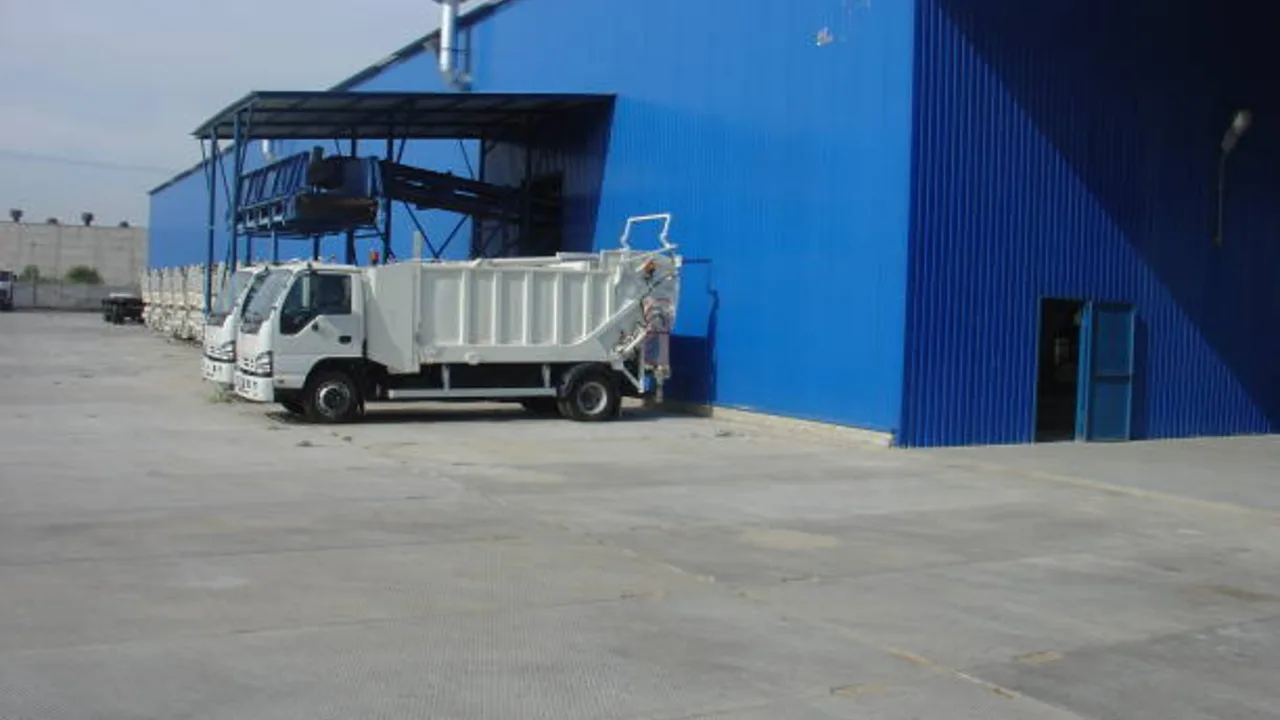
Labor availability is a common bottleneck in construction schedules. Prefab warehouse construction reduces reliance on large on-site crews by shifting labor-intensive tasks to fabrication facilities.
This results in:
- Smaller on-site teams
- Shorter installation durations
- Lower risk of labor-related delays
With fewer trades working simultaneously on site, coordination becomes simpler and progress more predictable.
Improved Schedule Predictability
Prefab warehouse construction speed is not only about building faster but also about building with greater schedule certainty. Factory production follows defined timelines and output rates, making delivery dates more reliable.
Predictable schedules benefit project stakeholders by:
- Reducing idle time for equipment and crews
- Allowing earlier commissioning and operation
- Improving cash flow planning
This predictability is particularly valuable for logistics, manufacturing, and distribution projects where time-to-operation directly affects revenue.
Logistics Planning and Just-in-Time Delivery
Efficient logistics planning further supports fast prefab construction. Components are delivered according to installation sequence, reducing on-site storage requirements and handling time.
Just-in-time delivery helps:
- Maintain a clean and organized site
- Reduce material handling delays
- Accelerate installation workflows
When combined with modular design, logistics efficiency becomes a key contributor to overall construction speed.
Time Savings Across the Project Lifecycle
The time advantages of prefab warehouses extend beyond structural erection. Faster enclosure enables earlier installation of MEP systems, equipment, and interior finishes.
Overall project time savings typically occur in:
- Design-to-fabrication transition
- Structural erection duration
- Building enclosure and commissioning
These cumulative savings can reduce total project timelines by several months compared to conventional construction methods.
Strategic Value of Prefab Warehouses for Fast Deployment
For developers seeking rapid facility deployment, prefab warehouses offer a clear competitive advantage. Industries such as logistics, e-commerce, manufacturing, and cold storage benefit directly from shorter construction cycles.
Choosing an experienced supplier of prefabricated steel structure warehouse solutions ensures that speed gains are achieved without compromising structural performance or long-term durability.
Conclusion: Speed as a Competitive Advantage
Prefab warehouse construction speed is the result of modular systems, off-site fabrication, and efficient installation processes working together. By reducing on-site complexity and enabling parallel workflows, prefab warehouses significantly shorten construction timelines while improving reliability.
As industrial projects continue to prioritize speed-to-market, prefab warehouse solutions provide a proven path to faster delivery, controlled execution, and long-term operational success.