A steel aircraft hangar has become the backbone of modern aviation infrastructure, supporting everything from private jets and commercial airlines to large-scale MRO operations and military fleets. As global air traffic continues to rise, airports and aviation companies are demanding structures that deliver long-term durability, maximum clear-span space, rapid installation, and low maintenance. Traditional concrete buildings can no longer keep up with this pace and complexity. This is why Metal Hangar Buildings and steel-structure engineering are now the preferred solution for aviation developers around the world.
Steel hangars are engineered to handle extreme weather conditions, heavy loads, and continuous daily activity within an aviation environment. Whether used for aircraft storage, repair operations, cargo handling, or flight training facilities, steel hangars provide the flexibility and performance that fast-growing aviation hubs require. More importantly, they are designed with global building codes in mind, allowing projects in airports, remote areas, or military bases to maintain consistent engineering quality. As aviation continues shifting toward efficiency and sustainability, steel structures stand out as the most reliable and economical choice.
Why Steel Aircraft Hangars Are the New Standard
The shift toward steel hangars is driven by performance, speed, and adaptability. A modern steel aircraft hangar offers a combination of strength and construction efficiency that traditional materials simply cannot deliver. Steel’s natural strength-to-weight ratio allows engineers to design large clear-span spaces without internal columns. This creates unobstructed aircraft movement, easier maintenance operations, and flexible internal planning for future upgrades.
Another major reason steel dominates aviation construction is speed. Prefabricated steel components are manufactured with precision, allowing fast on-site assembly. A hangar that traditionally took months to build can now be completed in a matter of weeks. This benefits airports, private owners, and government agencies that need new facilities operational as quickly as possible. Lower labor costs, fewer delays, and predictable timelines make steel hangars an attractive investment, especially for large aviation projects requiring scalability.
Durability is equally critical. Hangars must withstand strong winds, heavy rainfall, temperature fluctuations, and even potential seismic activity. Steel frames, properly engineered and treated, provide long-term resilience with minimal maintenance. Combined with modern coatings and insulation systems, steel hangars last decades while remaining structurally sound and energy-efficient.
Advantages of Steel Structure Hangar Buildings for Aviation

In the aviation sector, Metal Hangar Buildings deliver performance benefits that go beyond structural strength. Their adaptability makes them suitable for almost every type of aviation operation. A key advantage is door compatibility. Steel hangars accommodate a wide range of aircraft door systems—from sliding and bi-fold doors to hydraulic doors—allowing customization based on aircraft size, space availability, and operational needs. The flexibility of steel design makes it easy to integrate oversized door openings without compromising structural stability.
Another important benefit is environmental resilience. Aviation facilities are often located in extreme climates—humid coastal zones, deserts, snow-heavy regions, or cyclone-prone areas. Steel hangars can be engineered with galvanized steel, anti-rust coatings, and insulated panel systems that protect the building envelope from corrosion and moisture. This significantly reduces maintenance costs throughout the building’s lifecycle.
Metal hangars are also versatile in terms of function. Some serve purely for private aircraft storage, while others are designed as multi-purpose hubs supporting inspections, repairs, overhaul procedures, or cargo operations. Because steel structures allow easy expansion, airports and aviation companies can start with a smaller hangar and enlarge the facility as flight operations grow. The ability to adapt without major reconstruction gives steel hangars a major advantage over rigid concrete buildings.
Key Engineering Features of a Modern Steel Aircraft Hangar
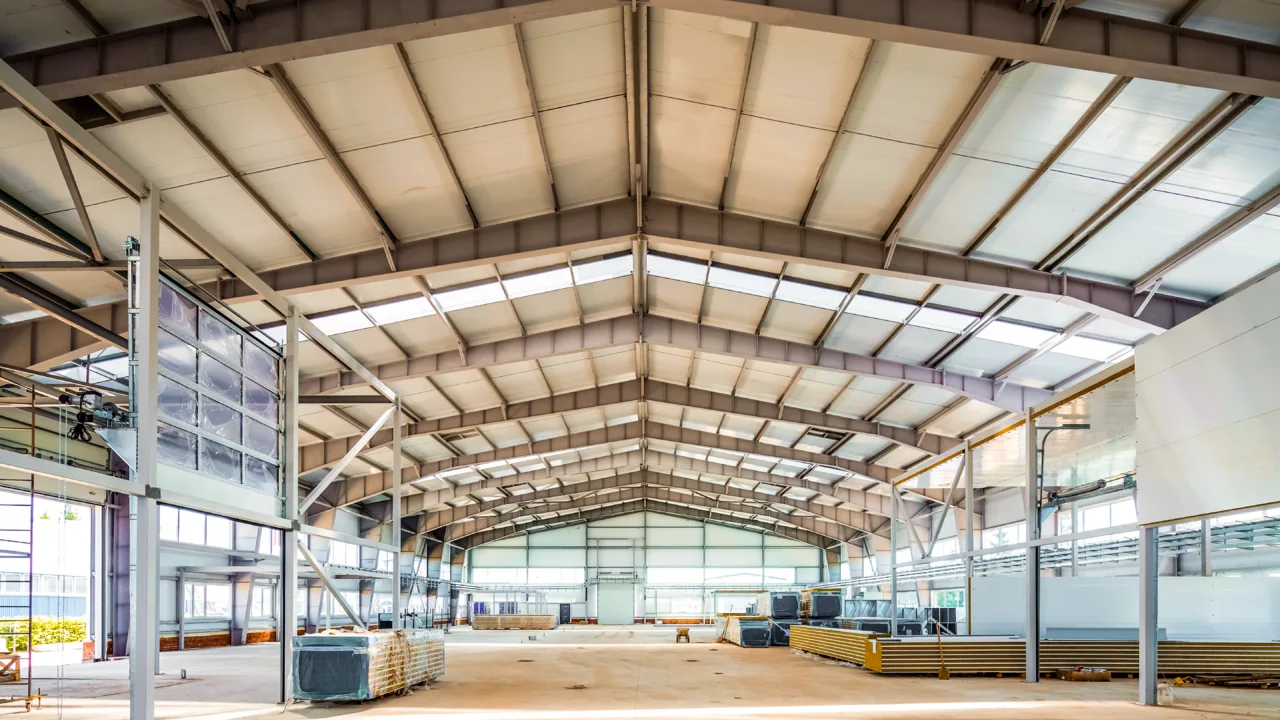
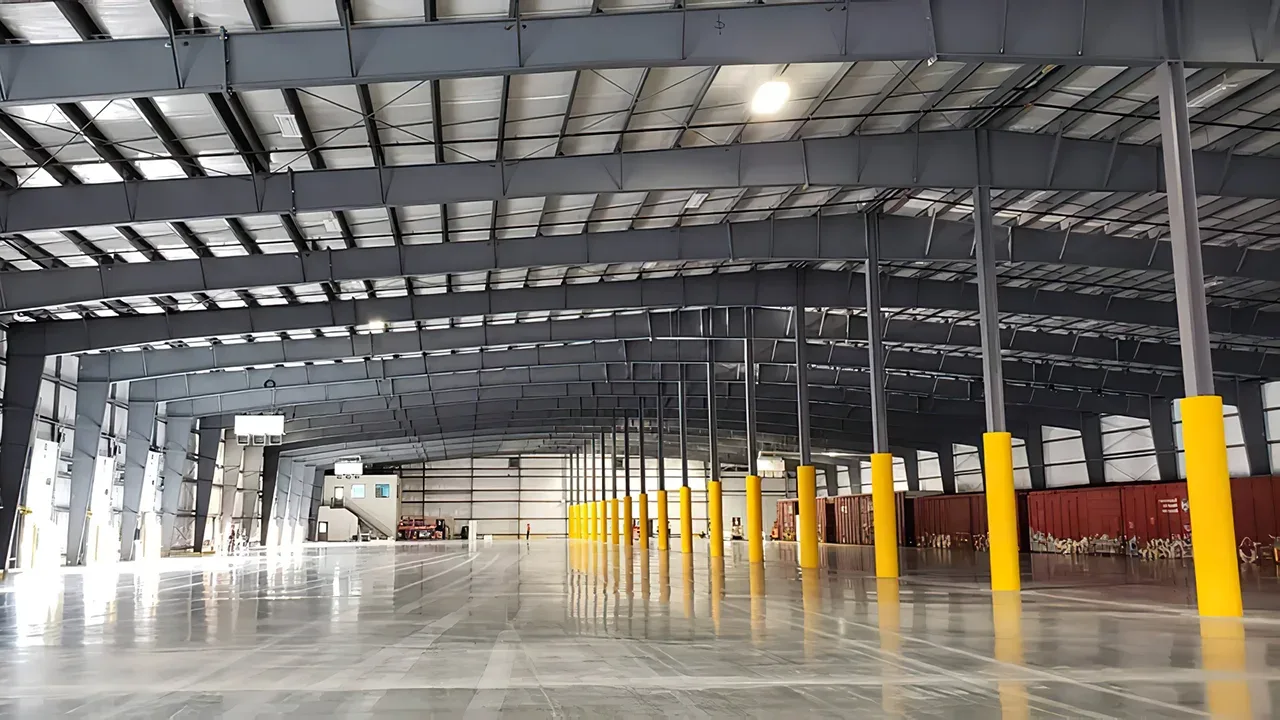
A modern steel aircraft hangar is a carefully engineered structure, designed to balance long-span strength, efficient material use, and operational functionality. The foundation of this design is the clear-span structure—a wide-open internal space supported only by the perimeter frames. This layout prevents internal columns from interrupting aircraft movement, making it easier to tow planes, arrange equipment, or perform maintenance tasks.
Engineering calculations are a crucial part of hangar design. Roof truss systems must handle wind load, snow load, and the weight of mechanical systems such as HVAC units or suspended equipment. In coastal regions, hangars require additional reinforcement to withstand high wind speeds. In colder climates, snow load considerations might require deeper trusses or heavier roofing materials. Fire safety standards also influence engineering decisions, often requiring fire-resistant coatings or integrated suppression systems.
The building envelope plays a major role in operational performance. Insulated sandwich panels reduce heat transfer, helping maintain internal temperature for MRO activities or equipment storage. Weather sealing prevents dust, moisture, and water infiltration, which is especially important for protecting aircraft sensitive components.
Finally, the foundation and anchoring system ensure the hangar remains stable during high wind events or heavy use. Reinforced concrete foundations with high-strength anchor bolts create a reliable connection between the structure and the ground. When engineered correctly, the hangar becomes a long-lasting facility capable of supporting decades of continuous aviation activity.
Design Options and Customization for Aircraft Hangars
One of the strongest advantages of steel hangars is customization. Every aviation project has its own operational demands, and steel structures adapt easily to these requirements. A thoughtfully planned hangar layout improves aircraft movement, minimizes downtime, and enhances worker safety. For example, maintenance hangars often require specific zones for inspection, workshops, spare parts storage, and administrative offices. Clear workflows reduce congestion and optimize productivity.
Steel aircraft hangars can include mezzanine levels for offices, technical rooms, or observation decks. These additional spaces integrate seamlessly into the main structure thanks to the flexibility of steel framing. Installing HVAC systems, fire-suppression networks, or specialized lighting is also easier due to the predictable layout of steel beams and trusses.
Externally, hangars can incorporate ventilation louvers, skylights for natural lighting, and customized facades to match airport architecture. Security enhancements such as perimeter fencing, access control systems, or reinforced door systems can also be added without structural limitations. This level of customization enables aviation companies to create hangars that meet operational, aesthetic, and safety standards while remaining cost-efficient.
Types of Steel Aircraft Hangars
As aviation operations expand, hangars must support different aircraft sizes and functions. A steel aircraft hangar accommodates all categories of aviation needs because steel structures allow large widths, customizable heights, and modular expansions. For private aviation, a smaller hangar built with a 20–30 meter span is often enough to store business jets or personal aircraft. These small structures prioritize protection, convenience, and affordability.
Commercial aviation requires larger clear-span spaces to handle multiple aircraft simultaneously. Airlines, charter operators, and cargo companies use hangars that combine wide door openings, heavy-duty floors, and high vertical clearance for aircraft like the Boeing 737 or Airbus A320. Steel framing allows these dimensions without compromising stability or increasing construction time.
The most complex facilities are MRO (Maintenance, Repair, and Overhaul) hangars. These structures need advanced engineering because maintenance operations require cranes, mezzanines, technical rooms, workshops, and inspection zones. Likewise, military hangars serve multi-purpose operations for helicopters, fighter jets, and transport aircraft, all requiring strong structural integrity and fast deployment. Metal Hangar Buildings deliver the strength and versatility needed for these mission-driven environments.
Cost Factors in Steel Aircraft Hangar Construction
The cost of a steel aircraft hangar varies significantly depending on size, structural requirements, door systems, insulation, and geographic conditions. The largest cost driver is the clear-span width. A wider span requires heavier steel components and advanced truss engineering. Hangars with oversized door systems—such as bi-fold or hydraulic doors—also require additional reinforcement because the opening width directly affects frame stability.
Climate plays a major role in determining final cost. A hangar designed for high snow loads in northern climates will use thicker steel members and stronger roof systems compared to a hangar built in a tropical region. Similarly, coastal projects need enhanced corrosion protection such as galvanized steel, zinc-rich coatings, or anti-rust finishing.
Operational features—insulation, ventilation, skylights, fire suppression systems, and interior rooms—add to the total investment. While these upgrades increase upfront cost, they improve long-term performance and energy efficiency.
Sample Cost Comparison Table
(Note: For structural illustration only—exact numbers vary by region.)
| Hangar Type | Typical Span Width | Estimated Price Range | Key Features |
|---|---|---|---|
| Private Aircraft Hangar | 20–30 m | Low to Medium | Basic doors, storage-focused design |
| Commercial Hangar | 40–60 m | Medium to High | Large door systems, higher clearance |
| MRO Facility | 60–100+ m | High | Workshops, cranes, insulation, HVAC |
| Military Hangar | 30–80 m | Medium to High | Rapid assembly, reinforced steel, secure access |
This table shows how structural objectives determine the investment level for each project.
Steel Aircraft Hangars vs Traditional Construction
When comparing steel hangars with conventional concrete buildings, steel consistently outperforms in terms of speed, flexibility, and lifecycle cost. A prefabricated steel aircraft hangar can be manufactured and installed in a fraction of the time required for concrete structures. This accelerated timeline is essential for airports and aviation companies that cannot afford operational downtime or long construction schedules.
Steel structures also provide long-term cost advantages. They require less maintenance, are resistant to pests and moisture, and allow easy expansion when operations grow. Concrete buildings, in contrast, are difficult to modify and tend to degrade faster in harsh climates. Over decades of use, steel offers a significantly lower total cost of ownership.
Flexibility is another important advantage. Where concrete limits architectural freedom, steel supports large clear-span spaces, allowing full mobility for aircraft and equipment. This design efficiency boosts operational performance and reduces bottlenecks inside the hangar.
Case Studies: Real Applications of Metal Hangar Buildings
Around the world, Metal Hangar Buildings have been deployed in airports, military bases, remote islands, and cargo hubs. In regional airports, steel hangars allow rapid expansion of private aviation services with minimal disruption. Developers can start with a smaller structure and later expand the building by extending the steel frame—a cost-efficient upgrade path that concrete cannot provide.
In remote or challenging environments, steel hangars offer fast installation because prefabricated components arrive ready to assemble. This approach is often used in desert airfields, high-altitude regions, and tropical islands where conventional construction is difficult. Precision fabrication ensures components fit seamlessly, reducing construction risks and delays.
Military operations benefit greatly from steel hangars’ mobility and strength. Rapid-deployment hangars can be transported, assembled, and reinforced in compressed timelines during strategic missions, disaster response, or temporary deployments.
Step-by-Step Process of Building a Steel Aircraft Hangar
A successful hangar project begins long before fabrication starts. The first step is a detailed assessment of operational requirements: aircraft size, number of aircraft, working areas, climate conditions, and local building codes. This information shapes the engineering calculations for wind, snow, seismic loads, and roof systems.
After the assessment, engineers develop structural drawings and 3D models of the hangar. These designs include the framing system, foundation requirements, door configuration, insulation, and electrical planning. Once approved, fabrication begins using precision cutting, drilling, and welding machinery. Every beam, column, and truss is manufactured to fit perfectly during on-site assembly.
When the steel components arrive at the project site, installation begins with foundation preparation and anchor bolt verification. The framing is then erected section by section, forming the skeleton of the hangar. Roof panels, wall panels, and insulation systems follow, along with door installation, ventilation, skylights, and interior rooms. The final stage involves electrical work, HVAC setup, fire protection systems, and any required equipment for aircraft operations.
Hangar Development Timeline Table
| Project Phase | Description | Typical Duration |
|---|---|---|
| Planning & Requirements | Define aircraft type, span, operations | 1–3 weeks |
| Engineering & Design | Structural drawings, load calculations | 2–6 weeks |
| Steel Fabrication | Manufacturing beams, columns, trusses | 3–8 weeks |
| Delivery & Installation | On-site erection and panel installation | 2–6 weeks |
| Final Setup | HVAC, lighting, interior rooms, safety systems | 1–4 weeks |
These timelines vary by project size but offer a realistic view of how efficient steel hangar construction can be.
FAQ About Steel Aircraft Hangars
How long does a steel aircraft hangar last?
A properly engineered steel hangar can last 40–70 years or more with minimal maintenance. Anti-rust coatings and insulated panels further extend its lifespan.
Can a steel hangar be expanded later?
Yes. One of the biggest advantages of steel structures is modular expansion. The frame can be extended without redesigning the entire building.
Do Metal Hangar Buildings meet global engineering standards?
With proper certification—CE, ISO, ASTM, or international load codes—steel hangars fully comply with global aviation requirements.
Steel aircraft hangars represent the future of aviation infrastructure. Their combination of strength, clear-span flexibility, durability, and rapid construction makes them ideal for airports, MRO centers, private aviation businesses, and military operations. Supported by modern engineering and the versatility of Metal Hangar Buildings, steel structures offer unmatched reliability and long-term value. As aviation continues to expand, steel hangars remain the smartest and most cost-efficient solution for modern aviation facilities.