In modern industrial and commercial construction, long-term performance is no longer optional—it is a fundamental requirement. Building owners, developers, and engineers increasingly prioritize steel building frame durability when selecting structural systems. Compared to traditional concrete or timber frames, steel building frames deliver superior strength, extended building lifespan, and higher safety performance across a wide range of demanding environments.
As global industries push for faster construction timelines, higher load capacity, and lower lifecycle costs, steel building frames have become the backbone of modern factories, warehouses, logistics hubs, and industrial platforms. This article explores how steel building frames improve durability and safety, the role of corrosion protection in extending service life, and why steel structures consistently outperform alternative framing systems.
Understanding Steel Building Frame Durability
Steel building frame durability refers to the ability of a steel structural system to retain its strength, stability, and functional performance throughout its intended service life. A durable steel frame resists deformation, fatigue, corrosion, and environmental stress while safely supporting static and dynamic loads over decades of use.
Unlike traditional materials that may suffer from inconsistent quality or unpredictable long-term behavior, structural steel is manufactured under strict standards. Its mechanical properties are precisely defined, allowing engineers to calculate load paths, deflection limits, and safety margins with high accuracy. This predictability is a key reason steel frames are widely used in mission-critical industrial buildings.
Why Steel Frames Outperform Traditional Building Structures
Steel building frames offer clear advantages over reinforced concrete and timber systems, particularly in industrial and large-span applications:
- High strength-to-weight ratio enables longer spans and reduced column requirements
- Minimal cracking, creep, or shrinkage compared to concrete structures
- Excellent fatigue resistance under repetitive or dynamic loads
- Factory-controlled fabrication ensures consistent material quality and precision
These characteristics translate directly into improved building lifespan and reduced structural risk. Steel frames maintain dimensional stability over time, which is critical for buildings housing precision machinery, storage systems, or elevated working platforms.
Steel Building Frames and Long-Term Building Lifespan
One of the most significant benefits of steel framing is its ability to extend overall building lifespan. Properly designed and protected steel structures routinely achieve service lives of 50 years or more, with many exceeding this benchmark through routine inspection and maintenance.
Concrete buildings often experience long-term deterioration due to reinforcement corrosion, cracking, or chemical attack. Timber structures may suffer from moisture damage, biological decay, or dimensional instability. In contrast, steel building frames maintain their load-bearing capacity and geometry when supported by appropriate corrosion protection systems.
This long-term reliability makes steel frames the preferred choice for warehouses, industrial plants, logistics centers, and steel working platforms where uninterrupted operation is essential.
The Role of Corrosion Protection in Steel Frame Durability
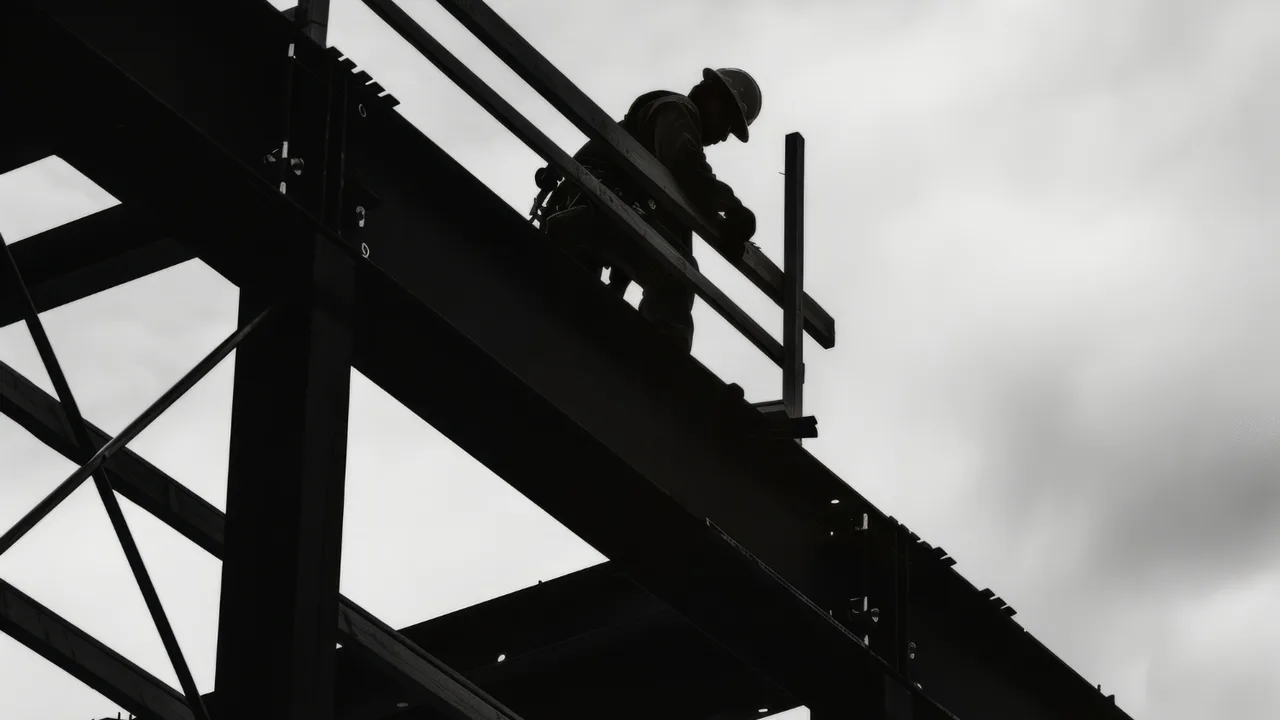
Effective corrosion protection is the foundation of long-lasting steel building frame durability. While steel is inherently strong and stable, prolonged exposure to moisture, oxygen, chemicals, and pollutants can gradually degrade unprotected steel surfaces. In industrial, coastal, or high-humidity environments, corrosion is not just a cosmetic issue—it directly affects structural performance, safety margins, and long-term building lifespan.
Modern steel construction addresses this challenge through a combination of material selection, surface treatment technologies, and lifecycle maintenance planning. When corrosion protection is properly designed and executed, steel building frames can maintain their structural integrity for decades with minimal loss of load-bearing capacity.
Corrosion in steel structures typically occurs through electrochemical reactions accelerated by factors such as humidity, salt content in the air, chemical exposure, temperature fluctuations, and poor drainage or ventilation. Understanding these risks at the design stage allows engineers to specify appropriate protection systems that match the building’s operating environment.
Common Corrosion Protection Systems
Hot-dip galvanization is one of the most widely used and effective corrosion protection methods. By coating steel components with a layer of zinc, galvanization creates a physical and electrochemical barrier that protects the steel from moisture and oxygen. This method is especially suitable for outdoor steel frames, coastal facilities, and high-humidity environments where long-term durability is required with minimal maintenance.
Epoxy and polyurethane coating systems are commonly applied in industrial and chemical environments. These coatings provide excellent resistance to chemicals, oils, solvents, and abrasion. Multi-layer coating systems are often used, combining primer, intermediate, and topcoat layers to achieve optimal corrosion resistance while also improving surface durability and aesthetics.
Fireproof and anti-corrosion composite coatings serve a dual purpose by protecting steel frames from both corrosion and fire exposure. These systems are frequently used in factories, warehouses, and commercial buildings where fire safety regulations require extended fire resistance without compromising long-term durability.
Routine inspection and maintenance programs play a critical role in corrosion management. Even the most advanced protection systems benefit from periodic inspections, touch-up coatings, and condition monitoring. Preventive maintenance significantly extends the service life of steel building frames and helps identify localized corrosion before it affects structural performance.
When these corrosion protection systems are correctly selected and applied, steel frames consistently outperform concrete structures in aggressive environments. In coastal regions, concrete structures often suffer from reinforcement corrosion due to chloride penetration, leading to cracking and spalling. In contrast, properly protected steel frames maintain predictable performance in chemical plants, wastewater treatment facilities, heavy industrial zones, and logistics hubs with high environmental exposure.
Ultimately, corrosion protection is not an optional upgrade—it is a strategic investment that ensures steel building frame durability, preserves safety margins, and maximizes the long-term value of steel structures across their entire lifecycle.
Structural Safety Advantages of Steel Building Frames
Safety is a core reason steel framing systems are widely adopted in industrial construction. Steel building frames offer superior performance under extreme loads, accidental impacts, and environmental forces.
Steel is a ductile material, meaning it deforms gradually under stress rather than failing suddenly. This ductility allows steel structures to absorb and dissipate energy during seismic events, high winds, or equipment impacts, significantly reducing the risk of catastrophic collapse.
Seismic, Wind, and Dynamic Load Performance
In seismic zones, steel building frames provide excellent earthquake resistance due to their flexibility and energy dissipation capacity. Steel moment frames, braced frames, and portal systems are commonly used to meet stringent seismic design requirements.
Similarly, steel frames perform well under wind loads and dynamic forces generated by overhead cranes, conveyor systems, and heavy machinery. Their predictable behavior ensures consistent performance throughout the building’s operational life.
Fire Resistance and Load Stability
Although steel is non-combustible, high temperatures can reduce its strength. Modern steel buildings address this through fireproofing systems such as intumescent coatings, fire-resistant boards, and spray-applied fire protection materials.
These systems allow steel frames to maintain structural stability during fire exposure, providing critical evacuation time and protecting structural integrity. Compared to timber structures, steel frames significantly reduce fire-related risks.
Construction Precision and Quality Control
Another contributor to steel building frame durability is precision manufacturing. Steel components are fabricated in controlled factory environments using CNC cutting, robotic welding, and strict quality inspections.
This level of precision minimizes on-site errors, improves connection performance, and ensures accurate alignment during erection. As a result, steel frames exhibit fewer structural defects and lower long-term maintenance requirements.
Applications That Benefit Most from Steel Building Frame Durability
Steel building frames are especially valuable in applications where durability, safety, and adaptability are critical:
- Industrial factories and manufacturing plants
- Warehouses and logistics distribution centers
- Steel structure working platforms and mezzanines
- Heavy equipment maintenance and assembly facilities
- Commercial and mixed-use industrial buildings
In these environments, a professionally engineered steel building structure ensures long-term safety, operational efficiency, and a strong return on investment.
Sustainability and Lifecycle Cost Benefits
Beyond durability and safety, steel building frames also contribute to sustainability goals. Steel is fully recyclable, and many modern steel structures incorporate recycled content without compromising performance.
From a lifecycle cost perspective, steel frames reduce expenses related to structural repairs, downtime, and retrofitting. Their modular nature also allows for future expansion or reconfiguration without extensive demolition.
Conclusion: Steel Frames as a Long-Term Strategic Choice
Selecting the right structural system is one of the most important decisions in any construction project. Steel building frame durability offers unmatched advantages in strength, corrosion resistance, safety, and long-term performance. When combined with effective corrosion protection and professional engineering, steel building frames significantly extend building lifespan while minimizing operational risks. For modern industrial and commercial buildings, steel frames are not just a structural solution—they are a long-term strategic investment.