Delivering a steel building on time is no longer just a competitive advantage — it is often a contractual necessity. In large industrial, warehouse, and infrastructure projects, steel structure erection planning plays a decisive role in whether a project stays on schedule or spirals into costly delays.
Unlike concrete works, steel erection happens fast — but only when planning, sequencing, and site logistics are executed with precision. Poor coordination can turn speed into chaos. This article explains how to plan steel structure erection effectively for tight project schedules without compromising safety or quality.
Why Steel Structure Erection Planning Matters in Fast-Track Projects
Steel construction is inherently suited for fast delivery, but speed alone does not guarantee schedule success. In fast-track projects, steel structure erection planning determines whether prefabrication advantages translate into real on-site progress or turn into coordination bottlenecks.
Once fabrication is completed, steel erection immediately becomes a critical-path activity. Any disruption during erection directly delays roofing, cladding, MEP installation, and finishing works. Unlike concrete structures, steel erection leaves little margin for improvisation.
| Erection Planning Factor | Impact on Fast-Track Projects | Risk if Poorly Planned |
|---|---|---|
| Prefabricated steel accuracy | Enables rapid installation without curing or waiting time | Misalignment causes rework, delays, and crane downtime |
| Crane and manpower coordination | Ensures continuous erection flow and optimal daily output | Idle crews, crane congestion, and inefficient lifting cycles |
| Temporary structural stability | Maintains safety and alignment during partial erection | Unsafe conditions, work stoppages, and corrective bracing |
| Overlapping trades | Allows parallel work between steel, roofing, and MEP | Trade clashes, restricted access, and workflow conflicts |
Because steel members are manufactured off-site to precise tolerances, there is very limited flexibility for on-site correction. Any deviation in anchor bolts, column positioning, or erection sequence can stop progress entirely while corrective measures are implemented.
In fast-track environments, cranes, manpower, and access routes must be precisely synchronized. Steel delivery schedules, lifting windows, and crew availability must align perfectly with the erection sequence. Even short delays can cascade into lost productivity across multiple work fronts.
Another critical aspect is temporary stability control. During erection, structures are often incomplete and vulnerable to wind loads, uneven loading, and alignment shifts. Without a planned bracing and stabilization strategy, erection speed must be reduced to maintain safety.
Fast-track projects also require multiple trades to overlap. Roofing, decking, and MEP installation often begin before the entire steel frame is complete. A structured steel structure erection planning approach defines clear work zones and sequencing rules, allowing these activities to proceed in parallel without interference.
Ultimately, proper erection planning transforms steel construction from a high-risk acceleration attempt into a controlled, predictable process. It reduces idle time, minimizes rework, and allows project teams to fully leverage the inherent speed of steel structures.
Step 2: Establish a Clear Erection Sequence
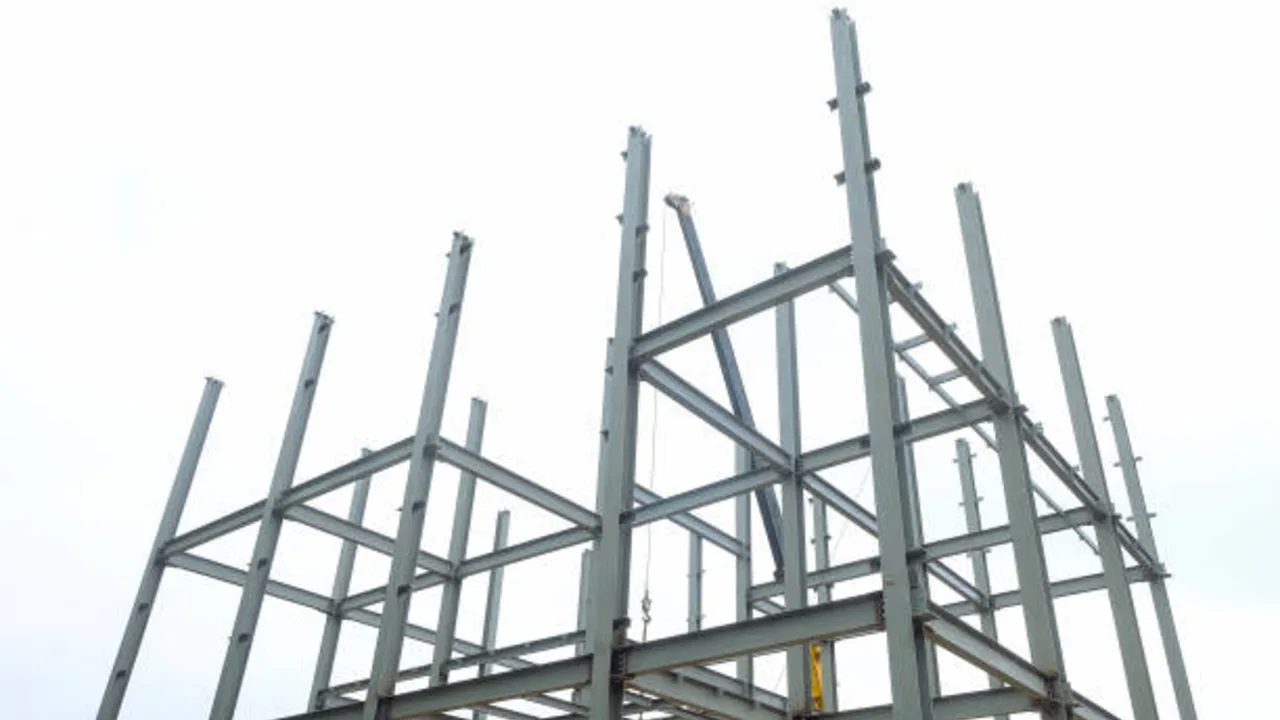
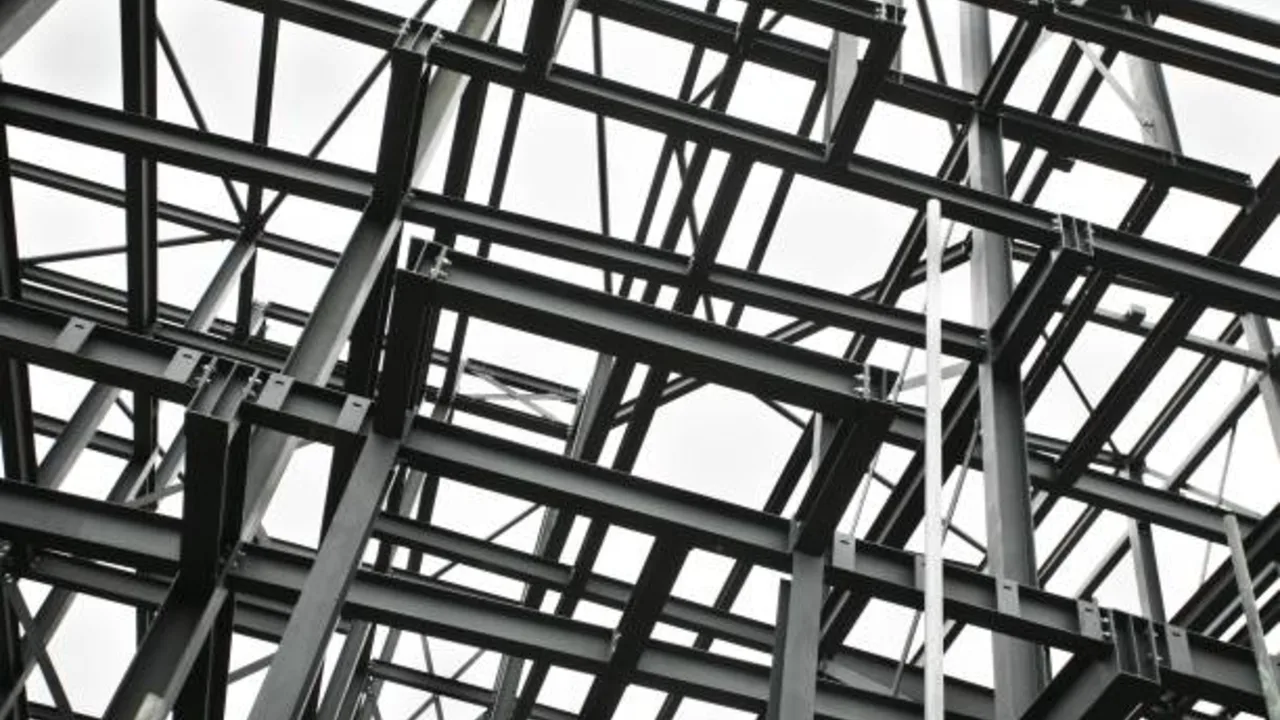
The erection sequence defines the order in which columns, beams, bracing, and secondary members are installed. A correct sequence improves safety, stability, and speed.
- Install primary columns and verify alignment
- Erect main beams and frames to form stable bays
- Apply temporary bracing to control lateral movement
- Install secondary beams, purlins, and girts
- Complete permanent bracing and final bolt tightening
The objective is to create self-stable structural zones early, allowing erection to proceed without delays caused by instability or crane congestion.
Step 3: Optimize Site Logistics for Steel Erection
On tight schedules, site logistics must function like a production system rather than a storage operation.
Effective logistics planning includes:
- Delivery timing aligned with erection sequence
- Minimal laydown areas to avoid double handling
- Clear crane travel routes and lifting zones
- Separated access for erection crews and other trades
Ideally, steel components are lifted directly from delivery trucks into their final position, reducing site congestion and improving safety.
Step 4: Coordinate Crane Planning with Structural Design
Cranes are the backbone of steel erection. Inadequate crane selection or positioning often becomes the main cause of erection delays.
Crane planning must consider:
- Maximum lift weight and radius
- Hook height versus building height
- Ground bearing capacity
- Crane relocation time between erection zones
For fast-track projects, multiple cranes or overlapping crane coverage can significantly shorten erection duration — provided the planning is precise.
Step 5: Align Manpower with the Erection Workflow
Speed comes from coordination, not manpower quantity alone. Efficient projects divide crews based on task specialization.
- Column and frame installation crews
- Bolting and alignment teams
- Temporary bracing crews
- Surveying and quality-control staff
When crews work in parallel within clearly defined zones, productivity increases and waiting time is minimized.
Step 6: Integrate Safety into Erection Planning
Under tight deadlines, safety shortcuts can cause severe disruptions. Effective steel structure erection planning integrates safety measures from the beginning.
- Pre-installed fall protection where possible
- Approved lifting plans for critical members
- Defined wind and weather limits
- Controlled access during lifting operations
A safe erection process is not slower — it is more predictable and reliable.
Step 7: Use Digital Planning and Visualization Tools
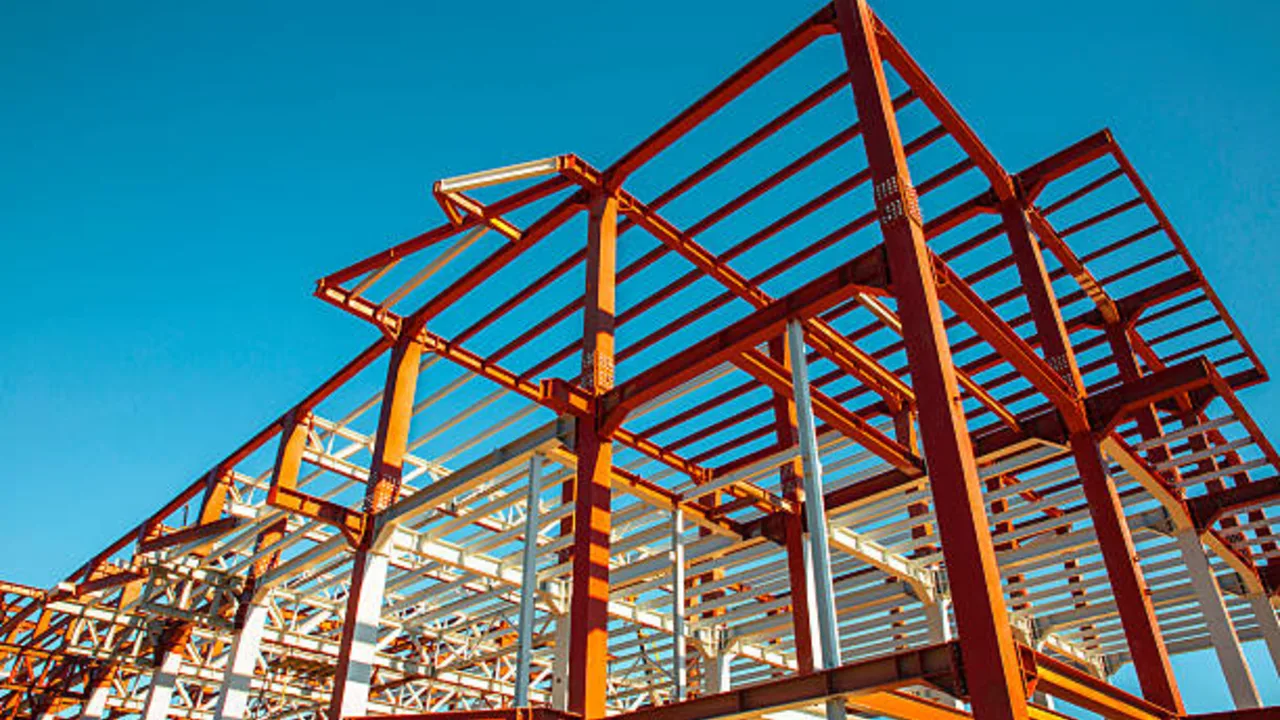
Modern fast-track erection projects increasingly rely on digital planning tools to reduce uncertainty and eliminate coordination errors before steel arrives on site. Tools such as 3D modeling, erection simulations, and BIM coordination have become essential components of effective steel structure erection planning.
Unlike traditional 2D drawings, digital models allow project teams to visualize the entire erection process in sequence. This makes it possible to identify conflicts between structural members, cranes, access routes, and site constraints during the planning phase rather than on site.
| Digital Tool | Primary Function | Benefit During Erection |
|---|---|---|
| 3D Structural Models | Visualize steel geometry and member connections | Reduces misinterpretation of drawings and installation errors |
| Erection Sequence Simulation | Simulate step-by-step installation order | Optimizes erection flow and minimizes crane repositioning |
| BIM Coordination | Integrate structure, MEP, and architectural models | Prevents trade clashes and supports parallel construction |
| Crane Reach & Load Analysis | Validate lifting radius, capacity, and hook height | Prevents crane-related delays and unsafe lifting conditions |
One of the biggest advantages of digital planning is early conflict detection. By running erection simulations, teams can identify issues such as insufficient crane clearance, overlapping lifting zones, or restricted access areas that would otherwise only become apparent during site execution.
Digital tools also support more accurate scheduling. When erection sequences are linked to time-based simulations, project managers can validate whether planned erection rates are realistic under actual site constraints. This improves short-term lookahead planning and daily productivity forecasting.
Experienced steel contractors such as emphasize the use of visualization and sequencing analysis to improve erection efficiency and site safety. By simulating erection scenarios in advance, contractors reduce reliance on improvisation and ensure that lifting operations follow a controlled, repeatable process.
From a safety perspective, digital planning helps define exclusion zones, lifting paths, and temporary stability requirements before work begins. This allows safety measures to be integrated into the erection plan rather than added reactively after risks appear on site.
In fast-track projects, where multiple activities overlap and time buffers are minimal, digital planning tools transform erection from a reactive operation into a predictable engineering process. When combined with proper sequencing and logistics planning, they significantly reduce delays, rework, and safety incidents.
How Proper Planning Supports Steel Structure Construction
Well-executed erection planning strengthens the entire steel structure construction process. Faster frame completion allows earlier access for roofing, cladding, and MEP trades, reducing overall project risk.
Conclusion
Steel structures offer speed — but only when planning unlocks their full potential. For projects with tight schedules, steel structure erection planning is the key factor that turns prefabrication efficiency into on-site performance.
By defining a clear erection sequence, optimizing site logistics, coordinating cranes and manpower, and embedding safety from day one, project teams can compress schedules without increasing risk. In modern construction, planning is not overhead — it is strategy.