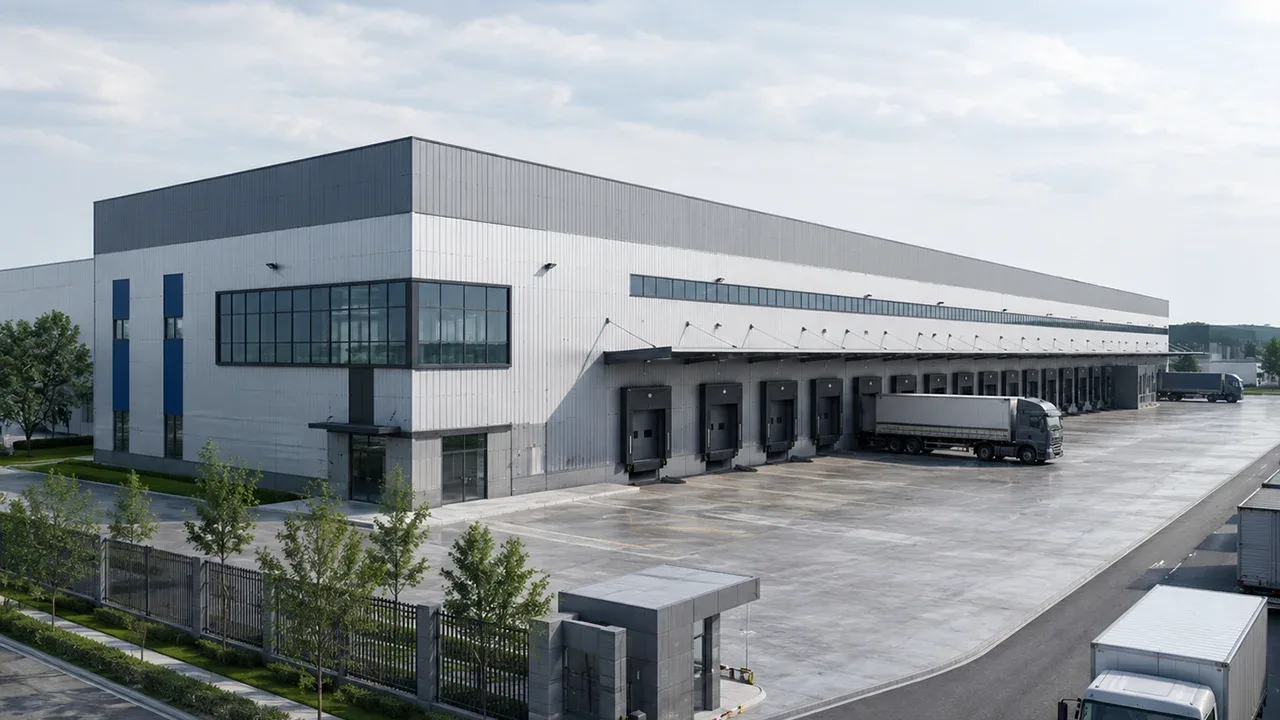
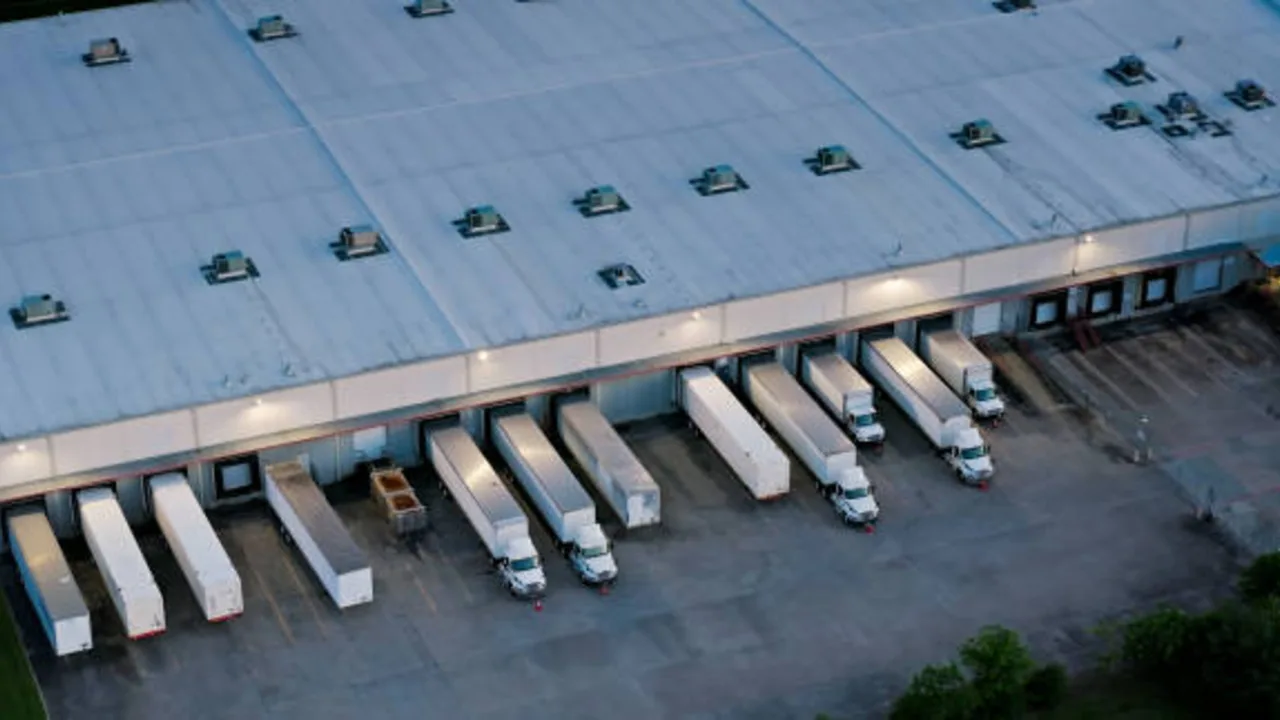
A steel roof structure for warehouses is more than a covering system. It affects how much clear storage space the building can provide, how safely the roof handles wind and rain, how easily services can be installed, and how practical the warehouse remains for long-term maintenance. In a storage building, the roof is directly connected to daily operations. It influences rack height, forklift routes, column layout, loading zones, lighting plans, ventilation, fire protection pipes, and future equipment upgrades.
Warehouses usually need wide interior areas with as few interruptions as possible. Every internal column can affect storage layout, pallet movement, vehicle circulation, inventory planning, and future reconfiguration. A weak or poorly coordinated roof may protect the building from weather in a basic sense, but it can still create operational problems if it limits clear height, drains poorly, moves too much under load, or conflicts with mechanical and electrical systems.
Steel works well for warehouse roofing because it can support repeated structural bays, efficient spans, prefabricated components, fast site assembly, and flexible roof layouts. A well-designed roof can combine strength, drainage, wind resistance, fabrication simplicity, and installation speed. The goal is not only to cover the warehouse, but to support how the warehouse stores, moves, protects, and expands its goods over time.
Why Warehouses Need a Strong Steel Roof Structure
Warehouse roofs carry more responsibility than many people expect. The roof must resist gravity loads, wind uplift, rain, insulation weight, maintenance activity, roof panels, purlins, lighting, fire pipes, and sometimes solar panels or HVAC equipment. It must also remain stable during installation, because many roof frames are not fully stable until bracing, purlins, and roof panels are properly connected.
Storage Space Depends on Roof Span and Column Layout
The value of a warehouse is closely tied to usable storage space. A roof system that allows wider spans can reduce the number of internal columns, which helps improve rack layout, forklift movement, staging areas, and inventory zones. This is especially important in logistics warehouses, distribution centers, e-commerce storage buildings, cold storage facilities, and manufacturing warehouses where movement efficiency matters as much as storage capacity.
However, the widest possible span is not always the best answer. Longer spans can require deeper rafters, stronger trusses, heavier connections, stricter deflection control, and larger lifting equipment. A practical steel roof structure for warehouses should balance open space with structural economy. The roof should support the warehouse operation without creating unnecessary steel weight, fabrication complexity, or installation difficulty.
Roof Strength Protects Operations, Not Just the Building
A warehouse roof protects stored goods, machines, packaging materials, loading operations, and workers. If the roof leaks, deflects too much, fails to drain properly, or suffers wind damage, the problem is not limited to repair cost. It can interrupt logistics schedules, damage inventory, delay shipments, and create safety risks inside the building.
That is why roof design should consider long-term use, not just initial construction. Drainage, wind resistance, purlin spacing, roof panel support, corrosion protection, and maintenance access all affect how reliably the warehouse can operate. A strong roof structure reduces the risk of disruption and helps the building remain useful under real operating conditions.
Steel Works Well for Repeated Warehouse Bays
Many warehouses use repeated bay layouts. This makes steel roofing especially practical because repeated frames, purlins, braces, plates, and connection details can simplify engineering, fabrication, packing, shipping, and installation. Repetition also helps reduce mistakes because components follow a predictable logic.
For large warehouse projects, this repeated structure can improve construction speed. Members can be fabricated in the factory, marked clearly, packed by sequence, and assembled on site with fewer adjustments. When the roof design is coordinated with bay spacing, crane access, delivery order, and temporary bracing, the installation process becomes safer and more predictable.
Main Components of a Steel Roof Structure for Warehouses
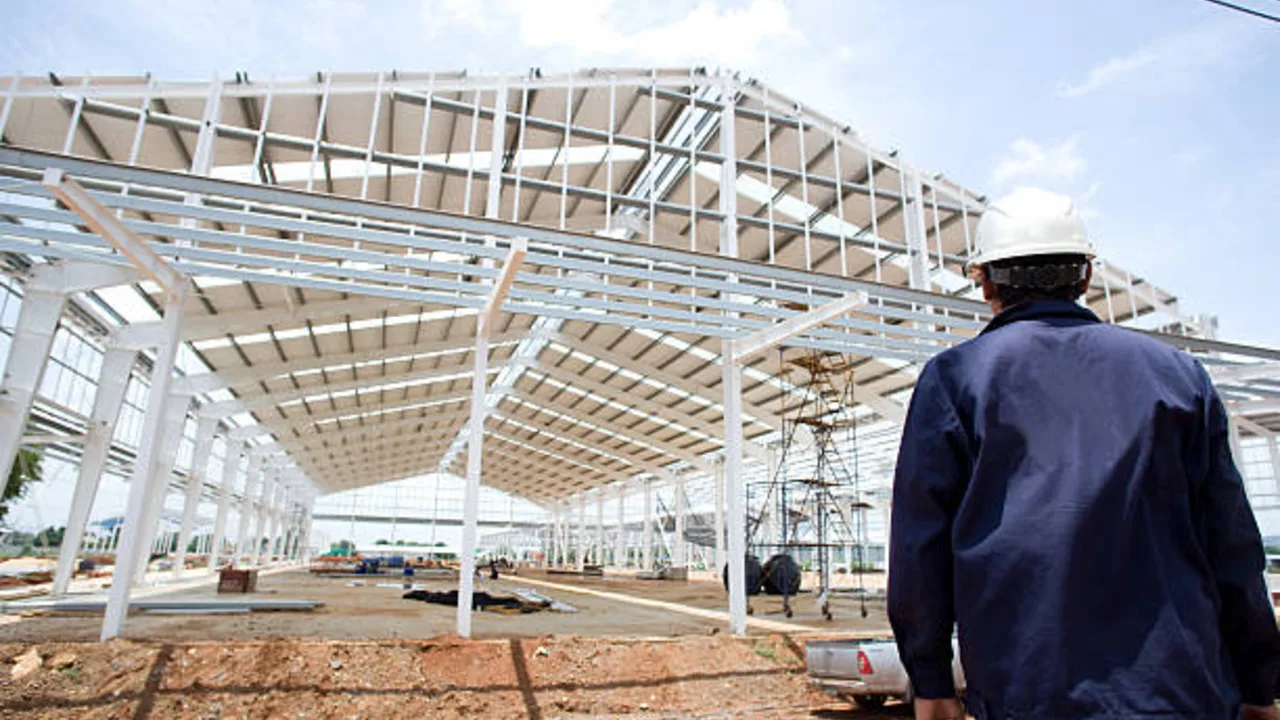
A warehouse roof is a system, not a single frame. The main members carry the roof loads, while secondary members support panels, stabilize the roof plane, transfer wind forces, and help align the whole structure. If one part is ignored, the roof may still create problems even when the main steel frame appears strong.
Primary Roof Frames and Rafters
Primary roof frames are the main load-carrying elements. In many warehouses, these are portal frames made of steel columns and rafters. In wider buildings, the system may use trusses, roof beams, or a hybrid arrangement. These members transfer roof loads to columns and then down to the foundation.
The size and shape of the primary frame depend on building width, span, roof load, eave height, wind demand, and required clear height. A simple storage warehouse may use repeated portal frames. A larger warehouse with wider open space may need deeper rafters or trusses. A warehouse with equipment loads, solar panels, or special ventilation systems may require local strengthening and additional support points.
Purlins and Roof Panel Support
Purlins are secondary roof members that support the roof panels and transfer loads to the primary frames or trusses. In warehouse buildings, C or Z purlins are commonly used because they are efficient, light, repeatable, and suitable for prefabricated construction.
Purlin spacing affects roof panel performance, fixing quality, insulation support, wind uplift resistance, and installation speed. If purlins are spaced too far apart, roof panels may deflect too much or become harder to fasten securely. If they are placed too close without need, the roof may become more expensive without improving meaningful performance. Good purlin design matches the roof panel type, insulation system, wind load, slope, and maintenance requirements.
Roof Bracing and Stability Members
Roof bracing helps the warehouse roof resist lateral forces and remain stable. Wind pressure, wind uplift, frame movement, and installation forces can all create horizontal demands. Bracing gives these forces a controlled path through the roof plane and down into the main structural system.
Bracing is especially important during construction. A finished roof may be stable after all purlins, bracing, and panels are installed, but partially erected frames can be vulnerable. Temporary bracing may be needed before the permanent system is complete. Treating bracing as a secondary detail can lead to alignment problems, installation delays, or unsafe site conditions.
Connections, Bolts, and Plates
Connections decide how loads move between members. Bolts, splice plates, gusset plates, stiffeners, welds, base connections, rafter joints, and purlin clips all affect the real performance of the roof. A member may be strong in calculation, but the system can still fail to perform well if the connection is weak, misaligned, hard to install, or poorly detailed.
Warehouse projects benefit from repeated and clear connection details. Standardized bolt patterns, practical splice locations, accessible bolt positions, and accurate member marking can reduce fabrication time and site adjustment. Good connection design improves both structural safety and installation efficiency.
Warehouse Roof Design Factors That Affect Performance
The best warehouse roof is not simply the heaviest or the widest. It is the roof that matches the building’s storage function, loading conditions, climate exposure, fabrication method, and installation plan. A practical design should review span, load, slope, drainage, deflection, bracing, and service coordination together.
Span, Bay Spacing, and Clear Height
Span and bay spacing shape the entire warehouse layout. Wider spans can create open floor areas, while repeated bay spacing can simplify the structure. Clear height affects rack capacity, forklift movement, loading operations, ventilation routes, and possible future mezzanine or equipment changes.
If the roof structure is too deep, it may reduce usable height. If the span is too wide, it may increase steel weight and erection difficulty. If the column layout is poorly coordinated, it may interrupt storage aisles. The roof should therefore be designed around the warehouse operation, not only around structural calculation.
Wind Uplift and Roof Load Requirements
Warehouse roofs often cover large surface areas, so wind uplift can be a major design factor. The roof panels, fasteners, purlins, bracing, rafters, trusses, and connections must work together to resist upward wind forces. If one part of the load path is weak, roof damage can occur even when the main frame is strong.
Other loads must also be considered early. These may include roof sheeting, insulation, rain, snow where applicable, maintenance workers, suspended lighting, fire protection pipes, cable trays, exhaust fans, skylights, solar panels, and HVAC units. Late additions can force redesign or reinforcement, which often costs more than including the loads during the first design stage.
Roof Slope and Drainage
Drainage is a practical performance issue for warehouses. A large roof area can collect a significant amount of rainwater. If the roof slope, gutters, downpipes, valley zones, and outlet positions are not coordinated, water can pond on the roof or overload drainage areas.
Ponding is not only a waterproofing issue. It adds load to the roof and can worsen deflection. Over time, poor drainage may increase leakage risk, damage roof panels, affect insulation, and create maintenance problems. A strong warehouse roof must therefore combine structural capacity with clear water management.
Deflection Control for Long-Term Use
A warehouse roof can be strong enough to avoid failure but still move too much for practical use. Excessive deflection can affect roof panel alignment, gutter performance, suspended services, insulation, skylights, and waterproofing details. In large warehouse roofs, even small movement can become noticeable because the roof area is wide.
Deflection control is especially important when the roof supports long spans, solar panels, service platforms, or suspended systems. The design should check not only ultimate strength, but also serviceability. A roof that remains aligned, drains properly, and supports services without repeated adjustment will perform better over the full life of the warehouse.
Common Steel Roof Systems Used in Warehouses
Different warehouse projects need different roof systems. A small storage building, a logistics warehouse, a cold storage facility, and a large distribution center may all use steel, but the best roof system can vary depending on span, load, height, climate, installation access, and future expansion plans.
Portal Frame Roof Systems
Portal frame roof systems are widely used in standard warehouses because they are simple, repeatable, and efficient for many rectangular building layouts. Steel columns and rafters work together to support roof loads and transfer forces to the foundation. The repeated frame rhythm makes engineering, fabrication, packing, and installation more predictable.
This system is often suitable for warehouses with moderate spans, regular bay spacing, and straightforward roof slopes. It can support fast construction and practical cost control. However, when the warehouse becomes very wide, when wind loads are high, or when special service loads are added, the rafters and connections may need to become deeper and stronger.
Steel Roof Truss Systems
Steel roof truss systems are useful when a warehouse needs wider clear space without too many internal columns. A truss distributes force through triangulated members, which can make it efficient for long-span roofing. This can be valuable for large storage halls, logistics centers, aircraft-related storage, heavy equipment warehouses, or facilities that need flexible interior planning.
The main concern with truss roofs is coordination. Trusses include many members, nodes, gusset plates, bolt holes, welds, splices, and lifting points. A truss may be efficient in steel weight, but it can become expensive or slow to install if connection details, transport sections, trial assembly, and crane lifting plans are not reviewed early.
Hybrid Roof Systems for Complex Warehouses
Some warehouses are not simple rectangular storage buildings. They may include loading canopies, office blocks, cold storage zones, mezzanine areas, equipment platforms, ventilation zones, or future expansion areas. In these cases, a hybrid roof system may combine portal frames, trusses, canopies, secondary framing, and local support structures.
A hybrid system can work well when each zone has a clear purpose. The important point is load-path clarity. Every roof zone must transfer loads safely to the main structure without weak transitions, confusing connection details, or difficult installation sequences.
How Steel Roof Structures Improve Warehouse Efficiency
A well-designed warehouse roof supports more than structural safety. It can improve space planning, construction speed, service coordination, maintenance access, and future flexibility. For warehouse owners, these benefits can matter as much as the initial construction cost.
Wider Clear Space for Storage Layouts
Steel roof systems can support wider spans and reduce the number of internal columns. This helps warehouse planners create cleaner pallet rack layouts, wider forklift aisles, better staging zones, and more flexible inventory areas. It also makes future layout changes easier if the building use changes over time.
In logistics and distribution buildings, open floor space can improve movement efficiency. Fewer obstructions can help loading teams move goods faster and reduce the risk of collision around internal columns. This is why roof span and column spacing should be discussed with warehouse operation planning, not only with structural engineering.
Faster Construction Through Prefabrication
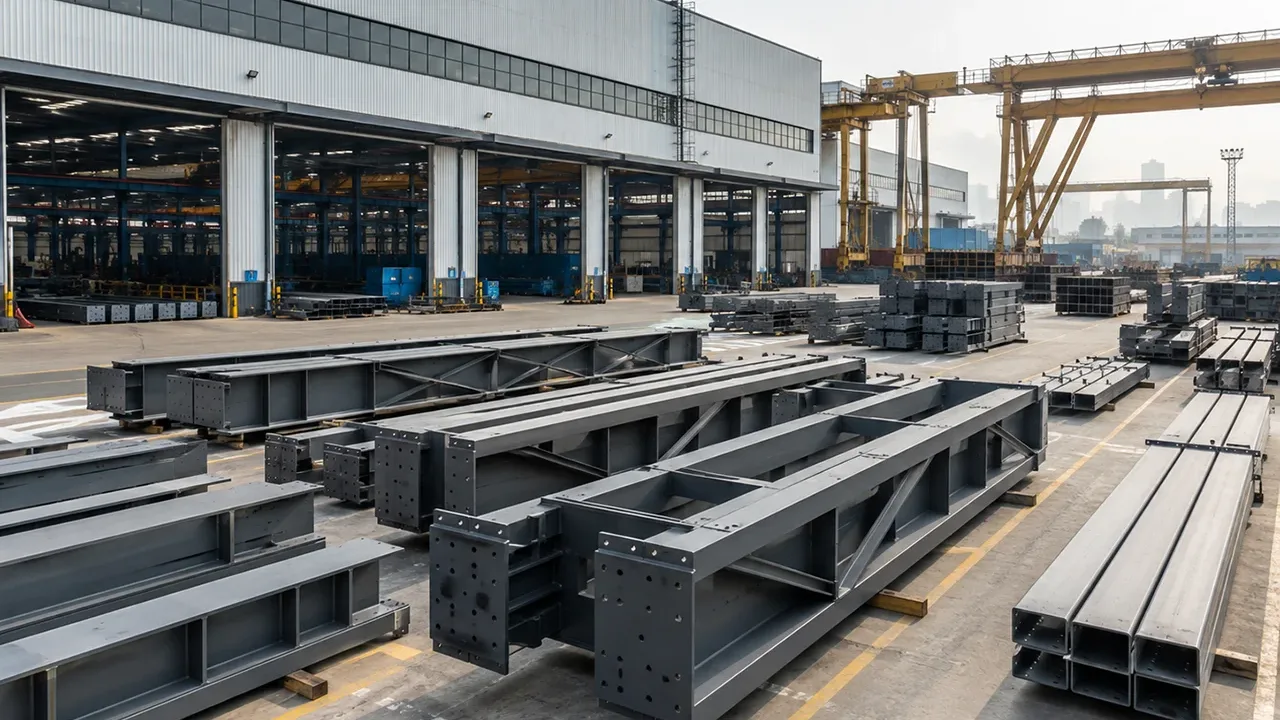
Steel roof members can be fabricated in the workshop before arriving on site. Rafters, purlins, truss sections, bracing, plates, and connection components can be cut, drilled, welded, coated, marked, and packed according to the erection sequence. This reduces site work and helps installation move faster.
Prefabrication is especially useful for warehouse projects with repeated bays. When the same frame logic appears again and again, the factory can produce components more efficiently and the site team can install them with fewer adjustments. Clear member marks and organized delivery also reduce installation mistakes.
Better Coordination with Warehouse Services
Modern warehouses often need lighting, ventilation, sprinklers, fire pipes, smoke vents, cable trays, security systems, solar panels, roof access points, and sometimes HVAC units. These systems must be coordinated with roof frames, purlins, bracing, and panel layout.
If services are planned early, the roof can include proper support points and avoid unnecessary conflict. If services are added late, the project may need extra purlins, reinforcement plates, revised bracing, or local support frames. Early coordination reduces rework and helps the warehouse operate more smoothly after completion.
Long-Term Maintenance Access
Warehouse roofs need inspection and maintenance over time. Gutters must be cleaned, roof panels must be checked, coatings may need repair, solar panels may need service, and ventilation equipment may require access. If maintenance routes are not planned, the roof may become difficult or unsafe to service.
Good roof design can include safe access points, walkways, roof hatches, service zones, and inspection-friendly details. This reduces long-term maintenance difficulty and helps the warehouse roof remain reliable throughout its service life.
Lightweight Steel Roof Structure and Warehouse Cost Control
Roof weight affects warehouse cost, but lighter does not always mean cheaper. A roof that uses less steel but requires complicated plates, difficult welds, special nodes, or risky installation may cost more overall. The best solution balances steel efficiency with practical fabrication and safe erection.
For projects that need lower roof weight without losing functional strength, a properly engineered lightweight steel roof structure can help reduce load demand while keeping the warehouse roof practical for fabrication and installation. This is especially useful when the building needs moderate spans, efficient purlin layouts, repeated roof bays, and controlled connection details.
The goal is not to make every member as light as possible. The goal is to reduce unnecessary weight while keeping the system strong, serviceable, repeatable, and easy to assemble. In many warehouse projects, a slightly heavier but simpler detail may be more economical than a lighter design with too many custom fabrication requirements.
Fabrication and Installation Considerations for Warehouse Roofs
Even a good design can become difficult if fabrication and installation are not planned properly. Warehouse roof components must be produced accurately, delivered in the right order, lifted safely, aligned correctly, and stabilized during erection. These practical steps affect schedule, safety, and final quality.
Shop Fabrication Accuracy
Shop fabrication includes cutting, drilling, welding, plate preparation, surface treatment, coating, marking, packing, and inspection. Accuracy is important because roof components must fit together quickly on site. Misaligned holes, missing plates, wrong member marks, or coating damage can slow installation and increase field correction.
For repeated warehouse roofs, fabrication accuracy also supports speed. When the same connection logic is used across many bays, the workshop can produce more consistently and the site team can install more confidently.
Transport and Member Length
Warehouse roof members may be long, especially when the building uses wider spans or large trusses. Some members can be shipped as single pieces, while others may need to be divided into transportable sections. Splice locations should be planned according to structural demand, transport limits, lifting method, and site assembly conditions.
Packing order also matters. Roof components should arrive in the sequence they are needed. If bracing, bolts, splice plates, or purlins are packed in a confusing order, installation crews may waste time sorting materials before work can continue.
Crane Access and Erection Sequence
Crane access affects how the warehouse roof can be installed. Site width, ground condition, lifting radius, nearby buildings, road access, member weight, and working height all influence erection planning. A member that is efficient to fabricate may not be efficient to lift if it is too long, too heavy, or difficult to control in wind.
The erection sequence should define which frames are installed first, when bracing is added, how members are temporarily supported, and how the roof becomes stable step by step. A clear sequence reduces safety risks and helps avoid alignment problems.
Temporary Stability During Roof Installation
A warehouse roof may not be stable until permanent bracing, purlins, and roof panels are installed. During partial erection, rafters, trusses, and light purlins can be sensitive to wind or accidental movement. Temporary bracing helps hold the structure in position until the permanent stability system is complete.
Temporary stability should be planned before site work begins. It is part of safe roof construction, not an optional site detail. Proper planning can prevent delays, rework, damaged members, and unsafe lifting conditions.
Common Mistakes in Warehouse Steel Roof Projects
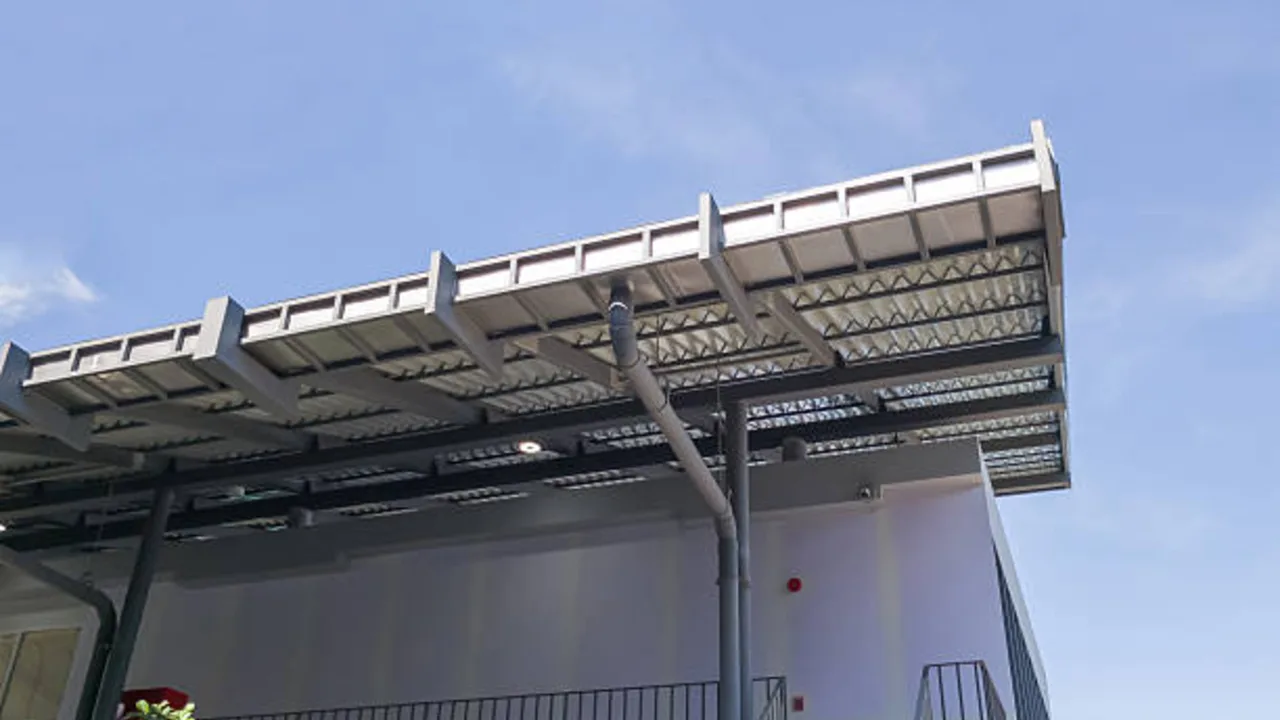
Many warehouse roof problems come from weak coordination rather than weak steel. Avoiding common mistakes early can reduce redesign, protect the budget, and improve long-term roof performance.
Choosing Span Without Reviewing Warehouse Operation
A wide span can create open space, but it should match the real warehouse operation. Storage layout, rack direction, forklift routes, loading doors, staging zones, machinery, and future expansion should all influence the span decision. Choosing a span only because it looks open may increase cost without improving function.
Adding Solar Panels or Equipment Too Late
Solar panels, HVAC units, exhaust fans, roof walkways, fire pipes, ducts, and suspended services can all add loads to the roof. If these items are added after the roof frame has been designed, the structure may need reinforcement, revised purlin spacing, new support frames, or connection changes.
Treating Drainage as a Secondary Issue
Drainage should be coordinated with the roof structure from the beginning. Roof slope, gutters, downpipes, valley zones, and roof openings all affect long-term performance. Poor drainage can cause ponding, leakage, corrosion risk, insulation problems, and maintenance difficulty.
Ignoring Installation Conditions
Installation conditions can affect the real success of the roof. Limited site space, poor crane access, wrong delivery sequence, high working elevation, wind exposure, or missing temporary bracing can slow construction and increase risk. A practical roof design should consider how the structure will actually be installed.
How to Evaluate a Steel Roof Structure for Warehouses
Before approving a steel roof structure for warehouses, owners, engineers, and contractors should evaluate the roof as a complete system. The best warehouse roof is not only strong in calculation. It must also support storage function, service coordination, installation safety, drainage, and future maintenance.
- Warehouse length and width: Defines roof area, bay arrangement, and structural rhythm.
- Required clear span: Affects storage layout, column spacing, member size, and installation planning.
- Column spacing: Should match rack layout, forklift routes, loading zones, and warehouse workflow.
- Storage height: Must coordinate with rafters, trusses, purlins, lighting, sprinklers, and ventilation.
- Roof slope: Influences drainage, roof panel selection, gutter design, and waterproofing details.
- Wind and rain requirements: Affect roof panels, fasteners, purlins, bracing, and main frame design.
- Snow load if applicable: Must be included for cold-region warehouses or export projects.
- Roof panel and insulation system: Affects dead load, purlin spacing, installation sequence, and thermal performance.
- Solar panel plan: Should be confirmed early to avoid reinforcement later.
- HVAC and ventilation loads: Need support points and coordination with roof framing.
- Fire pipe and sprinkler coordination: Should align with roof structure and service routes.
- Purlin spacing: Must match roof panel span, wind uplift, insulation, and maintenance requirements.
- Bracing layout: Must support stability without blocking openings or service routes.
- Coating requirement: Should match humidity, corrosion exposure, maintenance access, and service life expectations.
- Crane access: Affects lifting plan, member length, erection sequence, and installation cost.
- Delivery sequence: Helps reduce site sorting, delays, and unnecessary handling.
- Future expansion plan: Should consider additional bays, roof equipment, new openings, or layout changes.
Conclusion: A Warehouse Roof Should Support Storage, Safety, and Future Use
A steel roof structure for warehouses is not only a cover over stored goods. It is a structural system that supports storage efficiency, roof safety, drainage, service integration, installation planning, and long-term building usability. When designed well, it helps the warehouse provide open space, reliable protection, and practical maintenance access.
The best warehouse roof system balances span, load demand, fabrication simplicity, installation method, durability, and future flexibility. By coordinating the roof structure early with warehouse operations, service loads, drainage, and erection planning, project teams can avoid hidden problems and build a roof that remains safe, efficient, and useful for years of storage operation.