In heavy industrial environments, cranes are not optional equipment—they are structural drivers. Poor crane load planning can silently undermine safety, limit production efficiency, and cause long-term structural damage. This is why crane load steel factory planning must be integrated into the earliest stages of steel factory building design.
Unlike general floor loads, crane loads are dynamic, repetitive, and highly concentrated. They affect runway beams, columns, bracing systems, foundations, and even long-term fatigue performance. This article explains how crane load planning works in steel factory buildings, how it influences structural decisions, and what engineers must consider to ensure long-term reliability.
Why Crane Load Planning Is Critical in a Steel Factory
In a steel factory, cranes support core production activities such as raw material handling, component transfer, assembly, and shipping. Every lift introduces vertical, horizontal, and impact forces into the structure. Without proper planning, these forces can overstress critical members.
Effective crane load steel factory planning ensures:
- Structural safety under maximum lifting conditions
- Stable crane operation with minimal vibration
- Accurate alignment of runway beams and columns
- Long-term fatigue resistance under repeated cycles
- Compliance with international steel design standards
Understanding Crane Loads in Steel Factory Buildings
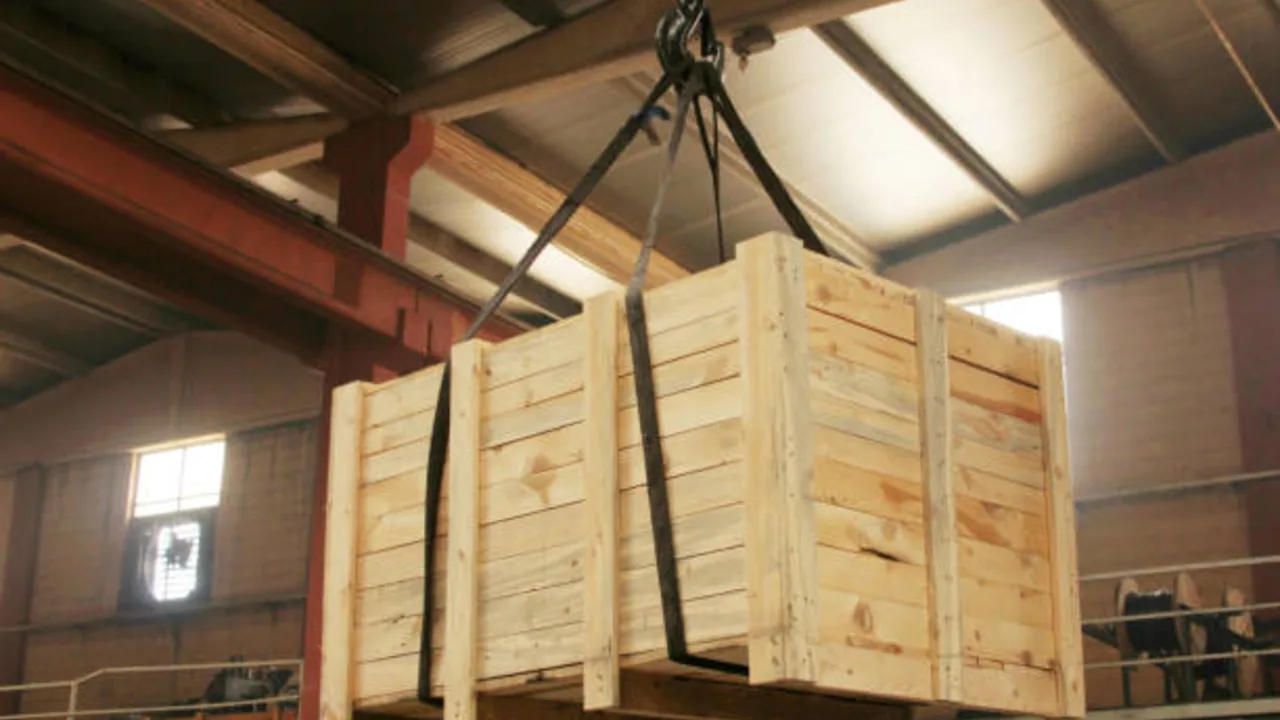
Crane loads are more complex than static building loads. They consist of several components that act simultaneously on the steel structure.
Vertical Loads
Vertical loads include the crane self-weight, lifted load, trolley weight, and impact factors. These loads are transferred directly to runway beams and then into columns and foundations.
Horizontal Loads
Horizontal forces occur due to crane acceleration, deceleration, skewing, and braking. These forces affect lateral stability and must be resisted by bracing systems and column connections.
Longitudinal Forces
As cranes travel along the runway beam, longitudinal forces are introduced into the structure. These loads influence column base design and expansion joint placement.
Dynamic and Fatigue Effects
Crane operations involve repeated load cycles. Over time, this can lead to fatigue damage if connections, welds, or beams are not properly designed.
Crane Load Steel Factory Planning at the Design Stage
Crane load planning must begin before structural sizing starts. Waiting until later stages often leads to costly redesigns or operational compromises.
Defining Crane Specifications Early
Key crane parameters must be confirmed during conceptual design:
- Rated lifting capacity
- Crane classification (light, medium, heavy duty)
- Span and hook approach dimensions
- Crane travel speed and duty cycle
These parameters directly influence beam sizes, column spacing, and foundation design.
Runway Beam Design Considerations
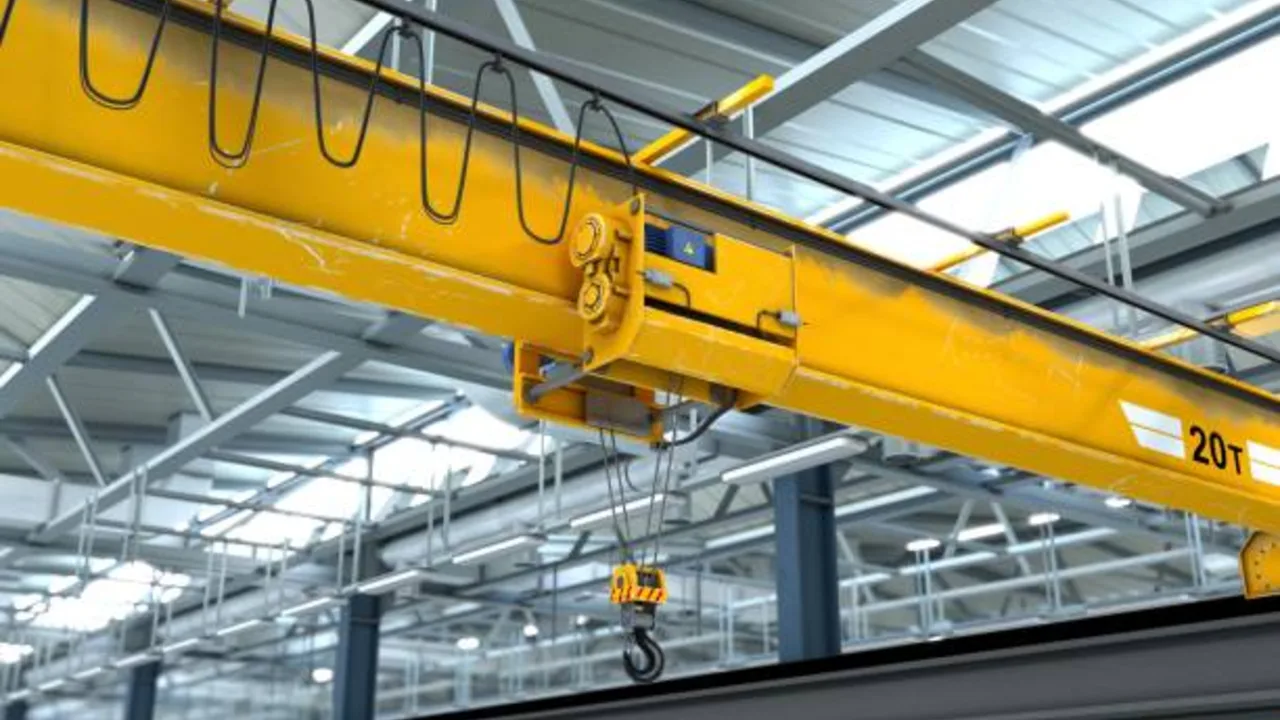
The runway beam is one of the most critical structural elements in crane-supported steel factories. It must resist vertical wheel loads, horizontal forces, and dynamic effects without excessive deflection.
Key design factors include:
- Maximum wheel load and wheel spacing
- Allowable vertical and lateral deflection limits
- Fatigue performance under repeated cycles
- Connection detailing to columns and brackets
Improper runway beam design can result in rail misalignment, crane vibration, and premature structural failure.
Column Design Under Crane Loads
Columns in crane-supported steel factory buildings carry combined axial loads, bending moments, and horizontal forces. This makes column design significantly more complex than in non-crane structures.
Load Combination Effects
Columns must be checked for:
- Dead load + live load + crane vertical load
- Crane horizontal forces combined with wind or seismic loads
- Local bending caused by crane brackets or corbels
Local Strength and Stiffness
Crane brackets introduce high localized stresses. Column web stiffeners, thicker flanges, and reinforced connections are often required to prevent local buckling.
Bracing Systems and Structural Stability
Crane-induced horizontal forces must be transferred safely through the building. This requires a coordinated bracing strategy.
- Longitudinal bracing resists crane travel forces
- Transverse bracing stabilizes crane-induced sway
- Roof and wall bracing distribute loads across frames
Neglecting bracing coordination can lead to excessive drift, misaligned rails, and operational instability.
Foundation and Anchor Design for Crane Loads
Crane loads do not stop at the steel frame. They continue into foundations and anchor systems.
Foundation design must consider:
- Increased column reactions under crane loading
- Dynamic amplification effects
- Anchor bolt fatigue and shear resistance
- Differential settlement tolerance
Proper coordination between structural and geotechnical engineers is essential.
Operational Efficiency and Workflow Impact
Well-planned crane load systems improve more than safety—they directly enhance production efficiency.
Modern crane systems used in steel mills are designed to streamline material flow, reduce handling time, and support high-capacity operations. Industry examples show that integrated crane and building design significantly improves workflow and load handling efficiency.
For further insight into how crane systems enhance steel mill operations, see this industry overview on crane systems for steel mills from a specialized equipment manufacturer. Crane systems for steel mills
Integrating Crane Planning with Steel Factory Building Design
Crane load planning should never be treated as a standalone task. It must be integrated with the overall steel structure factory building design process.
When crane requirements drive column spacing, beam sizing, and bracing layout from day one, the result is a safer, more economical, and future-proof steel factory.
Common Mistakes in Crane Load Steel Factory Design
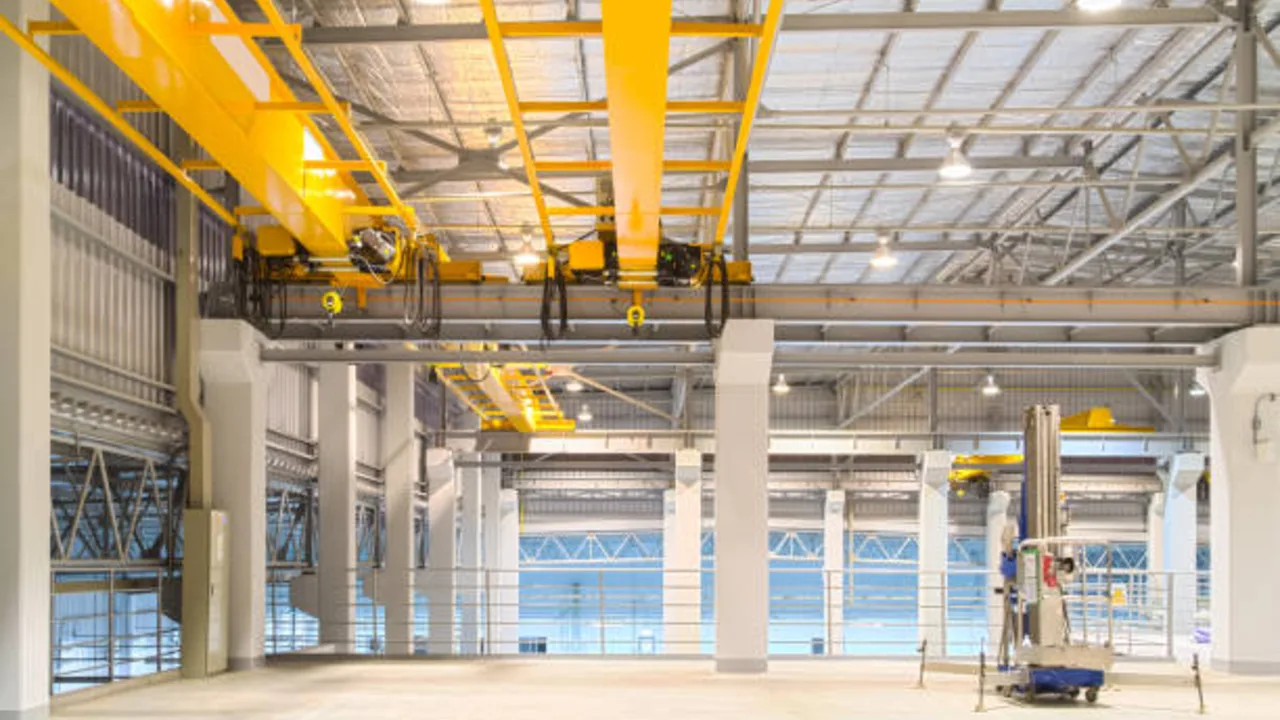
Even experienced project teams can underestimate how strongly cranes influence a steel factory structure. Most failures are not caused by a single design error, but by a chain of small oversights that compound over time. Below are the most common mistakes seen in crane load steel factory design—and why they become costly problems in real operations.
Underestimating Horizontal Crane Forces
One of the most frequent errors is treating crane loads as mostly vertical. In reality, cranes generate significant horizontal forces during acceleration, deceleration, braking, and skewing along the runway beam. These forces are transferred into columns, bracing systems, and foundations.
When horizontal crane forces are underestimated, the building may experience excessive lateral movement, rail misalignment, or increased stress at column connections. Over time, this can lead to cracked welds, loosened bolts, and unstable crane operation. Proper design must account for transverse and longitudinal crane forces as part of the primary load combinations—not as secondary effects.
Ignoring Fatigue Effects on Runway Beams
Runway beams are subjected to repeated load cycles, often thousands of times per year. A common mistake is designing them only for maximum static load, while ignoring fatigue behavior under long-term operation.
Fatigue damage typically develops silently. Small cracks may initiate at welds, stiffeners, or rail connections and grow over time until sudden failure occurs. In a steel factory with continuous crane usage, fatigue-resistant detailing, appropriate material selection, and conservative stress limits are essential to ensure long service life.
Late-Stage Crane Specification Changes
Crane specifications are sometimes finalized after the structural design has already progressed—or even after fabrication has begun. Changes in crane capacity, wheel spacing, span, or duty class can dramatically increase loads on runway beams and columns.
Late-stage changes often force compromises: oversized crane loads on under-designed structures, temporary reinforcements, or costly retrofits. In some cases, operational limits are imposed to avoid structural damage. To prevent this, crane requirements must be locked in early and coordinated closely with structural design from the start.
Inadequate Column Stiffening at Crane Brackets
Crane brackets introduce highly concentrated forces into columns. A common mistake is treating these connections as simple supports without addressing local stress concentrations.
Without adequate stiffeners, column webs and flanges may experience local buckling, excessive deformation, or cracking around bracket connections. Proper column stiffening ensures that crane loads are distributed safely into the main column section and down to the foundation, rather than overstressing localized areas.
Poor Coordination Between Crane Supplier and Structural Designer
Crane systems and steel structures are often designed by different parties. When communication between the crane supplier and structural designer is weak, critical load data may be misunderstood or incomplete.
Misaligned assumptions—such as wheel loads, impact factors, rail tolerances, or braking forces—can result in incompatible designs. Effective crane load steel factory planning requires continuous coordination, shared load calculations, and alignment on performance criteria to ensure both systems function together safely and efficiently.
Conclusion
Crane systems define how a steel factory operates—and how long it lasts. Proper crane load steel factory planning ensures that runway beams, columns, bracing, and foundations work together as a unified system.
By addressing crane loads early, coordinating structural components, and designing for dynamic and fatigue effects, steel factory buildings can achieve long-term safety, efficiency, and adaptability in demanding industrial environments.