Modern industrial buildings must support more than structural loads. They must also support efficient movement of materials, vehicles, and automated systems. In today’s manufacturing environment, proper factory AGV forklift design is essential to ensure smooth logistics, safe operations, and high productivity. Whether the facility uses manual forklifts, automated guided vehicles, or a combination of both, traffic planning must be integrated into the structural layout from the earliest design stage.
In a modern steel structure factory, internal transportation directly affects workflow efficiency. Poor traffic planning can cause bottlenecks, safety risks, and unnecessary structural modifications after construction. By defining correct aisle width, turning radius, and vehicle paths during the design phase, engineers can create factories that operate safely and efficiently for decades.
Why Traffic Planning Is Critical in Modern Steel Factories
Industrial factories are becoming increasingly automated. Production lines, storage systems, and material handling equipment now rely on both forklifts and AGV systems working together. Without proper factory AGV forklift design, mixed traffic environments can quickly become inefficient or unsafe.
Traffic planning is not only a logistics issue but also a structural design requirement. Column spacing, slab strength, and clear height must all match the operational needs of the factory.
Growth of Automated Material Handling
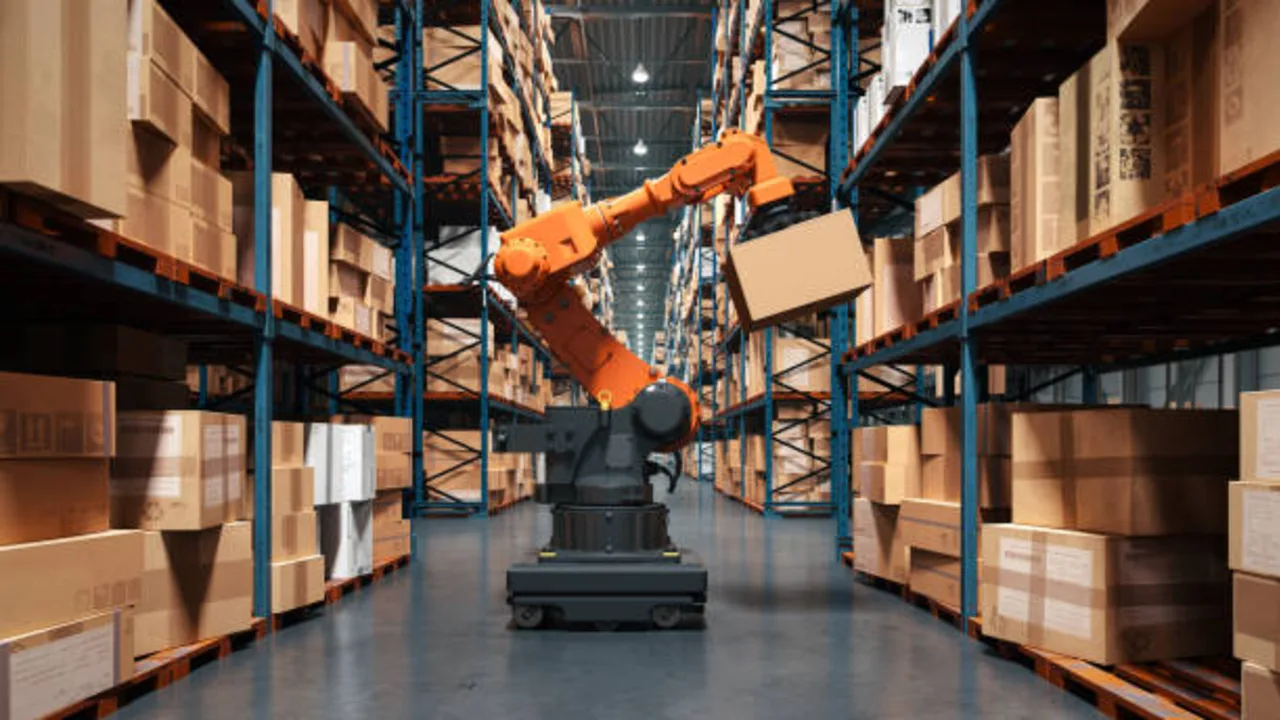
Modern factories use automated guided vehicles to transport raw materials, components, and finished products. These systems require predictable travel paths, consistent floor quality, and sufficient aisle width. Unlike manual forklifts, AGVs cannot easily adapt to unexpected obstacles, making precise layout planning essential.
As automation increases, factory AGV forklift design becomes a core part of industrial engineering rather than a secondary consideration.
Risks of Poor Traffic Layout
If traffic routes are too narrow, forklifts may need to slow down or make multiple turns. If AGV paths cross worker zones, safety risks increase. Insufficient aisle width may also require structural changes after installation, increasing cost and downtime.
Poor layout planning can lead to:
- Frequent collisions with columns
- Reduced production efficiency
- Unsafe working conditions
- Higher maintenance costs
These problems can be avoided when factory AGV forklift design is considered during the early design phase.
Importance of Aisle Width in Industrial Design
Correct aisle width ensures that vehicles can move without obstruction while maintaining safe clearance from structural elements. The required width depends on forklift size, load dimensions, and turning radius. For AGV systems, aisle width must also consider sensor range and navigation tolerance.
In many projects, insufficient aisle width becomes the most common mistake in factory layout planning.
Basic Principles of Factory AGV Forklift Design
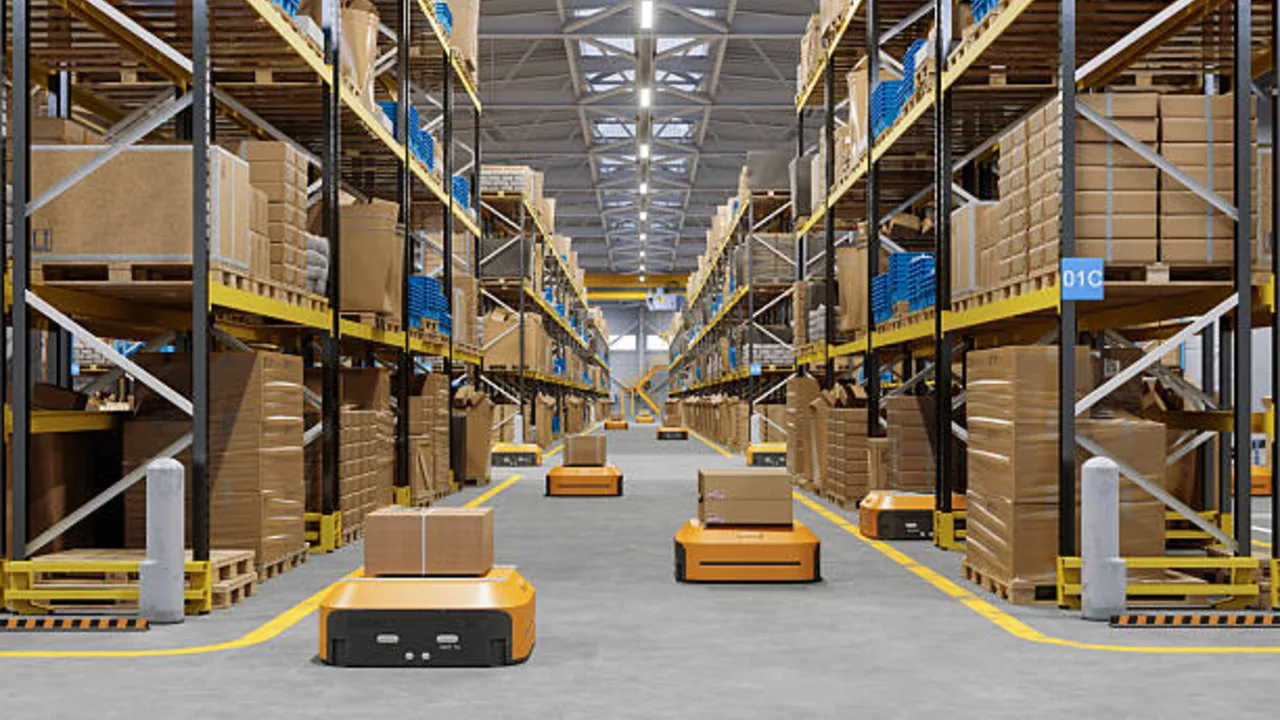
Effective factory AGV forklift design follows several fundamental rules. These rules ensure that both manual and automated vehicles can operate safely without interfering with production.
The design must consider traffic separation, vehicle size, turning radius, and safety zones.
Determining Required Aisle Width
The minimum aisle width depends on the largest vehicle operating inside the building. Forklifts carrying large pallets require more space to turn, while AGV systems require additional clearance for navigation accuracy.
Engineers calculate aisle width based on:
- Forklift length and width
- Load size
- Turning radius
- Safety clearance
Failing to provide adequate aisle width can reduce efficiency and increase accident risk.
Forklift Turning Radius and Clearance
Forklifts cannot turn sharply in narrow spaces. The turning radius must be included when defining aisle width and column spacing. If the structural grid is too tight, vehicles may collide with columns or racks.
Proper factory AGV forklift design ensures that turning areas are free from obstacles and that structural elements do not restrict movement.
AGV Navigation Path Design
AGV systems require consistent travel paths. Unlike forklifts, AGVs cannot easily adjust to irregular layouts. Path planning must include straight travel zones, turning points, and stopping areas.
The floor must also be flat and stable, because uneven surfaces can affect AGV sensors. For this reason, steel factory design often includes stricter floor tolerance requirements.
Safety Zones and Buffer Areas
Traffic lanes should not be placed directly next to columns, walls, or production equipment. Buffer zones allow vehicles to move safely without hitting structural elements.
Safety zones also protect workers walking inside the building. In many factories, separate pedestrian lanes are required to prevent accidents.
Layout Planning in Steel Structure Factory Buildings
The structural system of a factory directly affects traffic flow. In a steel structure factory, column spacing and span length determine how easily forklifts and AGVs can move.
Steel buildings provide more flexibility than concrete structures, making them ideal for automated factories.
Column Spacing and Vehicle Movement
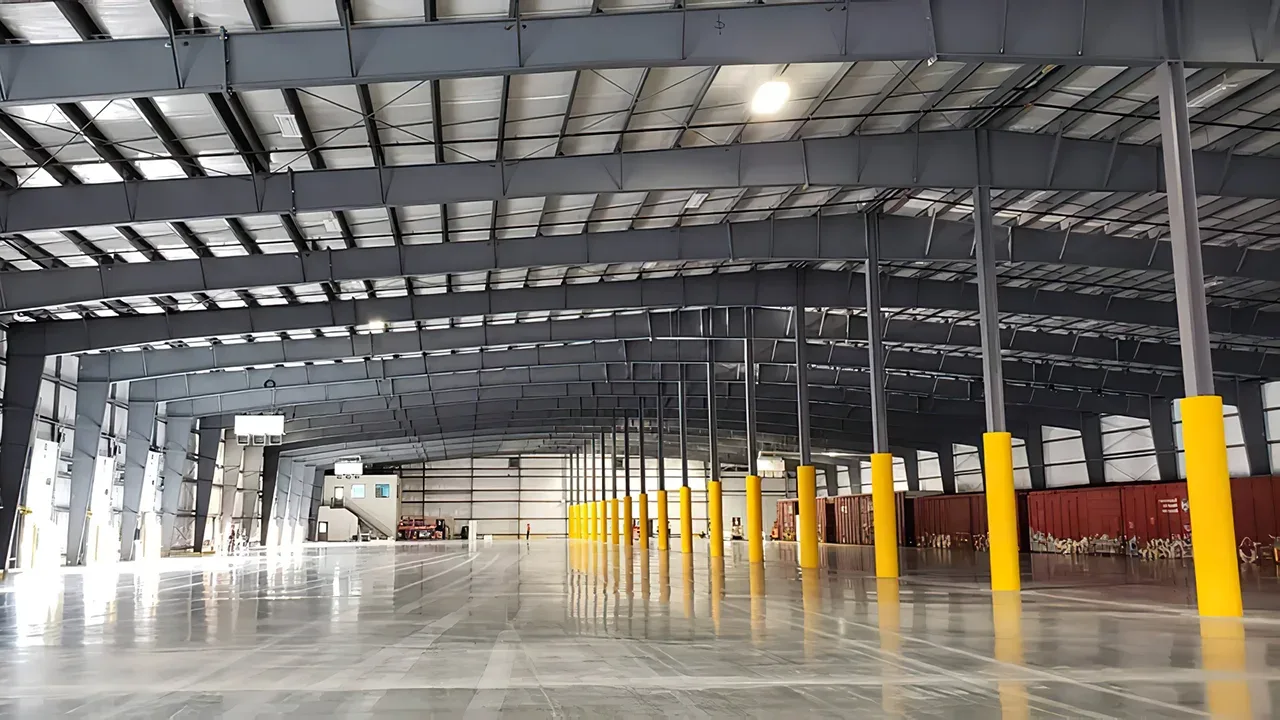
Wide column spacing allows larger aisle width and smoother traffic flow. If columns are too close together, forklifts may need to slow down or change routes, reducing efficiency.
When designing a steel structure factory, engineers often select span dimensions based on both structural load and vehicle movement requirements.
Clear Height for Forklift Operation
Forklifts lifting heavy loads may require significant vertical clearance. Racks, cranes, and production equipment must fit without interfering with vehicle movement.
Clear height is especially important in automated factories where AGVs and forklifts operate simultaneously.
Floor Flatness for AGV Systems
AGV vehicles require smooth floors for accurate navigation. Uneven concrete surfaces can cause sensor errors and reduce system efficiency.
Steel factory design often includes stricter slab tolerance and reinforcement to maintain flatness under heavy load.
Why Steel Structure Factory Design Supports Automation
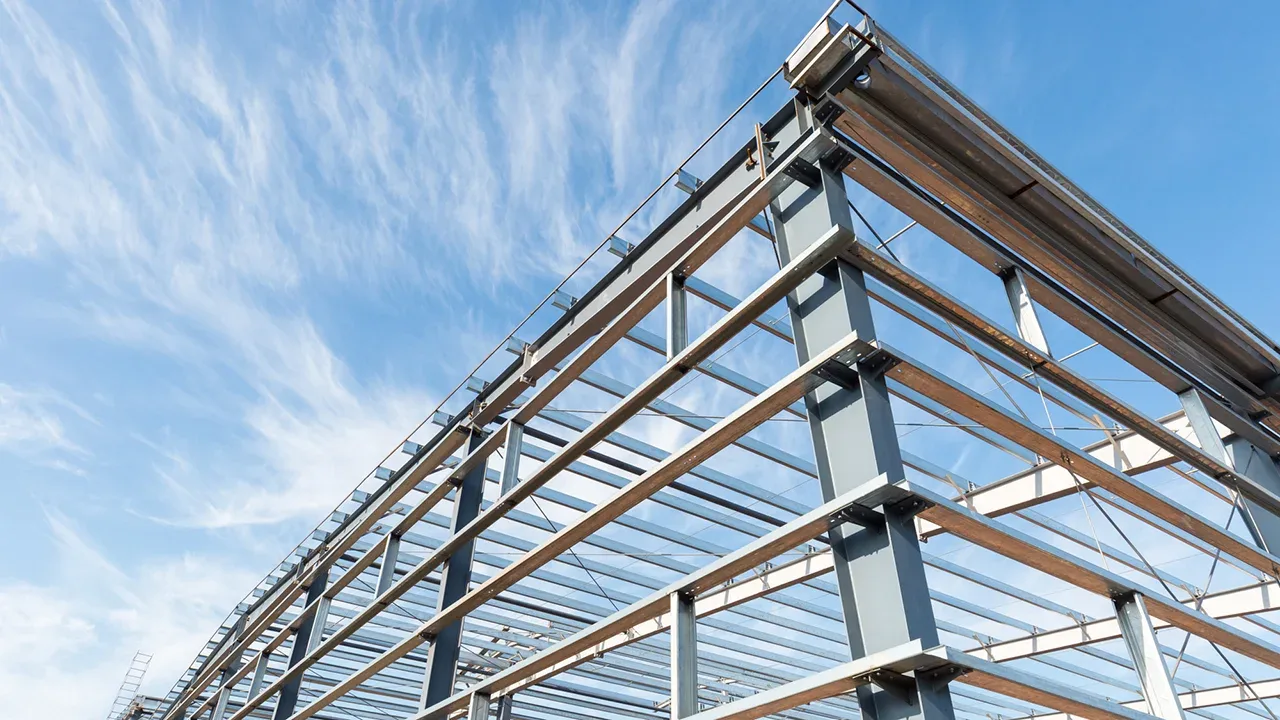
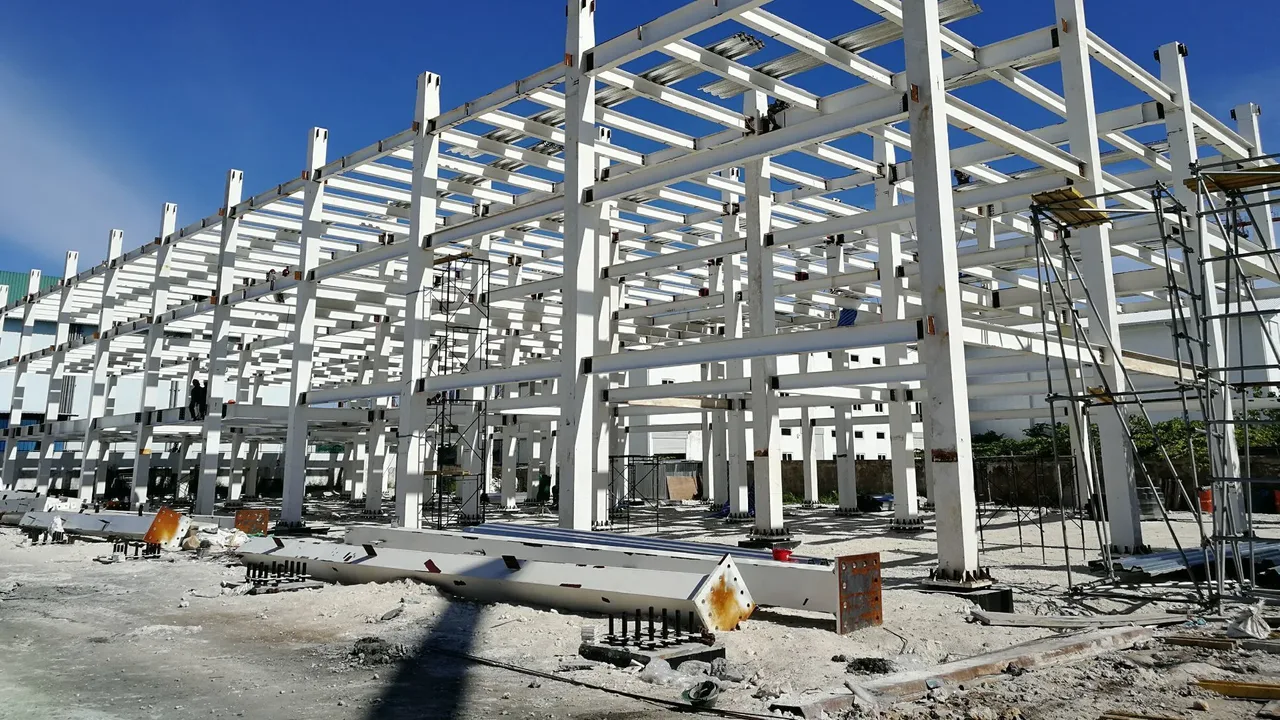
A steel structure factory provides long spans, flexible layouts, and high load capacity. These features make it easier to design efficient traffic systems for forklifts and AGVs.
Compared with other construction methods, steel structures allow easier modification when production lines change, making them ideal for modern automated manufacturing.
Aisle Width Standards for Forklift Operations
Correct aisle width is one of the most important parameters in factory AGV forklift design. The required dimension depends on forklift type, load size, and traffic direction.
Different operations require different aisle standards.
Narrow Aisle vs Wide Aisle Design
Narrow aisles save building space but require specialized forklifts. Wide aisles allow faster movement and safer operation but increase building size.
Engineers must balance building cost with operational efficiency.
Heavy-Duty Forklift Requirements
Factories handling steel components or heavy machinery often need larger forklifts. These vehicles require greater aisle width and stronger floor slabs.
If the layout does not allow enough space, structural changes may be required after construction.
Warehouse vs Production Factory Layout
Warehouse layouts usually have regular traffic patterns, while production factories often have complex routes between machines, storage areas, and assembly lines.
Because of this complexity, factory AGV forklift design in production plants requires more detailed planning than in simple storage buildings.
In the next section, we will examine AGV path design, structural load considerations, and real project examples where aisle width and factory AGV forklift design required structural adjustments.
AGV Path Planning in Industrial Steel Factories
Automated guided vehicles require more precise planning than manual forklifts. In modern factories, AGVs follow predefined routes and rely on sensors, markers, or laser navigation to move safely. Because of this, factory AGV forklift design must include clear path planning, correct aisle width, and stable floor conditions from the beginning of the project.
Unlike forklifts, AGVs cannot easily change direction when obstacles appear. Therefore, the structural layout, column grid, and equipment placement must all be coordinated with AGV routes.
Fixed Path vs Free Navigation AGV
Some AGV systems follow fixed tracks using magnetic strips or QR codes, while others use laser or vision navigation. Fixed-path systems require strict alignment of travel lanes, while free-navigation AGVs need wider aisle width to allow correction movement.
When planning factory AGV forklift design, engineers must know which navigation system will be used before finalizing the building layout.
Required Aisle Width for AGV Systems
AGVs typically require less space than forklifts, but they still need clearance for safe operation. The minimum aisle width must include vehicle size, safety margin, and sensor tolerance.
If aisle width is too small, AGV movement becomes unstable and system efficiency decreases. For this reason, many steel factories are designed with standardized aisle modules.
Collision Avoidance Zones
AGV systems must have safe zones around columns, walls, and equipment. These zones prevent sudden stops and allow the vehicle to adjust its path.
In mixed traffic factories, collision avoidance becomes even more important because forklifts and AGVs may share the same lanes.
Charging and Parking Areas
AGVs require charging stations and standby zones. These areas must not interfere with production traffic. During factory AGV forklift design, engineers must allocate space for parking, maintenance, and battery charging.
Poor planning of these areas can reduce efficiency and block traffic routes.
Structural Considerations for Traffic Load
Traffic planning also affects structural design. Forklifts and AGVs create dynamic loads that must be considered when calculating slab thickness and column strength.
In a steel structure factory, the structural system must support both building loads and vehicle loads.
Floor Load Capacity for Forklifts
Heavy forklifts carrying steel components can create high point loads on the floor. The slab must be designed to maintain sufficient load capacity without cracking or excessive deformation.
Engineers often increase reinforcement in traffic lanes to handle repeated loading.
Dynamic Load from AGV Systems
Although AGVs are usually lighter than forklifts, they operate continuously. Repeated movement can cause long-term fatigue in concrete slabs.
To maintain durability, factory AGV forklift design must include proper floor thickness, reinforcement, and joint layout.
Column Protection Design
Columns located near traffic lanes must be protected against impact. Steel guards or concrete barriers are often installed to prevent damage.
In some cases, the column base plate thickness is increased to resist accidental collision forces.
Relationship Between Load Capacity and Layout
Layout planning and structural design cannot be separated. If aisle width changes, column spacing and slab design may also need adjustment.
This is why traffic planning must be completed before finalizing the structural design of a steel structure factory.
Steel Factory Designed for AGV and Forklift Traffic
A real example of factory AGV forklift design can be seen in a heavy equipment manufacturing factory built in Southeast Asia. The building area was approximately 18,000 m² and required both manual forklift traffic and automated guided vehicles operating in the same production hall.
During the initial design stage, the layout was based on standard warehouse aisle width. However, after equipment planning was completed, engineers discovered that the turning radius of the heavy forklift required larger clearance. At the same time, the AGV navigation system required straight travel lanes with consistent spacing between columns.
To solve the problem, the structural grid of the steel structure factory was adjusted from 8 meters to 9 meters. This change allowed wider aisle width without reducing usable production space.
In addition, the floor slab thickness was increased in main traffic lanes to improve load capacity and prevent long-term damage from repeated forklift movement. Column protection guards were also added in areas where AGV and forklift routes intersected.
After construction, the factory achieved stable operation with both manual and automated traffic. The project demonstrated that early factory AGV forklift design can prevent costly structural changes later.
Safety Rules in Factory AGV Forklift Design
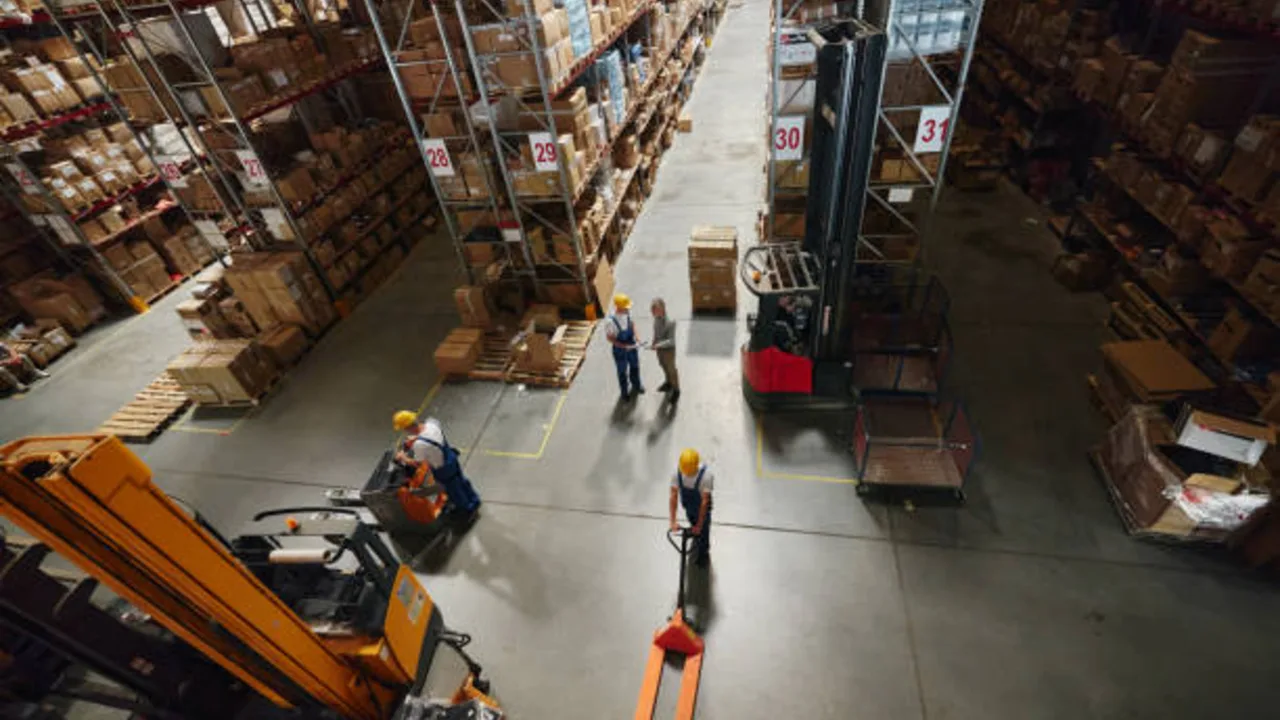
Safety is one of the main reasons for careful traffic planning. When forklifts and AGVs share the same space, clear rules must be applied to prevent accidents.
Proper factory AGV forklift design includes separation of routes, warning systems, and safe walking areas.
Pedestrian Safety
Workers should not walk inside vehicle lanes. Separate pedestrian paths with clear markings improve safety and reduce accident risk.
In many modern factories, barriers are installed between walking areas and traffic lanes.
AGV Sensor Zones
AGV systems rely on sensors to detect obstacles. If objects are too close to the path, the vehicle may stop unexpectedly.
Providing enough aisle width ensures reliable sensor performance.
Forklift Speed Control
Wide aisles allow forklifts to move safely without sudden braking. Narrow aisles increase the risk of collision.
Traffic rules and speed limits should be defined during factory AGV forklift design.
Lighting and Floor Marking
Clear lighting and floor lines help drivers and AGV systems follow correct routes. Marking traffic lanes during construction is easier than changing them later.
Good visibility improves both safety and efficiency.
Cost Optimization vs Operational Efficiency
Designing wider aisles increases building size, but improves productivity. Narrow layouts reduce construction cost but may slow production.
Engineers must balance cost and performance when planning factory AGV forklift design.
Overdesign Problems
Excessive aisle width increases steel usage and building cost without adding real benefit.
Undersized Aisle Problems
Too little aisle width may require reconstruction after equipment installation, which is much more expensive.
Expansion Planning
Factories often change production lines. Designing flexible layouts makes future upgrades easier.
Future Automation Readiness
Many factories start with forklifts and later add AGV systems. Planning for both from the beginning saves time and money.
Why Steel Structure Factory Buildings Are Ideal for AGV and Forklift Systems
Steel buildings provide long spans, flexible column spacing, and high structural strength. These features make them ideal for modern factory AGV forklift design.
Compared with concrete buildings, steel structures allow easier modification and expansion.
Advantages of Long Span Structures
Long spans reduce the number of columns, allowing larger aisle width and smoother traffic flow.
Flexible Layout Modification
Production lines change over time. A steel structure factory can be modified more easily than other building types.
Integration with Crane Systems
Many factories use overhead cranes together with forklifts and AGVs. Steel structures can support these systems without reducing traffic space.
Industrial Workflow Optimization
When factory AGV forklift design is integrated with structural planning, the result is a building that supports efficient production for many years.
Conclusion
Proper factory AGV forklift design is essential for modern industrial buildings. Correct aisle width, safe traffic routes, and strong structural support all contribute to efficient factory operation.
By planning traffic flow during the early stage of a steel structure factory project, engineers can avoid costly changes and ensure long-term performance. Factories designed with automation, safety, and flexibility in mind will operate more efficiently and remain adaptable to future production needs.