Industrial factories often operate with heavy machinery, rotating equipment, overhead cranes, and production lines running continuously throughout the day. While these operations are essential for productivity, they also generate constant dynamic forces that act on the building structure. Without proper planning, factory continuous vibration can accumulate over time and affect structural stability, equipment performance, and worker safety. For this reason, vibration load must be considered as a critical factor in modern industrial building design.
Unlike static loads such as roof weight or stored materials, vibration loads are repetitive and dynamic. These loads may appear small in each cycle, but when applied thousands or millions of times, they can cause long-term structural damage, connection loosening, and material fatigue. In large industrial facilities, especially those built with steel frames, the effect of repeated vibration can travel through beams, columns, and floor systems if the structure is not designed to dissipate energy properly.
Modern industrial engineering recognizes that designing a stable factory steel structure requires more than simply meeting strength requirements. Engineers must evaluate how the building behaves under continuous motion, how vibration energy flows through the structural system, and how repeated stress cycles may influence long-term durability. By applying proper analysis and structural strategies, factories can operate heavy equipment safely without compromising the integrity of the building.
Why Continuous Vibration Matters in Steel Factory Design
In industrial environments, vibration is unavoidable. Machines rotate, materials move, cranes travel, and production lines repeat the same motion throughout the entire working shift. Each of these actions generates small dynamic forces, and when combined, they create a constant vibration environment inside the building. Understanding how factory continuous vibration affects steel structures is essential for designing industrial facilities that remain safe and reliable over long periods of operation.
Difference Between Static Loads and Vibration Loads
Static loads act on a structure without changing over time. Examples include the weight of the roof, walls, equipment, or stored materials. These loads are predictable and usually remain constant after construction is completed. Structural design codes provide clear guidelines for calculating static loads, and most engineers are familiar with these requirements.
Vibration loads, however, behave differently. They change continuously as machines operate, stop, and restart. Even when the force level is relatively small, repeated cycles can create stress variations inside structural members. Over time, these repeated stresses may cause cracks, loosened bolts, or permanent deformation. Because of this behavior, factory continuous vibration must be evaluated using dynamic analysis rather than simple static calculations.
Why Steel Structures Respond Differently to Repeated Motion
Steel structures are widely used in industrial factories because of their strength, flexibility, and efficiency. However, this flexibility also means that steel frames can respond more noticeably to vibration compared to heavier concrete structures. When dynamic forces act on beams and columns, the structure may experience small movements that repeat with every machine cycle.
If the vibration frequency approaches the natural frequency of the structure, resonance can occur. Resonance increases movement amplitude and can quickly lead to structural damage. For this reason, engineers must carefully design stiffness, bracing systems, and connection details to ensure that the building can resist factory continuous vibration without entering unstable vibration modes.
Operational Risks Caused by Long-Term Vibration
Continuous vibration does not always cause immediate failure. In many cases, problems develop slowly and become visible only after long periods of operation. This makes vibration one of the most dangerous loads in industrial buildings, because damage may accumulate without obvious warning signs.
Common risks caused by long-term vibration include:
- Loosening of bolts and connection plates
- Cracking in welded joints
- Misalignment of production equipment
- Floor vibration affecting precision machines
- Structural fatigue in beams and columns
When these issues appear, repairs can interrupt production and increase maintenance costs. Proper design against factory continuous vibration helps prevent these problems and ensures stable operation throughout the life of the building.
Main Sources of Continuous Vibration in Industrial Factories
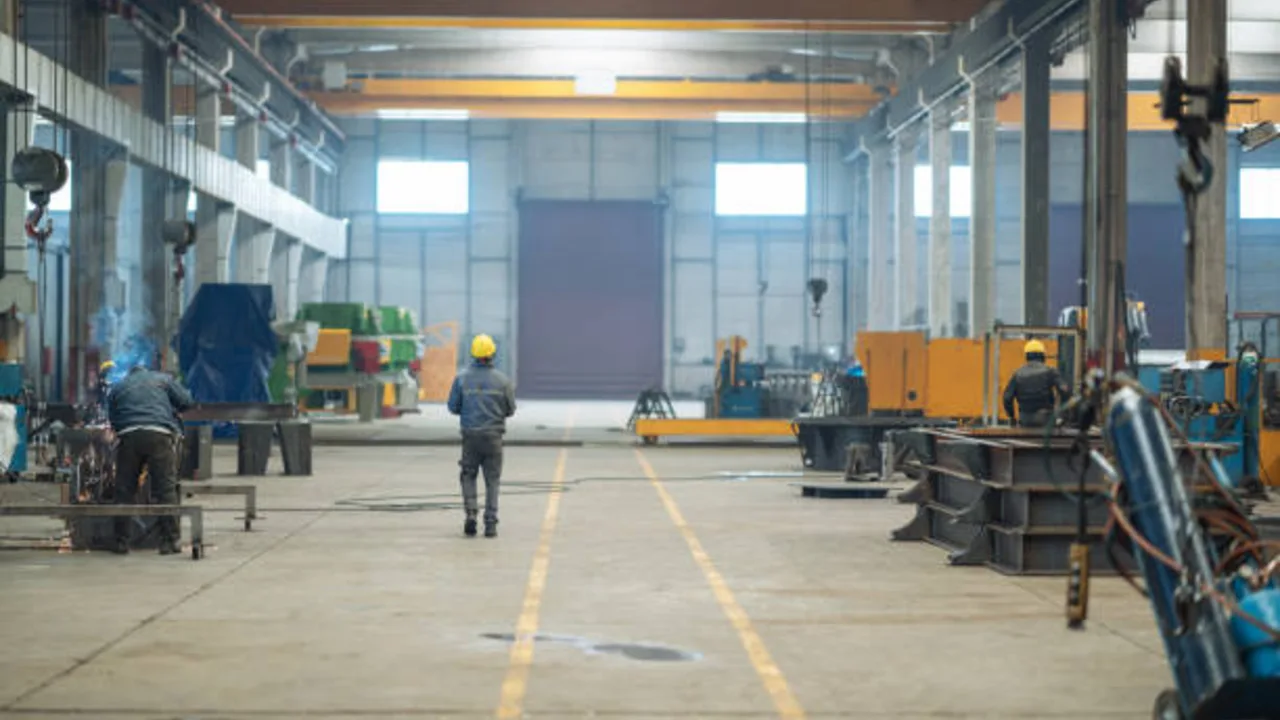
To control vibration effectively, engineers must first identify where dynamic forces originate. Industrial factories rarely have only one vibration source. Instead, multiple machines and systems operate at the same time, creating a complex vibration environment inside the building. Each source may generate different frequencies, amplitudes, and load patterns, which makes structural design more challenging.
Rotating Equipment and Heavy Machinery
Rotating machines are one of the most common sources of continuous vibration. Equipment such as turbines, compressors, pumps, mixers, and high-speed motors produce cyclic forces whenever they operate. Even with proper balancing, these machines generate small oscillations that transfer to the floor and supporting structure.
When heavy machinery is installed directly on structural frames without isolation, vibration can travel through beams and columns and spread across the entire building. In factories with many rotating machines operating simultaneously, the combined effect can create significant factory continuous vibration that must be considered in structural calculations.
Overhead Cranes and Runway Beam Activity
Overhead cranes are essential in many steel factories, but they also introduce dynamic loads that differ from normal structural forces. When cranes move along runway beams, they generate horizontal and vertical vibrations caused by acceleration, braking, and wheel movement. These forces are transferred directly into the main frame of the building.
Because crane systems are often integrated into the primary structure, repeated crane operation can create continuous vibration in columns, beams, and roof trusses. If the structure is not designed with sufficient stiffness and reinforcement, these dynamic effects may lead to long-term damage or excessive deflection.
Compressors, Pumps, and Ventilation Units
Mechanical systems that operate continuously, such as air compressors, cooling systems, and ventilation fans, may not produce large forces individually, but their constant operation makes them important vibration sources. These machines often run for long periods without stopping, which means their vibration cycles accumulate over time.
When mounted on structural platforms or roof frames, these systems can transmit vibration directly into the building. Without proper isolation mounts or dampening systems, the vibration may spread across the structure and contribute to overall factory continuous vibration inside the facility.
Production Lines with Repetitive Motion
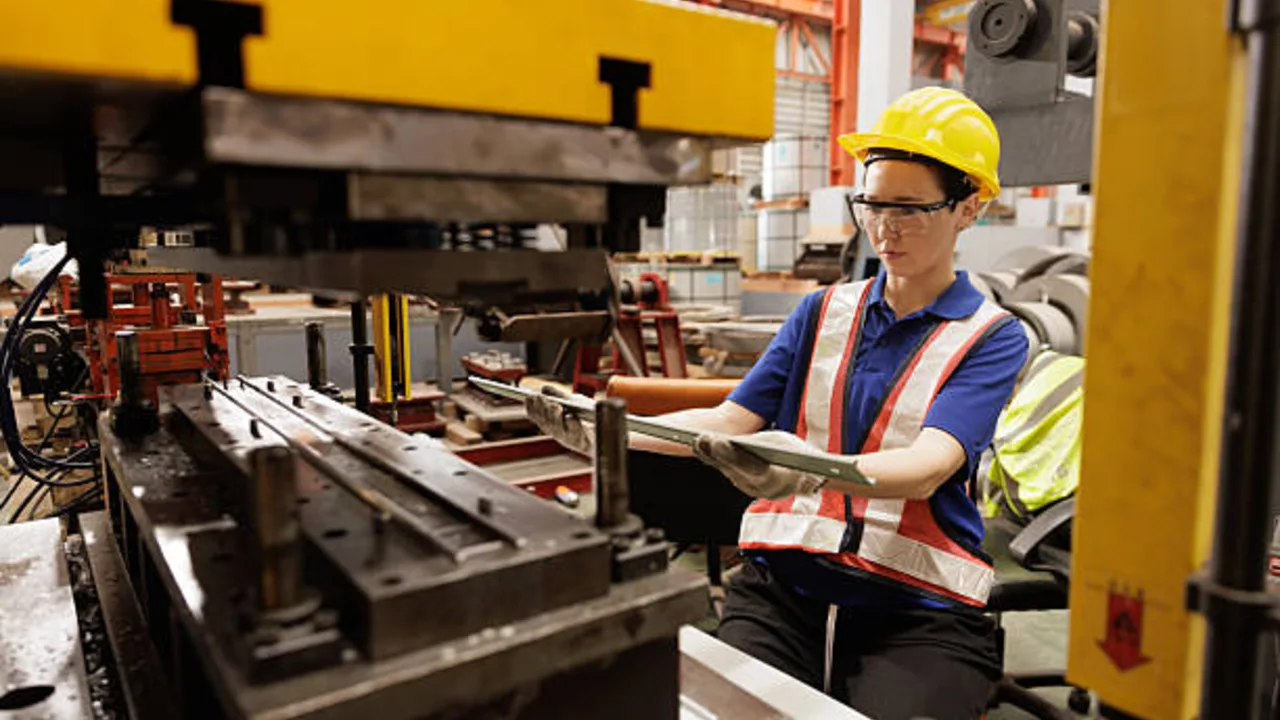
Automated production lines create another type of dynamic load. Stamping machines, conveyors, robotic arms, and repetitive assembly systems produce rhythmic motion that repeats thousands of times during a single shift. Although each movement may be small, the repeated cycles can generate significant stress in the supporting structure.
Factories with high-speed production equipment are especially sensitive to vibration problems. If the building is not designed to handle repeated motion, structural members may experience fatigue, and sensitive equipment may lose alignment. For this reason, engineers must evaluate vibration behavior early in the design of any factory expected to operate under continuous dynamic loads.
How Continuous Vibration Affects Steel Factory Buildings
When vibration loads act on a factory structure for long periods, the effects may not be immediately visible. However, repeated motion can gradually influence structural performance, connection stability, and equipment accuracy. In industrial buildings designed with steel frames, factory continuous vibration must be evaluated carefully because dynamic forces can travel through the structure and affect multiple areas at the same time.
Unlike one-time loads such as wind or snow, vibration loads occur thousands or even millions of times during the life of a factory. Each cycle introduces small stress changes in structural members. Over time, these repeated stresses can lead to deformation, connection wear, and material fatigue. Understanding how vibration affects steel factory buildings helps engineers design structures that remain reliable under continuous operation.
Structural Deflection and Resonance Risk
One of the main concerns in vibrating industrial buildings is excessive deflection. When machines generate dynamic forces, beams and columns may experience small movements that repeat continuously. If the stiffness of the structure is not sufficient, these movements can become noticeable and affect both the building and the equipment inside.
Resonance is an even more serious problem. Every structure has a natural frequency, and if the vibration frequency from machinery matches this natural frequency, the movement of the structure can increase rapidly. Resonance may cause large deflections, unusual noise, and even structural damage. Preventing resonance is a key objective when designing for factory continuous vibration.
Connection Loosening Over Time
Steel factory buildings rely on bolted and welded connections to transfer loads between structural members. Under continuous vibration, these connections experience repeated stress cycles. Even when each cycle is small, long-term vibration can gradually loosen bolts or create micro-cracks in welded joints.
Loose connections may reduce structural stiffness and allow more movement, which increases vibration even further. This cycle can continue until maintenance is required. Proper connection design, including high-strength bolts, stiff plates, and controlled detailing, is essential to ensure that the structure can resist factory continuous vibration throughout its service life.
Floor Vibration and Equipment Instability
In many factories, precision equipment is installed directly on floors or platforms supported by the main steel frame. When vibration is transmitted through the structure, floor movement may affect machine alignment and production accuracy. This is especially important in facilities using CNC machines, automated lines, or high-speed processing equipment.
Excessive floor vibration can also reduce worker comfort and make it difficult to operate sensitive instruments. To avoid these problems, engineers often design floor systems with higher stiffness, additional support beams, or vibration isolation details. Controlling floor movement is an important part of managing factory continuous vibration in industrial buildings.
Long-Term Fatigue in Repeated Load Zones
Repeated stress cycles caused by vibration can lead to structural fatigue, even when the stress level is below the normal strength limit of the material. Fatigue occurs when steel is subjected to many cycles of tension and compression over time. Small cracks may form in critical areas and grow slowly until repair becomes necessary.
Fatigue problems are more likely to appear in locations where vibration is concentrated, such as:
- Crane runway beams
- Machine support frames
- Beam-to-column connections
- Platform supports
- Areas near heavy rotating equipment
Because fatigue damage develops gradually, it may not be detected during normal operation. Designing against factory continuous vibration requires engineers to consider not only strength but also the number of load cycles the structure will experience during its lifetime.
Engineering Principles for Designing Against Factory Continuous Vibration
Designing a factory that can withstand continuous vibration requires more than increasing member size. Engineers must understand how dynamic forces move through the structure and how the building responds to repeated loading. Proper analysis allows the structure to remain stable while heavy equipment operates continuously.
Dynamic Load Analysis in Industrial Buildings
Static calculations alone are not enough when vibration loads are present. Engineers must perform dynamic analysis to evaluate how the structure behaves under moving or repeating forces. This includes studying load frequency, amplitude, and the interaction between machines and structural members.
Dynamic analysis helps determine whether the building may experience resonance, excessive deflection, or fatigue problems. By understanding these factors early in the design stage, engineers can adjust the structural system to improve resistance to factory continuous vibration.
Natural Frequency and Resonance Control
Every structural system has a natural frequency that depends on its stiffness and mass. If external vibration occurs at a similar frequency, resonance may develop. This condition increases movement and stress in structural members and may lead to serious damage if not controlled.
To prevent resonance, engineers may change the stiffness of the frame, adjust member sizes, or modify the layout of supports. Increasing stiffness usually raises the natural frequency, while increasing mass lowers it. The goal is to ensure that the operating frequency of machinery does not match the natural frequency of the building.
Controlling natural frequency is one of the most important steps in designing against factory continuous vibration.
Stiffness Versus Flexibility in Structural Systems
Steel structures are naturally flexible compared to concrete structures, which makes them efficient but also more sensitive to vibration. In factory buildings, engineers must find a balance between flexibility and stiffness. A structure that is too flexible may vibrate excessively, while a structure that is too rigid may transfer vibration directly to other parts of the building.
Proper design often includes additional bracing, stronger connections, or deeper beams to increase stiffness where vibration loads are high. At the same time, isolation details may be added to prevent vibration from spreading across the entire structure.
Balancing stiffness and flexibility is essential for controlling factory continuous vibration without making the structure unnecessarily heavy.
Load Path Design for Vibration Dissipation
Dynamic forces must have a clear path to travel safely through the structure and into the foundation. If vibration energy cannot dissipate properly, it may accumulate in certain members and cause local damage.
Engineers design load paths to ensure that vibration forces move through beams, columns, bracing systems, and foundations in a controlled way. Proper load path design reduces stress concentration and improves the overall stability of the building.
In modern industrial projects, vibration load paths are often considered during the early design of the structural system, especially in factories expected to operate under high levels of factory continuous vibration.
Structural Strategies to Reduce Vibration in Steel Factories
Once the sources and effects of vibration are understood, engineers can apply structural strategies to control movement and protect the building from long-term damage. Effective design against factory continuous vibration does not rely on a single solution. Instead, it combines frame stiffness, proper connections, vibration isolation, and foundation design to ensure stable operation under dynamic loads.
Increasing Frame Stiffness
One of the most direct ways to reduce vibration is to increase the stiffness of the structural frame. A stiffer structure moves less when subjected to dynamic forces, which lowers the risk of resonance and excessive deflection. Engineers may increase stiffness by using deeper beams, larger columns, or additional bracing members in areas exposed to strong vibration.
However, stiffness must be added carefully. Making the entire structure excessively rigid can increase cost and may transfer vibration to other parts of the building. The goal is to strengthen critical zones where factory continuous vibration is highest while keeping the overall design efficient.
Reinforcing Beam-to-Column Connections
Connections are often the most sensitive parts of a vibrating structure. Repeated stress cycles can cause bolts to loosen or welds to develop small cracks over time. For this reason, beam-to-column joints in industrial factories are usually designed with extra reinforcement.
Typical solutions include thicker connection plates, high-strength bolts, and improved welding details. In high-vibration zones, engineers may also add stiffeners to prevent local deformation. Strong and stable connections help maintain the integrity of the frame when exposed to continuous dynamic loads.
Designing Stable Support Systems for Machinery
Heavy machines should not be placed directly on flexible structural members without proper support. When equipment generates vibration, the supporting frame must be able to resist both static weight and dynamic forces. In many cases, engineers design dedicated machine foundations or reinforced platforms to isolate vibration from the main building structure.
These supports may include concrete blocks, additional steel framing, or vibration-dampening pads. By separating equipment loads from the primary frame, the overall level of factory continuous vibration inside the building can be significantly reduced.
Using Bracing Systems to Control Movement
Bracing systems play a major role in controlling horizontal and vertical movement in steel factories. Diagonal bracing, rigid frames, and moment connections help distribute dynamic forces throughout the structure and prevent excessive deformation.
In buildings with overhead cranes or heavy rotating equipment, bracing is often added near runway beams and machinery zones. This ensures that vibration loads do not concentrate in a single location. Proper bracing design improves structural stability and reduces the risk of fatigue damage caused by repeated motion.
Foundation Isolation and Vibration Separation
The foundation is the final path for vibration forces. If the foundation is not designed correctly, dynamic loads may reflect back into the structure instead of dissipating into the ground. Engineers often use isolation methods to prevent vibration from spreading between machines, floors, and the main frame.
Common techniques include rubber pads, spring isolators, and separate foundations for heavy equipment. These details help ensure that vibration energy is absorbed before reaching the structural system. Good foundation design is essential for long-term resistance to factory continuous vibration.
Fatigue Considerations in Continuously Vibrating Factory Structures
Even when stress levels are within allowable limits, repeated loading can still damage steel over time. This phenomenon is known as fatigue, and it is one of the most important concerns in factories exposed to constant motion. Designing for fatigue is a key part of controlling factory continuous vibration in industrial buildings.
What Structural Fatigue Means in Industrial Buildings
Fatigue occurs when a structural member experiences many cycles of loading and unloading. Each cycle creates a small change in stress, and after enough repetitions, microscopic cracks may begin to form. These cracks grow slowly and may eventually lead to failure if not detected.
In factory buildings, fatigue is common because machines operate continuously and generate thousands of vibration cycles every day. Even small forces can become dangerous when repeated over long periods.
Repeated Stress Cycles in Steel Members
Steel is strong and flexible, but it is also sensitive to repeated stress changes. Members that support cranes, heavy machinery, or moving production lines often experience alternating tension and compression. These cycles can weaken the material even when the maximum stress is relatively low.
Engineers must evaluate the expected number of cycles during the life of the building. In facilities designed for heavy production, the structure may experience millions of vibration cycles, making fatigue design essential for safety.
Critical Fatigue-Prone Areas in Factories
Some parts of a factory structure are more likely to develop fatigue problems than others. These include:
- Crane runway beams
- Beam-to-column connections
- Machine support frames
- Platform and mezzanine supports
- Areas near rotating or impact equipment
These zones are often reinforced or designed with higher safety factors to ensure they can withstand long-term factory continuous vibration.
Inspection and Maintenance Planning for Fatigue Control
Because fatigue damage develops slowly, regular inspection is necessary in factories exposed to vibration. Engineers may schedule periodic checks of connections, welds, and high-stress areas to detect cracks before they become serious.
Maintenance planning is an important part of vibration-resistant design. A well-designed structure allows easy access to critical areas so that repairs can be performed without stopping production for long periods.
Machine Layout Planning to Reduce Continuous Vibration
Structural strength alone cannot solve vibration problems. The layout of machinery inside the building also plays a major role in controlling how dynamic forces spread through the structure. Proper equipment arrangement helps reduce the overall level of factory continuous vibration and improves both structural performance and operational stability.
Separating High-Vibration Machinery Zones
Machines that generate strong vibration should be placed in dedicated zones instead of being distributed randomly across the factory floor. Concentrating high-vibration equipment in specific areas makes it easier to design stronger structural support where it is needed.
In a modern factory steel structure, zoning is often planned during the early design stage. Heavy equipment areas, crane zones, and high-speed production lines are positioned so that vibration does not affect offices, inspection rooms, or precision workstations.
Equipment Clustering and Load Concentration
Grouping similar machines together can help control vibration behavior. When equipment is clustered, engineers can design local reinforcement, thicker floors, or additional bracing only in those areas. This approach is more efficient than strengthening the entire building.
Load concentration must still be balanced carefully. Excessive vibration in one zone should not be allowed to transfer to the rest of the structure. Proper layout planning helps distribute forces safely and reduces the risk of structural fatigue.
Buffer Spaces for Sensitive Production Areas
Some production processes require stable conditions with minimal vibration. Laboratories, precision assembly lines, and quality inspection areas may be affected even by small movements. For this reason, buffer zones are often placed between high-vibration machinery and sensitive workspaces.
Storage areas, service corridors, or utility rooms can act as vibration barriers. These spaces help absorb energy before it reaches critical equipment. Including buffer zones in the layout is an effective method for reducing factory continuous vibration without increasing structural cost.
Material and Connection Design for Vibration Resistance
Material selection and connection detailing also influence how a factory performs under repeated motion. Choosing the right steel grade, connection type, and dampening components helps the structure resist long-term dynamic loads.
Steel Grade Considerations for Cyclic Loading
Different steel grades have different fatigue resistance properties. In factories exposed to continuous vibration, engineers often select materials with good toughness and ductility. These properties allow the steel to withstand repeated stress without cracking.
Higher-quality steel may increase initial cost, but it improves durability and reduces maintenance over the life of the building.
Bolted Versus Welded Connection Behavior
Both bolted and welded connections are used in steel factories, but they behave differently under vibration. Bolted connections allow small movement and can absorb some energy, while welded connections are more rigid but may be more sensitive to fatigue cracking if not designed correctly.
Engineers choose connection types based on expected vibration levels, load cycles, and maintenance requirements. Proper detailing ensures that joints remain secure under continuous dynamic loading.
Dampening Components and Isolation Details
Special components can be added to reduce vibration transmission. Rubber pads, spring mounts, and dampening plates are commonly used to isolate machines from structural frames. These elements absorb energy and prevent vibration from spreading through the building.
Isolation details are especially important in factories with heavy rotating equipment or repetitive production lines, where factory continuous vibration cannot be avoided.
Floor and Platform Design for Vibration-Sensitive Equipment
Some machines require extremely stable support. In these cases, engineers design floors with higher stiffness, thicker plates, or additional beams. In certain situations, separate foundations may be used to keep vibration away from sensitive equipment.
Careful floor design improves machine accuracy, reduces wear, and protects the structural system from repeated dynamic loads.
Monitoring and Maintenance Under Continuous Vibration Loads
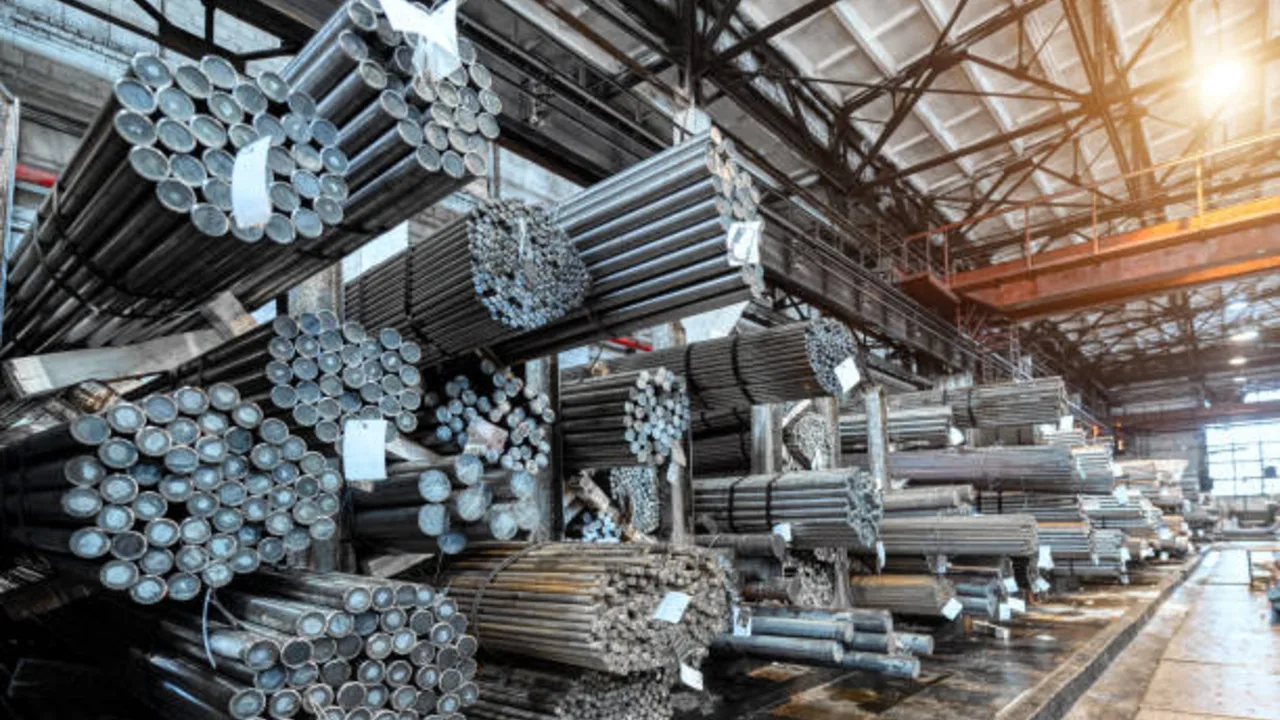
Even with proper design, factories operating under constant motion require regular monitoring. Vibration conditions may change as equipment is added, production speed increases, or maintenance conditions vary. Continuous inspection helps ensure that factory continuous vibration does not cause unexpected damage.
Routine Structural Inspection
Regular inspection of beams, columns, and connections allows engineers to detect early signs of fatigue or loosening. Checking bolt tightness, weld condition, and alignment helps maintain structural stability.
Monitoring Vibration Hotspots
Certain areas of a factory experience higher vibration than others. Sensors can be installed to measure movement and identify locations where vibration exceeds expected levels. This data allows engineers to take corrective action before damage occurs.
Detecting Fatigue Cracks Early
Small cracks may appear in high-stress zones after long periods of operation. Early detection prevents these cracks from growing into serious structural problems. Maintenance programs often include visual inspection, ultrasonic testing, or other methods to check fatigue-prone areas.
Preventive Reinforcement Strategies
When vibration increases due to new equipment or higher production speed, additional reinforcement may be required. Engineers can add bracing, stiffeners, or isolation supports without rebuilding the entire structure. Preventive reinforcement extends the life of the building and keeps production running safely.
Project Example: Steel Factory Designed for Continuous Vibration and Dynamic Loads
A real industrial project demonstrates how proper structural planning is required when factory buildings operate under repeated motion and dynamic forces. One representative case is the
Semir Apparel Shanghai Industrial Park reconstruction and expansion project, a large-scale factory facility designed to support modern manufacturing with high operational intensity.
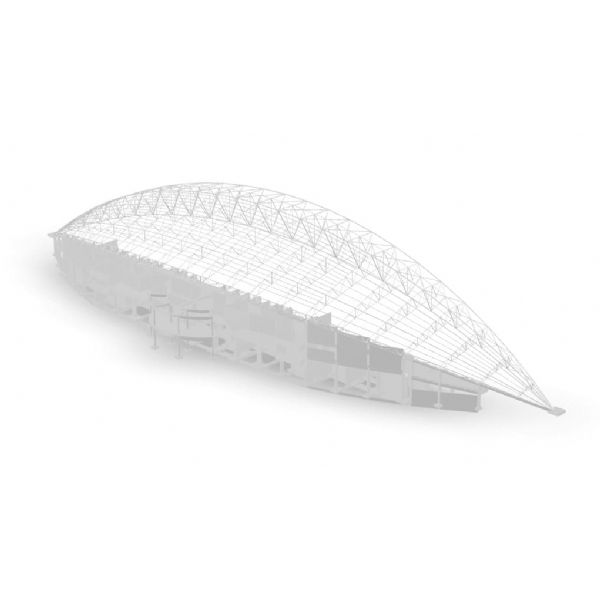
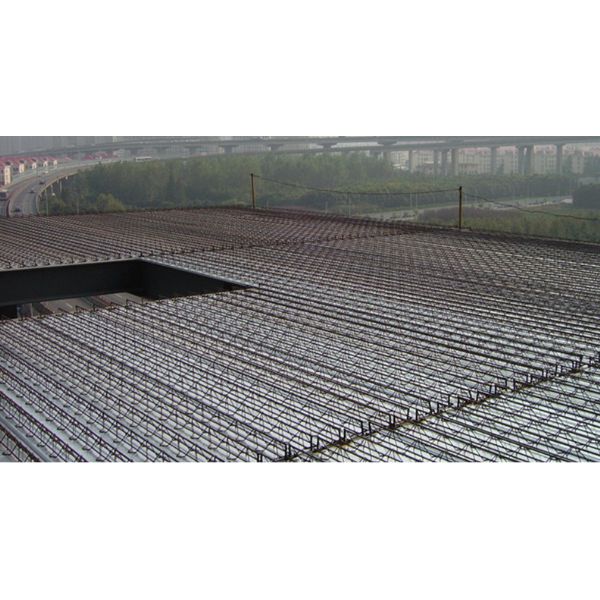
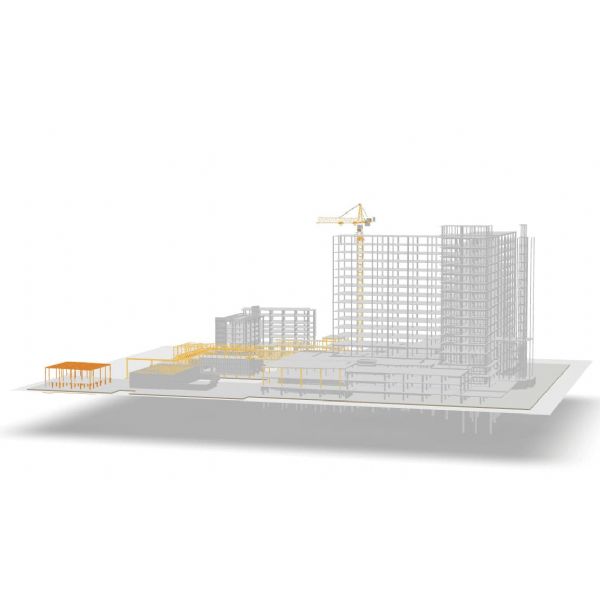
Located in Shanghai, the project covers approximately 60,000 square meters and uses about 10,000 tons of steel in the main structure. The building adopts a steel–concrete hybrid structural system, combining the flexibility of steel with the rigidity of concrete to achieve higher stability under industrial working conditions. The factory was designed to accommodate heavy equipment, automated production lines, and continuous operation environments where repeated motion and vibration loads are expected during daily use. :contentReference[oaicite:0]{index=0}
In projects of this scale, factory continuous vibration becomes an important design consideration. Production lines, material handling systems, and mechanical equipment generate cyclic forces that act on the structural frame throughout the entire service life of the building. Without proper stiffness design and load path control, these repeated forces can lead to structural fatigue, connection loosening, or long-term deformation.
To prevent these risks, the structural system must be designed to maintain stability under dynamic loads. In large industrial buildings such as a modern factory steel structure, engineers typically increase frame stiffness, reinforce connection zones, and carefully plan equipment layout to reduce vibration transmission across the building. These measures help ensure that vibration energy is dissipated safely through the structural system rather than accumulating in critical members.
Another key factor in this type of project is fatigue resistance. Because factory buildings may experience millions of vibration cycles during their lifetime, steel members, welds, and bolted joints must be designed to withstand repeated stress without cracking. In the Semir Apparel industrial park project, the use of high-quality steel materials and prefabricated components helped achieve both structural strength and long-term durability, while also allowing precise installation and better control of dynamic performance. :contentReference[oaicite:1]{index=1}
Projects like this show that designing for factory continuous vibration is not only about strength, but also about long-term structural behavior. By combining dynamic analysis, proper connection detailing, and vibration-aware layout planning, large steel factory buildings can operate heavy machinery continuously while maintaining safety, stability, and production efficiency.
Conclusion
Continuous vibration is a normal part of modern industrial production, but it must be considered carefully in structural design. Without proper planning, repeated dynamic loads can lead to resonance, connection damage, and long-term fatigue in steel members. Designing for factory continuous vibration requires a combination of dynamic analysis, strong structural detailing, proper machine layout, and regular maintenance.
A well-designed factory steel structure can operate heavy equipment for many years without structural problems when vibration loads are understood and controlled from the beginning. By integrating stiffness design, fatigue evaluation, and vibration isolation strategies, engineers can create factory buildings that remain stable, safe, and efficient under continuous industrial operation.