Industrial factories are complex environments where large open spaces, heavy machinery, and continuous production processes operate together. While modern steel structures allow efficient construction of wide-span buildings, they also introduce specific fire safety challenges. Without proper factory fire compartment design, a fire that starts in one section of the building can quickly spread across the entire facility, causing severe damage, production downtime, and safety risks for workers.
Large industrial buildings must be designed not only for structural strength and workflow efficiency, but also for fire protection. One of the most important strategies in modern industrial safety engineering is dividing the building into controlled zones that can limit fire spread. By applying correct fire zoning principles, engineers can isolate high-risk areas, protect critical equipment, and allow safe evacuation during emergencies.
In a modern factory, fire safety planning must be integrated at the earliest design stage. When factory fire compartment design is considered together with structural layout, equipment arrangement, and material selection, the result is a safer and more reliable industrial facility. This approach is especially important in large buildings designed as a steel structure factory building, where long spans and open layouts make uncontrolled fire spread more likely if proper compartment planning is not applied.
Why Fire Risk Is Higher in Large Steel Factories
Industrial factories contain many elements that increase fire risk, including combustible materials, electrical systems, heat-producing equipment, and large open spaces. In buildings with long spans and high ceilings, fire can develop rapidly and spread across wide areas if the structure is not divided into controlled zones. This is why factory fire compartment design is a critical requirement in modern industrial construction.
Large-Span Structures and Fast Fire Spread
One of the biggest advantages of steel construction is the ability to create large column-free spaces. These wide interiors allow flexible production layouts, easy movement of materials, and efficient installation of overhead cranes. However, the same open space that improves workflow can also allow fire and smoke to spread without obstruction.
In a large factory hall, heat and smoke can travel quickly under the roof structure. Without proper fire barriers, flames can move from one production line to another within minutes. For this reason, engineers must divide the building into smaller fire compartments even when the structural design uses a long-span system.
High Fire Load in Industrial Production
Factories often contain materials that can contribute to fire growth. Packaging, lubricants, electrical cables, insulation, and stored goods all add to the total fire load inside the building. When these materials are concentrated in one area, the intensity of a fire can increase rapidly.
Proper factory fire compartment design helps limit the amount of combustible material involved in a single fire event. By separating storage areas from production zones and isolating hazardous processes, engineers can reduce the risk of a fire spreading across the entire facility.
Machinery, Electrical Systems, and Heat Sources
Industrial equipment is another major source of fire risk. Motors, transformers, welding stations, furnaces, and cutting machines generate heat during operation. Electrical faults or mechanical failures can ignite nearby materials, especially in areas with continuous production.
Because modern factories often run multiple shifts, the probability of equipment overheating or electrical malfunction increases. When the building is designed as a steel structure factory building, these risks must be controlled through proper zoning and compartment separation to prevent a local fire from becoming a full-scale disaster.
Open Layouts in Steel Factory Buildings
Steel factories are commonly designed with open layouts to maximize flexibility. Production lines can be rearranged, equipment can be upgraded, and large components can be moved easily. While this flexibility is beneficial for operations, it creates challenges for fire safety.
Without internal barriers, fire can travel across the entire building interior. Smoke can fill large volumes of space, reducing visibility and making evacuation difficult. This is why factory fire compartment design must be integrated into the structural and architectural planning of every large industrial building.
Basic Principles of Factory Fire Compartment Design
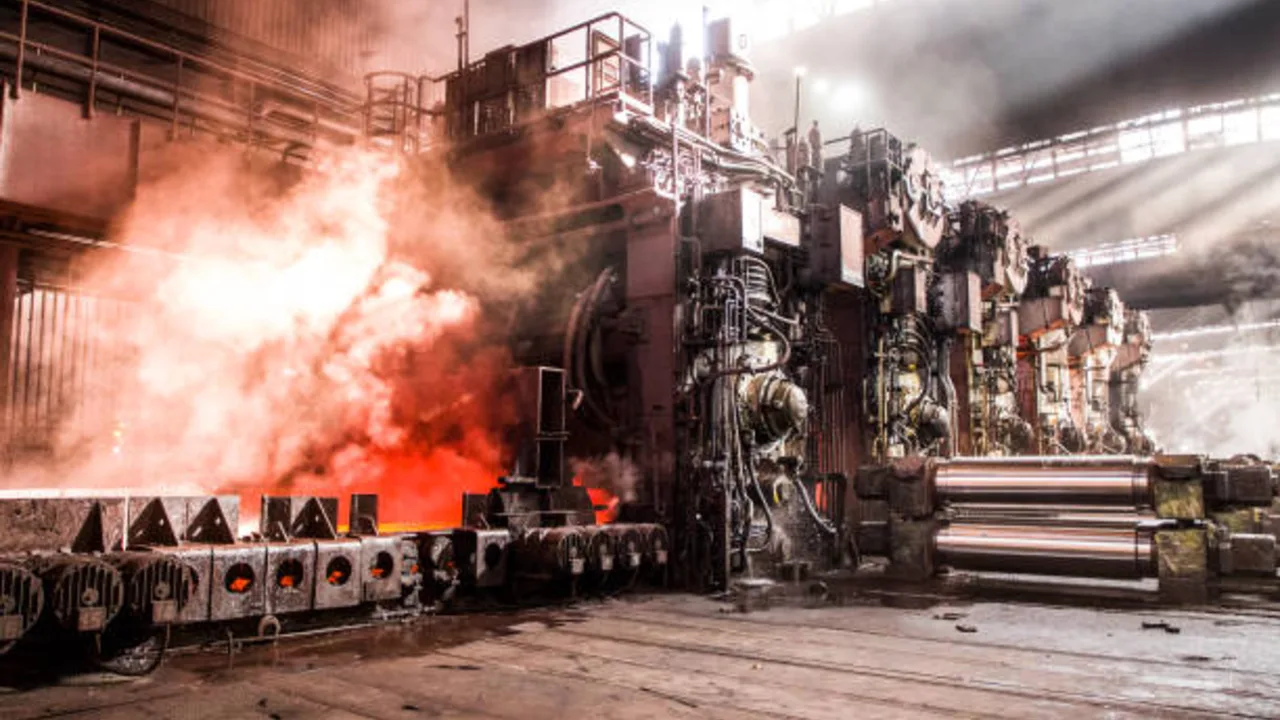
Fire compartment design is a fundamental concept in industrial safety engineering. Instead of allowing the entire factory to behave as one open space, the building is divided into smaller sections that can resist fire for a certain period of time. These compartments help contain flames, slow smoke spread, and give workers enough time to evacuate safely.
What Is a Fire Compartment
A fire compartment is a part of a building that is separated from other areas by fire-resistant walls, floors, or barriers. Each compartment is designed to prevent fire from spreading outside the zone for a specified time, usually measured in minutes or hours.
In industrial buildings, compartments are often created using fire-rated walls, fire doors, and protected structural elements. Proper factory fire compartment design ensures that even if a fire starts in one area, the rest of the building can remain protected long enough for emergency response.
What Is Fire Zoning
Fire zoning is the planning method used to organize different parts of a factory according to fire risk level. High-risk processes, storage areas, and critical equipment are separated into different zones so that a fire in one zone does not immediately affect the others.
Fire zoning is closely related to building layout, production flow, and structural design. When applied correctly, it improves both safety and operational reliability.
Compartment Size Limitations
Fire safety regulations usually define the maximum allowable size of a fire compartment. If a factory building is too large, it must be divided into several compartments using fire walls or fire barriers.
These limits are important because the larger the compartment, the more difficult it is to control a fire. In a large steel structure factory building, compartment planning must be coordinated with the structural grid so that fire walls can be installed without affecting production efficiency.
Separation Walls and Fire Barriers
Fire compartments are created using fire-rated walls, floors, and partitions. These elements are designed to resist heat and flames for a specified period, preventing fire from passing through.
In industrial buildings, fire barriers must also allow for equipment access, crane movement, and ventilation systems. This makes factory fire compartment design more complex than in ordinary buildings.
Fire Resistance Rating Requirements
Each fire compartment must meet specific fire resistance ratings defined by building codes. These ratings indicate how long structural elements and walls can withstand fire without failure.
Steel structures often require additional protection such as fireproof coatings or insulation to meet these requirements. When fire resistance is properly designed, the building can maintain structural stability long enough for safe evacuation and firefighting operations.
Fire Zoning Strategy in Industrial Factory Layout
An effective factory fire compartment design depends heavily on how the factory layout is organized. Fire zoning is not only about installing fire walls, but also about planning the arrangement of production areas, storage zones, and support spaces so that fire risk can be controlled. When fire zoning is considered during the early design stage, engineers can reduce the possibility of fire spreading across the entire building while maintaining efficient workflow.
Dividing Production Areas into Fire Zones
Large factories often contain multiple production lines operating at the same time. Each line may use different materials, machines, or processes, and the fire risk level may vary between them. Dividing the production floor into separate fire zones allows engineers to isolate potential hazards.
For example, heavy fabrication, welding, and cutting areas usually present higher fire risk than assembly or inspection zones. By separating these areas with fire-rated walls or partitions, the building can prevent a fire in one zone from affecting the entire facility. This approach is a key part of proper factory fire compartment design.
Separating Storage from Production
Storage areas often contain large quantities of combustible materials such as packaging, chemicals, or finished products. If these materials are located next to production equipment, a small fire can quickly grow into a large incident.
Fire zoning requires that storage zones be separated from production zones using fire barriers or compartment walls. In a modern steel structure factory building, this separation must be coordinated with the structural grid so that fire walls can be installed without interrupting crane operation or material flow.
Isolating High-Risk Processes
Some industrial processes present a higher fire hazard than others. Heat treatment, welding, painting, and chemical processing areas should be isolated from general production spaces. These zones may require additional fire protection measures such as fire-resistant walls, automatic suppression systems, or explosion relief panels.
Proper fire zoning ensures that high-risk processes are contained within controlled compartments. This reduces the chance that a fire will spread to other parts of the factory and helps emergency systems operate more effectively.
Protecting Offices and Control Rooms
Factories often include office spaces, control rooms, laboratories, and meeting areas within the same building. These spaces must remain safe during a fire so that personnel can manage emergency procedures and evacuation.
For this reason, office and control areas are usually placed in separate fire compartments with higher protection levels. In large factories, buffer zones such as corridors, storage rooms, or service areas may be used between production zones and office spaces. These zones help improve overall factory fire compartment design by limiting fire and smoke spread.
Fire Zoning vs Structural Zoning
Fire zoning must be coordinated with structural zoning. In large industrial buildings, the structural grid, expansion joints, and crane systems all influence where fire walls can be placed. If fire compartments are planned without considering structural layout, installation may become difficult or expensive.
In a well-designed steel structure factory building, engineers coordinate structural spans, column spacing, and fire compartments at the same time. This integrated approach ensures that fire safety requirements can be achieved without reducing operational efficiency.
Structural Design Considerations for Fire Compartments
In steel factories, structural design plays a major role in fire safety. Steel is strong and efficient, but it can lose strength at high temperatures. Because of this, factory fire compartment design must include proper fire protection for structural elements as well as for walls and partitions.
Fire-Resistant Protection for Steel Structures
Steel does not burn, but it weakens when exposed to high heat. If the temperature rises too much, structural members may deform or collapse. For this reason, steel columns, beams, and roof structures often require fire-resistant protection.
Common protection methods include fireproof paint, spray-applied insulation, and fire-resistant boards. These materials slow down heat transfer and allow the structure to maintain its strength for a longer period during a fire.
Fireproof Coatings and Insulation Systems
Fireproof coatings are widely used in industrial buildings because they are easy to apply and do not add much weight to the structure. Intumescent coatings, for example, expand when exposed to heat and create an insulating layer around the steel.
Insulation systems can also be installed around structural members to improve fire resistance. In large industrial buildings, these systems must be carefully designed so that they do not interfere with maintenance, crane operation, or equipment installation.
Fire-Rated Walls in Steel Buildings
Fire-rated walls are one of the most important elements in factory fire compartment design. These walls divide the building into separate compartments and prevent fire from spreading between them.
In steel factories, fire walls must be designed to connect properly with the structural frame. The wall must remain stable even if the steel structure expands due to heat. Flexible connections and expansion details are often required to maintain fire integrity.
Roof and Ceiling Fire Separation
Fire can spread quickly through the roof space of a large factory. Smoke and hot gases rise to the ceiling, and if there are no barriers, the fire may travel across the entire building. To prevent this, roof-level fire separation may be required.
Fire curtains, smoke barriers, and fire-rated ceiling systems can help divide large roof spaces into smaller zones. These elements are especially important in buildings with high roofs and long spans.
Fire Doors and Fire Shutters
Fire compartments must allow movement of people, materials, and equipment, but openings in fire walls can weaken protection. Fire doors and fire shutters are used to close these openings during a fire.
In a large steel structure factory building, doors may need to accommodate forklifts, trucks, or crane loads. Fire-rated shutters are often installed in these locations so that the compartment can be sealed automatically when a fire is detected.
Fire Compartment Design for Large-Span Steel Buildings
Large-span industrial buildings present special challenges for factory fire compartment design. The same structural features that make steel factories efficient—wide spans, high roofs, and open layouts—can also make fire control more difficult. Engineers must design compartments that work together with the structural system instead of against it.
Challenges with Long-Span Factory Structures
In a long-span building, there may be very few internal columns. This creates a large open space that allows flexible production layout, but it also allows fire and smoke to spread without obstruction. Installing fire walls in these buildings requires careful coordination with the structural frame.
Fire walls must be positioned so that they do not interfere with crane systems, production lines, or transportation routes. This makes compartment planning more complex than in smaller buildings.
Need for Fire Walls in Wide Buildings
Fire codes often limit the maximum area of a single fire compartment. When a factory exceeds this size, fire walls must be installed to divide the building into smaller sections.
In wide steel buildings, fire walls may extend from the foundation to the roof. These walls must be strong enough to resist fire exposure while also allowing the building structure to expand and contract during temperature changes.
Smoke Control in High Roof Structures
High roofs are common in industrial factories, especially where cranes or tall equipment are used. During a fire, hot smoke rises and collects near the roof. If the space is too large, smoke can spread quickly across the entire building.
Smoke vents, exhaust systems, and roof barriers are often used together with fire compartments to control smoke movement. These systems help maintain visibility and reduce heat accumulation, improving safety for workers and firefighters.
Fire Compartments and Expansion Joints
Large factories often include expansion joints to allow the structure to move with temperature changes. These joints must be carefully coordinated with fire compartments.
If a fire wall crosses an expansion joint, special detailing is required to maintain fire resistance while allowing structural movement. This is another reason why factory fire compartment design must be planned together with structural engineering.
Integration with Crane Systems
Many steel factories use overhead cranes that travel across long distances. Fire walls must be designed so that crane rails and runway beams can pass through without reducing fire protection.
In some cases, fire-rated doors or shutters are installed at crane openings. In others, the building is divided into compartments that match the crane span. In a properly designed steel structure factory building, crane layout, structural span, and fire zoning are planned as one system.
Fire Safety Codes and Standards for Factory Buildings
Fire compartment planning in industrial buildings must follow recognized safety codes and engineering standards. These regulations define how large a fire compartment can be, how long structural elements must resist fire, and how evacuation routes should be designed. Proper factory fire compartment design ensures that a building not only operates efficiently but also complies with safety requirements that protect workers, equipment, and production facilities.
International Fire Codes for Industrial Buildings
Many countries follow international fire safety standards such as NFPA, IBC, EN codes, or local building regulations. These codes provide guidelines for fire compartment size, fire resistance ratings, and required separation between hazardous areas. Large industrial facilities must be designed according to these rules to ensure that a fire can be contained within a limited area.
When designing a modern factory, engineers must consider both structural requirements and fire regulations at the same time. In a large steel structure factory building, fire compartments must be coordinated with the structural grid, crane systems, and production layout so that safety rules can be met without reducing operational efficiency.
Industrial Fire Safety Regulations
Industrial buildings usually have stricter fire safety requirements than residential or commercial buildings. Factories often contain flammable materials, high electrical loads, and heat-producing equipment, all of which increase fire risk.
Because of these conditions, regulations may require additional fire walls, automatic sprinkler systems, smoke control equipment, and emergency exits. Proper factory fire compartment design helps meet these requirements by dividing the building into manageable zones that can be protected independently.
Maximum Compartment Size Rules
Fire codes typically limit the maximum floor area of a single fire compartment. If a factory building exceeds the allowed size, it must be divided using fire-rated walls or barriers. These limits are based on how quickly a fire can grow and how difficult it would be for firefighters to control it.
In large factories with long spans, compartment size limits often determine where fire walls must be placed. This is why compartment planning must be done together with structural design. In a well-planned steel structure factory building, fire walls can be positioned along structural lines so that they do not interfere with equipment or production flow.
Evacuation and Emergency Access Requirements
Fire compartment design is closely related to evacuation planning. Each compartment must allow safe exit routes so that workers can leave the building quickly in an emergency. Corridors, doors, and escape paths must remain protected from fire and smoke long enough for evacuation to be completed.
In large factories, multiple exits are usually required for each compartment. Emergency routes should not pass through high-risk areas whenever possible. By using correct fire zoning principles, engineers can ensure that workers always have a safe path to exit the building.
Fire Detection and Suppression Systems
Fire compartments work together with detection and suppression systems. Smoke detectors, heat sensors, sprinklers, and alarm systems help control a fire before it spreads to other compartments.
In industrial buildings, these systems must be coordinated with the compartment layout. Each zone may require separate detection devices and control valves so that the system can respond quickly to a fire in a specific area. When factory fire compartment design is integrated with fire protection systems, the overall safety level of the building increases significantly.
Project Example: Fire Compartment Planning in a Steel Factory in South Africa
A practical example helps explain how factory fire compartment design is applied in real industrial projects. One reference case is the
steel structure factory project in South Africa, a large industrial facility designed using a long-span steel structural system to support modern manufacturing operations.
Large factory buildings like this typically require wide interior spaces to allow flexible production layout, overhead crane operation, and efficient material handling. Steel structural systems make it possible to create these open spaces, but they also increase the importance of proper fire zoning. Without well-planned compartments, fire and smoke could spread quickly across the entire building.
During the design of this steel structure factory building, fire compartment planning must be coordinated with the structural grid, equipment layout, and storage areas. Production zones, logistics spaces, and support facilities are usually separated into different fire zones to limit the impact of a potential fire event.
In large industrial projects, factory fire compartment design often includes fire-rated walls, protected structural elements, and controlled openings with fire shutters or fire doors. These elements allow the factory to maintain operational efficiency while still meeting safety regulations.
Projects like this demonstrate that fire safety in modern factories cannot be treated as a secondary step. In a large steel factory, structural design, fire zoning, and operational layout must be planned together from the beginning. When fire compartments are integrated into the early design stage, the building can achieve both high productivity and reliable fire protection.
Future Trends in Fire Safety Design for Industrial Factories

As industrial buildings become larger and more advanced, fire safety design is also evolving. Modern engineering focuses on integrating fire protection with structural design, digital monitoring, and intelligent safety systems. These new approaches make factory fire compartment design more effective and easier to manage in complex facilities.
Smart Fire Monitoring Systems
New factories increasingly use digital monitoring systems to track temperature, smoke, and equipment conditions in real time. These systems can detect abnormal conditions before a fire grows large and can automatically activate alarms or suppression systems.
When combined with proper fire compartments, smart monitoring allows engineers to identify the exact location of a fire and isolate the affected zone quickly.
Fire Simulation and Digital Design Tools
Modern design software can simulate how fire and smoke will spread inside a factory before construction begins. Engineers can test different compartment layouts and choose the safest configuration.
These tools are especially useful in large steel structure factory building projects where long spans and high roofs make fire behavior more complex.
Modular Fire Compartment Systems
Some modern factories use modular wall systems that can be installed or moved as production changes. These systems allow fire compartments to be adjusted without rebuilding the entire structure.
This flexibility is important in industrial facilities where equipment layout may change over time. By using modular compartments, the building can maintain proper factory fire compartment design even when production lines are updated.
Improved Fireproof Materials
New fire-resistant coatings, insulation materials, and composite panels provide better protection while reducing weight and installation time. These materials help steel structures maintain strength during fire exposure.
Using advanced materials allows engineers to design safer compartments without increasing construction cost significantly.
Integrated Safety Design Approach
Modern industrial projects no longer treat fire safety as a separate step. Instead, structural design, equipment layout, ventilation, and fire compartments are planned together from the beginning.
This integrated approach is especially important in large factories. When factory fire compartment design is coordinated with all other engineering systems, the building becomes safer, more efficient, and easier to maintain.
Conclusion
Large industrial factories require careful planning to control fire risk. Wide spans, open layouts, and heavy equipment make it easier for fire to spread if the building is not properly divided. By applying correct factory fire compartment design, engineers can limit fire growth, protect workers, and reduce damage to equipment and production lines.
Fire zoning, fire-rated walls, structural protection, and safety systems must all work together to create a reliable industrial building. In a modern steel structure factory building, fire compartment planning should always be integrated with structural design, production layout, and safety regulations.
When fire protection is considered from the early design stage, large factories can achieve both high efficiency and high safety. Proper compartment design not only meets code requirements but also ensures that industrial facilities remain stable, secure, and operational even in emergency situations.