In steel structure projects, contract structure plays a critical role in determining profitability and operational stability. A steel manufacturer contract risk becomes particularly significant under fixed-price agreements, where the total contract value is locked while actual costs remain variable. This imbalance creates a scenario where manufacturers carry the majority of financial uncertainty throughout the project lifecycle.
Fixed-price contracts are widely used in construction and industrial projects because they provide clients with cost certainty. However, for steel manufacturers, they introduce a different reality—one where fluctuations in raw material prices, design changes, and execution inefficiencies can directly erode profit margins. Unlike flexible contracts, there is little room for adjustment once the agreement is signed.
Understanding how risk is distributed and managed in these contracts is essential. From early-stage estimation to fabrication and delivery, each phase carries potential exposure. This article explores how steel manufacturer contract risk develops, the main factors that drive cost instability, and why managing these risks is critical for long-term competitiveness.
What Is a Fixed-Price Contract in Steel Manufacturing?
Definition of Fixed-Price Contracts
A fixed-price contract, also known as a lump-sum contract, is an agreement where the total project cost is predetermined and remains unchanged regardless of actual expenses incurred during execution. For steel manufacturers, this means committing to deliver fabrication, materials, and sometimes installation within a fixed financial framework.
Once signed, the manufacturer assumes responsibility for delivering the full scope within the agreed price. Any deviation in cost—whether from materials, labor, or logistics—is absorbed internally unless specific contractual clauses allow adjustments.
Why Clients Prefer Fixed Pricing
From the client’s perspective, fixed-price contracts provide predictability. Budget planning becomes simpler, and financial risks are largely transferred to the contractor or manufacturer. This is particularly attractive in large-scale infrastructure or commercial projects where cost overruns can significantly impact investment returns.
Clients also benefit from reduced administrative complexity, as fewer cost negotiations are required during project execution. However, this convenience often comes at the expense of increased pressure on manufacturers.
Why It Increases Steel Manufacturer Contract Risk
For manufacturers, fixed pricing creates a high-risk environment. While revenue is capped, costs remain dynamic. Steel prices can fluctuate, labor productivity may vary, and unforeseen challenges can arise during fabrication. Each of these factors contributes to steel manufacturer contract risk, making accurate forecasting and control essential.
Even small miscalculations during the bidding phase can compound over time. A slight underestimation in material usage or fabrication complexity can result in significant financial losses when multiplied across large project volumes.
Core Risk Factors in Steel Manufacturer Contract Risk
Raw Material Price Fluctuation
Steel is a globally traded commodity, and its price is subject to market volatility influenced by supply chains, geopolitical factors, and economic conditions. For manufacturers operating under fixed-price contracts, this volatility represents one of the most significant risks.
If material procurement is not secured early, price increases can lead directly to cost overrun. Since the contract price cannot be adjusted, the manufacturer absorbs the difference, reducing or even eliminating profit margins.
Design Changes and Scope Creep
Another major contributor to steel manufacturer contract risk is design instability. In many projects, detailed engineering is incomplete at the time of contract signing. As designs evolve, additional requirements may emerge, increasing material usage, fabrication complexity, or installation effort.
Without clearly defined variation clauses, these changes often fall on the manufacturer. This leads to unplanned work, extended timelines, and increased costs that are not compensated under the original agreement.
Fabrication Complexity Miscalculation
Accurately estimating fabrication complexity is challenging, especially for customized or large-span structures. Welding requirements, connection detailing, and tolerance control can vary significantly depending on design specifications.
Underestimating these factors results in longer production times, higher labor consumption, and increased quality control efforts. Over time, these inefficiencies accumulate and contribute to cost overruns that directly impact profitability.
Labor and Productivity Risk
Labor performance is another variable that cannot always be predicted with precision. Differences in workforce skill levels, unexpected absenteeism, or changes in working conditions can all affect productivity.
In fixed-price environments, lower productivity translates into higher labor costs per unit of output. This creates additional pressure on manufacturers to maintain efficiency while adhering to strict timelines.
Logistics and Transportation Risk
Steel structures often require complex logistics planning, especially for large components. Transportation delays, increased fuel costs, or site access limitations can all disrupt delivery schedules and increase expenses.
These factors are frequently underestimated during the bidding stage. When they materialize, they contribute to cost overrun and further amplify overall steel manufacturer contract risk.
How Cost Overrun Impacts Steel Manufacturers
Margin Erosion
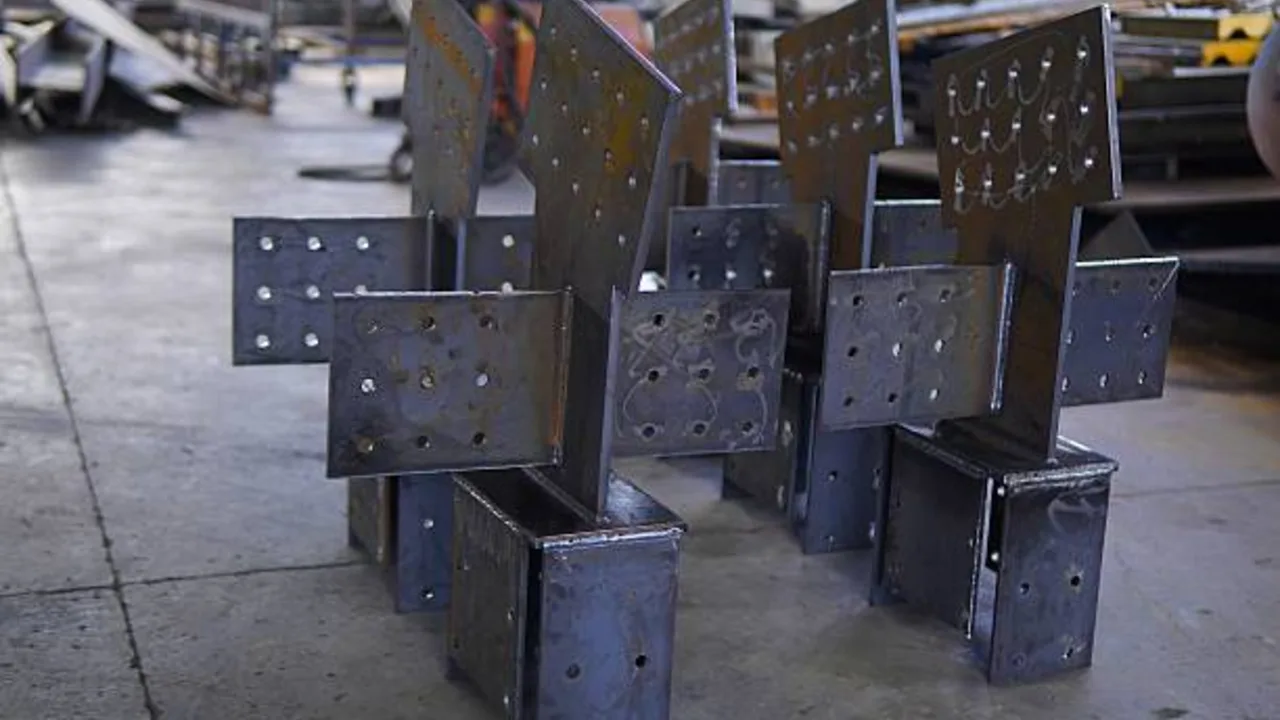
The most immediate impact of cost overrun is the erosion of profit margins. Since revenue remains fixed, any increase in cost directly reduces profitability. In extreme cases, projects may operate at a loss.
Cash Flow Pressure
Cost overruns also create cash flow challenges. Manufacturers may need to cover additional expenses upfront while waiting for milestone payments. This imbalance can strain financial resources, especially when multiple projects are running simultaneously.
Project Delays and Penalties
Financial pressure often leads to operational delays. When deadlines are missed, manufacturers may face contractual penalties such as liquidated damages. These penalties further reduce project profitability and increase overall risk exposure.
Long-Term Business Impact
Beyond immediate financial losses, repeated exposure to steel manufacturer contract risk can affect long-term business stability. Reduced profitability limits reinvestment capacity, while delays and quality issues can damage reputation and client trust.
Contract Clauses That Increase Risk Exposure
Fixed Scope Without Flexibility
Contracts that define scope rigidly without allowing adjustments create a high-risk environment. Any variation in design or execution requirements becomes a cost burden for the manufacturer.
Strict Delivery Deadlines
Tight schedules combined with penalty clauses increase pressure on production and logistics. Delays caused by external factors still result in financial consequences for the manufacturer.
Unbalanced Responsibility Allocation
In some contracts, risk allocation is heavily skewed toward the manufacturer. This includes responsibility for design coordination, material procurement, and site-related challenges.
Lack of Escalation Clauses
One of the most critical issues is the absence of price escalation clauses. Without mechanisms to adjust for material price increases, manufacturers are fully exposed to market volatility, significantly increasing steel manufacturer contract risk.
Risk Mitigation Strategies for Steel Manufacturers
Accurate Pre-Contract Cost Estimation
The foundation of managing steel manufacturer contract risk lies in precise cost estimation before signing the contract. This stage determines whether a project will be profitable or problematic. Manufacturers must go beyond surface-level calculations and perform detailed quantity take-offs, fabrication analysis, and risk assessments.
Conservative assumptions are essential, particularly when dealing with uncertain design details or volatile material markets. Including contingency buffers in pricing can help absorb unexpected cost increases without immediately eroding margins.
Early Engineering Involvement
Integrating engineering teams early in the bidding and planning stages significantly reduces uncertainty. When manufacturers participate in design development, they gain better visibility into structural complexity, connection requirements, and fabrication challenges.
This proactive approach minimizes the risk of late-stage design changes and helps align technical feasibility with cost expectations. It also enables more accurate WPS planning, fabrication sequencing, and production scheduling.
Material Procurement Strategy
Material cost volatility is one of the biggest contributors to steel manufacturer contract risk. To mitigate this, manufacturers must adopt strategic procurement practices. This includes locking in prices through early purchasing agreements, long-term supplier contracts, or hedging strategies where applicable.
Timing is critical. Delayed procurement can expose manufacturers to market price spikes, while early procurement requires accurate forecasting and storage planning. Balancing these factors is key to controlling cost overrun.
Contract Negotiation Techniques
Risk management begins at the negotiation table. Manufacturers should aim to include contract provisions that provide flexibility in response to changing conditions. Key clauses may include:
- Price escalation clauses linked to steel indices
- Clear variation and change order mechanisms
- Defined responsibility boundaries for design and scope
- Adjustable timelines for unforeseen delays
Well-structured contracts help distribute risk more evenly between parties, reducing the burden on manufacturers.
Production Planning Optimization
Efficient production planning plays a major role in minimizing risk exposure. By optimizing workflow, reducing idle time, and improving coordination between departments, manufacturers can control operational costs more effectively.
Lean manufacturing principles, standardized processes, and continuous monitoring of production metrics help reduce inefficiencies and prevent unnecessary cost escalation.
Role of Engineering and Fabrication Control in Risk Reduction
Standardization of Components
Standardizing structural components reduces variability in fabrication and simplifies production processes. Reusable designs and modular systems allow manufacturers to predict costs more accurately and improve efficiency.
This approach also reduces the likelihood of errors and rework, which are major contributors to cost overrun in fixed-price contracts.
Welding and Fabrication Efficiency
Controlled welding procedures and optimized fabrication techniques are essential for maintaining consistency. Efficient welding reduces labor time, minimizes defects, and improves overall productivity.
For a steel manufacturer contract risk scenario, even small improvements in welding efficiency can translate into significant cost savings across large volumes of work.
Quality Control Systems
Strong quality control systems prevent defects before they occur. By implementing inspection checkpoints, standardized testing procedures, and continuous monitoring, manufacturers can reduce rework and maintain production efficiency.
Preventing defects is always more cost-effective than correcting them, especially under fixed-price conditions where additional costs cannot be passed on to the client.
Integration Between Contract Management and Manufacturing
Alignment Between Sales and Engineering
One of the most common causes of steel manufacturer contract risk is misalignment between sales teams and engineering departments. Overly aggressive pricing during bidding can lead to unrealistic cost expectations that are difficult to achieve during execution.
Close collaboration ensures that pricing reflects actual production capabilities and constraints, reducing the risk of underbidding.
Real-Time Cost Tracking
Monitoring project costs in real time allows manufacturers to identify deviations early. By tracking material usage, labor productivity, and operational expenses, corrective actions can be implemented before issues escalate.
This level of visibility is critical for maintaining control in fixed-price environments.
Feedback Loop from Production
Data collected during production should be fed back into future project planning. Lessons learned from previous contracts help refine estimation models, improve efficiency, and reduce future risk exposure.
In a professional steel structure manufacturer, this continuous feedback loop is a key driver of long-term performance improvement.
Real-World Risk Scenarios in Steel Projects
Underestimated Steel Quantity
One of the most frequent and costly issues in fixed-price contracts is the underestimation of steel quantities during the bidding stage. This typically occurs when manufacturers rely on preliminary drawings, incomplete BOQs, or simplified assumptions to accelerate proposal submission.
In practice, detailed engineering often reveals additional requirements such as:
- Extra stiffeners or reinforcements
- Heavier sections due to load recalculations
- Additional connection plates and bolts
- Increased wastage factors during fabrication
As production progresses, these hidden quantities accumulate. What initially appeared as a small deviation can evolve into a significant material shortfall. Since the contract value is fixed, any additional steel must be procured at the manufacturer’s expense, immediately triggering a cost overrun.
Beyond direct material cost, this scenario also affects:
- Procurement timelines (urgent orders at higher prices)
- Production scheduling disruptions
- Cash flow pressure due to unplanned expenditures
For large-scale projects, even a 3–5% underestimation in steel quantity can translate into substantial financial losses, making this a critical component of steel manufacturer contract risk.
Late Design Changes
Design instability is another major real-world risk, especially in projects where engineering is not fully finalized before contract signing. Late design changes can originate from clients, consultants, or regulatory requirements, and often occur after fabrication has already begun.
Typical impacts include:
- Rework of partially fabricated components
- Scrapping of completed elements that no longer meet revised specifications
- Additional welding, cutting, and machining processes
- Extended production timelines
These changes disrupt the entire workflow. Fabrication lines may need to pause or adjust sequencing, leading to inefficiencies and increased labor costs. In some cases, previously completed work becomes unusable, resulting in both material and time losses.
Without clearly defined variation clauses in the contract, these additional costs are rarely recoverable. This makes late design changes one of the most unpredictable drivers of steel manufacturer contract risk.
Furthermore, repeated design revisions can create a ripple effect:
- Delays in delivery schedules
- Increased coordination complexity between departments
- Higher risk of quality inconsistencies due to rushed adjustments
In fixed-price contracts, this scenario is particularly dangerous because it combines cost increase with schedule pressure—two factors that directly impact profitability.
Material Price Surge
Steel price volatility is a well-known industry challenge, but its impact is magnified under fixed-price contracts. Market conditions can shift rapidly due to global supply chain disruptions, energy costs, trade policies, or geopolitical events.
A sudden increase in steel prices during the project lifecycle can significantly alter cost structures. For example:
- Raw material costs rise after contract signing but before procurement
- Supplier quotations increase beyond initial estimates
- Transportation and logistics costs also escalate in parallel
Without price escalation clauses, manufacturers are locked into the original contract value. This means they must absorb the difference between estimated and actual material costs, directly impacting margins.
In extreme cases, a sharp price surge can:
- Eliminate entire project profit
- Push projects into negative margins
- Affect the financial stability of the manufacturer
To make matters more complex, material price increases often coincide with other risks, such as supply shortages or delayed deliveries. This combination not only increases costs but also disrupts production schedules.
As a result, material price surge is one of the most critical external factors influencing steel manufacturer contract risk, especially in long-duration projects where exposure to market volatility is higher.
Best Practices to Manage Steel Manufacturer Contract Risk
Build Risk Buffers in Pricing
Including contingency margins in pricing is one of the most practical ways to manage uncertainty in fixed-price contracts. In reality, no cost estimation is ever 100% accurate—especially in steel manufacturing, where variables such as material prices, fabrication complexity, and site conditions can change rapidly.
A well-structured buffer should not be arbitrary. Instead, it should be based on:
- Historical project data (previous cost overruns, productivity gaps)
- Material price volatility trends
- Complexity level of the structure (standard vs custom fabrication)
- Contract risk exposure (tight schedule, unclear scope, etc.)
Manufacturers often apply tiered contingency strategies—for example, higher buffers for projects with incomplete drawings or aggressive timelines. While adding margin may reduce price competitiveness in bidding, it creates a critical financial cushion that protects against margin erosion.
Without this buffer, even minor deviations can quickly turn a profitable project into a loss-making one under fixed-price conditions.
Strengthen Supplier Relationships
Material procurement is one of the largest cost components in steel projects, making supplier stability a key factor in controlling <strong>steel manufacturer contract risk. Strong supplier relationships go beyond transactional purchasing—they are strategic partnerships that directly influence cost predictability and delivery reliability.
Key advantages of strong supplier networks include:
- Preferential pricing agreements during volatile market periods
- Priority allocation when supply is constrained
- Flexible payment terms that improve cash flow
- Faster response to urgent or unexpected material needs
In some cases, manufacturers collaborate with suppliers through long-term contracts or framework agreements, locking in pricing or securing supply for multiple projects. This reduces exposure to sudden price spikes and helps stabilize project costs.
Additionally, diversified sourcing strategies—using multiple suppliers instead of relying on a single source—can further reduce procurement risk.
Implement Digital Cost Monitoring
In fixed-price environments, delayed awareness of cost deviations is one of the biggest threats to profitability. Digital cost monitoring systems provide real-time visibility into project performance, allowing manufacturers to detect and respond to issues early.
Modern systems typically track:
- Material consumption vs planned quantities
- Labor productivity rates
- Equipment utilization
- Project progress vs budget
By integrating data from fabrication, procurement, and project management, manufacturers can identify early warning signs of cost overrun. For example, if welding hours exceed initial estimates, corrective actions—such as workflow adjustments or manpower reallocation—can be implemented immediately.
Digital tools also improve transparency across departments, ensuring that management decisions are based on accurate and up-to-date information rather than delayed reports.
Standardize Fabrication Processes
Standardization is a powerful tool for reducing variability, which is a major driver of risk in fixed-price contracts. When fabrication processes are standardized, outcomes become more predictable, making it easier to control both cost and quality.
Standardization can be applied to:
- Structural components (modular beams, standardized connections)
- Welding procedures and inspection methods
- Fabrication workflows and sequencing
- Material specifications and usage
By minimizing variation, manufacturers can:
- Reduce production time
- Lower defect rates and rework
- Improve labor efficiency
- Simplify training for new workers
For large-scale operations, even small efficiency gains per unit can translate into significant cost savings across the entire project. This directly reduces exposure to cost overrun and improves overall project stability.
Continuous Project Review
Risk management is not a one-time activity—it requires continuous monitoring throughout the project lifecycle. Regular project reviews allow manufacturers to compare planned performance with actual results and identify deviations early.
Effective review processes typically include:
- Weekly or bi-weekly cost tracking meetings
- Progress vs schedule analysis
- Quality performance reviews (defect rates, rework levels)
- Risk reassessment based on current project conditions
These reviews create a feedback loop between planning and execution. If a deviation is identified—such as increased material waste or slower production—corrective actions can be implemented before the issue escalates.
Continuous review also improves future performance. Lessons learned from current projects can be documented and applied to future bids, leading to more accurate estimation and better risk control.
Conclusion: Controlling Risk in Fixed-Price Steel Contracts
Fixed-price contracts present both opportunities and challenges for steel manufacturers. While they offer clear revenue visibility, they also place the burden of cost uncertainty on the manufacturer. Managing steel manufacturer contract risk requires a combination of accurate estimation, strong contract negotiation, efficient production, and continuous monitoring.
Manufacturers that adopt structured risk management strategies are better positioned to maintain profitability, deliver projects on time, and build long-term client trust. In an increasingly competitive market, the ability to control risk is not just a defensive strategy—it is a core capability that defines successful steel manufacturers.