
Modern logistics and industrial operations increasingly require taller storage spaces to improve efficiency and reduce land usage. A high clearance warehouse is designed to provide greater vertical space so materials, racks, and automated systems can operate safely at higher elevations. In large distribution centers, manufacturing plants, and logistics hubs, vertical expansion often delivers better results than increasing the building footprint.
Designing a high clearance warehouse requires careful structural planning. Increasing building height affects load distribution, stability, wind resistance, and connection strength. Engineers must also consider how vertical storage systems influence structural loads and floor performance. Steel structures are commonly used for these projects because they provide high strength, flexibility, and efficient construction for tall buildings.
A properly designed high clearance warehouse allows safe stacking, efficient handling equipment movement, and long-term structural reliability. However, height alone does not guarantee performance. The design must balance structural capacity, cost, and operational needs to ensure the warehouse functions as intended.
Why High Clearance Warehouse Design Matters in Modern Storage
The demand for taller storage buildings continues to grow as industries shift toward automation and high-density storage. A high clearance warehouse allows operators to maximize usable volume, making it ideal for logistics centers, industrial storage, and manufacturing facilities where floor space is limited.
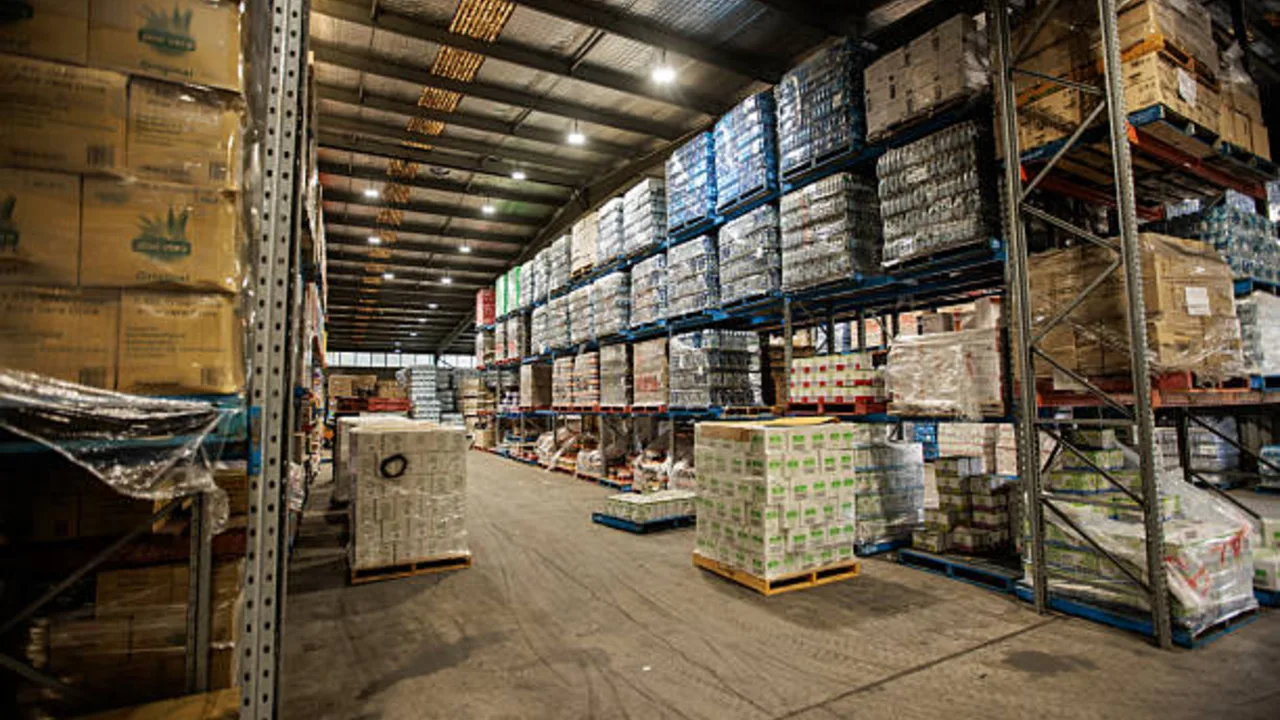
Traditional warehouses were designed with moderate heights, but modern systems rely heavily on vertical storage to increase capacity without expanding land use. Automated storage and retrieval systems, high-rack shelving, and overhead handling equipment all require increased clearance.
A high clearance warehouse also improves workflow efficiency. With taller racks, materials can be stored closer to production lines or shipping areas, reducing transport time. In addition, taller buildings allow better organization of goods, which improves inventory control and reduces operational errors.
Structural Requirements for High Clearance Warehouse Buildings
Increasing building height changes the behavior of the entire structural system. In a high clearance warehouse, columns become more slender, beams carry greater loads, and lateral forces become more significant. These factors must be carefully analyzed during design.
Tall warehouse buildings experience higher wind loads and larger bending moments. The structure must resist these forces without excessive deflection. Engineers must also ensure that connections between members can safely transfer loads without overstressing bolts, welds, or plates.
Another important factor is the relationship between height and span. Large clear spans combined with high clearance increase structural demand. To maintain stability, designers often adjust column spacing, beam depth, and bracing systems.
Column Design for High Clearance Warehouse
Columns in a high clearance warehouse must resist axial load, bending, and buckling. Because the height is greater than in standard warehouses, slenderness becomes a critical design parameter.
Engineers select steel sections with sufficient strength while controlling deflection. Base plates must also be designed to distribute loads safely into the foundation. As building height increases, column stability becomes one of the most important factors in the entire structure.
Proper column design ensures that vertical storage systems can operate safely without causing excessive vibration or movement.
Beam and Roof System Design
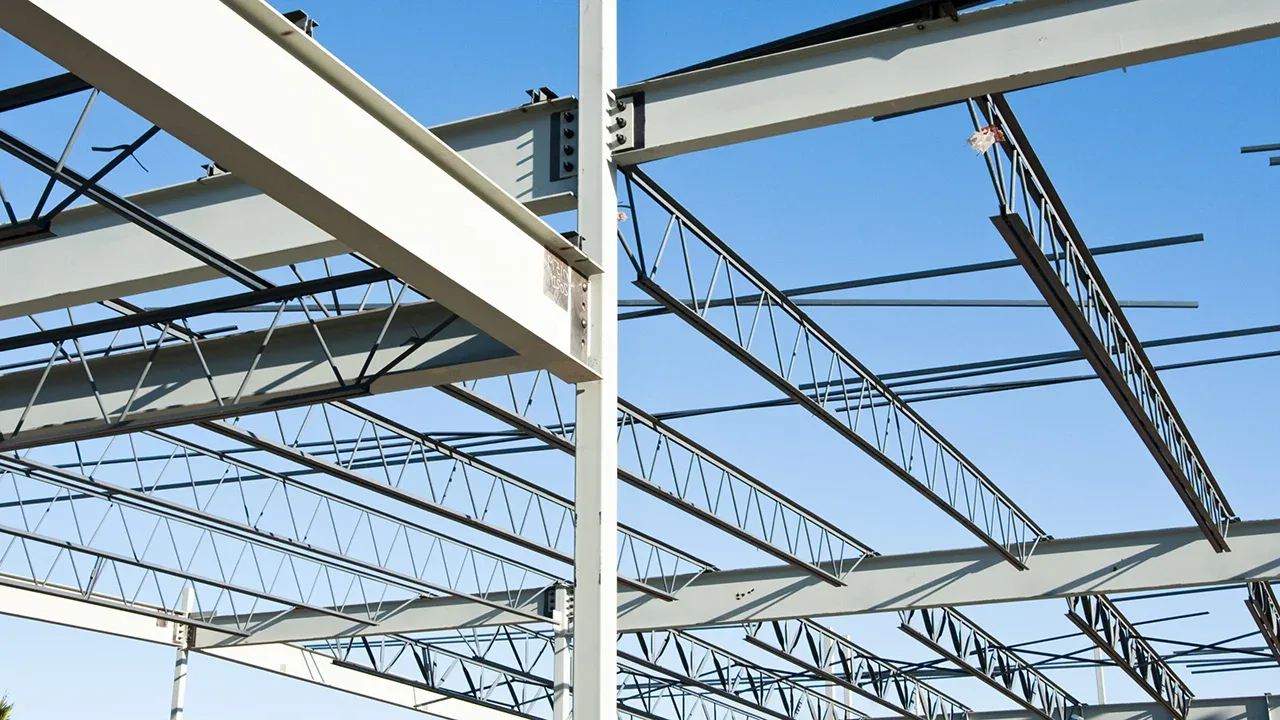
The roof structure of a high clearance warehouse must support long spans while maintaining stiffness. In many projects, portal frames or truss systems are used to reduce weight while maintaining strength.
Longer spans reduce the number of interior columns, which improves storage layout and allows better use of vertical storage racks. However, longer spans also increase bending forces, so beam depth and connection strength must be carefully calculated.
Roof systems must also support lighting, ventilation equipment, and sometimes suspended conveyors or cranes. These loads must be included in the design to ensure long-term reliability.
Advantages of Steel Structure for High Clearance Warehouse
Steel construction is widely used for tall storage buildings because it provides strength without excessive weight. A steel structure warehouse can achieve greater height and span compared to concrete systems while maintaining construction efficiency.
Steel members can be fabricated with high precision, allowing accurate assembly even in tall buildings. This accuracy is important in a high clearance warehouse where small alignment errors can affect rack installation and vertical storage equipment.
Another advantage is speed. Steel components are prefabricated in factories and assembled on site, reducing construction time. This is especially valuable for logistics projects where early operation is critical.
Steel structures also allow flexible expansion. If storage demand increases, the building can often be extended without major reconstruction. Because of these benefits, most modern steel structure warehouse projects use steel frames to achieve high clearance safely and efficiently.
Design Considerations for Vertical Storage Systems
A high clearance warehouse is usually designed to support advanced storage systems. These systems place additional demands on both the structure and the floor. Engineers must consider rack height, equipment movement, and load concentration.
Vertical storage racks transfer load to the floor through small contact areas. This means the slab must be strong enough to support concentrated forces without cracking. At the same time, column placement must allow enough space for forklifts, automated vehicles, or conveyors.
Lighting and ventilation also become more complex in tall buildings. Higher roofs require stronger lighting systems to maintain visibility at floor level. Ventilation must ensure proper air circulation throughout the vertical storage area.
Vertical Storage Load Capacity
In a high clearance warehouse, storage racks may reach heights of 15 meters or more. These racks create significant vertical loads that must be transferred safely to the structure.
Engineers calculate load combinations that include stored goods, rack weight, equipment movement, and impact forces. The structure must maintain sufficient strength even when storage is fully loaded.
Floor design is particularly important. The slab must remain level to ensure safe operation of lifting equipment. Uneven settlement can cause rack instability, which may lead to safety risks.
Foundation and Floor Requirements for High Clearance Warehouse
The foundation of a high clearance warehouse must support taller columns and higher loads than standard buildings. Soil capacity, settlement control, and anchor bolt accuracy all become more critical as building height increases.
Tall structures produce larger overturning forces during wind or seismic events. Foundations must resist these forces without excessive movement. In many projects, engineers use larger footings or reinforced slabs to maintain stability.
Floor flatness is another key factor. Automated systems and high-lift forklifts require very tight tolerances. Even small irregularities can affect vertical storage operation.
A well-designed foundation ensures that the entire warehouse performs safely for decades, even under heavy use.
Fabrication and Erection Challenges in High Clearance Warehouse
Constructing a high clearance warehouse involves additional fabrication and erection challenges compared to standard buildings. Taller columns, larger beams, and longer spans require careful planning during manufacturing, transportation, and on-site assembly. Even small deviations in alignment can affect structural stability and the performance of vertical storage systems.
Steel components for high clearance buildings are often produced in multiple segments because of transportation limits. Long columns may need to be divided into sections and connected on site using high-strength bolts or welds. These connections must be designed to transfer full load capacity without creating weak points in the structure.
Erection sequence also becomes more complex. Temporary bracing is usually required to keep the structure stable before the full frame is completed. Crane selection must consider lifting height, component weight, and site conditions. Proper planning ensures that the high clearance warehouse can be assembled safely and efficiently.
Real Case Project — High Clearance Steel Warehouse for Industrial Storage
A practical example of high clearance warehouse design can be seen in a heavy-duty steel storage facility built for industrial equipment distribution. The project required a storage height of more than 18 meters to support high-density racks and automated handling systems.
During the initial design stage, the client requested maximum vertical storage capacity without increasing the building footprint. Engineers selected a steel frame system with large column spacing to provide open interior space. However, increasing both height and span created higher bending forces on the columns and beams.
Structural analysis showed that standard warehouse proportions would not provide enough stability. The design team increased column section size and optimized beam depth to control deflection. Additional bracing was added to improve resistance against wind loads, which become more significant in a high clearance warehouse.
Foundation design was also upgraded to handle higher overturning forces. Larger base plates and stronger anchor bolts were used to ensure safe load transfer from the tall steel frame to the concrete foundation.
During fabrication, column segments were produced with precise tolerances to ensure accurate alignment during erection. On site, temporary supports were installed until the full frame was completed. After installation, rack systems were added, reaching nearly the full height of the building.
The final result demonstrated that careful engineering is essential in any high clearance warehouse project. By combining optimized steel structure design with proper erection planning, the building achieved high vertical storage capacity while maintaining safety and cost efficiency.
Safety Considerations in High Clearance Warehouse Design
Safety becomes more critical as building height increases. A high clearance warehouse must be designed to resist wind, seismic forces, and accidental impacts from equipment. Because tall racks store heavy goods at high levels, structural stability is essential.
Wind load is one of the main factors affecting tall warehouses. Higher walls create larger surface areas exposed to wind pressure. Engineers must ensure that the bracing system and connections can safely resist these forces without excessive movement.
Fire safety is another important consideration. Taller buildings require proper sprinkler coverage and safe evacuation routes. Lighting and emergency systems must function reliably even at high elevations.
Protection of columns is also necessary. Forklifts and automated vehicles operate close to structural members, so guard systems are often installed to prevent accidental damage that could affect load capacity.
Cost Optimization for High Clearance Warehouse
Although a high clearance warehouse increases storage capacity, it also increases structural cost. The key to successful design is balancing height, span, and material usage to achieve the best overall value.
Increasing height raises column size, foundation strength, and bracing requirements. However, the cost per storage volume may still be lower than building multiple smaller warehouses. Engineers often compare different height options to find the most economical solution.
Using steel structures helps reduce weight while maintaining strength. Optimized member sizes, efficient connection design, and proper span selection all contribute to cost control.
Construction time also affects cost. Faster erection reduces labor and equipment expenses. Because steel structures can be assembled quickly, they are often preferred for high clearance warehouse projects where schedule is important.
Common Mistakes in High Clearance Warehouse Projects
One common mistake in high clearance warehouse design is increasing height without evaluating structural impact. Taller buildings require stronger frames, and ignoring this can lead to instability or excessive deflection.
Another mistake is incorrect column spacing. If spacing is too wide, beams become too large and expensive. If spacing is too small, the interior layout becomes inefficient for vertical storage.
Floor design is often underestimated. Heavy racks create concentrated loads, and insufficient slab strength can cause cracking or settlement. This may affect both safety and operation.
Wind load is also sometimes underestimated. Tall warehouse walls must be designed to resist lateral forces, especially in open industrial areas.
Proper engineering analysis helps avoid these problems and ensures that the high clearance warehouse performs as expected.
Long-Term Performance of High Clearance Warehouse Buildings
A well-designed high clearance warehouse must maintain performance over many years of operation. Regular inspection of connections, bracing, and foundations is important to ensure that structural integrity is preserved.
Corrosion protection is also critical, especially in industrial environments. Coatings or galvanizing help maintain steel strength and prevent reduction of load capacity over time.
Future expansion should also be considered during design. Many warehouse projects later require additional storage height or extended floor area. Steel structures allow easier modification compared to other construction types.
Maintenance access must be included in the design. Tall buildings require safe ways to inspect roof systems, lighting, and structural connections.
Why Steel Structure Is Ideal for High Clearance Warehouse
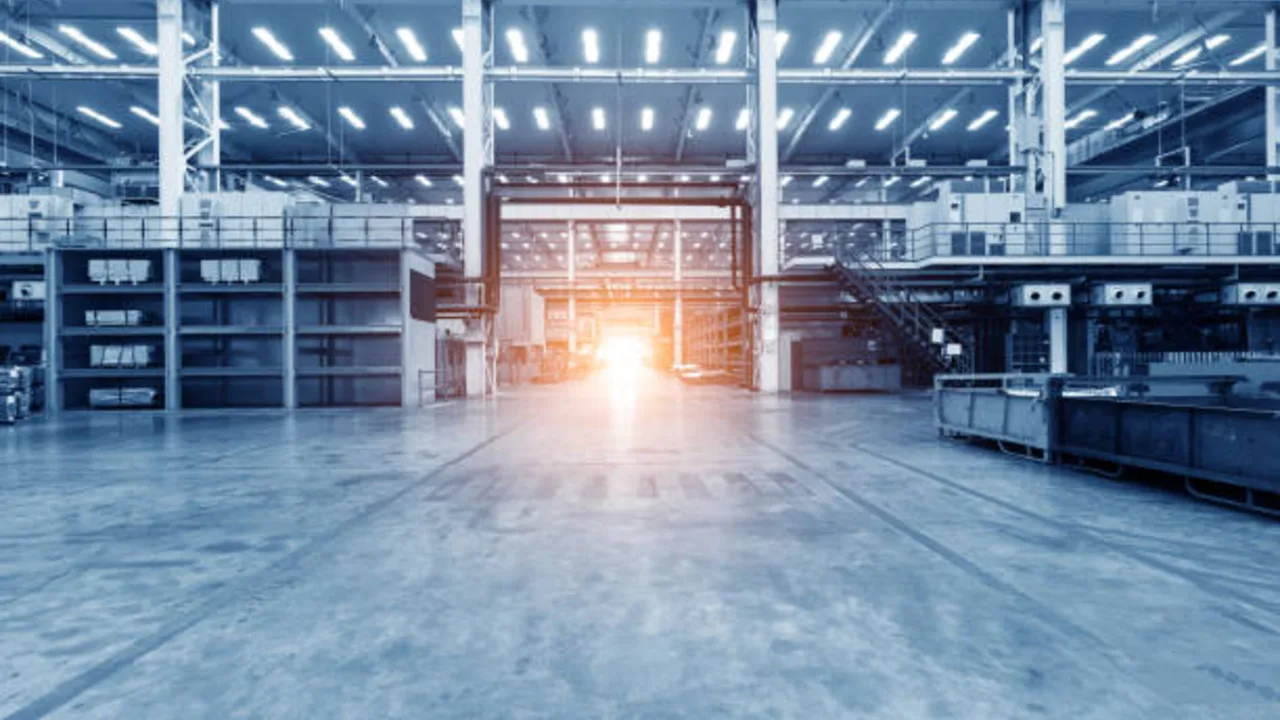
Steel frames provide the strength and flexibility needed for tall storage buildings. A properly designed steel structure warehouse can achieve large spans, high clearance, and efficient construction while maintaining safety.
Steel allows accurate fabrication, which is important when installing tall rack systems. It also provides better strength-to-weight ratio than concrete, reducing foundation size while maintaining stability.
Because of these advantages, most modern high clearance warehouse projects use steel frames. Working with experienced engineers in steel structure warehouse design ensures that the building meets both structural and operational requirements.
Conclusion
Designing a high clearance warehouse requires careful coordination between structural engineering, storage planning, and construction methods. Increased height improves vertical storage efficiency, but it also increases structural demand.
By selecting the right steel frame system, optimizing column spacing, and designing proper foundations, engineers can create warehouses that are both strong and economical. Steel structures make it possible to build taller storage facilities while maintaining safety and long-term reliability.
For modern logistics and industrial projects, a well-designed high clearance warehouse provides the best solution for maximizing space, improving efficiency, and supporting future growth.