In large industrial construction, site condition plays a critical role in structural performance. One of the most common challenges in warehouse development is warehouse uneven ground. Because warehouses typically cover wide areas with long-span steel frames, even small elevation differences can create structural stress, alignment problems, and long-term stability risks. Proper planning and early foundation adjustment are essential to ensure safe construction and reliable performance throughout the building’s lifecycle.
Unlike small buildings, warehouses distribute loads across large foundations and multiple columns. When the ground level is inconsistent, the load path changes, which may reduce overall structural safety. Engineers must evaluate soil condition, elevation difference, and bearing capacity before deciding the correct foundation solution. Careful design allows warehouse uneven ground to be corrected without increasing cost unnecessarily.
In modern industrial projects, steel structures are often preferred because they can adapt to site variation more easily than traditional concrete systems. However, even with steel construction, proper foundation adjustment remains the key factor in preventing differential settlement and structural damage.
Why Uneven Ground Is a Major Challenge in Warehouse Construction
Warehouses usually require large open spaces, high roof clearance, and long structural spans. These characteristics make the building more sensitive to site conditions. When warehouse uneven ground is not handled correctly, the structure may experience uneven load distribution, which can lead to deformation or connection stress.
Another reason uneven terrain is critical in warehouse projects is the size of the footprint. A small elevation difference at one corner can become a significant alignment problem across a building that is more than 100 meters long. Without proper foundation adjustment, columns may not sit at the same level, causing stress in beams and bracing systems.
In steel buildings, structural members are designed with precise dimensions. If the ground elevation varies beyond tolerance, installation becomes difficult and may require modification during construction. This increases time, cost, and risk.
Common Causes of Uneven Ground in Warehouse Project Sites
Natural Terrain Variation
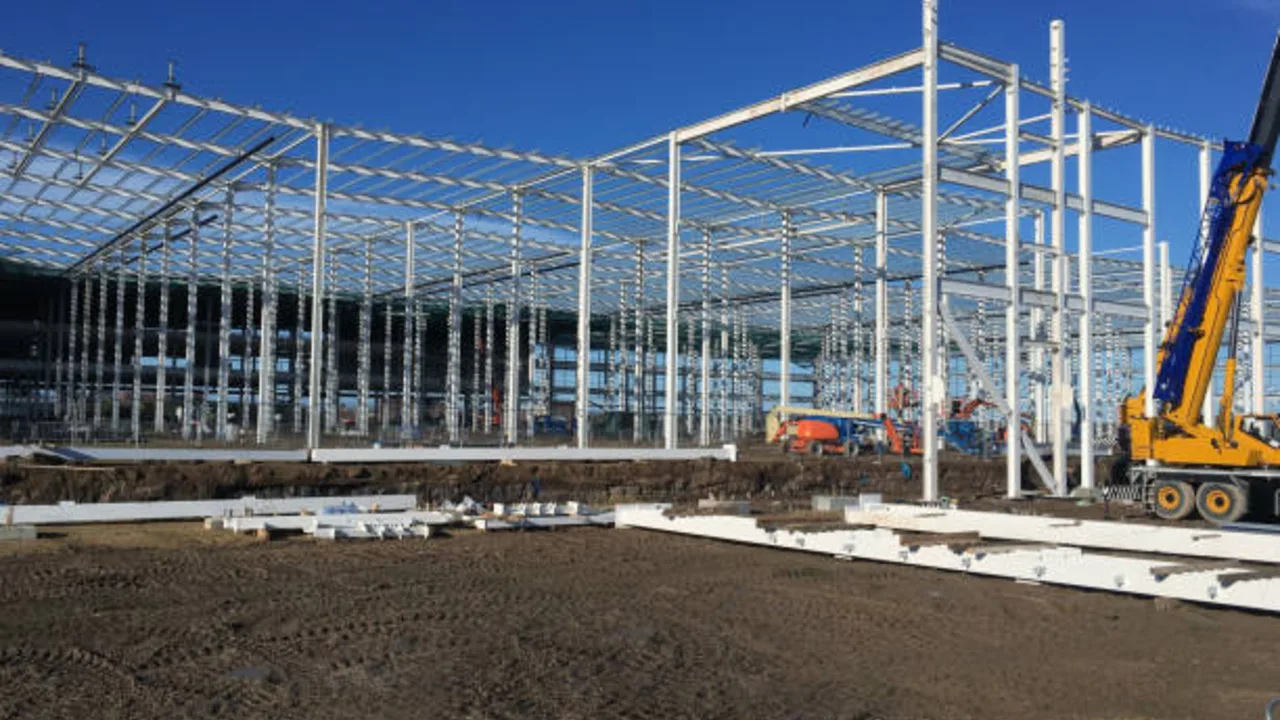
Many warehouse projects are built on large open land where natural slopes exist. Hills, valleys, and uneven soil layers often create warehouse uneven ground conditions. Even when the difference seems small, the effect on structural alignment can be significant for long-span buildings.
Previous Land Use
Industrial sites, filled land, or demolished building areas often have irregular soil density. In these cases, the ground may appear flat on the surface but contain weak zones underneath. Without proper foundation adjustment, these areas may settle after construction.
Soil Bearing Capacity Differences
Different soil layers may have different bearing strengths. Clay, sand, and rock respond differently under load. When a warehouse is built on mixed soil, uneven settlement may occur, creating structural stress. Engineers must analyze soil condition carefully before deciding the foundation system.
Groundwater Influence
Water level changes can affect soil stability. In some regions, seasonal rain or groundwater movement causes soil expansion or softening. These conditions increase the risk of warehouse uneven ground during and after construction. Proper drainage and foundation adjustment planning help prevent future problems.
Structural Risks Caused by Warehouse Uneven Ground
Differential Settlement
One of the biggest risks of warehouse uneven ground is differential settlement. When one part of the foundation moves more than another, the steel frame may twist or bend. This can cause doors to misalign, roof panels to deform, or connections to loosen.
Foundation Cracking
If the ground is not properly prepared, the foundation may crack due to uneven pressure. Cracks reduce structural strength and allow water penetration, which may lead to corrosion in steel components. Proper foundation adjustment reduces this risk significantly.
Connection Stress in Steel Structures
Steel frames rely on accurate connections between beams, columns, and bracing members. When the base level is uneven, connection plates may experience unexpected force. Over time, this stress can reduce load capacity and affect safety.
Reduced Load Capacity
Uneven ground can change how loads are transferred to the foundation. If one column carries more weight than designed, the overall warehouse may not achieve its full load capacity. This is especially dangerous in storage facilities where heavy goods are stored.
Site Investigation Before Warehouse Construction
Before starting construction, engineers must fully understand the site condition. Proper investigation helps determine how to handle warehouse uneven ground and what type of foundation adjustment is required.
Soil Testing Methods
Geotechnical testing is essential for warehouse projects. Borehole drilling, plate load tests, and penetration tests help determine soil strength and stability. These results guide the design of the foundation system.
Topographic Survey
A detailed survey shows the exact elevation difference across the site. Even small height variations must be recorded because they affect column level and beam alignment. Accurate survey data is necessary to plan foundation adjustment correctly.
Groundwater Analysis
Water level must be checked before foundation design. High groundwater may require deeper foundation or soil improvement. Ignoring this step often leads to future settlement problems.
Planning Foundation Adjustment Early
The best time to solve warehouse uneven ground is before construction begins. When foundation adjustment is included in the design stage, cost and risk can be controlled. Trying to fix uneven ground during erection is much more expensive.
Foundation Adjustment Methods for Uneven Ground
Different projects require different solutions. Engineers choose the most suitable foundation adjustment method based on soil condition, building size, and load requirement.
Excavation and Leveling
The simplest method is to cut high areas and fill low areas. This approach works when elevation difference is small and soil condition is stable. Proper compaction is necessary to prevent future settlement.
Soil Replacement
Weak soil can be removed and replaced with stronger material. This improves bearing capacity and reduces the risk of warehouse uneven ground after construction. Soil replacement is common in warehouse projects built on filled land.
Compaction Improvement
Mechanical compaction increases soil density and strength. This method is used when soil is loose but not too weak. Good compaction ensures uniform support for the foundation.
Pile Foundation Solution
When soil strength varies significantly, pile foundation may be required. Piles transfer load to deeper stable layers, reducing the effect of warehouse uneven ground. Although more expensive, this method provides high reliability.
Raft Foundation for Large Warehouses
Raft foundation spreads load across a large area, helping balance uneven soil pressure. This type of foundation adjustment is often used for heavy storage warehouses.
Stepped Foundation Design
For sloped sites, stepped foundations allow columns to be placed at different elevations while maintaining structural alignment. This solution is effective when terrain cannot be completely leveled.
Steel Structure Advantages on Uneven Ground Sites
One of the reasons steel buildings are widely used in industrial construction is their flexibility when dealing with warehouse uneven ground. Compared with traditional concrete structures, steel frames allow easier elevation adjustment and faster installation, which makes them suitable for projects where site conditions are not perfectly level. Even when foundation adjustment is required, steel systems can adapt without major redesign.
Steel columns can be installed with adjustable base plates, allowing small elevation corrections during erection. This helps maintain alignment even if minor differences remain after ground preparation. In addition, long-span steel frames distribute loads efficiently, reducing the impact of uneven support conditions.
Because of these advantages, many developers choose a steel structure warehouse solution when building on complex terrain. With proper engineering, steel systems can maintain structural safety even when the original site has significant height variation.
Design Considerations for Warehouse Projects on Uneven Ground
Designing a warehouse on uneven land requires more than leveling the surface. Engineers must consider how warehouse uneven ground affects structural behavior, foundation performance, and installation accuracy. Careful planning of foundation adjustment ensures that the final structure remains stable throughout its service life.
Column Base Elevation Control
Each column must be placed at the correct elevation to ensure proper load transfer. When the ground level varies, foundation height must be adjusted individually. Accurate elevation control prevents stress concentration in beams and connections.
Anchor Bolt Positioning
Anchor bolts must be installed with high precision. Even small misalignment can make steel erection difficult. When warehouse uneven ground exists, bolt positioning must be coordinated with foundation adjustment to avoid installation problems.
Base Plate Thickness Adjustment
In some cases, different base plate thicknesses are used to compensate for height differences or load variation. This allows the structure to remain level while adapting to uneven foundation conditions.
Expansion Joint Planning
Large warehouses often require expansion joints to accommodate movement. On uneven ground, these joints become even more important because different parts of the building may settle differently. Proper joint design reduces stress caused by warehouse uneven ground.
Drainage and Ground Slope Design
Drainage must be carefully planned to prevent water accumulation near the foundation. Poor drainage can weaken soil and increase settlement risk. Good ground slope design is an important part of foundation adjustment in warehouse projects.
Construction Process Control on Uneven Ground Sites
Even with good design, construction quality determines whether the building performs as expected. When working on warehouse uneven ground, strict control during foundation and erection stages is necessary.
Foundation Inspection
Before steel installation begins, the foundation must be checked for level accuracy and bearing strength. Any deviation should be corrected immediately. This step ensures that foundation adjustment has been completed properly.
Level Control During Erection
During steel installation, survey equipment is used to confirm column height and beam alignment. Continuous checking helps detect problems early and prevents structural stress.
Monitoring Settlement
In some sites, minor settlement may occur after construction starts. Monitoring allows engineers to confirm that movement remains within acceptable limits. If settlement becomes excessive, additional foundation adjustment may be required.
Alignment Checks
Steel frames must remain straight and square. Uneven ground can cause slight rotation of columns, which affects the entire structure. Regular alignment checks ensure that the building remains within tolerance.
Safety During Installation
Uneven terrain increases risk during construction. Proper temporary supports and safe working procedures are necessary to protect workers and maintain structural stability.
Real Case Project – Warehouse Built on Uneven Industrial Land
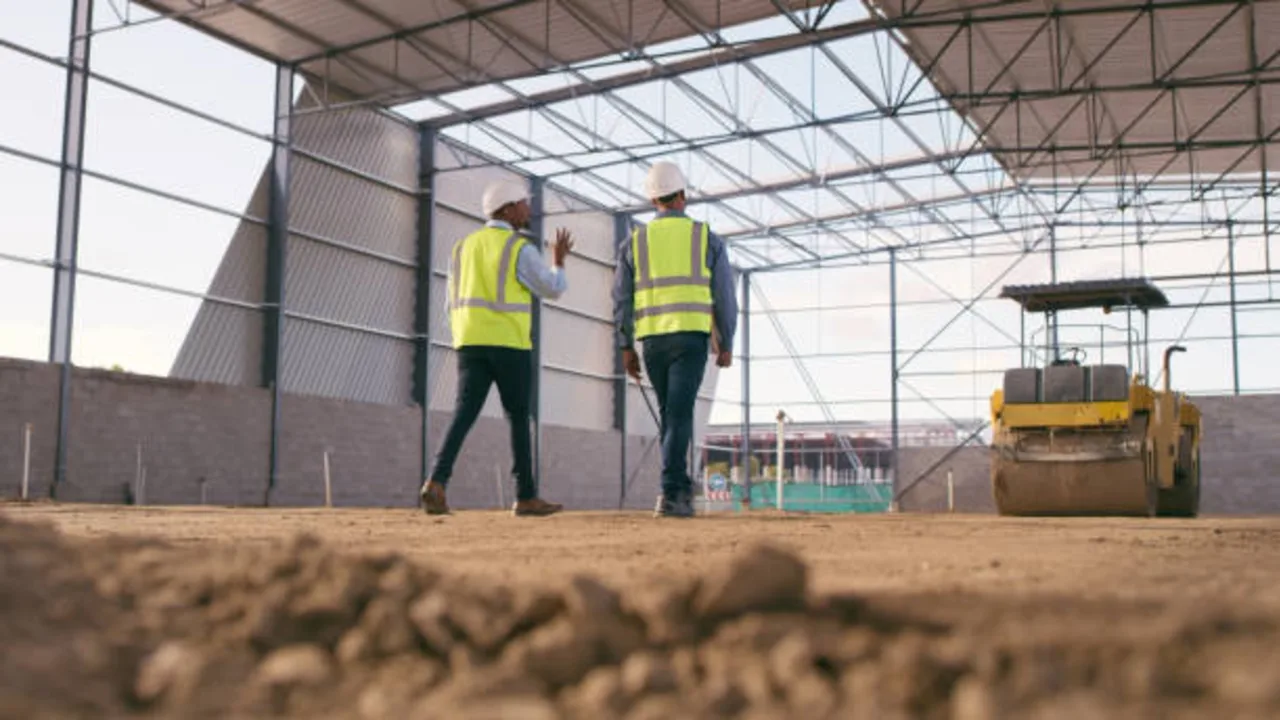
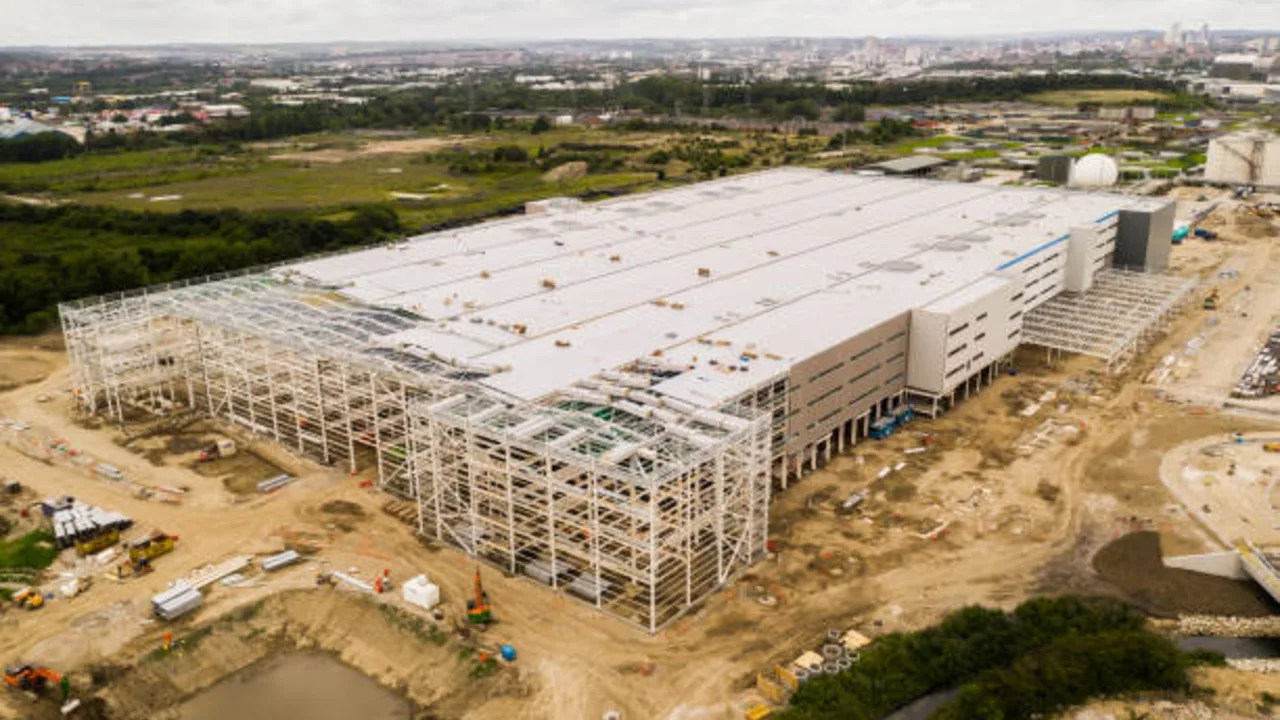
A practical example of handling warehouse uneven ground can be seen in a large steel warehouse project built on a former industrial site with irregular soil layers. The project required a storage facility covering more than 18,000 square meters, but the original terrain had elevation differences of over one meter across the building area.
During site investigation, engineers discovered that part of the land had been filled many years earlier, resulting in different soil densities. To solve this problem, a combination of soil replacement and pile foundation was used as the main foundation adjustment method. Weak soil zones were removed, and piles were installed in critical areas to ensure uniform support.
Because the building used a steel frame system, column base heights could be adjusted during installation. This allowed the structure to remain level even though the ground condition was not perfectly uniform. After completion, settlement monitoring showed that the building remained stable and maintained full load capacity.
This project demonstrates that warehouse uneven ground can be managed successfully with proper engineering design, correct foundation adjustment, and the flexibility of steel construction systems.
Long-Term Stability and Maintenance
Even after construction is complete, uneven ground conditions must be monitored. Over time, soil may change due to weather, moisture, or operational load. Proper maintenance ensures that warehouse uneven ground does not create future problems.
Regular inspection of the foundation helps detect early signs of settlement. Drainage systems should be kept clean to prevent water from weakening soil. Bolts and connections must also be checked to ensure that structural alignment remains correct.
With proper maintenance and periodic inspection, buildings constructed on uneven terrain can perform as reliably as those built on perfectly level sites.
Common Mistakes When Building Warehouse on Uneven Ground
Many problems occur because uneven ground is underestimated during the early stage of the project. One common mistake is skipping detailed soil testing. Without accurate data, foundation adjustment may be insufficient.
Another mistake is choosing the wrong foundation type. Using shallow foundation on weak soil can cause differential settlement. Poor compaction of filled ground is also a frequent cause of structural problems.
Incorrect drainage design can make the situation worse. Water accumulation softens soil and increases movement. Careful engineering planning is necessary to avoid these issues.
Why Professional Design Is Required for Warehouse Uneven Ground Projects
Projects involving warehouse uneven ground require experienced structural engineers. Proper calculation of load, soil strength, and foundation behavior is necessary to ensure safety. Professional planning of foundation adjustment reduces risk and prevents costly repair later.
Working with experienced designers also helps coordinate foundation, steel structure, and installation process. When all parts of the project are designed together, the warehouse can achieve full load capacity and long-term stability.
For reliable results, many developers prefer working with specialists in steel structure warehouse construction who understand how to manage uneven site conditions efficiently.
Conclusion
Uneven ground is a common challenge in warehouse construction, but it can be controlled with proper engineering. Careful site investigation, correct foundation adjustment, and accurate installation allow buildings to remain stable even on difficult terrain.
Steel structures provide flexibility that makes them ideal for projects with warehouse uneven ground conditions. When design, foundation, and construction are properly coordinated, the final building can achieve high safety, full load capacity, and long service life.