
Modern logistics operations are under constant pressure to store more inventory within the same footprint. Rising land costs, higher SKU counts, and faster fulfillment cycles have pushed warehouse owners to rethink how space is used — not just horizontally, but vertically. In this context, high density warehouse racking has become a critical strategy for improving storage efficiency without expanding building size.
However, high-density racking performance is not determined by the racking system alone. The warehouse building itself plays a decisive role. Structural layout, column spacing, floor performance, clear height, and load paths all influence how safely and efficiently a high-density racking system can operate. A poorly coordinated building design can limit rack height, reduce aisle efficiency, or introduce long-term structural risks.
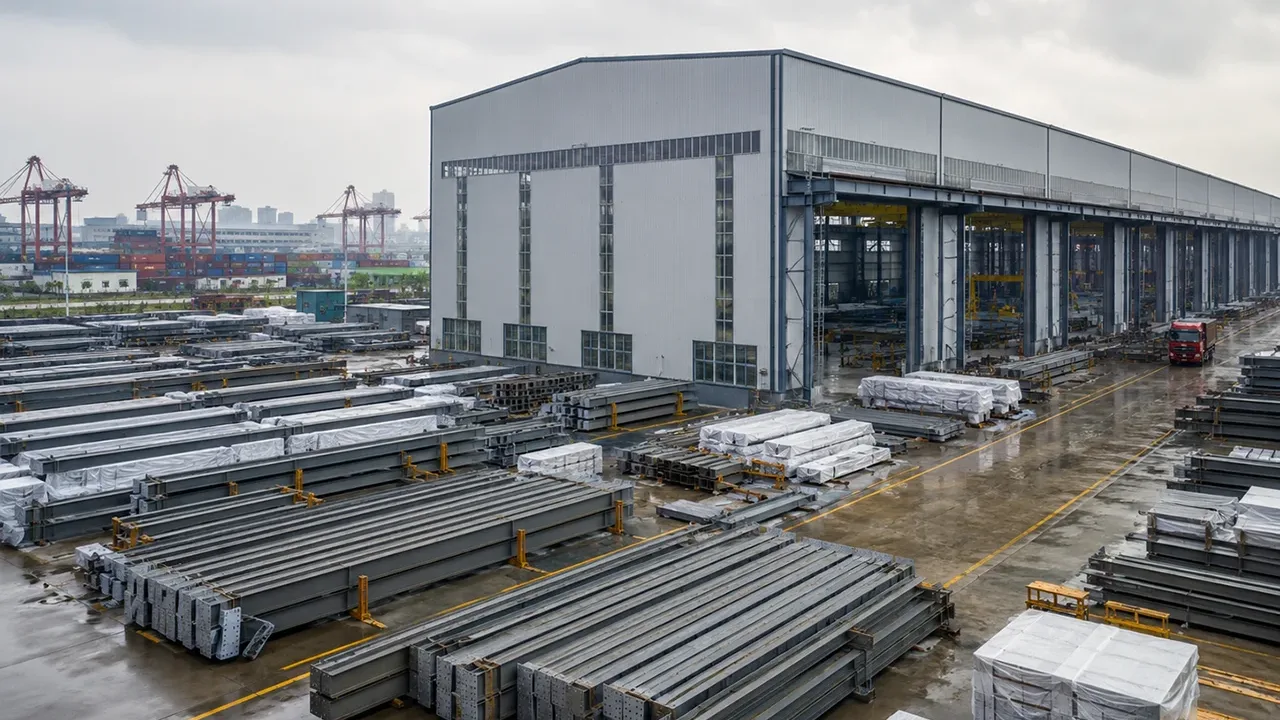
This is why steel warehouse design is increasingly favored for projects involving high density warehouse racking. Steel structures offer clear-span flexibility, predictable load behavior, and easier integration with racking, material handling equipment, and future automation. When planned correctly, a steel structure warehouse becomes an enabler of dense storage rather than a constraint.
What Is High Density Warehouse Racking?
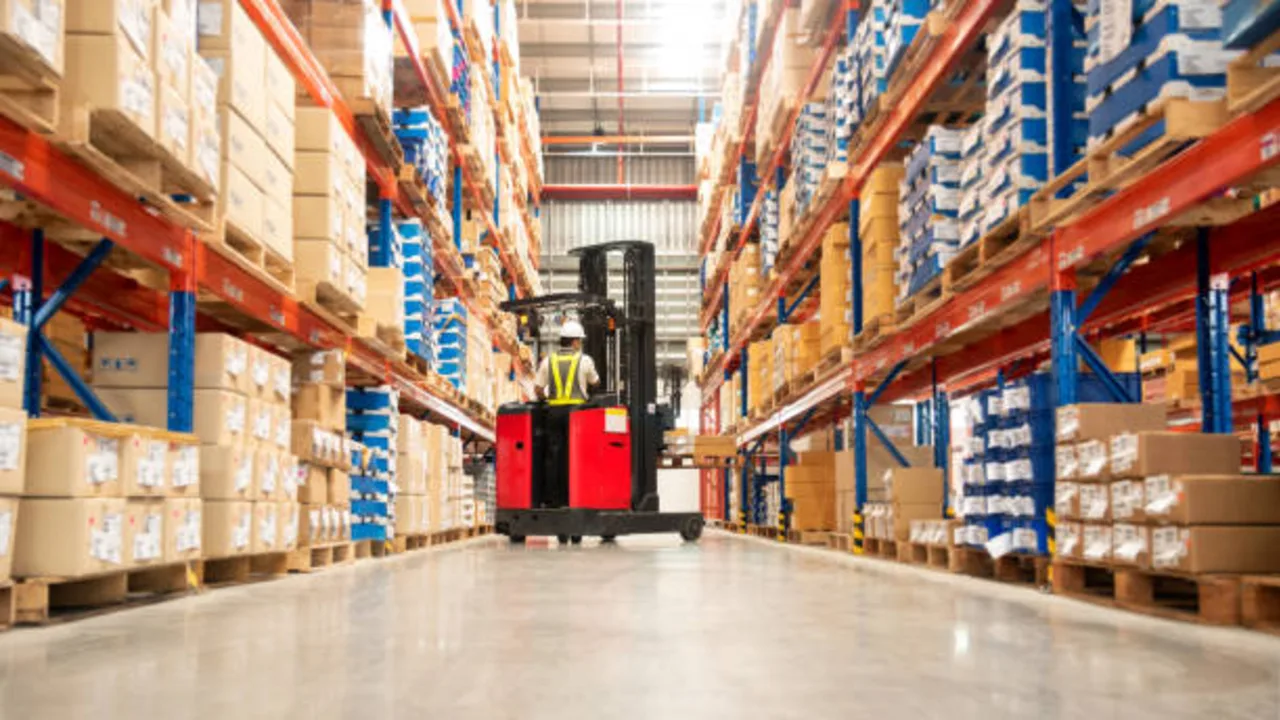
High density warehouse racking refers to storage systems designed to maximize pallet positions per square meter by reducing aisle space and increasing vertical storage height. Unlike conventional selective racking, which prioritizes easy access at the cost of space efficiency, high-density systems focus on compact layouts and optimized material flow.
These systems are widely used in environments where storage density directly impacts profitability. E-commerce fulfillment centers, third-party logistics (3PL) hubs, cold storage facilities, and manufacturing warehouses all rely on high-density racking to manage growing inventory volumes while keeping operating costs under control.
Common characteristics of high-density racking include taller rack structures, tighter aisle widths, and higher point loads transferred to the warehouse floor. As storage density increases, tolerances become tighter and structural coordination becomes more critical. This is where warehouse design decisions begin to influence operational performance.
Why Steel Warehouse Design Is Critical for High-Density Racking
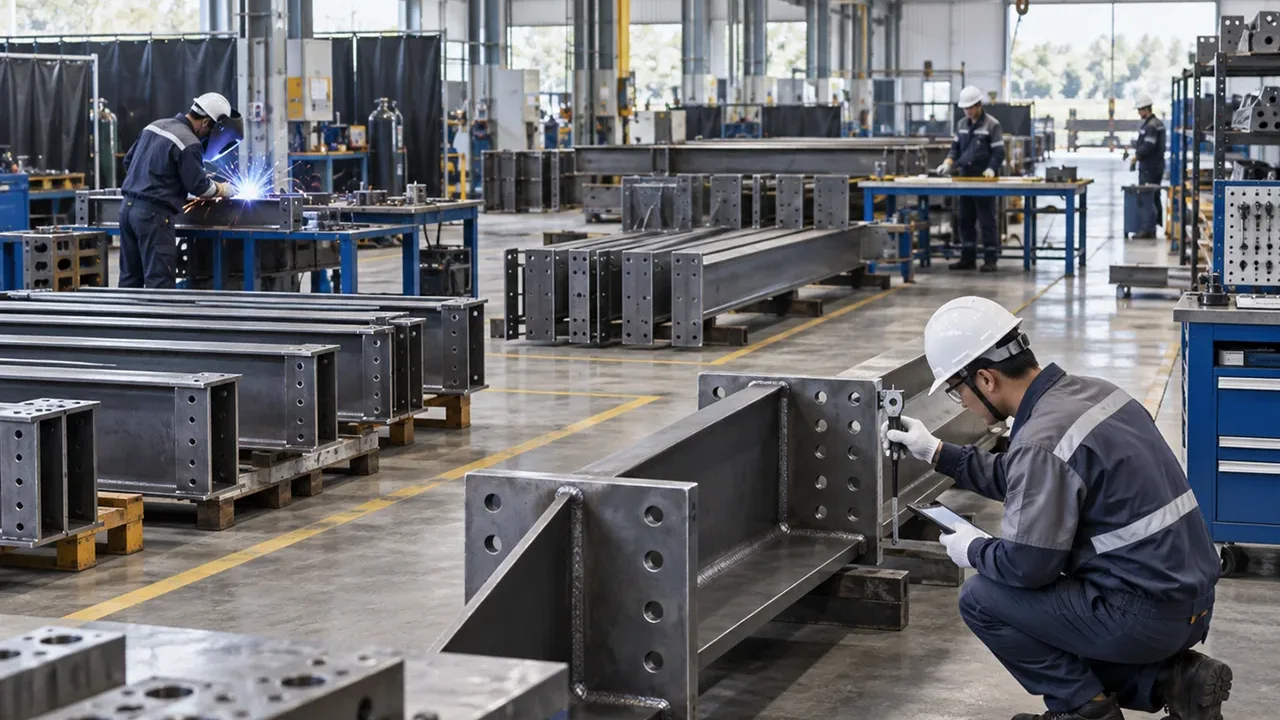
High-density racking places concentrated loads and strict geometric requirements on the building. The steel structure must work as part of a unified system that includes racking, flooring, and material handling equipment. A well-designed steel structure warehouse provides the flexibility needed to support these demands without compromising safety or efficiency.
Steel buildings allow engineers to design wider column grids and larger clear spans, reducing structural obstructions within the storage area. Fewer columns translate directly into better racking layouts, longer uninterrupted rack runs, and more efficient aisle planning. This structural freedom is difficult to achieve with rigid concrete layouts.
Another advantage of steel warehouse design is predictability. Steel frames behave consistently under load, which simplifies coordination with racking engineers. When rack loads, forklift paths, and structural loads are aligned early in the design stage, the result is a warehouse that performs reliably over its entire lifecycle.
Structural Load Considerations in High Density Warehouse Racking
Point Loads vs. Uniform Loads
Unlike bulk storage or light shelving, high density warehouse racking introduces heavy point loads at the rack base. These loads are transferred from pallets to rack uprights, then into the floor slab and foundation. The steel structure must be designed to accommodate this load path without excessive deflection or differential settlement.
While the warehouse roof may experience relatively uniform loads, the floor system beneath high-density racking experiences highly concentrated forces. Ignoring this distinction can lead to floor cracking, rack misalignment, and long-term maintenance issues.
Rack Height and Vertical Load Amplification
As rack height increases, vertical loads do not rise linearly. Taller racks amplify structural demands due to higher center of gravity, increased sway forces, and tighter tolerance requirements. In high-density configurations, rack heights often approach the maximum usable clear height of the building.
Steel warehouse structures are particularly well-suited for this condition. Their stiffness and adaptability allow designers to control deflection and provide the vertical clearance required for tall racking systems without excessive material usage.
Seismic and Dynamic Load Factors
In active warehouses, loads are not static. Forklift acceleration, braking, turning, and pallet placement all introduce dynamic forces into the racking system. In seismic regions, these forces are further amplified by horizontal ground movement.
For high density warehouse racking, the steel structure must be engineered with sufficient lateral stability to absorb and redistribute these dynamic loads. Proper bracing, frame stiffness, and connection detailing are essential to prevent progressive misalignment or rack instability over time.
Column Spacing and Clear Span Design
Column layout is one of the most influential design variables in high-density warehouse projects. Columns placed without consideration of racking geometry can reduce usable storage area, interrupt rack runs, and force inefficient aisle layouts.
Steel warehouse design allows for optimized column spacing that aligns with racking modules. By increasing clear spans and reducing internal columns, designers can create uninterrupted storage zones that support dense racking layouts and narrow aisle configurations.
This clear-span flexibility also provides long-term value. As storage strategies evolve or automation is introduced, the absence of fixed structural obstacles allows the warehouse to adapt without major structural modification.
Narrow Aisle Design and Its Impact on Warehouse Efficiency
One of the defining features of high density warehouse racking is the reduction of aisle width. By minimizing non-storage space, warehouses can significantly increase pallet positions within the same building envelope. This approach is commonly referred to as narrow aisle warehouse design.
While narrow aisle layouts dramatically improve storage density, they also impose stricter design tolerances on the warehouse structure. Aisle widths, rack alignment, and forklift guidance systems must all be precisely coordinated. Any deviation in floor flatness or structural alignment can directly impact operational safety and equipment performance.
What Is a Narrow Aisle System?
A narrow aisle system typically reduces aisle width to between 1.6 and 2.0 meters, compared to 3.0–3.5 meters in conventional selective racking layouts. This reduction allows more racking rows to be installed, increasing overall storage density without expanding the warehouse footprint.
However, narrow aisle systems require specialized handling equipment, such as very narrow aisle (VNA) forklifts or guided trucks. These systems place higher demands on floor quality, rack stability, and structural precision.
Structural Implications of Narrow Aisle Warehouses
In a narrow aisle warehouse, tolerances are tighter across the entire building system. Columns must be accurately positioned, floors must meet strict flatness standards, and the steel structure must limit deflection under load. Even minor misalignments can reduce equipment speed, increase collision risk, or cause long-term rack deformation.
This is where steel warehouse design provides a clear advantage. Steel structures allow precise fabrication and predictable erection tolerances, making them better suited for narrow aisle and high density warehouse racking applications.
Floor Design Requirements for High Density Warehouse Racking
The floor system is often the most overlooked element in high-density racking projects, yet it carries some of the highest risks. Racking loads are transferred directly into the slab, and any floor deficiency will be magnified as rack height increases.
For high density warehouse racking, floor design must address load capacity, flatness, joint placement, and long-term durability. A floor that performs well for conventional storage may be unsuitable for narrow aisle or very tall racking systems.
Key Floor Performance Criteria
| Floor Parameter | Design Consideration | Impact on Racking |
|---|---|---|
| Slab Thickness | Designed for concentrated point loads | Prevents cracking and differential settlement |
| Floor Flatness | FM2 / FM3 tolerance standards | Ensures stable forklift operation |
| Joint Layout | Minimized joints under racking rows | Reduces long-term rack movement |
| Surface Hardness | Wear-resistant finish | Improves durability under heavy traffic |
In high-density layouts, floor performance is inseparable from racking safety. A well-designed floor protects both the racking system and the steel structure above it.
Roof Height, Clear Height, and Vertical Storage Optimization
Vertical space utilization is a core objective of high density warehouse racking. The usable rack height is determined not only by the total building height, but by how effectively the roof structure is designed.
Steel warehouses allow optimized roof profiles and slimmer structural members, increasing usable clear height beneath the roof. This enables taller racking systems without increasing overall building height — a major cost advantage in regions with height restrictions or zoning limits.
Clear Height vs. Eave Height
| Height Term | Description | Design Impact |
|---|---|---|
| Eave Height | Total height to roof edge | Used for zoning and permitting |
| Clear Height | Usable vertical space inside | Determines maximum rack height |
| Obstructions | Lighting, sprinklers, HVAC | Reduces effective storage height |
Early coordination between steel structure, MEP systems, and racking layout ensures that vertical space is not unintentionally wasted.
Fire Protection and Safety Planning
Fire risk increases as storage density rises. In high density warehouse racking, closely spaced pallets and taller racks can accelerate fire spread if protection systems are not properly designed.
Fire protection strategies must be integrated into the warehouse design from the start, rather than added as an afterthought.
Common Fire Protection Approaches
| System Type | Application | Design Implication |
|---|---|---|
| Ceiling Sprinklers | Standard storage | Limited effectiveness for very tall racks |
| In-Rack Sprinklers | High density racking | Requires coordination with rack design |
| Steel Fireproofing | Structural protection | Improves fire resistance rating |
| Smoke Venting | Roof-level systems | Supports evacuation and damage control |
Because fire protection systems interact directly with both racking and roof structures, coordination between disciplines is essential to maintain compliance and operational efficiency.
Design Coordination: Racking, MEP, and Steel Structure
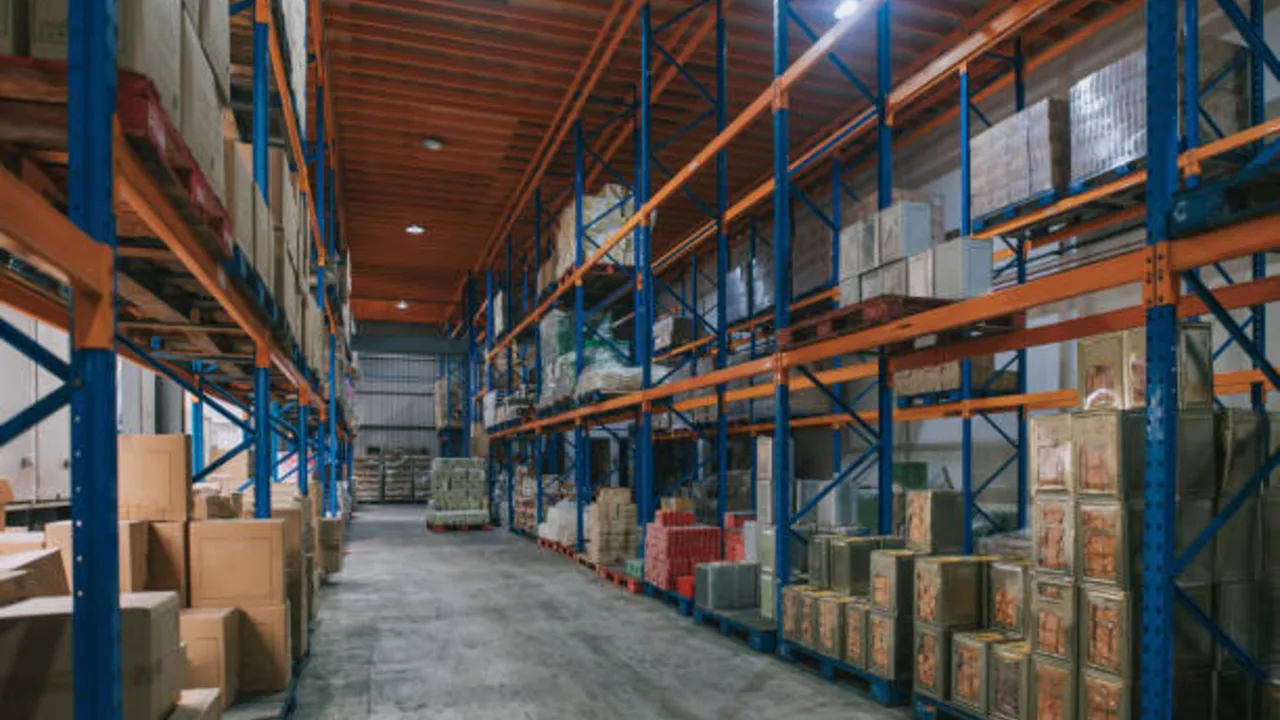
One of the most common mistakes in warehouse projects is treating racking as a post-design addition. In reality, high density warehouse racking must be considered from the earliest design stage.
Steel beams, sprinkler pipes, lighting fixtures, and cable trays all compete for the same overhead space. Without early coordination, clashes can reduce clear height, force costly redesigns, or limit future automation.
A coordinated design approach — often supported by BIM modeling — ensures that the steel structure warehouse supports racking, MEP systems, and material handling equipment as a single integrated system.
Cost Factors in High Density Warehouse Racking Projects
High-density storage often increases upfront capital expenditure, but reduces long-term operating costs. Understanding where costs originate helps decision-makers balance investment against performance.
Where the Budget Actually Goes
| Cost Component | Relative Impact | Notes |
|---|---|---|
| Steel Structure | Medium | Optimized spans reduce total material |
| Floor System | High | Critical for rack stability |
| Racking System | High | Driven by height and density |
| MEP & Fire Systems | Medium–High | More complex in dense layouts |
While high-density solutions require careful planning and coordination, they often deliver superior return on investment through improved storage efficiency and reduced footprint requirements.
Conclusion: Designing Steel Warehouses for Maximum Storage Efficiency
High density warehouse racking is not a standalone product — it is a system that relies on precise coordination between structure, floor, racking, and operations. Steel warehouse design provides the flexibility, strength, and predictability required to support these systems safely and efficiently.
When high-density racking is integrated into the warehouse design from the beginning, the result is a facility that maximizes storage capacity, supports future automation, and maintains long-term operational reliability.