Effective warehouse ventilation design is one of the most critical yet often underestimated components of modern industrial facilities. As warehouses grow larger, taller, and more structurally efficient, maintaining stable internal conditions becomes increasingly complex. Large steel warehouses in particular present unique airflow challenges due to their clear-span structures, high ceilings, expansive roof surfaces, and thermal conductivity of metal components.
In today’s logistics-driven economy, warehouses are not just storage boxes — they are dynamic operational hubs supporting manufacturing, distribution, cold chain management, and e-commerce. Poor warehouse ventilation design can lead to excessive heat buildup, humidity accumulation, condensation, worker discomfort, and even product damage. Proper airflow management is therefore not optional; it is a fundamental engineering requirement.
When designing ventilation systems for a modern warehouse steel structure, engineers must account for building height, volume, structural framing, roof slope, climate conditions, and operational heat loads. The relationship between building envelope performance and airflow behavior defines whether a warehouse operates efficiently or struggles with temperature imbalance and stagnant air zones.
Why Warehouse Ventilation Design Is Critical in Large Steel Structures
Large-scale steel warehouses differ significantly from conventional low-rise buildings. Their wide spans and minimal interior columns improve operational flexibility but complicate airflow distribution. As building size increases, so does the complexity of managing internal air movement and thermal gradients. A properly engineered warehouse ventilation design ensures consistent airflow, controlled humidity levels, and stable working conditions.
Temperature Control in High-Ceiling Warehouses
Steel warehouses frequently feature ceiling heights exceeding 10–15 meters. This vertical space contributes to heat stratification, where warm air rises and accumulates near the roof while cooler air remains below. Without strategic airflow management, this temperature layering creates discomfort at floor level and excessive heat buildup above.
Metal roofing further intensifies the issue. Steel panels absorb and transfer solar radiation quickly, raising interior temperatures during warm seasons. If warehouse ventilation design does not account for thermal gain, cooling systems become overloaded and energy costs rise significantly.
In colder climates, insufficient airflow can also result in condensation forming beneath roof panels, potentially damaging stored goods or causing corrosion in structural components.
Airflow Management in Wide-Span Buildings
Clear-span steel structures eliminate interior columns, allowing uninterrupted floor space. However, this structural advantage can lead to uneven airflow patterns. Inadequate vent placement may create stagnant zones where air circulation is weak, allowing dust, humidity, or heat to accumulate.
Balanced airflow requires careful positioning of intake and exhaust systems to ensure uniform air movement throughout the facility. Engineers must evaluate horizontal airflow paths, vertical pressure gradients, and mechanical assistance requirements to maintain consistent ventilation performance.
Worker Health, Safety, and Productivity
Beyond temperature control, warehouse ventilation design directly impacts indoor air quality (IAQ). Warehouses often generate dust, vehicle emissions, packaging fumes, and industrial by-products. Without adequate airflow, airborne contaminants can accumulate, creating respiratory risks and reducing worker productivity.
International safety standards and occupational health regulations increasingly require engineered ventilation strategies. Proper airflow improves comfort, reduces fatigue, and supports long-term operational sustainability.
Core Ventilation Challenges in Large Steel Warehouses
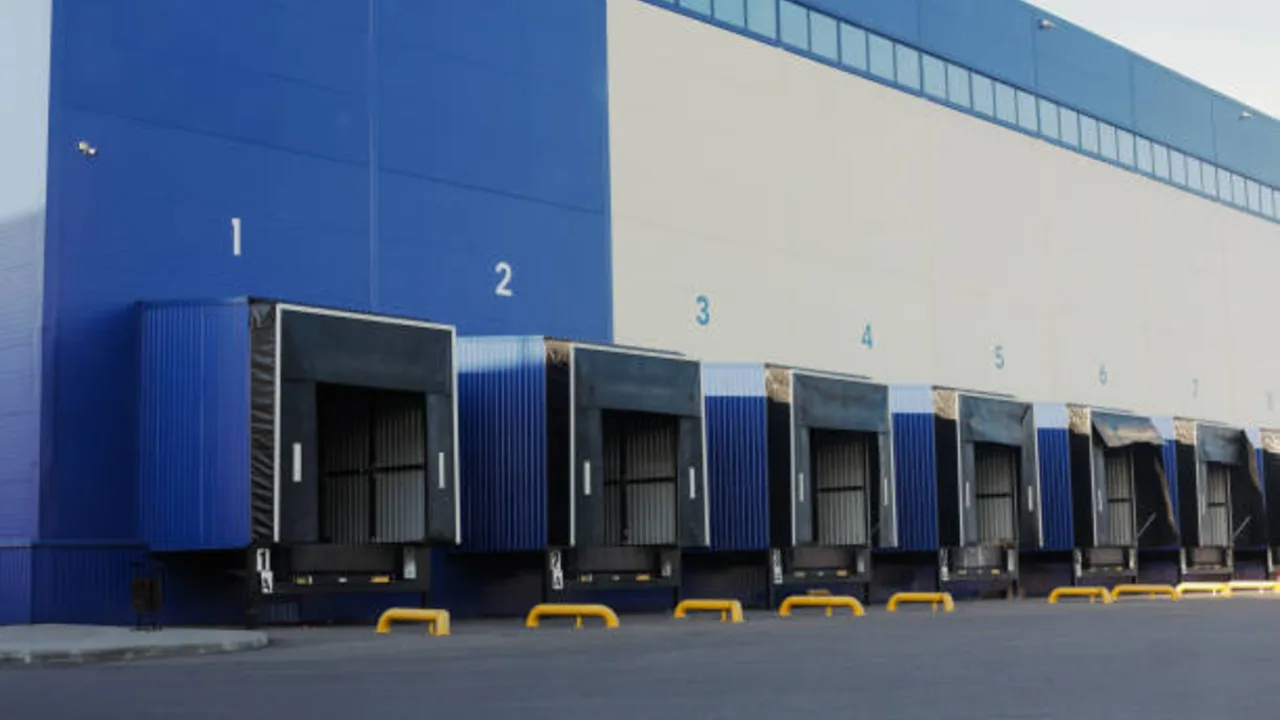
Designing ventilation for expansive steel buildings presents multiple engineering challenges. Unlike small commercial structures, large warehouses behave like enclosed climate systems. Their internal volume amplifies even minor airflow imbalances.
Stack Effect and Stratification
The stack effect occurs when warm air rises and escapes through high openings while cooler air enters from lower openings. In tall steel warehouses, this vertical airflow imbalance can become extreme. Without mechanical intervention, temperature differentials between floor and roof levels may exceed several degrees Celsius.
Effective warehouse ventilation design must control stratification using ridge vents, destratification fans, or hybrid systems to redistribute heat evenly.
Cross Ventilation Limitations
Cross ventilation relies on natural wind pressure to move air through wall openings. While cost-effective, it is unpredictable. Wind direction and speed fluctuate, making airflow inconsistent. Large warehouse footprints further reduce natural cross ventilation efficiency, especially when surrounding buildings block wind movement.
For this reason, relying solely on passive airflow is rarely sufficient for high-volume steel warehouses.
Mechanical Ventilation Constraints
Mechanical ventilation introduces additional complexity. Routing ductwork through steel trusses and purlin systems requires coordination between structural and mechanical engineers. Improper integration may interfere with structural load paths or maintenance access.
Energy consumption also becomes a concern. Oversized fans increase operating costs, while undersized systems fail to achieve required air change rates. A balanced warehouse ventilation design must optimize equipment capacity relative to building volume.
Humidity and Condensation Issues
Steel cladding is highly sensitive to condensation when internal and external temperatures differ. In humid climates, inadequate airflow can trap moisture, leading to dripping condensation beneath roof panels. This not only threatens stored inventory but also reduces the lifespan of structural components.
Controlling humidity through proper airflow distribution, insulation, and vapor barriers is a fundamental objective of warehouse ventilation engineering.
Types of Warehouse Ventilation Systems
Selecting the appropriate system is central to successful warehouse ventilation design. The scale of the warehouse, operational heat loads, and climate conditions all influence system selection.
Natural Ventilation Systems
Natural ventilation uses passive elements such as ridge vents, wall louvers, and roof openings to encourage airflow through pressure differences. It is energy-efficient and low-maintenance but limited by weather variability.
While suitable for mild climates, natural ventilation alone often cannot maintain stable conditions in very large steel warehouses.
Mechanical Ventilation Systems
Mechanical systems include exhaust fans, supply air units, and high-volume low-speed (HVLS) ceiling fans. These systems provide predictable airflow and controlled air exchange rates.
Well-engineered mechanical warehouse ventilation design ensures consistent airflow regardless of outdoor wind conditions, making it suitable for industrial environments with continuous heat loads.
Hybrid Ventilation Solutions
Hybrid systems combine passive and mechanical elements. For example, natural ridge vents may operate in conjunction with temperature-controlled exhaust fans. Sensors can monitor internal conditions and adjust airflow automatically.
This approach balances energy efficiency with performance reliability, particularly in large steel warehouse facilities.
Designing Warehouse Ventilation for Different Climates
Climate conditions significantly influence warehouse ventilation design. A ventilation strategy that works efficiently in a temperate region may fail completely in tropical, desert, or cold environments. Engineers must evaluate humidity levels, solar radiation intensity, seasonal temperature variation, and prevailing wind patterns before determining airflow requirements.
Tropical and High-Humidity Regions
Warehouses located in tropical climates face persistent humidity challenges. Warm air combined with high moisture levels increases condensation risks inside steel buildings. Without sufficient airflow, moisture accumulates beneath roofing systems and on structural members.
In such environments, warehouse ventilation design should prioritize continuous airflow movement, high-capacity exhaust systems, and moisture control measures. Accelerated air exchange rates reduce internal humidity and protect stored goods from mold and corrosion.
Cold Climate Warehouses
In cold regions, the objective shifts from cooling to temperature retention and condensation prevention. Warm indoor air meeting cold exterior steel panels often results in surface condensation. Controlled airflow combined with insulation and vapor barriers becomes critical.
Effective airflow strategies in cold climates must balance fresh air intake with heat conservation to avoid excessive energy consumption.
Desert and Hot-Arid Zones
Desert warehouses face extreme solar gain and rapid heat accumulation. Roof ventilation becomes particularly important. Ridge vents, powered exhaust systems, and reflective roofing materials all support improved airflow efficiency.
A well-engineered warehouse ventilation design reduces internal heat buildup and lowers reliance on mechanical cooling systems.
Engineering Considerations in Warehouse Ventilation Design
Engineering analysis ensures airflow performance meets operational demands. Large steel warehouses require data-driven modeling rather than rule-of-thumb calculations.
Airflow Calculation and CFD Modeling
Computational Fluid Dynamics (CFD) modeling allows engineers to simulate airflow behavior inside high-volume warehouse spaces. By analyzing velocity distribution, turbulence zones, and air change rates per hour (ACH), designers can optimize vent placement and fan capacity.
Accurate modeling is essential for large-scale warehouse ventilation design, where minor imbalances may create significant temperature disparities.
Vent Placement Strategy
Strategic placement of intake and exhaust vents determines overall airflow efficiency. Roof-level exhaust vents remove accumulated hot air, while low-level wall openings introduce cooler replacement air. Balanced distribution prevents pressure imbalance and short-circuit airflow paths.
Improper placement can cause localized stagnation zones or excessive energy waste.
Integration with Structural Framework
Ventilation components must integrate seamlessly with steel trusses, purlins, and roof framing systems. Engineers must coordinate duct routing and equipment mounting without compromising structural performance.
Modern warehouse ventilation design requires collaboration between structural, mechanical, and architectural teams from early planning stages.
Energy Efficiency and Sustainability in Warehouse Ventilation Design
Energy consumption represents a major operational cost in industrial facilities. Optimizing airflow efficiency can significantly reduce long-term energy expenditure.
Reducing Energy Consumption
Demand-controlled ventilation systems adjust airflow output based on real-time temperature or humidity readings. This prevents unnecessary fan operation and reduces electricity usage.
Efficient warehouse ventilation design focuses on performance optimization rather than maximum equipment capacity.
Solar-Assisted Ventilation Systems
Solar-powered exhaust fans provide supplemental airflow while lowering grid dependence. These systems are particularly useful in sun-intensive regions where peak heat coincides with maximum solar generation.
ESG and Green Building Standards
Environmental, Social, and Governance (ESG) standards increasingly influence industrial construction decisions. Ventilation systems contribute to LEED credits and sustainability certifications.
Advanced airflow management supports carbon reduction goals and enhances environmental performance ratings.
Cost Factors in Warehouse Ventilation Design
Cost evaluation must consider both installation expenses and long-term operational efficiency. The scale of the building, system type, and complexity of integration all influence final investment levels.
Installation Costs
Installation expenses include ventilation equipment, ductwork, structural modifications, and electrical integration. Mechanical systems typically require higher upfront investment compared to natural ventilation.
Operational and Maintenance Costs
Energy usage, maintenance intervals, and replacement cycles determine long-term financial performance. Efficient airflow systems reduce lifecycle costs.
Cost Comparison Table
| System Type | Initial Cost | Energy Consumption | Maintenance Level | Best Application |
|---|---|---|---|---|
| Natural Ventilation | Low | Very Low | Low | Mild climates, low heat loads |
| Mechanical Ventilation | Medium–High | Medium–High | Medium | Industrial heavy-use warehouses |
| Hybrid Ventilation | Medium | Optimized | Medium | Large steel warehouses |
Common Mistakes in Warehouse Ventilation Design
- Undersized airflow calculations
- Poor intake and exhaust placement
- Ignoring vertical heat stratification
- Over-reliance on passive airflow in large buildings
Avoiding these mistakes ensures long-term ventilation efficiency and structural protection.
Best Practices for Optimizing Airflow in Steel Warehouses
Optimized airflow begins during early design phases. Engineers should integrate ventilation planning with structural modeling rather than treating it as an afterthought.
- Perform CFD simulations before construction
- Coordinate mechanical and structural design teams
- Install monitoring sensors for performance tracking
- Allow scalability for future expansion
Case Example: Ventilation Optimization in a 20,000 m² Steel Warehouse
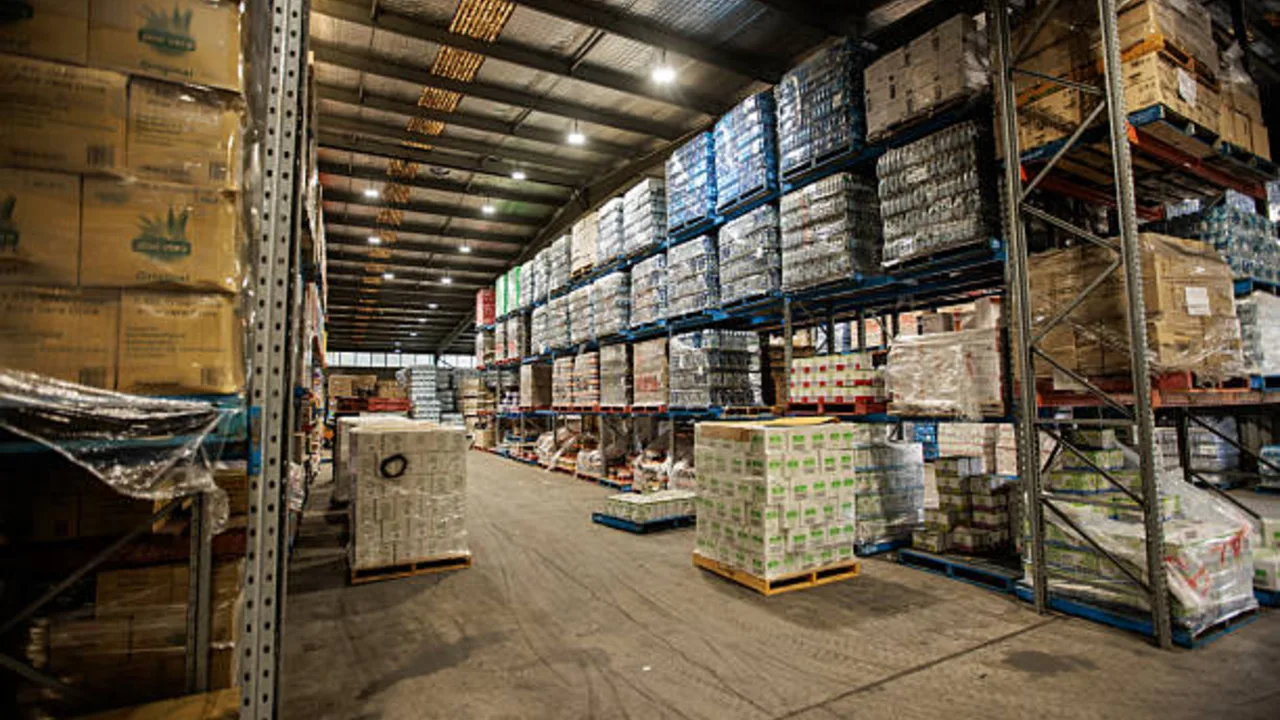
A 20,000 m² distribution center experienced severe overheating during summer months due to insufficient airflow distribution. Temperature differences between floor and ceiling exceeded 8°C.
Engineers implemented a hybrid warehouse ventilation design strategy combining ridge ventilation, high-capacity exhaust fans, and HVLS destratification fans. After optimization, internal temperature dropped by 6–8°C and airflow uniformity improved significantly.
Energy consumption decreased due to reduced reliance on air conditioning systems.
FAQ About Warehouse Ventilation Design
1. What is the ideal airflow rate in a large warehouse?
Air change rates vary by use case, but typically range between 4–8 ACH depending on operational heat load.
2. How does warehouse height affect ventilation design?
Higher ceilings increase stratification risk and require stronger airflow redistribution systems.
3. Can natural ventilation work in very large steel warehouses?
Natural systems may assist airflow, but rarely suffice as a standalone solution in high-volume facilities.
4. What is the most cost-effective ventilation system?
Hybrid systems often provide the best balance between cost and performance.
5. Why is airflow modeling important?
Modeling ensures that airflow distribution remains balanced and eliminates stagnant zones.
Conclusion
Large industrial buildings demand engineered solutions to manage temperature, humidity, and indoor air quality. Effective warehouse ventilation design ensures consistent airflow performance, structural protection, and operational efficiency.
When integrated early into a modern warehouse steel structure project, ventilation systems enhance long-term sustainability and reduce energy consumption. As warehouses continue to scale in size and complexity, data-driven airflow engineering will remain a central component of industrial building performance.