In modern structural engineering, connection design is one of the most decisive elements in overall building performance. While beams, columns, and bracing members form the visible skeleton of a structure, it is the connections that determine how forces truly flow through the system. The debate surrounding bolted vs welded steel building systems is not simply about preference — it is about structural reliability, construction efficiency, cost control, and long-term durability.
In any steel structure, connections must safely transfer axial forces, shear, bending moments, and sometimes torsional effects. The way these forces are transferred directly influences joint performance, which in turn affects global stability and structural resilience. Choosing between bolted and welded systems is therefore a strategic engineering decision rather than a purely practical one.
Understanding the differences between bolted vs welded steel building connections allows engineers, contractors, and project owners to align structural design with project goals, whether those goals prioritize speed of erection, aesthetic finish, seismic resistance, or lifecycle maintenance efficiency.
The Structural Role of Connections in Steel Buildings
Connections are the points where structural members interact. They determine whether a steel frame behaves as a rigid moment-resisting system, a braced frame, or a pinned structure. Regardless of system type, the connection governs how loads are distributed and how structural elements respond under stress.
Load Transfer Mechanisms
In a steel building, loads originate from gravity forces, wind pressure, seismic motion, equipment vibration, and occupancy use. These loads move from floor systems into beams, from beams into columns, and finally into the foundation. At every stage, connection detailing ensures that forces are transmitted safely.
If connections are improperly designed, even a well-sized beam or column may fail to perform as intended. The evaluation of joint performance must therefore consider both strength and stiffness. Connections must resist shear forces without slip, tension forces without fracture, and bending moments without excessive rotation.
Connection Behavior and Global Stability
The behavior of a connection determines whether it acts as rigid, semi-rigid, or pinned. In moment-resisting frames, welded joints are often selected to create continuity. In braced frames, bolted connections frequently provide efficient shear transfer while allowing controlled rotation.
The structural implications of bolted vs welded steel building systems extend beyond the local joint. They influence vibration response, lateral drift control, and redundancy under extreme events. Engineers evaluate connection behavior carefully to ensure predictable structural response under both service and ultimate load conditions.
Overview of Bolted Connections in Steel Buildings

Bolted connections are widely used in structural steel construction due to their practicality and installation efficiency. They involve mechanical fastening using high-strength bolts to clamp steel members together.
Types of Bolted Connections
There are two primary categories of structural bolted connections: bearing-type and slip-critical connections. Bearing-type connections transfer load through bolt shear and bearing against the connected plates. Slip-critical connections rely on friction between clamped surfaces to resist movement.
High-strength structural bolts commonly conform to standards such as those published by the American Institute of Steel Construction. These bolts are engineered to provide reliable tensile and shear resistance in demanding environments.
Installation and Field Efficiency
One of the strongest advantages of bolted systems in the bolted vs welded steel building discussion is field adaptability. Bolted connections can be assembled rapidly on-site using calibrated torque tools. Minor alignment adjustments are easier to accommodate compared to field welding.
For large-scale industrial or commercial projects, especially in remote regions, bolted systems reduce dependency on highly specialized welding labor. This improves schedule predictability and reduces weather-related construction risks.
Structural Characteristics of Bolted Joints
Bolted joints provide strong shear resistance and reliable tensile performance when properly tightened. They also offer ductility, allowing slight deformation before failure, which can enhance overall joint performance under dynamic loading.
In seismic applications, bolted connections may allow controlled slip or redistribution of forces, depending on design strategy. This controlled behavior can prevent sudden brittle failure and improve system resilience.
Advantages of Bolted Steel Building Connections
- Rapid site assembly
- Reduced field welding requirements
- Ease of inspection through torque verification
- Greater flexibility for future disassembly or modification
- Consistent performance in modular construction
Because of these characteristics, bolted systems are commonly used in industrial steel structure building projects where speed and scalability are critical.
Limitations of Bolted Systems
Despite their advantages, bolted connections are not without limitations. Slip may occur in bearing-type connections before full engagement. In corrosive environments, exposed bolts may require additional protective treatment. Aesthetically, bolt heads and plates may also be less visually streamlined compared to welded seams.
Overview of Welded Connections in Steel Buildings
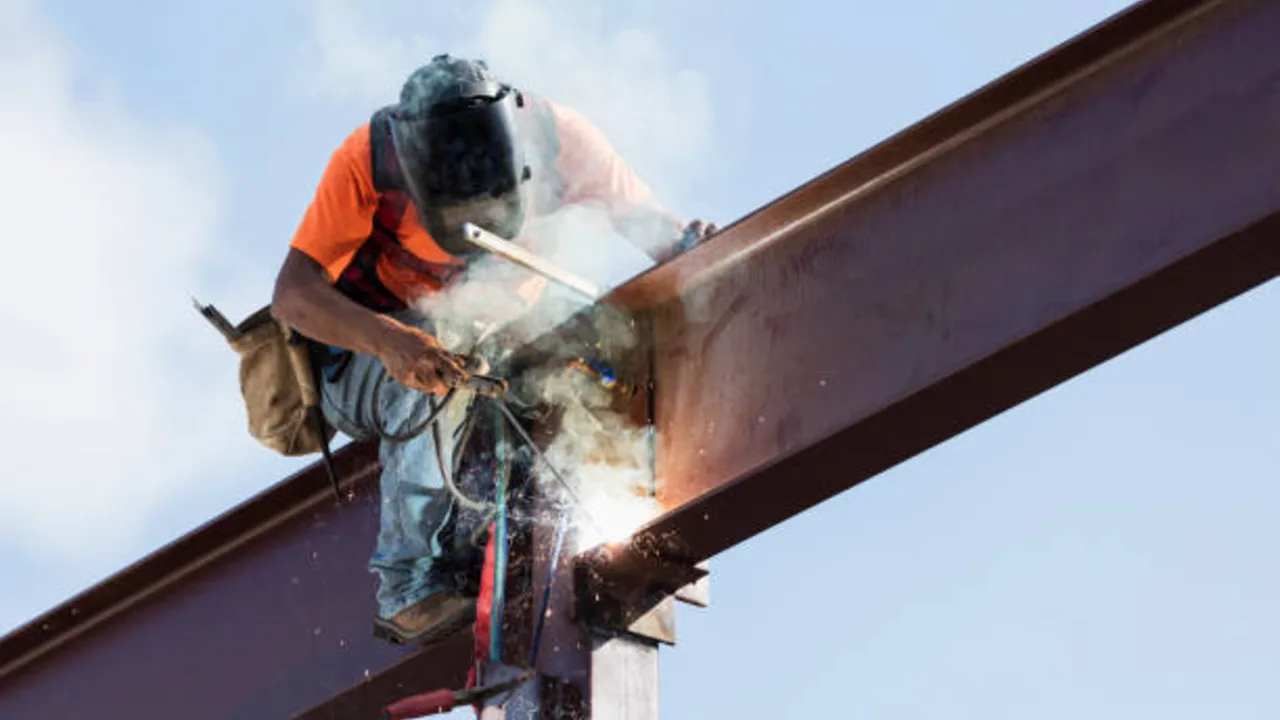
Welded connections create structural continuity by fusing steel components together through controlled heat and filler material. Unlike bolted systems, welded joints do not rely on mechanical fastening; instead, they form a metallurgical bond between members.
Types of Welded Joints
Common welded joints include fillet welds, groove welds, and full-penetration welds. Each type serves different structural purposes depending on load direction and required rigidity.
Full-penetration welds are often used in moment connections where maximum rotational stiffness is required. Fillet welds, meanwhile, are widely applied in secondary connections and stiffener attachments.
Fabrication and Structural Behavior
Welded connections are frequently completed in fabrication shops under controlled conditions to ensure precision. In some cases, field welding is required, though it demands strict quality control and environmental protection.
From a structural perspective, welded joints offer excellent stiffness and eliminate the potential slip associated with bolted systems. This characteristic often enhances joint performance in high-moment or heavily loaded applications.
The comparison of bolted vs welded steel building systems becomes particularly significant when moment resistance and visual continuity are primary design objectives. Welded joints create smooth load paths that may improve rigidity and vibration resistance.
Bolted vs Welded Steel Building: Engineering Comparison
When evaluating a bolted vs welded steel building approach, engineers focus on structural behavior, constructability, and long-term reliability. While both systems can achieve required strength levels, their mechanical characteristics differ in meaningful ways. The decision is rarely absolute; instead, it depends on project-specific structural demands and expected joint performance.
Strength and Capacity Considerations
From a pure strength perspective, both bolted and welded connections can be designed to meet demanding load requirements. Welded joints provide continuous force transfer, often resulting in higher initial stiffness. Full-penetration groove welds, for example, can create moment connections that behave almost as monolithic elements.
Bolted connections, on the other hand, distribute forces through multiple fasteners. High-strength bolts in slip-critical configurations can achieve significant shear and tensile resistance. In many industrial applications, the ultimate capacity difference between bolted vs welded steel building connections is negligible when properly engineered.
Serviceability, however, introduces subtle differences. Bolted systems may experience minor slip in bearing-type joints before full load engagement, while welded systems eliminate that movement entirely. Engineers must determine whether slight initial movement affects the intended joint performance for the structure.
Behavior Under Cyclic and Dynamic Loading
In seismic regions or facilities with heavy vibrating equipment, connection behavior under repeated loading becomes critical. Welded joints, particularly if improperly detailed, can be susceptible to brittle fracture under cyclic stress. Modern welding procedures and detailing standards have significantly reduced this risk, but quality control remains essential.
Bolted connections often demonstrate beneficial ductility under cyclic conditions. Slight deformation around bolt holes may allow redistribution of forces, enhancing overall joint performance during extreme events. For this reason, some seismic design philosophies favor bolted energy-dissipating connections.
Failure Modes and Redundancy
The failure mechanism of a connection influences structural resilience. In a bolted system, failure typically occurs through bolt shear, bolt tension rupture, or bearing failure of connected plates. Because force is shared across multiple fasteners, redundancy can improve reliability.
In welded systems, failure may occur through weld fracture or heat-affected zone cracking. Although properly designed welds are highly reliable, inspection complexity increases the importance of fabrication quality. In the bolted vs welded steel building comparison, redundancy and inspectability often favor bolted assemblies in large-scale projects.
Cost and Construction Efficiency Analysis
Cost considerations in the bolted vs welded steel building discussion extend beyond material price. Fabrication labor, equipment requirements, erection speed, and inspection procedures all contribute to total project expenditure.
Fabrication Cost Differences
Shop welding can be efficient when performed in controlled factory environments with automated systems. However, field welding typically increases labor costs and requires additional quality assurance measures.
Bolted systems require drilling or punching bolt holes and purchasing high-strength fasteners. While bolt material adds cost, reduced on-site welding can offset labor expenses. In large industrial steel structure building projects, the overall cost balance often favors bolted primary framing combined with selective welded reinforcement.
Erection Speed and Site Conditions
Construction schedule is a decisive factor in connection selection. Bolted connections enable rapid assembly, particularly in adverse weather conditions. Components can be aligned and tightened quickly without waiting for weld cooling or inspection delays.
Welded systems may require protective measures against moisture, wind, or temperature fluctuations during installation. These additional requirements can affect construction timelines and influence the overall bolted vs welded steel building decision.
Inspection, Quality Control, and Maintenance
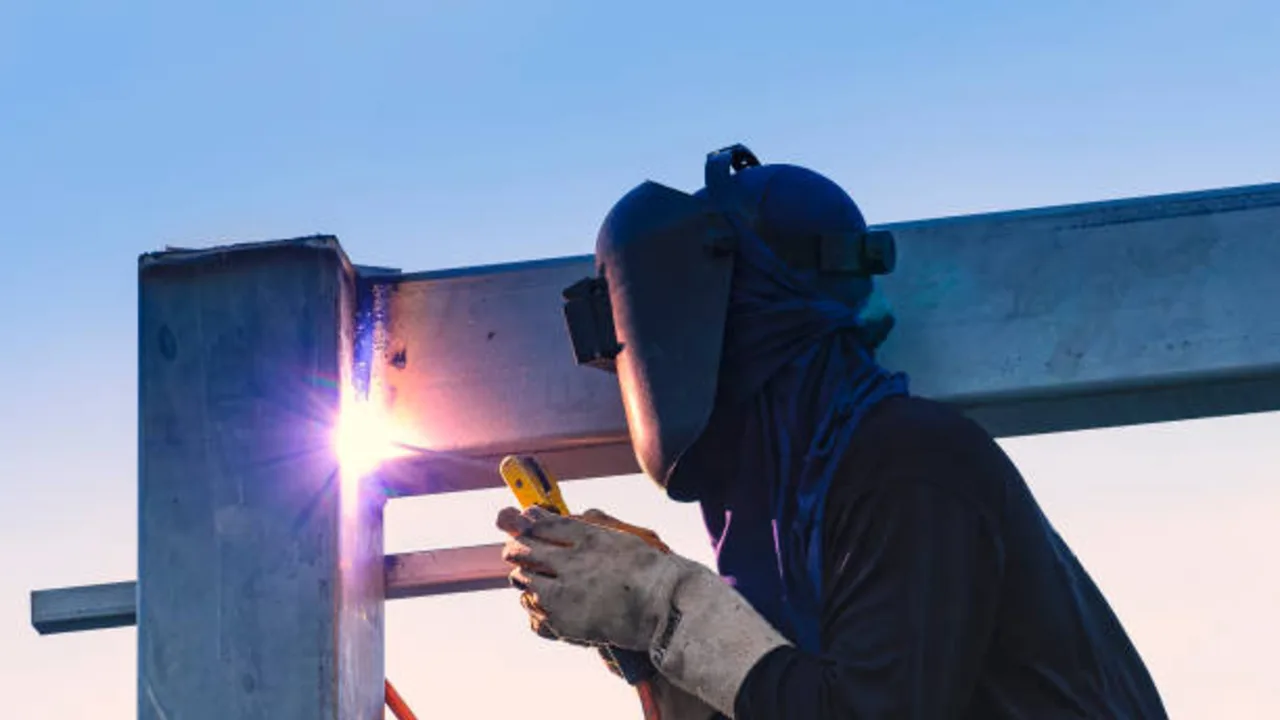
Inspection procedures differ significantly between bolted and welded connections. Each system requires its own quality assurance approach to guarantee long-term joint performance.
Bolted Connection Inspection
Bolt tension can be verified using calibrated torque methods, tension-indicating devices, or direct tension indicators. Visual inspection of bolt alignment and plate fit-up is relatively straightforward.
Maintenance considerations are also practical. If future modifications are required, bolted connections allow disassembly without destructive cutting, offering flexibility in building expansion or retrofitting.
Welded Connection Inspection
Welded joints may require ultrasonic testing, magnetic particle inspection, or radiographic examination depending on structural criticality. These methods ensure internal weld integrity but increase inspection complexity.
Long-term maintenance must consider corrosion protection and potential fatigue cracking. Proper coating systems and periodic evaluation preserve structural integrity over decades of service.
Real Case Scenario: Hybrid Connection Strategy in an Industrial Facility
A recent heavy manufacturing facility project illustrates the strategic combination of both systems. The primary portal frames utilized bolted beam-to-column connections to accelerate erection and simplify site assembly. Meanwhile, welded stiffeners and moment plates were integrated in high-load zones to enhance joint performance under crane operation.
This hybrid approach optimized the bolted vs welded steel building balance. Bolted joints reduced installation time by nearly 18% compared to a fully welded alternative. Welded reinforcements ensured rigidity in critical load-transfer points without increasing the overall fabrication complexity.
Post-construction performance monitoring confirmed stable alignment and minimal connection-related maintenance requirements. The project demonstrated that strategic integration, rather than strict preference, often produces the most efficient structural outcome.
Bolted vs Welded Strategy in a 32,000 m² Logistics Steel Building
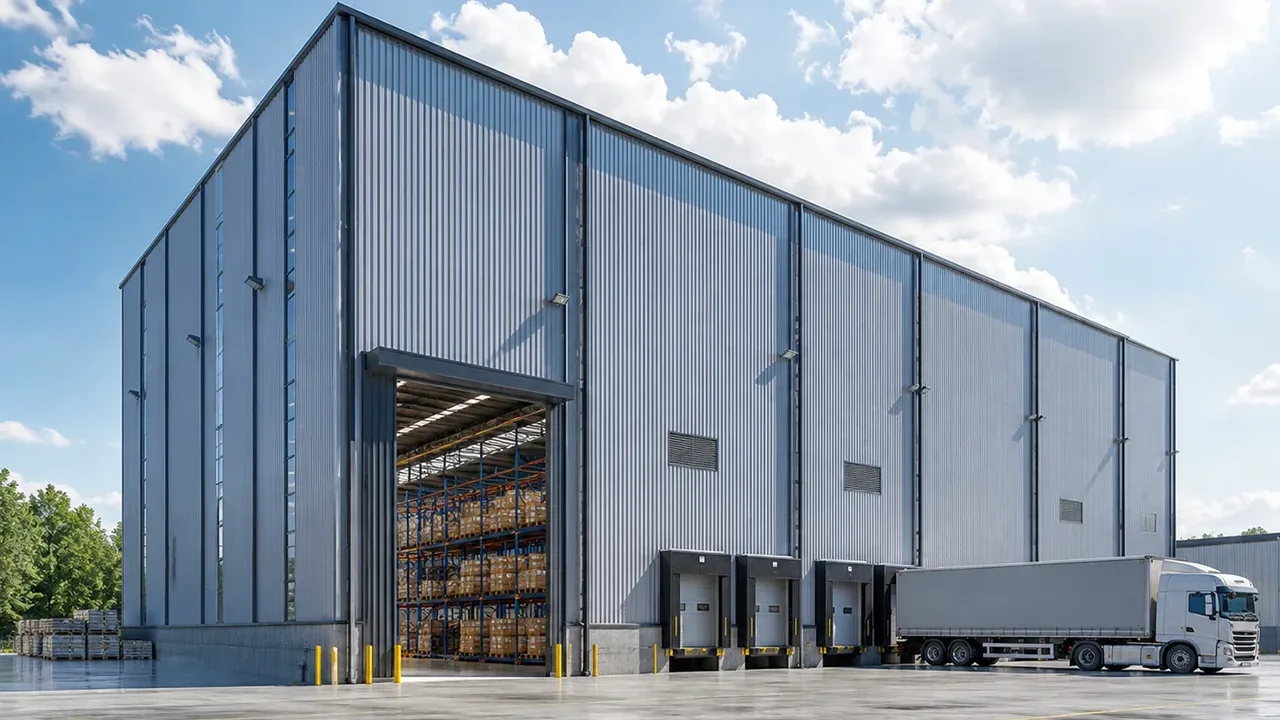
A clear example of strategic decision-making in a bolted vs welded steel building scenario can be seen in a 32,000 m² logistics distribution center constructed in Southeast Asia. The project required long-span portal frames, high clear height, and integrated overhead material handling systems. From the early design phase, connection strategy was identified as a critical factor influencing schedule, cost, and long-term joint performance.
The building incorporated 42-meter clear spans with roof trusses supporting mechanical systems and solar panel loads. Structural analysis indicated that primary frame connections would experience significant bending moments and lateral forces during typhoon-level wind events. Engineers initially considered fully welded moment connections to maximize rigidity. However, erection timeline constraints and regional labor availability influenced the final design direction.
After structural simulations and cost evaluation, the engineering team adopted a hybrid approach. Main beam-to-column connections were designed as high-strength bolted end-plate assemblies, allowing rapid alignment and field installation. Slip-critical bolt configurations ensured that joint performance under lateral loading remained within serviceability limits.
In contrast, welded reinforcement plates were introduced at critical roof truss nodes where fatigue resistance and stiffness were essential due to dynamic loading from suspended conveyor systems. These welds were completed in the fabrication workshop under controlled conditions, minimizing site welding exposure.
During erection, the bolted system reduced installation time by approximately 20% compared to the projected fully welded alternative. Inspection efficiency also improved, as torque verification was completed immediately after assembly. No significant alignment corrections were required, demonstrating predictable joint performance during construction.
Two years after commissioning, performance monitoring indicated no bolt slippage, no weld cracking, and stable frame alignment. The project validated that the bolted vs welded steel building decision is not about choosing one exclusively, but about assigning each connection type according to structural demand and construction practicality.
This case highlights an important engineering principle: connection selection must align with structural behavior, environmental exposure, and lifecycle expectations. When evaluated holistically, bolted and welded systems can complement each other to deliver optimized performance in modern steel buildings.
Choosing the Right Connection for Your Steel Structure Building
There is no universal answer in the bolted vs welded steel building debate. The correct solution depends on structural demands, environmental conditions, project scale, and long-term operational requirements.
Bolted systems are generally preferable when speed, adaptability, and ease of inspection are priorities. Welded systems may be advantageous when rigidity, seamless load transfer, or architectural appearance is critical.
In many cases, the most effective design philosophy combines both methods. Experienced engineers evaluate anticipated loads, seismic conditions, and lifecycle objectives to select connection strategies that optimize joint performance while maintaining construction efficiency.
Conclusion
Connections define how a steel building performs under real-world conditions. The comparison of bolted vs welded steel building systems reveals differences in stiffness, constructability, inspection complexity, and maintenance flexibility. Both systems can achieve high structural capacity when properly designed and executed.
Ultimately, the decision must align with engineering analysis and project goals. By carefully evaluating structural behavior and expected joint performance, designers can deliver safe, efficient, and durable steel buildings capable of long-term reliability in diverse applications.