Designed for High-Speed Fulfillment Operations
Large Open Picking and Packing Areas
Efficient order fulfillment requires uninterrupted internal movement between storage, picking, sorting, and packing zones. An e-commerce warehouse steel structure allows large open floor areas with fewer internal columns, improving workflow efficiency.
This layout supports faster employee movement, optimized conveyor routing, and improved warehouse organization.
High-Clearance Storage Systems
E-commerce warehouses frequently use vertical storage systems to maximize inventory capacity. Steel structures support:
- High-bay racking systems
- Automated storage equipment
- Multi-level inventory layouts
- Vertical material handling systems
Higher internal clearance also improves warehouse scalability as operational volume increases.
Loading Dock Integration
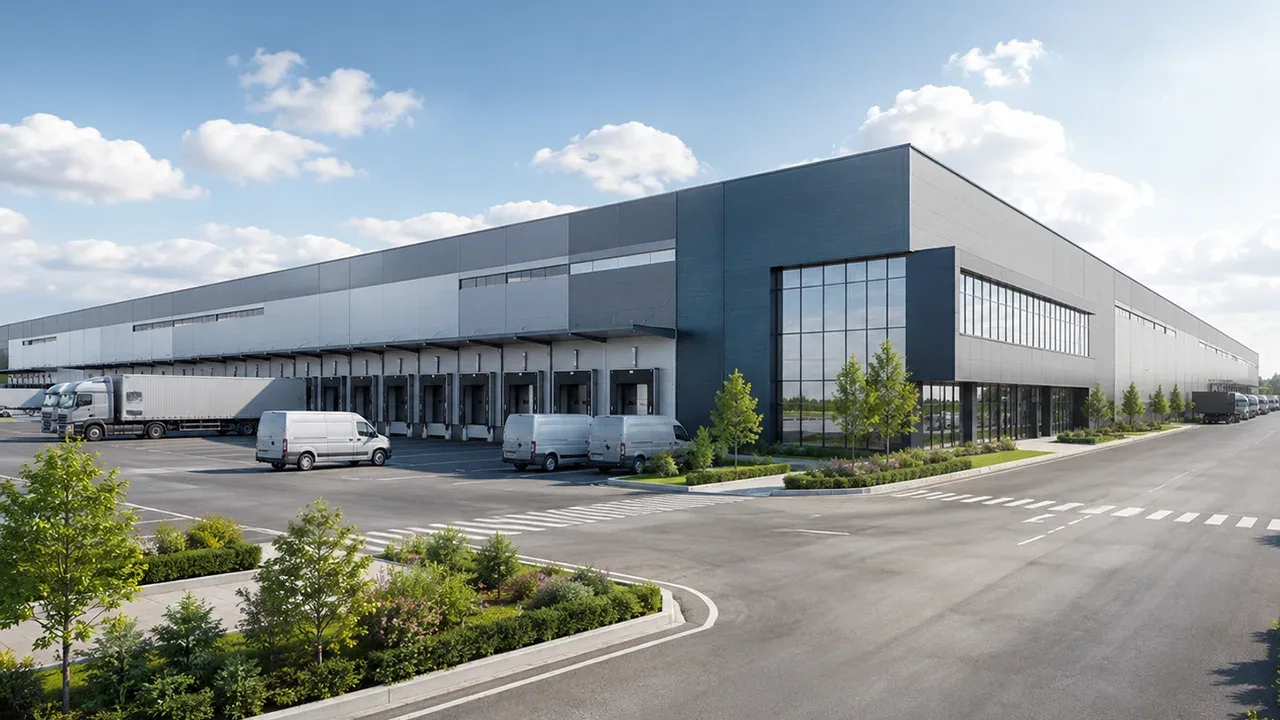
Loading efficiency directly affects delivery speed and transportation coordination. Steel warehouse systems can integrate multiple loading docks, truck circulation routes, and shipment staging areas into a single operational layout.
This improves logistics flow while reducing loading delays.
Typical E-commerce Warehouse Applications
Regional Fulfillment Centers
Large regional fulfillment hubs process high order volumes across broad geographic areas. These facilities require flexible layouts capable of supporting continuous warehouse activity.
Steel structures provide the span capacity and operational flexibility necessary for large-scale fulfillment environments.
Last-Mile Distribution Warehouses
Last-mile facilities are designed to accelerate local deliveries within urban areas. Fast truck access, optimized loading zones, and efficient inventory organization are critical operational factors.
Steel warehouse systems allow compact yet highly functional logistics layouts.
Cross-Border E-commerce Logistics Hubs
International e-commerce operations require centralized logistics facilities that support customs handling, inventory processing, and high-volume shipping coordination.
An e-commerce warehouse steel structure can support integrated logistics workflows while allowing future expansion for increasing international demand.
Automated Smart Warehouses
Many modern e-commerce facilities integrate automation technologies such as robotic sorting systems, automated conveyors, and warehouse management systems.
Steel framing systems provide structural flexibility for supporting automation infrastructure and future equipment upgrades.
Structural Features That Improve Warehouse Efficiency
Long-Span Steel Framing
Long-span structures minimize interior obstructions and improve operational flexibility inside the warehouse.
This creates more usable floor space for logistics operations.
Flexible Expansion Design
E-commerce businesses often scale rapidly. Steel warehouse systems can be expanded in phases without major structural disruption.
This allows warehouse owners to align facility growth with operational demand.
Mezzanine and Multi-Level Integration
Steel structures can support mezzanine systems and multi-level operational layouts for inventory management, office space, and equipment positioning.
- Additional storage capacity
- Improved operational zoning
- Better space utilization
Support for Automation Equipment
Modern warehouse operations increasingly depend on automated systems. Steel structures can accommodate conveyor systems, robotic equipment, and automated sorting technology.
This flexibility supports long-term warehouse modernization.
Construction Speed for Fast-Growing E-commerce Businesses
Warehouse construction speed has become a major competitive factor for logistics companies and online retailers. Delays in warehouse development can directly affect operational expansion and delivery performance.
Prefabricated steel systems help reduce construction timelines through factory-controlled manufacturing and faster on-site installation.
For rapidly growing e-commerce operations, faster warehouse deployment can create significant operational advantages.
Steel systems also support phased expansion strategies, allowing developers to increase warehouse capacity over time instead of building oversized facilities from the beginning.
Environmental Control and Operational Reliability
Ventilation and Temperature Management
Warehouse environments must maintain stable operating conditions for inventory protection and employee productivity. Steel structures can integrate industrial ventilation systems, insulation solutions, and temperature control systems.
Lighting Systems for Warehouse Productivity
Large logistics facilities require effective lighting for operational accuracy and workplace safety.
Modern steel warehouse designs often incorporate:
- Natural lighting systems
- LED warehouse lighting
- Energy-efficient roof panels
Durability Under Continuous Operations
E-commerce facilities typically operate for extended hours with continuous equipment movement and heavy logistics activity. Steel structures provide long-term durability with relatively low maintenance requirements.
Cost Efficiency Over Long-Term Warehouse Operations
| Operational Factor | Steel Warehouse Structure | Traditional Warehouse Construction |
|---|---|---|
| Construction Speed | Faster | Slower |
| Expansion Flexibility | High | Limited |
| Automation Compatibility | Excellent | Moderate |
| Long-Term Maintenance | Lower | Higher |
| Operational Adaptability | Flexible | Less flexible |
Over long operational cycles, steel warehouses often provide better scalability and lower infrastructure adjustment costs.
Choosing the Right E-commerce Warehouse Steel Structure Partner
Warehouse development involves more than structural engineering. Successful projects require understanding logistics flow, inventory movement, transportation coordination, and future operational scalability.
Engineering teams must consider warehouse circulation, equipment integration, loading efficiency, and expansion planning during the design process.
With experience in industrial and logistics steel construction, XTD Steel Structure supports warehouse developers through integrated design, fabrication, and project execution solutions.
Common Questions from Warehouse Developers
Can steel warehouses support automation systems?
Yes. Steel structures are highly compatible with automated logistics systems and warehouse equipment.
Are steel warehouses suitable for future expansion?
Yes. Steel systems can be expanded more efficiently than many traditional warehouse structures.
How fast can an e-commerce warehouse be constructed?
Construction speed depends on project scale, but prefabricated steel systems typically reduce overall project timelines.
Are steel warehouses suitable for high-volume logistics operations?
Yes. Steel structures are widely used in modern fulfillment and distribution facilities handling large operational volumes.
Build Scalable Fulfillment Infrastructure
A well-designed e-commerce warehouse steel structure provides the operational flexibility, expansion capability, and structural efficiency required for modern logistics networks. As online retail continues to grow, scalable warehouse infrastructure becomes increasingly important for maintaining delivery performance and operational reliability.
Strategic warehouse planning and efficient steel construction help businesses build logistics facilities capable of supporting long-term e-commerce growth.