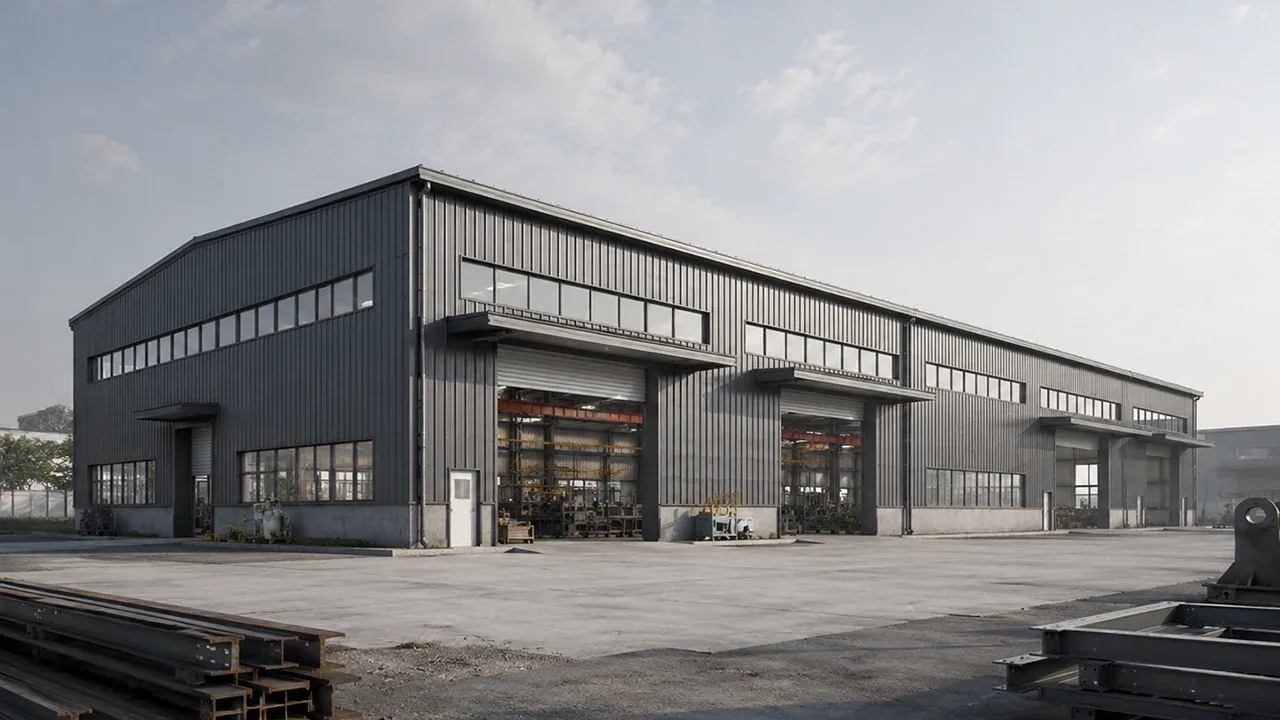
What Defines a Modern Steel Structure Workshop Building?
A modern workshop facility is designed around operational efficiency rather than simple enclosed storage. The structure must support workflow optimization, equipment installation, and safe production environments.
A properly engineered steel structure workshop building typically includes:
- Large column-free working areas
- Flexible machinery layout
- Overhead crane compatibility
- Efficient ventilation systems
- Expandable structural configuration
Steel framing systems allow production lines and equipment arrangements to evolve as operational requirements change.
Workshop Building Types by Industrial Usage
Manufacturing Workshops
Manufacturing workshops require organized production flow and stable structural performance. Steel systems support heavy machinery installation while maintaining open operational space.
These facilities are commonly used for industrial manufacturing, component production, and processing operations.
Equipment Maintenance Workshops
Maintenance facilities often require high clearances and flexible equipment access. Steel structures allow maintenance teams to efficiently handle vehicles, machinery, and industrial equipment.
Large access doors and adaptable layouts improve operational efficiency.
Mechanical Processing Workshops
Mechanical processing facilities depend on stable environments for fabrication, machining, and material handling activities.
A steel structure workshop building can support specialized processing equipment while maintaining structural flexibility.
Assembly and Fabrication Workshops
Assembly workshops require efficient movement between fabrication zones, storage areas, and production lines. Steel structures simplify internal layout planning and workflow coordination.
Open-span layouts also reduce operational restrictions.
Structural Systems Used in Workshop Buildings
Portal Frame Systems
Portal frame systems are commonly used for workshop construction because they provide efficient structural support with relatively low material usage.
These systems are suitable for medium and large industrial workshops.
Crane-Supported Steel Structures
Many industrial workshops require overhead crane systems for material handling and equipment movement. Steel structures can be engineered to integrate crane beams and support systems directly into the building framework.
This improves operational efficiency for heavy industrial environments.
Large-Span Workshop Layouts
Large-span steel structures reduce the need for interior columns, allowing more flexible equipment placement and smoother internal logistics.
- Higher roof clearance
- Flexible bay spacing
- Improved material flow
- Reduced internal obstruction
Key Planning Factors for Workshop Construction
Internal Equipment Flow
Workshop efficiency depends heavily on how materials, machinery, and personnel move throughout the facility. Structural planning should support logical operational flow and minimize bottlenecks.
Ventilation and Lighting
Industrial workshops often generate heat, dust, and continuous equipment activity. Proper ventilation and natural lighting systems help improve worker comfort and operational safety.
Future Production Expansion
Production demands can change over time. Steel workshop buildings allow future expansion with less structural disruption compared to traditional construction systems.
Worker Safety and Accessibility
Safety planning includes equipment access, emergency pathways, fire protection systems, and safe operational circulation.
Efficient workshop design improves both productivity and workplace safety.
Fabrication and Installation Workflow
Engineering and Structural Drawings
Each workshop project begins with engineering analysis and production-oriented structural planning.
Steel Fabrication Process
- Steel cutting
- Welding and assembly
- Drilling and connection preparation
- Dimensional inspection
Surface Treatment and Protection
Structural components are protected through galvanization, industrial coatings, and anti-corrosion systems depending on project requirements.
Delivery and Site Erection
After fabrication, components are transported to the installation site where erection teams coordinate lifting operations and structural assembly.
As an experienced industrial building supplier, XTD Steel Structure supports integrated workshop construction projects for multiple manufacturing industries.
Advantages of Steel Workshop Buildings
Faster Construction: Prefabricated steel systems reduce project timelines significantly.
Flexible Layouts: Open-span configurations allow efficient production planning.
Structural Durability: Steel systems perform reliably under industrial operating conditions.
- Lower maintenance requirements
- Expandable building layouts
- Efficient equipment integration
- Long service life
Steel workshop facilities are designed to support long-term industrial productivity.
Workshop Buildings for Different Industries
Steel workshop buildings are widely used across different industrial sectors because of their adaptability and operational efficiency.
| Industry | Workshop Usage |
|---|---|
| Automotive | Vehicle maintenance and assembly |
| Heavy Equipment | Machinery repair and fabrication |
| Metal Fabrication | Cutting, welding, and processing |
| Industrial Manufacturing | Production and assembly operations |
| Machinery Processing | Equipment machining and installation |
Choosing the Right Steel Workshop Building Supplier
Industrial workshop projects require more than standard construction capability. Engineering coordination, fabrication precision, export logistics, and installation experience all affect project performance.
Manufacturers with experience in industrial steel systems can better support customized workshop requirements, equipment integration, and long-term operational planning.
Common Questions About Steel Structure Workshop Buildings
Can workshop buildings support overhead cranes?
Yes. Steel workshop structures can be engineered to integrate overhead crane systems.
How fast can steel workshops be installed?
Prefabricated steel systems typically allow faster installation compared to conventional construction.
Are steel workshops expandable?
Yes. Steel structures are well-suited for future expansion and production upgrades.
Building Efficient Industrial Workshop Environments
A well-designed steel structure workshop building helps improve production efficiency, equipment integration, and operational flexibility. Modern steel systems support scalable industrial environments that can adapt to changing manufacturing demands.
Through proper engineering, fabrication quality, and efficient installation planning, workshop facilities can deliver long-term structural reliability and industrial performance.