Retail Distribution Requires High-Efficiency Warehousing
Retail logistics environments operate under constant pressure to move inventory quickly and accurately. Warehouse infrastructure directly impacts order fulfillment speed, transportation efficiency, and inventory management performance.
Fast Inventory Movement
Distribution facilities require efficient inbound and outbound operations to avoid delays in product handling.
- High-volume loading dock operations
- Rapid truck turnaround
- Continuous goods movement
- Efficient staging areas
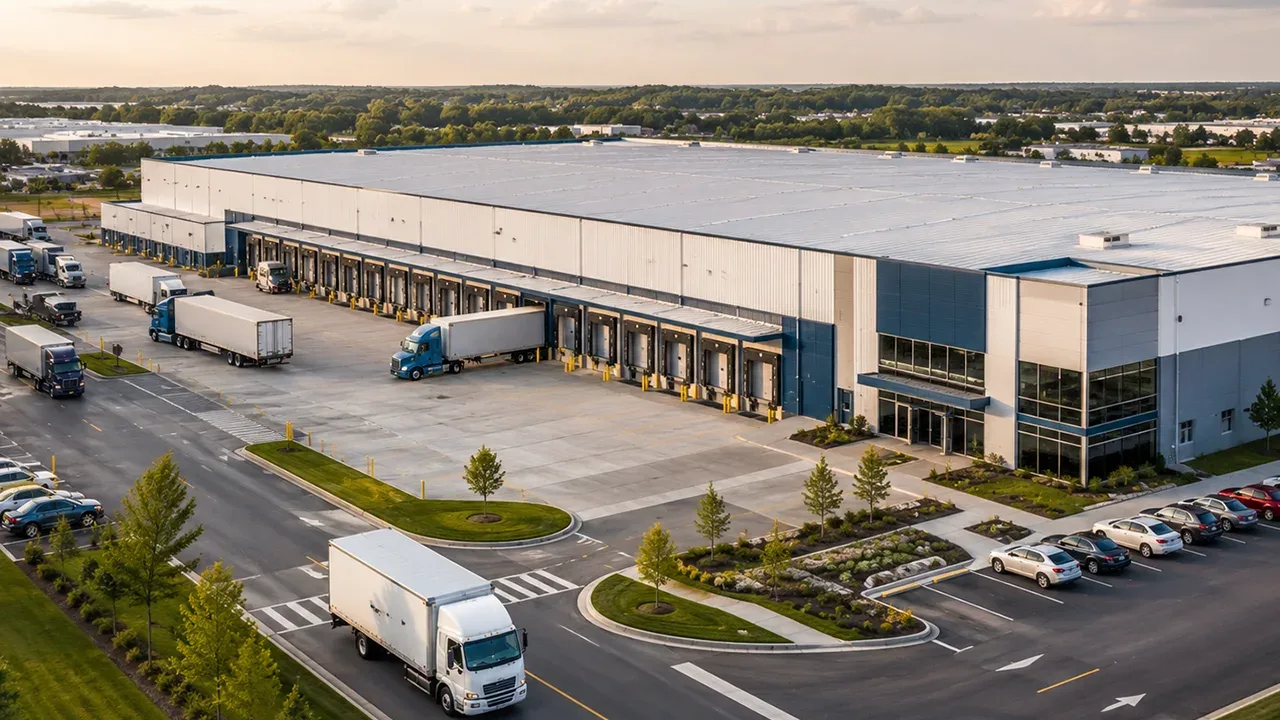
A properly designed steel warehouse for retail distribution supports smoother operational flow by minimizing internal obstructions and improving circulation routes.
High SKU Storage Flexibility
Retail businesses often manage thousands of product categories with changing inventory levels. Steel warehouse layouts can accommodate multiple racking systems, automated storage solutions, and adjustable storage zones.
This flexibility allows facilities to adapt as product demand changes throughout the year.
Seasonal Distribution Scalability
Retail supply chains frequently experience seasonal peaks during promotional events and holiday shopping periods. Warehouses must handle temporary inventory increases without disrupting normal operations.
Steel structures simplify future expansion and temporary operational adjustments when distribution demand rises.
Why Steel Structures Perform Well in Retail Logistics
Large Clear-Span Storage Areas
Steel framing systems allow large column-free storage areas that improve forklift movement, storage planning, and automated equipment operation.
Fewer internal columns create more usable warehouse space and improve inventory organization.
Faster Construction for Distribution Expansion
Retail distribution networks often need to expand quickly to meet changing market demand. Prefabricated steel systems reduce construction schedules compared to many conventional building methods.
This helps companies accelerate warehouse deployment and begin operations sooner.
Integration with Automated Warehouse Systems
Modern retail warehouses increasingly rely on automation technologies including conveyor systems, automated sorting lines, and robotic storage solutions.
A steel warehouse for retail distribution can be engineered to integrate these systems efficiently while supporting future technology upgrades.
Durability Under Continuous Operations
Retail logistics facilities operate continuously with constant equipment movement and loading activity. Steel structures provide long-term durability and structural reliability under demanding operational conditions.
Warehouse Design Features for Retail Distribution
Loading Dock Planning
Loading dock configuration directly affects warehouse efficiency. Proper dock positioning helps improve loading speed and vehicle circulation.
Truck Flow and Access Design
Efficient truck access routes reduce congestion and improve transportation coordination. Site planning typically includes separate entry and exit points for smoother logistics flow.
Mezzanine and Multi-Level Storage Options
Retail distribution facilities sometimes require vertical storage optimization. Steel systems can support mezzanine platforms and multi-level operational layouts.
Lighting and Ventilation Efficiency
Warehouse environments require proper lighting and ventilation to support safe and efficient operations.
| Warehouse Feature | Operational Benefit |
|---|---|
| Clear-span structure | Improved equipment movement |
| High ceiling clearance | More vertical storage capacity |
| Dock integration | Faster loading operations |
| Ventilation systems | Improved working environment |
Retail Industries Using Steel Distribution Warehouses
E-commerce Distribution
E-commerce fulfillment centers require fast processing, flexible storage systems, and continuous shipping operations. Steel warehouses support large-scale logistics activity efficiently.
Consumer Goods Storage
Consumer product distributors require organized inventory systems capable of handling diverse product categories and changing stock levels.
Supermarket and Retail Chains
Retail chains depend on centralized distribution facilities to support regional store networks and inventory replenishment.
Large-scale warehouse systems improve supply chain coordination and delivery efficiency.
Wholesale Distribution Networks
Wholesale operations require durable facilities capable of handling high inventory turnover and large transportation volumes.
Fabrication and Construction Workflow
- Engineering and layout planning
Warehouse dimensions, logistics flow, and operational requirements are analyzed before production begins. - Structural steel fabrication
Steel components are manufactured using precision cutting, welding, and assembly processes. - Transportation and delivery coordination
Components are organized and shipped according to project installation schedules. - On-site installation
Steel framing systems are assembled efficiently using coordinated lifting and connection operations.
With experience in industrial steel building systems, XTD Steel Structure supports warehouse projects for logistics and distribution industries worldwide.
Long-Term Operational Advantages
Retail distribution facilities must remain adaptable as supply chains evolve and logistics technologies continue to advance.
- Lower long-term maintenance requirements
- Flexible future expansion capability
- Improved logistics efficiency
- Better inventory organization
- Support for automation integration
- Scalable warehouse operations
Steel warehouse systems help businesses maintain operational flexibility while supporting long-term distribution growth.
Choosing a Steel Warehouse Partner for Distribution Projects
Retail logistics projects require more than basic structural engineering. Distribution facilities must support operational flow, transportation coordination, automation systems, and long-term scalability.
Choosing an experienced steel warehouse partner helps ensure that engineering, fabrication, and installation align with operational distribution goals.
Common Questions from Distribution Companies
Can steel warehouses support automated logistics systems?
Yes. Steel warehouse systems can integrate conveyors, robotic systems, and automated storage equipment.
Are steel warehouses expandable?
Yes. Steel structures are highly adaptable for future expansion and operational upgrades.
Is steel suitable for high-traffic logistics operations?
Yes. Steel systems provide durability and structural stability for continuous warehouse activity.
How fast can a distribution warehouse be completed?
Construction timelines depend on project size, but prefabricated steel systems generally reduce overall project duration.
Build Smarter Retail Distribution Infrastructure
A modern steel warehouse for retail distribution helps businesses improve logistics performance, inventory management, and operational scalability. Steel systems continue to play a major role in the modernization of retail supply chains worldwide.
Well-planned warehouse engineering and efficient structural execution create facilities that remain adaptable, durable, and operationally efficient for long-term retail distribution demands.