Why Steel Structures Are Ideal for Food Processing Facilities
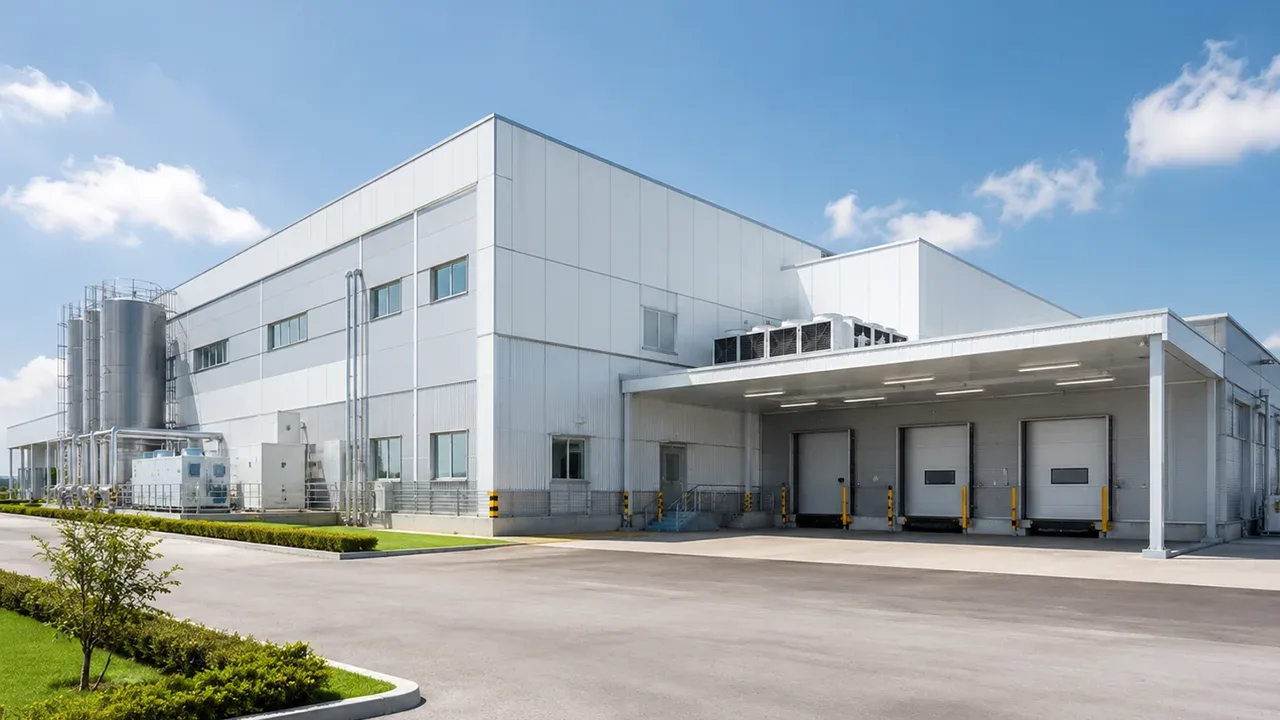
Food-grade industrial buildings must maintain clean production environments while supporting continuous manufacturing operations. Steel structures are highly suitable for these facilities because they combine durability, flexibility, and easier maintenance.
Modern steel processing facilities often integrate:
- Corrosion-resistant structural systems
- Washable wall and ceiling solutions
- Large-span production areas
- Ventilation and air circulation systems
- Temperature-controlled processing zones
- Flexible internal layouts
In addition, steel framing systems allow production lines and utility systems to be modified more easily as operational needs evolve.
Common Food Processing Factory Applications
Meat and Poultry Processing Plants
Meat processing facilities require strict hygiene separation between raw handling, processing, packaging, and storage areas. Steel structures help create organized production zones while supporting sanitation requirements.
Large-span layouts also improve equipment arrangement and workflow efficiency.
Dairy and Beverage Production Facilities
Dairy and beverage plants frequently require controlled environments with integrated piping systems, ventilation equipment, and temperature-sensitive production areas.
A steel structure factory for food processing can support these systems while maintaining structural stability under continuous industrial operation.
Frozen Food Processing Buildings
Frozen food production environments often involve cold rooms, insulated panels, and refrigeration systems. Steel structures are compatible with modular cold-storage integration and temperature-controlled operations.
Grain and Agricultural Product Facilities
Agricultural processing plants require efficient material handling and storage systems. Steel structures support conveyor integration, elevated equipment platforms, and flexible production expansion.
Seafood Processing Factories
Seafood facilities are exposed to humid and corrosive conditions. Properly protected steel systems can provide reliable long-term structural performance in these demanding environments.
Factory Layout Planning for Food Processing Operations
Separation of Clean and Contaminated Areas
Food processing facilities often require carefully controlled zoning to reduce contamination risks. Processing flows are typically organized to separate:
- Raw material receiving
- Processing areas
- Packaging zones
- Cold storage rooms
- Finished product dispatch
Steel structures support flexible partitioning and organized workflow management.
Material Flow and Production Efficiency
Efficient factory layouts reduce unnecessary movement while improving operational productivity. Open steel-framed interiors allow equipment and production lines to be arranged according to processing requirements.
This flexibility becomes increasingly important as production capacity grows.
Ventilation and Temperature-Controlled Zones
Ventilation systems are essential for maintaining air quality, humidity control, and thermal management inside food facilities.
Steel structures can accommodate large ventilation systems, suspended utility lines, and insulated roofing assemblies.
Equipment Support and Utility Integration
Food processing factories frequently require support for piping, electrical systems, water treatment equipment, and industrial machinery.
Steel framing systems simplify utility integration while maintaining organized industrial layouts.
Structural and Environmental Requirements
Hygienic Surface Protection Systems
Food production environments require surfaces that are easier to clean and maintain. Steel components are commonly protected using coatings and finishing systems designed for industrial hygiene environments.
Corrosion Resistance in Humid Environments
Humidity and cleaning chemicals can create corrosive operating conditions. Structural systems may use galvanized steel or protective coatings depending on environmental exposure.
| Protection System | Main Advantage | Typical Application |
|---|---|---|
| Galvanized Steel | Strong corrosion resistance | Humid processing areas |
| Protective Coating Systems | Flexible surface protection | General food production zones |
Fire Safety and Regulatory Compliance
Food factories must comply with industrial safety regulations and fire protection standards. Steel facilities can integrate:
- Fire-resistant coatings
- Smoke exhaust systems
- Emergency evacuation layouts
- Industrial safety zoning
Long-Term Structural Durability
A properly engineered steel structure factory for food processing can provide reliable long-term structural performance while supporting heavy industrial operations.
Routine maintenance and protective systems help extend building lifespan and operational reliability.
Fabrication and Construction Process
Precision Steel Fabrication for Food Facilities
Structural components are manufactured using advanced fabrication technologies to ensure dimensional accuracy and consistent quality.
Prefabrication and Faster Construction Timelines
Prefabricated steel systems help reduce on-site construction time and improve installation efficiency.
On-Site Installation Coordination
Installation teams coordinate structural assembly, utility integration, and equipment access planning during project execution.
Benefits of a Steel Structure Factory for Food Processing
Modern food manufacturers increasingly prioritize flexible and scalable industrial infrastructure.
- Faster factory construction
- Cleaner operational environments
- Flexible production layouts
- Lower maintenance requirements
- Easier future expansion
- Efficient equipment integration
Steel construction also supports modernization across food manufacturing industries.
Choosing the Right Industrial Steel Structure Partner
Food processing projects involve more than structural engineering alone. Successful execution requires coordination between industrial workflows, hygiene standards, utility systems, and production requirements.
Choosing an experienced industrial structure provider helps improve project efficiency and long-term operational performance.
With experience in industrial steel facility development, XTD Steel Structure supports engineering, fabrication, and installation solutions for specialized processing environments.
Frequently Asked Questions
Why are steel structures widely used in food factories?
Steel structures provide durability, flexible layouts, and support for hygienic industrial environments.
Can steel factories support cold storage operations?
Yes. Steel systems can integrate insulated panels and refrigeration infrastructure for cold-storage applications.
Are steel structures suitable for hygienic production environments?
Yes. Properly protected steel systems support sanitation and industrial cleaning requirements.
Develop Modern Food Processing Infrastructure
A well-designed steel structure factory for food processing supports efficient production, organized industrial workflows, and long-term operational reliability. Modern steel systems help food manufacturers build scalable infrastructure capable of adapting to changing market demands.
Careful engineering, quality fabrication, and coordinated installation all contribute to safer and more efficient food processing facilities.