What Is CNC Steel Fabrication?
CNC steel fabrication refers to the use of computer-controlled machinery to process structural steel components with high precision. Digital engineering data is converted into machine instructions that automatically control cutting, drilling, milling, machining, and other fabrication operations.
Unlike conventional fabrication methods that rely on manual measurements and positioning, CNC systems follow programmed coordinates to produce highly accurate steel components with consistent quality.
A typical CNC fabrication workflow includes:
- Engineering design preparation
- CAD/CAM programming
- Automated steel cutting
- Precision drilling
- Machining and milling
- Assembly preparation
- Quality inspection
Each step contributes to improved production accuracy while minimizing human error throughout the manufacturing process.
How CNC Steel Fabrication Works
Digital Engineering and CAD Models
The CNC fabrication process begins with detailed engineering models developed using CAD software. Engineers define dimensions, hole locations, connection details, material specifications, and fabrication requirements before transferring the information into CAM software.
Digital preparation provides several advantages:
- Accurate engineering data
- Improved production planning
- Consistent fabrication instructions
- Reduced manual calculations
- Efficient project coordination
Digital engineering creates a seamless connection between structural design and manufacturing operations.
CNC Cutting
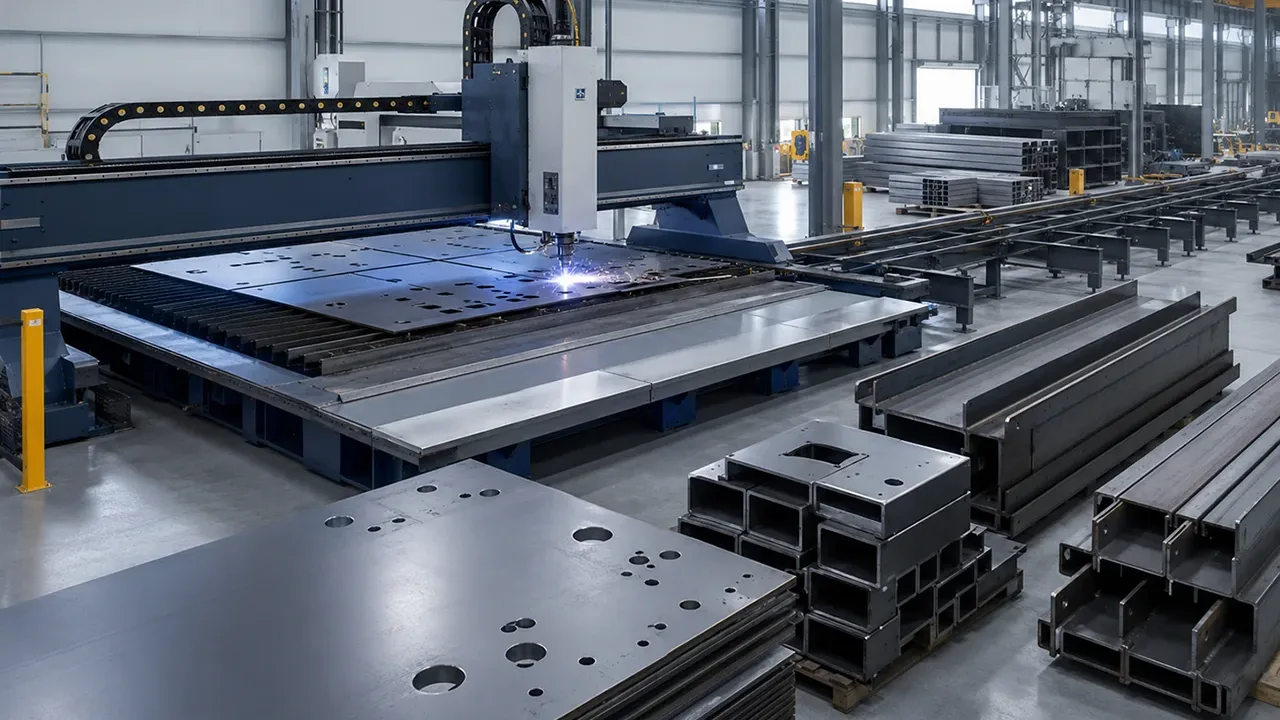
Steel cutting is one of the first fabrication processes performed using CNC equipment. Depending on material thickness and project requirements, different cutting technologies may be used.
Common cutting methods include:
- CNC plasma cutting
- CNC flame cutting
- CNC laser cutting
Computer-controlled cutting improves dimensional accuracy while producing clean edges that reduce secondary processing requirements.
CNC Drilling
Accurate bolt holes are critical for successful structural steel assembly. CNC drilling machines automatically position drilling heads according to engineering data, ensuring consistent hole placement.
Advantages of CNC drilling include:
- Precise bolt hole positioning
- Improved assembly accuracy
- Reduced fabrication errors
- Higher production speed
- Excellent repeatability
These improvements simplify field installation and reduce alignment issues during construction.
CNC Milling and Machining
Certain structural components require additional machining operations beyond cutting and drilling. CNC machining equipment produces complex profiles and precision surfaces with consistent quality.
Applications include:
- Connection preparation
- Precision slots
- Complex steel profiles
- Custom fabricated components
- Special engineering details
Computer-controlled machining minimizes dimensional variation while supporting highly customized fabrication requirements.
Assembly Preparation
After machining operations are complete, fabricated components move to assembly preparation where accurate fit-up becomes essential for efficient welding and structural assembly.
CNC processing improves:
- Component alignment
- Joint accuracy
- Welding preparation
- Assembly efficiency
- Overall fabrication quality
Well-prepared components help reduce production delays while improving finished structural performance.
Advantages of CNC Steel Fabrication
Higher Precision
One of the greatest advantages of CNC fabrication is its ability to consistently manufacture steel components within tight engineering tolerances.
Precision benefits include:
- Accurate dimensions
- Repeatable production
- Improved component fit
- Reduced field adjustments
- Reliable structural performance
Consistent precision improves installation efficiency throughout construction projects.
Faster Production
Automation significantly increases fabrication speed compared with manual processing methods.
CNC equipment reduces production time by:
- Automating repetitive tasks
- Minimizing manual setup
- Reducing idle machine time
- Improving production flow
- Supporting continuous operation
Higher productivity enables manufacturers to complete projects within demanding construction schedules.
Better Quality Consistency
Because CNC equipment follows programmed instructions, each fabricated component is produced using identical machining parameters.
Quality improvements include:
- Standardized production
- Consistent dimensions
- Reduced operator variation
- Improved assembly accuracy
- Reliable inspection results
This consistency becomes particularly valuable during large-scale steel structure manufacturing.
Material Optimization
Modern CNC software optimizes material utilization through intelligent nesting and production planning.
Benefits include:
- Reduced material waste
- Higher material utilization
- Lower scrap rates
- Improved production efficiency
- Better cost control
Efficient material management contributes to both economic and environmental sustainability.
Lower Production Costs
Although CNC equipment requires significant investment, automated manufacturing reduces long-term production costs through higher productivity and fewer fabrication errors.
Cost advantages include:
- Lower labor requirements
- Reduced rework
- Higher production output
- Improved delivery performance
- Better overall manufacturing efficiency
These benefits make CNC fabrication an important competitive advantage for modern steel manufacturers.