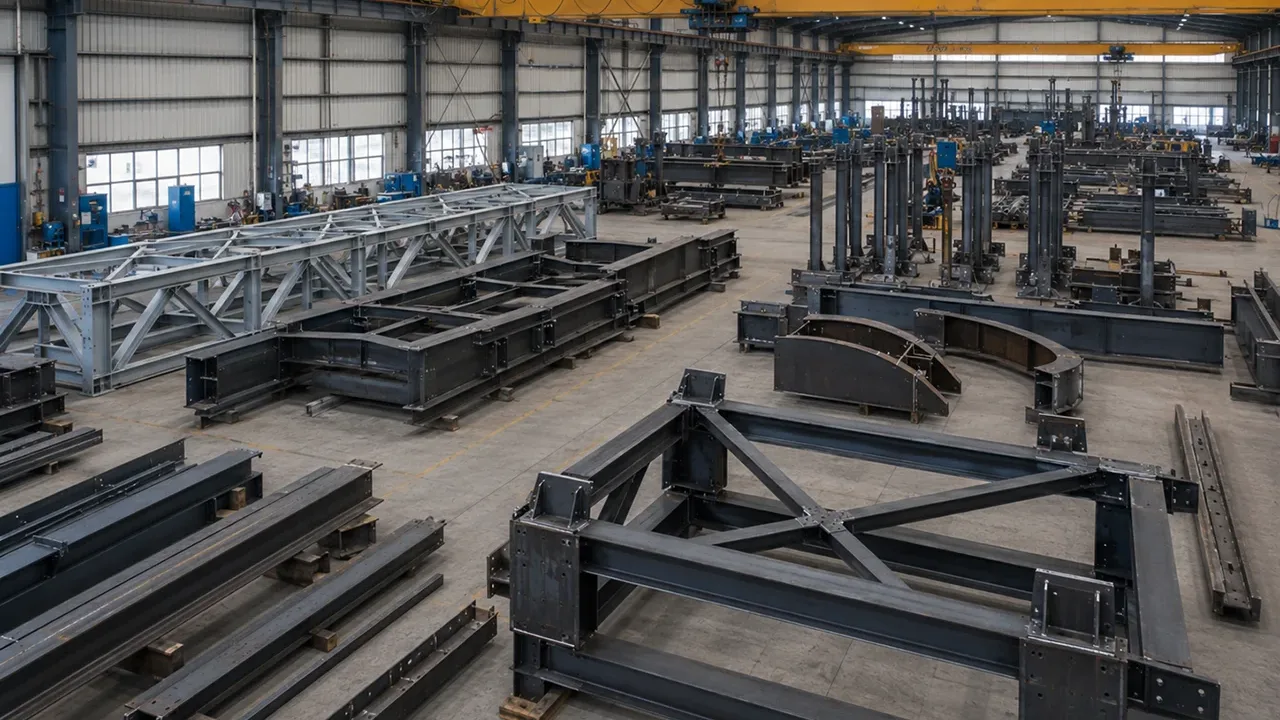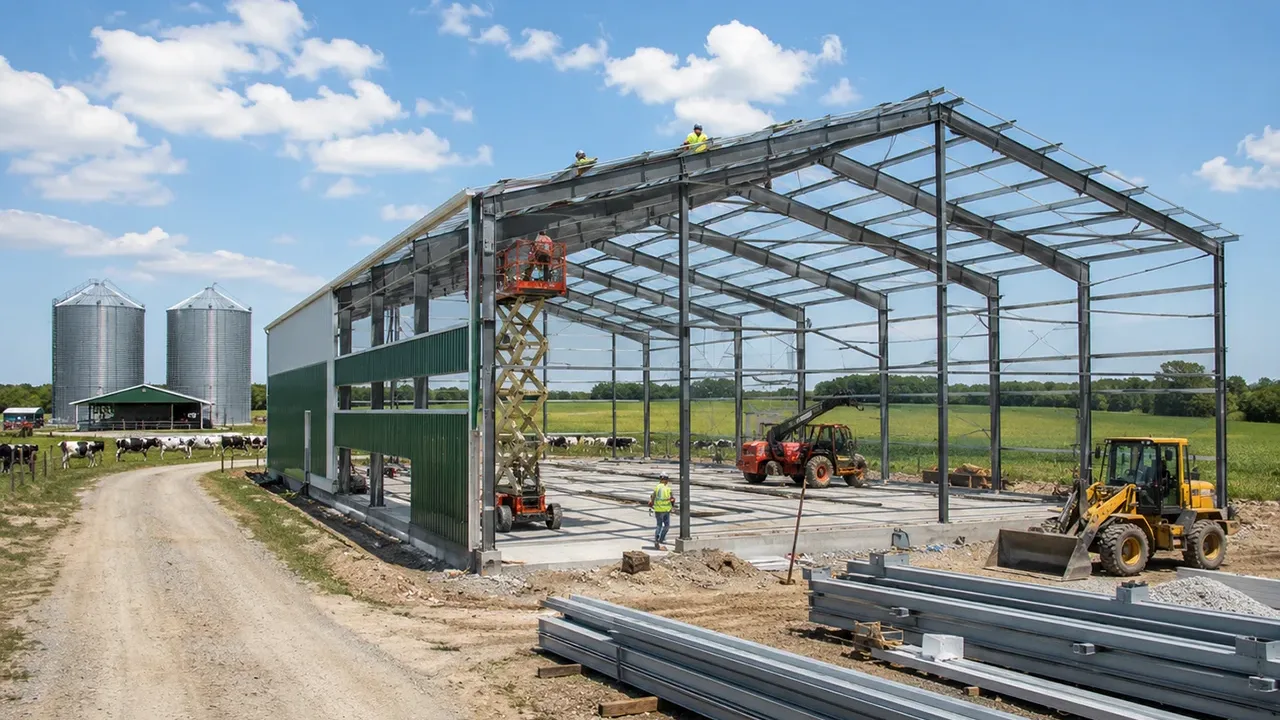
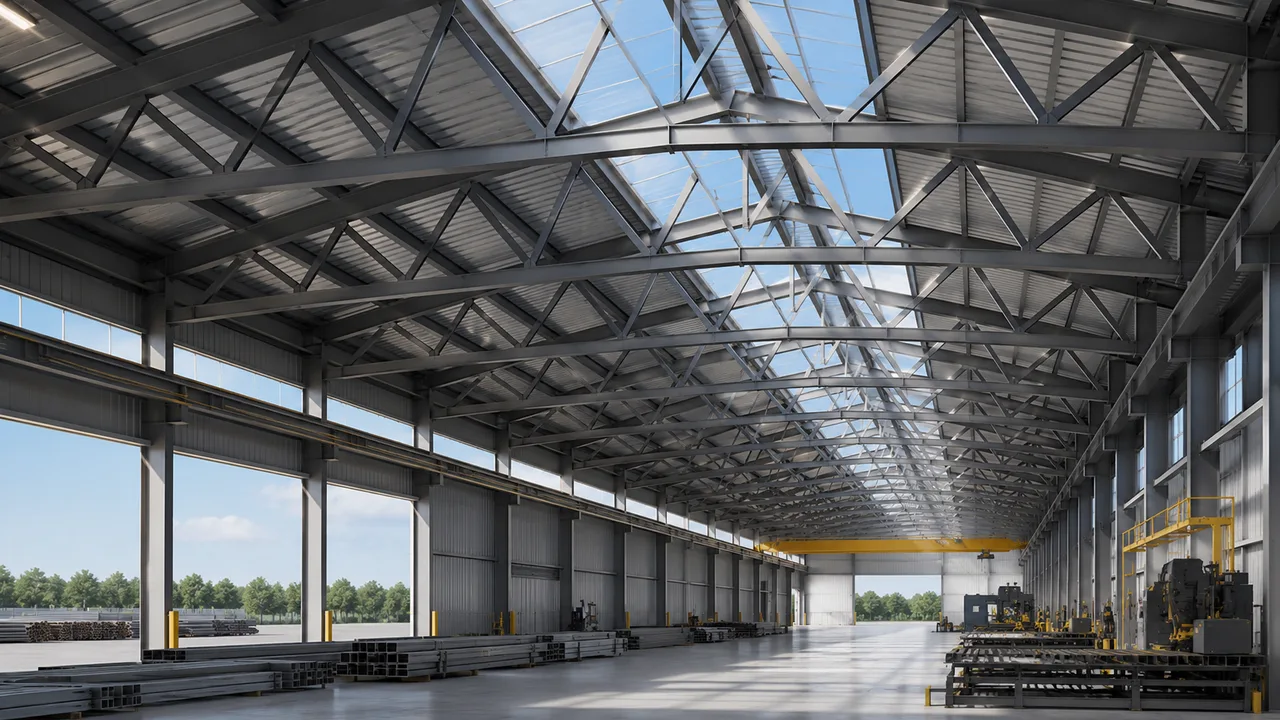
The main Warren truss advantages come from its simple triangular geometry, efficient load distribution, and practical use in steel roof structures, bridges, and industrial buildings. A Warren truss is easy to recognize because of its repeated diagonal pattern, usually forming a series of triangles across the span. This layout allows the structure to transfer loads through connected members instead of relying on one heavy solid beam.
In steel structure projects, this matters because the structure must balance strength, weight, fabrication cost, transportation limits, and installation speed. A truss system can often cover a longer span with less material than a deep solid girder, especially when the load path is clear and the member layout is well planned.
The Warren truss is widely used in roof systems, pedestrian bridges, industrial access bridges, conveyor galleries, pipe racks, and long-span building structures. Its value is not only structural. It is also practical for fabrication because repeated triangular panels can simplify cutting, welding, drilling, inspection, and field assembly.
What Is a Warren Truss?
A Warren truss is a structural truss system made from a series of diagonal members arranged in repeating triangles. In its simplest form, it may not include vertical members. Instead, the diagonal members alternate direction from one panel to the next, creating a zigzag pattern between the top chord and bottom chord.
The main parts of a Warren truss usually include:
- Top chord: the upper horizontal or sloped member that helps carry compression or combined forces.
- Bottom chord: the lower member that often carries tension, depending on the load case.
- Diagonal members: the repeated members that form the triangular web pattern.
- Panel points: the connection points where members meet and loads are transferred.
- Gusset plates: steel plates used to connect multiple members at the same joint.
- Lateral bracing: members that help prevent out-of-plane movement and improve stability.
- Support points: the locations where the truss transfers load into columns, foundations, bridge bearings, or supporting frames.
The strength of a Warren truss comes from triangulation. A triangle is a stable shape because it resists deformation better than a rectangle without bracing. When loads are applied to a properly designed Warren truss, the forces move through the triangular web members and into the supports.
Key Warren Truss Advantages
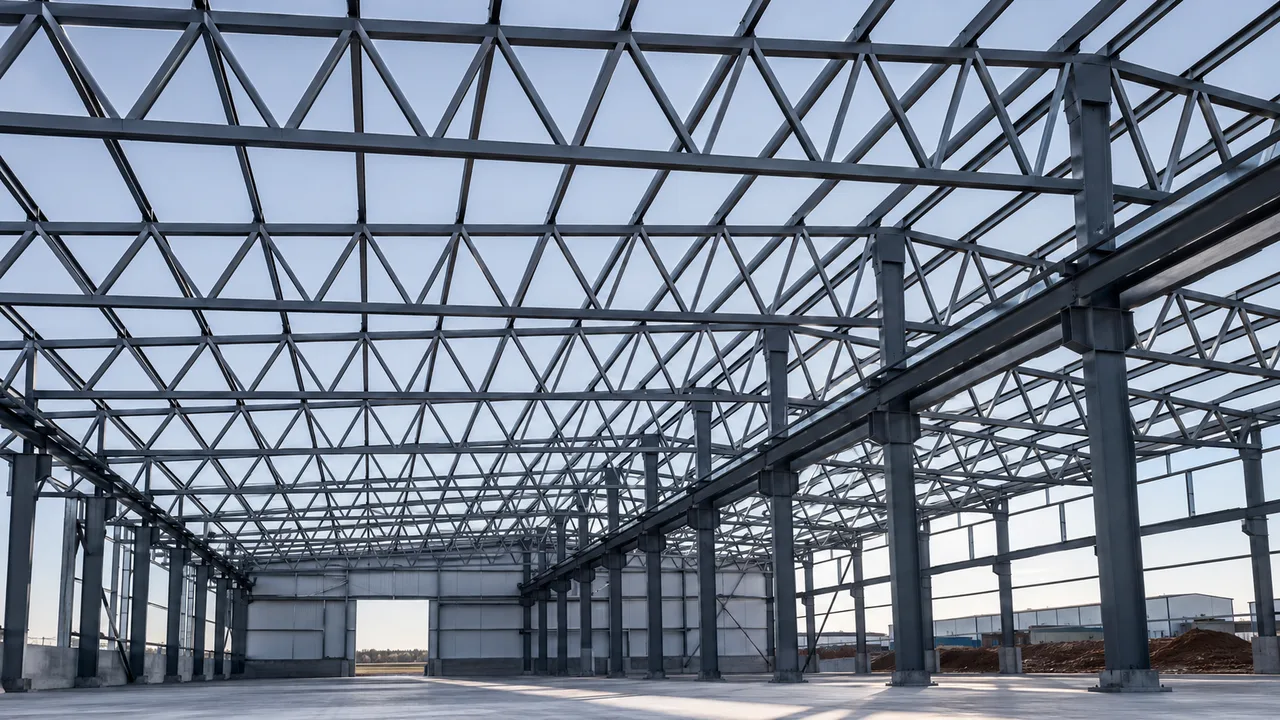
Understanding the main Warren truss advantages helps project teams decide whether this truss type is suitable for roofs, bridges, or industrial steel structures. The system is not the best choice for every project, but it offers several important benefits when the span, load pattern, and fabrication method fit the design.
Efficient Load Distribution
One of the strongest benefits of a Warren truss is its ability to distribute loads through repeated triangular panels. Instead of concentrating force in a single large beam, the truss spreads force through the top chord, bottom chord, and diagonal members.
This is useful for roof systems, bridges, conveyor supports, walkways, and industrial frames where loads must travel across a span. When the load is relatively distributed, a Warren truss can perform efficiently because the diagonal web members share the work across multiple panels.
The load path must still be engineered carefully. If heavy concentrated loads are applied between panel points, extra vertical members, secondary beams, or reinforced connections may be needed. But when the structure is designed correctly, the Warren truss gives engineers a clear and efficient load-transfer system.
Simple and Repetitive Geometry
Another major advantage is the simple repeated pattern. The triangular layout is easy to understand, draw, fabricate, and inspect. For steel fabrication, repetition is valuable because it can reduce unnecessary variation between members.
A repeated Warren truss layout can support:
- Cleaner shop drawings
- More consistent member cutting
- More predictable bolt hole layout
- Efficient welding and assembly sequences
- Easier member labeling for site erection
- More straightforward quality inspection
This is especially useful in prefabricated steel construction. When the same panel geometry appears many times, the fabrication team can standardize more of the production process. That does not remove the need for engineering checks, but it can reduce confusion and improve project control.
Good Material Efficiency
A Warren truss can often achieve good span efficiency with less steel than a solid beam of similar span capacity. The reason is that a truss uses depth and triangulation to resist bending. Instead of making one large heavy section carry all the force, the truss separates the top and bottom chords and connects them with diagonal members.
This can help reduce self-weight, improve the span-to-weight ratio, and make lifting or transportation more practical. In some projects, lower self-weight can also reduce demand on columns, foundations, bearings, or supporting frames.
Material efficiency depends on the actual design. Member size, steel grade, span, load type, connection design, and bracing strategy all affect final steel consumption. Still, when used in the right situation, material economy is one of the most practical Warren truss advantages.
Suitable for Medium to Long Spans
Warren trusses are often selected when a project needs to cover a medium or long span without excessive member weight. This makes the system useful for bridges, roof structures, industrial buildings, conveyor galleries, pipe bridges, and access structures.
In building projects, a long-span truss can reduce the number of internal columns. In bridge projects, a truss can support the deck while keeping the main structure lighter than a solid girder. In industrial projects, a truss can cross roads, equipment zones, storage areas, or production spaces while keeping the area below more open.
Clean Visual Appearance
The Warren truss also has a clean visual rhythm. Its repeated diagonal pattern looks simple, strong, and organized. This is useful when the structure will remain exposed, such as in pedestrian bridges, stadium concourses, public buildings, industrial architecture, and open roof structures.
A clear triangular pattern can make the structure easier to read visually. For architectural projects, this can be an advantage because the structural system becomes part of the design language instead of being hidden behind finishes.
Flexible Design Variations
A Warren truss does not always appear in one fixed form. Designers can adjust the system based on project requirements. Common variations include:
- Warren truss with vertical members
- Subdivided Warren truss panels
- Warren truss with a sloped or curved top chord
- Warren truss roof systems
- Warren truss bridge systems
- Warren-style trusses for industrial galleries and pipe racks
Vertical members may be added when the structure needs better support for concentrated loads or when deck beams, roof purlins, or secondary framing need more connection points. This flexibility allows the basic Warren pattern to be adapted without losing its main structural logic.
Warren Truss Advantages for Roof Structures
In roof construction, a Warren truss can help create wide, open spaces with fewer internal supports. This is important for warehouses, factories, workshops, logistics centers, agricultural buildings, sports facilities, and large public structures.
A roof truss must support more than its own weight. It may also carry roof panels, purlins, insulation, wind load, rain load, snow load in some regions, maintenance loads, lighting systems, ducts, cable trays, and other suspended services. The truss must transfer these loads safely into columns or supporting frames.
A Warren truss roof system can be practical because the repeated triangular pattern provides a clear path for load transfer. Roof loads usually move from roof panels to purlins, then into the truss and down to the supports. When purlins and panel points are coordinated correctly, the system can work efficiently.
For industrial buildings, open floor space is often a major design requirement. Production lines, storage racks, vehicles, cranes, and machinery need space to move. A long-span Warren truss roof can help reduce interior columns, which gives the owner more flexibility in how the building is used.
Fabrication and installation are also important. A roof truss with repeated panels can be fabricated in sections, transported to site, lifted into place, and connected with a planned assembly sequence. For companies like XTD Steel Structure, this type of repeatable steel geometry can fit well with controlled factory fabrication and bolted site installation.
Warren Truss Advantages for Bridges
Warren trusses are also common in bridge design. A Warren truss bridge uses the triangular web pattern to transfer deck loads toward the supports. The system can be used for pedestrian bridges, industrial access bridges, pipe bridges, conveyor bridges, and some transportation structures.
Bridge loads can be more complex than roof loads because they may include moving loads, impact, vibration, fatigue, wind, and changing load positions. In a Warren truss bridge, diagonal members may experience tension or compression depending on where the load is placed. This is why structural analysis is necessary before final member sizes are selected.
One advantage of a Warren truss bridge is that it can reduce dead load compared with a heavy solid girder. A lighter bridge structure may be easier to transport and erect. It may also reduce demands on foundations and bearings, depending on site conditions.
For industrial access bridges, the Warren truss can be especially useful. These bridges may need to cross roads, drainage channels, plant areas, equipment zones, or mining access routes. The structure must be strong, practical, and easy to inspect. A visible triangular web can help inspectors identify members, connections, and possible maintenance issues more easily.
Warren Truss Advantages for Industrial Buildings
Industrial buildings often need a structure that is strong, repeatable, and practical to build. They may include wide production areas, heavy equipment zones, storage areas, conveyor lines, pipe supports, maintenance platforms, and access bridges. Warren trusses can support many of these functions when the design is properly coordinated.
In factories and workshops, a Warren truss can support long-span roofs over production lines or assembly areas. In logistics buildings, it can help create open internal layouts for vehicle movement and storage systems. In mining, energy, and processing facilities, Warren-style trusses can be used for conveyor galleries, pipe bridges, equipment supports, and service walkways.
The system also fits prefabricated steel construction. Truss segments can be detailed, fabricated, painted or galvanized, marked, packed, transported, and assembled on site. This workflow can improve quality control because much of the work is done in a factory environment before site installation begins.
However, industrial environments can be demanding. Dust, vibration, moisture, chemicals, and heavy maintenance loads may affect the structure. For this reason, the truss design should include proper corrosion protection, drainage details, access for inspection, and a realistic maintenance plan.
Warren Truss vs Pratt Truss
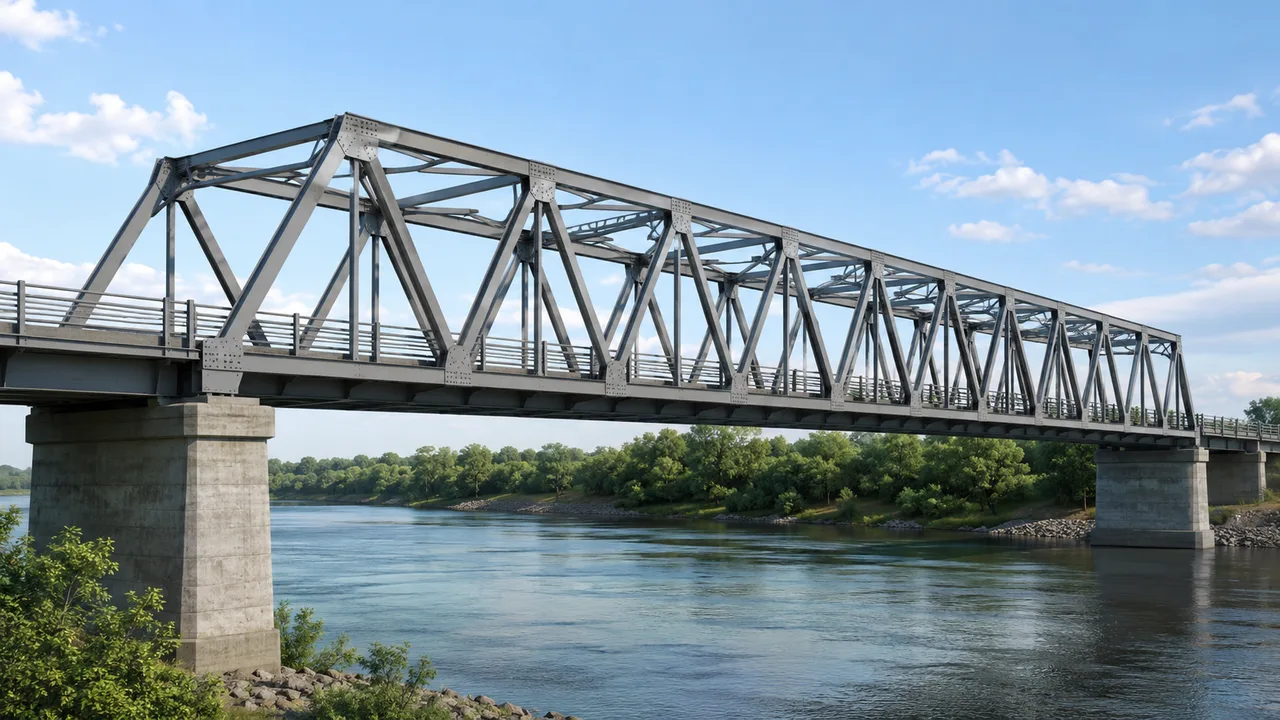
The Warren truss and Pratt truss are both widely used, but they have different member arrangements and load behavior. A Warren truss uses repeated diagonals in alternating directions. A Pratt truss usually has vertical members and diagonals that slope toward the center of the span, with the diagonals often working mainly in tension under typical gravity loads.
A Warren truss may be preferred when:
- The project has relatively distributed loads.
- A simple repeated triangular pattern is desired.
- Fabrication repetition is important.
- A clean exposed structure is part of the design.
- The span and load pattern fit the Warren truss layout.
A Pratt truss may be preferred when:
- The designer wants a more directional load path.
- Diagonal tension behavior under gravity load is preferred.
- Vertical load points align well with panel points.
- The project benefits from a more traditional bridge truss layout.
Neither system is automatically better. The right choice depends on span, load type, serviceability limits, fabrication method, transportation, erection plan, and connection design.
Warren Truss vs Howe Truss
A Howe truss has a different force pattern from a Warren truss. In many traditional Howe truss arrangements, diagonal members work mainly in compression under typical gravity loading, while vertical members may carry tension. This was historically useful in timber and iron construction, but modern steel projects often evaluate the system differently.
A Warren truss can be cleaner and lighter in some steel applications because of its alternating diagonal geometry. However, the final decision should not be based only on the truss name. Engineers must review the span, load position, material, member length, connection details, bracing requirements, and project environment.
Design Considerations Before Choosing a Warren Truss
The Warren truss advantages are clear, but they only apply when the system is properly designed. A truss that looks simple can still fail or perform poorly if important engineering details are ignored.
Load Type and Load Position
Warren trusses usually perform well with distributed loads, but concentrated loads need careful attention. If a heavy load is applied between panel points, the truss may need additional secondary framing or reinforced members. Designers should avoid forcing the truss to carry loads in ways that do not match its geometry.
Compression Member Buckling
Because diagonal members can experience compression depending on load position, buckling must be checked carefully. A slender compression member may fail before the steel reaches its full material strength. Member length, section shape, bracing, end conditions, and connection stiffness all affect buckling performance.
Deflection Control
Long-span trusses must also meet serviceability requirements. Excessive deflection can affect roof panels, cladding, bridge decks, drainage, ceiling systems, equipment alignment, and user comfort. Deflection limits should be reviewed early in the design stage instead of being treated as a final check.
Connection Design
Connections are critical in any truss system. Gusset plates, bolts, welds, splice plates, and hole patterns must transfer forces safely between members. Poor connection design can weaken the entire truss even if the main members are strong.
Fabrication tolerance also matters. If bolt holes do not align, field teams may be forced to enlarge holes or make unplanned corrections. Accurate detailing, CNC drilling, clear member marking, and quality inspection help prevent these problems.
Lateral Bracing
A truss needs stability outside its main plane. Lateral bracing helps prevent twisting, sideways movement, and out-of-plane buckling. This is especially important during erection, when the truss may not yet be connected to the full roof, deck, or permanent bracing system.
Temporary bracing may be needed during lifting and installation. Permanent bracing must be coordinated with purlins, deck framing, cross frames, diaphragms, and support conditions.
Corrosion Protection
Outdoor bridges, industrial plants, coastal facilities, and chemical environments can expose steel trusses to corrosion risk. Surface treatment should be planned according to the project environment. Options may include protective painting, hot-dip galvanizing, better drainage details, and accessible inspection points.
A truss has many joints and overlapping surfaces where water and dust may collect. Good detailing helps reduce long-term maintenance problems.
Common Mistakes in Warren Truss Projects
| Common Mistake | Why It Matters | Better Approach |
|---|---|---|
| Choosing a Warren truss only for appearance | The triangular pattern may look clean, but appearance alone does not confirm structural suitability. | Review span, load type, deflection limits, fabrication method, and erection plan before choosing the truss form. |
| Ignoring concentrated loads | Heavy point loads between panel points can create bending or overstress in members not designed for that condition. | Align loads with panel points where possible, or add vertical members, secondary framing, or reinforced connections. |
| Underestimating compression member buckling | Some diagonals may work in compression, and slender members can buckle before reaching full strength. | Check slenderness ratio, member length, section type, lateral restraint, and load combinations. |
| Poor gusset plate detailing | Weak or congested connections can reduce capacity and make fabrication or inspection difficult. | Design gusset plates, bolts, welds, and hole layouts with clear force transfer and practical fabrication in mind. |
| Weak lateral bracing | A truss may be strong in elevation but unstable out of plane during lifting, installation, or service. | Plan temporary and permanent bracing as part of the structural system, not as an afterthought. |
| Not planning transport and installation segments | Large trusses may be difficult to ship or lift in one piece. | Divide the truss into practical segments and coordinate splice details, lifting points, and site assembly sequence. |
| Poor corrosion protection | Moisture and dust can collect around joints, bolts, and overlapping surfaces. | Select proper coating or galvanizing, improve drainage details, and allow future inspection access. |
When Should You Choose a Warren Truss?
A Warren truss may be a good choice when the project needs a medium to long span, a clear triangular load path, and a practical steel fabrication layout. It is especially useful when loads are mostly distributed and when the project benefits from repeated member geometry.
This truss type may be suitable for:
- Industrial roof structures
- Warehouse and factory buildings
- Pedestrian bridges
- Industrial access bridges
- Pipe bridges
- Conveyor galleries
- Long-span steel platforms
- Exposed architectural steel structures
The system should not be selected only because it looks simple. Final design should always consider load combinations, member forces, buckling, connection design, lateral stability, corrosion protection, transport, and erection method.
When these factors are properly coordinated, the Warren truss advantages can support a strong, efficient, and practical steel structure.
Conclusion
A Warren truss is a proven structural system for roofs, bridges, and industrial buildings. Its repeated triangular geometry helps distribute loads efficiently, reduce unnecessary material weight, and simplify fabrication when the project is well designed. The system can also provide a clean visual appearance for exposed steel structures.
For roof structures, Warren trusses can help create large open spaces with fewer internal columns. For bridges, they can provide efficient span performance and easier inspection. For industrial buildings, they can support practical prefabricated steel workflows, conveyor systems, pipe bridges, and access structures.
The real value of a Warren truss depends on proper engineering. Load position, compression member buckling, deflection control, connection design, lateral bracing, corrosion protection, and installation planning must all be handled carefully. With the right design and fabrication approach, a Warren truss can be a durable and efficient solution for many modern steel structure projects.
FAQ About Warren Truss Advantages
What are the main Warren truss advantages?
The main Warren truss advantages include efficient load distribution, simple triangular geometry, good material efficiency, suitability for medium to long spans, clean visual appearance, and practical fabrication repeatability.
Where is a Warren truss commonly used?
A Warren truss is commonly used in roof structures, pedestrian bridges, industrial access bridges, conveyor galleries, pipe racks, warehouses, factories, workshops, and long-span steel systems.
Is a Warren truss good for roof construction?
Yes. A Warren truss can be good for roof construction when the building needs open interior space, long spans, and a repeatable steel truss layout. It is often useful for warehouses, factories, workshops, sports facilities, and industrial buildings.
Is a Warren truss better than a Pratt truss?
Not always. A Warren truss is often suitable for distributed loads and simple repeated geometry, while a Pratt truss may be better when designers prefer diagonals mainly in tension under predictable gravity loads. The better choice depends on the project span, loading, fabrication method, and connection design.
What is the biggest design issue in a Warren truss?
The biggest design issues usually include compression member buckling, concentrated loads, connection design, deflection control, and lateral bracing. These factors must be checked carefully during structural design.
Can Warren trusses be used in industrial buildings?
Yes. Warren trusses can be used in industrial buildings for roof systems, conveyor galleries, pipe bridges, service walkways, equipment support structures, and long-span steel frames.