What Is Large Scale Steel Fabrication?
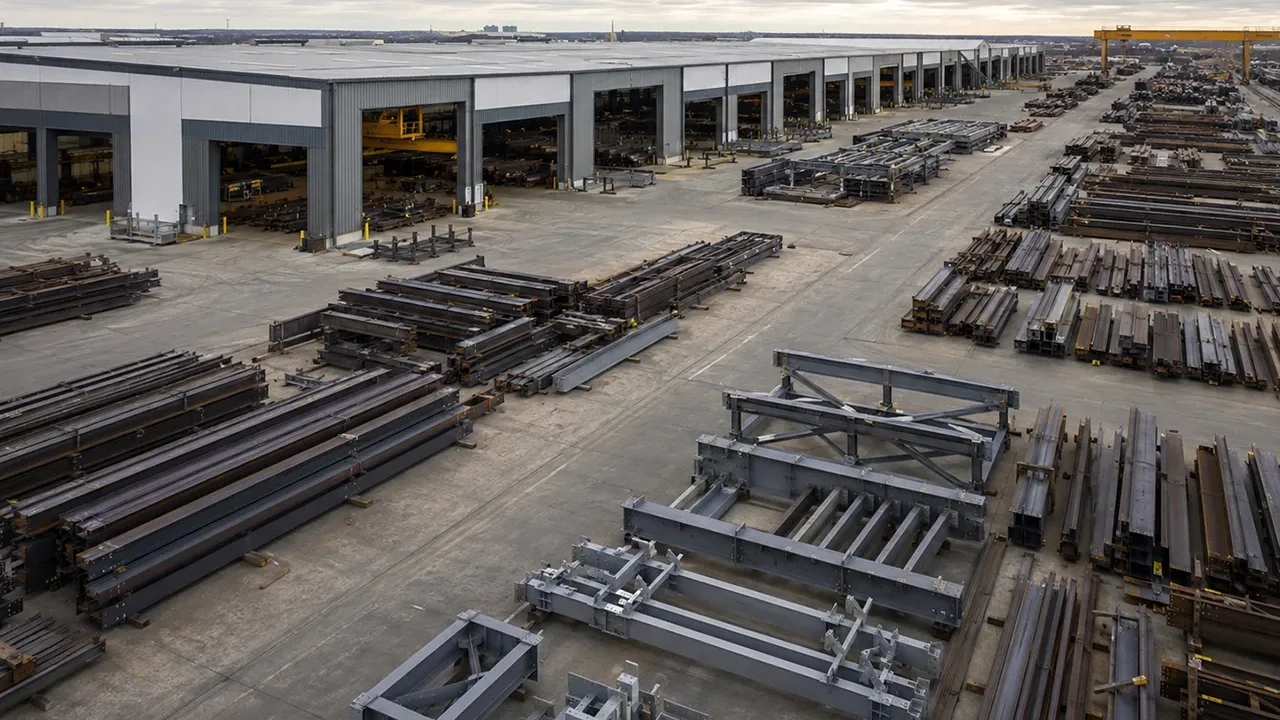
Large scale steel fabrication refers to the manufacturing of structural steel components using high-capacity production facilities capable of processing substantial volumes of steel for industrial, commercial, and infrastructure projects. These facilities integrate engineering, CNC processing, welding, assembly, inspection, and logistics into a streamlined manufacturing system.
Unlike conventional fabrication shops that primarily serve small or medium-sized projects, large-scale fabrication facilities are specifically designed to manufacture heavy structural components while maintaining consistent production quality across multiple production lines.
A complete large-scale fabrication project typically includes:
- Engineering review
- Material procurement
- CNC cutting and drilling
- Heavy steel assembly
- Automatic welding
- Surface treatment
- Quality inspection
- Packing and shipment
This integrated workflow ensures efficient production while supporting large international construction projects.
Characteristics of Large Scale Steel Fabrication
High Production Capacity
One of the defining characteristics of large scale steel fabrication is the ability to manufacture significant quantities of structural steel within demanding project schedules.
Large fabrication facilities typically feature:
- Multiple production workshops
- Parallel manufacturing lines
- Continuous material handling systems
- Large storage capacity
- High daily production output
High-capacity production minimizes project delays while ensuring a continuous supply of fabricated steel components.
Heavy Structural Components
Industrial and infrastructure projects often require structural members that are significantly larger and heavier than those used in conventional buildings.
Large-scale fabrication plants manufacture:
- Heavy steel columns
- Wide-span beams
- Large roof trusses
- Bridge girders
- Industrial platforms
- Pipe rack structures
- Custom heavy steel assemblies
Specialized equipment enables manufacturers to process oversized steel members safely and accurately.
Automated Manufacturing
Automation plays a critical role in improving both production efficiency and manufacturing consistency.
Modern fabrication facilities commonly utilize:
- CNC cutting systems
- Automatic drilling lines
- Robotic welding equipment
- Digital production management
- Automated material handling
Automation reduces manual intervention while increasing dimensional accuracy and production speed.
Strict Quality Management
Large-scale projects require rigorous quality control throughout every manufacturing stage.
Comprehensive quality management typically includes:
- Raw material verification
- Process inspection
- Dimensional measurement
- Welding inspection
- Coating inspection
- Production traceability
- Final quality approval
Systematic inspections help ensure every fabricated component meets engineering specifications before shipment.
Steel Products Manufactured at Large Scale
Industrial Building Frames
Industrial buildings require structural systems capable of supporting heavy production equipment and long-term operational loads.
Fabricated components include:
- Main steel frames
- Columns
- Primary beams
- Bracing systems
- Roof framing
High production capacity allows complete building packages to be delivered efficiently.
Warehouse Structures
Large warehouse projects often involve repetitive structural components manufactured in significant quantities.
Typical products include:
- Warehouse frames
- Roof trusses
- Purlins
- Wall framing
- Loading platform structures
Standardized production improves both fabrication speed and installation efficiency.
Factory Buildings
Manufacturing facilities require customized structural systems capable of supporting cranes, machinery, and production equipment.
Large fabrication facilities produce:
- Crane runway beams
- Heavy columns
- Production building frames
- Equipment support structures
- Maintenance platforms
Precision fabrication ensures compatibility with complex industrial equipment layouts.
Long Span Roof Systems
Large-span buildings require specially engineered structural systems capable of covering wide interior spaces without intermediate supports.
These systems include:
- Steel roof trusses
- Space frame systems
- Long-span girders
- Arch structures
- Custom roof assemblies
Advanced fabrication techniques maintain dimensional accuracy across large structural members.
Heavy Steel Trusses
Heavy trusses are widely used in industrial buildings, transportation facilities, stadiums, and infrastructure projects.
Large fabrication plants manufacture trusses that combine high load capacity with efficient structural performance.
Bridge Components
Bridge construction requires large structural members produced under strict quality standards.
Typical fabricated products include:
- Bridge girders
- Cross beams
- Connection assemblies
- Steel diaphragms
- Support brackets
Precise fabrication simplifies field assembly while improving long-term structural performance.
Industrial Platforms
Industrial facilities frequently require elevated steel platforms supporting equipment and maintenance operations.
Large fabrication facilities manufacture platform systems that provide strength, accessibility, and operational safety for industrial environments.
Production Process
Engineering Review
Every project begins with a detailed engineering review to verify drawings, material specifications, fabrication sequences, and production schedules.
Material Procurement
Certified structural steel is sourced according to project specifications and inspected before entering production.
CNC Cutting
Automated CNC equipment performs precision cutting, drilling, and machining according to digital engineering data.
Assembly and Welding
Fabricated components are assembled and welded using qualified procedures that ensure structural integrity and dimensional accuracy.
Surface Treatment
Steel members undergo shot blasting, painting, galvanizing, or other protective treatments based on project requirements.
Dimensional Inspection
Each component is measured to verify compliance with engineering tolerances before shipment.
Packing and Shipment
Finished products are packaged according to transportation requirements, enabling efficient domestic delivery or international export while protecting fabricated steel during transit.