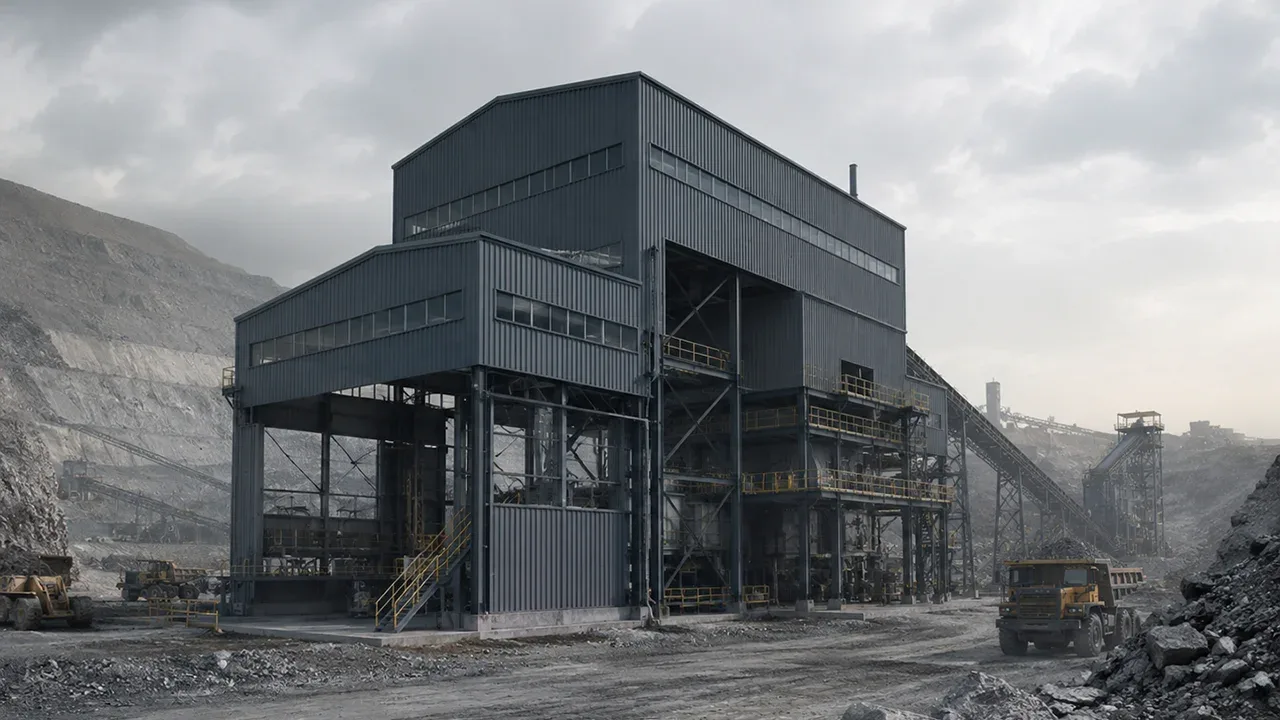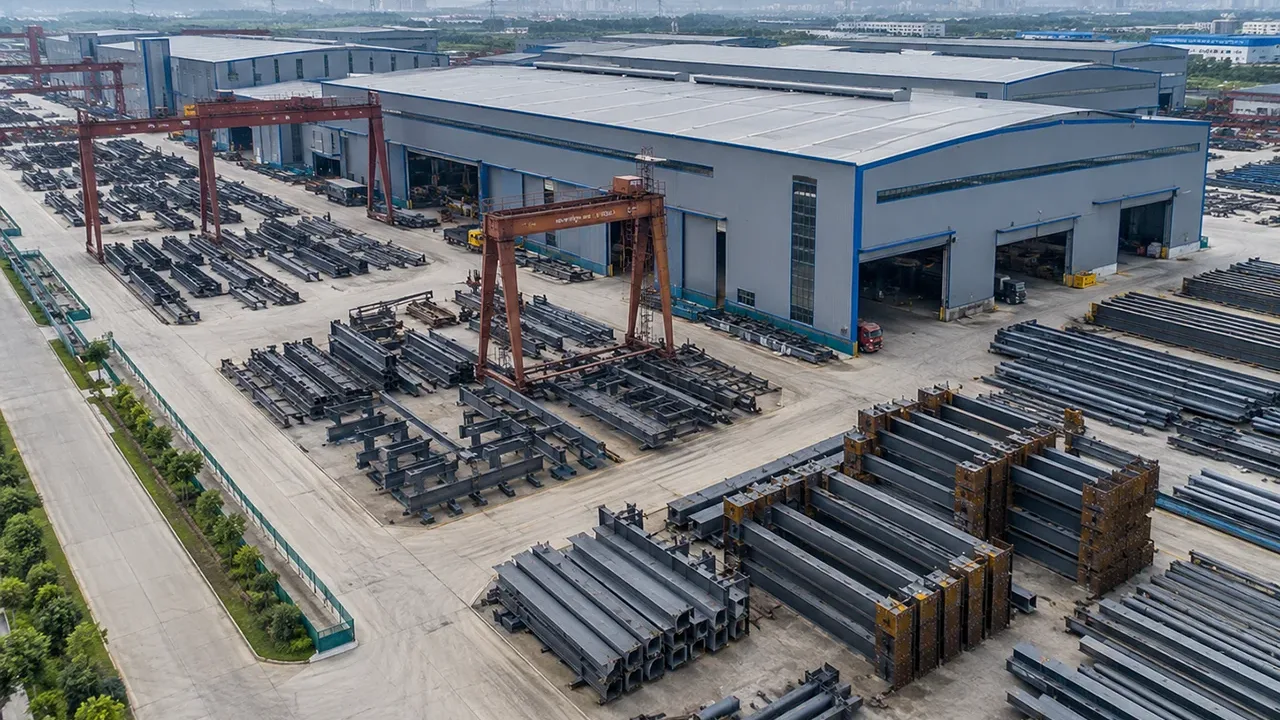
Howe truss design is one of the classic truss systems used in roof structures, bridge structures, industrial buildings, covered walkways, agricultural buildings, and other long-span applications. Its layout is easy to recognize: a series of triangular panels formed by top chords, bottom chords, vertical members, and diagonal members. This geometry allows loads to move through the structure efficiently instead of relying on one heavy solid beam.
In many projects, the choice of truss type affects more than the appearance of the structure. It influences steel weight, member size, connection details, fabrication method, transport planning, lifting sequence, and long-term maintenance. A roof truss for a warehouse does not face the same conditions as a bridge truss carrying pedestrian or vehicle loads. Even when the same truss form is used, the engineering approach must respond to the actual load, span, environment, and construction method.
A Howe truss is often discussed together with Pratt, Warren, Fink, and other truss types. Each system has its own load path and member behavior. The value of a Howe truss is not that it is always better than other systems, but that it gives engineers and fabricators a clear triangular framework that can be adapted for specific roof and bridge structure applications.
What Is a Howe Truss?
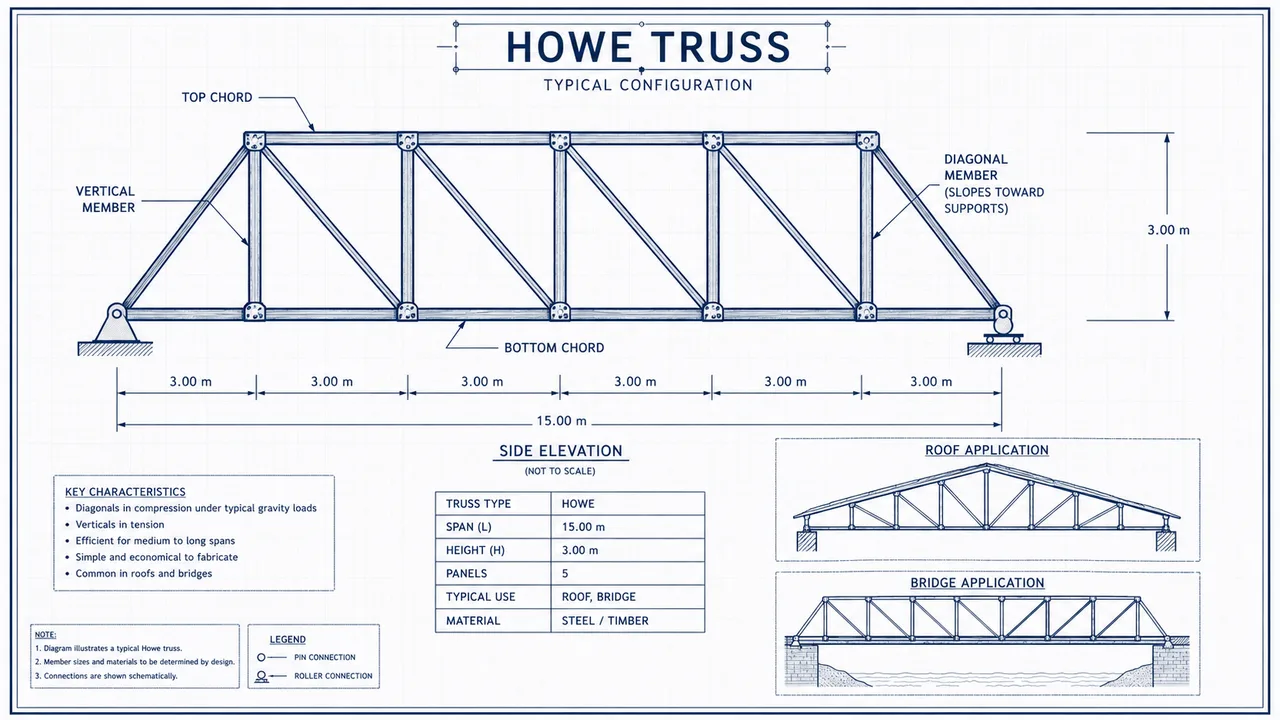
A Howe truss is a structural truss system made from a series of connected triangular panels. In a typical Howe truss, the diagonal members slope downward toward the supports. Under common gravity loading, the diagonals often work in compression while the vertical members often work in tension. The top chord usually carries compression, and the bottom chord usually carries tension.
This force arrangement is one of the main features that separates Howe trusses from some other common truss types. The system was historically popular in timber bridge construction because timber performs well in compression, while iron rods could be used for tension verticals. In modern construction, the same principle can be adapted to steel structures, especially when the design accounts for compression member stability, connection strength, lateral bracing, and fabrication accuracy.
A Howe truss normally includes several important components:
- Top chord: the upper member line, often following the roof slope or bridge profile.
- Bottom chord: the lower member line that ties the truss together.
- Diagonal members: sloping web members that commonly carry compression in a Howe layout.
- Vertical members: upright web members that commonly carry tension.
- Panel points: the joints where members meet and loads are transferred.
- Gusset plates or connection plates: plates used to connect members together with bolts or welds.
- Lateral bracing: supporting members that prevent out-of-plane movement and improve stability.
The shape may look simple, but a reliable Howe truss is not just a repeated triangle. The truss depth, panel spacing, member size, connection design, support condition, and bracing layout all need to work together.
How Howe Truss Design Works
The basic function of Howe truss design is to transfer loads from the supported surface to the end supports through a stable triangular framework. In a roof structure, the load may come from roof sheets, purlins, insulation, suspended services, wind, rain, snow, or maintenance activity. In a bridge structure, the load may come from the deck, pedestrians, vehicles, pipe systems, equipment, wind, and dynamic movement.
The load usually enters the truss at planned panel points. From there, forces travel through the top chord, bottom chord, verticals, and diagonals. The triangulated geometry helps prevent the frame from changing shape under load. Instead of bending like a simple beam, the truss distributes force through axial tension and compression in individual members.
This is why trusses can often span longer distances with less material than solid beams. The members are arranged so that each part contributes to the overall load path. However, this also means that weak details can affect the whole system. A poorly designed gusset plate, an unbraced compression member, or an inaccurate bolt hole pattern can reduce performance even if the general truss shape is correct.
Good Howe truss design normally considers:
- Span length and required clearance
- Truss depth and panel geometry
- Roof slope or bridge deck arrangement
- Dead load, live load, wind load, snow load, and maintenance load
- Steel grade and member section type
- Connection method, including bolting or welding
- Temporary and permanent lateral bracing
- Fabrication tolerance and transport limits
- Corrosion protection and inspection access
Main Components of a Howe Truss
Every truss member has a role. In a Howe truss, the member behavior is especially important because compression and tension affect how each member should be sized, connected, and braced.
Top Chord
The top chord forms the upper line of the truss. In roof structures, it often follows the roof slope. In bridge structures, it may form the upper boundary of the bridge truss. The top chord commonly works in compression, which means buckling control is important.
A compression member can fail by instability before the steel reaches its full material strength. For this reason, the top chord often needs proper lateral restraint. Roof purlins, cross bracing, deck framing, or dedicated bracing members may help stabilize the top chord, depending on the structure type.
Bottom Chord
The bottom chord forms the lower line of the truss and helps tie the structure together. It often works in tension under gravity loading. In roof structures, the bottom chord may also support ceilings, lighting systems, suspended services, or internal bracing. In bridge structures, it may connect to deck-level framing depending on whether the bridge is a through truss, deck truss, or other arrangement.
Even when the bottom chord is mainly in tension, it still needs accurate detailing. Splices, bolt groups, welds, and connection plates must be designed to transfer the force properly. Misalignment in the bottom chord can create installation problems and unexpected secondary stress.
Diagonal Members
The diagonal members are one of the defining features of a Howe truss. They typically slope downward toward the supports. Under common vertical loading, these diagonals often carry compression.
Because these members are frequently in compression, they must be checked for slenderness and buckling. A diagonal that is too slender may appear strong in cross-section but still lose stability under load. Member length, section shape, end connection, and bracing condition all affect the final design.
Vertical Members
Vertical members connect the top and bottom chords at the panel points. In a typical Howe truss, they often work in tension. These verticals help divide the truss into clear panels and support the transfer of load between chords and diagonals.
Vertical members may look secondary, but they are essential to the load path. They must be detailed with proper end connections, hole alignment, and plate thickness. In bridge structures, vertical members may also interact with deck framing, handrails, service supports, or inspection access systems.
Connections and Gusset Plates
Connections are critical in any truss system. A truss is only effective when forces can move safely from one member to another. Gusset plates, bolts, welds, splice plates, and member end details must be designed as part of the structural system.
Poor connection design can cause several problems: local plate bending, bolt slip, weld cracking, misalignment during erection, difficult inspection, and reduced load transfer. For steel Howe trusses, connection planning should begin early because it affects fabrication, shipping, assembly, and long-term maintenance.
Howe Truss Design for Roof Structures
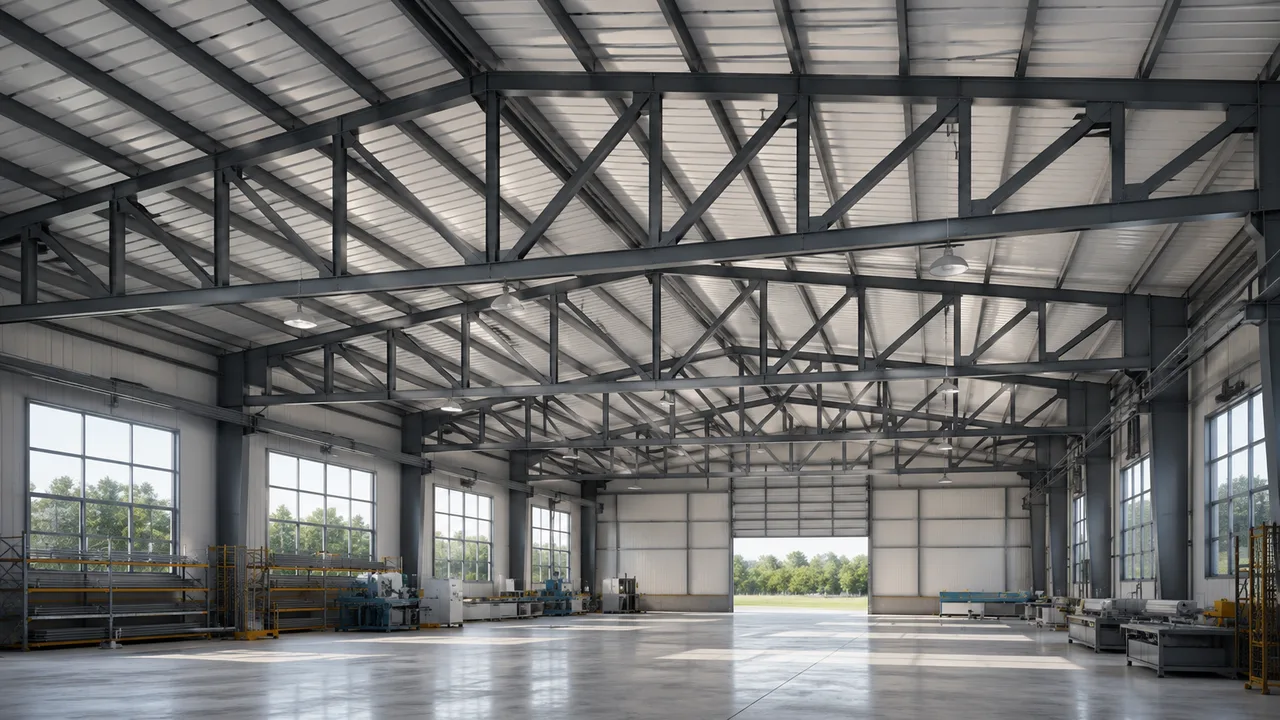
Howe truss design can be useful in roof structures where the project requires longer spans, open interior space, and efficient load transfer. Instead of placing many interior columns under the roof, a truss can carry loads across a wider distance and deliver them to exterior columns, walls, or main frames.
Common roof applications include:
- Warehouses
- Workshops
- Factories
- Agricultural storage buildings
- Covered loading areas
- Community halls
- Large shelters
- Industrial service buildings
In a roof system, loads usually enter through roof sheets, purlins, secondary beams, or service supports. These loads should be transferred to panel points wherever possible. If heavy loads are applied between panel points, the truss members may experience bending that was not intended in the original axial-force design.
Roof trusses also need to resist more than downward gravity load. Wind uplift can reverse forces in some members. Rain, snow, maintenance activity, suspended pipes, lighting, insulation, and mechanical systems can also influence the final design. For this reason, a roof truss should not be designed only for its empty steel weight and roof sheet load.
Coordination is also important. The truss must work with purlins, roof panels, bracing, gutters, drainage systems, insulation, skylights, and the installation sequence. A roof truss may be structurally strong, but if the supporting details are not coordinated, the finished roof system can still face leakage, vibration, deflection, or erection difficulties.
Howe Truss Design for Bridge Structures
Howe trusses have a long history in bridge construction. The triangular framework helps distribute loads across the span and toward the supports. For bridge applications, the truss must support the deck system and resist vertical load, lateral load, vibration, and sometimes repeated dynamic loading.
A bridge may carry pedestrians, maintenance vehicles, utility pipes, industrial equipment, or road traffic depending on its purpose. Each of these loads affects the truss differently. Pedestrian bridges may require vibration control for comfort. Industrial access bridges may need to support pipes, conveyor systems, or maintenance platforms. Vehicle bridges may require stricter checks for live load, impact, fatigue, and deflection.
Common bridge applications for Howe-style truss systems include:
- Pedestrian bridges
- Rural bridges
- Industrial access bridges
- Pipe bridges
- Maintenance walkways
- Service bridges inside industrial plants
In bridge structures, lateral stability is especially important. A bridge truss does not only need strength in its main vertical plane. It also needs bracing to resist wind, sway, deck movement, and out-of-plane buckling. Cross frames, lateral bracing, deck diaphragms, and portal frames may all be needed depending on the bridge type.
Corrosion protection is another major consideration. Many bridges are exposed to rain, humidity, industrial pollution, coastal air, or chemical environments. Protective coatings, galvanizing, drainage details, and inspection access should be considered early, not added as an afterthought.
Howe Truss vs Pratt Truss
A common comparison in steel structure planning is Howe truss vs Pratt truss. These two truss systems may look similar at first because both use top chords, bottom chords, vertical members, and diagonal members. However, the diagonal orientation and force behavior are different.
In a typical Howe truss, the diagonals slope toward the supports and often work in compression under gravity loading. The vertical members often work in tension. In a typical Pratt truss, the diagonals slope toward the center of the span and often work in tension, while the vertical members often work in compression.
This difference matters because steel performs very well in tension, while compression members require more attention to buckling. A compression diagonal may need a larger section, shorter unbraced length, or additional bracing. A tension diagonal may be more material-efficient in some situations, but the final choice depends on span, load position, connection design, fabrication method, and project requirements.
The comparison should not be simplified into “Howe is better” or “Pratt is better.” For some roof structures, a Howe truss may be practical because of layout, fabrication, or architectural requirements. For some bridge structures, a Pratt truss may be preferred because of tension diagonal behavior. For other projects, a Warren, Fink, bowstring, or custom truss arrangement may be more suitable.
Advantages of Howe Truss Design
One advantage of Howe truss design is its clear geometry. The repeated triangular panels are easy for engineers, fabricators, and installers to understand. This can support smoother detailing, workshop fabrication, marking, packing, and site assembly.
Another advantage is efficient load transfer across longer spans. A Howe truss can reduce reliance on heavy solid beams and help create open interior space in roof structures. This is useful for warehouses, workshops, factories, and agricultural buildings where columns may interfere with production, storage, or vehicle movement.
Howe trusses can also support prefabrication. Repeated panels allow similar members and connection details to be produced in a controlled workshop environment. Cutting, drilling, welding, surface treatment, trial assembly, and labeling can be managed before the steel reaches the site. This can reduce field modification and improve erection efficiency.
The system is also adaptable. While Howe trusses were historically associated with timber and iron, modern versions may use structural steel members, bolted connections, welded joints, or hybrid details depending on the project. For industrial buildings and bridges, steel offers strength, consistency, and better compatibility with modern fabrication methods.
Limitations of Howe Truss Design
A Howe truss is practical, but it is not suitable for every project. One limitation is that the diagonal members often work in compression. Compression members must be checked carefully for buckling. If the diagonals are too slender or insufficiently braced, the structure may lose stability before reaching the expected load capacity.
Another limitation is connection complexity. A truss contains many joints, and each joint must transfer force correctly. More panels can improve load distribution, but they also increase the number of plates, bolts, welds, and inspection points. If connection details are crowded or difficult to fabricate, the project may face delays in the workshop or on site.
Large trusses can also create transportation and lifting challenges. A long prefabricated truss may not fit normal transport limits. In that case, the truss may need to be fabricated in segments and assembled on site. This requires splice design, lifting points, temporary supports, and erection bracing.
For exposed structures, corrosion protection must be planned carefully. Outdoor bridges, coastal buildings, industrial plants, and agricultural structures may expose steel members to moisture, chemicals, dust, or salt. Without proper coating, drainage, and inspection access, maintenance costs can increase over time.
Key Engineering Factors in Howe Truss Design
Reliable Howe truss design depends on engineering details, not only on the general truss shape. The same truss form can perform very differently depending on span, depth, panel spacing, bracing, material, and connection design.
Span and Truss Depth
Span length controls much of the structural demand. As the span increases, member forces and deflection become more important. Truss depth also matters. A shallow truss may look cleaner architecturally, but it can create higher member forces and larger deflection. A deeper truss may improve structural efficiency, but it requires more vertical clearance and may affect building height, bridge clearance, or transport size.
The best proportion depends on the project. Roof structures may be limited by architectural height or crane clearance. Bridges may be limited by deck level, waterway clearance, road clearance, or approach elevation.
Panel Spacing
Panel spacing affects member length, connection count, purlin layout, deck support, and fabrication complexity. Smaller panels can reduce individual member length and improve load distribution, but they increase the number of joints. Larger panels reduce the number of connections, but they can increase member forces and bending effects if loads are not applied at panel points.
A practical panel layout should match the secondary structure. In roof applications, this may include purlin spacing and roof sheet support. In bridge applications, it may include deck beams, floor beams, railing posts, and service supports.
Load Conditions
A Howe truss should be designed for the full set of realistic load conditions. Roof structures may need to resist dead load, live load, wind load, rain load, snow load, suspended services, and maintenance loads. Bridge structures may need to resist deck load, pedestrian load, vehicle load, wind, vibration, thermal movement, impact, and fatigue.
Load reversal should also be considered. Wind uplift can change force direction in roof trusses. Bridge movement and dynamic effects can also create force patterns that differ from simple static gravity loading. This is why actual structural analysis is necessary before final member sizing.
Material Selection
Modern roof and bridge Howe trusses often use structural steel because it offers high strength, predictable quality, and compatibility with prefabrication. However, the steel grade, section type, plate thickness, bolt grade, weld requirement, and protective coating must match the project environment.
For indoor roof structures, painted steel may be sufficient in many cases. For exposed bridges or industrial environments, stronger corrosion protection may be required. In aggressive environments, galvanizing, heavy-duty coating systems, or special maintenance access may be needed.
Bracing and Stability
A truss needs stability in more than one direction. It must resist forces in its main vertical plane, but it must also stay stable laterally. Without proper bracing, the truss may twist, sway, or buckle out of plane.
Temporary bracing is also important during installation. A truss that will be stable after the full roof or bridge system is complete may be unstable while being lifted or partially assembled. Erection bracing, temporary supports, lifting plans, and installation sequencing should be part of the project planning.
Fabrication and Installation
Fabrication quality affects the success of the entire truss system. CNC cutting and drilling, accurate welding, correct bolt hole alignment, clear member marking, surface treatment, packing, and transport planning all help reduce field errors.
Installation planning is equally important. Large trusses may require segmented delivery, site assembly, crane lifting, temporary supports, and careful alignment. The design should consider how the truss will actually be fabricated, shipped, lifted, and connected on site.
Common Mistakes in Howe Truss Projects
| Common Mistake | Why It Causes Problems | What to Check |
|---|---|---|
| Choosing Howe truss design only by appearance | A familiar truss shape does not automatically prove structural efficiency. The wrong choice can increase member size, connection complexity, or installation difficulty. | Review span, load type, material, roof or bridge layout, fabrication method, transport limits, and installation conditions. |
| Ignoring compression member buckling | Howe diagonals and top chords often work in compression. If they are too slender or poorly braced, they may buckle before reaching expected capacity. | Check slenderness ratio, unbraced length, member section, end condition, and lateral restraint. |
| Weak connection detailing | Truss forces must pass through joints. Poor gusset plates, bolt layouts, welds, or hole alignment can reduce the reliability of the whole structure. | Review gusset plates, bolts, welds, splice plates, fabrication tolerance, and inspection access. |
| Poor lateral bracing | A truss can be strong in elevation but unstable out of plane. This risk is high during lifting, partial assembly, and early erection stages. | Plan permanent bracing, temporary erection bracing, cross frames, purlin restraint, and deck or roof diaphragm action. |
| No corrosion planning | Outdoor steel trusses can deteriorate when exposed to water, salt, chemicals, or industrial pollution. | Specify coating, galvanizing, drainage, sealed details, maintenance access, and inspection intervals. |
| Overlooking transportation limits | Large truss sections may be difficult to ship or lift, causing site delays and unexpected splice requirements. | Check segment size, transport route, crane capacity, lifting points, site access, and field assembly plan. |
When Should You Choose a Howe Truss?
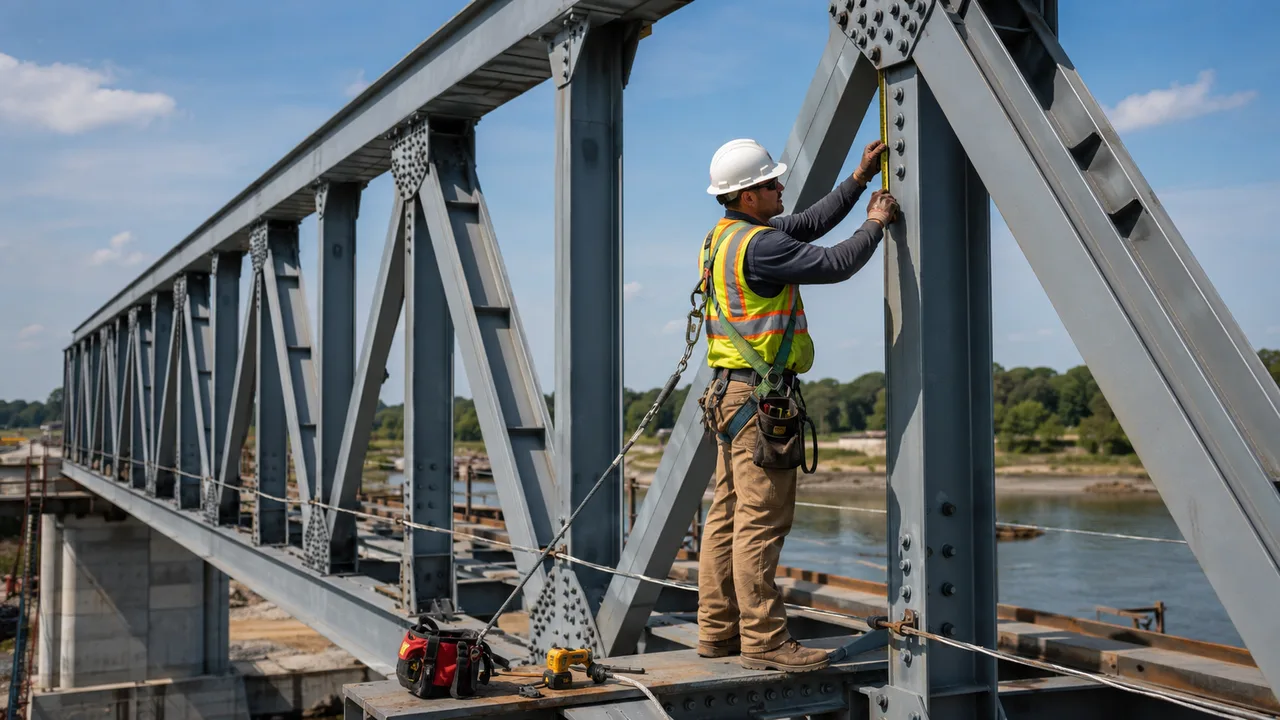
A Howe truss may be a good choice when the project needs a clear long-span structure, repeated panel geometry, and efficient load transfer through a triangular framework. It can be useful for roof structures where open interior space is important and for bridge structures where loads can be transferred through planned panel points.
It may also be practical when the project team can properly brace compression members and coordinate connection details. Since Howe diagonals often work in compression, bracing and member sizing are especially important. The system should not be chosen only because it is familiar or visually simple.
For some projects, other truss types may be more efficient. Pratt trusses, Warren trusses, Fink trusses, bowstring trusses, and custom steel truss systems all have their own advantages. The best choice depends on the actual span, load conditions, material, fabrication capacity, transportation plan, and long-term service environment.
FAQ About Howe Truss Design
What is Howe truss design used for?
Howe truss design is used for roof structures, bridge structures, industrial buildings, pedestrian bridges, agricultural buildings, covered walkways, and long-span steel framing. It is useful when a project needs a stable triangular framework and clear load transfer.
How does a Howe truss carry load?
A Howe truss carries load through its chords, vertical members, and diagonal members. Loads enter through roof purlins, bridge decks, or secondary framing, then move through the truss panels toward the supports.
Is Howe truss design good for steel bridges?
Yes, Howe truss design can be used for steel bridges, especially pedestrian bridges, industrial access bridges, rural bridges, and service bridges. However, bridge design must consider compression members, lateral bracing, vibration, corrosion, deck support, and inspection access.
What is the difference between Howe truss and Pratt truss?
The main difference is diagonal direction and force behavior. In a Howe truss, diagonals often work in compression. In a Pratt truss, diagonals often work in tension. This affects member sizing, buckling checks, and material efficiency.
Is Howe truss design suitable for roofs?
Yes. Howe truss design can be suitable for roofs that need longer spans, open interior space, and efficient roof load transfer. It is often considered for warehouses, workshops, factories, agricultural buildings, and large shelters.
What are the main disadvantages of a Howe truss?
The main disadvantages include compression member buckling, connection complexity, lateral bracing requirements, transportation limits for large truss sections, and corrosion protection needs for exposed structures.
What materials are used in Howe trusses?
Howe trusses were historically built with timber and iron, but modern roof and bridge applications often use structural steel. Steel provides high strength, consistent quality, and better compatibility with prefabrication and industrial construction.
Conclusion
Howe truss design remains useful because it provides a clear and practical structural form for roof and bridge applications. Its triangular geometry can support long spans, reduce the need for heavy solid beams, and create open spaces for industrial, agricultural, commercial, and infrastructure projects.
However, the success of a Howe truss depends on engineering details. Compression members must be checked for buckling. Connections must transfer force safely. Lateral bracing must control out-of-plane movement. Corrosion protection, fabrication tolerance, transport planning, and installation sequence must all be considered.
A Howe truss works best when it is selected based on real project conditions, not only because it is a familiar truss shape. When span, load, material, fabrication, and maintenance needs are properly coordinated, a Howe truss can provide a strong, efficient, and reliable solution for modern steel roof and bridge structures.