What Is On-site Steel Structure Construction?
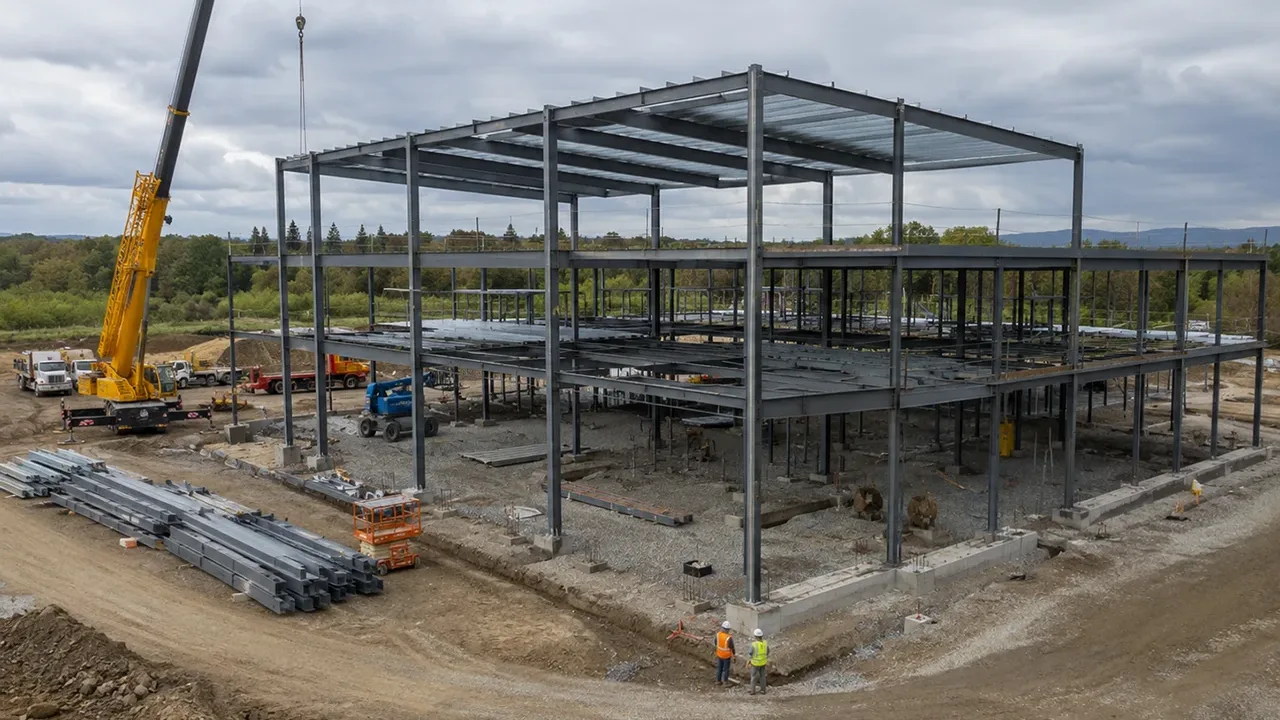
On-site steel structure construction refers to the field assembly and installation of prefabricated steel components according to approved engineering drawings and construction specifications. Unlike fabrication, which takes place inside a manufacturing facility, on-site construction is performed directly at the project location using cranes, lifting equipment, surveying instruments, and experienced construction teams.
The objective is to assemble the fabricated components into a complete structural system while maintaining dimensional accuracy, structural stability, and construction safety.
A typical on-site construction project includes:
- Site preparation
- Foundation verification
- Material inspection
- Steel frame erection
- Structural connections
- Roof and secondary steel installation
- Final inspection and handover
Every activity follows a carefully planned construction sequence to ensure efficient project execution.
Why On-site Steel Structure Construction Is Important
Safe Structural Assembly
Proper field construction ensures the completed building performs according to engineering calculations. Even perfectly fabricated steel members require accurate installation and secure connections to achieve the intended structural capacity.
Professional construction teams ensure:
- Accurate member positioning
- Proper structural alignment
- Secure bolted connections
- Reliable load transfer
- Overall structural stability
Following approved erection procedures significantly reduces construction risks.
Efficient Project Execution
Well-organized site activities improve productivity while keeping construction schedules under control.
Efficient execution provides:
- Shorter installation periods
- Better equipment utilization
- Improved labor productivity
- Reduced construction delays
- Smoother project coordination
Efficient field operations help owners begin production or occupancy sooner.
Quality Assurance During Installation
Continuous inspection throughout construction ensures every structural component meets project requirements.
Quality assurance typically includes:
- Engineering supervision
- Dimensional verification
- Bolt torque inspection
- Welding inspection
- Final structural review
Regular inspections identify potential issues before they affect project quality.
Adaptability to Site Conditions
Every construction site presents unique challenges including weather, terrain, logistics, and available working space.
Professional site teams adapt by:
- Adjusting lifting sequences
- Managing restricted access
- Planning around weather conditions
- Optimizing equipment positioning
- Maintaining construction safety
This flexibility is particularly valuable for remote industrial and mining projects.
Typical On-site Construction Activities
Foundation Verification
Before steel erection begins, the foundation must be inspected to verify that it complies with engineering requirements.
Inspection includes:
- Anchor bolt positioning
- Foundation elevation
- Base plate preparation
- Concrete condition
- Dimensional verification
Accurate foundations simplify the installation of structural steel.
Material Receiving and Inspection
All delivered components are checked before installation begins.
The inspection process includes:
- Component identification
- Shipping damage inspection
- Quantity verification
- Protective coating inspection
- Engineering documentation review
Early verification prevents unnecessary delays during construction.
Steel Structure Erection
The primary steel frame is assembled according to the approved erection sequence.
This stage generally includes:
- Steel column installation
- Beam installation
- Temporary bracing
- Frame stabilization
- Alignment adjustments
Careful sequencing maintains structural stability throughout the erection process.
Connection Installation
After the primary frame is erected, permanent structural connections are completed.
Connection work includes:
- High-strength bolt installation
- Field welding where specified
- Connection plate installation
- Bolt tightening verification
- Joint inspection
Properly executed connections ensure safe structural load transfer.
Roof and Secondary Steel Installation
Once the primary frame is stable, secondary structural members are installed.
Typical components include:
- Roof framing
- Purlins
- Wall girts
- Bracing systems
- Roof support members
Secondary steel enhances structural rigidity while supporting roof and wall systems.
Final Inspection and Handover
Before project completion, comprehensive inspections confirm that every installation requirement has been satisfied.
Final verification includes:
- Dimensional measurements
- Structural alignment checks
- Bolt inspection
- Safety assessment
- Construction documentation
A successful final inspection confirms the structure is ready for operation and long-term service.
Equipment Used for On-site Steel Structure Construction
Mobile Cranes
Mobile cranes perform most heavy lifting operations, allowing steel components to be positioned safely and efficiently.
Lifting Equipment
Slings, shackles, spreader beams, and lifting accessories ensure loads are handled safely during installation.
Boom Lifts and Scaffolding
Elevated work platforms provide safe access for workers performing bolting, welding, and inspection tasks.
Survey Instruments
Total stations, laser levels, and surveying equipment verify structural alignment throughout construction.
Torque Wrenches and Inspection Tools
Specialized tools ensure structural bolts are tightened according to engineering specifications.
Engineering Considerations
Construction Planning
Proper planning coordinates equipment, manpower, material delivery, and installation sequences.
Weather Conditions
Wind, rain, and temperature can affect lifting operations and worker safety, requiring flexible scheduling.
Lifting Safety
Every lift should follow approved lifting plans to minimize operational risks.
Site Logistics
Efficient material storage and equipment movement improve construction productivity.
Structural Stability During Erection
Temporary bracing and controlled erection sequences maintain structural stability until the permanent system is fully completed.
Applications of On-site Steel Structure Construction
- Industrial buildings
- Warehouses
- Manufacturing plants
- Mining facilities
- Commercial buildings
- Infrastructure projects
Each application requires detailed planning and experienced site management to achieve safe, efficient construction.
Why Choose XTD Steel Structure
XTD Steel Structure combines precision fabrication with professional engineering support to help customers complete on-site steel structure construction efficiently. From engineering coordination and fabrication to installation guidance and international project experience, XTD Steel Structure supports projects requiring reliable structural performance, quality assurance, and efficient construction management.
“`