When Warehouse Insulation Becomes a Performance Requirement
Not every warehouse needs the same level of insulation. A simple storage shed may only need basic weather protection, while an industrial warehouse in a hot, cold, humid, or temperature-sensitive environment requires stronger control over internal conditions. In these projects, insulation should be considered early in the design stage, not added as an afterthought.
An insulated steel warehouse is especially useful when the stored goods can be affected by heat, moisture, condensation, or large temperature swings. This can include packaged food, agricultural products, pharmaceutical materials, chemicals, electronics, machinery components, paper products, textiles, or other goods that require a cleaner and more stable environment.
Insulation also matters for operational efficiency. If workers spend long hours inside the warehouse, or if the facility uses ventilation, cooling, heating, or production equipment, a better insulated building envelope can improve comfort and reduce the burden on mechanical systems.
What an Insulated Steel Warehouse Helps Control
Temperature Stability
Roof and wall insulation help reduce heat transfer between the outside environment and the warehouse interior. In hot climates, this can reduce heat buildup under the roof and create a more manageable working environment. In cold regions, insulation helps limit heat loss and supports more stable indoor conditions.
Temperature stability is particularly important when storage quality affects product value. Even if a warehouse is not designed as a full cold storage facility, better insulation can still help reduce extreme internal temperature changes.
Condensation and Moisture Risk
Condensation can appear when warm, moist air meets colder metal surfaces. In steel warehouses, this issue may affect roof panels, purlins, wall areas, stored goods, and packaging materials. Over time, moisture can lead to product damage, corrosion risk, mold issues, or reduced indoor comfort.
Proper insulation, ventilation, sealing, and roof design can help reduce condensation risk. The goal is not only to install insulated panels, but to coordinate the full warehouse envelope so moisture is managed more effectively.
Energy Use and Operational Comfort
For warehouses with HVAC systems, packaging zones, production support areas, or long working hours, insulation can support more efficient energy use. A better building envelope reduces unnecessary heat gain or heat loss, helping mechanical systems work more effectively.
Improved indoor conditions also support worker comfort. In industrial warehouses, this can affect productivity, equipment operation, and the overall usability of the facility.
Common Applications for Insulated Steel Warehouses
Food and Agricultural Storage
Food and agricultural storage facilities often need better protection from heat, humidity, and condensation. Grain, packaged food, seeds, raw agricultural materials, and processed goods may require a warehouse environment that is cleaner and more stable than a standard steel building.
Insulated roof and wall systems can help protect stored products while supporting ventilation and controlled access through doors, loading areas, and service openings.
Pharmaceutical and Chemical Storage
Pharmaceutical materials, chemical products, and sensitive industrial goods often require more careful warehouse planning. While not every project needs a fully controlled environment, many facilities benefit from reduced temperature fluctuation and better moisture control.
In these applications, insulation must be coordinated with ventilation, fire safety, internal layout, and local building requirements. The final design should match the actual storage condition required by the goods.
Manufacturing and Logistics Facilities
Many industrial warehouses are connected to production, packaging, assembly, or logistics operations. These facilities may include loading docks, work zones, equipment areas, and storage zones in one building. Insulation helps create a more usable internal environment across different functions.
For logistics operators, an insulated warehouse can also improve the handling of goods that pass through multiple climate conditions during transport and storage.
Insulated Roof and Wall System Options
Insulated Sandwich Panels
Insulated sandwich panels are commonly used for steel warehouse roofs and walls. Depending on the project requirement, panel options may include EPS, rock wool, PU, or PIR insulation cores. Each material has different characteristics related to thermal performance, fire resistance, cost, weight, and application suitability.
The right panel choice depends on warehouse use, local climate, fire safety requirements, budget, and expected service life. For example, a general industrial warehouse may use a different panel system from a facility storing temperature-sensitive products.
Roof Insulation and Ventilation Coordination
The roof is one of the most important areas for insulation performance because it receives direct heat exposure and is also a common location for condensation. Roof panel selection, slope, drainage, ventilation, skylight placement, ridge vents, and sealing details should be considered together.
A good roof system helps reduce heat transfer while preventing moisture problems. For warehouses in humid or high-temperature regions, this coordination can make a significant difference in daily operation.
Wall Panels, Doors, and Openings
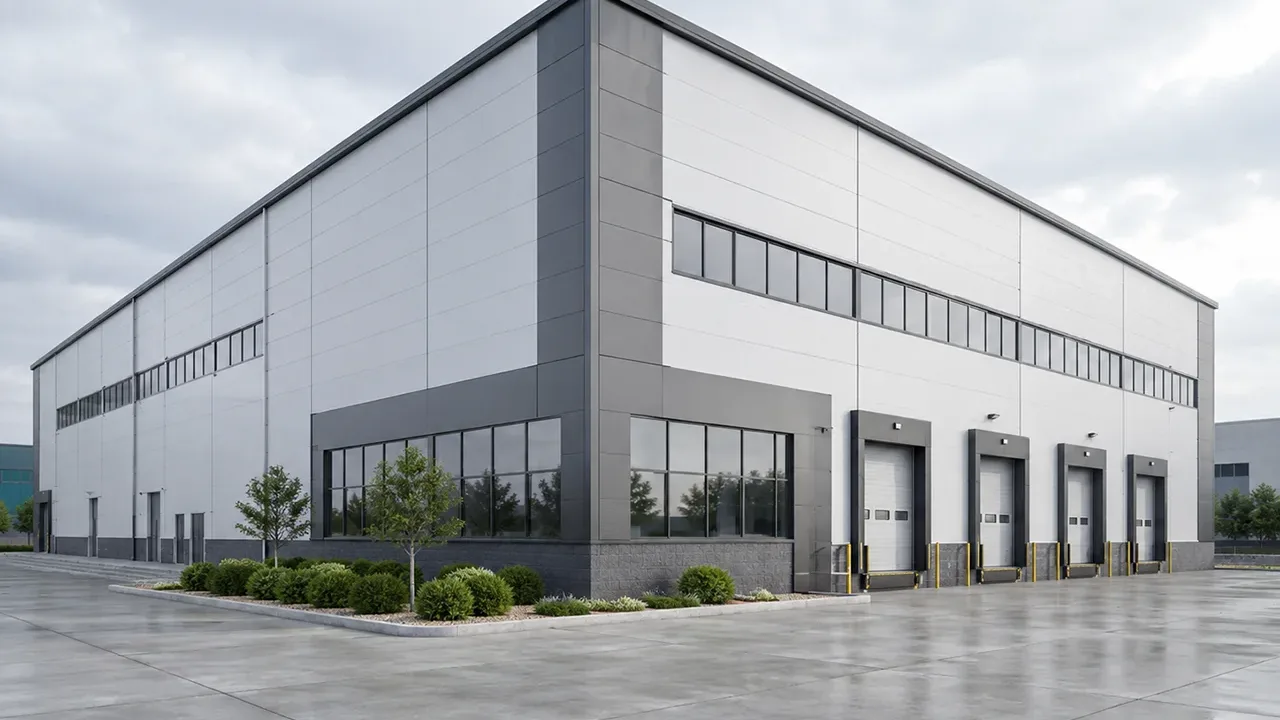
Wall insulation performance can be reduced if doors, windows, louvers, loading dock openings, and wall penetrations are not planned properly. Large openings are often necessary for warehouse operation, but they must be coordinated with the insulation strategy.
Roll-up doors, sectional doors, dock shelters, windows, and ventilation openings should be located and specified according to traffic flow, material handling needs, and indoor environmental requirements.
Structural Design Still Comes First
Insulation improves warehouse performance, but the steel structure must still be designed correctly from the beginning. The main frame, purlins, girts, bracing, roof slope, panel fixing system, and foundation coordination all affect how well the building performs over time.
A reliable insulated steel warehouse should be planned as a complete system. The structure must support roof and wall panels properly, resist wind and local environmental loads, allow efficient drainage, and provide enough flexibility for doors, equipment, loading docks, and future expansion.
This is why early coordination between structural design and insulation system selection is important. If panel types, openings, and ventilation are decided too late, the project may require redesign or compromise on performance.
Recommended Configurations for Different Storage Needs
Different warehouse uses require different insulation priorities. The table below shows common configuration directions for insulated steel warehouse projects.
| Storage Requirement | Recommended Insulation Focus | Design Consideration |
|---|---|---|
| General industrial goods | Basic roof and wall insulation | Focus on heat reduction, weather protection, and daily comfort |
| Food or agricultural storage | Improved moisture and temperature control | Coordinate ventilation, drainage, and clean internal layout |
| Temperature-sensitive goods | Higher thermal performance panels | Review required temperature range and HVAC plan early |
| Hot climate warehouse | Roof heat reduction and ventilation | Consider roof insulation, air movement, and sunlight exposure |
| Cold region warehouse | Heat retention and condensation control | Check roof load, sealing detail, and indoor heating strategy |
| Warehouse with HVAC | Continuous building envelope insulation | Reduce energy loss through roof, walls, doors, and openings |
| Warehouse with loading docks | Opening control and wall system coordination | Plan dock doors, shelters, traffic flow, and panel protection |
Fabrication and Installation Quality Affect Insulation Performance
Insulation performance depends not only on panel material, but also on fabrication accuracy and installation quality. Steel members must be fabricated accurately so roof panels, wall panels, doors, and accessories can be installed with proper alignment.
Panel overlap, fastening details, sealant application, flashing, roof-wall joints, gutter areas, and door openings all influence the final result. Poor alignment or weak sealing can reduce insulation value and allow water, air, or moisture problems to develop.
XTD Steel Structure supports insulated warehouse projects through structural design coordination, steel fabrication, surface treatment, component marking, export packing, and installation support based on project requirements. This helps keep the steel frame, enclosure system, and construction sequence aligned from factory to site.
Why Choose an Insulated Steel Warehouse Instead of a Standard Steel Warehouse?
A standard steel warehouse can provide strong structural protection, but it may not offer enough thermal comfort or moisture control for demanding storage conditions. Choosing an insulated solution gives owners better control over the internal environment and improves the long-term value of the building.
- Better temperature control for stored goods and working areas
- Reduced condensation risk on roof, wall, and internal steel surfaces
- Improved storage conditions for sensitive products and materials
- Better worker comfort in hot, cold, or humid environments
- Lower heating or cooling burden when HVAC systems are used
- Cleaner internal environment for manufacturing, packaging, or logistics operations
- Stronger long-term asset value compared with a basic warehouse shell
For owners who expect the warehouse to protect inventory, support daily operations, and remain efficient over many years, insulation can be a practical investment rather than an unnecessary cost.
Project Workflow for Insulated Warehouse Construction
Requirement Review and Climate Analysis
The process begins by understanding the project location, local temperature range, humidity, stored goods, warehouse size, loading dock requirements, working hours, and whether HVAC or mechanical ventilation will be used. These inputs help define the required level of insulation performance.
Structural Design and Insulation System Selection
After the requirements are clear, the steel frame system, roof and wall panels, insulation material, door layout, ventilation design, and drainage system can be coordinated. This step ensures that the warehouse is designed as a complete building system rather than separate structural and enclosure parts.
Fabrication, Delivery, and Site Installation Support
Once drawings and specifications are confirmed, steel components are fabricated, inspected, marked, packed, and delivered according to the project sequence. XTD Steel Structure can provide fabrication and delivery coordination for overseas warehouse projects, helping clients move from design to installation more efficiently.
Insulated Steel Warehouse FAQs
What is the main purpose of an insulated steel warehouse?
The main purpose is to improve temperature stability, reduce condensation risk, protect stored goods, and create a more comfortable and efficient internal environment compared with a standard non-insulated warehouse.
Which insulation panel is suitable for steel warehouses?
The suitable panel depends on the warehouse function, fire safety requirements, climate, budget, and temperature control needs. Common options include EPS, rock wool, PU, and PIR sandwich panels.
Can an insulated warehouse support temperature-controlled storage?
Yes. Insulation can support temperature-controlled storage, especially when coordinated with HVAC, ventilation, door sealing, and operational planning. The required temperature range should be confirmed during the design stage.
Is an insulated steel warehouse more expensive than a standard warehouse?
Usually yes, because insulated panels and sealing details add cost. However, the investment may reduce energy burden, improve storage quality, and increase long-term building value when insulation is required by the operation.
Build a Warehouse That Protects More Than Space
An insulated steel warehouse is not only about creating enclosed storage area. It is about protecting inventory, improving energy performance, reducing moisture risk, and supporting stable industrial operation. For many projects, these benefits can make the warehouse more reliable and more valuable throughout its service life.
To start planning your project, prepare key details such as warehouse dimensions, project location, stored materials, temperature requirements, humidity concerns, loading dock layout, and expected construction schedule. With the right engineering and fabrication support, your warehouse can be designed to deliver both structural strength and practical environmental performance.