What Is Prefabricated Steel Fabrication?
Definition and Manufacturing Concept
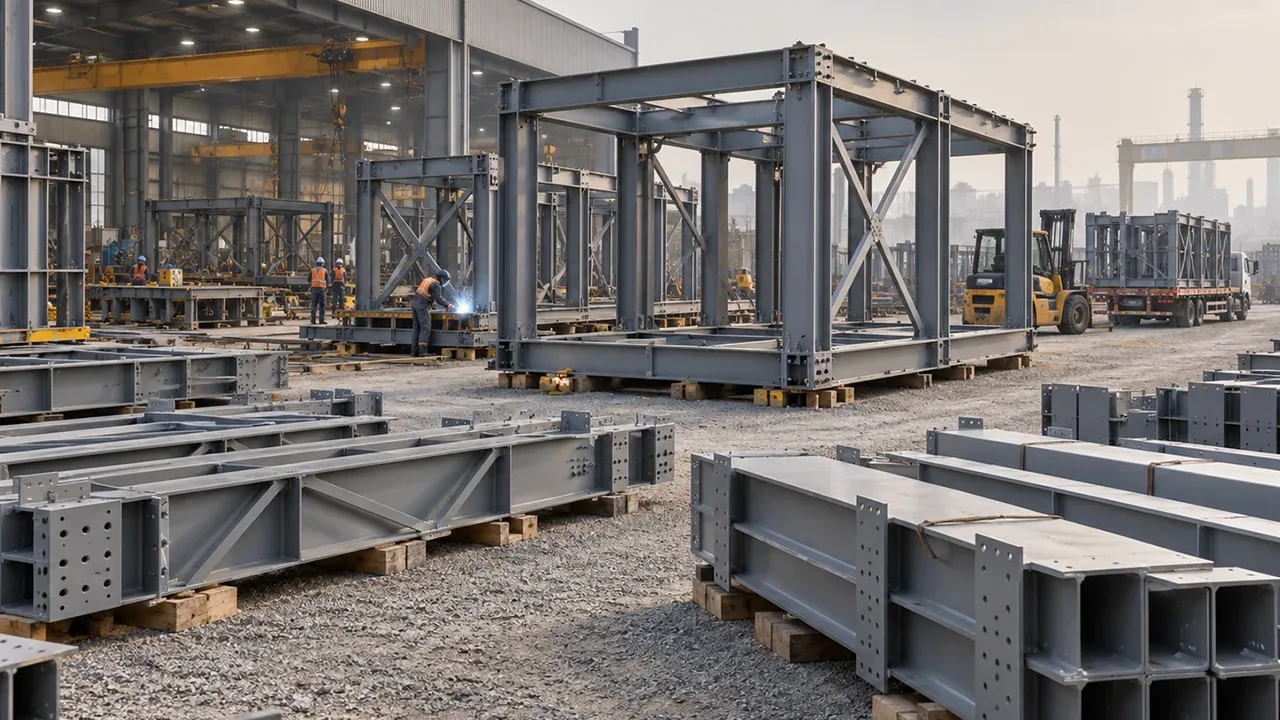
Prefabricated steel fabrication refers to the production of structural steel components away from the final construction site. Instead of performing extensive cutting, drilling, fitting, and welding in the field, these operations are completed in a dedicated manufacturing facility using controlled production procedures and specialized equipment.
The fabricated components may include primary structural members, secondary framing, connection plates, bracing systems, trusses, and customized assemblies. After production, each component is inspected, marked, packed, and organized for transportation.
Why Prefabrication Improves Project Efficiency
Factory fabrication allows several project activities to be coordinated in parallel. While site preparation and foundation work progress, structural components can be manufactured under controlled conditions. This helps reduce the amount of structural work that must wait until the building site is fully ready.
Prefabrication also allows production teams to use fixed workshop equipment, repeatable procedures, dedicated welding stations, CNC machinery, and established inspection points. These conditions can improve consistency compared with carrying out the same activities entirely on site.
Typical Applications
Prefabricated steel systems can be used across a wide range of projects, including:
- Industrial factories and workshops
- Steel warehouses and logistics facilities
- Commercial and public buildings
- Agricultural buildings
- Aircraft hangars
- Infrastructure support structures
- Mining and energy facilities
- Customized industrial steel structures
Our Prefabricated Steel Fabrication Capabilities
Engineering Review
Manufacturing begins with a review of the available structural drawings, specifications, material requirements, connection details, tolerances, and project interfaces. The objective is to confirm that the approved structural information can be translated into practical production steps.
During this review, attention may be given to component dimensions, shipping limitations, splice locations, assembly requirements, surface treatment, and any details that could influence fabrication or installation.
CNC Steel Processing
Computer-controlled production equipment can be used to process steel plates and sections with consistent dimensions. CNC operations may include cutting, drilling, profiling, bevel preparation, and other component-specific machining.
This is particularly important for projects involving repeated components or multiple connection interfaces, where small dimensional differences can affect installation efficiency.
Precision Cutting and Drilling
Accurate cutting and hole preparation support reliable fit-up during assembly. Steel plates, beams, columns, connection plates, and stiffeners are processed according to approved production information.
Hole locations, end dimensions, plate geometry, and connection interfaces are checked against the required fabrication tolerances before components progress to subsequent stages.
Welding and Assembly
Structural components are assembled and welded using defined production procedures. The fabrication sequence is planned to maintain geometry, connection compatibility, and dimensional stability.
Where necessary, fixtures, temporary restraints, and intermediate dimensional checks can be used to help control movement or distortion during welding.
Surface Treatment
After fabrication, components may receive surface preparation and protective treatment according to the project environment. Available systems can include:
- Shot blasting or abrasive surface preparation
- Shop primer
- Industrial anti-corrosion coating systems
- Finish paint systems
- Hot-dip galvanizing where suitable
The selected system should reflect environmental exposure, project specifications, expected service conditions, and transportation requirements.
Component Identification and Packaging
Finished components are marked using member numbers, labels, or project-specific identification systems. Clear identification helps connect delivered components with installation drawings and erection sequences.
Packaging is planned according to component size, transport method, destination, handling requirements, and installation priorities.
Prefabricated Steel Components We Manufacture
Steel Columns
Steel columns form the vertical load-bearing system of many industrial and commercial structures. They can be fabricated from rolled sections or built-up plate members depending on structural loads, building height, and project-specific requirements.
Steel Beams
Primary and secondary beams can be manufactured for portal frames, floor systems, roof structures, mezzanines, and other load-bearing applications. End plates, stiffeners, holes, and connection details can be incorporated during factory fabrication.
Roof Trusses
Steel trusses are commonly used for long-span roofs where larger column-free areas are required. Depending on transportation and lifting limitations, trusses may be manufactured as complete units or divided into transportable segments.
Portal Frame Components
Portal frame systems typically include columns, rafters, haunches, bracing, purlins, and connection assemblies. Factory production allows these components to be prepared as coordinated packages for warehouse, factory, workshop, and agricultural building projects.
Bracing Systems
Roof bracing, wall bracing, tie members, and other stability components are fabricated according to the structural system and load-transfer requirements defined in the project drawings.
Connection Plates
Base plates, end plates, gusset plates, splice plates, stiffeners, and other connection components require accurate dimensions and hole patterns because they directly influence field assembly.
Customized Structural Components
Projects may also require special built-up members, equipment supports, industrial platforms, custom brackets, transfer structures, or non-standard assemblies. These components can be manufactured according to project-specific engineering information.
Prefabricated Steel Fabrication Process
Project Review
The process begins by reviewing project scope, available drawings, component quantities, material grades, required standards, surface protection, delivery destination, and expected schedule.
This stage establishes the manufacturing requirements and identifies any information that must be clarified before material procurement or production begins.
Shop Drawing Verification
Shop drawings and fabrication information are reviewed to confirm dimensions, member marks, connection details, hole locations, weld requirements, and assembly relationships.
For larger projects, production packages may be organized according to building zones or erection sequence so that fabrication and shipping can better support site installation.
Material Preparation
Steel plates and sections are selected according to the approved specifications and prepared for production. Material identification is maintained as required by the project and internal quality procedures.
CNC Manufacturing
Steel is processed through cutting, drilling, profiling, and other machining operations. CNC technology supports repeatability and helps maintain consistent geometry across large quantities of components.
Welding and Assembly
Prepared parts are fitted, assembled, and welded according to approved production information. Dimensional checks may be carried out before, during, and after welding to maintain required geometry and interface accuracy.
Quality Inspection
Quality inspection is integrated into the fabrication workflow rather than treated as a final-only activity. Material verification, dimensional checks, weld inspection, component identification, and surface condition are reviewed at defined stages before components are released for shipment.
For prefabricated steel fabrication, this controlled inspection process is especially valuable because the objective is to deliver components that can move directly from transport into organized site assembly with minimal corrective work.
Packing and Shipping
After fabrication and inspection are complete, structural components are grouped, marked, and packed according to project requirements. Packages may be organized by building zone, erection sequence, component type, or transport method.
Shipping plans can include container loading, open-top or flat-rack arrangements, and break bulk transportation for oversized components. Proper packaging protects critical connection areas and helps simplify unloading, storage, and installation at the destination.
Quality Control During Prefabricated Steel Fabrication
Material Inspection
Incoming steel materials are checked against approved project specifications before entering production. Depending on project requirements, verification may include material grade, thickness, dimensions, certificates, and traceability information.
Consistent material control helps ensure that fabricated components correspond with the structural requirements defined during engineering.
Dimensional Accuracy
Dimensional control is maintained throughout cutting, drilling, fit-up, welding, and final inspection. Particular attention is given to dimensions that directly affect field assembly, including bolt-hole positions, base plate geometry, member lengths, connection interfaces, and mating surfaces.
Maintaining these critical dimensions reduces the risk of misalignment and unnecessary modification during erection.
Welding Inspection
Welded connections are inspected according to the technical requirements of the project. Visual examination is commonly used, while additional non-destructive testing may be specified for particular joints, components, or structural applications.
Inspection criteria and documentation should be confirmed before production so that quality requirements remain consistent throughout the fabrication process.
Surface Coating Inspection
Protective coating systems are reviewed for surface preparation, coverage, application quality, and specified thickness where required. Coating inspection helps verify that the steel receives the intended level of corrosion protection before transportation.
Factory Acceptance Inspection
Before release, finished components may undergo final factory inspection covering dimensions, quantities, marking, connection details, surface treatment, packaging readiness, and required documentation.
This final review creates an additional checkpoint before components leave the controlled manufacturing environment.
Applications of Prefabricated Steel Fabrication
Industrial Buildings
Industrial projects use prefabricated steel components for production buildings, workshops, maintenance facilities, processing plants, utility buildings, and equipment support structures. Factory fabrication allows structural packages to be coordinated around operational loads, equipment zones, and installation priorities.
Warehouses
Steel warehouses commonly use prefabricated portal frames, rafters, columns, bracing, purlins, girts, and connection assemblies. Large clear-span layouts can be produced efficiently while reducing the amount of fabrication required at the construction site.
Factory Buildings
Factory structures can incorporate high clearances, crane systems, production lines, mezzanines, and customized equipment interfaces. Prefabricated components can be produced according to specific manufacturing layouts and structural loading requirements.
Commercial Buildings
Commercial facilities such as showrooms, retail buildings, offices, exhibition spaces, and service centers can benefit from prefabricated steel systems where rapid structural installation and flexible interior planning are important.
Agricultural Buildings
Agricultural applications include machinery storage buildings, livestock facilities, grain warehouses, feed storage structures, agricultural workshops, and processing buildings. Steel components can be prepared with surface protection suitable for the expected operating environment.
Infrastructure Projects
Prefabricated structural steel can support transport facilities, corridors, canopies, public buildings, utility structures, and other infrastructure where factory-controlled production and organized site assembly are advantageous.
Mining and Energy Facilities
Mining, power generation, renewable energy, and industrial utility projects may require platforms, support frames, process structures, workshops, and equipment buildings. Prefabrication allows these components to be manufactured before delivery to remote or schedule-sensitive project sites.
Advantages of Prefabricated Steel Fabrication
Faster Construction
Factory production allows steel fabrication to progress while foundations and other site activities are being completed. Once delivered, components are primarily assembled rather than extensively manufactured in the field, helping shorten the structural installation period.
Higher Manufacturing Precision
Dedicated workshop equipment, controlled production procedures, and CNC processing support more consistent dimensions across components. This is particularly useful for repetitive frames, multi-bay structures, and projects with numerous bolted interfaces.
Better Quality Consistency
Manufacturing in a controlled environment allows defined inspection points to be incorporated throughout production. Material preparation, fit-up, welding, dimensions, and surface treatment can be monitored before the components are shipped.
Reduced Site Labor
Completing major cutting, drilling, welding, and assembly operations in the factory reduces the amount of specialist fabrication work required at the construction site. Site crews can focus more directly on erection, alignment, bolting, and completion activities.
Easier Installation
Components that are accurately fabricated, clearly identified, and packaged according to erection needs are easier to organize during installation. This can reduce unnecessary handling and help site teams locate the correct members for each construction stage.
Improved Project Coordination
Prefabrication creates a direct connection between engineering, manufacturing, quality management, logistics, and erection planning. When these activities are coordinated early, production packages and delivery schedules can better reflect actual site priorities.
Why Choose XTD Steel Structure?
A capable fabrication partner should provide more than workshop capacity. Reliable delivery requires an understanding of engineering information, production sequencing, tolerances, quality requirements, transportation constraints, and installation needs.
- Advanced CNC cutting, drilling, and processing capabilities
- Fabrication of both primary and secondary steel components
- Engineering review and shop drawing coordination
- Controlled welding and dimensional inspection
- Multiple surface protection options
- Flexible production capacity for customized projects
- International packaging and export experience
- Production scheduling coordinated with project delivery requirements
XTD Steel Structure supports prefabricated steel projects through coordinated engineering review, manufacturing, inspection, packaging, and international delivery preparation for industrial, commercial, agricultural, and infrastructure applications.
Frequently Asked Questions
What is included in prefabricated steel fabrication?
The service can include engineering review, shop drawing coordination, material preparation, CNC cutting and drilling, welding, assembly, surface treatment, quality inspection, component marking, packaging, and preparation for transport.
Can you fabricate according to our drawings?
Yes. Components can be manufactured according to customer-provided structural drawings, approved shop drawings, technical specifications, material requirements, and quality standards.
Do you provide surface treatment?
Yes. Depending on project requirements, steel components can receive blasting, shop primer, industrial coating systems, finish paint, or hot-dip galvanizing where appropriate.
Can prefabricated components be exported directly?
Yes. Components can be inspected, marked, packaged, and organized for international shipment using containers, flat racks, open-top equipment, or break bulk transportation depending on their dimensions.
What information is needed for a quotation?
For an accurate quotation, provide available structural drawings, component or building quantities, steel grades, surface treatment requirements, project destination, required standards, and expected delivery schedule.
Request a Prefabricated Steel Fabrication Quote
If your project requires reliable prefabricated steel fabrication for buildings, structural components, or customized industrial assemblies, share your drawings, technical specifications, quantities, coating requirements, and delivery information with our team. We can review the manufacturing scope and develop a production plan based on the actual structural and logistical requirements of your project.
For EPC contractors, developers, engineering firms, steel building suppliers, and international project teams, coordinated factory fabrication can provide a practical way to increase production control, reduce field work, and prepare structural packages for efficient installation.