Integrated Steel Structure Manufacturing and Contracting Services
One Partner for Fabrication and Construction
When fabrication and construction are handled through a coordinated service scope, communication between production teams and site teams becomes more direct. Questions concerning connection details, component dimensions, erection sequence, transportation limits, or site access can be considered before fabrication reaches an advanced stage.
This reduces the number of handovers between separate organizations and provides clearer responsibility for issues that affect both manufacturing and installation.
Project-Specific Service Scope
The exact service scope can be adapted according to project requirements. Depending on the contract, integrated support may include:
- Engineering and drawing review
- Fabrication detailing coordination
- Structural steel manufacturing
- Surface treatment and corrosion protection
- Component marking and packaging
- Transportation and logistics planning
- Structural erection coordination
- Technical support during construction
This flexibility allows project owners and contractors to define responsibilities according to local construction conditions and their existing project team.
What Does a Steel Structure Manufacturer and Contractor Provide?
Engineering and Technical Coordination
Before production begins, structural drawings, specifications, connection details, member sizes, loading requirements, and installation conditions should be reviewed. Particular attention is given to interfaces that may affect fabrication or site erection.
Important considerations can include foundation geometry, anchor bolt positions, transport segmentation, crane access, field splice locations, secondary steel interfaces, and the relationship between structural components and building systems.
Steel Structure Fabrication
Manufacturing may include primary and secondary steel elements such as:
- Columns and main beams
- Roof trusses and structural frames
- Bracing systems
- Base plates and connection plates
- Purlins and secondary framing
- Built-up steel members
- Customized structural assemblies
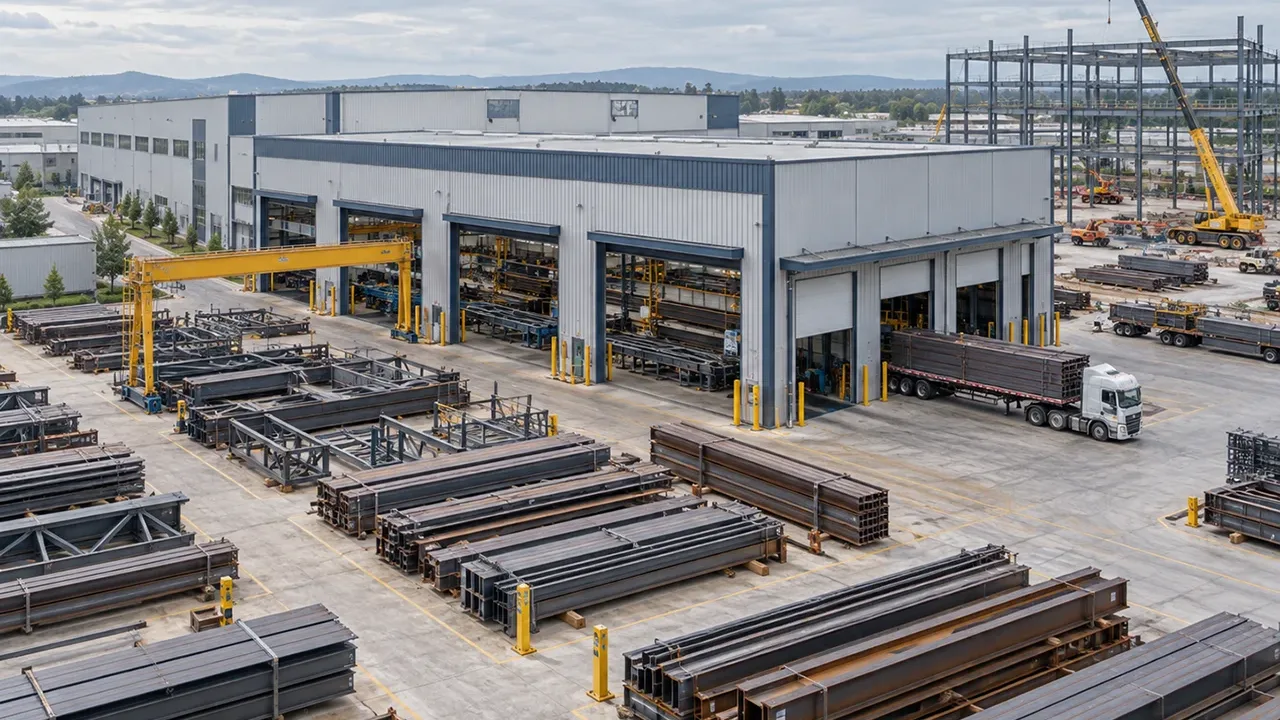
Factory production allows components to be processed under controlled conditions with systematic dimensional checks and quality inspections before shipment.
Construction and Erection Services
Construction coordination focuses on how structural components will be assembled safely and efficiently on site. Activities can include erection planning, lifting coordination, structural alignment, bolted or welded connection completion, and verification of the finished structural frame.
The installation method depends on the building configuration, crane availability, site access, local labor conditions, and project sequence.
Manufacturer and Contractor vs. Separate Suppliers
Reduced Coordination Gaps
Using separate manufacturers and contractors can create additional interfaces. When a fabrication question affects erection, information may need to move through several organizations before a decision is made.
A coordinated manufacturer-contractor model reduces these gaps by connecting production decisions more directly with construction requirements.
Improved Constructability
A component may be structurally correct but still difficult to transport, lift, position, or connect. Constructability review considers these practical issues before production.
Member length, assembly weight, connection access, field splice locations, temporary stability, and lifting conditions can all influence fabrication decisions.
Better Schedule Control
Production and site construction should follow compatible priorities. If components are manufactured or shipped without considering erection sequence, the site may receive unnecessary materials before the critical structural package arrives.
Coordinated planning allows fabrication batches, shipping packages, and site erection priorities to follow the same delivery strategy.
Steel Structure Projects We Support
Steel Warehouse Projects
Warehouse projects typically require clear internal spaces, efficient structural grids, loading zones, high-bay storage compatibility, and rapid construction. Steel frames can be coordinated with racking, conveyors, automated storage systems, and loading docks.
Steel Factory Projects
Factories may require production lines, heavy equipment, cranes, maintenance zones, utilities, and future expansion. Structural manufacturing and construction planning must account for these operational requirements from an early stage.
Commercial Steel Buildings
Retail buildings, offices, showrooms, exhibition facilities, and mixed-use developments can benefit from flexible structural layouts and fast steel construction. Coordination may also include façade interfaces, floor systems, canopies, and architectural steel elements.
Agricultural Steel Buildings
Agricultural applications can include farm warehouses, livestock buildings, grain storage facilities, machinery buildings, and processing facilities. These projects often require large spans, ventilation considerations, corrosion protection, and flexible expansion.
Specialized and Infrastructure Structures
Large-span roofs, transport-related buildings, industrial support structures, equipment platforms, and customized steel projects can involve more complex geometry and site interfaces. These applications benefit from close coordination between fabrication and erection planning.
Steel Structure Manufacturing Capabilities
CNC Processing
CNC equipment supports accurate cutting, drilling, profiling, and plate preparation. Automated processing helps maintain dimensional consistency across repeated components and reduces manual production errors.
Welding and Assembly
Structural components are fitted and welded according to approved production information. Welding sequences, dimensional checks, and assembly controls help maintain geometry throughout fabrication.
Heavy and Light Steel Fabrication
Production can include heavy primary frames as well as lighter secondary members. Built-up beams, heavy columns, trusses, braces, and customized assemblies can be coordinated within the same project package.
Surface Protection
Steel components may receive abrasive blasting, shop primers, industrial paint systems, or hot-dip galvanizing where appropriate. The protection system should reflect environmental exposure and project specifications.
Construction and Installation Capabilities
Pre-Construction Coordination
Before erection begins, site teams review foundation readiness, anchor bolt conditions, access routes, crane locations, unloading areas, temporary storage, and delivery sequence.
Early verification is important because problems with foundation interfaces or site logistics can delay structural erection even when fabrication is complete.
Structural Erection
A typical erection sequence may begin with columns and primary frames, followed by temporary or permanent bracing, main beams, trusses, secondary members, and other structural elements.
The actual sequence is developed according to structural stability, project geometry, crane availability, and site conditions.
Alignment and Final Verification
During erection, teams monitor verticality, frame alignment, connection completion, geometry, and structural stability. Final verification confirms that the installed structure corresponds with approved engineering and construction requirements.
Complete Project Workflow
Project Consultation
The process begins by understanding building function, dimensions, project location, schedule, site conditions, engineering status, and the required division of responsibilities.
Engineering Review
Technical teams review drawings, loads, structural interfaces, connection arrangements, and fabrication feasibility before production information is finalized.
Production Planning
Material procurement, fabrication sequence, inspection stages, surface treatment, packing, and delivery priorities are organized according to the construction schedule.
Manufacturing
Steel components proceed through cutting, drilling, fitting, welding, inspection, finishing, marking, and packing according to approved project information.
Logistics and Delivery
Finished components are grouped according to transportation and installation requirements. Shipping packages can be organized to reduce unnecessary handling at the construction site.
Site Erection and Coordination
Construction teams complete structural erection according to the planned sequence while coordinating technical questions, site conditions, and any approved project adjustments.
Quality Control Across Manufacturing and Construction
Material Verification
Steel materials are checked against project specifications and relevant documentation before fabrication.
Dimensional Inspection
Critical dimensions, connection positions, hole patterns, and assembly geometry are checked during production to support accurate field installation.
Welding Inspection
Welded joints are inspected according to project requirements, with additional testing performed where specified.
Coating Inspection
Surface preparation and protective coating application are inspected before components are released for packing and shipment.
Site Installation Checks
During construction, alignment, connection completion, frame geometry, and other project-specific structural requirements are reviewed as erection progresses.
Advantages of Working with One Manufacturer and Contractor
- Single coordinated responsibility: fabrication and construction requirements are managed through a connected workflow.
- Better communication: production and site issues can be discussed without excessive handovers.
- Reduced interface risk: connection, transportation, and erection requirements can be reviewed before fabrication.
- Faster technical response: project changes can be evaluated against both manufacturing and construction implications.
- Fabrication aligned with installation: production packages can follow erection priorities.
- More predictable scheduling: manufacturing, delivery, and site activities can be planned together.
- Reduced site rework: better factory coordination can limit unnecessary cutting, drilling, or adjustment during erection.
- Improved project visibility: clients gain clearer oversight across the structural delivery process.
International Project Delivery
Export Manufacturing
For international projects, components can be clearly marked, documented, packed, and grouped according to shipping and installation requirements.
Container and Break Bulk Shipping
Transportation methods depend on component dimensions, weight, destination, and project priorities. Standard packages may be optimized for containers, while oversized components may require break bulk arrangements.
Overseas Installation Coordination
Installation drawings, component identification, erection sequencing, and technical communication can support overseas project teams where direct construction arrangements vary by destination.
Why Choose XTD Steel Structure
Integrated Manufacturing Capability
Coordinating primary steel fabrication, secondary components, CNC processing, welding, surface treatment, and packing under one production system helps maintain consistency throughout the project.
Construction Coordination Experience
Understanding site erection requirements allows manufacturing decisions to reflect practical lifting, connection, delivery, and installation conditions.
Engineering Support
Technical review and fabrication coordination help identify interface issues before they become production or construction problems.
International Delivery Experience
International projects require careful coordination of manufacturing, packing, transportation, documentation, and installation requirements across different project environments.
As an experienced steel structure manufacturer and contractor, XTD Steel Structure combines fabrication capability with practical construction coordination to support customized steel projects from factory production through structural delivery and erection planning.
Frequently Asked Questions
What is the difference between a steel structure manufacturer and contractor?
A manufacturer primarily produces structural components, while a contractor is responsible for construction activities on site. A combined service coordinates both scopes within a connected project workflow.
Can one company handle both fabrication and erection?
Yes. Depending on project location and contractual requirements, fabrication and erection can be coordinated under one service scope or combined with local construction resources.
Do you support projects based on client drawings?
Yes. Client drawings and technical specifications can be reviewed and converted into fabrication and delivery requirements.
Can you provide complete steel building packages?
Yes. The scope can include primary structural steel, secondary framing, selected accessories, surface treatment, packaging, logistics support, and construction coordination according to project requirements.
Do you support international construction projects?
Yes. International projects can be supported through export manufacturing, component marking, packing, transportation planning, technical documentation, and erection coordination.
Request a Steel Structure Manufacturer and Contractor Quote
If you need a reliable steel structure manufacturer and contractor for an industrial, warehouse, factory, commercial, agricultural, or specialized steel project, provide your drawings, BOQ, structural specifications, project location, required building dimensions, and expected construction scope. Our team can evaluate the manufacturing and construction requirements and develop an integrated delivery solution based on your project conditions.