Faster Building Delivery With Factory-Prepared Steel Components
The main advantage of a quick assembly approach is that many critical tasks are completed before the components reach the jobsite. Columns, beams, rafters, bracing members, purlins, girts, and connection plates can be prepared under controlled factory conditions. This reduces the amount of cutting, drilling, welding, and adjustment required during installation.
Factory preparation also supports better schedule planning. When steel members are fabricated according to approved drawings and clearly marked before shipment, the installation team can identify components more quickly and follow a more predictable erection sequence. This is especially important for overseas projects, remote sites, or industrial facilities where delays can affect production plans.
A well-planned quick assembly steel structure building does not depend only on fast labor. It depends on accurate detailing, practical connections, shipment organization, and coordination between fabrication and site assembly. These details help the building go up faster without creating confusion during installation.
Where Quick Assembly Steel Buildings Are Most Useful
Industrial Workshops and Production Buildings
Industrial workshops often need to become operational as soon as possible. Delays in building completion can delay equipment installation, production layout, and commissioning. Steel structure systems are suitable for workshops because they can provide large open spans, strong roof framing, crane support options, and flexible internal planning.
For production buildings, quick assembly helps reduce the time between project approval and equipment move-in. The structural frame can be coordinated with machine foundations, crane beams, ventilation systems, doors, and future workflow changes.
Warehouses and Logistics Buildings
Warehouses, distribution centers, and logistics facilities benefit from predictable construction schedules. Many of these buildings require large covered space, efficient loading access, clear internal movement, and fast availability for storage or shipping operations.
A prefabricated steel structure can reduce on-site complexity while supporting wide spans, high-bay storage, loading docks, wall cladding, roof panels, and later expansion. This makes it practical for companies planning inventory storage, e-commerce warehousing, supply chain facilities, or industrial distribution buildings.
Agricultural, Commercial, and Utility Buildings
Quick assembly steel buildings are also useful for agricultural storage, farm buildings, service buildings, equipment shelters, showrooms, and commercial facilities. These projects often need a cost-effective structure that can be installed efficiently while still allowing customization for doors, ventilation, insulation, roof slope, and internal use.
Because steel components can be fabricated according to project-specific dimensions, the building does not have to be limited to a generic layout. The structure can be planned around the function of the building from the beginning.
What Makes the Assembly Process Faster?
Prefabricated Structural Members
Prefabrication is the foundation of faster assembly. The primary and secondary steel members are manufactured before they reach the site. This includes cutting steel sections to size, drilling bolt holes, welding plates, preparing connection interfaces, and applying surface protection.
When components are ready before delivery, the site team can focus on erection instead of fabrication. This helps reduce labor intensity, site waste, and unexpected modification work.
Bolt-Connected Frame System
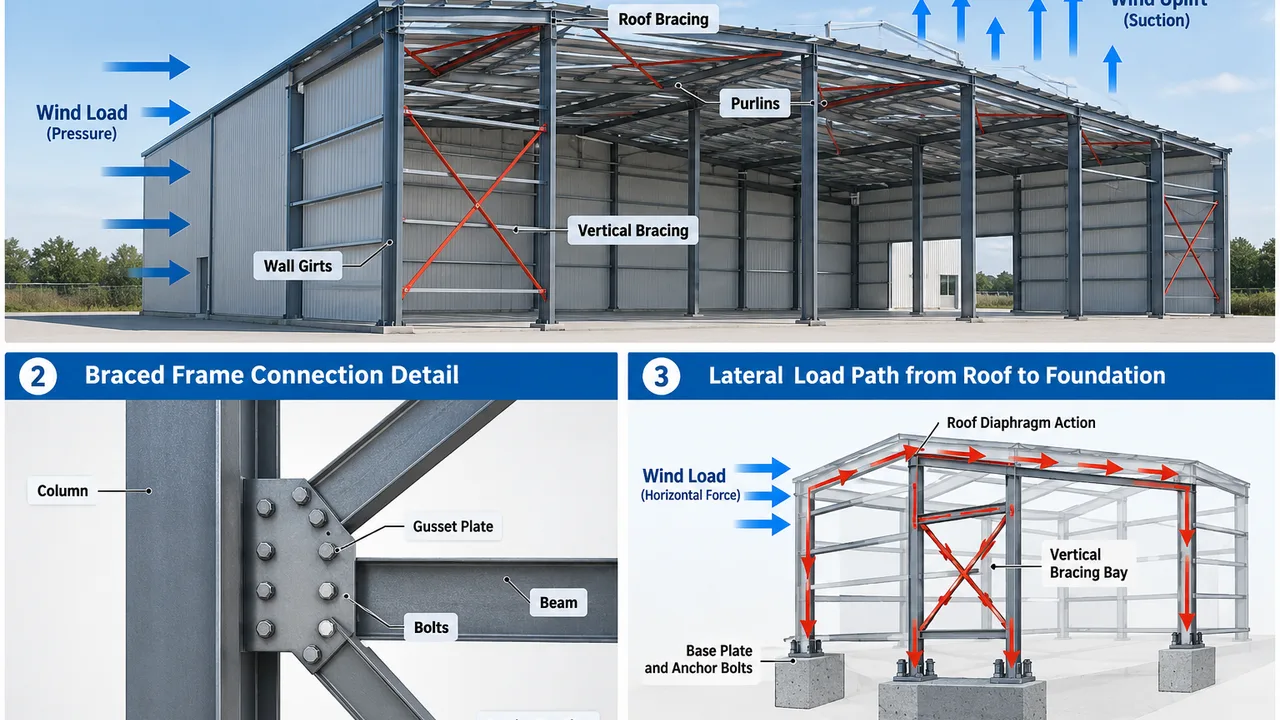
Bolt-connected steel framing is one of the key factors behind quick installation. Compared with extensive on-site welding, bolted connections are easier to control, faster to assemble, and more suitable for organized erection sequences. They also help reduce dependency on site welding conditions, weather, and specialized welding work at height.
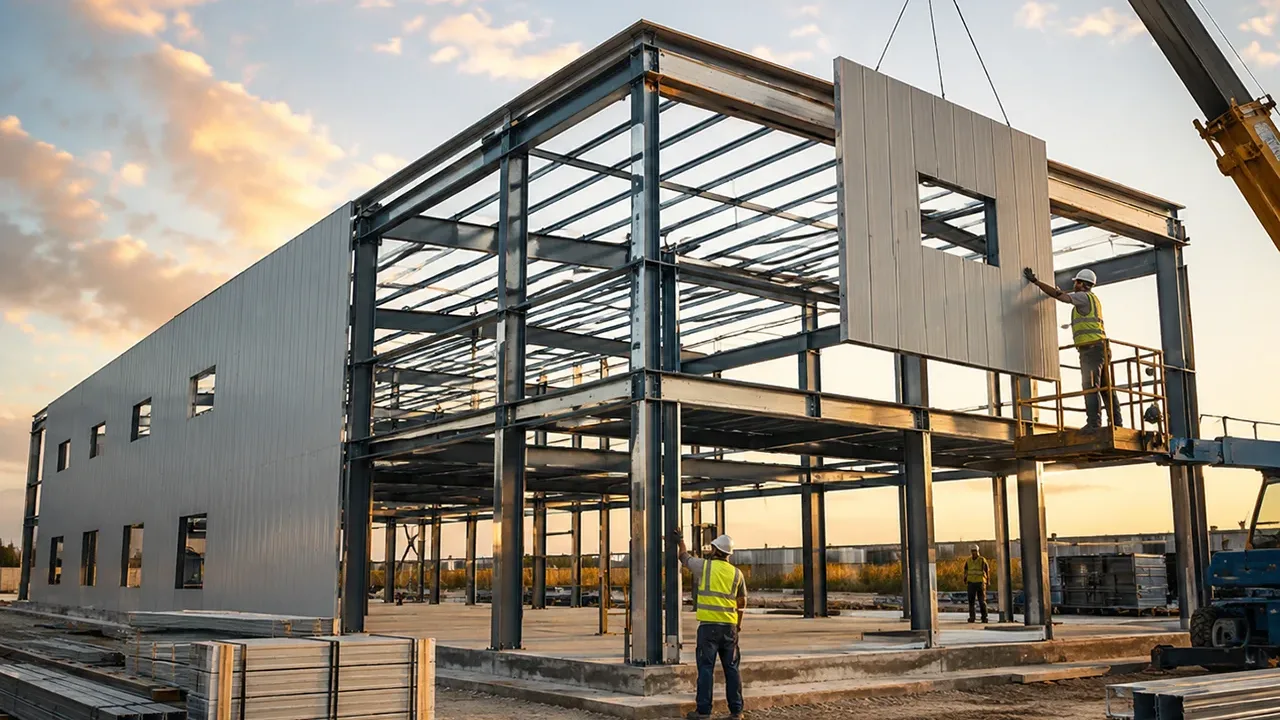
For many projects, columns and beams are lifted into position, aligned, and connected using pre-designed bolt systems. This supports faster frame completion and allows the installation team to move efficiently from one bay to the next.
Clear Component Marking and Packing
Even a well-fabricated structure can lose time if components arrive without clear identification. Marking, packing lists, and shipment sequencing are important parts of fast assembly. Each member should be easy to match with the drawings and installation plan.
For export projects, organized packing is especially important. Proper labeling and grouped delivery can help reduce sorting time on site and make the erection process more manageable for local teams.
Design Planning Before Production Starts
Building Size, Span, and Layout
Before fabrication begins, the building layout must be confirmed carefully. Important factors include building length, width, clear height, column spacing, roof slope, door openings, wall system, internal traffic routes, and production or storage requirements.
A quick assembly steel structure building should be easy to install, but it must also be practical to use. The design should support the owner’s actual workflow, whether the building is used for storage, manufacturing, maintenance, logistics, or mixed industrial operations.
Local Load and Site Conditions
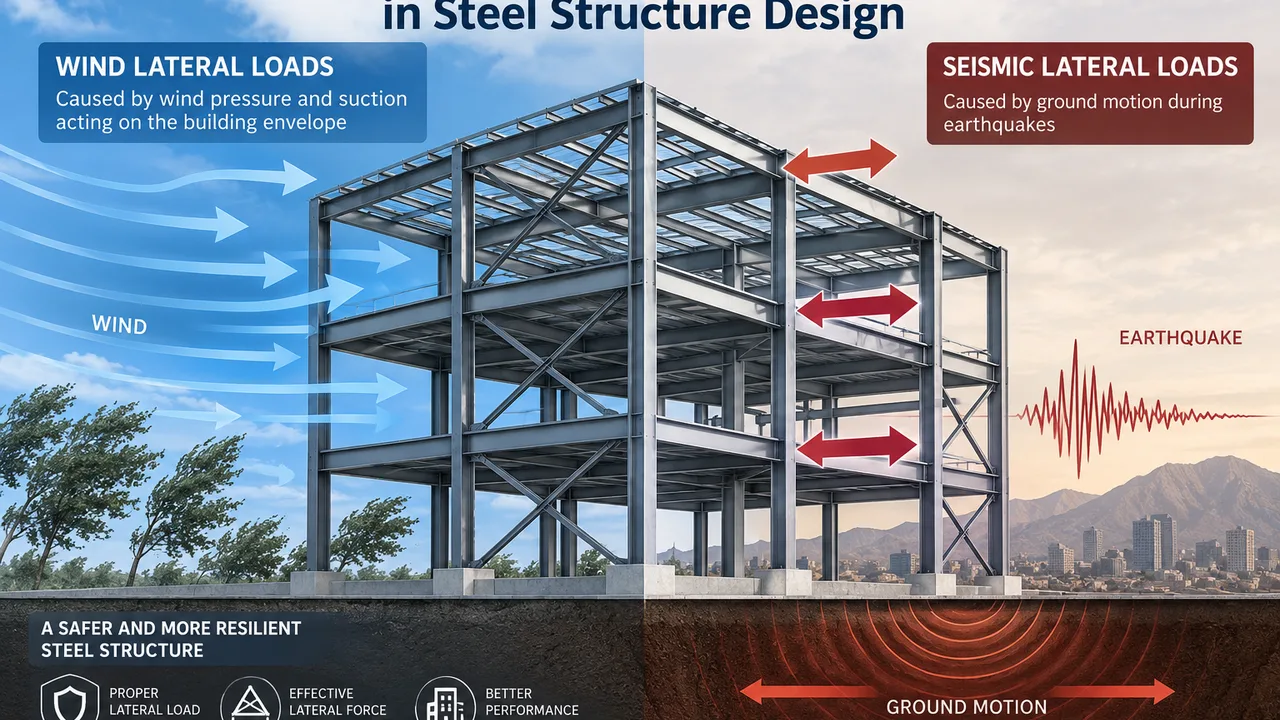
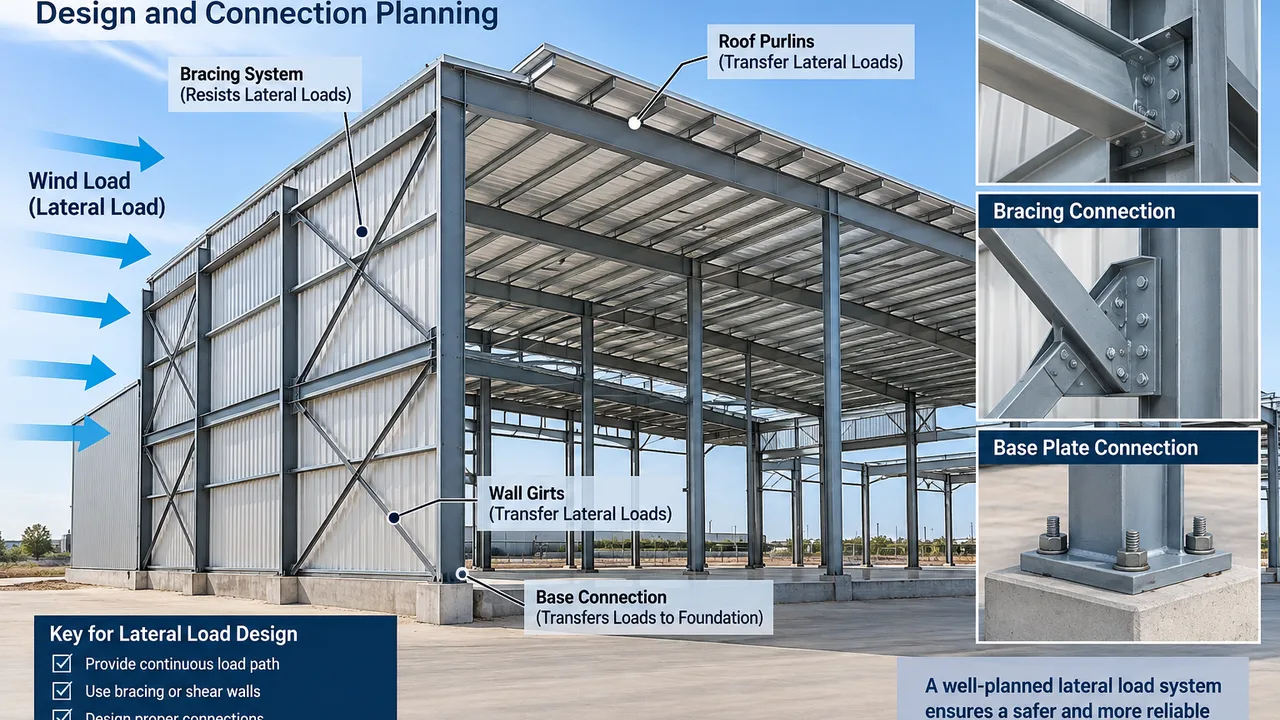
Fast assembly does not remove the need for proper engineering. Wind load, snow load, seismic requirements, soil conditions, corrosion exposure, temperature variation, and local building regulations must be considered. The structure should be designed for the project location, not only for a standard catalog size.
Site access also matters. Crane availability, unloading space, road conditions, foundation readiness, and storage areas can all affect installation efficiency. A building that is designed for quick assembly should also be planned for realistic site conditions.
Future Expansion Requirements
Many steel buildings are built in phases. If future expansion is likely, the structural layout can be planned with extension bays, removable end walls, reserved connection points, or modular grid planning. This allows the owner to expand capacity later with fewer structural conflicts.
Fabrication Quality Behind Quick Assembly
Quick assembly depends on precision. If bolt holes do not align, connection plates are inaccurate, or components are poorly marked, the site team may lose the time that prefabrication was supposed to save. For this reason, fabrication quality is directly connected to installation speed.
XTD Steel Structure supports steel building projects with structural detailing coordination, CNC cutting, drilling, welding, dimensional inspection, surface treatment, and export-ready packing. This helps ensure that steel members are prepared for efficient installation and reliable long-term performance.
Surface protection can include industrial paint systems, anti-corrosion coatings, or galvanizing for selected components depending on the environment. For coastal, humid, or industrial locations, coating selection should be reviewed early so the building can achieve the required service life.
Typical Configuration Options
Different projects need different configurations. The table below shows common options that can help improve assembly speed and site coordination.
| Component / Item | Common Option | Assembly Benefit |
|---|---|---|
| Primary Frame | Portal frame or custom steel frame | Supports efficient erection and clear structural layout |
| Secondary Members | Purlins, girts, bracing, and tie members | Prepared in advance to reduce site adjustment |
| Connection System | Bolted connections with pre-drilled holes | Speeds up installation and reduces on-site welding |
| Roof and Wall System | Steel sheet, insulated panel, or cladding system | Can be installed after frame alignment is completed |
| Surface Treatment | Paint coating or galvanizing where required | Protects components before and after installation |
| Packing Method | Marked bundles and erection-based packing | Helps site teams identify components faster |
| Expansion Design | Reserved bay or modular end-wall planning | Supports future extension with less disruption |
Advantages of Quick Assembly Steel Structure Buildings
Choosing a fast assembly method can bring practical benefits across cost, schedule, and project management. The biggest value comes from reducing uncertainty during the construction phase.
- Shorter installation time because most steel members are fabricated before delivery
- Reduced site labor dependency compared with construction methods that require more on-site work
- More predictable erection sequence through component marking and organized packing
- Less on-site welding when bolted connections are designed properly
- Better quality control because fabrication takes place under factory conditions
- Flexible layout options for workshops, warehouses, commercial buildings, and agricultural facilities
- Suitable for export projects where controlled packing and clear identification are important
- Future scalability when expansion is considered during the design stage
Project Workflow From Drawing to Site Assembly
Requirement Review and Structural Proposal
The process begins with project information such as building size, function, location, load requirements, preferred span, roof and wall system, crane needs, and target schedule. Based on this information, the structural concept can be developed around both performance and assembly efficiency.
Detailing, Fabrication, and Quality Inspection
After design confirmation, engineers prepare fabrication drawings and connection details. Factory production then follows planned procedures for cutting, drilling, welding, fitting, inspection, and coating. Accurate shop drawings and production control help reduce mismatch during site installation.
Delivery, Marking, and Installation Support
Finished components are marked, packed, and delivered according to shipment and erection requirements. Installation support may include drawings, component lists, erection sequence guidance, and technical coordination. XTD Steel Structure can support domestic and overseas projects where organized delivery and installation planning are important.
Quick Assembly Steel Structure Building FAQs
What makes a steel structure building quick to assemble?
Fast assembly usually comes from factory-prefabricated steel members, pre-drilled connections, bolted frame systems, clear component marking, and shipment planning that follows the erection sequence.
Is quick assembly still strong enough for industrial use?
Yes. Assembly speed does not replace structural design. The building must still be engineered according to load requirements, span, height, wind conditions, seismic requirements, and operational use.
Can this building type be customized?
Yes. Dimensions, span, height, roof slope, wall cladding, doors, windows, insulation, crane support, ventilation, and expansion planning can be customized according to the project.
Does quick assembly reduce project cost?
It can help reduce cost by shortening installation time, reducing on-site labor, minimizing rework, and improving project coordination. Final cost still depends on size, steel quantity, design load, materials, surface treatment, and site conditions.
Can the building be expanded later?
Yes. Future expansion can be planned through modular bay design, reserved structural interfaces, and end-wall planning. Expansion requirements should be discussed during the early design stage.
Build Faster Without Sacrificing Structural Reliability
A quick assembly steel structure building is a practical solution for projects that need faster delivery, organized installation, and dependable structural performance. By combining factory fabrication, bolted connections, accurate marking, and project-specific engineering, the building can move from design to site assembly more efficiently.
To start planning your project, prepare the building dimensions, intended use, project location, local load requirements, roof and wall preferences, and target construction schedule. With the right structural and fabrication partner, fast assembly can support both speed and long-term building value.