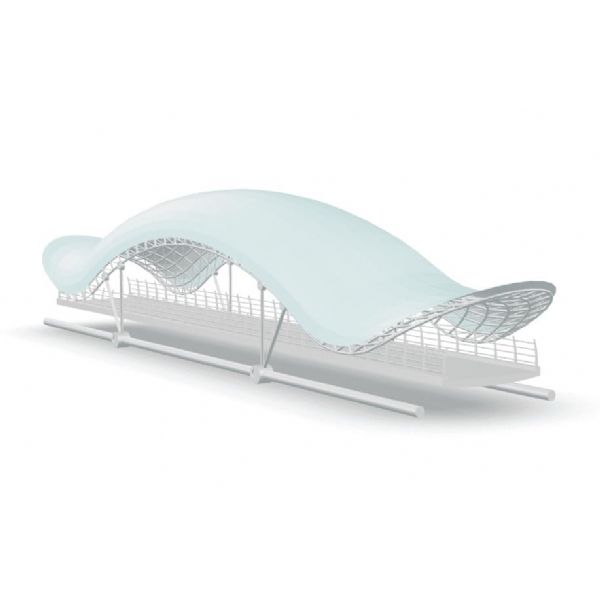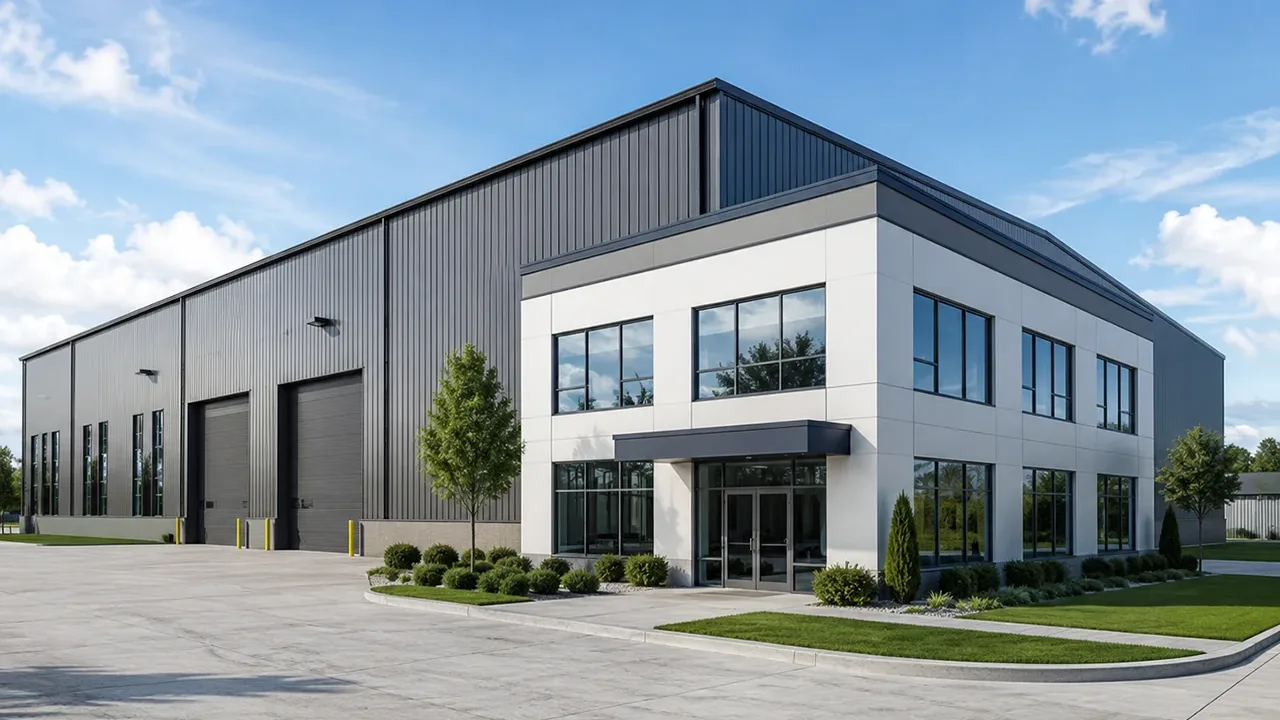
Large-span industrial and commercial buildings have become a defining feature of modern infrastructure. From aircraft hangars and logistics warehouses to sports facilities and manufacturing plants, the demand for wide, column-free spaces continues to grow. At the core of these projects lies large span steel building engineering, a specialized discipline that integrates structural design, load analysis, material selection, and construction precision to achieve safe, efficient, and durable long-span structures.
This article examines the key engineering factors behind successful large-span steel buildings, with a focus on long-span structures, load distribution strategies, and why steel remains the preferred material for spanning vast distances without compromising safety or performance.
What Defines a Large-Span Steel Building?
A large-span steel building typically refers to a structure with clear spans exceeding 30 meters and, in many cases, extending beyond 60 or even 100 meters without intermediate columns. These buildings are engineered to provide unobstructed interior space while maintaining strict structural safety standards.
Large span steel building engineering focuses on optimizing structural efficiency so that long spans can be achieved with minimal material usage, controlled deflection, and reliable long-term performance. This balance between strength, stiffness, and economy is what distinguishes advanced steel engineering from conventional building design.
Why Steel Is Ideal for Long-Span Structures
Steel has become the dominant structural material for long-span buildings because it combines high mechanical performance with design flexibility and construction efficiency. In long-span structures, where clear distances of 30–100 meters or more are required, material behavior becomes a critical engineering variable. Steel’s exceptional strength-to-weight ratio and predictable mechanical properties allow engineers to push structural limits while maintaining safety, serviceability, and cost control.
Compared to concrete or timber, steel can achieve significantly greater spans using slimmer members. This reduction in self-weight directly lowers foundation loads, minimizes material consumption, and simplifies overall structural systems. As span lengths increase, these advantages become increasingly important for both structural feasibility and project economics.
Key Engineering Advantages of Steel for Long Spans
Steel’s performance in long-span applications is driven by several core material characteristics:
- High tensile and compressive strength
Structural steel can resist high tensile and compressive forces, allowing primary members such as trusses, girders, and space frames to span large distances without excessive depth or material usage. - Uniform and predictable material quality
Steel is produced under strict manufacturing standards, ensuring consistent mechanical properties. This predictability allows engineers to perform accurate load calculations, deflection checks, and fatigue assessments with high confidence. - Excellent ductility and energy absorption
Steel’s ductile behavior enables long-span structures to absorb and dissipate energy under dynamic loads such as wind, seismic activity, moving equipment, or crane operations. This improves overall structural resilience and safety. - High level of prefabrication and dimensional accuracy
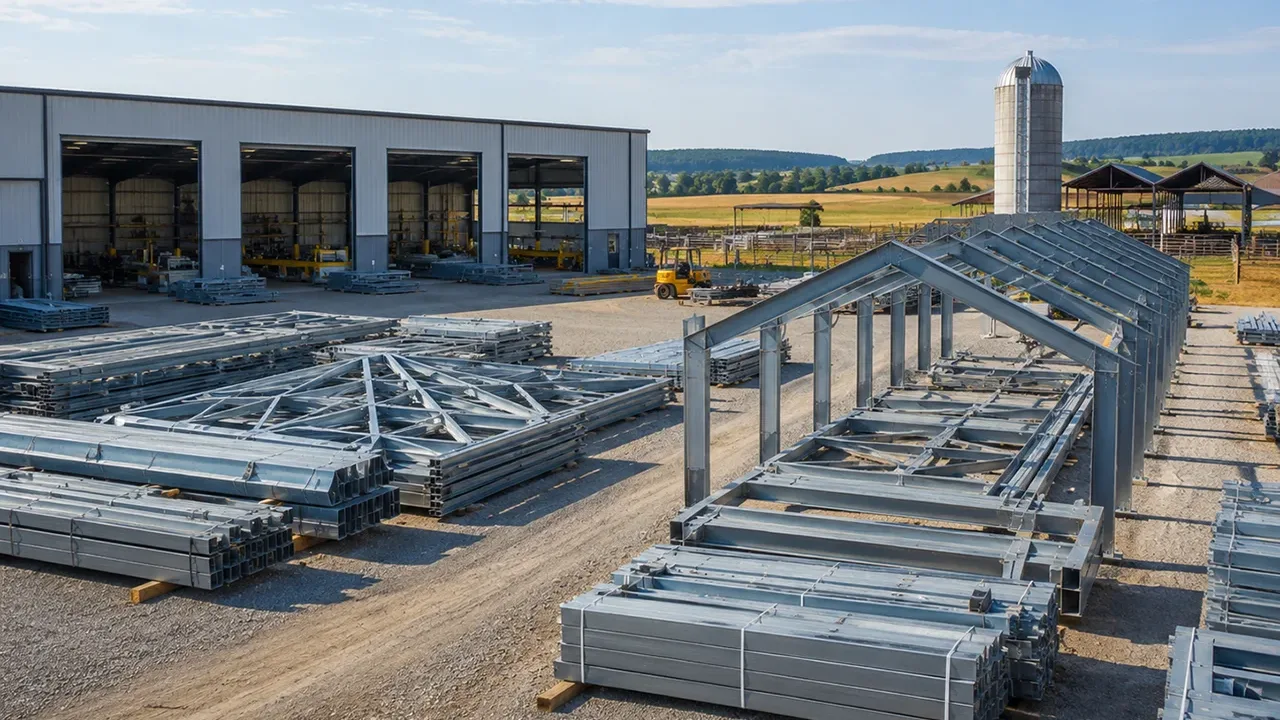
Steel components are fabricated in controlled factory environments using CNC cutting and automated welding. This ensures precise geometry, tight tolerances, and reliable connection performance—critical factors for long-span erection.
Together, these characteristics allow engineers to design large-span steel buildings that are structurally efficient, adaptable, and cost-effective throughout their entire lifecycle.
Steel vs Concrete vs Timber in Long-Span Applications
To better illustrate why steel is preferred for long-span structures, the table below compares steel with concrete and timber across key engineering criteria:
| Engineering Factor | Steel Structure | Concrete Structure | Timber Structure |
|---|---|---|---|
| Maximum practical span | Very long (30–100 m+) | Medium (typically ≤ 40 m) | Limited (≤ 30 m) |
| Strength-to-weight ratio | Very high | Moderate | Low |
| Structural member size | Slim and efficient | Thick and heavy | Large cross-sections |
| Self-weight impact | Low | High | Moderate |
| Deflection control | Excellent with proper design | Good but heavier | Limited |
| Material consistency | Factory-controlled, predictable | Variable (on-site casting) | Natural variability |
| Construction speed | Fast (prefabricated) | Slow (curing time) | Medium |
| Adaptability & expansion | High | Low | Moderate |
| Lifecycle cost | Low | High | Medium |
| Suitability for dynamic loads | Excellent | Moderate | Poor to moderate |
This comparison highlights why steel remains the most reliable and scalable solution for long-span engineering projects.
Structural Efficiency and Material Optimization
In long-span steel building engineering, efficiency is not achieved by simply increasing member size. Instead, engineers optimize structural geometry—such as truss depth, frame spacing, and load paths—to achieve maximum span with minimum material.
Steel’s high strength allows load forces to be redistributed efficiently across fewer primary members. This results in:
- Reduced material volume
- Lower transportation and erection costs
- Simplified foundation design
- Greater architectural freedom
Such optimization is far more difficult to achieve with heavier materials like concrete, where increased span often leads to exponential growth in structural mass.
Lifecycle Cost Benefits of Steel in Long-Span Buildings
Beyond structural performance, steel delivers long-term economic advantages. Lighter structures reduce foundation costs, while prefabrication shortens construction schedules and lowers labor risks. Over the building’s lifespan, steel structures also benefit from:
- Easier inspection and maintenance
- Compatibility with corrosion protection systems
- High recyclability and residual material value
These factors contribute to a lower total cost of ownership, especially for industrial and commercial buildings that operate continuously.
Structural Systems Used in Large-Span Steel Buildings

Several structural systems are commonly applied in large span steel building engineering, each selected based on span length, load conditions, and architectural requirements:
- Portal frames – widely used for industrial buildings up to medium-large spans
- Truss systems – efficient for very long spans with reduced material usage
- Space frame structures – ideal for complex geometries and ultra-large spans
- Arch and cable-supported systems – used in stadiums and special-purpose buildings
The correct selection of the structural system is one of the most critical engineering decisions in long-span projects.
Load Distribution in Long-Span Steel Buildings
Effective load distribution is fundamental to the safety and durability of large-span steel buildings. Unlike conventional buildings where loads are transferred through multiple columns, long-span structures must channel forces efficiently across fewer primary members.
Engineers carefully analyze how dead loads, live loads, wind loads, seismic forces, and equipment loads interact within the structural system. Advanced modeling techniques such as finite element analysis (FEA) are commonly used to simulate real-world conditions and verify structural behavior.
Key Load Types Considered
- Dead loads – self-weight of steel members and roofing systems
- Live loads – occupants, stored goods, or movable equipment
- Wind loads – critical for large roof areas and tall buildings
- Seismic loads – especially important in earthquake-prone regions
- Thermal loads – expansion and contraction over long spans
Balanced load distribution minimizes excessive deflection, reduces stress concentrations, and ensures long-term structural stability.
Controlling Deflection and Structural Stiffness
In large-span steel building engineering, deflection control is often as important as strength. Excessive deflection can affect roof performance, drainage, cladding integrity, and occupant comfort, even if the structure remains safe.
Engineers address deflection through optimized member sizing, appropriate truss depths, bracing systems, and strategic use of secondary structural elements. Serviceability limit states are carefully evaluated alongside ultimate strength requirements.
Connection Design and Structural Integrity
Connections play a critical role in the performance of long-span steel buildings. Bolted and welded connections must transfer large forces reliably while accommodating movement caused by temperature changes and dynamic loads.
Well-engineered connections improve overall load distribution and reduce fatigue risk. In large-span applications, connection detailing is often subjected to the same level of engineering scrutiny as primary structural members.
Construction Precision and Fabrication Quality
Large-span steel buildings rely heavily on fabrication accuracy and construction precision. Steel components are typically manufactured in controlled factory environments using CNC cutting, automated welding, and rigorous quality inspections.
This high level of precision ensures that long-span elements align correctly during erection, minimizing on-site adjustments and reducing construction risks. Accurate fabrication also contributes to faster installation timelines and improved structural performance.
Durability, Corrosion Protection, and Maintenance
Durability is a key consideration in large span steel building engineering, particularly for buildings exposed to harsh environments. Protective systems such as hot-dip galvanization, industrial coatings, and fireproof treatments help preserve structural integrity over decades of service.
Routine inspection and maintenance planning are integrated into the design phase to ensure that long-span structures maintain their performance throughout their intended lifespan.
Applications of Large-Span Steel Buildings
Large-span steel buildings are widely used across multiple industries due to their flexibility and performance advantages:
- Aircraft hangars and aviation facilities
- Logistics warehouses and distribution centers
- Manufacturing plants and assembly halls
- Sports stadiums and exhibition halls
- Industrial maintenance and storage facilities
In global projects, partnering with an experienced steel structure building china supplier ensures compliance with international standards, precise engineering execution, and reliable project delivery.
Why Engineering Expertise Determines Project Success
The success of a large-span steel building depends not only on material selection but on the quality of engineering behind it. Poor load analysis, inadequate deflection control, or improper connection design can compromise safety and increase lifecycle costs.
By applying advanced structural analysis, proven design standards, and high-quality fabrication practices, large span steel building engineering delivers structures that are safe, efficient, and adaptable to future operational needs.
Conclusion: Engineering Excellence Behind Every Long Span
Large span steel building engineering is the foundation of modern wide-span architecture. Through intelligent structural systems, optimized load distribution, precise fabrication, and rigorous engineering control, steel buildings can achieve impressive spans while maintaining safety, durability, and cost efficiency.
As industries continue to demand larger, more flexible spaces, expertly engineered long-span steel buildings will remain a critical solution for global industrial and commercial development.