Modern industrial facilities are no longer designed around basic shelter alone. Today, manufacturers, logistics operators, and industrial developers demand buildings that deliver long-term efficiency, operational stability, and superior environmental performance. As a result, high performance steel building design has become a core strategy for creating industrial facilities that meet modern productivity, safety, and sustainability standards.
Steel buildings offer unmatched flexibility in structural layout, load-bearing capacity, and envelope integration. When combined with advanced engineering principles, steel building designs can significantly improve thermal efficiency, optimize industrial workflows, and reduce lifecycle operating costs. This article explores how high-performance steel building design supports industrial efficiency, safety, and long-term value.
What Defines High-Performance Steel Building Design?
High performance steel building design refers to an integrated approach where structural steel systems are engineered to maximize efficiency across multiple performance dimensions. These include structural strength, thermal efficiency, energy consumption, operational flexibility, and long-term durability.
Unlike conventional industrial buildings that focus only on structural adequacy, high-performance designs consider how the building interacts with its environment, internal processes, and future operational demands. Steel structures provide the ideal foundation for this approach due to their predictable material behavior and adaptability.
Why Steel Is the Preferred Material for Industrial Performance
Steel has become the dominant material for high-performance industrial buildings because it delivers a unique combination of strength, precision, speed, and long-term adaptability that alternative materials struggle to match. In modern industrial environments—where efficiency, safety, and scalability are critical—steel provides a structural foundation capable of supporting complex operational demands.
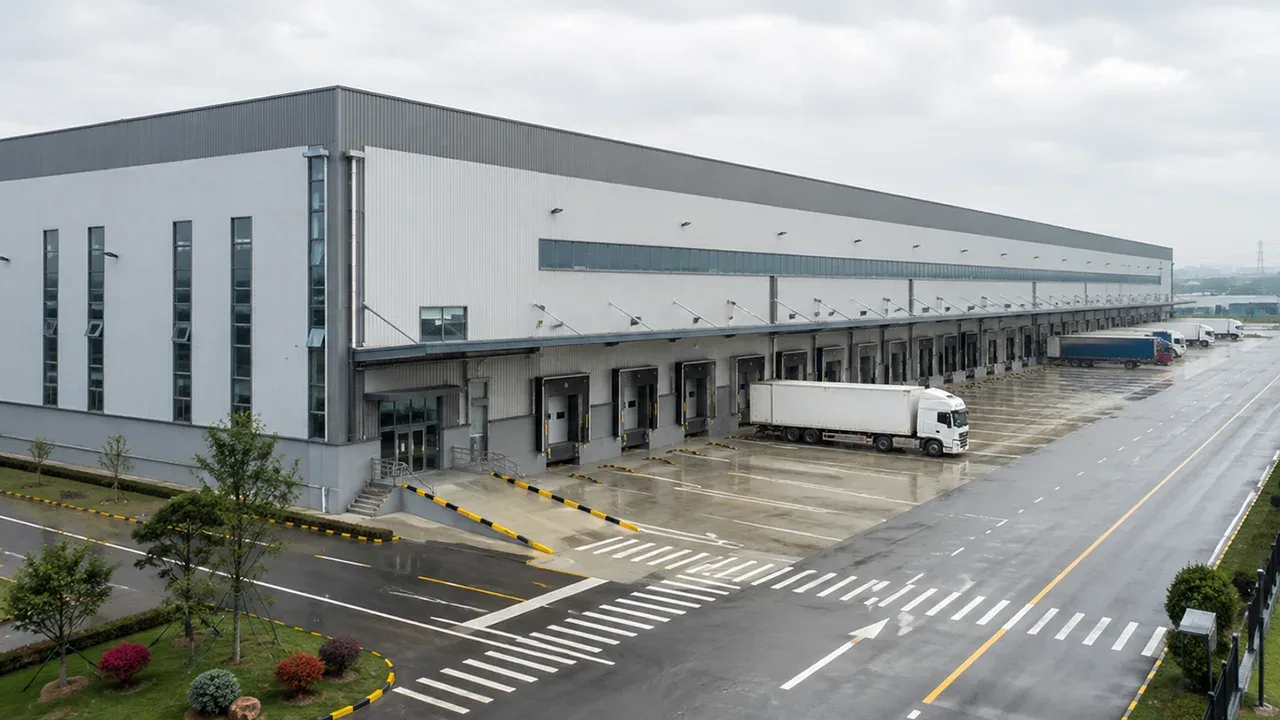
One of steel’s most significant advantages is its high strength-to-weight ratio. Steel can carry heavy loads while remaining relatively lightweight compared to concrete or masonry systems. This allows designers to create large clear spans with fewer columns, resulting in open, obstruction-free interiors. Such layouts are essential for industrial facilities that rely on uninterrupted production lines, automated storage systems, overhead cranes, and flexible material flow.
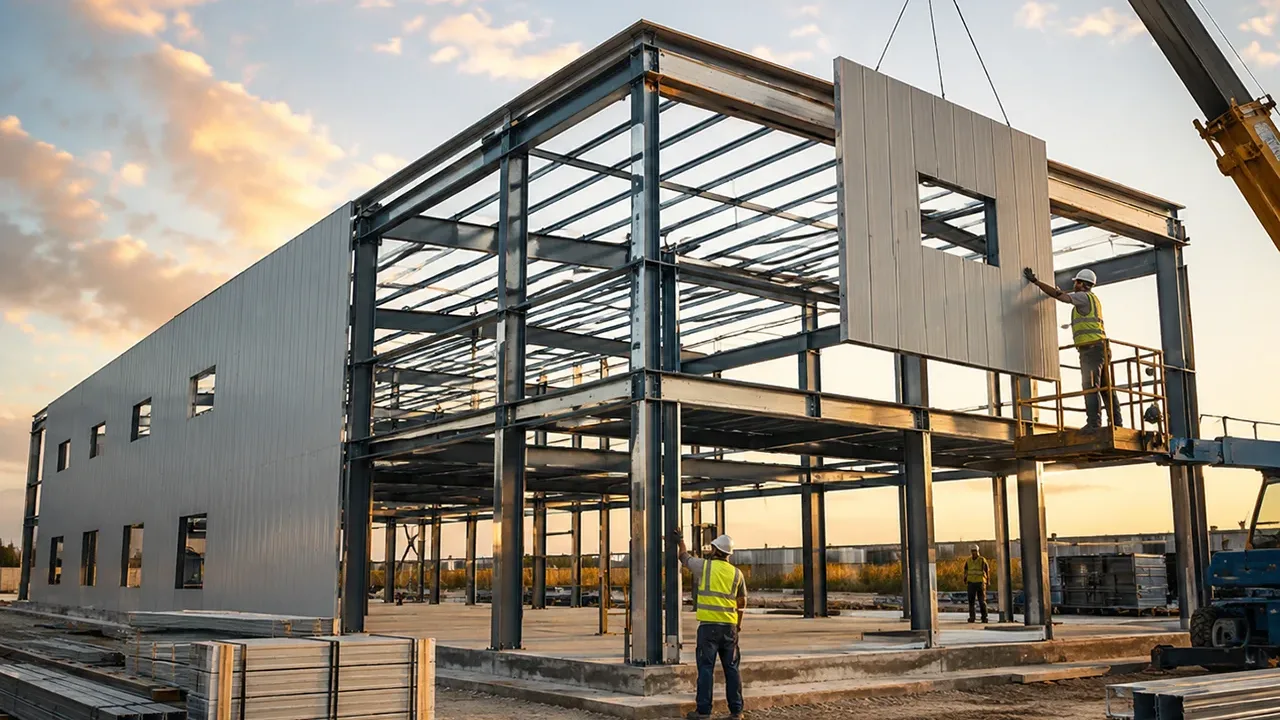
Another key factor is precision fabrication. Steel components are manufactured in controlled factory environments using advanced technologies such as CNC cutting, robotic welding, and automated quality inspection. This process ensures exceptional dimensional accuracy and consistency across all structural elements. As a result, steel buildings achieve tighter tolerances, more reliable connections, and faster on-site assembly—reducing construction errors, rework, and delays.
Modular construction capability further enhances steel’s suitability for industrial performance. Steel structures are inherently modular, allowing buildings to be erected quickly and expanded efficiently as operational needs evolve. Production facilities, warehouses, and logistics centers often require phased development or future capacity increases. Steel building systems make it possible to add bays, extend spans, or modify layouts with minimal disruption to ongoing operations.
Steel is also highly compatible with advanced building envelope systems, which play a critical role in energy performance. Modern insulated wall panels, high-performance roofing systems, daylighting solutions, and airtight construction details integrate seamlessly with steel frames. This compatibility significantly improves thermal performance, reduces energy loss, and supports stable internal environments—an important factor for both worker comfort and process reliability.
Beyond these technical benefits, steel offers long-term operational advantages. Its predictable structural behavior simplifies maintenance planning, while corrosion protection systems and fireproofing treatments ensure durability even in harsh industrial conditions. Over time, steel buildings typically deliver lower lifecycle costs compared to conventional construction, making them a strategic investment rather than just a structural choice.
Together, these advantages make steel building designs especially well-suited for factories, warehouses, processing plants, and logistics centers that demand consistent performance, adaptability, and long-term operational efficiency.
Thermal Efficiency in Steel Industrial Buildings
Thermal performance is a critical component of industrial facility design. Poor insulation and uncontrolled heat transfer increase energy consumption, reduce worker comfort, and negatively impact sensitive production processes. Modern steel building systems address these challenges through advanced envelope integration.
High-performance steel buildings commonly incorporate insulated roof panels, wall systems with thermal breaks, and airtight construction detailing. These elements significantly enhance thermal efficiency by minimizing heat loss in cold climates and reducing heat gain in hot environments.
Steel framing also allows precise coordination between structural components and insulation layers, reducing thermal bridging that often occurs in poorly designed concrete or hybrid structures.
Industrial Design Optimization Through Steel Structures
Effective industrial design goes beyond aesthetics. It focuses on workflow efficiency, equipment integration, safety, and scalability. Steel building designs support these goals by enabling wide-span interiors, high ceiling clearances, and adaptable column grids.
These features allow industrial facilities to accommodate production lines, overhead cranes, automated storage systems, and material handling equipment without structural limitations. As operations evolve, steel buildings can be reconfigured or expanded with minimal disruption.
Structural Performance and Load Management

High-performance industrial facilities often involve heavy machinery, dynamic loads, and vibration-sensitive operations. Steel building designs are engineered to manage these demands through precise load distribution and connection detailing.
Steel frames maintain structural stability under static and dynamic conditions, including crane operations, equipment movement, and wind or seismic forces. This reliability directly contributes to operational safety and long-term building performance.
Energy Efficiency and Operational Cost Reduction
Energy consumption represents a significant portion of industrial operating costs. High performance steel building design supports energy efficiency by enabling integrated solutions such as daylighting systems, energy-efficient HVAC layouts, and rooftop solar installations.
Steel roofs and frames are well-suited for supporting photovoltaic systems and ventilation equipment without extensive reinforcement. Combined with optimized thermal envelopes, these features help industrial facilities reduce energy usage and stabilize long-term operating expenses.
Durability and Lifecycle Performance
Durability is a defining factor of high-performance industrial buildings. Steel structures offer long service life when paired with appropriate corrosion protection and maintenance planning. Galvanization, advanced coating systems, and controlled drainage design ensure consistent performance even in aggressive industrial environments.
Over the building lifecycle, steel structures typically require fewer structural repairs than concrete alternatives, reducing downtime and maintenance costs. This long-term reliability enhances return on investment for industrial developers and operators.
Safety and Compliance in Industrial Steel Buildings
Industrial facilities must meet strict safety and regulatory standards. Steel building designs support compliance through predictable structural behavior, fire-resistant systems, and compatibility with safety infrastructure such as guardrails, platforms, and access systems.
Steel’s ductility allows structures to absorb energy during seismic events or accidental impacts, reducing the risk of sudden failure. Fire protection systems further enhance occupant safety and asset protection.
Applications That Benefit from High-Performance Steel Building Design
High performance steel building design is particularly valuable for:
- Manufacturing plants and production facilities
- Warehouses and logistics distribution centers
- Automated processing and assembly buildings
- Heavy equipment maintenance facilities
- Industrial parks and export-oriented factories
In these applications, working with an experienced steel structure building company ensures that structural performance, energy efficiency, and operational requirements are fully aligned.
Sustainability and Future-Ready Industrial Buildings
Sustainability has become a key performance metric in industrial construction. Steel is fully recyclable, and modern steel buildings often incorporate recycled content without compromising strength or quality.
Additionally, steel building designs support future upgrades such as automation, expansion, or energy system integration. This adaptability reduces the need for demolition and rebuilds, lowering environmental impact over time.
Conclusion: Steel as the Foundation of High-Performance Industrial Design
High performance steel building design provides a comprehensive solution for modern industrial facilities seeking efficiency, safety, and long-term value. By combining structural strength, thermal efficiency, and intelligent industrial design, steel buildings support reliable operations and sustainable growth.
For industrial developers and operators focused on performance-driven construction, steel building designs offer a proven pathway to durable, efficient, and future-ready facilities.