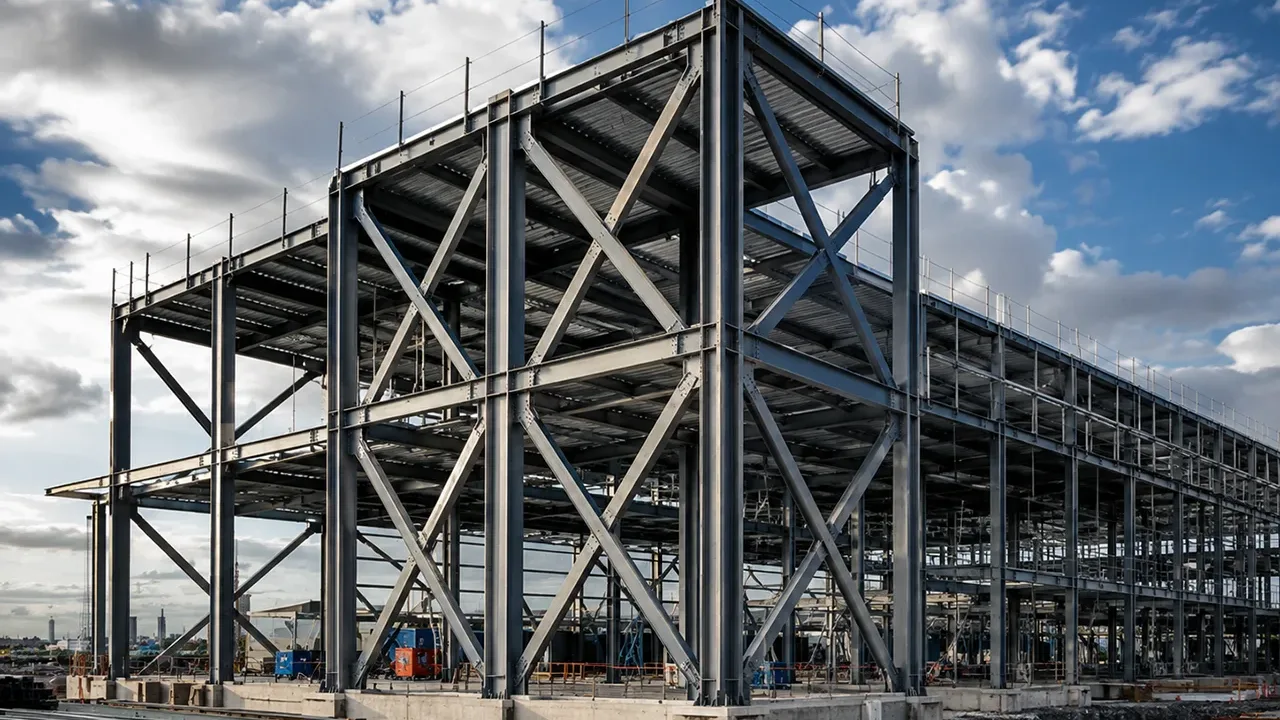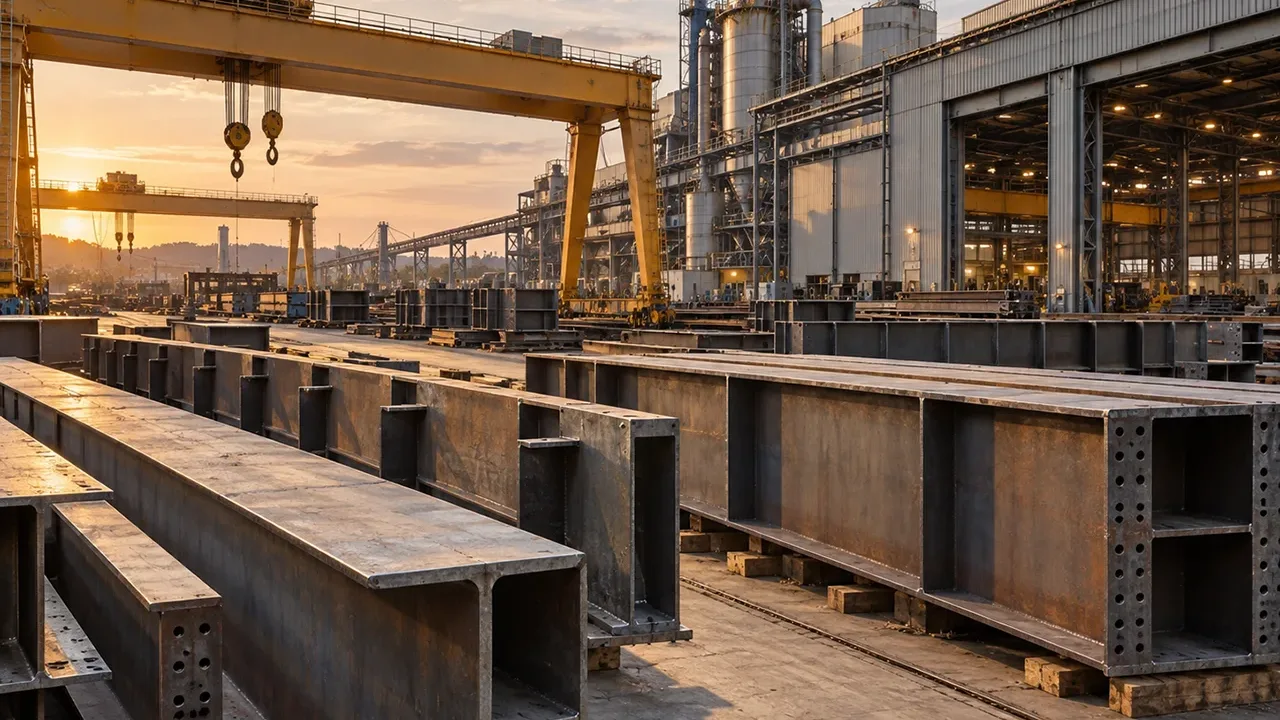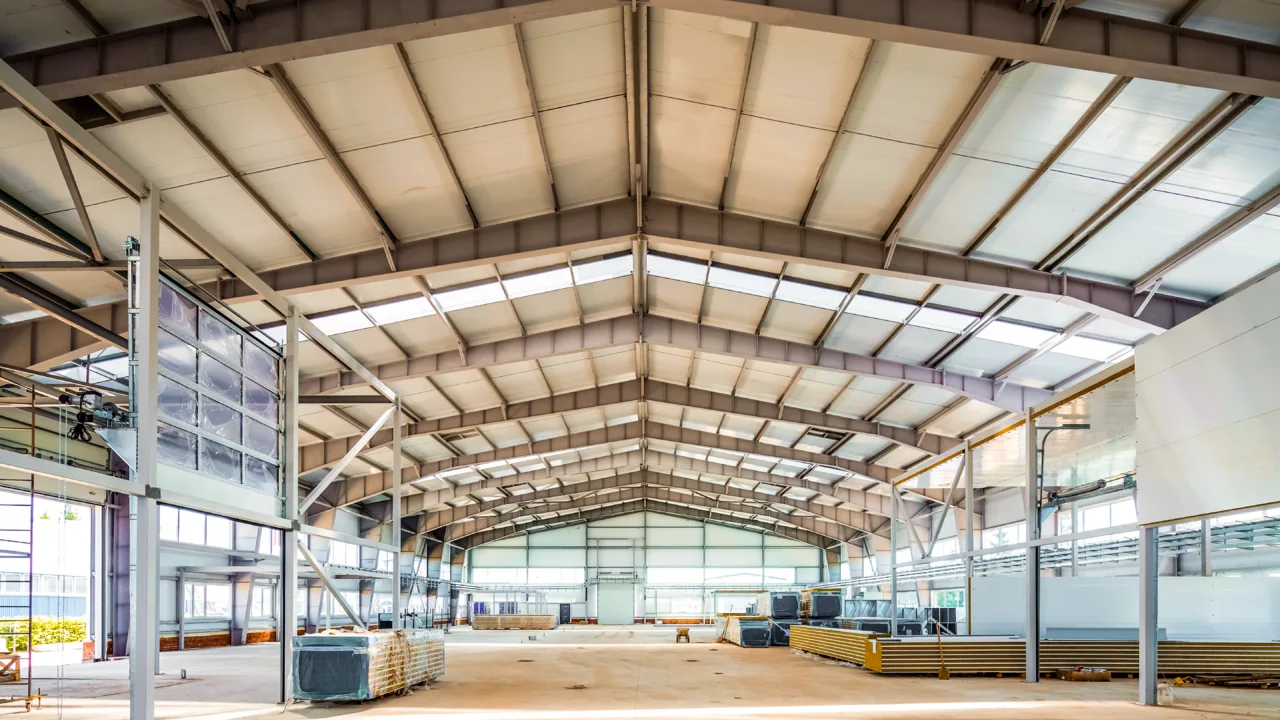
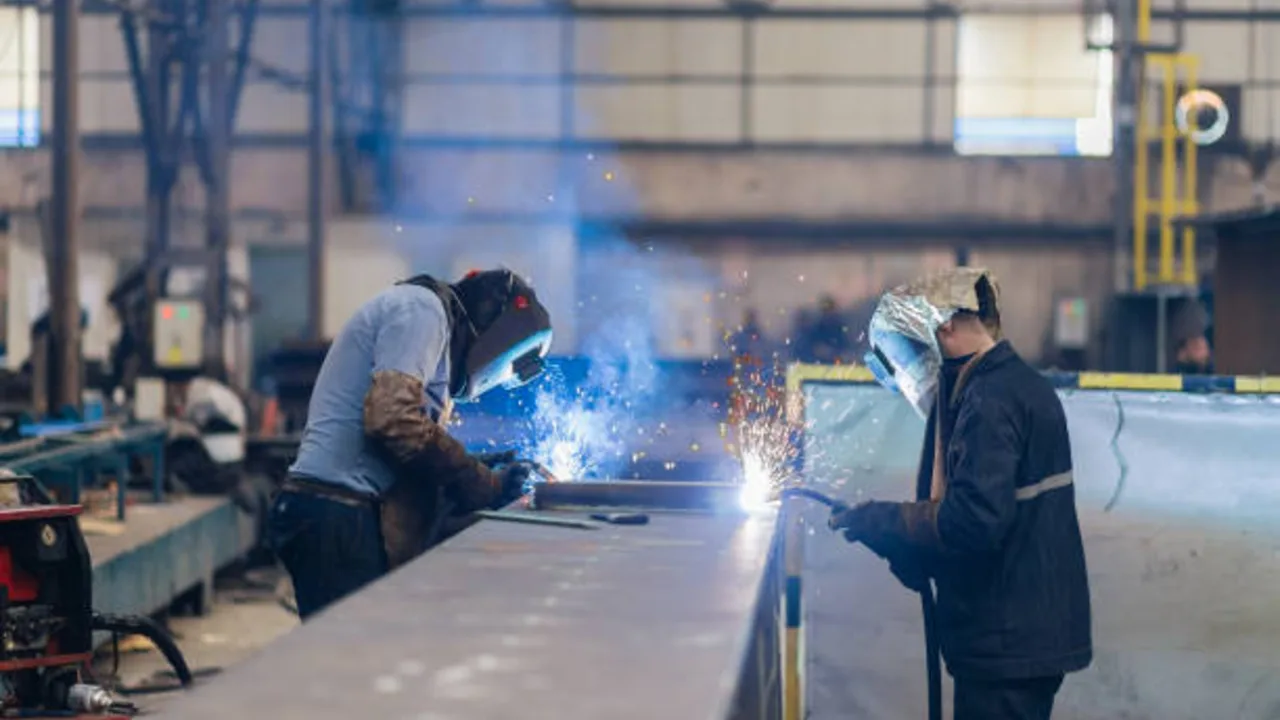
Structural steel fabrication relies heavily on welding to create strong, reliable, and durable connections between steel members. From industrial buildings and warehouses to bridges and large-span facilities, welding plays a critical role in ensuring that fabricated steel components perform safely under load and over time.
The steel structure fabrication process involves multiple stages, including cutting, assembly, welding, inspection, and surface treatment. Among these stages, welding is one of the most technically demanding, as weld quality directly affects structural integrity, fatigue resistance, and long-term performance.
This article examines the most commonly used welding techniques in structural steel fabrication, with a focus on MIG welding, flux core welding, and their applications in modern fabrication facilities.
Role of Welding in Structural Steel Fabrication
Welding is the primary method used to join steel plates, beams, columns, and connection elements into complete structural assemblies. Unlike mechanical fastening alone, welding creates continuous joints that can efficiently transfer loads across steel members.
Within the steel structure fabrication process, welding serves several essential functions:
- Forming rigid and semi-rigid structural connections
- Ensuring load continuity across steel members
- Reducing the need for excessive bolting in certain applications
- Improving fabrication accuracy and assembly efficiency
Because welded joints are often permanent, fabrication plants must apply strict quality control and standardized welding procedures.
Common Welding Techniques in Structural Steel Fabrication
Modern steel fabrication facilities use several welding methods depending on material thickness, joint design, production speed, and quality requirements. The most widely used techniques include MIG welding and flux core welding.
MIG Welding in Steel Fabrication
MIG welding, also known as Gas Metal Arc Welding (GMAW), is one of the most common welding methods used in structural steel fabrication workshops. It utilizes a continuously fed wire electrode and shielding gas to produce clean, consistent welds.
Key advantages of MIG welding include:
- High welding speed and productivity
- Clean weld appearance with minimal spatter
- Ease of automation and robotic integration
- Good control over weld penetration and bead profile
MIG welding is commonly applied to medium-thickness steel components, such as beams, columns, stiffeners, and secondary structural elements. It is especially suitable for factory-controlled environments where welding conditions can be carefully regulated.
Flux Core Welding for Heavy Steel Structures
Flux core welding, or Flux-Cored Arc Welding (FCAW), is widely used for heavy-duty structural steel fabrication. This method uses a tubular wire filled with flux, allowing deeper penetration and higher deposition rates compared to MIG welding.
Advantages of flux core welding include:
- Excellent performance on thick steel sections
- High deposition rates for faster weld completion
- Strong welds with good mechanical properties
- Better tolerance to surface contamination
Flux core welding is commonly used for primary load-bearing components, such as heavy columns, large beams, trusses, and bridge elements. It is also well-suited for outdoor or semi-controlled environments.
Selection Criteria for Welding Techniques

Choosing the appropriate welding method is a critical decision in structural steel fabrication. Fabricators evaluate several factors before selecting a welding technique, including:
- Steel thickness and grade
- Joint configuration and design
- Production volume and schedule
- Required mechanical properties of the weld
- Applicable welding codes and standards
In many projects, multiple welding techniques are used within the same fabrication process to optimize efficiency and quality.
Quality Control and Welding Standards
Welding quality directly impacts the safety and durability of steel structures. Fabrication plants implement comprehensive quality control measures, including:
- Certified welders and welding operators
- Qualified Welding Procedure Specifications (WPS)
- Visual inspection and non-destructive testing (NDT)
- Dimensional checks and weld documentation
Standards such as AWS, EN, and ISO define acceptable welding practices and inspection criteria, ensuring consistency across projects.
Automation and Advanced Welding Technologies
Modern structural steel fabrication increasingly incorporates automated and robotic welding systems. These technologies improve repeatability, reduce human error, and enhance production efficiency.
Automated welding systems are particularly effective for:
- Repetitive weld joints
- Large-volume production runs
- Complex assemblies requiring precise control
By combining skilled manual welding with automation, fabrication facilities achieve higher productivity while maintaining strict quality standards.
Impact of Welding on Overall Fabrication Efficiency
Welding efficiency has a direct influence on fabrication cost, project schedules, and final product quality. Optimized welding techniques reduce rework, minimize distortion, and improve assembly accuracy.
Effective welding management within the steel structure fabrication process contributes to:
- Shorter production cycles
- Lower fabrication costs
- Consistent structural performance
- Improved project delivery timelines
Conclusion: Welding as a Core Element of Steel Fabrication
Welding techniques such as MIG welding and flux core welding are fundamental to modern structural steel fabrication. Each method offers specific advantages depending on application requirements, steel thickness, and production conditions.
By selecting appropriate welding techniques and applying rigorous quality control, fabricators ensure that steel structures meet design specifications, safety standards, and long-term performance expectations. As fabrication technology continues to evolve, welding will remain a core component of efficient and reliable structural steel construction.