Industrial buildings rely heavily on steel structures to support heavy loads, complex machinery, and long-term operational demands. While design calculations and material selection often receive significant attention, fabrication quality—especially accuracy—plays an equally critical role in determining overall building safety. Even minor deviations during fabrication can cascade into major structural and safety issues once components are assembled on site.
Steel fabrication accuracy directly influences how well structural elements fit together, transfer loads, and perform under real operating conditions. In industrial environments where safety margins are tight and operational risks are high, fabrication precision is not optional—it is a fundamental requirement.
This article examines how fabrication accuracy affects industrial building safety, with a focus on tolerance control, structural behavior, and the prevention of long-term safety risks.
Understanding Steel Fabrication Accuracy
Steel fabrication accuracy refers to how closely fabricated steel components match the dimensions, geometry, and specifications defined in engineering drawings and design models. Accuracy is measured through dimensional tolerances, alignment precision, hole positioning, flatness, and overall geometric consistency.
Unlike concrete construction, where minor adjustments can often be made on site, steel structures depend on prefabricated components fitting together precisely. Any deviation introduced during cutting, drilling, welding, or assembly can disrupt load paths and compromise structural performance.
In industrial buildings, where steel structures support cranes, equipment platforms, mezzanines, and production lines, fabrication accuracy becomes a key determinant of structural safety.
The Role of Tolerance Control in Structural Performance
Tolerance control is the system of allowable dimensional limits within which fabricated steel components must fall. These tolerances are defined by design standards, engineering codes, and project-specific requirements.
Effective tolerance control ensures:
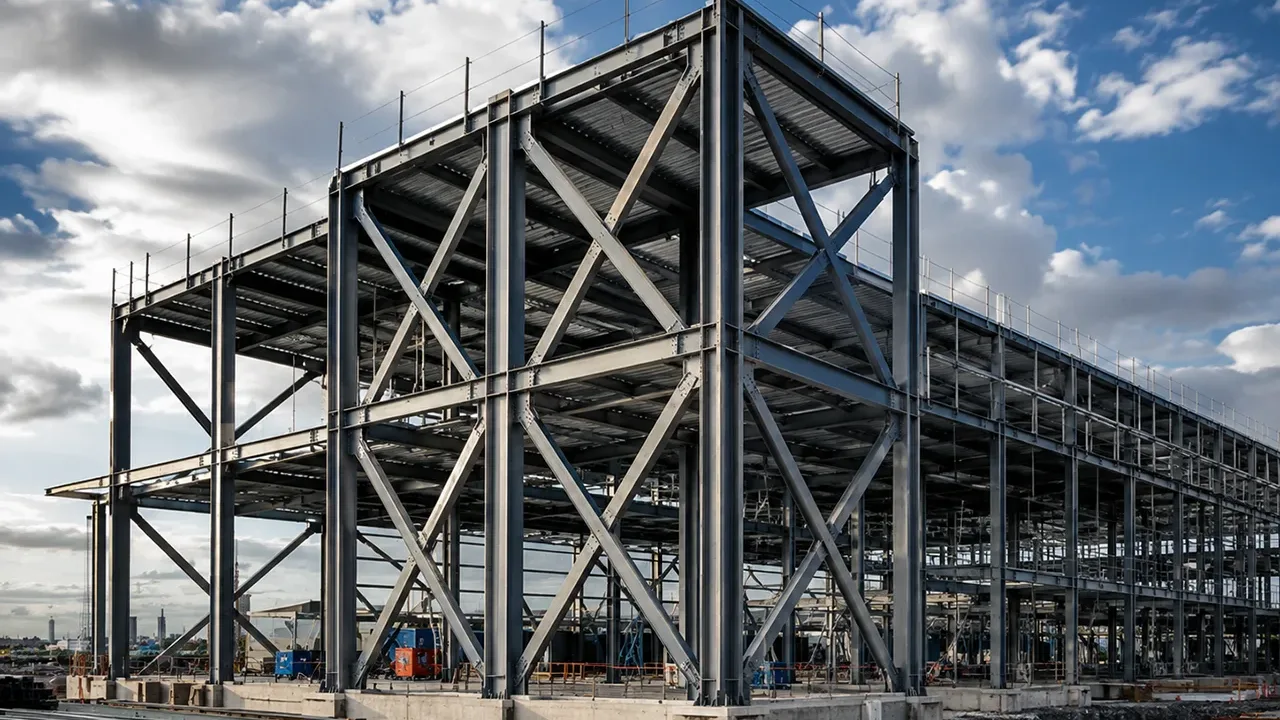
- Proper alignment of beams, columns, and bracing members
- Accurate bolt hole positioning for reliable connections
- Uniform load transfer across joints and supports
- Ease of assembly without forced adjustments
Poor tolerance control often leads to on-site corrections such as flame cutting, slotting bolt holes, or forcing components into position. These practices introduce residual stresses and weaken connections, increasing long-term safety risks.
Impact of Fabrication Accuracy on Structural Safety
Structural safety depends not only on design strength but also on how accurately that design is executed. Fabrication inaccuracies can compromise safety in several critical ways.
Misalignment and Load Redistribution
When fabricated components are misaligned, loads may not be transferred as intended. Instead of flowing evenly through the structural system, forces concentrate in unexpected areas, increasing the risk of localized overstress and fatigue.
Connection Integrity and Joint Performance
Steel structures rely on bolted and welded connections to maintain stability. Inaccurate hole placement, uneven welding, or distorted members can reduce connection capacity, even if the steel material itself meets strength requirements.
Reduced Stability Under Dynamic Loads
Industrial buildings are often subjected to dynamic loads from cranes, moving equipment, vibrations, and thermal expansion. Fabrication inaccuracies amplify these effects by introducing geometric imperfections that reduce structural damping and stability.
Fabrication Accuracy and On-Site Safety Risks
Inaccurate fabrication does not only affect long-term structural behavior—it also increases safety risks during construction and installation.
Common on-site safety issues caused by poor fabrication accuracy include:
- Unstable temporary positioning of members
- Increased crane time and complex lifting adjustments
- Higher risk of dropped objects or uncontrolled movements
- Extended working-at-height operations
Accurate fabrication allows steel components to be installed quickly and safely, reducing exposure to hazardous site conditions and minimizing installation-related accidents.
Quality Control Processes That Ensure Accuracy
Achieving high steel fabrication accuracy requires systematic quality control throughout the manufacturing process.
Key quality control measures include:
- Digital shop drawings derived from BIM or 3D models
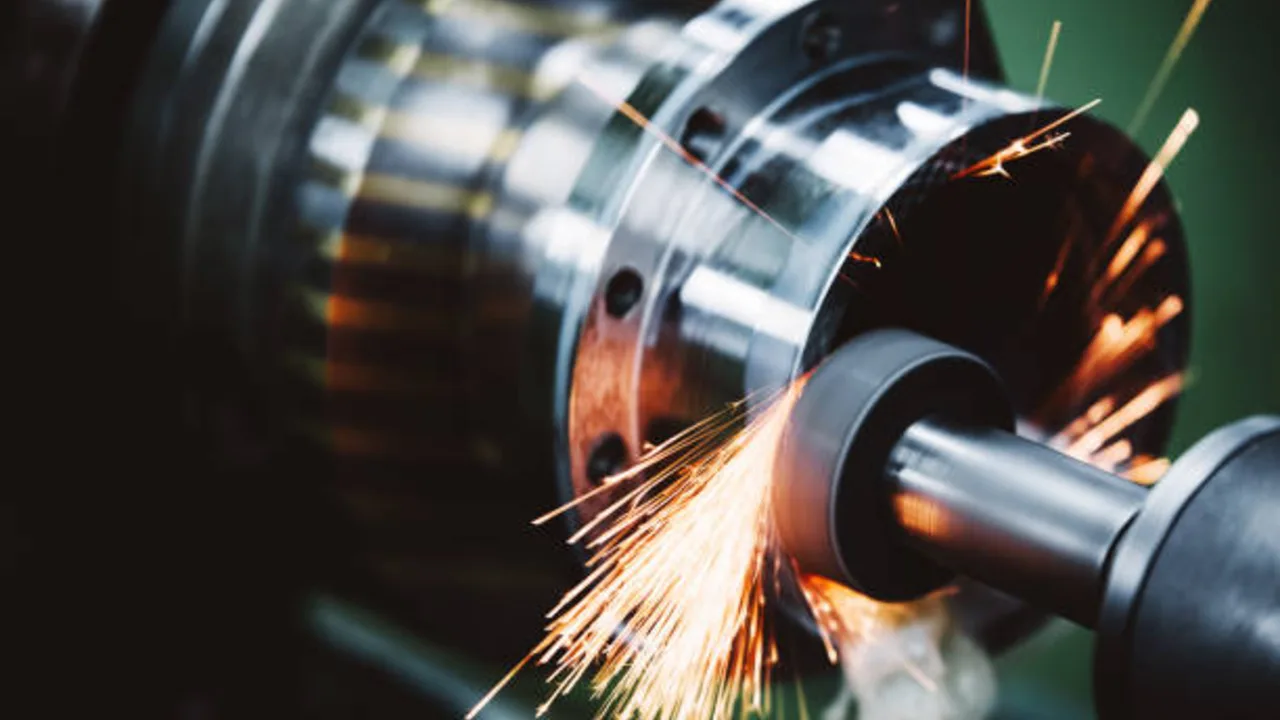
- CNC cutting and drilling for dimensional consistency
- In-process inspections at critical fabrication stages
- Final dimensional checks before delivery
Advanced fabrication facilities integrate automated equipment with skilled workmanship to ensure that tolerances are consistently met across large production volumes.
Long-Term Safety and Lifecycle Performance
Fabrication accuracy has a lasting impact on an industrial building’s lifecycle performance. Structures assembled from accurately fabricated components experience:
- Lower maintenance requirements
- Reduced fatigue-related damage
- Better resistance to vibration and dynamic loading
- More predictable behavior during modifications or expansions
Conversely, buildings constructed with poorly fabricated steel often require ongoing monitoring, reinforcement, or corrective works to address hidden safety risks.
The Importance of Choosing the Right Fabrication Partner
Industrial safety begins long before construction starts. Selecting an experienced steel structure fabrication manufacturer with strong quality systems is one of the most effective ways to ensure fabrication accuracy and structural reliability.
A qualified fabrication partner typically offers:
- Certified quality management systems
- Advanced fabrication technology
- Strict tolerance control procedures
- Proven experience with industrial projects
Such capabilities translate directly into safer structures and smoother project execution.
Fabrication Accuracy in Complex Industrial Environments
Industrial buildings often involve complex geometries, heavy equipment interfaces, and tight spatial constraints. In these conditions, fabrication accuracy becomes even more critical.
Examples include:
- Steel platforms supporting rotating machinery
- Crane runway beams with strict alignment requirements
- Multi-level industrial mezzanines
- Structures integrated with mechanical and piping systems
Any dimensional deviation in these systems can lead to operational hazards, excessive vibration, or premature structural wear.
Conclusion: Accuracy as a Foundation of Industrial Safety
Steel fabrication accuracy is a foundational element of industrial building safety. While engineering design defines what a structure should achieve, fabrication accuracy determines whether those safety objectives are realized in practice.
Through effective tolerance control, robust quality management, and collaboration with capable fabrication partners, project stakeholders can significantly reduce structural risks and enhance long-term safety performance.
In industrial construction, accuracy is not merely a matter of workmanship—it is a critical safety strategy that protects assets, operations, and, most importantly, people.