Industrial warehousing has evolved far beyond simple storage buildings. Today’s facilities must support high-density storage, efficient material flow, automation systems, and future expansion—all while keeping construction and operating costs under control. As a result, warehouse owners are increasingly turning to steel structures that can be tailored to their exact operational needs.
Custom warehouse layout steel solutions allow industrial warehouses to be designed around workflow, equipment, and inventory requirements rather than forcing operations to adapt to a fixed building form. By leveraging steel’s structural flexibility, companies can achieve layouts that maximize space utilization, improve efficiency, and remain adaptable over the long term.
This article explores how custom layout solutions are applied in industrial steel warehouses, with a focus on clear span design, mezzanines, and strategic planning principles that drive performance and scalability.
Why Custom Layout Matters in Industrial Warehousing
Warehouse layout directly influences productivity, safety, and operating costs. A poorly planned layout can create bottlenecks, limit storage capacity, and restrict future upgrades. In contrast, a custom-designed steel warehouse aligns the building structure with operational processes from day one.
Custom layouts are particularly critical in industrial environments where warehouses may serve multiple functions, such as:
- Raw material storage
- Finished goods warehousing
- Production support and staging areas
- Automated picking and sorting zones
Steel structures provide the structural freedom required to design these spaces without unnecessary constraints, making customization both practical and cost-effective.
Structural Flexibility of Steel Warehouse Systems
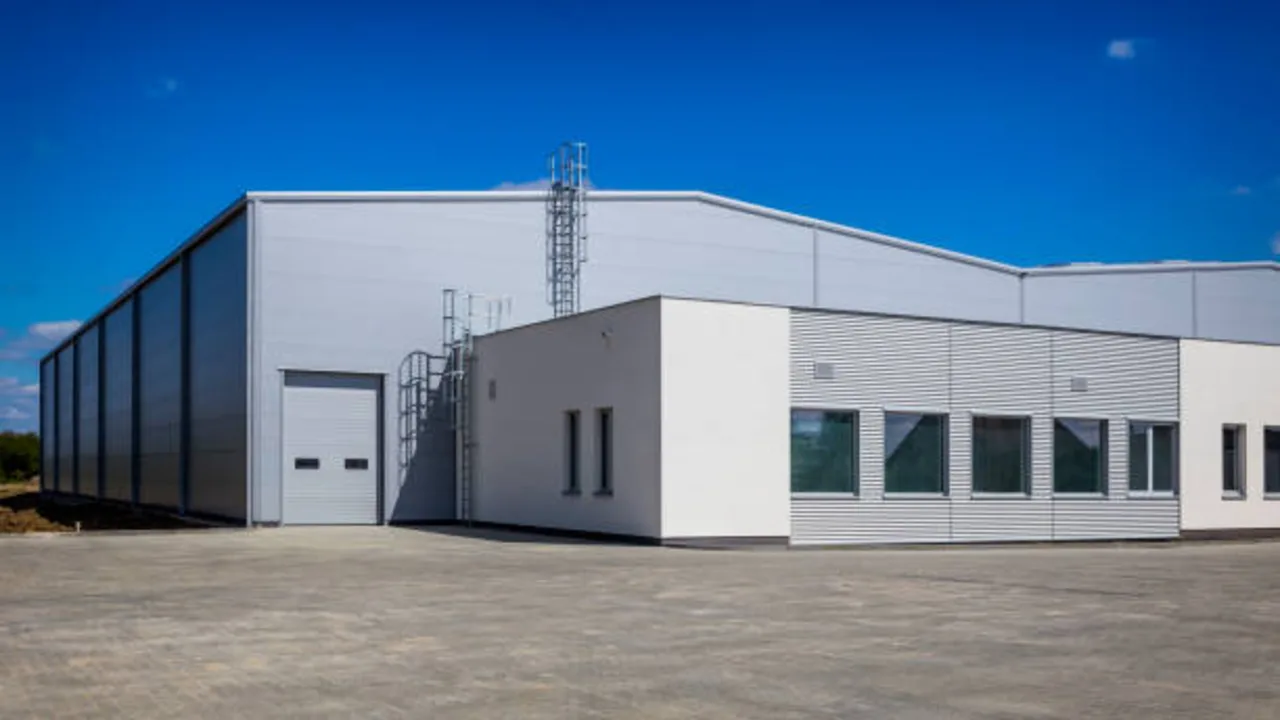
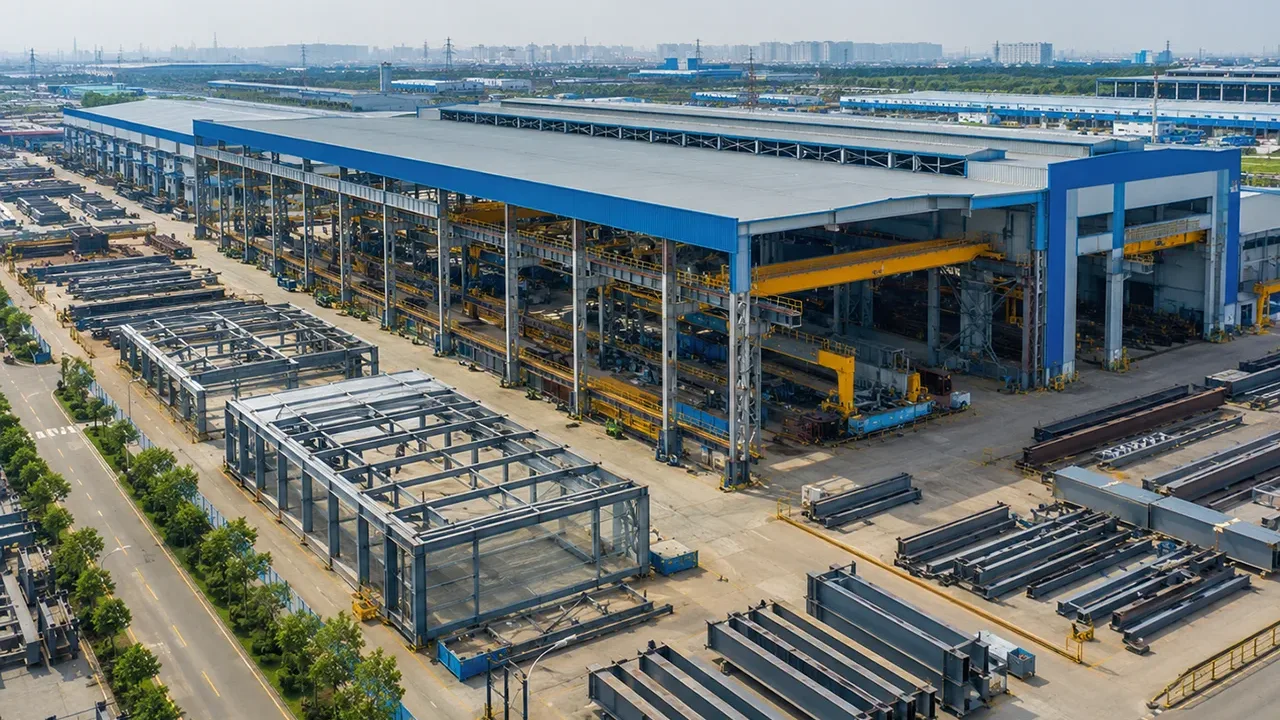
Steel is uniquely suited for custom warehouse layouts due to its high strength-to-weight ratio and modular construction approach. Unlike traditional concrete structures, steel buildings can be engineered to accommodate large open areas, multi-level platforms, and complex load requirements without compromising structural integrity.
Key advantages of steel structures for custom layouts include:
- Long-span framing systems
- Column-free interior spaces
- Easy integration of mezzanines and platforms
- Future expansion and modification capability
These characteristics allow designers to create warehouses that respond precisely to operational demands rather than architectural limitations.
Clear Span Design for Optimized Warehouse Flow
One of the most important elements in custom warehouse layout steel design is the use of clear span structures. Clear span warehouses eliminate interior columns, creating unobstructed floor space that supports flexible racking systems, vehicle movement, and automation equipment.
Benefits of clear span warehouse design include:
- Improved forklift and AGV circulation
- Higher racking density and storage efficiency
- Simplified reconfiguration of storage systems
- Enhanced safety and visibility
Clear span steel frames are particularly valuable in logistics hubs, distribution centers, and manufacturing warehouses where layout flexibility directly impacts throughput and efficiency.
Integrating Mezzanines into Custom Steel Warehouse Layouts
Another key strategy in custom layout design is the use of mezzanines. Steel mezzanine systems enable warehouses to utilize vertical space by adding intermediate floors for storage, offices, or production support areas without expanding the building footprint.
Common mezzanine applications include:
- Lightweight storage platforms
- Picking and packing areas
- Office and control rooms
- Maintenance and utility zones
Because mezzanines are typically integrated into the main steel structure, they can be designed to match load requirements and operational flows precisely. This makes them an ideal solution for warehouses facing space constraints or future growth demands.
Designing Layouts Around Warehouse Operations
A successful custom warehouse layout starts with a deep understanding of operational processes. Steel warehouse design should be driven by how goods move through the facility, from inbound receiving to outbound shipping.
Key operational factors that influence layout design include:
- Material handling methods
- Storage type and inventory turnover
- Equipment size and movement paths
- Automation and conveyor systems
By aligning the steel structure with these operational requirements, warehouse owners can reduce handling time, minimize congestion, and improve overall productivity.
Load Requirements and Structural Planning
Custom layouts often introduce varied load conditions across different warehouse zones. Heavy storage areas, automated systems, and mezzanines all impose different structural demands that must be addressed during design.
Steel structures allow engineers to:
- Optimize member sizes based on localized loads
- Reinforce high-load zones without overdesigning the entire building
- Accommodate future load increases through modular reinforcement
This targeted structural approach helps control construction costs while ensuring safety and long-term performance.
Future Expansion and Adaptability
Industrial warehouses rarely remain static over their lifecycle. Changes in inventory volume, technology, or business models often require layout adjustments. One of the greatest advantages of custom steel warehouse layouts is their adaptability.
Steel warehouses can be designed to:
- Extend building length or width
- Add new mezzanine levels
- Reconfigure internal zones
- Upgrade load capacity for new equipment
This flexibility protects the initial investment and reduces the cost and disruption associated with future upgrades.
Collaboration with a Steel Warehouse Partner
Achieving a truly effective custom layout requires close collaboration between warehouse owners, designers, and manufacturers. Working with an experienced steel structure warehouse supplier ensures that layout concepts are translated into practical, buildable solutions.
An integrated partner can support:
- Early-stage layout planning and feasibility analysis
- Structural optimization for clear span and mezzanine systems
- Fabrication accuracy and modular construction
- Efficient on-site assembly and future scalability
This end-to-end approach minimizes risk and ensures that the final warehouse performs as intended.
Cost Efficiency Through Smart Layout Design
While custom layouts may appear more complex than standard warehouse designs, they often deliver superior cost efficiency over the building’s lifecycle. Optimized layouts reduce wasted space, improve labor efficiency, and support higher storage density.
Key cost benefits include:
- Lower operating costs through improved workflow
- Reduced need for future structural modifications
- Better return on investment through scalable design
When planned correctly, custom warehouse layout steel solutions balance upfront construction cost with long-term operational savings.
Conclusion: Building Warehouses Around Performance
Industrial steel warehouses are no longer just storage facilities—they are strategic assets that support production, logistics, and growth. Custom layout solutions enable these buildings to perform at their highest potential by aligning structure, space, and operations.
By leveraging clear span designs, integrating mezzanines, and planning for future adaptability, warehouse owners can create facilities that are efficient, scalable, and resilient. With the right design approach and manufacturing partner, custom steel warehouse layouts become a powerful tool for long-term operational success.