Industrial construction has undergone a dramatic transformation over the past century. What began as simple brick factories and masonry warehouses has evolved into high-performance facilities engineered with precision, sustainability, and advanced technology. Today, modern industrial steel buildings represent the global standard for manufacturing plants, logistics hubs, and large-scale industrial infrastructure. Their rise is driven by enhanced structural engineering methods, innovative steel frame technology, and the increasing demand for cost-efficient, fast, and scalable building solutions.
As industries expand and operational requirements become more complex, steel buildings offer unmatched flexibility, speed, and durability. The integration of high-strength materials, digital engineering, and automated fabrication has accelerated the shift toward modern industrial steel buildings, making them the preferred choice for companies seeking long-term value and engineering excellence.
Origins of Industrial Steel Construction
Before the modern industrial era, factories relied heavily on brick, stone, and timber construction. These traditional materials limited building size, imposed heavy structural loads, and restricted interior space. However, with the rise of steel production during the Industrial Revolution, engineers gained access to a superior material capable of supporting taller structures, wider spans, and more robust load-bearing systems.
From Early Steel Mills to Modern Factories
In the late 19th and early 20th centuries, steel mills began producing stronger, more consistent steel profiles. This advancement enabled the first generation of industrial steel buildings—mainly workshops, rail facilities, and early warehouses. Over time, the engineering principles behind steel structures evolved, paving the way for the sophisticated modern industrial steel buildings we see today.
Why Steel Became the Preferred Structural Material
Steel’s rise in industrial construction is driven by several key advantages:
- Strength-to-weight ratio: Steel provides exceptional load capacity while remaining lightweight.
- Faster construction: Prefabricated steel members reduce on-site labor and construction time.
- Cost efficiency: Less material waste and lower long-term maintenance costs.
- Design freedom: Large column-free spaces ideal for industrial operations.
These factors laid the foundation for today’s widespread adoption of modern industrial steel buildings.
The Rise of Modern Industrial Steel Buildings
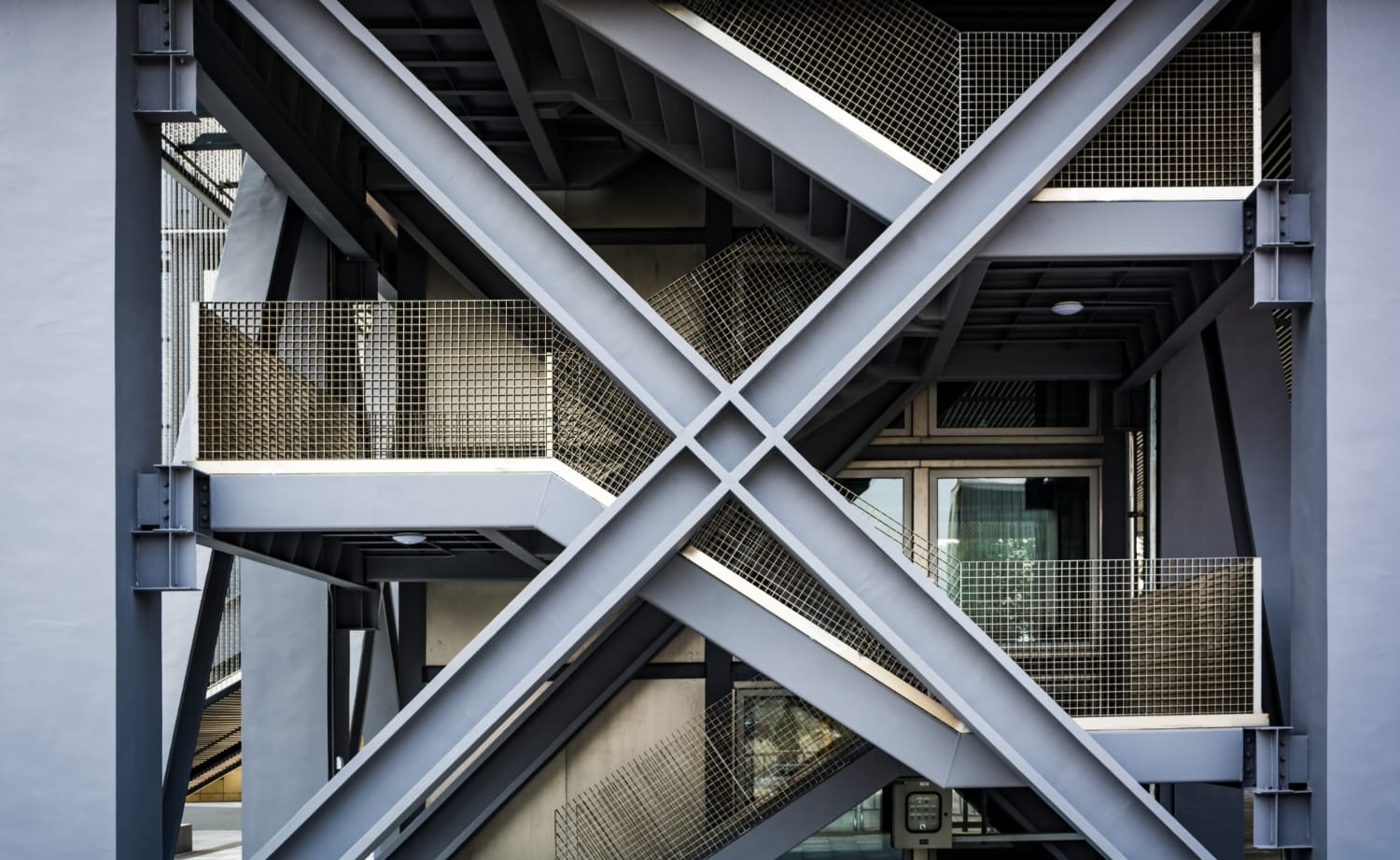
As industries globalized and production demands increased, traditional concrete and masonry buildings could no longer meet the speed and scalability required. Steel structures emerged as the most adaptable and economically viable alternative.
Transition From Traditional Structures
Concrete buildings offer durability but come with limitations: heavy foundations, long curing times, and restricted span capabilities. In contrast, modern industrial steel buildings provide lighter structural systems, faster assembly, and enhanced performance under dynamic loads such as seismic activity and wind.
The Role of Structural Engineering
Structural engineering plays a crucial role in optimizing the performance of industrial buildings. Engineers analyze load distribution, wind pressure, seismic resistance, and functional layout requirements. With modern software tools, they can model complex structures, perform stress simulations, and design highly efficient frameworks for modern industrial steel buildings.
Advances in Steel Frame Technology
Innovations in steel frame design and fabrication techniques have revolutionized the industrial construction sector. These advances improve safety, reduce costs, and enable increasingly ambitious architectural and engineering designs.
High-Strength Steel Materials
Modern steel buildings utilize advanced material grades that offer superior tensile strength, corrosion resistance, and fire performance. These materials allow engineers to design thinner, lighter, and stronger components, reducing overall structural weight while increasing building lifespan.
Prefabrication and Modular Engineering
Prefabrication is a defining feature of today’s steel construction. Structural members are cut, welded, drilled, and coated in controlled factory environments. This ensures consistent quality and accelerates on-site assembly. Many systems used in a modern prefab steel structure building are now standard across industrial projects, enabling companies to complete facilities in a fraction of the time needed for traditional construction.
Digital Engineering (BIM, Simulation, 3D Modeling)
Digital technologies have become essential tools for planning and executing industrial construction. Building Information Modeling (BIM) and 3D simulations allow engineers to:
- Detect clashes before fabrication begins
- Optimize structural layouts for efficiency
- Visualize construction sequencing
- Reduce on-site errors and costly rework
These innovations significantly enhance the performance and constructability of modern industrial steel buildings.
Key Features of Modern Industrial Steel Buildings
Industrial operations require buildings that can support heavy machinery, withstand environmental stress, and offer flexible interior layouts. Steel structures deliver all these advantages and more.
Clear Span Design
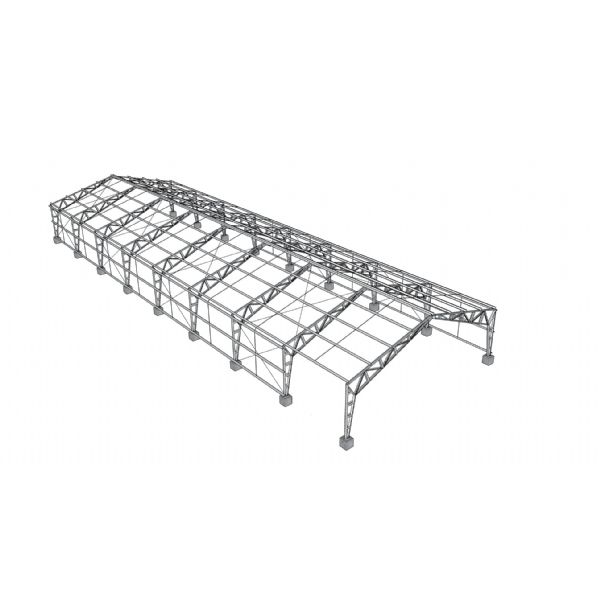
One of the most important benefits of steel is its ability to create wide, column-free spaces. Clear span designs maximize maneuverability for forklifts, production lines, and warehouse racking systems—making modern industrial steel buildings ideal for logistics centers, factories, and large storage facilities.
Speed of Construction
Prefabricated steel components drastically reduce installation time. Once transported to the site, steel columns, beams, and trusses can be assembled rapidly using bolted or welded connections. Shorter construction timelines minimize labor costs and allow businesses to begin operations sooner.
Structural Flexibility & Adaptability
Modern steel buildings are designed with long-term flexibility in mind. Operations can expand without large-scale demolition, and layouts can be reconfigured to accommodate evolving industrial needs. This adaptability increases the long-term value of modern industrial steel buildings.
Fabrication and Construction Process
The evolution of fabrication techniques is one of the biggest reasons modern industrial steel buildings continue to outperform traditional construction systems. The use of precision machinery, automated welding, and advanced coating processes ensures consistent quality and long-term durability across all structural components.
Material Cutting, Welding & Quality Control
Fabrication begins with accurate cutting and shaping of steel plates, beams, and structural profiles. CNC cutting machines, laser systems, and robotic welding deliver precise results with minimal human error. Every beam, column, and truss used in modern industrial steel buildings undergoes rigorous quality control checks to ensure compliance with engineering standards.
Non-destructive testing (NDT), ultrasonic inspections, and visual checks ensure that welds and joints meet the highest safety requirements. This high level of fabrication accuracy plays a key role in the longevity of industrial steel structures.
Surface Treatment & Coating
To ensure long-term corrosion resistance, steel components are treated using sandblasting, galvanization, and epoxy coatings. These protective layers extend the lifespan of modern industrial steel buildings, especially in corrosive environments such as coastal regions, chemical plants, or high-humidity manufacturing zones.
On-Site Assembly Sequence
On-site installation follows a highly efficient sequence:
- Anchor bolt preparation and foundation layout
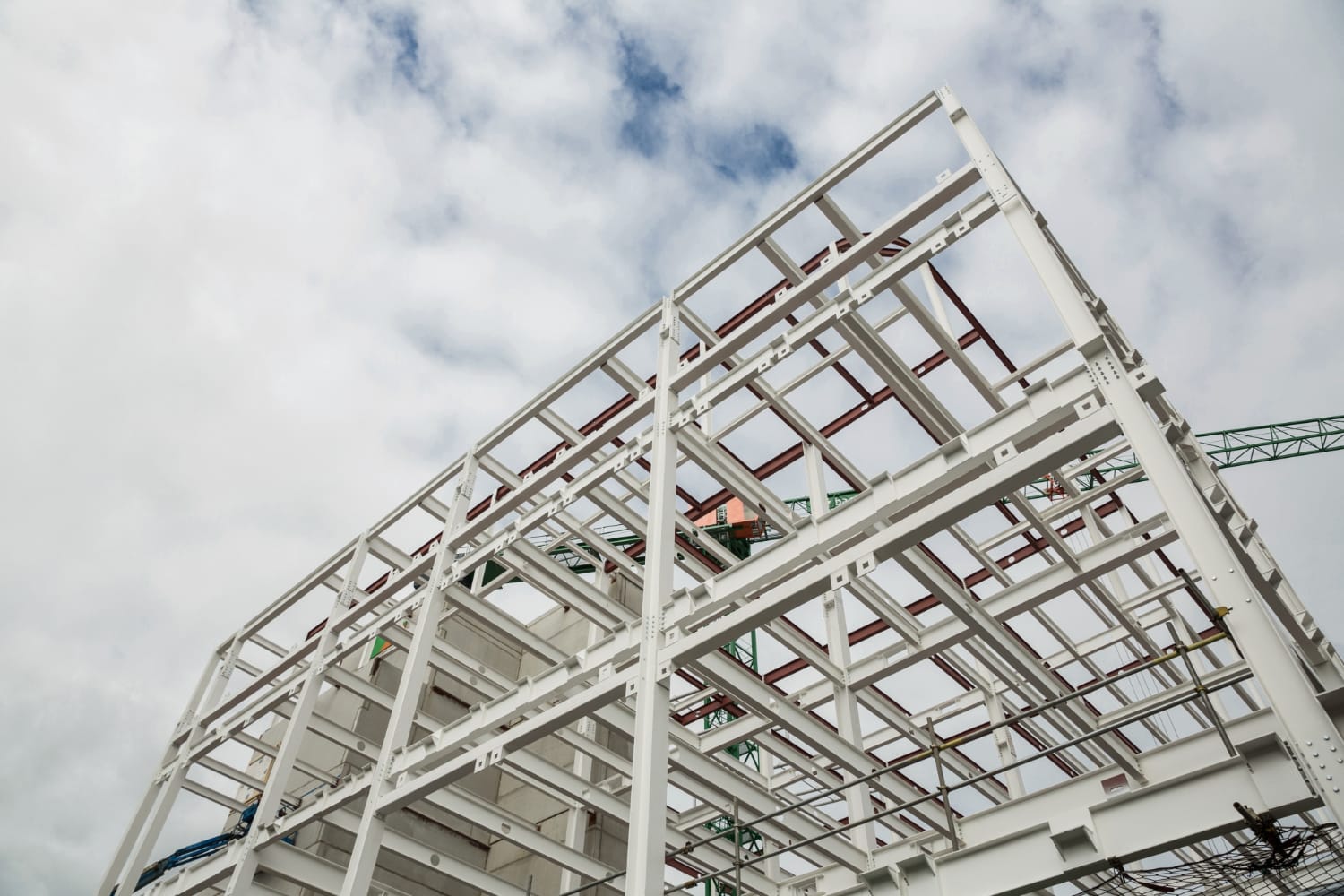
- Erection of primary steel frames
- Installation of secondary beams and purlins
- Roof and wall panel installation
- Integration of doors, windows, and ventilation systems
The prefabricated nature of a prefab steel structure building ensures a smooth workflow, reduced labor requirements, and enhanced safety during the assembly phase. Compared to concrete construction, the installation of modern steel buildings is significantly faster and more predictable.
Integration With MEP Systems
Mechanical, electrical, and plumbing (MEP) systems are essential components of industrial facilities. Because modern industrial steel buildings are designed with adaptable frameworks, integrating HVAC systems, fire suppression, cable trays, and production machinery becomes easier and more efficient.
Comparing Modern Industrial Steel Buildings vs Traditional Concrete Buildings
While traditional concrete structures remain common in certain sectors, their limitations become increasingly evident when compared to the performance, efficiency, and flexibility of steel buildings. The table below illustrates the major differences.
| Criteria | Steel Buildings | Concrete Buildings |
|---|---|---|
| Construction Speed | Very fast due to prefabrication | Slow due to curing time |
| Structural Weight | Lightweight | Heavy, requires deep foundations |
| Span Capabilities | Excellent clear-span solutions | Limited without large beams |
| Cost Efficiency | High (material savings + labor reduction) | Moderate to high |
| Sustainability | Highly recyclable, less waste | High carbon footprint, more waste |
Applications of Modern Industrial Steel Buildings
Due to their structural advantages, modern industrial steel buildings are now used across nearly all industrial sectors. Their adaptability and cost efficiency make them ideal for both small-scale operations and large, complex facilities.
- Manufacturing facilities: Heavy-duty steel frames support large equipment and production lines.
- Warehouses: Clear-span designs maximize storage and racking efficiency.
- Distribution centers: High bays and long spans allow automated logistics systems to operate smoothly.
- Processing plants: Steel structures withstand temperature variations and heavy mechanical loads.
- Cold storage buildings: Steel offers excellent insulation integration and airtight performance.
- High-tech facilities: Steel buildings accommodate precise environmental controls and modular systems.
The Sustainability Advantage
Sustainability is one of the strongest drivers behind the rise of modern industrial steel buildings. Steel is one of the most recycled materials on the planet, with a recovery rate exceeding 90%. This makes industrial steel buildings inherently more sustainable compared to concrete alternatives.
Steel Recyclability
Steel can be recycled indefinitely without losing strength. Components from dismantled buildings can be melted, re-rolled, and reused in new construction—reducing environmental impact and supporting circular manufacturing principles.
Energy Efficiency
Modern insulation materials, airtight wall systems, and advanced roof designs allow industrial steel buildings to achieve high energy efficiency. This lowers operational costs and helps companies meet energy compliance targets.
Lower CO₂ Footprint
Producing steel generates emissions, but modern electric arc furnace (EAF) technology has significantly reduced the carbon footprint. When combined with recyclability, modern industrial steel buildings offer a more sustainable lifecycle than concrete structures.
Long-Term Durability
Properly coated steel frames can last 50 years or more with minimal maintenance. Their resistance to pests, mold, moisture, and fire makes them suitable for harsh industrial environments.
Challenges & Future Innovations
Despite their advantages, steel buildings face challenges that continue to push innovation in the industry.
Engineering Challenges
Long-span industrial structures, high-bay warehouses, and heavy-duty manufacturing buildings present engineering demands that go far beyond traditional construction. As modern industrial steel buildings grow larger and more complex, engineers must account for a combination of structural, environmental, and operational challenges.
One of the most significant engineering hurdles is the design of long-span structures. Clear-span areas exceeding 30–80 meters require precise calculations to prevent excessive deflection and ensure stable load distribution. Advanced truss systems, tapered rafters, castellated beams, and optimized girder designs are often employed to achieve the required span without compromising safety.
Seismic loads add another layer of complexity. Industrial buildings located in earthquake-prone regions must be able to absorb and dissipate energy during seismic events. This requires specialized detailing such as ductile moment connections, braced frames, base isolation systems, and strategically positioned shear walls. Engineers also use nonlinear dynamic analysis to ensure structures can withstand sudden lateral forces.
In coastal or storm-heavy regions, extreme wind conditions pose additional challenges. Engineers must design steel frames to resist uplift forces, vortex shedding, and aerodynamic pressures. Wind tunnel testing, computational fluid dynamics (CFD), and parametric modeling are frequently used to predict and mitigate wind effects on roof systems, cladding, and structural frames.
Modern engineering software—especially finite element analysis (FEA)—has become essential for solving these challenges. FEA allows engineers to simulate real-world conditions, evaluate stress concentrations, and optimize each component of the steel frame. This results in safer, lighter, and more efficient building designs while minimizing material waste and construction risk.
New Coating Technologies
The performance and lifespan of modern industrial steel buildings depend heavily on the quality of surface protection applied to structural members. Advances in coating technology have significantly improved corrosion resistance, fire safety, and environmental durability.
Anti-corrosion coatings such as zinc-rich primers, hot-dip galvanizing (HDG), and epoxy-polyurethane systems are widely used to protect steel in industrial environments. Modern zinc-aluminum-magnesium (ZAM) coatings provide even higher resistance to salt spray, humidity, and chemical exposure—making them ideal for coastal factories, chemical plants, and cold storage facilities.
Fire-resistant paints, including intumescent coatings, are another key innovation. When exposed to high heat, these coatings expand into a thick protective layer that insulates steel from structural failure. This technology enables steel buildings to meet strict fire ratings without relying on bulky fireproofing materials, helping maintain the clean, open aesthetics of industrial interiors.
Emerging technologies like nano-ceramic coatings offer enhanced scratch resistance, thermal stability, and superior adhesion. These ultra-thin layers reduce maintenance needs and extend the long-term performance of steel structures.
Hybrid protective systems that combine zinc coating, epoxy sealing, and UV-resistant polyurethane finishing provide multi-layer defense suitable for the harshest industrial environments. With these advances, modern coatings ensure the longevity and reliability of industrial steel buildings through decades of heavy use.
AI & Robotics in Steel Fabrication
Artificial intelligence and robotics are revolutionizing how steel components are produced, assembled, and maintained. The shift toward automation has increased precision, improved productivity, and reduced material waste.
AI-driven welding robots ensure consistent weld quality, even on complex geometries and repetitive tasks. They can detect minor misalignments, adjust speed, optimize heat input, and correct weld paths in real-time. This dramatically improves safety and minimizes defects across thousands of welded joints.
Automated cutting lines using laser, plasma, or CNC technology deliver millimeter-level precision, ensuring each beam, column, or purlin is fabricated according to exact specifications. This reduces rework on-site and accelerates the assembly process for modern industrial steel buildings.
In addition, AI-powered predictive maintenance systems monitor fabrication equipment using sensor data, detecting mechanical anomalies before they lead to downtime. This keeps production facilities running efficiently and ensures timely fabrication for large-scale industrial projects.
Advanced robotics also streamline logistics inside steel factories—automated guided vehicles (AGVs), robotic material handlers, and smart inventory systems reduce handling errors and improve workflow coordination.
Together, AI and robotics are redefining steel fabrication, making it faster, safer, and more precise than ever.
Advanced Composite Steel Systems
New generations of industrial buildings are increasingly utilizing composite structural technologies that combine steel with advanced materials such as fiber-reinforced polymers (FRP), carbon fiber laminates, and hybrid concrete-steel systems.
FRP-reinforced steel members offer superior corrosion resistance, reduced weight, and enhanced tensile strength. By bonding or encasing steel elements with FRP, engineers achieve higher load capacity with minimal added mass—ideal for long-span roofs, crane-supported structures, and heavy mechanical areas.
Carbon fiber–enhanced steel systems provide even greater performance benefits. Carbon fiber’s incredible strength-to-weight ratio allows engineers to design slimmer, lighter beams that still meet stringent load requirements. This significantly reduces the total steel tonnage required for large industrial buildings.
Composite steel-concrete systems, such as composite beams and slabs, improve stiffness and fire resistance while reducing overall structural depth. These systems are widely used in multi-story industrial buildings and heavy-duty production floors.
Hybrid materials also open the door to next-generation structural innovations, such as:
- Ultra-lightweight yet high-strength framing
- Improved seismic performance through ductile hybrid connections
- Enhanced sustainability through recyclable composite materials
As research continues, composite steel systems will play an even larger role in the future of modern industrial steel buildings, enabling engineers to push boundaries in span length, load performance, and architectural freedom.
The Future of Modern Industrial Steel Buildings
As industries become more automated and globalized, the demand for fast, flexible, and sustainable facilities will continue to grow. Modern industrial steel buildings are at the forefront of this transition, offering unmatched adaptability for high-tech manufacturing, logistics automation, and modern production systems.
Future advancements in modular design, robotics, and smart materials will further expand the capabilities of steel buildings. Companies that embrace these innovations will gain significant competitive advantages in speed, efficiency, and long-term operational performance.
Conclusion
The evolution of industrial steel construction reflects a broader shift toward efficiency, sustainability, and engineering precision. From early steel mills to today’s advanced facilities, modern industrial steel buildings have transformed how industries operate. Their strength, adaptability, and technological integration make them the most reliable and future-ready solution for industrial development. As prefabrication, digital engineering, and innovative materials continue to advance, steel buildings will remain at the core of global industrial progress.