Prefab steel projects depend on more than accurate fabrication. Before any beam, frame, truss, platform, or modular steel package leaves the workshop, it must be checked against drawings, specifications, packing plans, and site installation requirements. A component may look complete from a production perspective, but that does not automatically mean it is ready for shipment.
A structured prefab pre-shipment inspection helps confirm that steel components are dimensionally correct, properly finished, clearly marked, safely packed, and ready for formal release approval before loading. This inspection stage acts as a final quality gate between workshop production and site installation.
Once fabricated steel components leave the factory, correcting problems becomes more difficult, more expensive, and more disruptive. Missing plates, wrong hole positions, damaged coatings, unclear markings, incomplete documents, or incorrect packing sequences can all create serious delays once the shipment reaches the project site.
For modular and prefabricated steel construction, shipment readiness is not just a logistics task. It is a coordinated quality process involving engineering, QC, production, coating, packing, logistics, and project management teams. When this process is handled properly, site teams receive steel components that are easier to unload, sort, inspect, and install according to the planned erection sequence.
Why Pre-Shipment Inspection Matters in Prefab Steel Projects
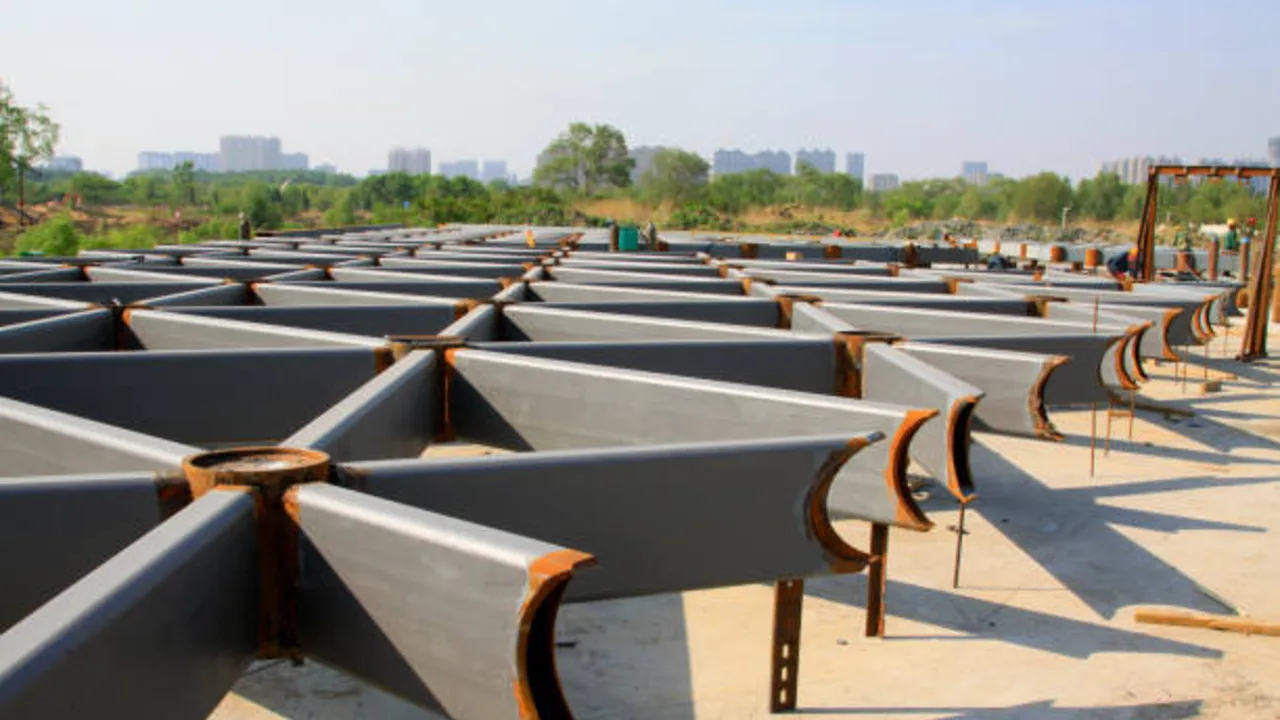
Preventing site installation problems before delivery
Many installation issues are easier to prevent in the workshop than to correct on site. In prefab steel projects, even a small fabrication or marking error can create a much larger problem during erection.
Common issues that should be identified before shipment include:
- Misaligned bolt holes
- Missing connection plates
- Incorrect member lengths
- Unclear component markings
- Damaged coating areas
- Wrong packing sequence
If these problems are discovered only after delivery, the site team may need to delay crane operations, search through mixed bundles, perform emergency modifications, or request replacement parts from the factory.
A proper prefab pre-shipment inspection reduces these risks by confirming that each component is ready before it enters the logistics chain.
Protecting the factory-to-site workflow
Prefab steel construction relies on a disciplined factory-to-site workflow. Production, inspection, packing, transportation, unloading, and erection all need to follow a coordinated plan.
If one batch is shipped incorrectly, the impact may extend beyond a single delivery. It may affect:
- Site unloading order
- Temporary storage planning
- Crane scheduling
- Installation sequence
- Follow-up trade coordination
This is why shipment inspection should not be treated as a quick visual check at the loading area. It should verify whether the steel package is actually aligned with the installation plan.
For large projects, shipment readiness often determines whether the site team can continue erection smoothly or must pause work while waiting for corrections.
Supporting release approval decisions
Release approval should never be based only on the fact that fabrication is complete. A steel member may be produced, but still not ready for dispatch.
Before release approval, the responsible team should confirm that:
- The correct drawing revision was used
- Dimensional inspection has been completed
- Welding and surface treatment checks are acceptable
- Component markings match the packing list
- Required documents are complete
- No critical nonconformance remains open
This makes release approval a controlled decision rather than a routine shipping formality. It also reduces disputes between the workshop, logistics provider, client inspector, and site installation team.
Key Areas Covered in a Prefab Pre-Shipment Inspection
Inspection scope before shipment
A complete pre-shipment inspection should cover both the physical steel components and the supporting records. The table below summarizes the main areas that should be reviewed before release approval.
| Inspection Area | What to Check | Why It Matters Before Shipment |
|---|---|---|
| Dimensions | Length, width, hole spacing, plate location, camber, and overall geometry | Confirms that components can fit correctly during site assembly without emergency modification. |
| Welding Quality | Weld continuity, visible defects, spatter removal, grinding areas, and fabrication finish | Reduces the risk of structural quality issues being discovered after delivery. |
| Surface Treatment | Primer, paint, galvanizing condition, coating thickness, damaged areas, and touch-up completion | Protects steel components during storage, transportation, and early site exposure. |
| Connection Interfaces | Bolt holes, splice plates, brackets, base plates, stiffeners, and orientation details | Ensures that members can connect smoothly during erection and alignment work. |
| Marking | Member numbers, assembly codes, direction marks, bundle labels, and erection references | Helps site crews unload, sort, and install components according to the correct sequence. |
| Packing | Bundle condition, moisture protection, edge protection, accessory packaging, and loading order | Prevents transport damage and reduces site handling problems after arrival. |
| Documents | Inspection reports, packing list, material certificates, coating records, and NCR closure records | Supports release approval and provides traceability for client or third-party verification. |
Dimensional verification
Dimensional accuracy is one of the most important parts of prefab pre-shipment inspection. Prefabricated steel components are often manufactured to fit into a planned assembly sequence with limited tolerance for error.
Inspection teams should verify:
- Overall member length
- Width and depth of fabricated sections
- Bolt hole spacing
- Connection plate position
- Base plate alignment
- Camber or preset geometry where required
Small dimensional deviations may appear manageable inside the workshop, but they can become major problems during field installation. A few millimeters of hole misalignment can delay bolting. Incorrect plate orientation can stop a connection from fitting. A member with wrong geometry may require cutting, drilling, or replacement on site.
Dimensional checks help confirm that the fabricated steel package is not only complete, but also installable.
Welding and fabrication quality checks
Welding quality should be reviewed before components are released for shipment. This does not always mean repeating every inspection performed during fabrication, but the pre-shipment stage should confirm that visible welding and fabrication conditions are acceptable.
Typical checks include:
- Visible weld defects
- Incomplete weld areas
- Excessive spatter
- Sharp edges or unfinished grinding areas
- Missing welds on secondary plates or brackets
- Fabrication details that do not match approved drawings
For projects with formal welding procedures, the inspection team may also verify that welding records, welder qualifications, and inspection results have been properly closed before release approval.
This step is especially important because once steel components are packed and loaded, access to weld areas may become limited. Finding problems after loading can require unpacking, rework, and shipment delay.
Surface treatment and coating inspection
Surface protection should be checked carefully before shipment. Prefab steel components may face long-distance transportation, outdoor storage, sea freight, humidity, handling abrasion, or site exposure before erection is completed.
Coating inspection may include:
- Primer or paint coverage
- Dry film thickness where required
- Galvanizing condition
- Scratches, chips, or exposed steel
- Touch-up completion
- Cleanliness before packing
Coating damage that is ignored before shipment may worsen during transport. Components may rub against each other, collect moisture, or arrive with corrosion marks that create client complaints or additional repair work on site.
A reliable pre-shipment process ensures that steel components leave the workshop with suitable corrosion protection and documented coating condition.
Bolt holes, connection plates, and assembly interfaces
Connection areas deserve special attention before shipment because they directly affect erection speed on site. A steel member may pass general dimensional inspection, but still create installation problems if its connection interfaces are incorrect.
Inspection teams should review:
- Bolt hole alignment
- Splice plate orientation
- Base plate position
- Gusset plate details
- Bracket locations
- Temporary assembly marks
These details are especially important in prefab steel systems because site crews often expect components to connect quickly with minimal adjustment. If a splice plate is reversed, a bolt hole pattern is wrong, or a connection plate is missing, the issue can stop the installation sequence immediately.
A careful prefab pre-shipment inspection should confirm that all major assembly interfaces match the latest approved drawings before packing begins.
Documentation Required Before Shipment Release
Approved drawings and latest revision control
Shipment readiness depends heavily on revision control. Steel components should never be released based on outdated drawings, superseded sketches, or informal workshop instructions.
Before shipment, the QC team should confirm that:
- The latest approved drawing revision was used for fabrication
- Any design changes were reflected in the inspected components
- Shop drawings match the packing list and shipment batch
- Revision records are available for client or third-party review
Drawing revision mismatch is one of the most damaging errors in prefab steel projects. A component may be fabricated neatly, coated properly, and packed safely, but if it follows an old revision, it may not fit the current site condition.
This is why revision confirmation should be part of release approval, not an afterthought.
Inspection records and quality reports
A physical inspection is only complete when the records are also complete. Quality documents provide proof that the shipment has passed the required checks before leaving the workshop.
Typical records may include:
- Dimensional inspection reports
- Welding inspection records
- Coating inspection reports
- Material certificates
- Packing lists
- Photo records
- Nonconformance closure reports
These documents help the client, project manager, or third-party inspector understand what has been checked and approved.
Incomplete records can delay release approval even when the physical components appear ready for shipment.
Material traceability documents
Material traceability is especially important for international projects, industrial facilities, and structures with strict quality requirements.
Traceability documents may include:
- Material test certificates
- Heat numbers
- Steel grade records
- Batch identification
- Component-to-material mapping
These records help confirm that the correct steel materials were used for the correct project components.
For large prefab steel packages, traceability also supports future maintenance, audit requirements, and quality dispute resolution.
Release approval checklist
A release approval checklist should clearly define whether the shipment is ready to leave the workshop.
The checklist should confirm:
- No critical NCR remains open
- All required inspections have been completed
- Client or third-party witness points have been closed where required
- The packing list matches the physical shipment
- Marking and labels are correct
- Documents are complete and controlled
This process prevents release approval from becoming a simple signature. Instead, it becomes a structured decision based on inspection readiness, project requirements, and shipment risk.
Component Marking and Identification Before Shipping
Member numbers and assembly codes
Clear identification is essential before steel components are packed and shipped. Every major member should carry a visible mark that matches the erection drawings, shop drawings, and packing list.
Marking should identify:
- Member number
- Project code
- Assembly zone
- Shipment batch
- Installation sequence where needed
Poor marking can create serious problems after delivery. Site teams may waste time sorting similar-looking members, opening the wrong bundles, or searching for missing components.
Good marking improves unloading, storage, and erection efficiency.
Directional and orientation marks
Some steel components appear symmetrical but are not actually interchangeable. Orientation marks help installation crews understand how each member should be positioned.
Useful orientation marks may include:
- Top and bottom direction
- Left and right position
- Gridline reference
- North or south orientation
- Module face direction
These marks are especially useful for frames, trusses, bracing members, wall modules, roof modules, and equipment platforms.
Correct orientation marking reduces site confusion and helps prevent incorrect installation.
Bundle labels and package identification
Bundle labels should remain visible after packing and loading. Labels should be durable enough to survive handling, transport, weather exposure, and unloading.
Package identification may include:
- Bundle number
- Component list
- Shipment sequence
- Weight information
- Destination zone
- Handling instructions
If labels are hidden, damaged, or inconsistent with the packing list, site crews may need extra time to identify materials after arrival.
Clear package identification is a simple but powerful part of shipment readiness.
Packing Readiness for Prefab Steel Shipment
Protecting finished steel components during transport
Packing should protect steel components from transport damage, coating abrasion, moisture exposure, and unnecessary handling damage.
Common protection measures include:
- Edge protection for coated steel
- Timber or rubber separators between members
- Moisture-resistant wrapping where required
- Secure strapping that does not damage coatings
- Protection for exposed connection surfaces
Packing quality directly affects how the shipment arrives at site. Poor packing can cause scratches, deformation, missing accessories, or corrosion marks before installation even begins.
Packing by installation sequence
Packing should not be based only on workshop convenience. Whenever possible, it should follow site erection logic.
This means components needed first should be easier to access during unloading.
Sequence-based packing helps reduce:
- Site sorting time
- Extra lifting operations
- Temporary storage pressure
- Risk of misplaced components
- Crane waiting time
A good shipment plan connects workshop packing with site installation priorities.
Handling points and lifting safety
Large steel members and prefab modules should be prepared for safe handling before shipment.
Inspection teams should confirm:
- Lifting points are clearly identified
- Rigging access is not blocked by packing
- Heavy members have suitable handling instructions
- Bundles are stable for loading and unloading
- Weight information is available where required
Safe handling is part of shipment readiness. If lifting points are unclear or blocked, unloading may become slower and riskier.
Special protection for small parts and accessories
Small parts can create large installation delays when they are missing or poorly packed.
These items may include:
- Bolts
- Washers
- Clips
- Brackets
- Small plates
- Temporary installation accessories
Small parts should be packed in clearly labeled boxes, crates, or sealed containers. The packing list should identify where each accessory package is located.
A missing box of bolts or clips can delay the installation of an entire structural area.
Common Problems Found During Pre-Shipment Inspection
Missing or incorrect components
One common issue during pre-shipment review is that the shipment batch does not fully match the packing list.
This may happen when:
- Components are still in production
- Finished members are stored in the wrong area
- Accessories are packed separately without clear labels
- Similar components are confused with each other
A careful inspection process catches these issues before loading.
Drawing revision mismatch
Revision mismatch occurs when a component was fabricated according to an older drawing while the site team is preparing to install based on a newer revision.
This can affect:
- Hole locations
- Plate sizes
- Connection details
- Member lengths
- Interface dimensions
This type of error is often expensive because the component may look acceptable until it is compared against the correct revision.
Coating damage before loading
Coating damage may occur during handling, storage, movement between workshop areas, or packing.
Common damage includes:
- Scratches
- Chipped paint
- Exposed steel
- Contaminated surfaces
- Incomplete touch-up
If coating damage is found before loading, it should be repaired and recorded before shipment release.
Incorrect packing sequence
A shipment may contain all required components but still be inefficient if packed in the wrong order.
For example, components needed first on site may be loaded under later-stage materials. This forces the site team to unload, move, and restack components before erection can begin.
Incorrect packing sequence increases handling time and creates avoidable safety exposure.
Incomplete inspection records
Sometimes the steel components are physically ready, but the shipment cannot be released because documentation is incomplete.
Missing reports, unsigned inspection sheets, absent coating records, or open NCRs can delay release approval.
This proves that shipment readiness includes both physical readiness and document readiness.
Role of Third-Party or Client Inspection
When witness inspection is required
Some projects require client or third-party witness inspection before shipment.
This is common in:
- International steel projects
- Industrial facilities
- Government projects
- EPC procurement packages
- High-value modular structures
Witness inspection may include dimensional checks, coating review, packing verification, document review, and final shipment confirmation.
Factory inspection before release approval
Client or third-party inspectors may visit the workshop before release approval is issued.
During this inspection, they may review:
- Fabricated steel components
- Weld quality
- Surface treatment
- Marking and identification
- Packing condition
- Inspection documents
This process helps confirm that the shipment meets project requirements before it leaves the factory.
Reducing disputes after delivery
Pre-shipment inspection records help reduce disputes after delivery because they show the condition of steel components before transport.
Photo records, signed inspection sheets, packing lists, and release approval documents can help clarify whether damage or missing items occurred before shipment, during transport, or after arrival.
This documentation is valuable for both the supplier and the client.
How Pre-Shipment Inspection Supports Site Installation

Faster unloading and sorting
A shipment with clear markings, accurate packing lists, and logical bundle organization allows the site team to unload and sort materials faster.
This helps reduce:
- Confusion at the storage area
- Unnecessary equipment movement
- Time spent searching for members
- Delays before erection begins
A well-managed prefabricated steel structure workshop connects inspection readiness with packing, logistics, and site erection planning.
Lower rework risk
Problems discovered in the workshop are usually easier and cheaper to correct than problems discovered on site.
The workshop has:
- Fabrication tools
- Welding equipment
- Coating repair resources
- QC personnel
- Access to production records
Once materials arrive at site, correction may require field modification, additional labor, crane standby time, and approval from multiple parties.
This is why a disciplined prefab pre-shipment inspection helps reduce rework risk.
Better crane and erection planning
Prefab steel installation often depends on crane availability and erection sequence.
When components arrive correctly packed and clearly identified, the site team can plan lifting activities more confidently.
Good pre-shipment preparation supports:
- Accurate crane scheduling
- Faster component identification
- Reduced waiting time
- More predictable erection progress
Poor shipment readiness can create crane idle time, which is often expensive and difficult to recover.
Stronger coordination between workshop and site team
Pre-shipment inspection creates a practical connection between factory quality control and site construction needs.
The workshop confirms that the steel is ready. The logistics team confirms that the shipment is organized. The site team receives components that match the erection plan.
This coordination helps make prefab steel installation more predictable and efficient.
Best Practices Before Shipment Release
Real case scenario: shipment batch almost released with the wrong loading order
In one prefab steel shipment, the fabrication team had already completed the main structural members for a warehouse project. From the production side, the batch looked ready. The columns, rafters, bracing members, and connection plates had passed the basic fabrication checks, and the logistics team was preparing trucks for dispatch.
However, during the final release review, the QC team noticed that the packing list had been revised twice during the week, but the loading team was still using the older version. Several members needed for the first erection zone were scheduled to be loaded behind components required much later in the installation sequence.
If the shipment had been released that way, the site team would have received the correct steel components, but in the wrong order. The crane crew would need to unload unnecessary members first, move bundles around the storage area, and search for the pieces required for the first installation stage.
The issue was corrected before loading began. The packing list was frozen, the loading sequence was updated, and the shipment documents were revised to match the final erection plan.
This case shows why the packing list should be finalized before loading. A frozen packing list helps align workshop storage, loading sequence, transport documents, and site receiving inspection.
Real case scenario: open NCR found before release approval
Another common situation happens when the steel components are physically ready, but one nonconformance report remains unresolved.
For example, during inspection of a prefabricated roof truss package, the QC team found minor coating damage around several lifting points. The damage was not severe, but it exposed small areas of steel that could worsen during long-distance transport.
The production team initially considered shipping the trusses first and repairing the coating later at the site. However, during the release approval review, the project manager rejected that approach because the components would be transported through a humid coastal route before reaching the project location.
The NCR was kept open until the coating touch-up was completed, checked, photographed, and recorded. Only after the corrective action was closed did the shipment receive release approval.
This example shows that critical nonconformances should be corrected before shipment. If minor issues are accepted for dispatch, they must be clearly documented and approved by the responsible party. Open NCRs should never be hidden inside release approval paperwork.
Real case scenario: photo records helped avoid a delivery dispute
Photo records can be extremely valuable after shipment, especially when steel components travel through multiple handling stages.
In one project, several bundles arrived at the site with scratches on the outer coating. The site team initially believed the damage came from the workshop. However, the pre-dispatch photo records showed that the members had been properly coated, labeled, separated with timber blocks, and loaded without visible coating damage.
The photos included general component condition, member markings, bundle labels, packing method, coating close-ups, and the loaded truck condition before departure. After reviewing the records, the project team identified that the damage likely happened during intermediate unloading and reloading.
Because the workshop had complete photo evidence, the issue was handled as a logistics claim rather than a fabrication quality dispute.
This is why photo records before dispatch are important. They support quality control, logistics tracking, and claim management.
Real case scenario: release approval delayed because departments were not aligned
In another prefab steel shipment, QC had completed inspection, but logistics had not confirmed truck availability. At the same time, the site team requested a change in delivery priority because the crane schedule had shifted.
If the shipment had been released only based on QC approval, the wrong batch might have arrived before the site was ready to install it. This would create storage congestion and force the site team to handle the same components multiple times.
The release approval was paused until all departments confirmed readiness. QC confirmed inspection status, logistics confirmed transport availability, production confirmed batch completion, and the project manager confirmed that the shipment matched the updated site sequence.
After alignment, the batch was released with a corrected loading plan and updated delivery schedule.
This case shows that final shipment release should involve more than one department. Release approval must reflect actual project readiness, not just production completion.
Conclusion
Prefab steel shipment readiness is a quality gate, not just a loading activity. A complete prefab pre-shipment inspection helps confirm that fabricated steel components are dimensionally correct, properly welded, adequately protected, clearly marked, safely packed, and supported by complete documentation.
This process reduces installation delays, rework risk, missing component disputes, coating damage issues, and release approval problems. It also improves coordination between the workshop, logistics team, client inspector, and site installation crew.
For modular steel construction, the best time to solve shipment problems is before the steel leaves the factory. Once the components are in transit or already on site, even small mistakes can become expensive.
A disciplined inspection and release process helps ensure that prefab steel components arrive ready for unloading, sorting, lifting, and installation according to the planned erection sequence.